Brewing
Gongfu brewing
- Water temperature
- 75 °C
- Tea amount
- 5 g
- Water volume
- 100 ml
- First steep
- 10 s
- Time added per infusion
- 5 s
- Infusions
- 3

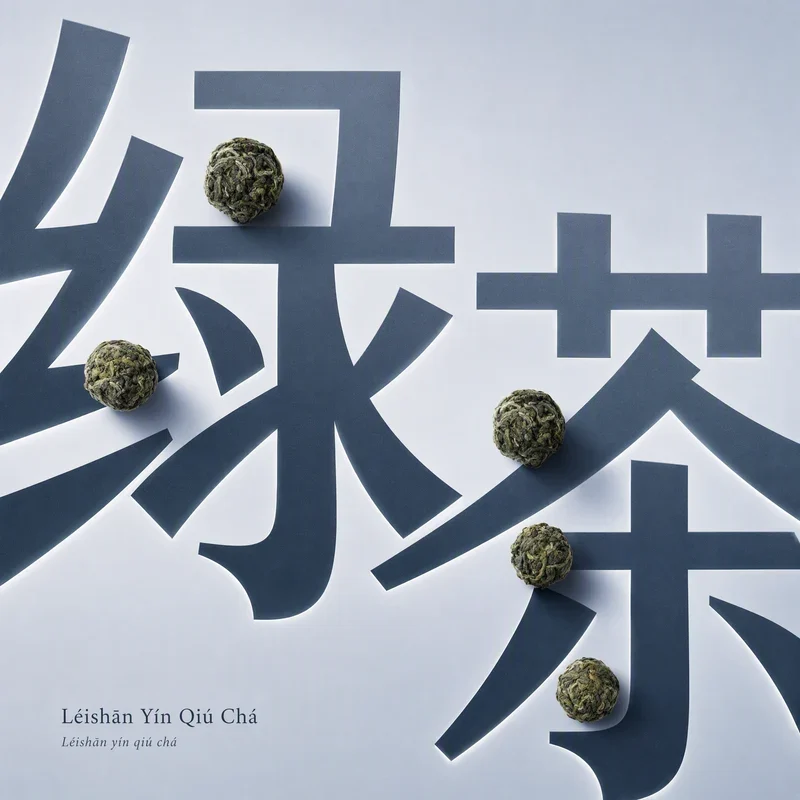
Léishān yín qiú chá
Choose a brewing method. Start with the recommended quantities and time, then adjust to taste.
Brewing
Brewing
Taste
Tea encyclopedia
Category: PRC Geographical Indication Product (国家地理标志产品, 2014). "Golden Tea King" of the All-China Good Green Tea Congress (中国好绿茶大会金奖茶王, 2024). Included in the "Map of China's Good Green Tea" (中国好绿茶地图). Intangible cultural heritage — "手工搓球" technology. Brand value — 25.67 billion yuan (2024). One of the "Ten Famous Teas of Guizhou" (贵州十大名茶). Annual production volume — approximately 200 tons (limited by the labor-intensive hand-rolling process). In 1991, the PRC Ministry of Foreign Affairs sel...
Category: PRC Geographical Indication Product (国家地理标志产品, 2014). "Golden Tea King" of the All-China Good Green Tea Congress (中国好绿茶大会金奖茶王, 2024). Included in the "Map of China's Good Green Tea" (中国好绿茶地图). Intangible cultural heritage — "手工搓球" technology. Brand value — 25.67 billion yuan (2024). One of the "Ten Famous Teas of Guizhou" (贵州十大名茶). Annual production volume — approximately 200 tons (limited by the labor-intensive hand-rolling process). In 1991, the PRC Ministry of Foreign Affairs selected Yin Qiu Cha as a gift for foreign guests.
Coordinates: Approximately 26°22′ N, 108°05′ E.
Origin: China, Guìzhōu Province (贵州省), Qiándōngnán Miáo and Dōng Autonomous Prefecture (黔东南苗族侗族自治州, Qiándōngnán Miáozú Dòngzú Zìzhìzhōu), Léishān County (雷山县, Léishān Xiàn). Tea gardens are located in 9 townships: Xījiāng (西江), Wangfeng (望丰), Dānjiāng (丹江), Fāngxiāng (方祥), and others.
Type: Green tea (绿茶, lǜchá), non-oxidized. Unique spherical form (球形, qiúxíng) — the only one among Chinese green teas. Belongs to the category of "special green teas" (特种绿茶, tèzhǒng lǜchá). Fundamentally different from mechanically pressed "pearl teas" (珠茶, zhūchá) in that shaping is performed exclusively by hand through natural leaf pectins.
Cultural Significance: Leishan is the heart of Miao culture in Guizhou. In the same county is located Xījiāng Qiānhù Miáozhài village (西江千户苗寨, Xījiāng Qiānhù Miáozhài — "Thousand-household Miao Village of Xijiang") — the world's largest Miao settlement. Yin Qiu Cha is the "tea" symbol of Miao identity, alongside silver ornaments, embroidery, and rice wine. In Miao tradition, tea is served to guests according to the ritual of "Twelve Welcome Teas" (十二道迎宾茶) and "High Mountain Stream" (高山流水) — when the hostess pours tea from a height into a small cup in a continuous stream.
Basic "Yin Qiu Cha" (银球茶), "Tianma Yin Qiu Cha" (天麻银球茶 — with added Gastrodia elata for sedative effect), "Qingming Nenya" (清明嫩芽 — entirely from buds, early spring), "Leigongshan Xueya" (雷公山雪芽 — "Snow Bud of Thunder God Mountain"), "Yunwu Yin Zhen" (云雾银针 — "Silver Needle in Clouds"), "Yunwu Lücha" (云雾绿茶 — mass market green tea).
Cultivar: Primary — local population variety of Leigongshan (当地群体种, dāngdì qúntǐzhǒng, Camellia sinensis var. sinensis) — ideal for producing spherical tea due to large, fleshy buds with exceptionally high pectin content (果胶质丰富), which is critically important for "gluing" the ball without external additives. Trees are adapted to cold climate (14–15°C) and altitude of 1200–1600 m. Additionally used is Fuding Dabai Cha (福鼎大白茶) — for early, highly aromatic batches with abundant down. In the area of Fāngxiāng Township (方祥乡), on the Leigongping plateau (雷公坪, 1600+ m), grow thousand-year-old wild tea trees — evidence of the ancient tea tradition of the region.
Altitude: 1200–1600 m — one of the highest tea zones in Guizhou. Peak of Leigongshan — 2178.8 m.
Climate: Leigongshan — "Mountain of the Thunder God," national nature reserve covering more than 47,000 hectares. Mid-subtropical monsoon climate zone. Average annual temperature — 14–15°C — significantly colder than most tea regions of Guizhou (for comparison: Kaiyang — 19.1°C). Precipitation — 1310–1375 mm. Cloud cover — more than 180 days. Diffused light comprises more than 70% of total — exceptional indicator. Large difference between day and night temperatures promotes accumulation of amino acids, sugars, and pectins in the leaf.
Soil: Yellow soils (黄壤土, pH 4.5–6.7) based on volcanic rocks. Organic matter content — ≥2%. Enriched with selenium (Se) and zinc (Zn) from reserve soils.
Forest coverage — 78.8%. Water resources — first class purity. Zero industrial pollution — territory entirely within the protected zone of the national reserve. Leigongshan biodiversity includes more than 2000 plant species, including relict species.
Fāngxiāng Township (方祥乡) — Maoping village (毛坪), Leigongping highlands (雷公坪, 1600+ m) — thousand-year-old wild tea trees. "Jiaosan" tea farm (脚散云雾茶场, "Jiaosan Cloud Tea Plantation") — 1100 mu, equipped with digital management and traceability systems. Dānjiāng Township (丹江镇) — location of "Mao Kexi Tea Industry" company.
4–6 hours on bamboo sieves. Partial moisture evaporation, initial aroma development.
Rotary drum at ~300°C. High temperature necessary for rapid enzyme inactivation and preservation of greenness, while beginning partial pectin release.
Standard mechanical rolling to break down cellular structure and release cell sap.
Repeated firing in wok at moderate temperature. At this stage, pectins begin to actively release, and the leaf acquires characteristic "stickiness" necessary for rolling.
Each portion is carefully weighed — exactly 2.5 g (±0.2 g). Weight precision is one of the standard requirements.
Central and unique operation. The master uses "ten great hand techniques" (十大手法, shí dà shǒufǎ): grasp (抓, zhuā), shake (抖, dǒu), place (搭, dā), rub (拓, tuò), press (捺, nà) — and five more movements passed from master to student. The ball is formed exclusively through natural leaf pectins — without glue, without molds, without press. Each ball is a perfect sphere with diameter 18–20 mm. Mechanical pressing is strictly prohibited — counterfeits made in presses are irregularly shaped and easily crumble. Learning this skill takes at least a year (the creator's granddaughter, Mao Juan, trained for a year before mastering the technique).
~80°C — final fixation of ball shape.
~60°C — gentle warming to enhance chestnut and honey notes.
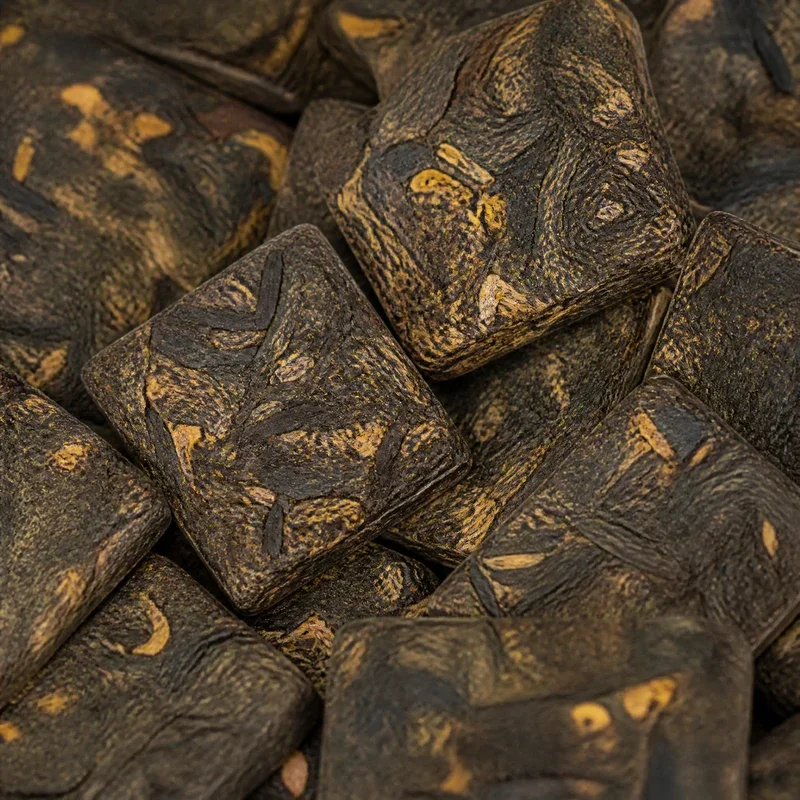
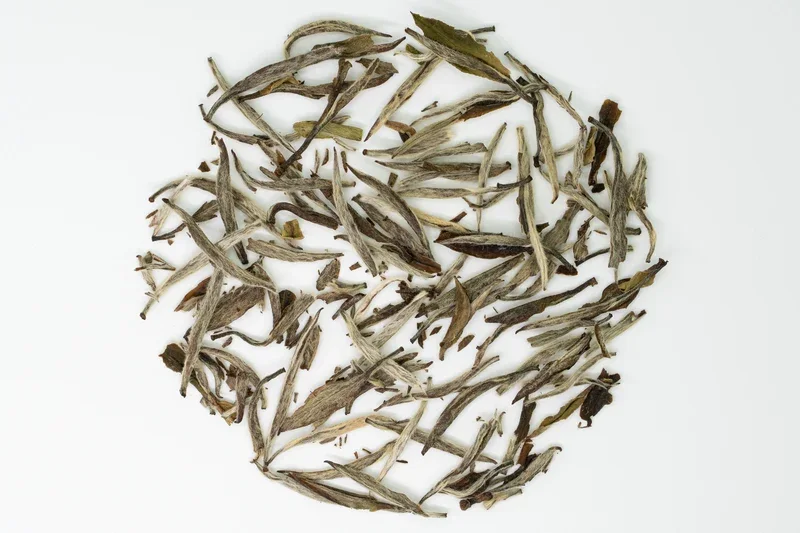
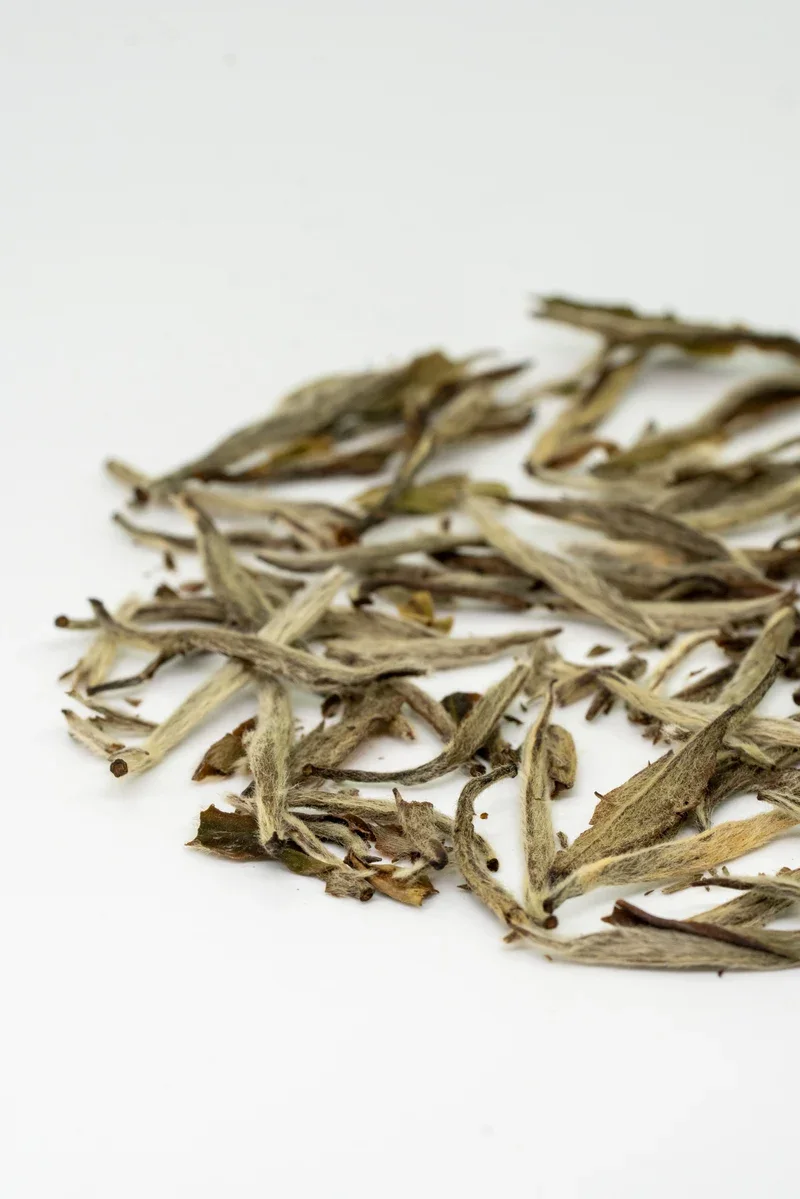
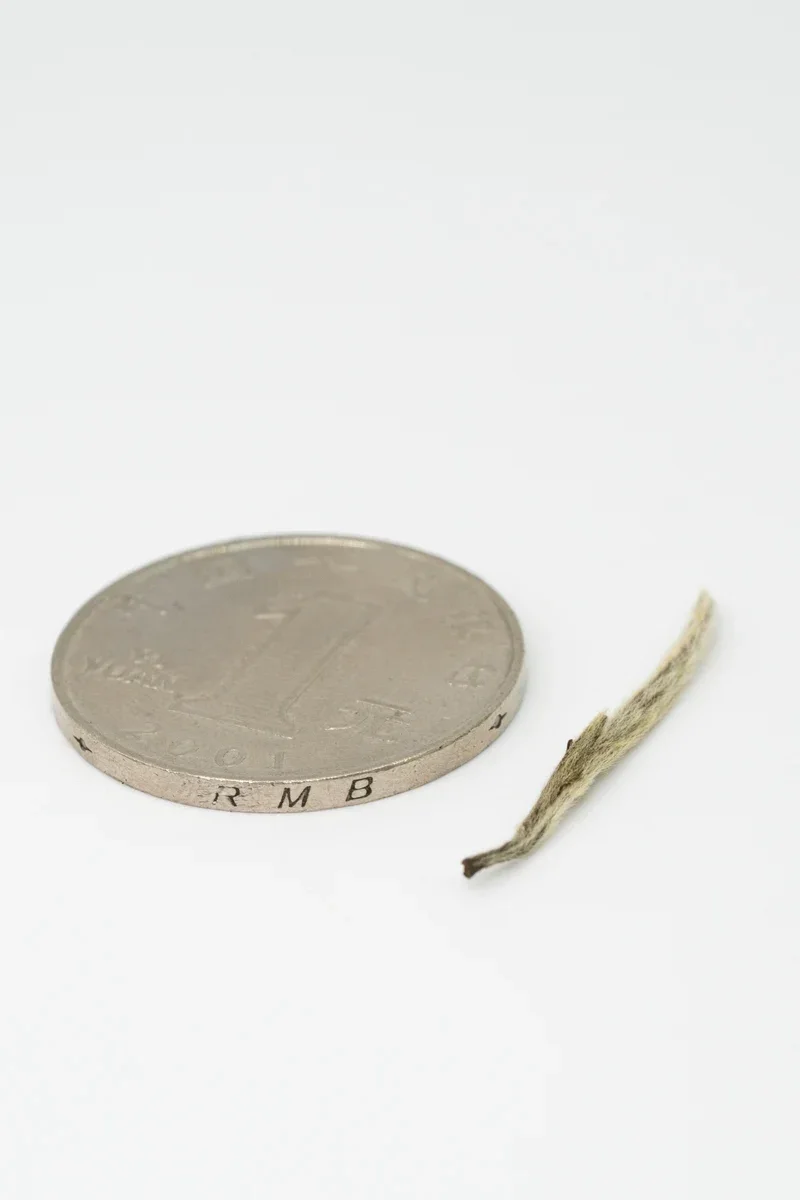
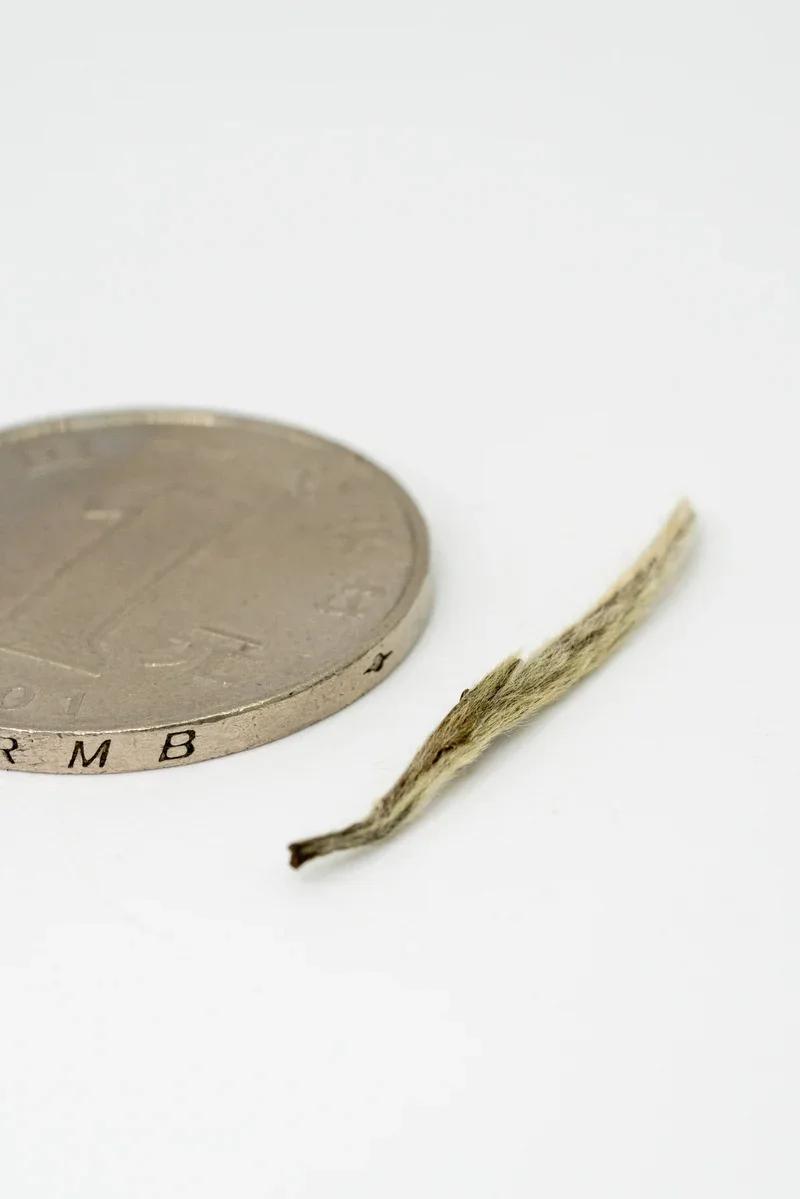
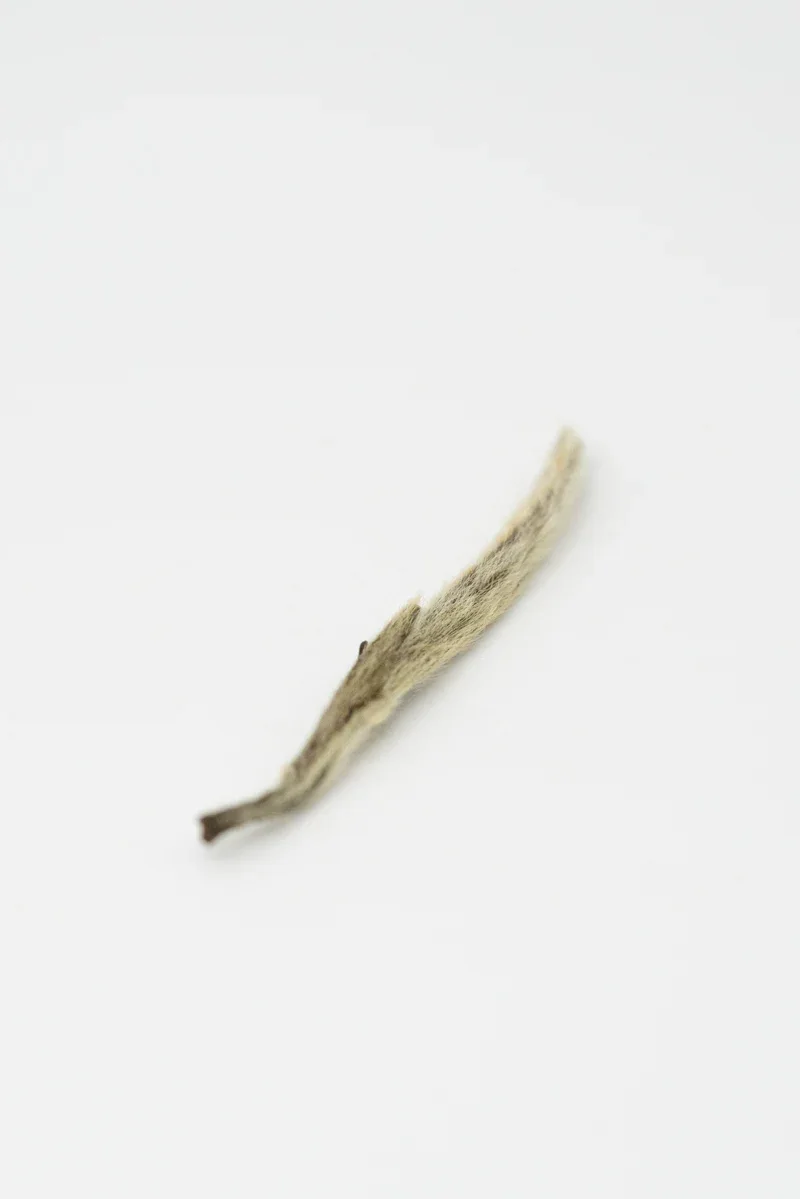
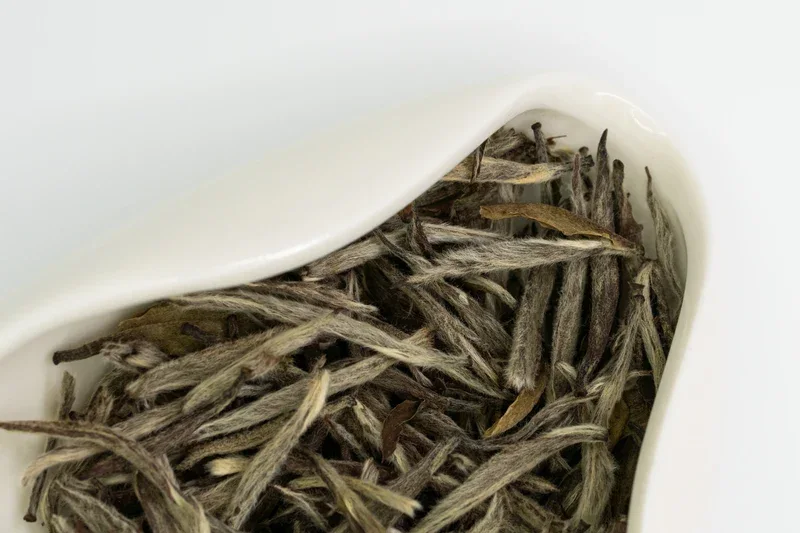
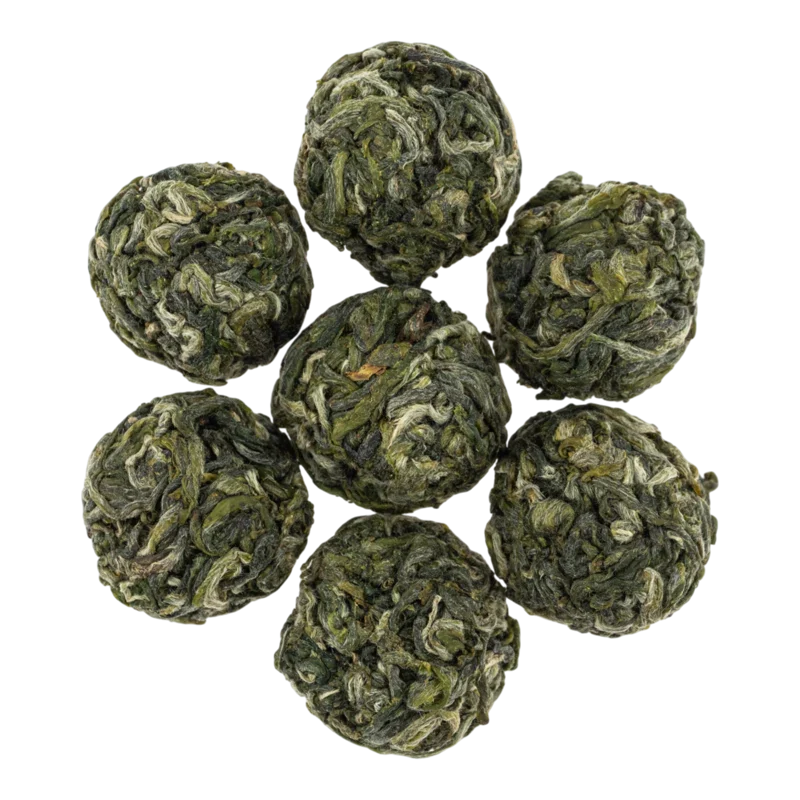
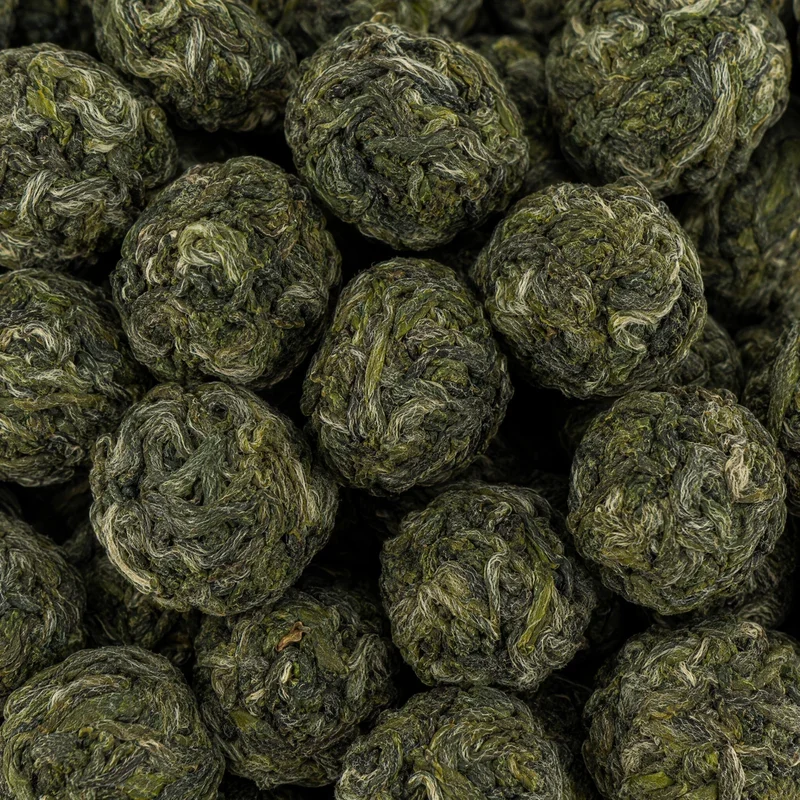
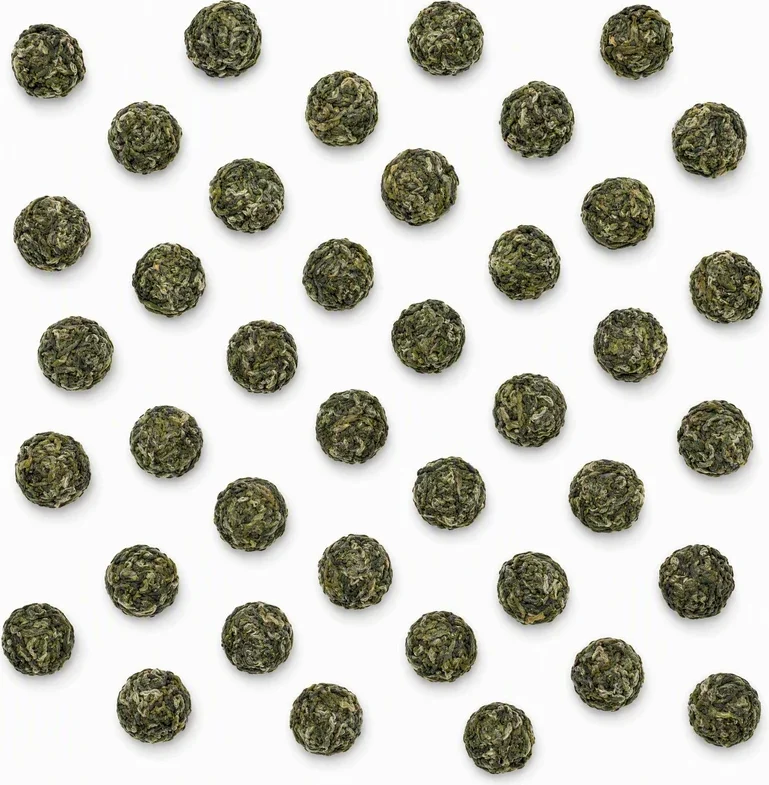
Dry Leaf Appearance: Perfect balls (球状) with diameter 18–20 mm, weighing 2.5 g each. Color — silvery-gray-green (银灰墨绿, yínhuī mòlǜ) with slight luster. Surface smooth, without cracks or chips. When brewing, the ball slowly opens in water, "blooming" like a flower — a spectacle comparable to "blooming teas" (工艺花茶), but without artificial shape fixation.
Dry Leaf Aroma: Chestnut (栗香, lìxiāng) — primary, rich and persistent. Supreme grade has additional "tender" note (嫩香, nènxiāng). Early spring "Qingming Nenya" has subtle floral undertone. Aroma is stable — cooled cup retains fragrance for more than 15 minutes.
Liquor Aroma: Chestnut aroma unfolds more fully, enriched with honey and nutty overtones. Persistence — highest: aroma remains until fifth infusion.
Liquor Color: Yellow-green, bright and clear (黄绿明亮, huánglǜ míngliàng).
Spent Leaves: Tender, whole, with visible buds (嫩匀完整,鲜活显芽) — ball completely opens, and leaf structure can be observed. Leaves form "rosettes" (成朵), soft and elastic.
Taste: Fresh and mellow (鲜醇, xiān chún). Dense and rich (浓醇, nóng chún) — polyphenols 18–25%, water extractives 40–48%. Returning sweetness — persistent and prolonged. Light astringency quickly transitioning to sweetness (微涩转甜) — effect of anthocyanins (花青素, huāqīngsù). Aftertaste — clean, with chestnut warmth and light "mountain" cool undertone.
Amino Acids: 2.2–7.3% — wide range depending on season, grade, and batch. Early spring "Qingming" — up to 7.3%. 20–50% higher than low-altitude teas — result of altitude 1200–1600 m and cold climate (14–15°C).
40–48% — highest indicator, testifying to exceptional richness of liquor. Data stable according to multi-year analyses (since 1982).
3.6–4.6% — above average for green teas (usually 2.5–3.5%), providing pronounced tonic effect.
3.2–4.6% — high indicator ensuring sweetness of liquor.
2.00–2.02 μg/g — 15 times higher than ordinary green tea (~0.13 μg/g). From soils of Leigongshan National Reserve.
Present — provide characteristic transition from light astringency to sweetness (微涩转甜) and contribute to antioxidant activity.
Exceptionally high content — key technological factor allowing ball formation without external binding agents.
Polyphenols: 18.0–25.0% (according to state and provincial laboratory data). Source file indicates ≥40%, however laboratory data from company and inspection agencies give range 18–25% — this is typical for high-altitude green teas with high amino acid content (polyphenol/amino acid balance shifted toward amino acids due to cold climate and diffused light).
Polyphenols (18–25%) + selenium (15 times above normal) + anthocyanins — triple antioxidant protection, synergistically neutralizing free radicals.
Caffeine 3.6–4.6% — above average for green teas. Combined with high amino acid content (up to 7.3%) provides powerful but gentle stimulation without sharp peaks.
Selenium (Se) — essential cofactor of glutathione peroxidase and deiodinases; zinc (Zn) — participant in immune defense and cellular renewal. Both elements from reserve soils.
Polyphenols and water-soluble sugars (3.2–4.6%) promote digestive normalization.
Catechins + Se + anthocyanins reduce risk of oxidative vascular damage.
High caffeine + amino acids (including L-theanine) — improvement of concentration, memory, and mood.
Selenium participates in immune cell differentiation.
Anthocyanins + polyphenols + vitamin C — complex protecting skin from photoaging.
Tea Amount: 1 ball (2.5 g) per 150–200 ml — ideal "dosage" built into the tea form itself. No scales needed.
Teaware: Glass tumbler — strongly recommended for observing ball "blooming." Can also use white porcelain gaiwan.
Water Temperature: 85–90°C.
Airtight opaque packaging, refrigerator 0–5°C.
After opening — up to 6 months (significantly longer than loose green tea — spherical form better preserves aroma due to minimal contact area with air). Unopened — up to 18 months.
Dense ball minimizes leaf contact area with oxygen and moisture, slowing oxidation and aroma loss.
Classic "pearl tea" from Zhejiang — small balls (3–5 mm), mechanically rolled. Taste — astringent, with "gunpowder" note. Don't open when brewing. Yin Qiu Cha is fundamentally different product: handwork, 18–20 mm ball, complete "blooming" in cup, chestnut aroma instead of astringency.
Bound tea in ball or bud form, opening when brewing into "flower." Made by hand from green or white tea with woven dried flowers. Visual effect similar to Yin Qiu Cha, but nature of form completely different: "blooming tea" leaves bound with thread, Yin Qiu Cha glued with pectins.
Famous green tea from southern Guizhou, one of "Ten Famous Teas of China." Spiral form. Aroma — more floral and fresh. Taste — mild, without pronounced astringency. In prestige Duyun Maojian is higher, but in uniqueness of form and Se content incomparable.
Flat green tea from Meitan (Guizhou). Clean, fresh taste. Production scale — significantly larger (Meitan is one of China's largest tea-growing counties). Yin Qiu Cha — niche product (~200 tons/year), but with unique form and cultural significance.
"Green Emerald" — pearl-shaped (珠形) green tea from Guizhou, machine-produced. Was included in "Ten Famous Teas of Guizhou." Form — small balls resembling zhucha. Yin Qiu Cha — handmade, large, pectin-based; Lübaoshi — mass-produced, small, mechanical.
Authentic ball — perfectly round, 18–20 mm, smooth surface without cracks or chips. Mechanically pressed counterfeits — irregular shape, with visible seams.
Exactly 2.5 g (±0.2 g). Counterfeits often lighter or heavier.
Authentic ball does not crumble under light pressure — pectin bond is strong. Mechanically pressed counterfeits crumble.
Authentic ball opens slowly, beautifully, "blooming" like a flower, with complete leaf unfolding. Counterfeits — either don't open at all, or fall apart chaotically.
No reviews yet. Tell us what you think of this tea.
Rate this tea and share your impressions. We review each submission before publishing it.