Brewing
Gongfu brewing
- Water temperature
- 75 °C
- Tea amount
- 5 g
- Water volume
- 100 ml
- First steep
- 10 s
- Time added per infusion
- 5 s
- Infusions
- 3

Kāiyáng fù xī chá
Choose a brewing method. Start with the recommended quantities and time, then adjust to taste.
Brewing
Brewing
Taste
Tea encyclopedia
Category: PRC Geographical Indication Product (中国国家地理标志产品, 2013). Intangible cultural heritage of Guìyáng City (贵阳市非遗名录, 2018). Title "One of China's Ten Major Se-brands" (中国十大富硒品牌, 2024). Passed EU inspection for 481 pesticide residue parameters — one of the few Chinese teas with confirmed European compliance.
Category: PRC Geographical Indication Product (中国国家地理标志产品, 2013). Intangible cultural heritage of Guìyáng City (贵阳市非遗名录, 2018). Title "One of China's Ten Major Se-brands" (中国十大富硒品牌, 2024). Passed EU inspection for 481 pesticide residue parameters — one of the few Chinese teas with confirmed European compliance.
Coordinates: Approximately 27°05′ N, 106°58′ E.
Origin: China, Guìzhōu Province (贵州省), Guìyáng City (贵阳市, Guìyáng Shì), Kāiyáng County (开阳县, Kāiyáng Xiàn). The county is located northeast of Guizhou's capital — Guiyang. The production core — five "ten-thousand-mu" townships (万亩茶叶专业乡镇, wàn mǔ chá yè zhuānyè xiāngzhèn): Nanlong (南龙乡, Nánlóng Xiāng — "cradle of tribute tea"), Héfēng (禾丰乡, Héfēng), Lónggǎng (龙岗镇, Lónggǎng), Gāozhài (高寨乡, Gāozhài) and Máoyún (毛云乡, Máoyún), which account for more than 70% of production.
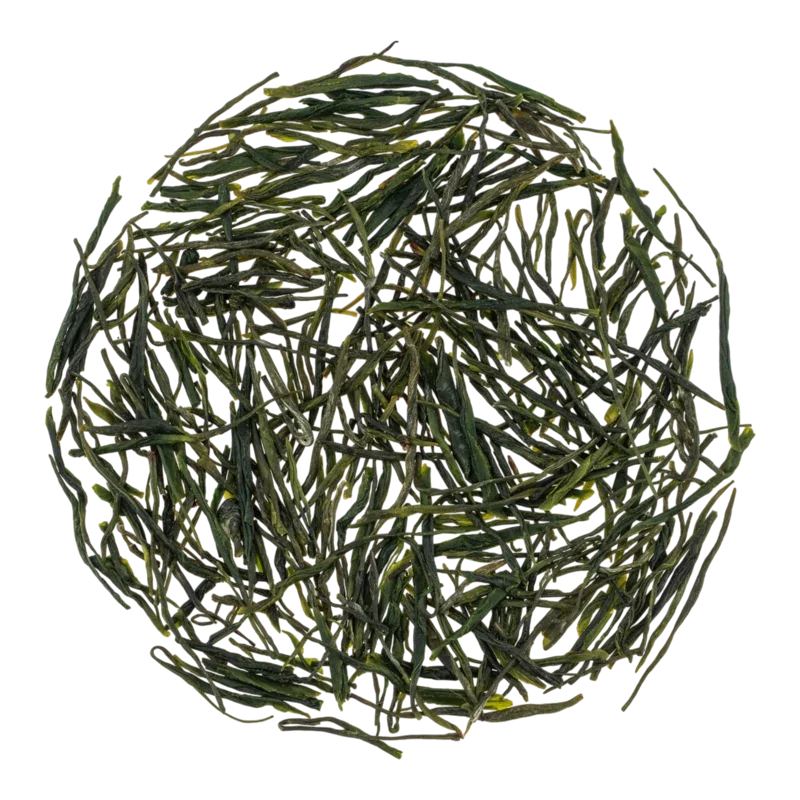
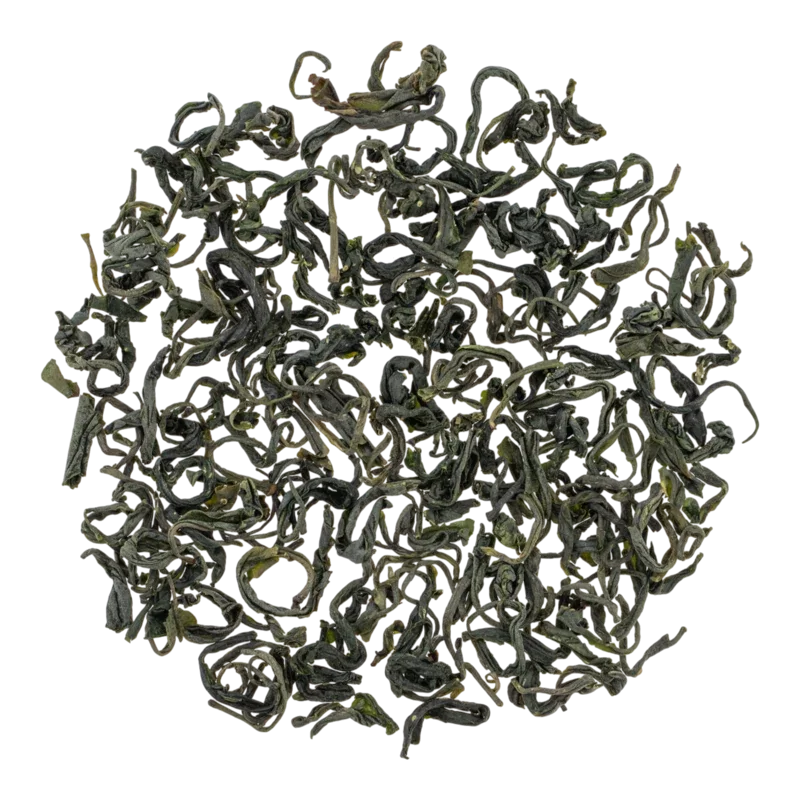
Type: Green tea (绿茶, lǜchá), non-oxidized — the main and most mass-produced line. Green tea is produced in two forms: flat (扁形, biǎnxíng — in the style of "Guizhou Longjing") and spiral (卷曲形, juǎnqū xíng — in the style of "Qingchi Maojian"). Additional lines: Se-red tea (black tea) (富硒红茶, fù xī hóngchá — fully oxidized) and Se-white tea (富硒白茶, fù xī báichá — minimally processed). All types of tea contain elevated levels of selenium.
"Cradle of tribute tea" — historical center of production with plantations laid during the Qing era.
One of five "ten-thousand-mu specialized tea townships" with modern processing facilities.
Large-scale production with emphasis on flat-form green tea.
High-altitude plantations (1200–1300 m) producing premium grades.
Specializes in spiral-form "Maojian" with abundant down.
Cultural Significance: Kaiyang is one of three "selenium capitals" (硒都, Xī Dū) of China alongside Ēnshī (恩施, Hubei) and Zǐyáng (紫阳, Shaanxi). The historical name "Nan Gongcha" (南贡茶, "Southern Tribute Tea"), dating back to the Qianlong era, has been returned to circulation as the name of a premium line. Guizhou as a whole is located in the core of the global origin area of the tea tree — the oldest fossilized tea leaf over one million years old was discovered here — and Kaiyang tea inherits this deep connection with the prehistory of Camellia sinensis culture.
0.25–4.00 mg/kg — 5.5+ times higher than ordinary green tea (~0.15 mg/kg). Selenium is predominantly in organic form (selenomethionine, selenocysteine), ensuring high bioavailability during brewing.
Cultivar: Main cultivars:
Picking: Spring picking — main, determining quality. Standards by grades:
Altitude: 900–1300 m above sea level.
Climate: Subtropical monsoon, with the characteristic Guizhou Plateau formula «低纬度、高海拔、寡日照» (dī wěidù, gāo hǎibá, guǎ rìzhào — "low latitude, high altitude, little sunshine"). Average annual temperature — 19.1°C (higher than most high-mountain tea regions due to low latitude). Precipitation — 1733 mm per year. Cloudiness — more than 150 days. Diffused light predominates, which favors synthesis of amino acids and L-theanine in the leaf.
Soil: Yellow soils (黄壤土, huáng rǎng tǔ), acidic (pH 4.5–6.5). Average selenium content in soil — 3.24 mg/kg — 8–10 times higher than the Chinese average. 75% of the county's territory is classified as a "natural selenium enrichment zone". Origin of the anomaly — Paleozoic sedimentary rocks rich in organic Se. Forest cover — 54.33%. Water resources — first class purity.
"Tea + forest" model (茶林相间, chálin xiāngjiàn): tea rows are interspersed with ginkgo trees (银杏, yínxìng — Ginkgo biloba) and yew trees (红豆杉, hóngdòushān — Taxus chinensis), creating a natural barrier against pests and microclimatic protection. Chemical pesticides are prohibited. Passing 481 EU inspection parameters — one of the strictest food safety standards in the world.
Freshly picked leaves are spread on bamboo sieves for 5–10 hours — significantly longer than for most green teas (usually 2–4 hours). Moisture loss — 20–25%. Prolonged spreading promotes development of floral and chestnut notes in the aroma.
Rotary drum at 200–250°C. High temperature ensures rapid enzyme inactivation and preservation of the leaf's green color.
For flat form ("Guizhou Longjing") — pressing in a special wok or on a pressing machine that forms the characteristic flat profile with smooth surface. For spiral form ("Qingchi Maojian") — rolling, creating tight spirals with abundant down.
To moisture content ≤7.0%.
Withering (萎凋) → rolling (揉捻) → oxidation at 25°C → drying over pine wood (松明火烘焙, sōngmíng huǒ hōngbèi), imparting light smokiness remotely reminiscent of Zheng Shan Xiao Zhong.
Minimal processing — withering and natural drying. White down is completely preserved.
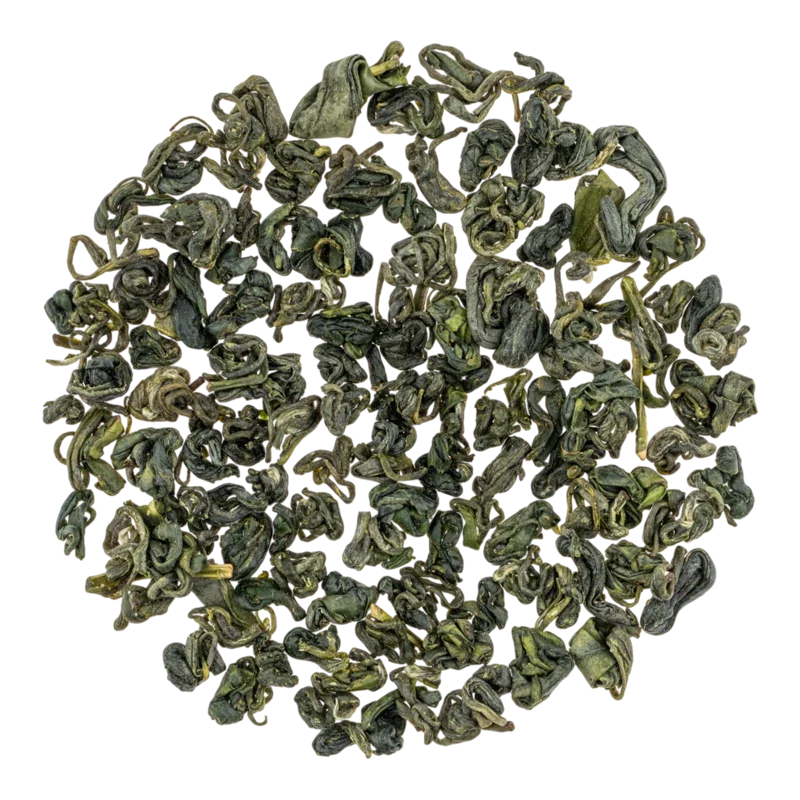
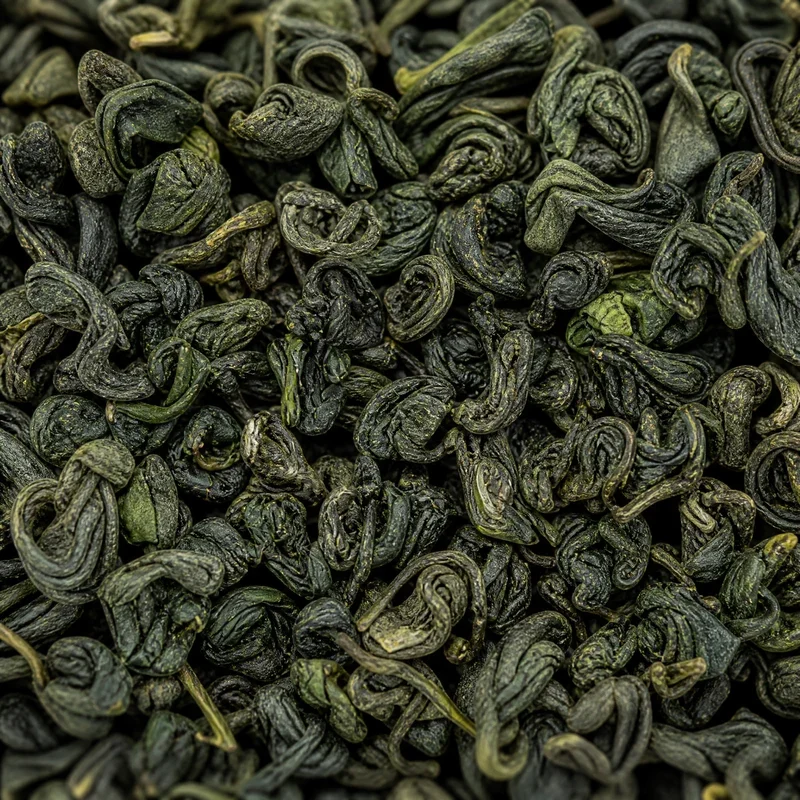
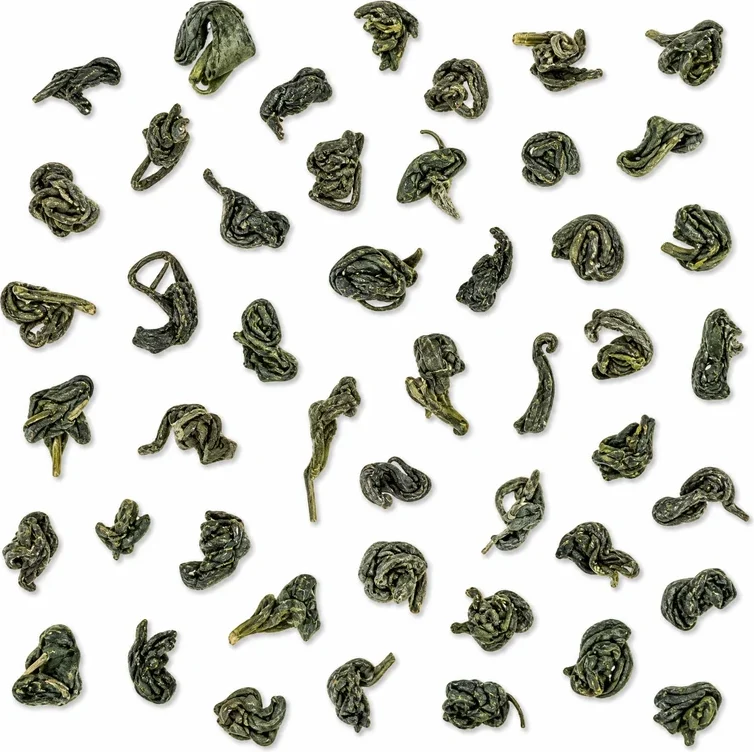
Dry Leaf Appearance: Spiral (毛尖): tight, neat spirals of green color with abundant silvery down, compact and uniform. Flat (翠片): straight, smooth, resembling classic Longjing, with glossy surface and tender green shade. Se-red tea (black tea): thin dark strips with golden tips. Se-white tea: buds with abundant white down.
Dry Leaf Aroma: Chestnut (栗香, lìxiāng) — main note for green tea. In supreme grades of flat form — pure and fresh (清香, qīngxiāng). Red tea (black tea) — sweet (甜香, tiánxiāng) with light smokiness from pine drying. Aroma is persistent — cooled cup retains fragrance for at least 15 minutes.
Liquor Aroma: Chestnut aroma unfolds more fully, enriched with honey and floral undertones. Red tea (black tea) — fruity-sweet, with light smoky aftertaste.
Liquor Color: Green tea — yellow-green, bright and clear (黄绿明亮). Red tea (black tea) — orange-yellow, clear (橙黄透亮). White tea — pale yellow.
Spent Leaves: Tender green, uniform, fleshy and soft (嫩绿匀整,肥厚柔软). Leaves are thick, elastic, with clearly distinguishable buds — evidence of high-mountain origin and enriched soils.
Taste: Fresh and mellow (鲜醇, xiān chún) — amino acids 3.5–5.0%, which is 20% higher than ordinary green teas. Rich and full-bodied (醇厚, chúnhòu) — polyphenols ≥30%. Returning sweetness (回甘) — pronounced and persistent, provided by high L-theanine content (3.4–3.8 g/100 g). Aftertaste — clean, without bitterness.
Amino Acids: 3.5–5.0% — 20% higher than ordinary green teas. According to individual analyses — up to 13% (calculated by China Tea Institute methodology — 2.8%). High indicator is due to cloudy climate and diffused light.
0.25–4.00 mg/kg in dry leaf — key marker of identity. For comparison: ordinary green tea — about 0.15 mg/kg. Excess — 5.5+ times. Selenium is predominantly in organic (bioavailable) form — selenomethionine and selenocysteine, ensuring 80–90% absorption during brewing. One of the earlier analytical characteristics (for "Nangongcha" variety): Se ~0.35 mg/kg — closer to the lower boundary of the range, but still significantly above average.
3.4–3.8 g/100 g — high indicator, forming characteristic "freshness" (鲜爽) and mild calming effect.
According to one analysis — 2.4% — moderate content, typical for green teas.
According to analysis — 35.6%.
Essential Oils: Form the chestnut and floral aromatic profile.
Minerals: Besides Se — zinc (Zn), magnesium (Mg), potassium (K).
Polyphenols: ≥30%. According to one analysis of "Nangongcha" variety — 23.4% (for a specific batch). Catechins, including EGCG, provide antioxidant activity and light astringency.
Vitamins: Vitamin C (ascorbic acid), B vitamins (B1, B2), vitamin K.
Se content 5.5+ times higher than ordinary green tea. Selenium is an essential microelement necessary for immune system function, thyroid gland and antioxidant protection. Organic form of Se in Kaiyang tea ensures 80–90% absorption, making the tea one of the most effective dietary sources of selenium.
Polyphenols (≥30%) + organic Se — synergy of two powerful antioxidant mechanisms: polyphenols neutralize free radicals directly, while selenium activates glutathione peroxidase — a key endogenous antioxidant enzyme.
Caffeine (~2.4%) combined with L-theanine (3.4–3.8 g/100 g) provides mild stimulation without sharp peaks: concentration improves, mood enhances, anxiety decreases.
Polyphenols help reduce LDL cholesterol levels. Selenium participates in protecting vascular endothelium from oxidative damage.
Selenium is a cofactor of deiodinases, enzymes necessary for synthesis of active thyroid hormones (T3 from T4).
Polyphenolic compounds stimulate digestive enzymes and promote healthy intestinal microflora.
Selenium participates in immune cell differentiation and inflammatory response modulation; polyphenols enhance this effect.
Antioxidant complex Se + polyphenols + vitamin C protects skin from photoaging and oxidative stress.
85–90°C, 3–4 g per 150 ml, first infusion — 45 seconds.
Process: First steeping — 3–5 seconds (quick). Withstands 5–8 steepings with gradual time increase.
Tea Amount: 5 g per 150 ml (gaiwan).
Teaware: Glass cup (for observing tea form and liquor color) or white porcelain gaiwan (盖碗).
Water Temperature: 90–95°C.
Airtight opaque packaging, refrigerator 0–5°C. After opening — consume within 3 months. Unopened — up to 12–18 months.
Dry cool place, protected from light and foreign odors. Storage period — up to 2–3 years. Refrigerator not necessary.
Allows long aging (3–5+ years) in dry, well-ventilated conditions. With age, taste becomes softer and sweeter.
Main enemies of tea — light, moisture, foreign odors and oxygen. Do not store near products with strong aroma.
The only surviving "steamed" green tea (蒸青) in China from Enshi (Hubei) — another "selenium capital." Form — dark green needles. Taste — pronounced umami with marine notes. Kaiyang tea is "pan-fired" (炒青), with chestnut aroma instead of marine freshness. Both are rich in Se, but Kaiyang contains Se in higher concentration (up to 4.00 mg/kg vs ~0.5–1.0 mg/kg for Enshi).
Se-tea from Ziyang County (Shaanxi) — the third "selenium capital." Classic green tea with mild taste and clean aroma. Se content — 0.3–0.6 mg/kg — lower than Kaiyang's. Ziyang tea is milder and lighter in taste, Kaiyang is denser and more complex.
Famous green tea from southern Guizhou, included in the "Ten Famous Teas of China." Spiral form with abundant down. Aroma — fresher and more floral, without pronounced chestnut tone. Not a Se-tea. In prestige Duyun Maojian ranks higher, but in Se content is incomparable.
"Zinc-selenium tea" from Fenggang County (Guizhou) — another Se-tea of the province, but with emphasis on dual enrichment Zn+Se. Was included in the "Ten Famous Teas of Guizhou." Kaiyang tea surpasses in Se concentration, Fenggang — in Zn.
Green tea from Meitan County (Guizhou) — one of China's largest tea-growing counties. Flat form, resembling Longjing. Clean, fresh taste. Not a Se-tea. Meitan is larger in volume, but Kaiyang is unique precisely for its Se-terroir.
request laboratory certificate of Se content. Authentic Kaiyang tea contains 0.25–4.00 mg/kg selenium — this indicator cannot be reproduced on ordinary soils.
No reviews yet. Tell us what you think of this tea.
Rate this tea and share your impressions. We review each submission before publishing it.