Brewing
Gongfu brewing
- Water temperature
- 75 °C
- Tea amount
- 5 g
- Water volume
- 100 ml
- First steep
- 10 s
- Time added per infusion
- 5 s
- Infusions
- 3

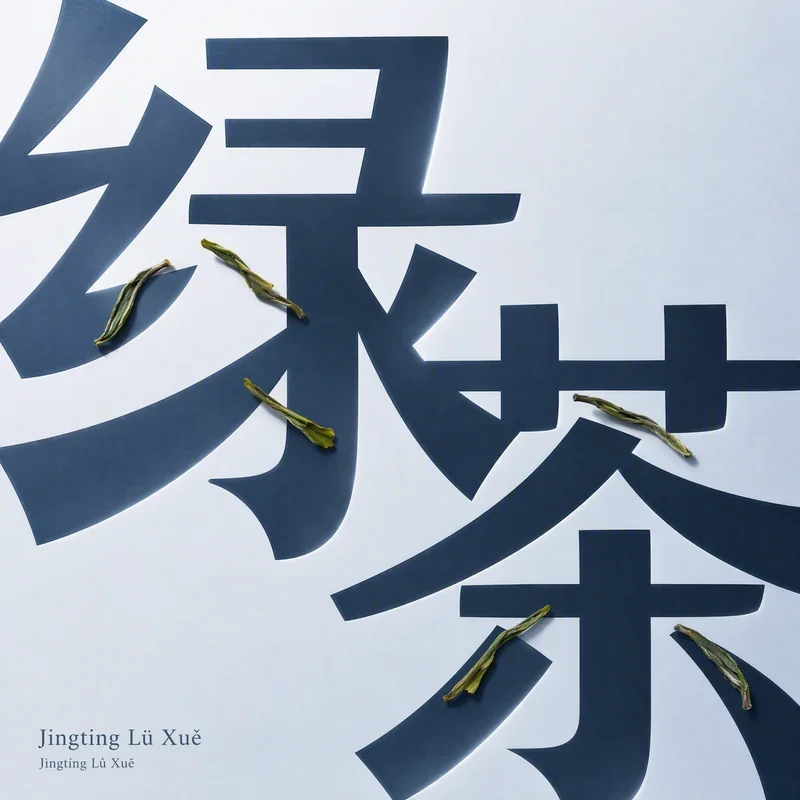
Jìngtíng Lǜ Xuě
Choose a brewing method. Start with the recommended quantities and time, then adjust to taste.
Brewing
Brewing
Taste
Tea encyclopedia
Category: Historical Famous Teas of China (历史名茶, lìshǐ míngchá).
Category: Historical Famous Teas of China (历史名茶, lìshǐ míngchá).
Coordinates: Approximately 31°00′ North latitude, 118°40′ East longitude.
Origin: China, Ānhuī Province (安徽, Ānhuī), Xuānchéng Prefecture (宣城, Xuānchéng), Xuānzhōu District (宣州区, Xuānzhōu Qū), Mount Jingtingshan (敬亭山, Jìngtíng Shān). The core production area is concentrated on the main peak Yifeng (一峰, Yī Fēng) and adjacent tea gardens—Mingxiangtai (茗香台), Shangshiba (上十坝) and other plots on shaded slopes at altitudes of 300–500 meters.
Type: Green tea (non-oxidized), hōngqīng (烘青, hōngqīng)—dried by heating method (oven drying).
Cultural Significance: Mount Jingtingshan is one of the most famous "poetic mountains" (诗山, Shī Shān) of Southern China. It was celebrated by the Southern Qí poet Xiè Tiáo (谢朓, Xiè Tiǎo, 464–499), and the great Lǐ Bái (李白, Lǐ Bái) climbed this mountain seven times and left 45 poems, including the immortal "Sitting Alone on Mount Jingting" (《独坐敬亭山》). For more than a thousand years—from the era of the Six Dynasties to the Qing—over 300 literati celebrated the mountain, including Bai Juyi, Du Mu, Ouyang Xiu, Huang Tingjian, Su Shi, and Wen Tianxiang. The tea born on the slopes of this legendary mountain was from the beginning inextricably linked with literary tradition. Qing poet Shi Runzhang wrote about it: "Pouring into white porcelain—indistinguishable from [pure water], as if the fragrance of flowers were caught by a mountain stream." Artist Méi Gēng (梅庚, Méi Gēng) also praised the tea, noting that its "color resembles autumn water, and taste—orchid." Jingting Lü Xue along with Huangshan Mao Feng and Liu An Gua Pian comprises the canonical "three great teas of Anhui" (安徽三大名茶).
History: Jingting Lü Xue was created during the Ming dynasty (1368–1644). During the Ming and Qing dynasties, the tea was included in the registry of imperial court tribute teas. According to the "Xuancheng County Chronicle" (《宣城县志》, Xuānchéng Xiànzhì), during the Ming-Qing period, 300 jin (approximately 150 kg) of this tea were sent annually to the court. During the Kangxi era, poet and scholar Shī Rùnzhāng (施闰章, Shī Rùnzhāng) celebrated this tea in verse, strengthening its literary fame. By the end of the Qing era, the production technology was lost. In 1972, the tea factory at Mount Jingtingshan (敬亭山茶场) began work to restore the recipe, and in 1978 the technology was successfully recreated. In 1976, the famous writer and public figure Guō Mòruò (郭沫若, Guō Mòruò) personally wrote the calligraphic inscription "Jingting Lü Xue," which became the tea's calling card. In 1983, the tea received an honorary certificate from the Ministry of Foreign Economic Relations of the PRC. In 2010, the production technology of Jingting Lü Xue was included in the registry of intangible cultural heritage of Anhui Province. The harvesting and processing methodology of this tea was incorporated into official university textbooks for tea specialization.
Name Breakdown: Each component of the name carries semantic meaning. "Jingting" (敬亭) is the mountain's name; originally it was called Zhaotingshan (昭亭山, Zhāotíng Shān), but at the beginning of the Western Jin dynasty (266 CE) it was renamed to avoid taboo on the name of Emperor Sima Zhào (司马昭). "Lü" (绿, lǜ)—"green," indicates the color of tea buds and leaves. "Xue" (雪, xuě)—"snow," describes the white down (bái háo) abundantly covering the tea leaves, which when brewed separates and swirls in the water, creating the effect of falling snowflakes. There is also a folk legend: according to it, Lü Xue ("Green Snow") was the name of a master craftswoman who made wonderful tea. Fleeing from the advances of a local official, she threw herself from a cliff, and the tea leaves scattered from her basket sprouted all over the mountain slope. People named the tea after her in her memory.
For special grade (tèjí)—exclusively single buds or buds with the first unopened leaf; for first grade—bud with one leaf; for second grade—bud with two beginning-to-open leaves. Harvesting requirements are formulated with four characters: "nèn, jūn, jìng, qí" (嫩、均、净、齐)—tenderness, uniformity, cleanliness, evenness.
Cultivar: The main cultivar is Xuānchéng Jiānyè (宣城尖叶, Xuānchéng Jiānyè)—a nationally recognized seed variety (国家级有性系良种). This is a bush form (Camellia sinensis var. sinensis) with medium-sized leaves and semi-spreading bush habit. Young shoots are yellow-green in color, densely covered with down. The weight of 100 buds of "bud + three leaves" standard is approximately 64 g. The cultivar is distinguished by high resistance to cold and drought, as well as prolonged tenderness of shoots (持嫩性强, chí nèn xìng qiáng).
Picking: Harvesting is conducted annually from Qīngmíng (清明, Qīngmíng, early April) to Gǔyǔ (谷雨, Gǔyǔ, mid to late April). The harvesting standard is "one leaf embracing one bud" (一叶抱一芯): an unopened or barely opened bud with one young leaf about one cun (寸, ~3.3 cm) long.
Raw Material: Only young, undamaged shoots without coarse leaves, uniform in size, free from foreign odors and impurities.
Altitude: Main tea gardens are located at 300–500 meters above sea level. The most valuable raw material is collected on shaded (northern) slopes near the main peak.
Soil: Soils formed from sandstone weathering. Reaction is weakly acidic (pH 4.5–5.0), with high humus and mineral content, including selenium and iodine. This composition provides the tea with a rich mineral profile and contributes to the formation of characteristic aroma.
Mount Jingtingshan is located in the transitional zone between the mountainous regions of Southern Ānhuī (皖南山区) and the coastal plain of the Yangtze River. The climate is subtropical with four distinct seasons. Average annual temperature is 15–16.8 °C. Annual precipitation is 1500–2000 mm. Frost-free period exceeds 220 days. Average annual air humidity exceeds 80%. Forest cover on Jingtingshan reaches 96.3%, allowing tea bushes to receive predominantly diffused light, which promotes amino acid accumulation and suppresses formation of coarse fibers in shoots.
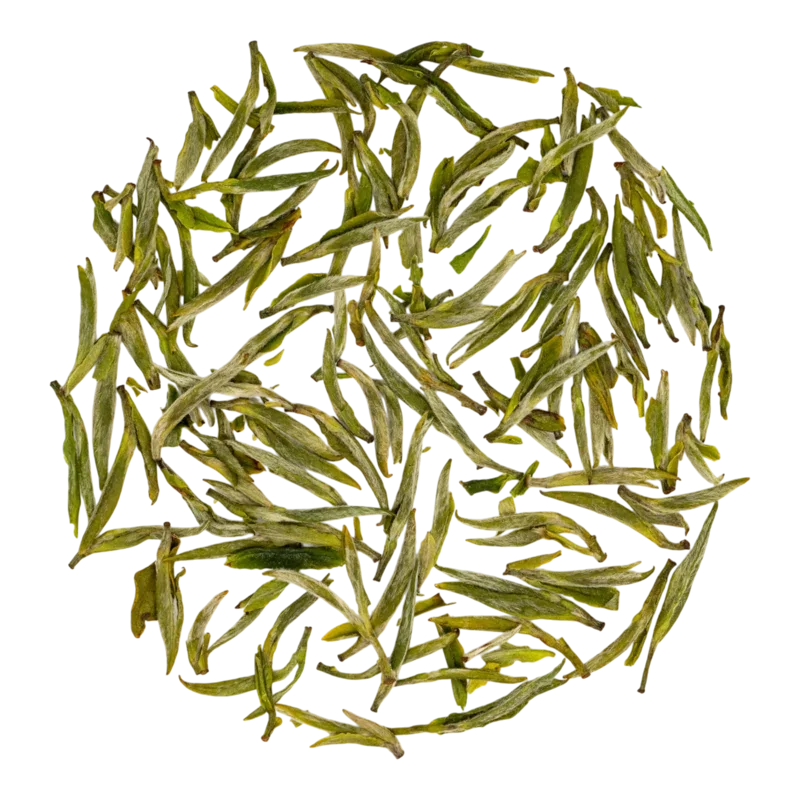
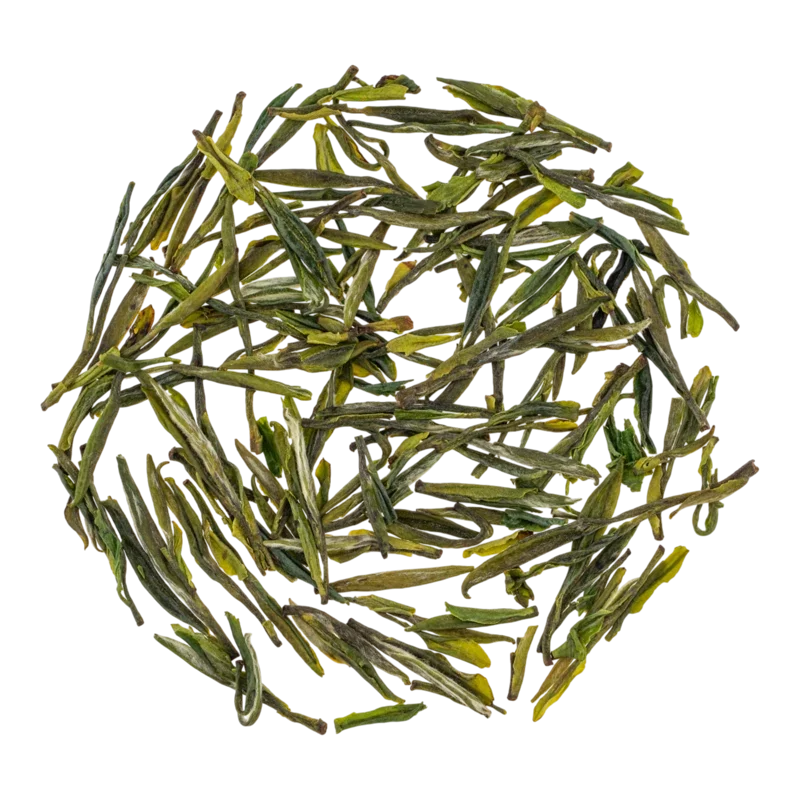
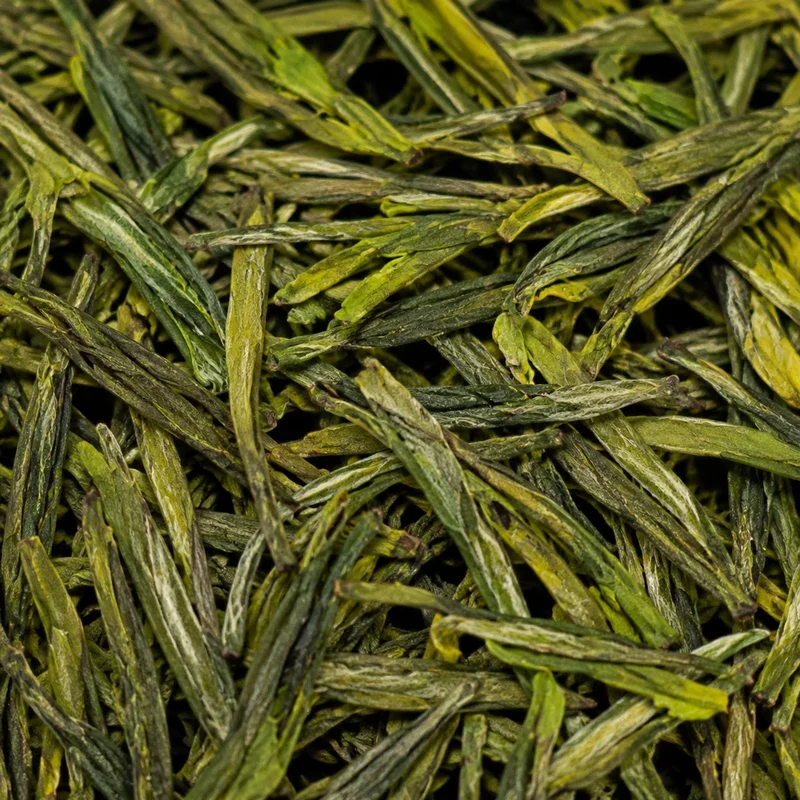
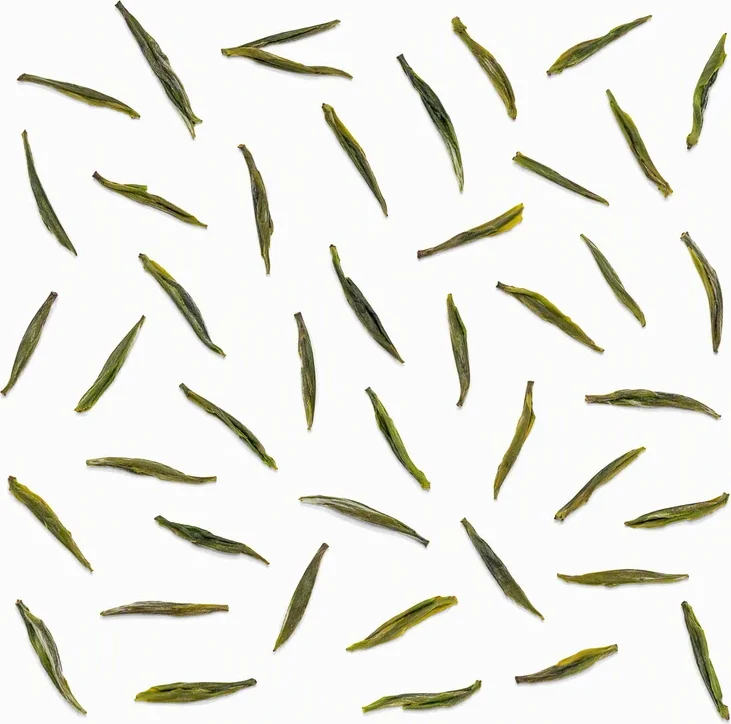
Dry Leaf Appearance: Tea leaves have the shape of "sparrow tongue" (雀舌形, quèshé xíng)—straight, dense, slightly flattened, elastic to the touch. Color is rich emerald-green with abundant white down, in places with golden luster (tèjí, 特级). The leaf contains no fragments or dust. The highest grade tea is distinguished by special density of twist and bright shine.
Dry Leaf Aroma: The predominant note is roasted chestnut (板栗香, bǎnlì xiāng), complemented by orchid tones (兰花香, lánhuā xiāng). Depending on the microclimate of the plot, honeysuckle flower aroma (金银花香, jīnyínhuā xiāng) may also appear. The aroma is fresh, clean, persistent.
Liquor Aroma: Rich and lasting, with a pronounced chestnut core, floral overtones and fresh "green" base. As the cup cools, honey and nutty shades unfold.
Liquor Color: Tender green with yellowish tint (嫩绿明亮, nèn lǜ míng liàng), transparent and clear. When brewed in a glass cup, one can clearly see how white down separates from the leaves and swirls in the water, creating the famous "green snow" effect.
Spent Leaves: Tender, elastic, bright green leaves and buds, gathered in dense "bouquets" (成朵状, chéng duǒ zhuàng). Uniform coloration and leaf integrity testify to raw material quality and careful processing.
Taste: Fresh (鲜爽, xiānshuǎng), soft and harmonious (醇和, chúnhé), with distinct sweetness (甘, gān) and prolonged returning sweetness (huí gān) (回甘) aftertaste. Medium-bodied, without bitterness and excessive astringency when properly brewed. Special grade tea additionally shows tones of fresh beans and creaminess.
Alkaloids: Caffeine (咖啡碱, kāfēi jiǎn) is the main tonic component, working together with L-theanine. Theobromine and theophylline are also present.
Amino Acids: Free amino acid content is 4.3%, which is a high indicator for green teas. The main portion is L-theanine (L-茶氨酸, L-chá'ānjīsuān), providing characteristic sweetness, umami-like fullness of taste and synergistic effect with caffeine for "gentle alertness."
Essential Oils: The aromatic profile is formed during fixation (shāqīng) and final charcoal drying. Main aroma-forming compounds include pyrazines (chestnut notes), linalool and geraniol (floral tones).
Minerals: Potassium, manganese. Fluorine content in the range of 200–300 ppm is noted, which contributes to tooth enamel strengthening. Soil composition ensures the presence of trace elements—selenium and iodine.
Polyphenols: Tea polyphenol content is 31.1%—significantly higher than the average indicator for green teas. Main catechins are epigallocatechin-3-gallate (EGCG), epicatechin-3-gallate (ECG), epigallocatechin (EGC). Total catechin content is 14.7%. The antioxidant activity of polyphenols in this tea is estimated to be 18 times higher than that of vitamin E.
Vitamins: Vitamin C (ascorbic acid)—high content in fresh raw material, partially preserved thanks to gentle oven drying. B-group vitamins (B₁, B₂). Vitamin K.
High catechin content (31.1% polyphenols) provides powerful neutralizing action against free radicals, supporting cellular health and slowing oxidative aging processes.
Caffeine combined with L-theanine creates a state of calm concentration without the sharp peaks and drops in energy characteristic of coffee.
L-theanine stimulates alpha-wave generation in the brain, improving attention concentration, reaction speed and clarity of thinking.
Polyphenols and tannins stimulate digestive enzyme secretion and facilitate digestion of fatty foods. Traditionally this tea is drunk after meals.
Catechins help reduce oxidized cholesterol (LDL) levels, support vascular wall elasticity and normalize blood pressure with regular consumption.
Fluorine content of 200–300 ppm combined with antibacterial action of catechins (suppression of cariogenic bacteria Streptococcus mutans growth) helps prevent caries.
Catechins and caffeine jointly activate thermogenesis and stimulate fat oxidation, contributing to healthy weight maintenance.
Exclusively single buds or "bud + first unopened leaf" standard. Shape—straight, thin, flawless "sparrow tongues." Golden down covers no less than 80% of the surface. Aroma—bright chestnut with orchid overtones. Taste—maximally fresh, sweet, with pronounced huigan. Liquor—tender green, transparent. Price—from 1200 yuan per jin.
"One bud—one leaf" standard. Tea leaves are emerald-green with down. Aroma—clean, persistent, chestnut. Taste—soft, harmonious.
"Bud + two beginning-to-open leaves" standard. Down is less pronounced. Aroma—clean but more muted. Taste—soft with less intense huigan.
Mature leaves predominate. Suitable for daily tea drinking and blends.
Tea Amount: 3 g per 150 ml water (1:50 ratio). For gongfu method—5 g per 120 ml.
Teaware: Glass cup (recommended for first acquaintance—allows observing the "flying snow" effect); white porcelain gaiwan (盖碗, gàiwǎn) is optimal for aroma evaluation. Yixing teapot is not recommended: porous clay may muffle the delicate chestnut aroma.
Water Temperature: 80 °C (boiling water cooled for 3 minutes). Important not to exceed 85 °C—overheating destroys chlorophyll, causing yellowing of the liquor and appearance of bitterness.
Originates from the Huangshan mountain range in southern Anhui, at altitudes of 700–1200 m. The leaf has a slightly twisted form with golden-yellow "fish leaves" (鱼叶金黄). The aroma is orchid-floral, lighter and higher than the chestnut tone of Jingting Lü Xue. The taste is distinguished by pronounced freshness and purity with less body density.
Unique in that it is made exclusively from leaf blades (without buds and petioles). The shape is flat, resembling sunflower seeds. The aroma is roasted, nutty, with more pronounced "fieriness." The taste is more full-bodied and rich. Unlike Jingting Lü Xue, there is no visual effect of white down here.
Large-leaf green tea from Taiping County (now Huangshan District). The tea leaves are long (up to 7 cm), flat, with a characteristic net-like pattern. The aroma is persistent orchid. In size and shape, it is the complete opposite of the miniature "sparrow tongues" of Jingting Lü Xue.
Produced near the sacred mountain Jiuhuashan. The picking standard and technology are close to Jingting Lü Xue, but the aroma is more grassy, with less pronounced chestnut notes. The cultural association is Buddhist, in contrast to the "poetic" identity of Jingting Lü Xue.
Price Category: Suspiciously low cost (less than 300–400 yuan per jin for positioned "tèjí") is almost a guarantee of substitution.
Genuine Jingting Lü Xue has the characteristic "sparrow tongue" shape—straight, dense, undeformed tea leaves with abundant white down. Counterfeits often look more loose, with non-uniform size and broken fragments.
Natural chestnut aroma with floral overtones is a key sign. Absence of chestnut note, smell of "hay" or mustiness indicate low quality or substitution with raw material from other regions.
Transparent, tender green, without cloudiness. Presence of "flying down" is a good sign. Cloudy or dark yellow liquor indicates old or poor-quality raw material.
It is recommended to purchase from verified sellers with transparent information about geography and harvest date. Since 2010, the production technology has been protected by intangible heritage status of Anhui Province.
No reviews yet. Tell us what you think of this tea.
Rate this tea and share your impressions. We review each submission before publishing it.