Brewing
Gongfu brewing
- Water temperature
- 75 °C
- Tea amount
- 5 g
- Water volume
- 100 ml
- First steep
- 10 s
- Time added per infusion
- 5 s
- Infusions
- 3


jīnfúyùcuì
Choose a brewing method. Start with the recommended quantities and time, then adjust to taste.
Brewing
Brewing
Taste
Tea encyclopedia
Category: Chinese regional green teas; product with protected geographical indication.
Category: Chinese regional green teas; product with protected geographical indication.
Coordinates: Nanchuan District — approximately 28°46′–29°30′ N, 106°54′–107°27′ E. Mount Jinfo — 28°50′–29°20′ N, 107°00′–107°20′ E.
Origin: China, Chóngqìng Municipality (重庆市, Chóngqìng Shì), Nánchuān District (南川区, Nánchuān Qū). The production zone covers 29 townships and towns of the district — from Shuijiang Town (水江镇) in the east to Toudu Town (头渡镇) in the south, Shentong Town (神童镇) in the west and Taipingchang Town (太平场镇) in the north. The core production is concentrated in the cloud-mist belt at elevations of 750–1200 m around Jinfo Mountain National Scenic Park and the Daguanyuan Ecological Agricultural Zone (大观园区).
Type: Green tea (绿茶, lǜchá), non-oxidized. By fixation method, belongs to chaojing lücha (炒青绿茶, chǎoqīng lǜchá) — green teas that undergo pan-firing.
Cultural Significance: Jinfuyucui is the calling card and "signature tea" of Nanchuan District, one of the "three famous teas of Chongqing" (重庆三大名茶). The tea is inextricably linked with the cultural landscape of Mount Jinfo — a UNESCO World Heritage site (as part of "South China Karst," 2014). On Mount Jinfo grow wild ancient tea trees (古茶树, gǔcháshù), the largest of which, according to Southwest University's assessment, is over 1,400 years old. These trees are among the "five wonders of Mount Jinfo" (金佛山五绝) alongside square bamboo (方竹), silver fir (银杉), ginkgo (银杏), and rhododendrons (杜鹃). The endemic tea species "Nanchuan tea" (Camellia nanchuanica H.T. Chang et Xiong) was described as an independent botanical species by Professor Zhang Hongda from Sun Yat-sen University and included in the "Ten Outstanding Agricultural Genetic Resources of Chongqing."
History: The territory of Nanchuan is one of the most ancient tea-producing regions of southwestern China. The history of local tea can be traced back to the Western Zhou period (11th–8th centuries BCE): according to the "Huayang Guozhi" (《华阳国志》, "Records of the Lands South of Mount Hua"), the state of Ba annually presented tea among tributes to the court of the Zhou kings. During the Late Tang period (late 9th — early 10th century), tea connoisseur Máo Wénxī (毛文锡, Máo Wénxī) recorded in "Chapu" (《茶谱》, "Tea Register"): "Fuzhou Prefecture produces three types of tea, of which Binhua is the finest" — Binhua (宾化) referred to modern Nanchuan. During the Southern Song period (12th century), the treatise "Jianyan Zaji" (《建炎杂记》, 1162) mentions "Binhua Zaochun" (宾化早春) — "early spring tea from Binhua," which became famous in the capital. The great "Classic of Tea" (《茶经》, Lù Yǔ) by Lù Yǔ (陆羽) also records the presence of ancient tea trees in the Bashan-Xiachuan mountains (巴山峡川), which includes the Jinfo Mountain area.
Name Breakdown: 金 (jīn) — "gold, golden"; 佛 (fó) — "Buddha"; 玉 (yù) — "jade, nephrite"; 翠 (cuì) — "emerald green, green color." The name poetically combines the image of Golden Buddha Mountain (Jinfo Mountain) and the visual character of the tea — jade-green, internally luminous color of the dry leaf and liquor. Mount Jinfo received its name from the fact that at sunset its cliffs are illuminated with golden light, resembling thousands of shining Buddhas — an effect celebrated in the Song poem "Wang Jinfo Shan Yao" (《望金佛山谣》): "Jinfo he cuiwei, piaomiao yunsxiajian" (金佛何崔嵬,缥缈云霞间 — "How majestic is Golden Buddha Mountain, as if floating among clouds and dawn").
Cultivar: Main cultivars — Fúdǐng Dàbáichá (福鼎大白茶, Fúdǐng Dàbáichá) and Bāyú Tèzǎo (巴渝特早, Bāyú Tèzǎo), both are nationally recommended varieties (国家级良种). Local small-leaf population varieties from the "Sichuan small-leaf group" (川小叶群体种, Chuān xiǎoyè qúntǐ zhǒng) are used as supplementary raw material. Fuding Dabaicha is a large-bud variety of Camellia sinensis var. sinensis, distinguished by early sprouting, abundant pubescence, and high amino acid content. Bayu Tezao is an ultra-early Chongqing-bred variety that allows harvesting to begin 7–10 days earlier than standard cultivars.
Picking: Main harvest — spring, predominantly before and around the Qīngmíng festival (清明, early April). Spring harvest provides maximum quality raw material due to amino acids accumulated during the winter period. Summer and autumn harvests are used for producing mass-category teas.
Pluck Standard: Special grade (特级) — one bud with one just-beginning-to-unfold leaf (一芽一叶初展, yī yá yī yè chūzhǎn); first grade (一级) — one bud with two leaves; second grade (二级) — one bud with three leaves.
Raw Material: Fresh, uniform, without mechanical damage, without coarse and overripe leaves. Tea polyphenol content in fresh leaf — not less than 25%, water extract — not less than 47.4%.
Altitude: 600–1,200 m above sea level; core production — cloud-mist belt at 750–1,200 m.
Soil: Weakly acidic yellow soils and purple soils (紫色土, zǐsè tǔ) with pH 4.5–6.5, rich in organic matter. The core production territory belongs to a water conservation zone where the use of chemical fertilizers and pesticides is prohibited.
Nanchuan District is located at the junction of the Sichuan Basin and the Yunnan-Guizhou Plateau, in the subtropical humid monsoon climate zone. Average annual temperature — 16.6°C, average annual precipitation — about 1,185 mm. The number of foggy days per year exceeds 200. There is a significant diurnal temperature range, which slows shoot growth and promotes amino acid accumulation: free amino acid content in spring shoots reaches 4.0% and higher. The predominance of diffused (scattered) light over direct solar radiation additionally increases the aromatic and amino acid potential of the raw material.
Tea gardens are located on the slopes of Mount Jinfo and surrounded by natural forest, which provides biological protection from pests and creates a unique microclimate. Mount Jinfo is a national nature reserve and World Heritage site with the richest biodiversity (over 8,000 documented species of flora and fauna), which directly shapes the ecological purity of the tea raw material.
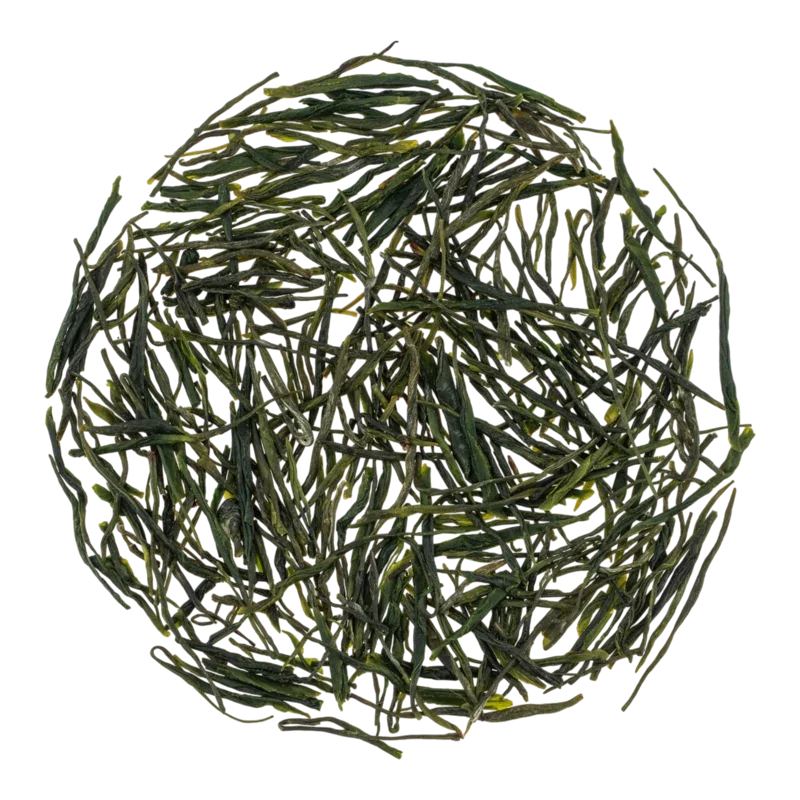
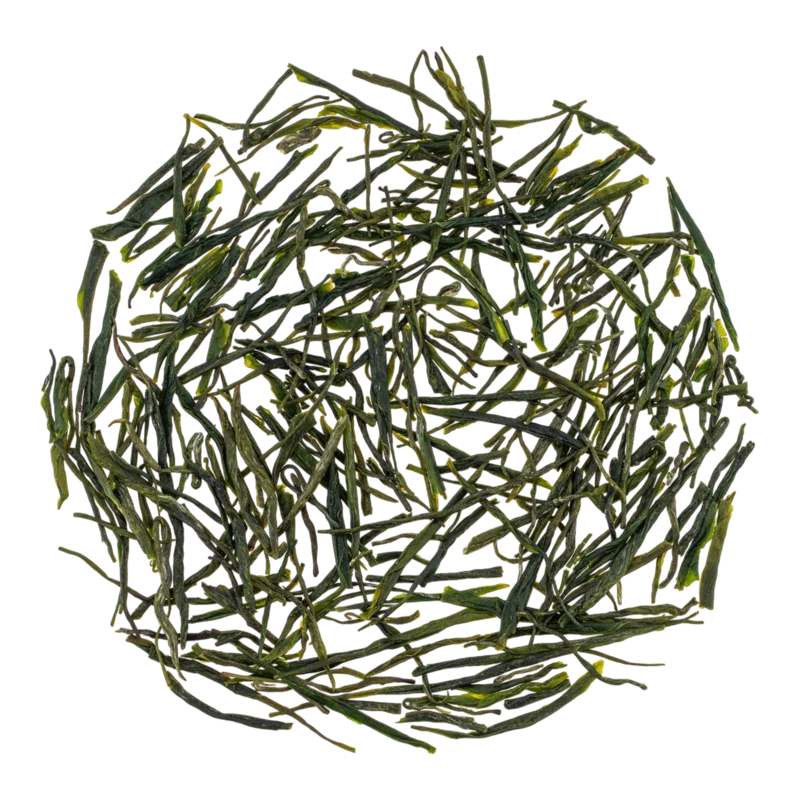
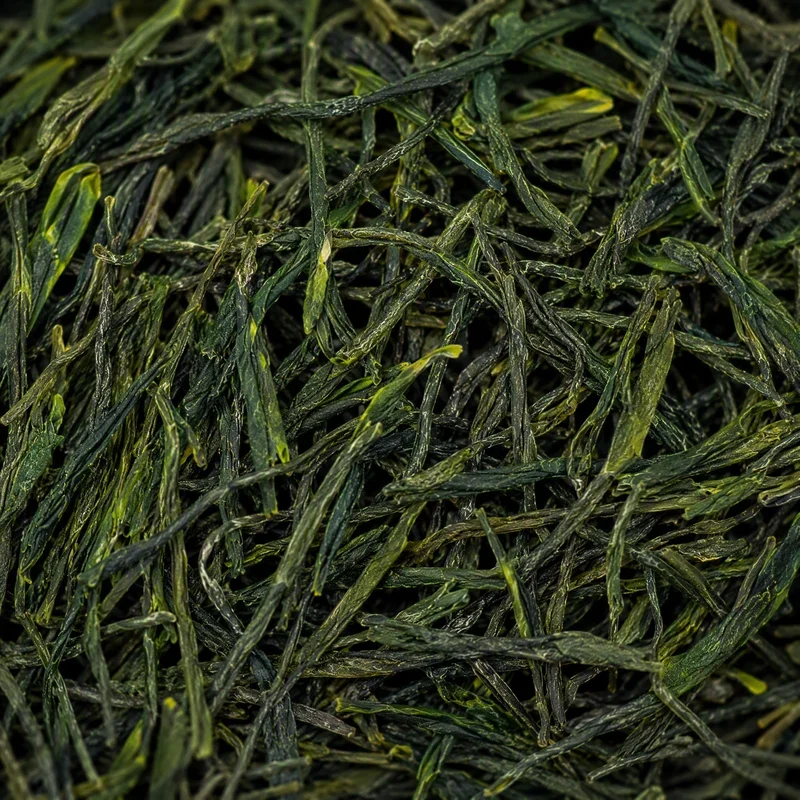
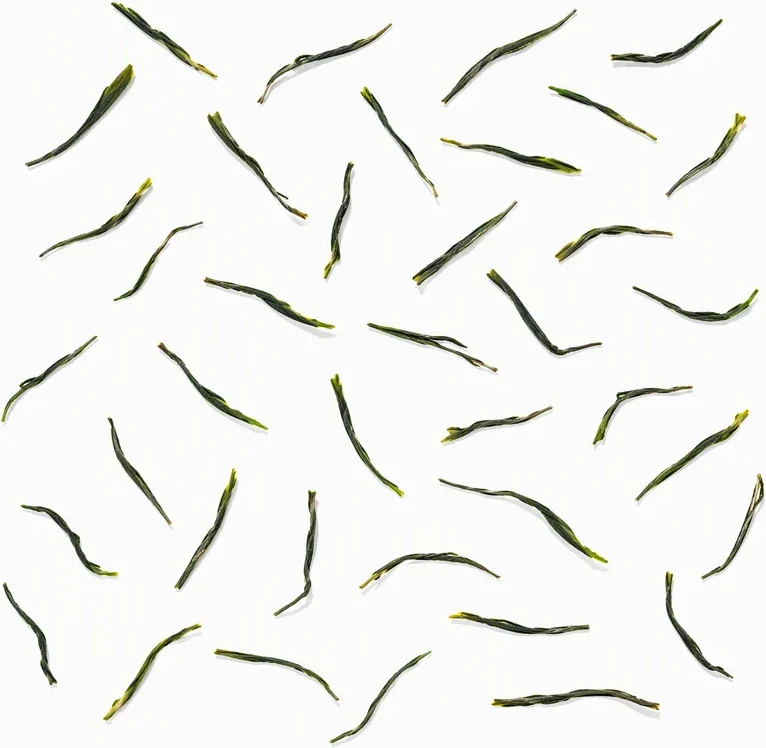
Dry Leaf Appearance: Tea particles are straight, tightly rolled, weighty (紧直重实, jǐnzhí zhòngshí), color — deep green with pronounced oily luster (绿润, lǜrùn) and noticeable silver tips. Shape — straight rod (紧直形, jǐnzhí xíng), high uniformity.
Dry Leaf Aroma: Pronounced chestnut aroma (栗香, lìxiāng) with clean notes of fresh greenery; high-altitude batches have a characteristic "cold aroma" (冷香, lěngxiāng) that reveals itself upon cooling.
Liquor Aroma: Chestnut aroma dominates and persists through many infusions (栗香持久). In the top notes — clean freshness (清香, qīngxiāng) of young green tea. Aroma is high, bright (高香, gāoxiāng), without heaviness and grassy rawness.
Liquor Color: Tender green, bright and clear (嫩绿明亮, nèn lǜ míngliàng), with repeated infusions transitions to yellow-green.
Spent Leaves: Yellow-green, bright (黄绿明亮), buds and leaves whole, even, elastic, with good size uniformity.
Taste: Dense, rich and softly oily (浓醇, nóngchún) — the sensation of tea "body" is above average for green teas. Pronounced freshness and liveliness (鲜爽, xiānshuǎng), due to high amino acid content. Persistent and prolonged sweet aftertaste — huigan (回甘, huígān). Bitterness and astringency are minimal.
Alkaloids: Caffeine (咖啡碱, kāfēi jiǎn), theobromine, theophylline. Caffeine content in high-altitude tea is generally somewhat higher than in lowland analogues, due to a longer vegetation period.
Amino Acids: Free amino acid content — not less than 4.0% (in spring raw material), which is significantly higher than the average indicator for green teas (2.0–3.5%). The main share — L-theanine (L-茶氨酸, L-cháānjīsuān), providing "body sweetness" (甘味) and umami sensation. L-theanine also has a mild sedative-focusing effect, balancing the stimulating effect of caffeine.
Not less than 47.4% — an indicator testifying to high extractability and liquor richness.
Essential Oils: Responsible for chestnut aroma formation; among key volatile compounds — linalool, geraniol, phenylacetaldehyde and pyrazines formed during pan-firing.
Minerals: Potassium, manganese, zinc, fluorine, phosphorus. The presence of purple soils of volcanic origin enriches the tea leaf with microelements.
Polyphenols: Tea polyphenol content in finished product — not less than 25%. Main components — catechins of the EGCG group (epigallocatechin-3-gallate), EGC, ECG. Polyphenols provide antioxidant activity, astringent taste background and form the "body" of the liquor. Compared to lowland green teas, the mountain conditions of Mount Jinfo promote a more pronounced ratio of catechins to amino acids (reduced phenol-amine coefficient), which creates the soft, rich taste without excessive astringency.
Vitamins: Vitamin C (ascorbic acid) — content in fresh green tea leaf is one of the highest among food products, but is partially destroyed during pan-firing. Also present are B-group vitamins (B₁, B₂), vitamin K and vitamin E.
Tea Amount: 3 g per 150 ml (1:50 ratio) for glass method; 5–6 g per 120 ml for gongfu method in gaiwan.
Teaware: Glass tumbler — ideal option for observing the "dance of buds" (芽叶竖立, yáyè shùlì): tender buds stand vertically in water, creating a spectacular picture. White porcelain gaiwan — for aroma development and infusion time control. Yixing teapot — acceptable, but may "absorb" delicate top aroma notes.
Water Temperature: 80–85°C for standard glass brewing; 85°C for first rinse in gaiwan (gongfu method). Water temperature above 90°C is categorically not recommended — this destroys freshness and provokes excessive bitterness.
Another famous green tea from Chongqing, produced in Yongchuan District. Belongs to the "hongjing" type (烘青, hot air drying), unlike pan-fired Jinfuyucui. Xiuya has a softer, floral-herbaceous aroma, while Jinfuyucui stands out with dense chestnut tone and "heavier body" liquor.
Famous green tea from Henan Province, one of the "ten great teas of China." Maojian is a pan-fired green tea with abundant tips and fresh, slightly beany aroma. Jinfuyucui differs with more pronounced chestnut note and strong, dense taste (浓醇), while Xinyang Maojian tends toward delicacy and lightness.
Classic Sichuan green tea from Mount Mengding, one of China's most ancient named teas. Twisted shape, floral-chestnut aroma. Compared to Mengding Ganlu, Jinfuyucui has a straighter tea particle shape and more pronounced mountain minerality due to the high-altitude terroir of Mount Jinfo's karst massifs.
The only representative of classic steamed (蒸青) green teas in Hubei Province. Yulu has deep green color and pronounced "fresh marine" aroma characteristic of steamed teas, which fundamentally differs from the chestnut, "roasted" profile of Jinfuyucui.
Special grade (特级): 500–1,000 yuan per jin (500 g) — one bud with beginning-to-unfold leaf, high-intensity chestnut aroma, pronounced tips. First grade (一级): 300–500 yuan per jin — one bud with two leaves, clean aroma, bright liquor. Second grade (二级): 100–300 yuan per jin — one bud with three leaves, dense and persistent taste, excellent price-quality ratio. Price depends on harvest time (early spring harvest — most expensive), growing altitude, proportion of manual labor and specific farm.
No reviews yet. Tell us what you think of this tea.
Rate this tea and share your impressions. We review each submission before publishing it.