Brewing
Gongfu brewing
- Water temperature
- 93 °C
- Tea amount
- 5 g
- Water volume
- 100 ml
- First steep
- 10 s
- Time added per infusion
- 5 s
- Infusions
- 4

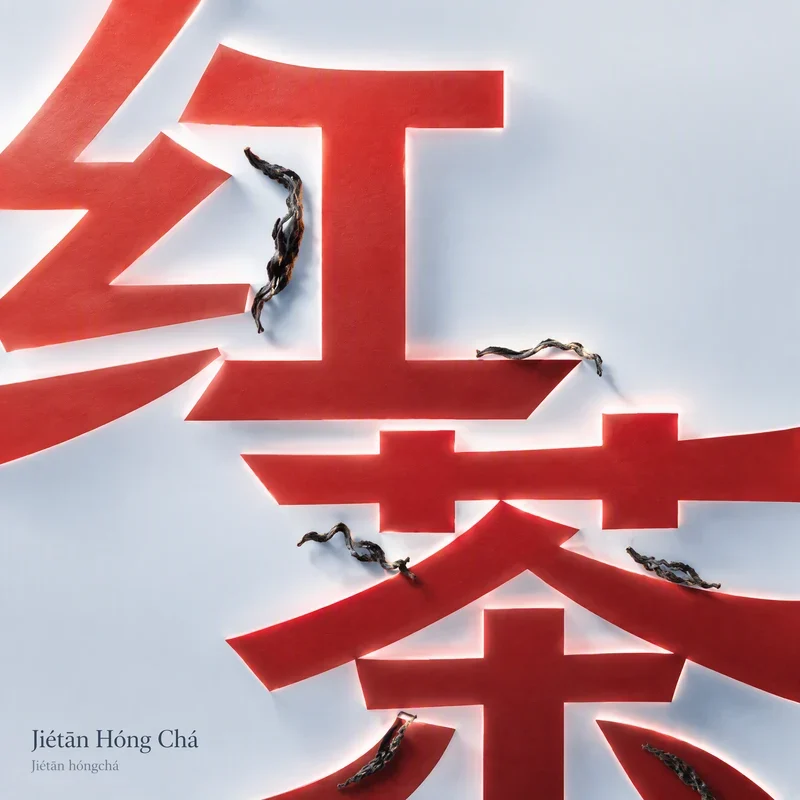
Jiétān hóngchá
Choose a brewing method. Start with the recommended quantities and time, then adjust to taste.
Brewing
Brewing
Taste
Tea encyclopedia
Category: Regional Húnán Gōngfū Hóng chá (湖红工夫, Hú Hóng Gōngfū). Part of the "Jietan Cha" (碣滩茶) product line, protected by geographical indication. Jietan Cha is an umbrella brand including green, red tea (black tea), and dark (hei) teas.
Category: Regional Húnán Gōngfū Hóng chá (湖红工夫, Hú Hóng Gōngfū). Part of the "Jietan Cha" (碣滩茶) product line, protected by geographical indication. Jietan Cha is an umbrella brand including green, red tea (black tea), and dark (hei) teas.
Coordinates: approximately 28°27′ N, 110°24′ E (Jietan Mountain area); tea plantations in the county are located at approximately 28° N latitude—on the so-called "golden belt" of world production of quality green and red tea (black tea).
Origin: China, Húnán Province (湖南省, Húnán Shěng), Huáihuà City (怀化市, Huáihuà Shì), Yuánlíng County (沅陵县). The main production zone is located in the Wǔlíng Mountains (武陵山, Wǔlíng Shān) and Xuěfēng Mountains (雪峰山, Xuěfēng Shān) massifs, on both banks of the Yuán River (沅水) and Yóu River (酉水). The name "Jietan" comes from Jiétān Mountain (碣滩山) on the northern bank of the Yuan River—the historical core of tea production. The character 碣 (jié) means "stone stele," and 滩 (tān) means "river rapids": the name describes rocks standing in the middle of the torrent like stone steles.
Type: Chinese red tea (black tea) (红茶, hóngchá), fully oxidized.
Cultural Significance: Jietan Cha is one of Hunan's most ancient teas, repeatedly included in lists of "Famous Teas of China" (中国名茶). Yuanling is associated with the names of Qu Yuan, Liu Yuxi, Li Bo, Wang Changling, Wang Yangming, and Shen Congwen—all of whom, according to legends, drank local tea. Shen Congwen called Yuanling his "second homeland" and wrote that "the beauty of Yuanling is beauty that makes the heart contract." Jietan Cha is included in the exhibition "Zhongguo Ming Cha Lu" (《中国名茶录》—"Registry of Famous Teas of China"). Modern Yuanling promotes a tea-tourism concept, linking tea plantations, the military-historical fortress Chenlongguan (辰龙关), and the ancient caravan route Tea Horse Road (茶马古道).
History: Yuanling's tea tradition has over 1,800 years of documented history. The Western Jin treatise "Jingzhou Tudi Ji" (《荆州土地记》, ca. 3rd–4th centuries) notes: "Seven counties of Wuling produce tea, and it is the best"—Yuanling was among these seven counties. Eastern Jīn author Pei Yuán (裴渊) in "Kun Yuan Lu" (《坤元录》) mentions Wúshè Mountain (无射山, Wúshè Shān) as a place where "there are many tea trees"; this mountain is located in Yuanling County and in 2016 received the status of "Historic Tea Mountain of China" (中国茶文化历史名山) from the China Tea Marketing Association. Tea sage Lù Yǔ (陆羽, Lù Yǔ) in "The Classic of Tea" (《茶经》, 760s) refers to the same Mount Wushe. According to legend, around 710 CE, a concubine of Emperor Ruìzōng (睿宗, Ruìzōng) named Hú Fèngjiāo (胡凤娇), a native of Yuanling, brought local tea to court; the emperor ordered it to be offered annually as tribute tea (贡茶, gòng chá)—"tribute to the throne." Jietan Cha remained an imperial tribute under the Song, Yuan, Ming, and Qing dynasties. In the Ming era, the tea was called "Chenzhou Jietan Cha" (辰州碣滩茶). During the Republic period (1930s), the county was one of Hunan's leading tea producers: 3.13 万亩 (about 2,100 hectares) of plantations, over 500 tons of annual output; red and green teas were exported through Yangtze River ports. Wars and subsequent social upheavals led to decline; by the 1970s, plantations were practically abandoned. In 1972, Japanese Prime Minister Tanaka Kakuei during his visit to China mentioned the lege
Name Breakdown: 碣 (jié)—"stone stele" (image of a standing rock); 滩 (tān)—"river rapids, shoal"; together "Jietan" describes the characteristic landscape of the Yuan River at Jietan Mountain—rapids in which rocks stick out like stone steles. 红茶 (hóngchá)—"red tea (black tea)." Thus, "Jietan Hong Cha"—"red tea (black tea) from Stone Rapids."
Cultivar: Raw material for Jiétān Hóng Chá is obtained from improved varieties (良种, liángzhǒng) of tea bush Camellia sinensis, adapted to Wuling Mountains conditions. The share of improved varieties in the county exceeds 80%. Tea bushes belong to the Yunnan-Guìzhōu tea complex (云贵茶叶组系), which determines increased content of amino acids, caffeine, and essential oils. Both small-leaf (var. sinensis) and medium-leaf forms are used.
Picking: For red tea (black tea), optimal picking is before Qīngmíng (清明, early April) and in the early spring period; young buds and upper leaves contain maximum aromatic substances.
Pluck Standard: 1 bud + 1–2 young leaves (嫩鲜叶, nèn xiānyè); for highest grades—tender, uniform shoots with minimal leaf blade opening.
Raw Material: Freshly picked leaves must be whole, without mechanical damage; delivery to the factory—immediate.
Altitude: Main plantations—400–600 m, individual plots—up to 800–1,000 m. The main historical tea garden on Jietan Mountain is located at about 100–200 m above sea level, directly above the Yuan River.
Climate: Subtropical monsoon, humid. Average annual temperature—16.6°C; average annual precipitation—1,441 mm; frost-free period—272 days. The Wuqiangxi Reservoir (五强溪水库), formed by a large hydroelectric station, creates a unique reservoir-type microclimate (库区小气候): increased humidity, abundant fogs, and softened daily temperature fluctuations. A local saying goes: "In the height of summer it's cool as autumn here; clouds and fogs roll in waves year-round" (三伏暑天如寒秋,四季云雾泛浪头). Such conditions promote accumulation of amino acids, caffeine, and aromatic oils in the leaves.
Soil: Red (红壤), yellow (黄壤), and unique purple sandy-clay soils (紫色岩土, zǐsè yántǔ)—a rare type for China, occupying several hundred square kilometers in Yuanling. Acidic reaction (pH 4.5–5.5), organic matter ≥ 2%, soil layer depth ≥ 60 cm. Purple soils are especially rich in microelements.
Forest coverage of the county—76.19%. The Wuling and Xuefeng Mountains converge in Yuanling, creating diverse microclimates. The Yuan and You Rivers—historical arteries of the "Maritime Silk Tea Route" (海上丝绸茶路)—permeate the county, maintaining air humidity at levels optimal for tea bushes. Tea gardens are ecologically clean: thanks to natural plant resistance provided by soil richness and absence of industrial pollution, tea bush diseases are rare, pesticides and mineral fertilizers are not used. Yuanling is among the "Ten Leading Ecological Tea-Producing Counties of China" (全国十大生态产茶县).
1 bud + 1–2 leaves, hand or mechanized picking in morning hours, preferably in dry weather.
Fresh leaves are spread in thin layers on bamboo trays or special racks; duration and intensity of withering are regulated depending on humidity and temperature. Criterion: leaves lose turgor, become soft and elastic, moisture content decreases.
Mechanical or hand rolling to break cell walls and bring juice to the surface. A tight, fine twist is formed (条索紧细, tiáosuǒ jǐnxì).
Key stage determining the character of "Jietan Hong." Rolled leaves are placed in controlled conditions (temperature 22–28°C, humidity 90–95%) for 4–6 hours. The uniqueness of the process lies in carefully calibrated degree of oxidation, allowing preservation of floral freshness characteristic of high-mountain Yuanling raw material. Criterion: leaves acquire copper-red hue, bright fruity aroma appears.
Two-stage: primary drying (烘焙) stops oxidation, then repeated drying (复干, fùgān) at gentler temperature stabilizes aroma and reduces moisture to safe storage levels.
Grading by fraction size, removal of coarse stems and non-standard leaves.
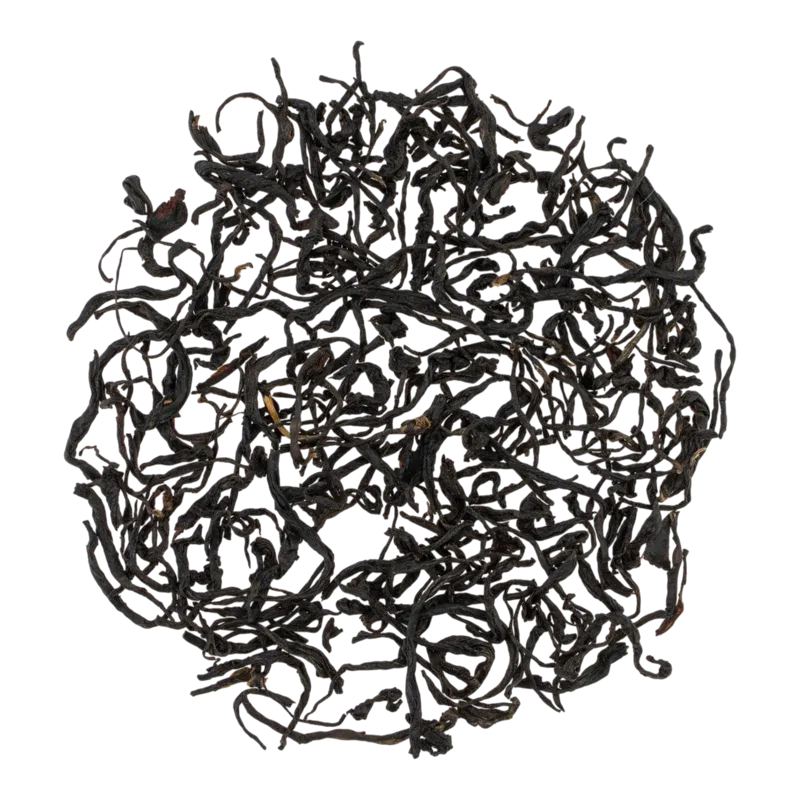
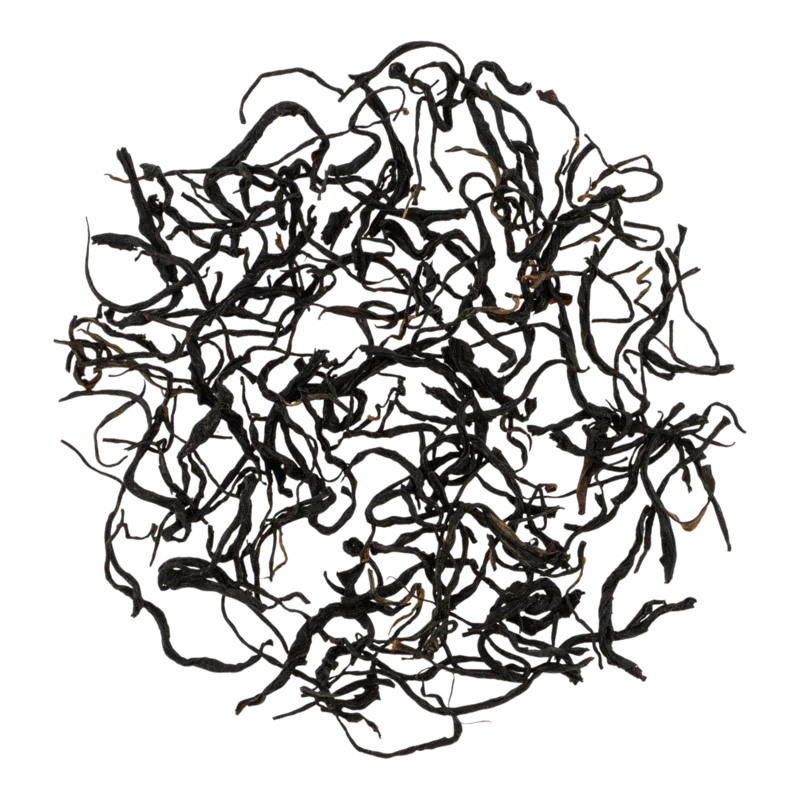
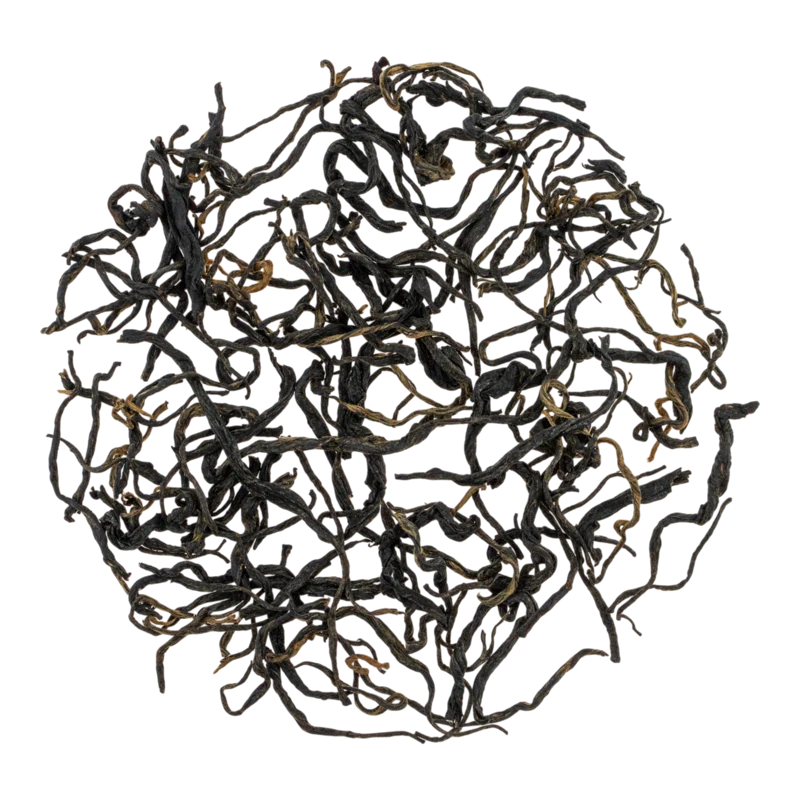
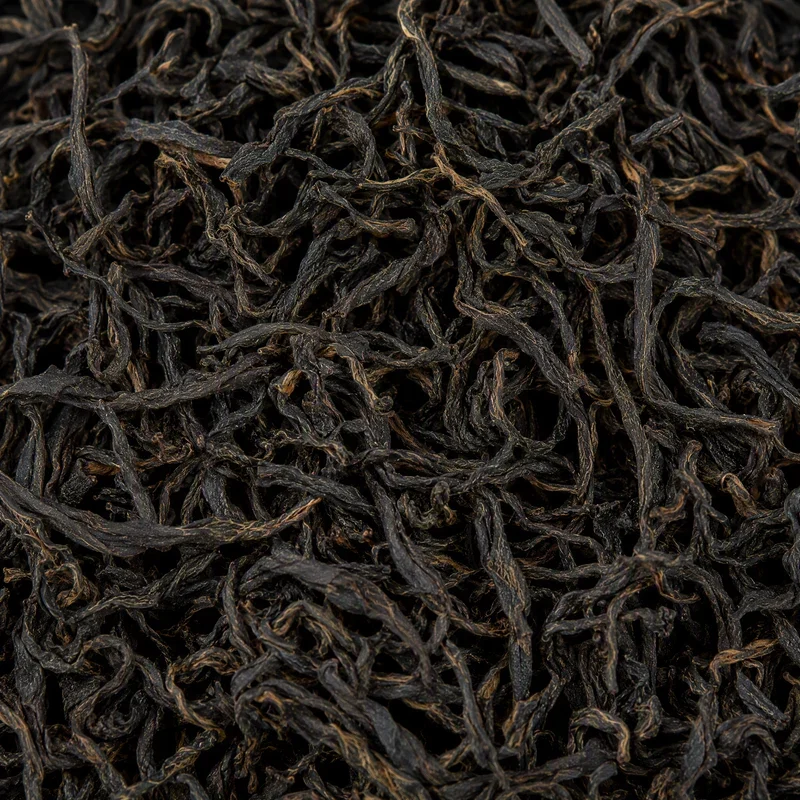
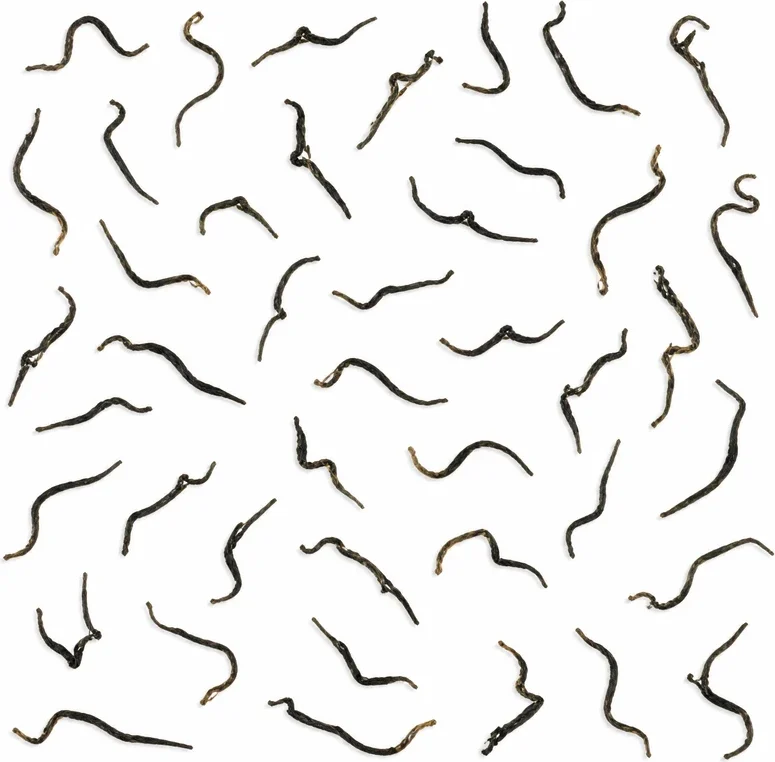
Dry Leaf Appearance: Fine, tight twist (条索紧细); color—dark, with oily luster (色泽乌润, sèzé wūrùn); high uniformity.
Dry Leaf Aroma: Fresh floral-fruity bouquet with honey notes and light bread undertone; characterized by purity and "transparency" of aroma—without heavy or intrusive tones.
Liquor Aroma: Bright, multi-layered: floral notes (orchid, osmanthus), fruity (peach, dried apricot), honey; aroma is described as "芬芳鲜爽" (fēnfāng xiānshuǎng—"fragrant and fresh"). Aromatic persistence—high: aroma is distinctly perceived even at distance from the cup.
Liquor Color: Bright red, clear, with good transparency (汤色红亮, tāngsè hóngliàng); highest grades have pronounced golden rim.
Spent Leaves: Tender, red-copper, evenly colored (叶底细嫩红亮, yèdǐ xìnèn hóngliàng); leaves whole, well-opened.
Taste: Full-bodied (醇厚, chúnhòu), sweet (甘甜, gāntián), with soft fruity juiciness and minimal astringency. Aftertaste—long, with honey "sweet return" (回甘). Absence of bitterness and astringency—distinctive feature due to high amino acid content in raw material.
Alkaloids: Caffeine (2–4% dry weight), theobromine, theophylline. Synergy with L-theanine gives mild tonic effect.
Amino Acids: Increased L-theanine content (due to high-mountain foggy climate and purple soils). L-theanine provides the sweetness without sugariness characteristic of Jietan Hong and soft "velvety" taste character.
Linalool, geraniol, nerolidol, β-ionone—form bright floral-fruity aroma. Feature of Jietan raw material—unusually high concentration of aromatic oils, giving tea "distant aroma" (远香): property where scent is perceived more vividly at distance from the cup.
Minerals: Zinc, manganese, selenium, potassium, iron—reflect mineral richness of purple soils.
Polyphenols: Total polyphenol content—moderate (lower than lowland red teas (black teas)), with emphasis on theaflavins (TF) and thearubigins (TR), providing clean red color and soft texture. High TF/TR ratio determines "liveliness" and transparency of liquor.
Vitamins: Vitamin C (partially preserved during gentle two-stage drying), B vitamins, vitamin K.
Tea Amount: 4–5 g per 100–120 ml (gongfu); 2–3 g per 200–250 ml (steeping in cup).
Teaware: White porcelain gàiwǎn (盖碗) 100–120 ml—best choice for revealing floral aroma; porcelain teapot; glass teapot (for visual enjoyment of liquor color).
Water Temperature: 90–95°C for standard batches; 85–90°C for delicate bud grades.
General name for Hunan gongfu hong cha, historically produced in Anhua, Taoyuan, Linxiang, and other areas. Jietan Hong is a regional variety of Hu Hong Gongfu, distinguished by brighter floral aroma and softer, less "smoky" character, due to unique terroir (purple soils, reservoir microclimate).
Red version of the celebrated yellow tea from Dongting Lake. Possesses brighter "tippy" sweetness and honey character, while Jietan Hong is more full-bodied, with pronounced floral profile.
Anhui standard of gongfu hong cha with characteristic "Qimen aroma" (祁门香)—complex tone of orchid and dried fruits. Compared to Qi Men, Jietan Hong possesses fresher, more "open" aroma with fruity brightness and less pronounced dried fruit note.
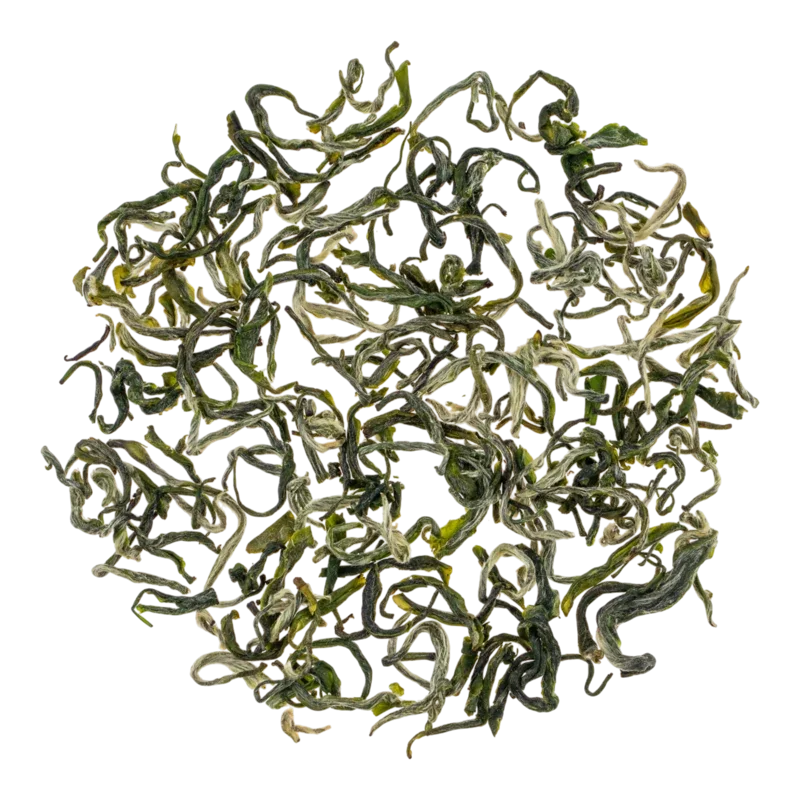
Green version of the same brand—curly green tea with characteristic chestnut aroma and sweet taste. Both teas use the same raw material from Wuling Mountains, but full oxidation technology radically changes the profile: green version—fresh, crisp, grassy-chestnut; red—warm, honey-floral, velvety.
No reviews yet. Tell us what you think of this tea.
Rate this tea and share your impressions. We review each submission before publishing it.