Brewing
Gongfu brewing
- Water temperature
- 75 °C
- Tea amount
- 5 g
- Water volume
- 100 ml
- First steep
- 10 s
- Time added per infusion
- 5 s
- Infusions
- 3

Jiāngshān lǜ mǔ dān
Choose a brewing method. Start with the recommended quantities and time, then adjust to taste.
Brewing
Brewing
Taste
Tea encyclopedia
Category: Historical famous teas of China. Product with geographical indication protection (原产地域产品保护, 2004; 国家农产品地理标志, 2021).
Category: Historical famous teas of China. Product with geographical indication protection (原产地域产品保护, 2004; 国家农产品地理标志, 2021).
Coordinates: approximately 28°44′ N, 118°37′ E (center of Jiangshan County). Tea gardens of the core zone are concentrated in Peijiadi Village (裴家地村) of Bao'an Township (保安乡) and in Zhoucun Village (周村村) of Nianbadu Town (廿八都镇) — in the high-altitude belt of primeval forests of the Xianxia Ridge.
Origin: China, Zhèjiāng Province (浙江省, Zhèjiāng Shěng), Jiāngshān City (江山市, Jiāngshān Shì), part of Qúzhōu Prefecture (衢州市, Qúzhōu Shì). Jiangshan is located at the junction of three provinces — Zhejiang, Fujian, and Jiangxi, at the northern foothills of the Xiānxiá Ridge (仙霞岭, Xiānxiá Lǐng).
Type: Green tea (绿茶, lǜchá), non-oxidized. Subtype — curled pan-fired green tea (卷曲形炒青绿茶).
Cultural Significance: Jiangshan Lü Mu Dan is the "calling card" of Jiangshan County and one of the symbols of the tea tradition of western Zhejiang. The poetic correspondence of Su Shi and his friends, who praised the tea of Xianxia Ridge, entered the Chinese literary history of tea. The imperial award of the Ming era and the status of "tribute tea" strengthened this tea's reputation at the national level. Today, Lü Mu Dan is part of the living tea heritage of Zhejiang and one of the regional representatives of traditional Chinese green teas.
History: The origins of tea production in the Jiangshan area can be traced back to the Tang dynasty (618–907). Lù Yǔ (陆羽, Lù Yǔ) in "The Classic of Tea" (《茶经》, Chájīng) mentions the territory of Xūjiāng (须江, Xūjiāng) — the ancient name for Jiangshan — among the tea regions of western Zhejiang. During the Northern Song dynasty (960–1127), poet Sū Shì (苏轼, Sū Shì), who served as prefect of Hangzhou, received tea from the Xiānxiá Mountains as a gift from his friend and fellow countryman Máo Pán (毛滂, Máo Pāng) from Jiangshan and spoke enthusiastically about it, calling it "奇茗极精" — "extraordinary tea, perfect to the utmost." During the Ming dynasty, in the Zhengde period (正德, 1506–1521), Emperor Zhú Houzhao (朱厚照) during an inspection tour of Jiangnan tasted tea from Xianxia Ridge, gave it the name "Lüming" (绿茗, Lǜmíng) and ordered its inclusion in the registry of imperial tribute teas (贡茶, gòngchá). During the Qing dynasty, in the 12th year of the Tóngzhì reign (同治, 1873), the "Gazetteer of Jiangshan County" (《江山县志》) contains detailed records of harvesting and processing technology. In 1980, county specialists restored the historical production technology, and in 1982 at the famous tea competition in Changsha, Jiangshan Lü Mu Dan took second place among the ten best teas in the country. In 2004, the State Administration for Quality Supervision granted the tea protected designation of origin status. In 2021, state registration of geographical indication for agricultural products was obtaine
Name Breakdown: 江山 (Jiāngshān) — "Jiangshan," the name of the county; 绿 (lǜ) — "green," indicating the rich emerald color; 牡丹 (mǔdān) — "tree peony," a metaphor for the form of leaves unfolding in water, resembling peony petals. The ancient name 仙霞化龙 (Xiānxiá Huà Lóng, "transforming dragon of Xianxia Ridge") emphasizes the connection with the mountain range and the poetics of leaf movement in the cup.
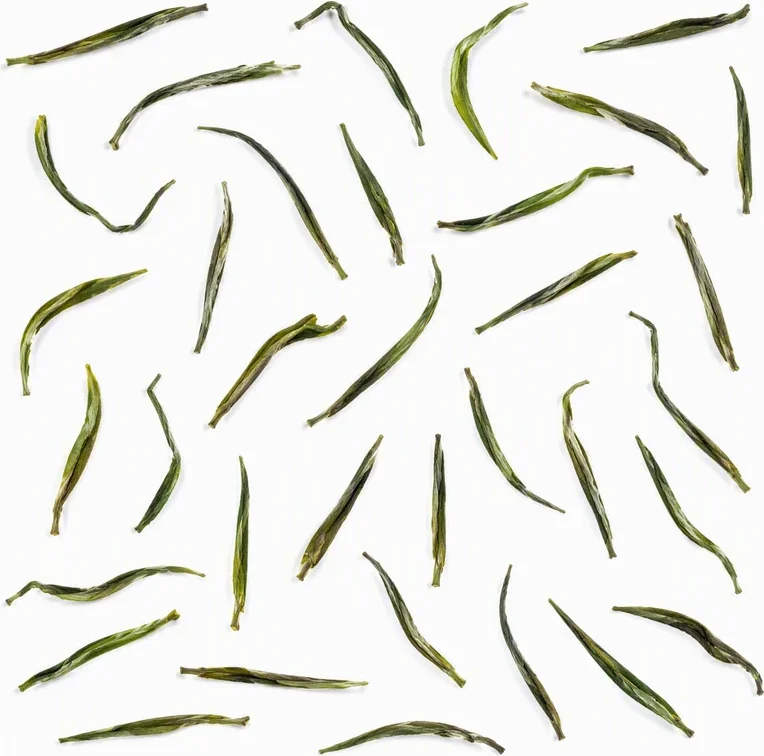
For special grade (特级, tèjí) — complete bud or bud with one just beginning to unfold leaf; for first grade — bud with one unfolded leaf; for second grade — bud with two beginning to unfold leaves. The bud must be longer than the leaf.
Cultivar: The main cultivar is the Jiāngshān local population variety (江山本地群体种, Jiāngshān běndì qúntǐ zhǒng), belonging to the medium-leaf type (Camellia sinensis var. sinensis). Additionally used are the selected varieties Yíngshuāng (迎霜, Yíngshuāng) and Longjing 43 (龙井43, Lóngjǐng 43). In the core zone of Peijiadi Village grow old tea trees over 150 years old, distinguished by thick, fleshy leaf blades with enhanced ability to maintain tenderness (持嫩性).
Picking: Spring harvest: begins before the Qīngmíng festival (清明, Qīngmíng, usually early April) and concludes after Gǔyǔ (谷雨, Gǔyǔ, late April). Highest quality comes from tea picked before Qīngmíng (明前茶, míngqián chá).
Raw Material: Harvesting in rain and dew is not permitted; thin and weakened shoots, pest-damaged leaves, and shoots with purple coloration are not collected. Raw material must be uniform, fresh, without foreign odors.
Altitude: 500–800 m above sea level. The best raw material comes from high-altitude areas near primeval forests.
Soil: Acidic red-yellow soils (红黄壤, hónghuáng rǎng), formed by weathering of granitic rocks. Soil pH — 4.5–5.5. Potassium content — up to 206.6 mg/kg, organic matter — ≥ 2.5%. Soils are well-drained and rich in minerals, which favors the formation of the tea's rich aromatic profile.
Jiangshan County is located in the subtropical humid monsoon climate zone. Average annual temperature — 17.3 °C, annual precipitation — about 1700 mm, relative humidity — over 80%. The core production zone is located on the northern slope of the Xiānxiá Ridge (仙霞岭), where tea gardens are year-round shrouded in mists and clouds, providing diffused lighting and gentle temperature fluctuations.
High cloudiness and mistiness (the term "cloud mist" — 云雾, yúnwù — traditionally indicates high-altitude tea origin) creates ideal conditions for accumulating amino acids and aromatic compounds that give the tea sweetness, tenderness, and complex bouquet. The territory of all Jiangshan County encompasses 19 townships and towns where tea production is conducted; forest coverage in the core zone reaches 80%, providing natural shading, biodiversity, and minimal need for pesticides. Mountain topography with elevation differences from 150 to 1500 m forms a microclimatic mosaic where each plot produces tea with its own character.
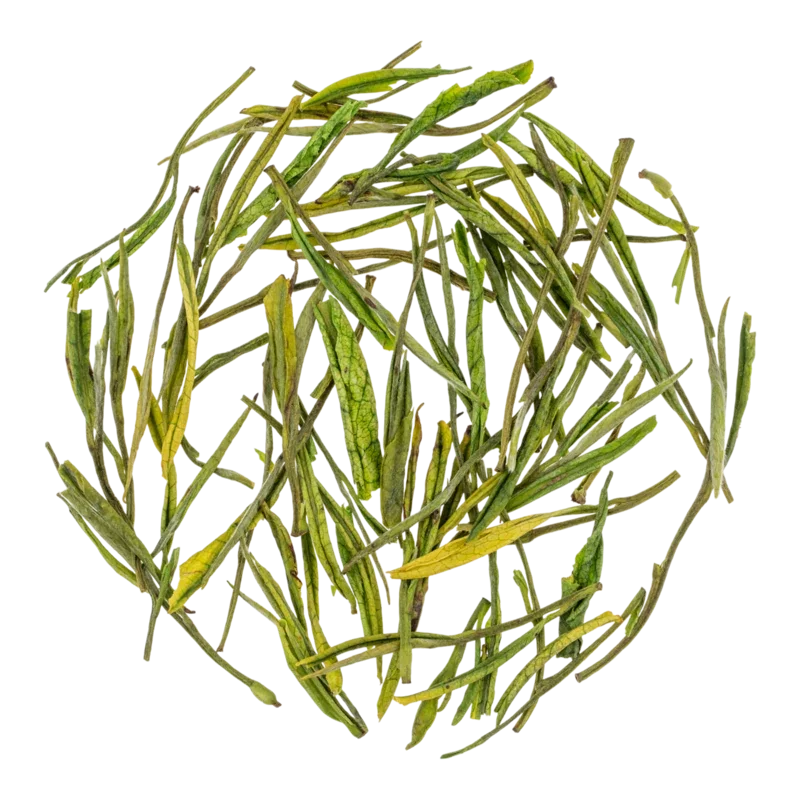
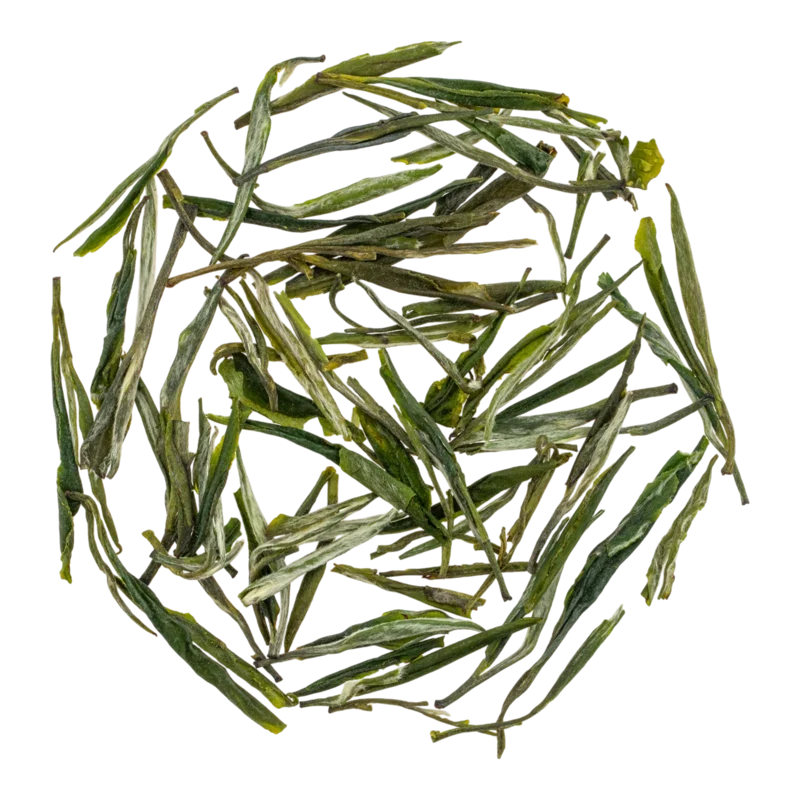
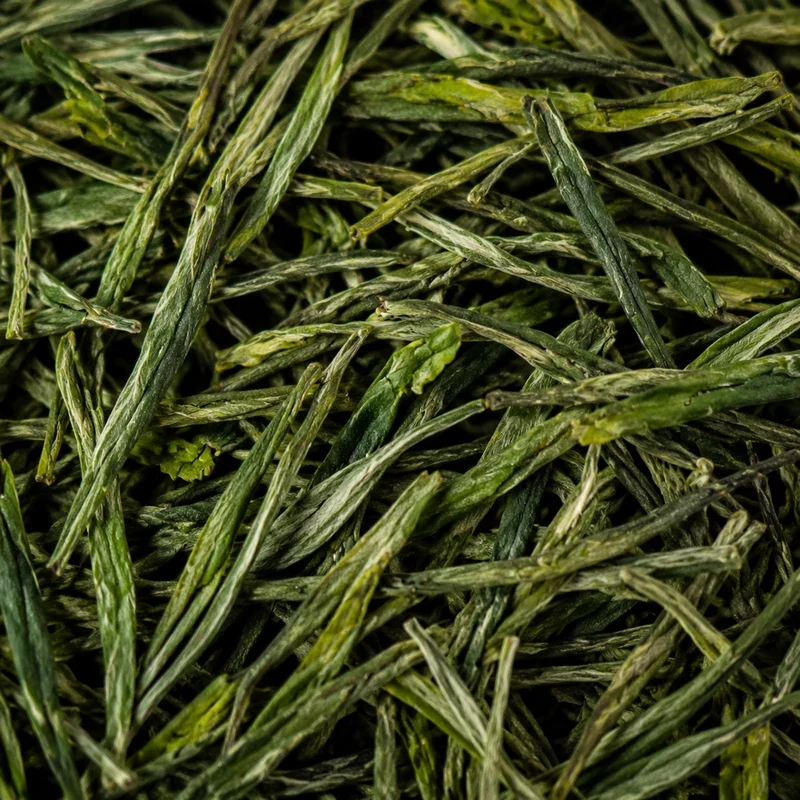
Dry Leaf Appearance: Curled form resembling flower petals that naturally unfold in the cup. Color — rich dark green with oily luster. Highest grade tea has a pronounced "white peony" structure — abundant silvery down resembling miniature petals. Bud length for special grade — no more than 2.5 cm.
Dry Leaf Aroma: Bright chestnut aroma (板栗香, bǎnlì xiāng) — the main note; delicate floral overtones reminiscent of orchid create a "high-mountain melody" (高山韵, gāoshān yùn). The aroma is deep, clean, without grassy or musty notes.
Liquor Aroma: Rich, voluminous chestnut aroma with a light floral veil. A characteristic feature — the aroma persists in the cooled cup (cold cup aroma) for more than 30 minutes.
Liquor Color: Delicate emerald green, clear and transparent, with pronounced luster.
Spent Leaves: Tender, elastic leaves — green, uniform, whole; in the cup they unfold like peony petals. Quality tea floats and "blooms" in the water column; low-quality tea sinks to the bottom and does not unfold.
Taste: Bright freshness (鲜爽, xiānshuǎng), due to high amino acid content (≥ 2.8%); dense, rich body (醇厚, chúnhòu) thanks to polyphenols (≥ 25.6%); prolonged, pronounced sweet aftertaste (回甘, huígān), smoothly transitioning to a sensation of freshness in the mouth.
Alkaloids: Caffeine (approximately 2.5–3.5%), theobromine and theophylline — provide tonic effect and bitter background that balances amino acid sweetness.
Amino Acids: Free amino acid content — ≥ 2.8%. L-theanine forms characteristic "umami" sweetness and enhances the sensation of freshness, and also provides mild relaxing and concentrating effects.
Essential Oils: Responsible for forming chestnut and floral notes; their profile is formed by high-altitude terroir and traditional charcoal drying.
Minerals: Potassium (content in soils — up to 206.6 mg/kg, which is reflected in the mineral composition of leaves), manganese, zinc, selenium in trace amounts.
Polyphenols: Tea polyphenol content — ≥ 25.6%. Catechins (especially EGCG, EGC, ECG) — key antioxidant group; by some estimates, their ability to neutralize free radicals exceeds vitamin E effectiveness by 18 times.
Vitamins: Vitamin C (in fresh raw material — up to 200 mg/100 g), B vitamins, vitamin K, β-carotene (content — 0.24 mg/kg, which supports vision).
Tea Amount: 3 g per 150 ml water (1:50 ratio) for glass brewing. For gongfu method — 5–6 g per 120 ml.
Teaware: Clear glass tumbler — ideal option, allowing observation of "peony blooming" (牡丹绽放, mǔdān zhànfàng) as leaves unfold. White porcelain gaiwan — universal alternative. Yixing teapot not recommended — porous clay may muffle delicate aroma.
Water Temperature: 85 °C — optimal for revealing chestnut aroma and preserving freshness. When reduced to 70 °C, the sensation of freshness (鲜爽) is enhanced, but aroma depth is lost.
Shelf Life: New tea (新茶, xīnchá) recommended for consumption within one month for maximum freshness. In airtight packaging in refrigerator — up to 12 months without significant quality loss. After opening — within 2–4 weeks.
Airtight packaging (vacuum or in zip-lock bags placed in opaque containers with tight lids). Protection from foreign odors, direct light, and moisture — three main enemies of green tea.
Temperature: Optimally 0–5 °C (refrigerator) for long-term storage. Before opening, allow package to warm to room temperature (15–20 minutes while closed) — this prevents moisture condensation on cold tea leaves.
Flat pan-fired tea with "beany" aroma and delicate sweetness. Unlike Lü Mu Dan, has flat rather than curled form; aroma is more "grassy" with less pronounced chestnut overtone. Long Jing lacks the "blooming" effect in the cup.
Needle-shaped green tea with straight form resembling pine needles. Compared to Lü Mu Dan — simpler aromatic profile, less pronounced aftertaste, and absence of "peony" visual effect.
Green tea with anomalously high amino acid content (up to 6–12%) and characteristic whitish coloration of shoots. Compared to Lü Mu Dan — taste is more "sweet" and less "dense," aroma is rather "fresh" and "corn-like" than chestnut. Leaf form — straight and flat.
Historical green tea from neighboring Jinhua (Zhejiang), included among 44 national intangible heritages. Distinguished by more compact rolling and less pronounced floral note compared to Lü Mu Dan.
Large-leaf flat green tea from Anhui with orchid aroma. Diametrically opposite in form (long flat leaf vs. curled "flower"), but comparable in aroma depth and aftertaste duration.
Special grade (特级) — from 3,000 yuan per jin (500 g) and higher; second grade — about 200 yuan per jin. Price depends on grade, growing altitude, harvest time (before or after Qingming), and amount of manual labor.
Price Factors: High-altitude origin, "before Qingming" season, exclusively hand picking and double rolling, use of raw material from old Peijiadi trees — all increase the cost of highest grades.
No reviews yet. Tell us what you think of this tea.
Rate this tea and share your impressions. We review each submission before publishing it.