Brewing
Gongfu brewing
- Water temperature
- 75 °C
- Tea amount
- 5 g
- Water volume
- 100 ml
- First steep
- 10 s
- Time added per infusion
- 5 s
- Infusions
- 3

gǔláochá
Choose a brewing method. Start with the recommended quantities and time, then adjust to taste.
Brewing
Brewing
Taste
Tea encyclopedia
Category: Historical famous tea of Guǎngdōng (广东历史名茶). Geographical indication product of the PRC (国家地理标志保护产品, 2015). Intangible cultural heritage (非物质文化遗产) — production technology. One of three famous teas of Heshan (alongside Baishuida Tea and Ma'ershan Tea). Representative of Lǐngnán tea culture (岭南茶文化).
Category: Historical famous tea of Guǎngdōng (广东历史名茶). Geographical indication product of the PRC (国家地理标志保护产品, 2015). Intangible cultural heritage (非物质文化遗产) — production technology. One of three famous teas of Heshan (alongside Baishuida Tea and Ma'ershan Tea). Representative of Lǐngnán tea culture (岭南茶文化).
Coordinates: Approximately 22°46′ North latitude, 112°52′ East longitude.
Origin: China, Guǎngdōng Province (广东省, Guǎngdōng Shěng), Jiāngmén City (江门市, Jiāngmén Shì), Hèshān City district (鹤山市, Hèshān Shì), Gǔláo Town (古劳镇, Gǔláo Zhèn). Tea gardens are located on low hills (200–500 m) northwest of the town: Líshuǐ (丽水), Cháshān (茶山), Maishui (麦水), Xialu (下陆). To the west — Dayunwu Mountains (大云雾山), to the south — Gǔdōu Mountains (古兜山).
Type: Green tea (绿茶, lǜchá), unfermented. Belongs to pan-fired green teas (炒青绿茶, chǎoqīng lǜchá) with characteristic ultra-high-temperature final roasting (高火滚炒). The premium "Yinzhen" grade has needle-like form; the "Gulaocha" grade (劈蕊) has strip form.
Cultural Significance: Gǔláochá is a symbol of Hakka (客家) tea culture in Guangdong. The Hakka are a migrant people carrying within themselves longing for abandoned lands; and Gulao tea, according to locals, is "full of the same deep and distant homesickness as the Hakka themselves." Yuan dynasty Yelü Chucai (耶律楚材, 1190–1244), famous advisor to Genghis Khan, dedicated a quatrain to Lingnan tea: "A noble person gifted me Lingnan tea, / Tasted — flying flowers, snow buried the cart, / Three cups of jade crumbs — from the tenderest shoots, / Green banner, one leaf — from freshly ground buds" (高人惠我岭南茶,烂尝飞花雪没车,玉屑三瓯烹嫩蕊,青旗一叶碾新芽). In the Qing era, a folk song circulated: "Want to live well — marry into Lishui" (真好采,嫁丽水) — a hint at the prosperity of tea villages.
History: Gulaocha is one of Guangdong's most ancient teas with a history spanning 700+ years (according to some versions — up to 1600 years).
Cultivar: Traditional varieties — local populations of Camellia sinensis var. sinensis, subdivided into two types:
Picking: Strict seasonal differentiation:
Altitude: 200–500 m. Maximum point — "Gaoaoding" (高凹顶), ~500 m. Low in absolute values, but constant mists and river evaporation compensate for lack of altitude.
Climate: Subtropical monsoon, modified by proximity to the Xi River. Average annual temperature — 21.8°C. Frost-free period — practically year-round. Annual precipitation — ~1800 mm. Evaporation from the Xi River surface creates constant mist and high humidity (80%+), forming on low hills (200–500 m) the effect of "high-mountain climate in lowlands" (丘陵上的高山气候环境).
Soil: Acidic yellow soils (酸性黄壤), deep and fertile, rich in organics and minerals. Especially valued are soils of the Shiyantou area (石岩头) — rocky (石岩), imparting to tea the so-called "rock rhyme" (岩韵) — mineral undertone comparable to Wuyi oolongs.
Traditional shade-growing system — tea rows are interspersed with "yinshu" trees (楹树, legumes), creating diffused shade. Soil is covered with grass (草覆保湿), preserving moisture.
4–6 hours. Gentle withering.
Pan-firing at 180–200°C using the "tossing" method (扬炒, yáng chǎo). Rapid enzyme inactivation.
Light hand-rolling into strips.
Pan-firing at ~60°C to fix shape. Double rolling-shaping (二次揉捻塑形).
Slow drying over low heat (文火) to moisture content <5%.
Key final stage determining the "fire-flower" character of Gulaocha. Tea is placed in a heated drum at 300°C and above and quickly rolled until the characteristic caramel-burnt-floral aroma appears. Readiness criterion: "leaf when rubbed between fingers crumbles to powder" — exactly as described in the ancient treatise "Tongjun Lu" (《桐君录》): "Take [tea], turning into powder for drinking" (取为屑茶饮). The entire process is exclusively manual, takes ~5 hours per 1 jin of finished tea.
Triple cycle of drying and "aroma lifting" for maximum aromatic stability. Cold cup retains aroma for more than 30 minutes.
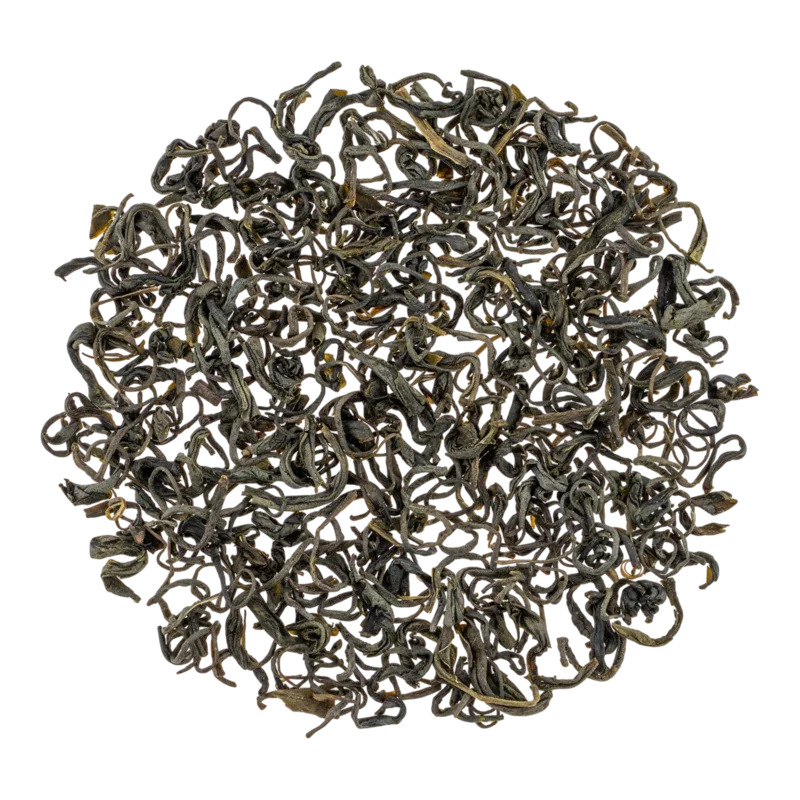
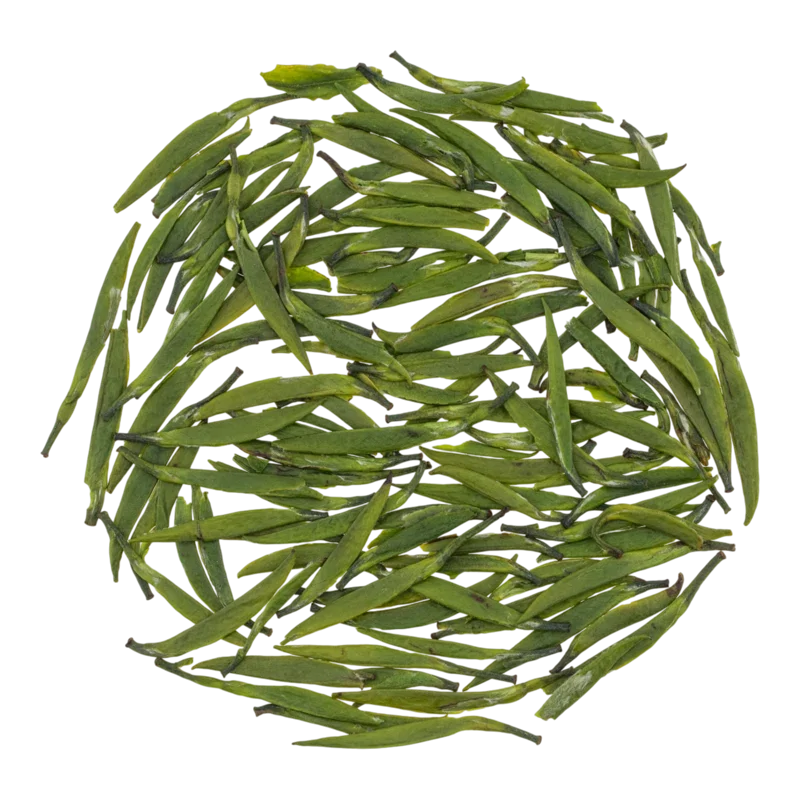
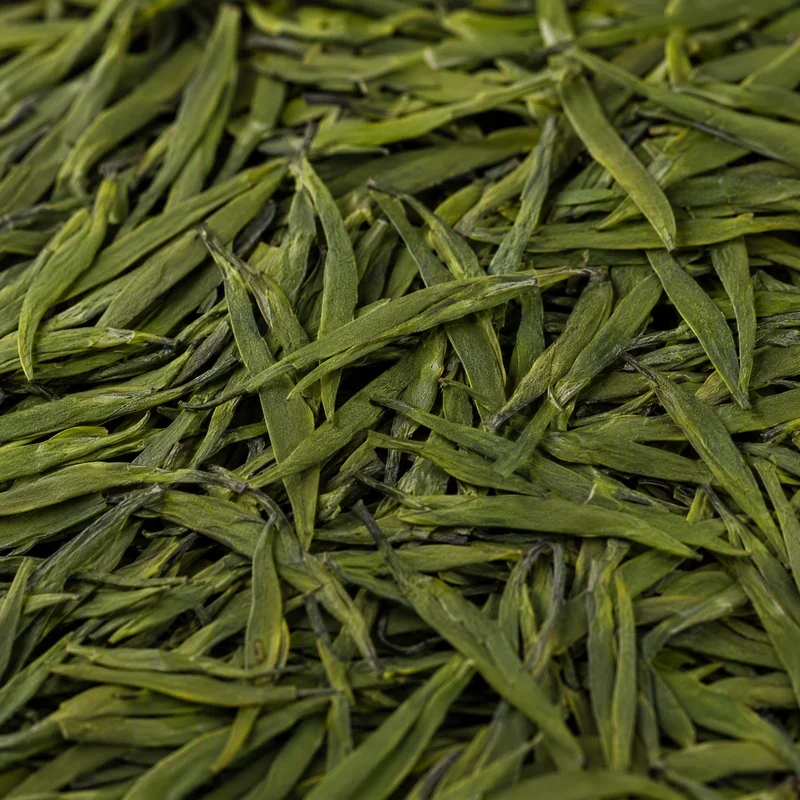
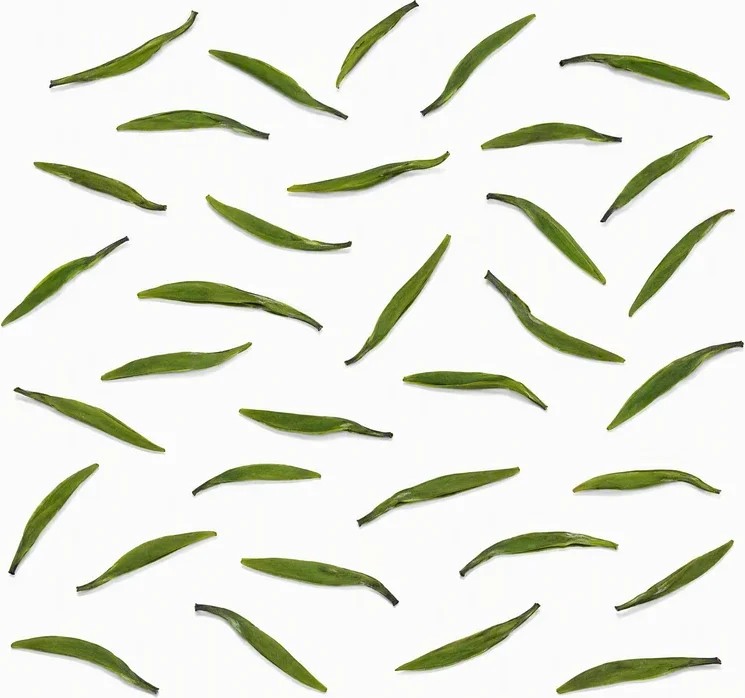
Dry Leaf Appearance: Depends on grade. Yínzhēn (雀舌茶): straight, dense "needles," silvery-gray with abundant down. Douchi Li: round, hook-shaped grains, dark green with light down. Pirui: dense strips, green-brown color.
Dry Leaf Aroma: "Fire-flower" (火花香) — unique combination of caramel sweetness, orchid floral tone, and chestnut warmth. Cold cup retains aroma for more than 30 minutes.
Liquor Aroma: High, pure, persistent. "First infusion — fire's heat, second — sugar fragrance, third — spirit at peace, fourth — taste still pure" (头泡火气味,二泡糖香生,三泡神怡然,再泡味尚醇).
Liquor Color: Green, bright and clear (绿而明亮) — for "Yinzhen."
Spent Leaves: Tender green, whole, uniform.
Taste: Soft, sweet, without sharp bitterness (醇和回甘). Medium body. Returning sweetness — prolonged and building. In the best batches — mineral "rock" undertone (岩韵) reminiscent of Wuyi oolongs — echo of the rocky soils of Shiyantou.
Amino Acids: 6–9% — exceptionally high indicator, explaining the honey sweetness and "juiciness" of taste.
Moderate content.
Minerals: K, Mg, Zn, Mn. Shiyantou soils are enriched with trace elements from rocky substrates.
Polyphenols: 25–30%. Provide antioxidant potential.
Vitamins: Vitamin C, B-group vitamins.
Polyphenols 25–30%.
Caffeine + L-theanine — gentle alertness.
Especially valuable in Guangdong's hot and humid climate.
Traditionally Gulaocha is drunk after fatty Cantonese cuisine to improve digestion.
Polyphenols promote normalization of lipid metabolism.
Tea Amount: 3 g per 150 ml.
Teaware: Glass tumbler (for observing silvery "needles") or porcelain gaiwan.
Water Temperature: 80–85°C. For premium grade "Yinzhen" — 85°C (to reveal "fire-flower" aroma without excessive bitterness).
Also from Guangdong, high-altitude. Guluocha — lowland (22 m), with ultra-high temperature roasting (300°C).
Guangdong. Large-leaf (var. assamica). Guluocha — small-leaf (var. sinensis), but with "fire" technology close to oolongs.
Guangdong. Hakka "high-fire" tea. Similar philosophy of "fire," but Guluocha — even more extreme (300°C vs ~200°C for Kanghe).
Price Category: Upper segment of Guangdong green teas. Premium grade "Cuiyan Yinzhen" (翠岩银针, "Emerald Rock Silver Needle") from Lishui — from 880 yuan per 50 g (!). First grade "Douchi Li" — ~260 yuan per 100 g. Mass-market "Pirui" — more affordable.
No reviews yet. Tell us what you think of this tea.
Rate this tea and share your impressions. We review each submission before publishing it.