Brewing
Gongfu brewing
- Water temperature
- 93 °C
- Tea amount
- 5 g
- Water volume
- 100 ml
- First steep
- 10 s
- Time added per infusion
- 5 s
- Infusions
- 4

Fújiàn gāo shān hóngchá
Choose a brewing method. Start with the recommended quantities and time, then adjust to taste.
Brewing
Brewing
Taste
Tea encyclopedia
Category: Modern artisanal high-mountain red tea (black tea).
Category: Modern artisanal high-mountain red tea (black tea).
Coordinates: Approximately 25°05′ N, 117°01′ E (central part of Longyan Prefecture; specific tea gardens are located in mountainous areas northwest of the city).
Origin: China, Fújiàn Province (福建省, Fújiàn Shěng), Longyan Prefecture-level City (龙岩市, Lóngyán Shì). Plantations are located in mountainous areas at elevations exceeding 1500 meters above sea level, in zones adjacent to the southwestern spurs of the Wǔyí Mountain Range (武夷山脉, Wǔyí Shānmài).
Type: Red tea (black tea) (红茶, hóngchá) — fully oxidized (oxidation degree approximately 80%). According to European classification, corresponds to black tea. Belongs to the category of Gōngfu Hóngchá (工夫红茶, Gōngfu Hóngchá) — "red teas of high craftsmanship," requiring meticulous, skillful processing of raw material.
Fujian Gaoshan Hongcha — rare example of tea in which Taiwanese selection (Jinxuan cultivar) meets Fujian craftsmanship of Gongfu Hongcha processing. The cultivar, made famous by oolongs with milky aroma, in the role of red tea acquires completely different character — chocolate-fruity with silky texture.
The names "Orange Pekoe" and "Black Tea," which Europeans used to designate Chinese red teas from the 17th century, arose precisely thanks to Fujian teas. Dutch merchants, who first delivered red tea to Europe around 1610, called it "Bohea" (from dialectal pronunciation of "Wuyi"), and the term "Orange Pekoe" according to one version is connected to the Orange Dynasty of the Netherlands.
Plantations at elevations exceeding 1500 m — among the highest for red tea in Fujian Province. For comparison: famous Zhengshan Xiaozhong is produced in the 800–1200 m zone, and Wuyi yancha — at 200–700 m.
Mountain plantations of Longyan Prefecture are located far from industrial centers, in ecosystem adjacent to nature reserves. Heavy metal content in tea is significantly below permissible norms of national standards.
Cultural Significance: This tea embodies the modern stage of development of Fujian tea artistry, in which centuries-old traditions of red tea production are enriched by innovative approaches — the use of new generation cultivars and high-mountain terroirs previously not utilized in hongcha production. The combination of Taiwanese selection and Fujian craftsmanship creates a product that fully reflects the philosophy of "the best from both sides of the strait."
History: Fujian Province occupies a unique place in the history of world red tea (black tea) — it was here, in the village of Tóngmùguān (桐木关, Tóngmùguān) in the Wuyi region, during the 16th–17th centuries under the Míng Dynasty (明朝, Míng Cháo), that the world's first red tea was created — Zhèngshān Xiǎozhǒng (正山小种, Zhèng Shān Xiǎo Zhǒng), known in the West as Lapsang Souchong. By the 19th century, Fujian red teas had become the most important export commodity, supplied to Russia through the border town of Kyakhta and to Europe through Canton and Fuzhou. With the development of tea production in India and Ceylon, Fujian gradually lost its dominant position in European markets, however, traditions of producing the highest class red tea have been preserved and continue to develop to this day. The use of the Taiwanese cultivar Jinxuan (TTES No. 12) for red tea production in the high-mountain areas of Longyan is a relatively recent phenomenon of the turn of the 20th–21st centuries, demonstrating active exchange of technologies and varietal material between mainland China and Taiwan.
Cultivar: Jīnxuān (金萱, Jīn Xuān), also known as TTES No. 12 (台茶十二号, Táichá Shí'èr Hào) — a cultivar developed by the Táiwān Tea Research and Extension Station (臺灣省茶業改良場, Táiwān Shěng Cháyè Gǎiliáng Chǎng). Obtained by crossing the Taiwanese variety Yìngzhī Hóngxīn (硬枝红心, Yìng Zhī Hóng Xīn) with Taicha No. 8 (台茶八号, Táichá Bā Hào), representing the Indian Assam line. Officially registered in 1981. Distinguished by large, fleshy leaves with characteristic milky-creamy aroma, high yield and adaptability to various growing conditions.
Picking: Spring harvest (late March — April), the period of highest quality raw material. In high-mountain conditions, spring harvest may shift 2–3 weeks later compared to lowland areas.
Pluck Standard: One bud and two upper young leaves (一芽二叶, yī yá èr yè). Hand-picked.
Raw Material: Due to slowed growth in high-mountain conditions (exceeding 1500 m), tea leaves accumulate increased content of polyphenols (more than 18%) and aromatic compounds, ensuring a rich, multi-layered flavor-aroma profile. Young leaves must be fresh, resilient, without mechanical damage.
Climate: Subtropical monsoon, temperate. Average annual temperature at tea plantation elevation — approximately +16°C. High air humidity and abundant fog (more than 200 days per year) create natural diffused lighting, protecting tea bushes from excessive insolation. Significant diurnal temperature variations (8–12°C) promote accumulation of aromatic substances and amino acids in leaves.
Soil: Acidic (pH 4.0–5.0), mountain podzolic soils on granite foundation, rich in minerals. Good natural drainage.
Exceeding 1500 meters above sea level. Average elevation of Longyan Prefecture territory — approximately 652 m, however tea gardens are located in the upper zones of mountain massifs, where individual peaks reach 1800 m.
Distance from industrial zones and location in the ecosystem of mountain subtropical forests ensure ecological purity of raw material. According to analysis data, cadmium content in tea leaf does not exceed 0.04 mg/kg, which is significantly below permissible norms.
Hand-picking of young flushes of "one bud — two leaves" standard in morning hours after dew has dried.
Picked leaves are spread in thin layers on bamboo trays in ventilated rooms with controlled humidity (approximately 70%) for 10–12 hours. Moisture content in leaves decreases from 75–78% to approximately 60%. Goal — softening of cell walls, beginning of enzymatic processes and formation of aroma precursors.
Leaves are rolled by hand or on mechanical rollers. Goal — destruction of cell membranes, release of cell sap and enzymes necessary for subsequent oxidation. Rolling determines the shape of finished tea leaf — longitudinal, dense.
Key stage distinguishing red tea from other types. Rolled leaves are spread in layers 8–10 cm thick in rooms with controlled conditions: temperature 25–28°C, relative humidity 90–95%. Duration — 3–5 hours, until achieving oxidation degree of approximately 80%. Leaves acquire characteristic reddish-brown shade, theaflavins and thearubigins form, determining liquor color and flavor fullness.
The oxidation process is stopped by rapid drying in special ovens at temperature of approximately 120°C. Moisture content of finished product decreases to 4–5%. At this stage, aroma is fixed and final flavor profile is formed.
Finished tea is sorted, selecting whole, undamaged leaves and buds. Stems, broken leaf and foreign inclusions are removed.
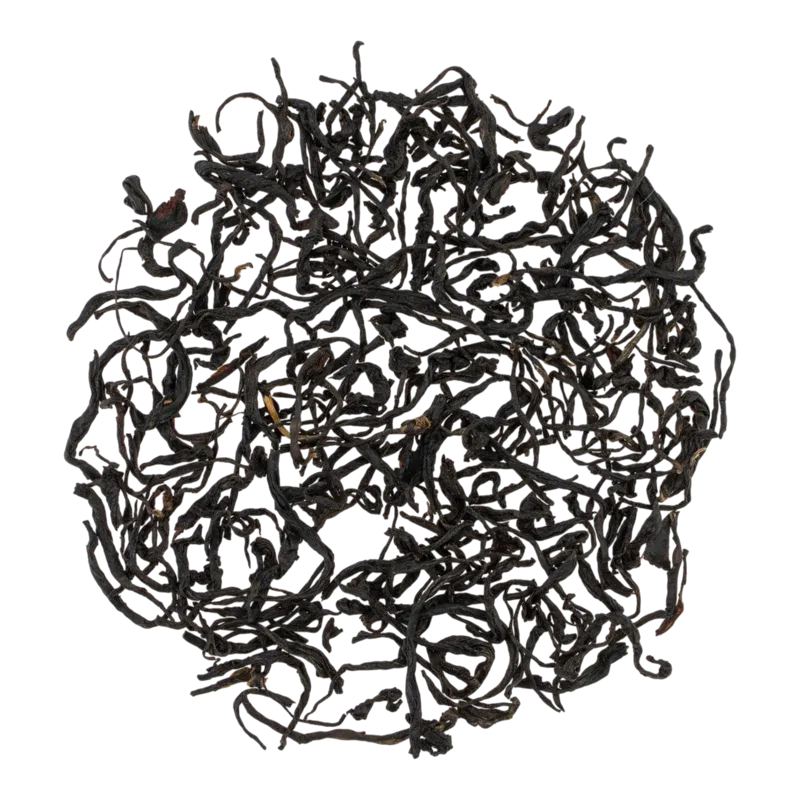
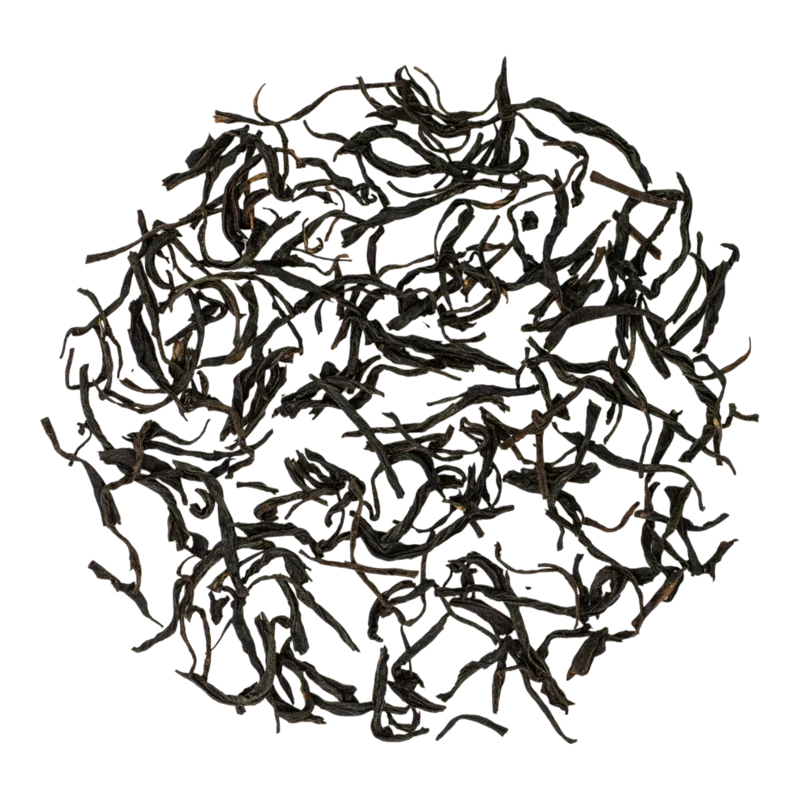
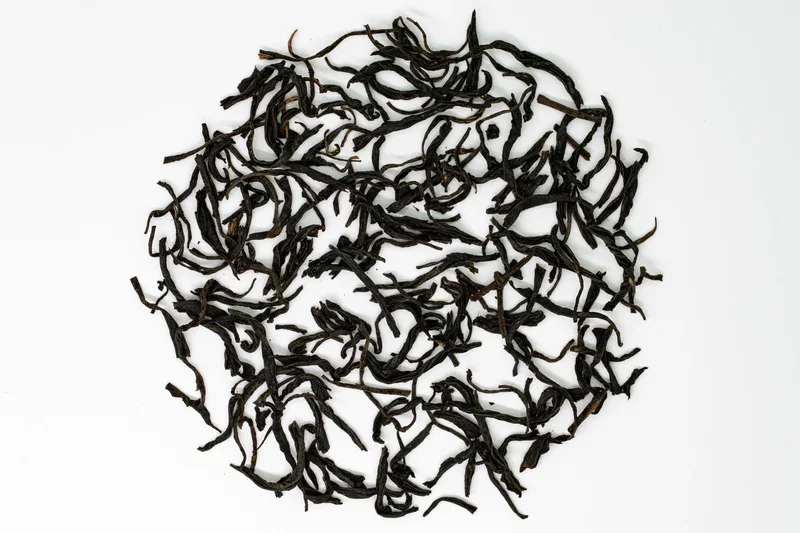
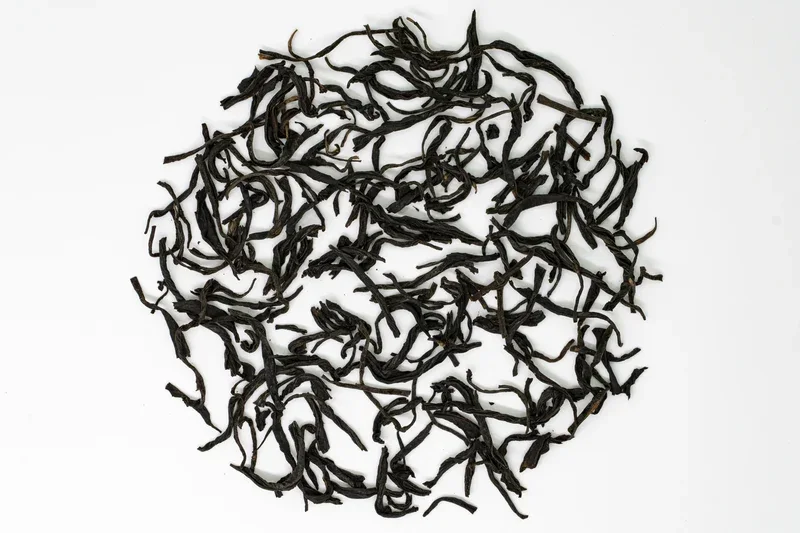
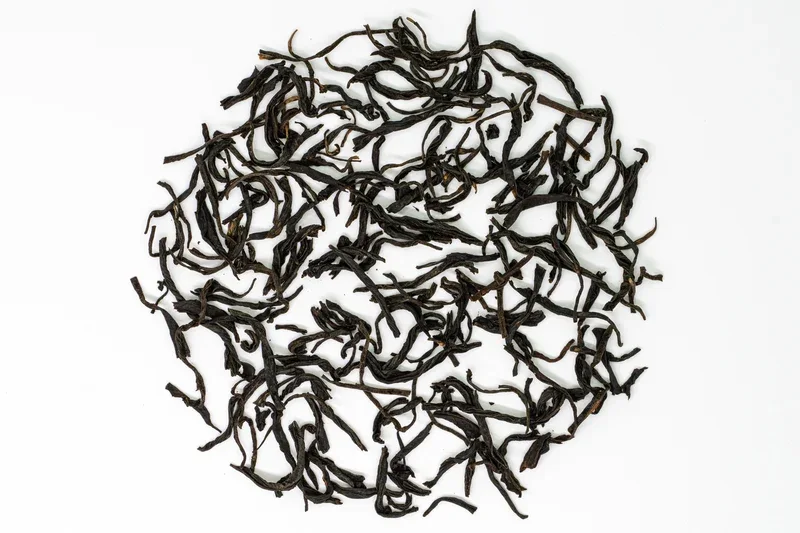
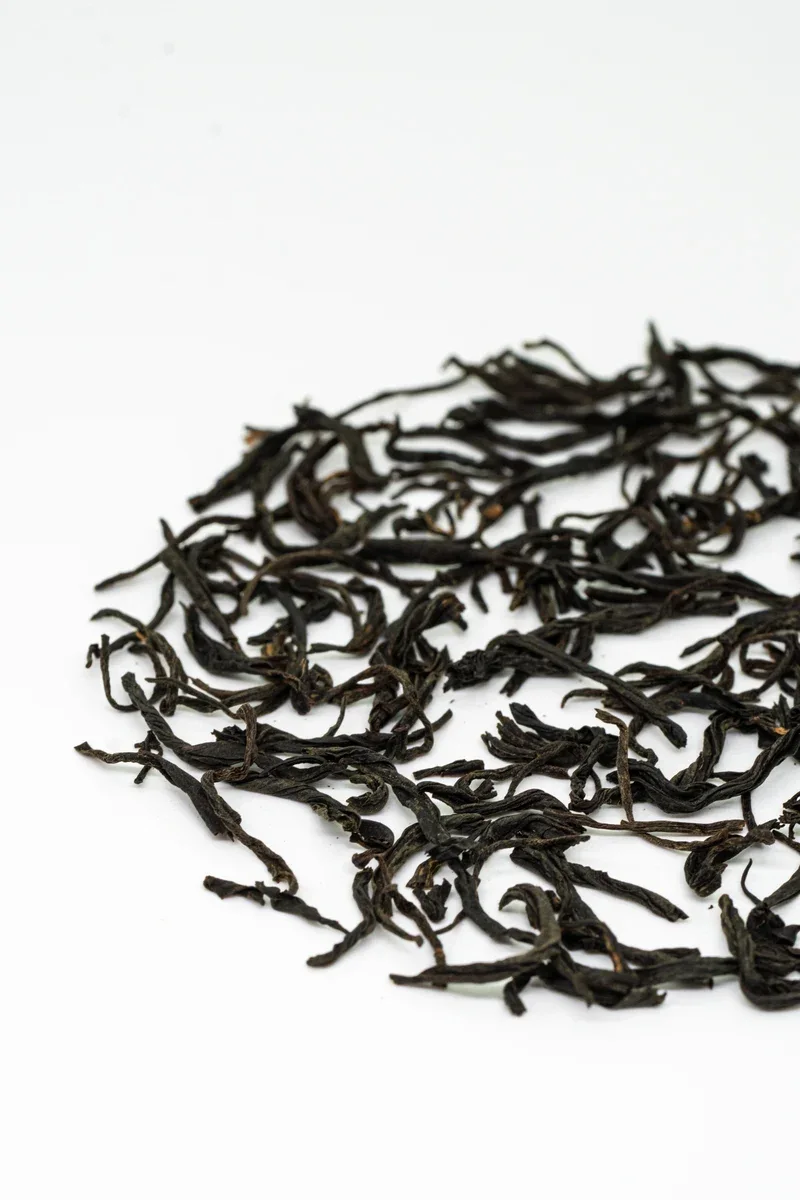
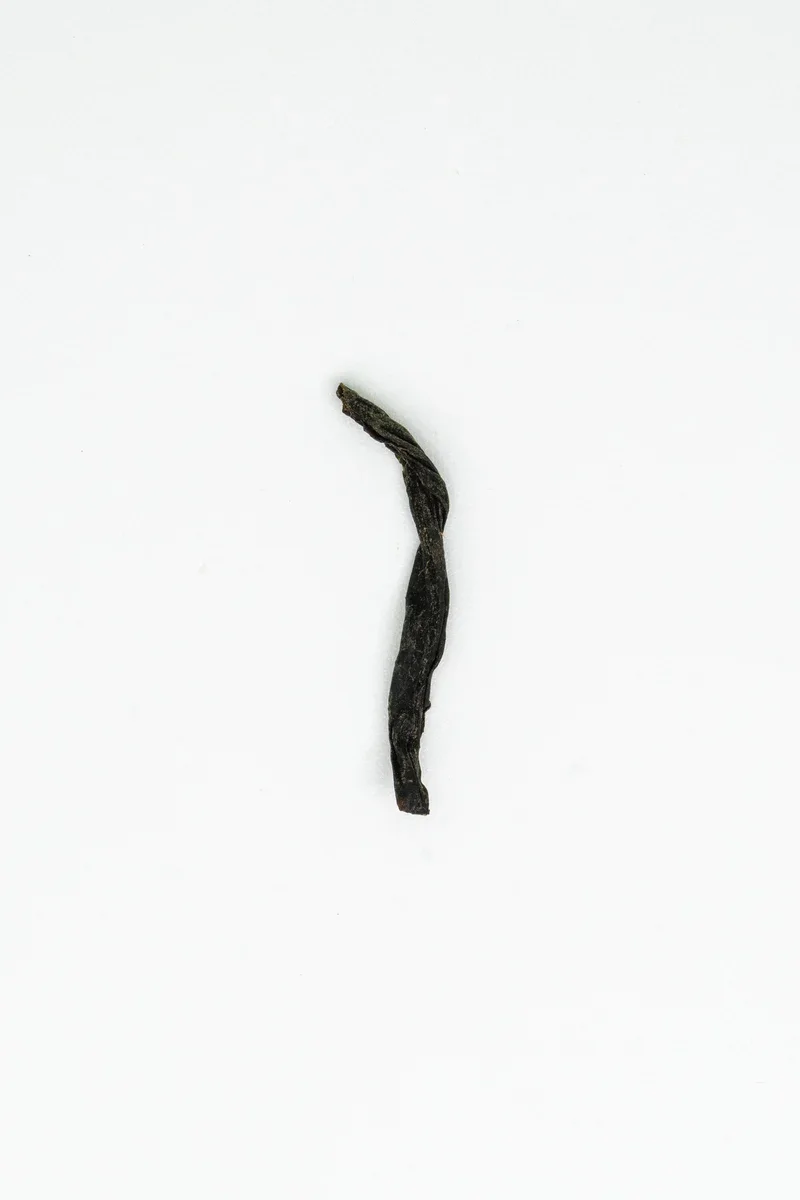
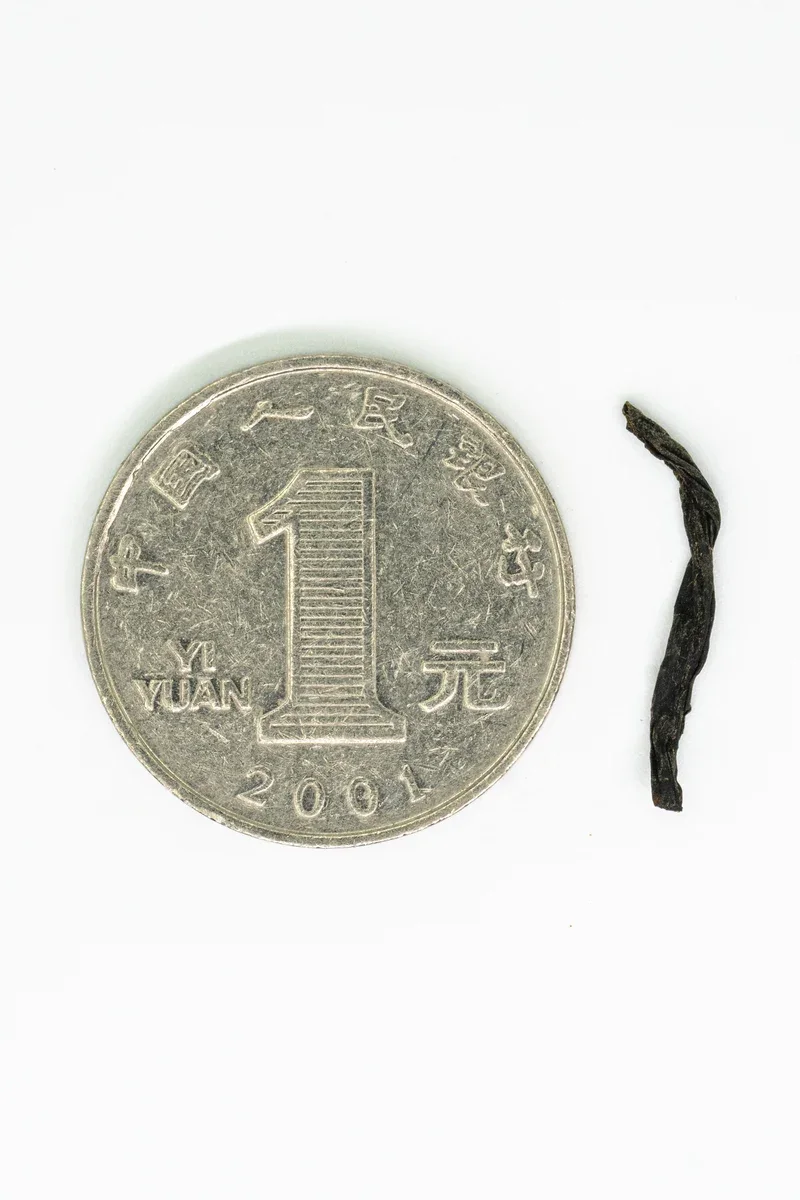
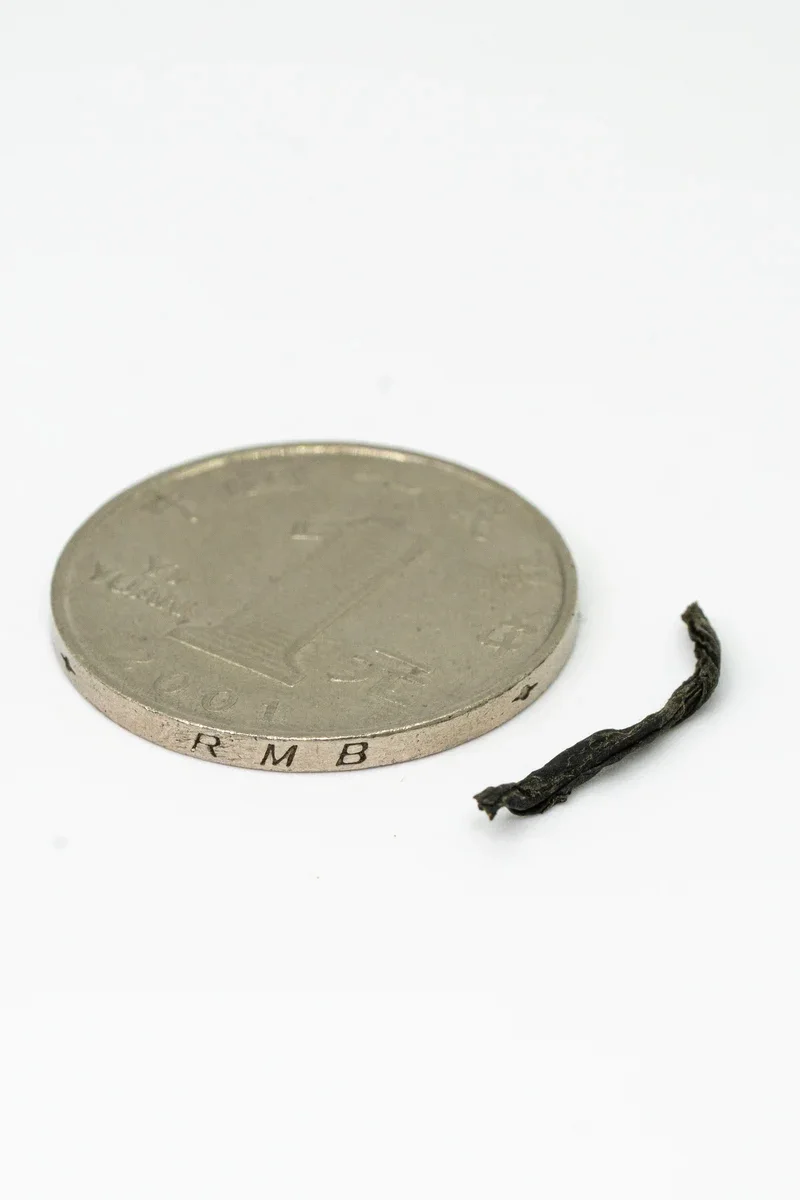
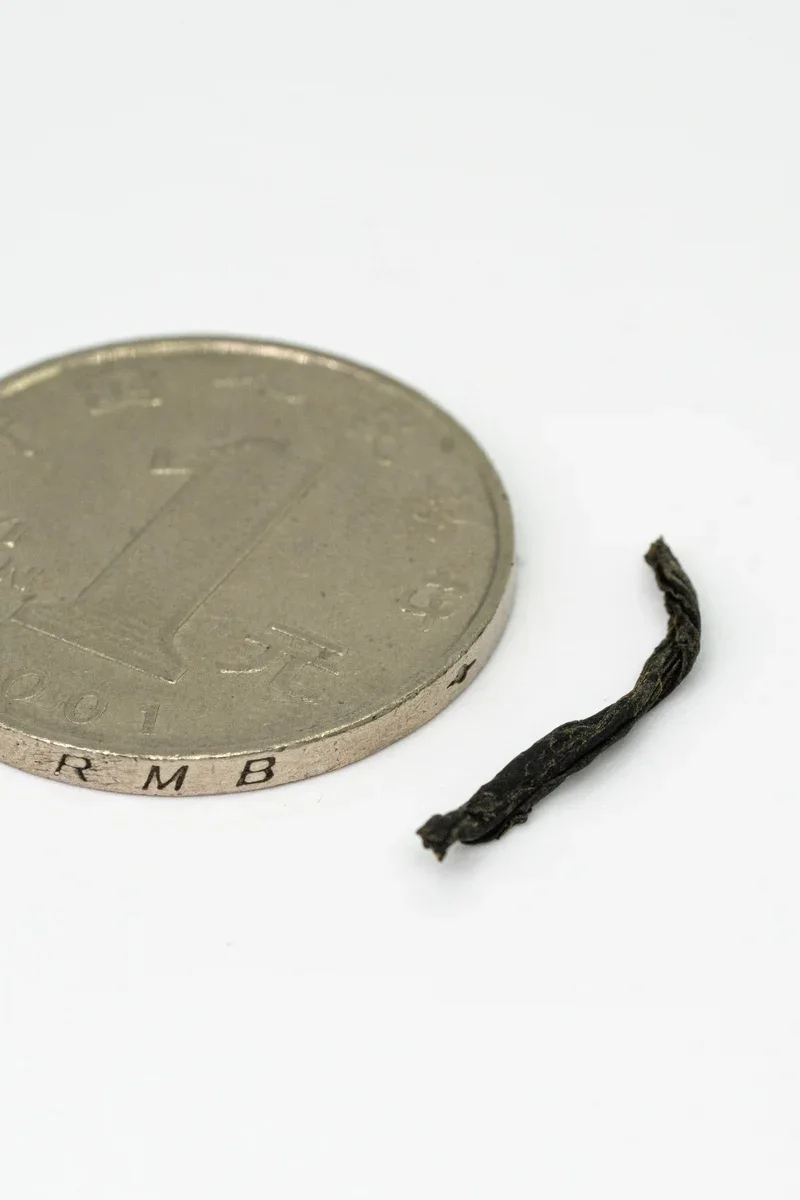
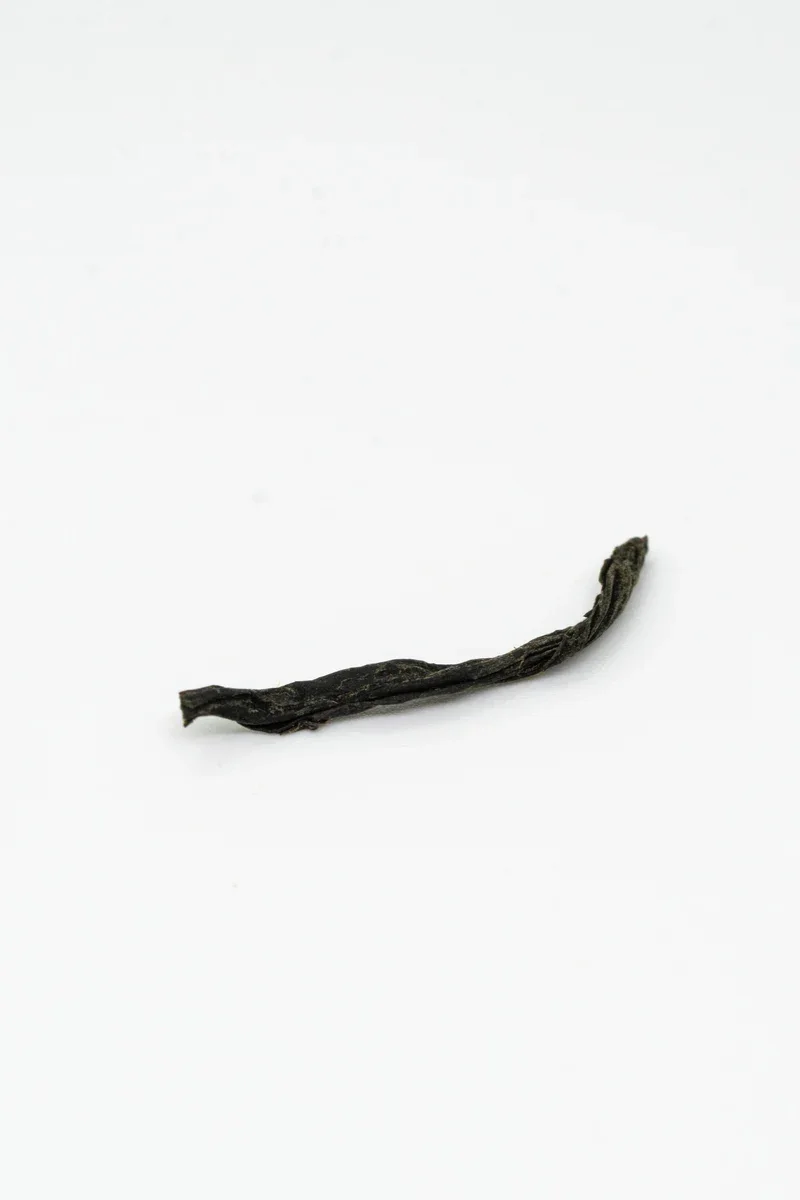
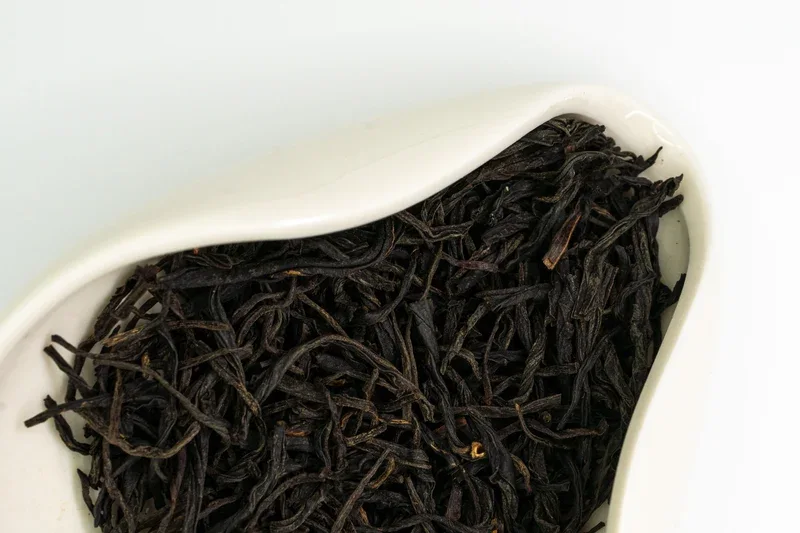
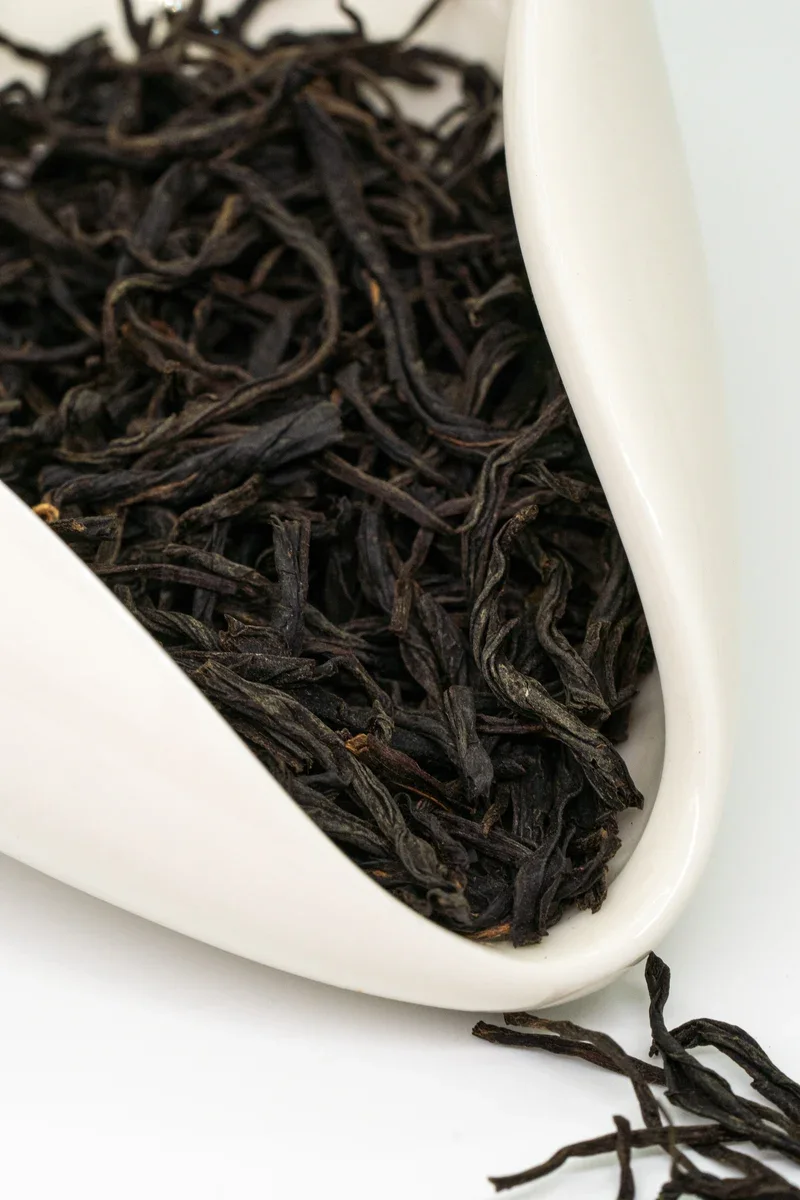
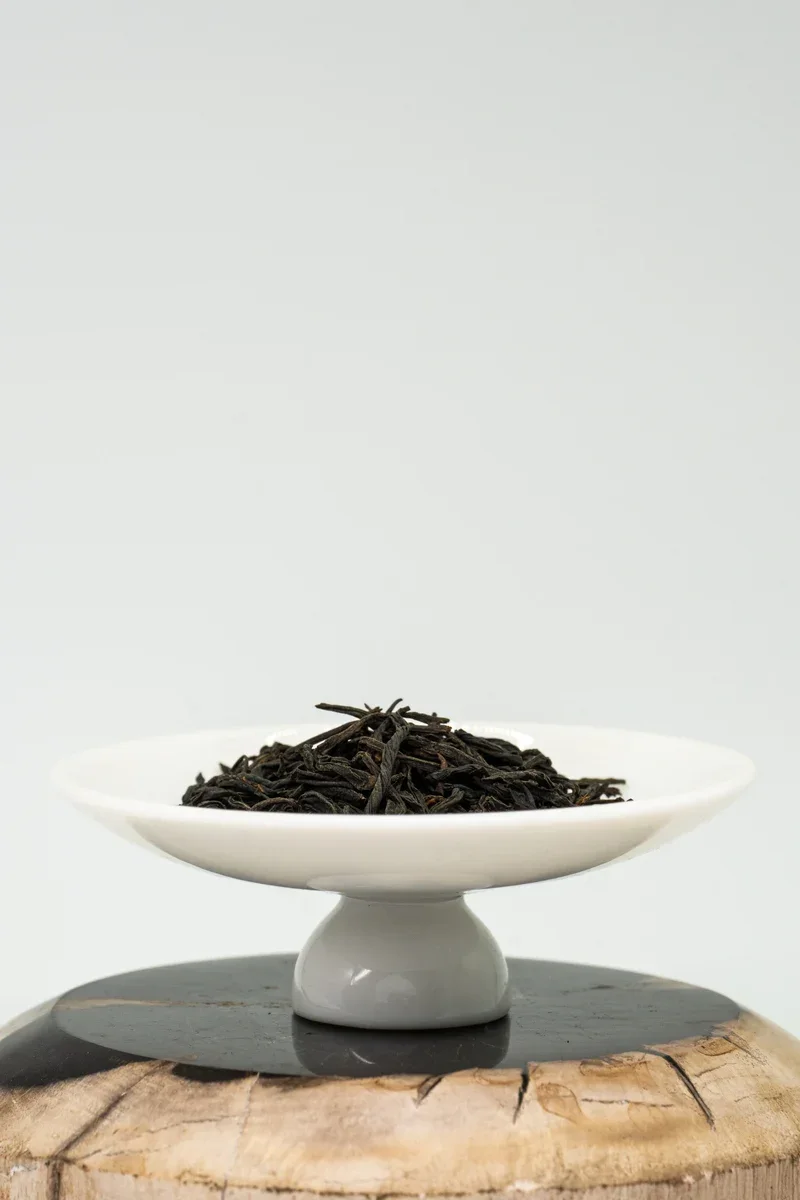
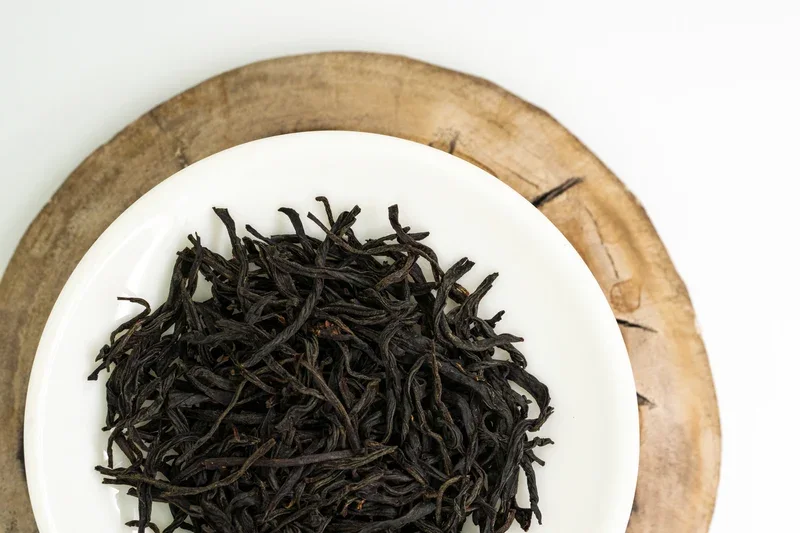
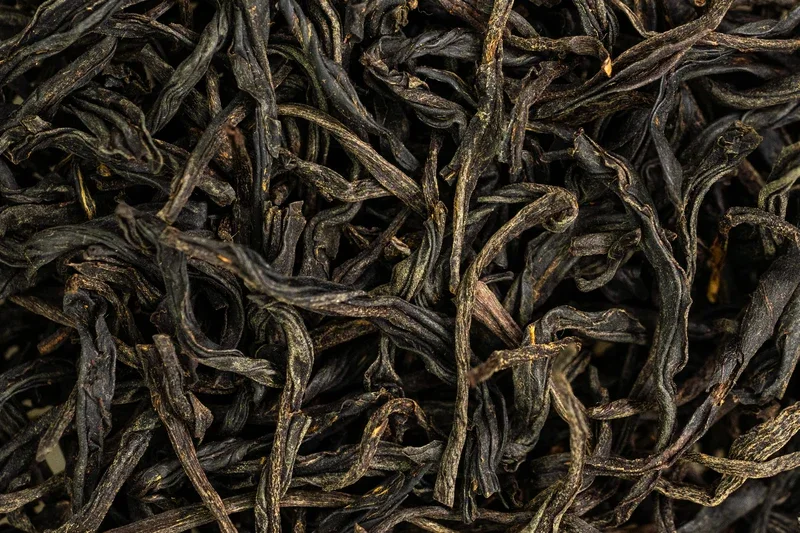
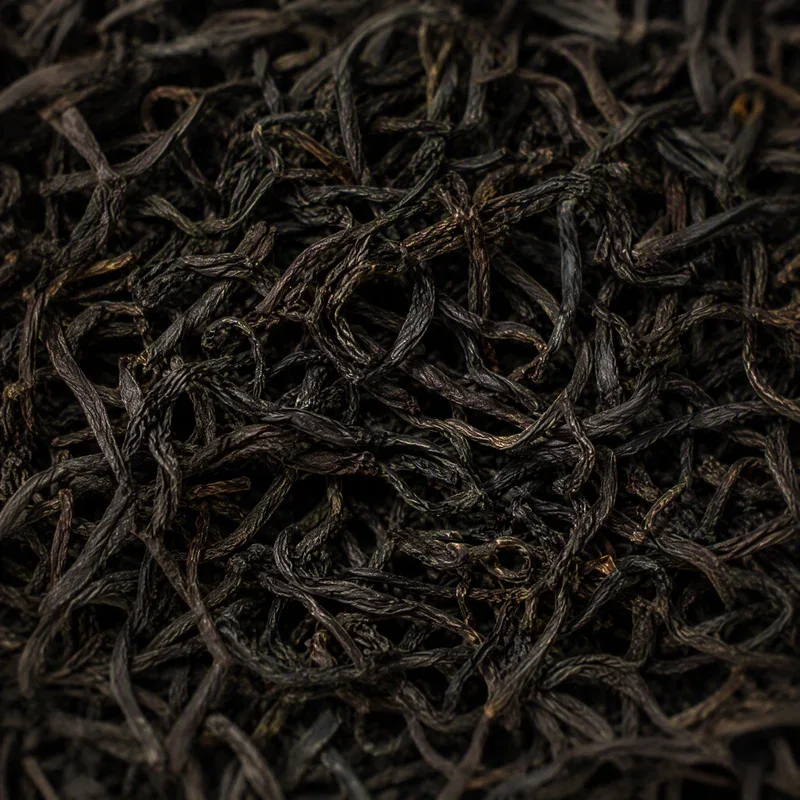
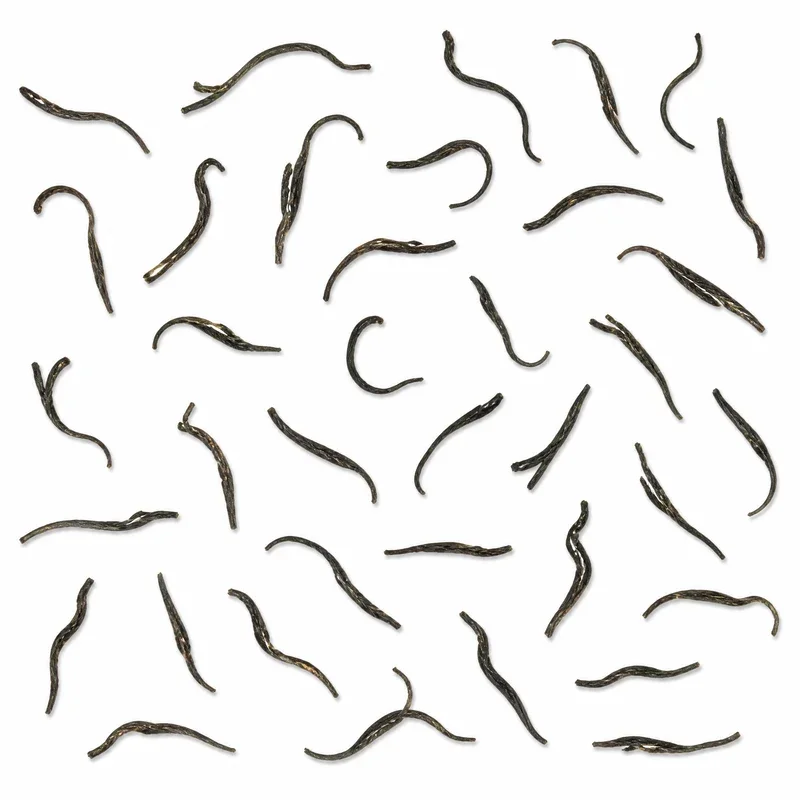
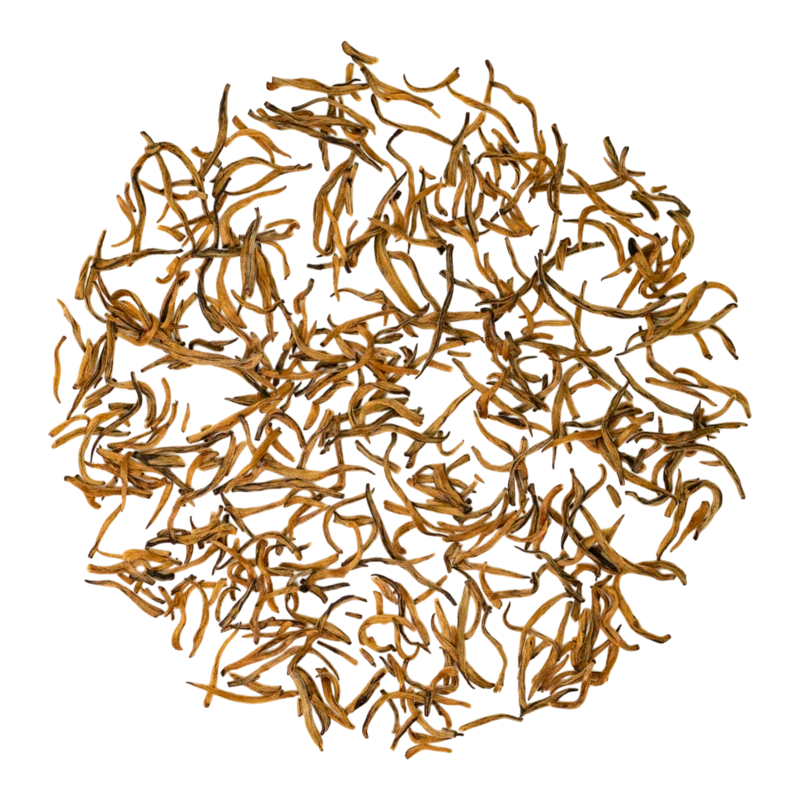
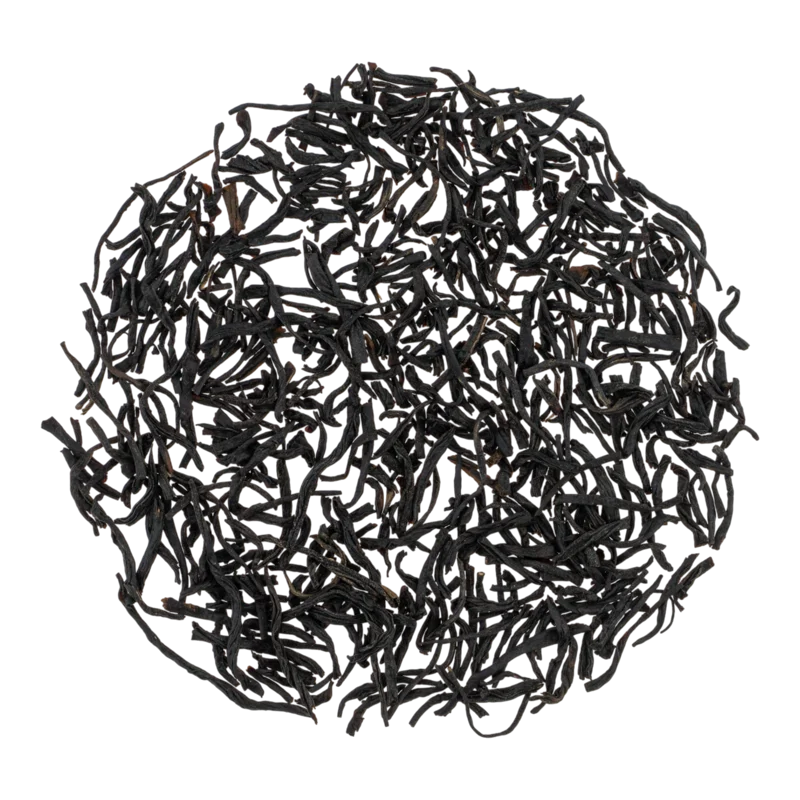
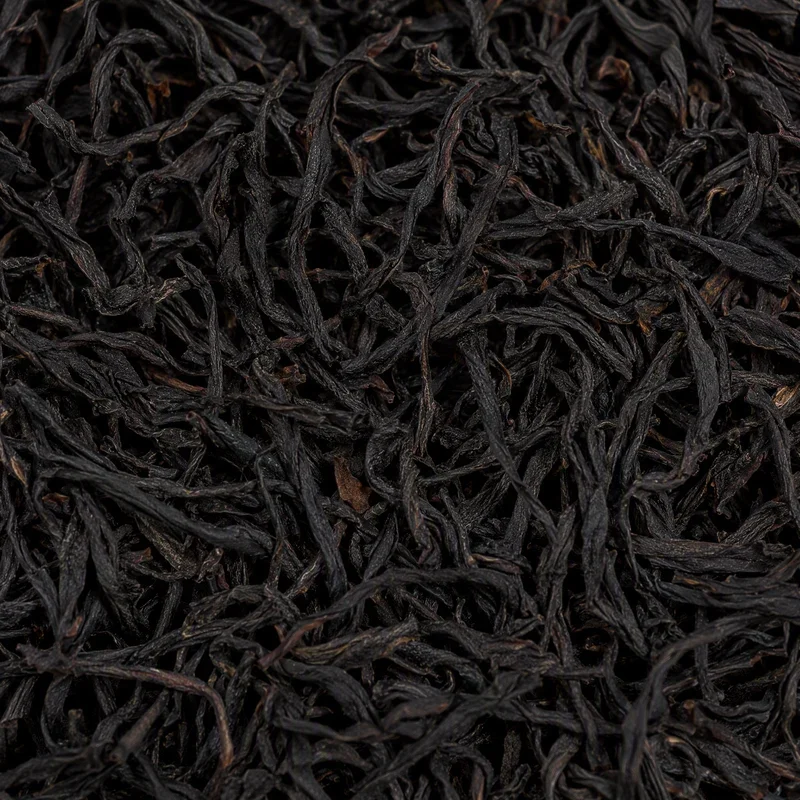
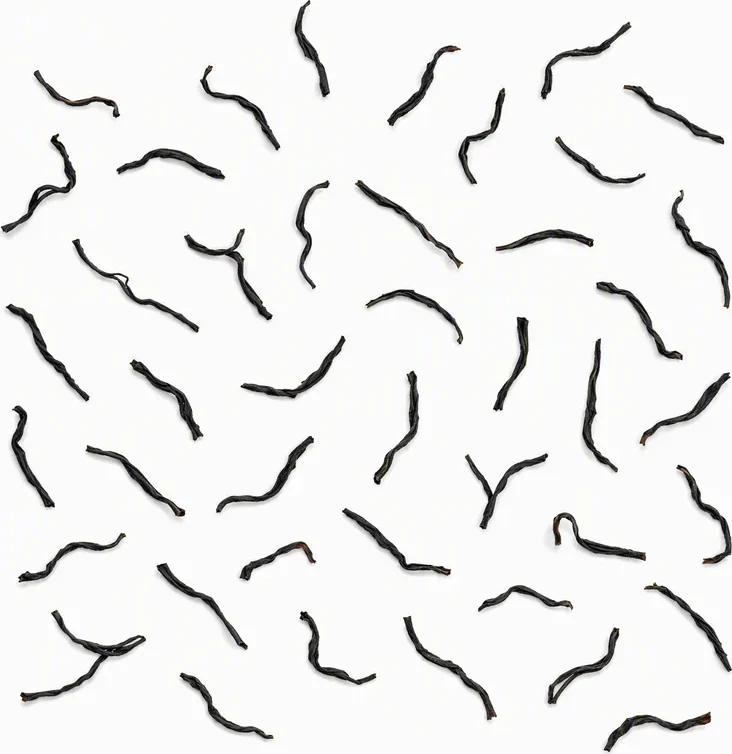
Dry Leaf Appearance: Tightly rolled longitudinal leaves of dark brown, almost black color with oily luster. Among the dark leaf, golden buds (tips) are visible, covered with fine down. Leaf is whole, uniform in size.
Dry Leaf Aroma: Intense, honey-floral, with distinct notes of ripe persimmon, caramel and light creamy undertone inherited from the Jinxuan cultivar.
Liquor Aroma: Multi-layered, sweet, enveloping. Honey and ripe fruit notes dominate, complemented by floral and creamy-caramel overtones. With cooling, subtle woody-nutty nuances emerge.
Liquor Color: Bright, clear, saturated amber color with reddish reflections. When cooling, the shade shifts to deeper copper.
Spent Leaves: Whole, elastic leaves of uniform copper-brown color. The "one bud — two leaves" structure is clearly visible. Leaves retain resilience, do not tear with light stretching.
Taste: Dense, silky, with enveloping creamy texture. In first steepings, caramel tones unfold, in the 3rd–4th steeping dark chocolate notes emerge, and in subsequent brewings — dried fruit shades (prunes, dried apricots). Aftertaste is long (up to 45 seconds), sweetish, with pronounced fruity undertones. Bitterness and astringency are minimal with proper brewing.
Alkaloids: Caffeine — 2–3% of dry mass (approximately 30–45 mg per 150 ml cup). Theobromine and theophylline are present in small quantities.
Amino Acids: L-theanine content — approximately 1.1% of dry mass. High-mountain conditions (diffused light, cool nights) promote theanine accumulation, which is responsible for flavor softness and "calm alertness" effect.
Linalool (floral notes), geraniol (rose and geranium notes), nerol, phenylethyl alcohol (rose notes), benzaldehyde (almond notes). The characteristic creamy undertone of Jinxuan cultivar is due to increased content of methyl salicylate and 2,6-dimethyl-3,7-octadien-2,6-diol.
Minerals: Potassium, manganese, fluorine, zinc, selenium. Copper content (Cu²⁺) — within safe limits (less than 10 mg/kg).
Polyphenols: Total content — exceeding 18%. During full oxidation, a significant portion of catechins (including epigallocatechin gallate, EGCG — approximately 8 mg/g in original raw material) transforms into theaflavins (give liquor brightness and golden shade) and thearubigins (responsible for flavor fullness and saturated reddish-brown color). Residual catechins provide antioxidant activity.
Vitamins: B group (B₁, B₂, B₃), vitamin C (in red teas its content is lower than in green teas due to oxidation during fermentation), vitamin P (rutin).
Combination of caffeine and L-theanine provides mild, prolonged tonic effect without sharp excitement spikes — state of "calm concentration."
Theaflavins, thearubigins and residual catechins actively neutralize free radicals, reducing oxidative stress in the body.
Regular moderate consumption of red tea is associated with reduction of "bad" cholesterol (LDL) levels, improvement of vascular elasticity and normalization of blood pressure.
Red tea polyphenols, particularly EGCG and theaflavins, possess ability to inhibit β-amyloid plaque formation, which may reduce risks of neurodegenerative diseases.
Moderate red tea consumption stimulates digestive enzyme production, improves GI tract motility.
Polyphenols and B vitamins contribute to maintaining normal immune system function.
L-theanine stimulates dopamine and serotonin production, contributing to stress level reduction and emotional state improvement.
Tea Amount: 4–5 g per 150 ml water (when brewing by steeping method); 2–3 g per 200 ml (when steeping in cup or European teapot).
Teaware: Porcelain gàiwǎn (盖碗, gàiwǎn) — optimal choice, allowing control of extraction time and aroma evaluation. Small Yíxīng clay teapots (宜兴紫砂壶, Yíxīng zǐshā hú) designated for red teas, or thin porcelain teapots are also suitable.
Water Temperature: 90 ± 2°C. Using boiling water (exceeding 95°C) is not recommended — this may lead to excessive tannin extraction and appearance of undesirable bitterness.
Container: Original vacuum foil packaging — optimal choice until opening. After opening — opaque, hermetically sealing container (ceramic jar with silicone seal, tin can with tight lid).
Humidity: No more than 50%. Excessive humidity leads to aroma loss and mold development.
Light: Store in dark place, away from direct sunlight. Ultraviolet destroys polyphenols and aromatic compounds.
Shelf Life: Under proper conditions — up to 24 months. Best taste — in first 12 months after production. This is not tea for aging.
Store separately from spices, coffee, household chemicals and other sources of strong aromas.
Temperature: Cool place, ideally 0–5°C (refrigerator), but only in completely airtight packaging to avoid absorption of foreign odors. At room temperature, store in cool, dry place (not exceeding 25°C).
Classic Fujian red tea from Tongmuguan region. Traditional version is distinguished by pronounced smoky aroma (smoking over pine wood), denser, more saturated taste with longan and dried fruit notes. Fujian Gaoshan Hongcha — more elegant, without smoky notes, with pronounced creamy texture.
Premium red tea from Tongmuguan, produced exclusively from buds. Distinguished by more delicate, floral-honey profile with sweet potato and caramel notes. Fujian Gaoshan Hongcha possesses denser body due to presence of leaves in raw material and characteristic creamy undertone from Jinxuan cultivar.
Yunnan red tea from large-leaf cultivars of Assam group. Distinguished by more powerful, malty character, pronounced astringency and dark liquor color. Fujian Gaoshan Hongcha — more delicate, silky, with less astringency.
Closest analogue, produced in Taiwan from the same cultivar. Main difference — terroir: Taiwanese versions (for example, from Sun Moon Lake) are often lighter-bodied, with accent on floral and honey notes, while the Fujian version thanks to continental high-mountain terroir possesses denser body and pronounced fruity-chocolate depth.
Price Category: Premium segment. Authentic Fujian Gaoshan Hongcha spring harvest belongs to expensive red teas. Cost is determined by high-mountain origin (exceeding 1500 m), limited production volume, use of hand-picking "one bud — two leaves" standard and cultivar quality. Retail price may range from 80 to 150 dollars per 100 g depending on specific plot and harvest year.
Buy tea from specialized tea shops with good reputation, working directly with farmers from Longyan Prefecture.
Quality leaf — whole, tightly rolled, with oily luster and visible golden buds. Broken, dull leaf without buds — sign of low quality or counterfeit.
Natural aroma — clean, honey-floral, with creamy undertone, without foreign "smoky" or chemical notes. Artificial colorants (E102, E133) may be used to imitate golden color of tips — such buds unevenly color water during first steeping.
Genuine tea produces clear, bright amber liquor. Cloudy or unnaturally dark liquor — alarming sign. During rinsing, quality buds often float to surface.
Suspiciously low price (below 30–40 dollars per 100 g) with claimed high-mountain origin and spring harvest — reason for doubt. Common types of falsification: region substitution (using lowland raw material from Hubei or Anhui provinces), replacement of spring harvest with summer or autumn.
No reviews yet. Tell us what you think of this tea.
Rate this tea and share your impressions. We review each submission before publishing it.