Brewing
Gongfu brewing
- Water temperature
- 93 °C
- Tea amount
- 5 g
- Water volume
- 100 ml
- First steep
- 10 s
- Time added per infusion
- 5 s
- Infusions
- 4

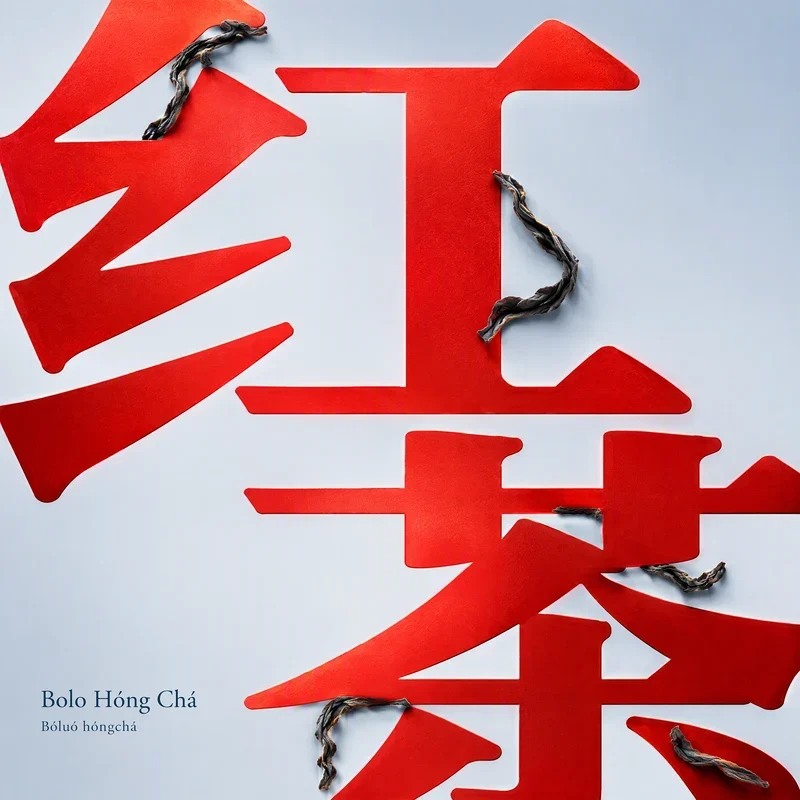
Bóluó hóngchá
Choose a brewing method. Start with the recommended quantities and time, then adjust to taste.
Brewing
Brewing
Taste
Tea encyclopedia
Category: Guangdong red teas; regional red tea based on small-leaf mountain population (小叶种山茶, xiǎoyè zhǒng shānchá). The product is connected to the geographical indication system "Baitang Shan Cha" (柏塘山茶), which received protected geographical indication product status (地理标志产品, dìlǐ biāozhì chǎnpǐn) on December 4, 2015.
Category: Guangdong red teas; regional red tea based on small-leaf mountain population (小叶种山茶, xiǎoyè zhǒng shānchá). The product is connected to the geographical indication system "Baitang Shan Cha" (柏塘山茶), which received protected geographical indication product status (地理标志产品, dìlǐ biāozhì chǎnpǐn) on December 4, 2015.
Coordinates: ≈ 23.4° N, 114.1° E (Baitang Town).
Origin: China, Guǎngdōng Province (广东省, Guǎngdōng Shěng), Huìzhōu City (惠州市, Huìzhōu Shì), Bóluó County (博罗县, Bóluó Xiàn). Main production zone — Bǎitáng Town (柏塘镇, Bǎitáng Zhèn), the largest tea town in Huizhou. Secondary zones — towns on the southern slopes of Luofushan mountain range (罗浮山, Luófú Shān) and western slopes of Xiangtoushan (象头山, Xiàngtóu Shān).
Type: Red tea (black tea) (红茶, hóngchá) — fully oxidized.
Cultural Significance: Bolo Hóng Chá is ān inseparable part of Luofushan Daoist tea culture (罗浮道茶, Luófú Dào Chá). Mount Luofushan is one of the "ten great Daoist abodes" (十大洞天), and the tea tradition here is inseparable from the Daoist practice of "nourishing life" (养生, yǎngshēng). Bǎitáng annually holds tea culture festivals (柏塘山茶文化节) with tea ceremonies, "doucha" competitions (斗茶, dòu chá), and master classes. In 2023–2024, Baitang Town received more than 60,000 tourists annually, demonstrating the growing role of tea tourism. Baitang holds the titles "One of Ten Tea Villages of Guangdong" (广东十大茶乡) and "National Model Village of One Product" (全国一村一品示范村镇).
History: Boluo is one of the four most ancient counties in Guangdong, founded in 214 BCE under Qin Shi Huang. The tea tradition of the region can be traced back to the Jīn era (晋, 265–420): the Daoist hermit Dàn Dàokāi (单道开, Shàn Dàokāi), who practiced on Mount Luofushan, "from time to time drank tea-su one or two sheng" — one of the earliest documentary evidence of tea consumption in Lingnan.
Name Breakdown: "Bo" (博) and "Luo" (罗) are elements of an ancient toponym dating back to the Qin era. According to legend, the floating mountain Pénglái (蓬莱, Pénglái) sailed across the sea and merged with Mount Luofushan — hence the legendary etymology of the county name. "Hong Cha" (红茶) means "red tea." Thus, Bolo Hong Cha is "red tea from [Boluo] County."
Cultivar: Bǎitáng Xiǎoyèzhǒng (柏塘小叶种) — small-leaf mountain population of Camellia sinensis var. sinensis, formed as a result of centuries-long naturalization of wild tea from surrounding mountains. Bush is low, leaf is small, narrow, elliptically-lanceolate, 3–10 cm long, with pronounced pubescence on young shoots. Venation is distinct. Flowering — from August to December. Some farms also cultivate small-leaf purple-bud tea (紫芽茶, zǐ yá chá), containing elevated amounts of anthocyanins. Baitang preserves more than 130 old tea trees, among which about 30 specimens are approximately 100 years old and one tree is approximately 200 years old.
Picking: Main harvest seasons: spring harvest after Spring Equinox (春分茶, Chūnfēn Chá) — best batches; harvest after Qīngmíng (清明茶); summer and autumn harvests. Notable is also the winter batch "Xue Pian" (雪片, Xuě Piàn, "snow flakes") — tea harvested during the period of Minor and Major Snow (小雪–大雪), when shoots are sparse and leaves are especially valuable. Between main seasons, "Hehua Cha" (禾花茶) is harvested — "rice flower tea," coinciding with the flowering period of late rice planting.
Pluck Standard: Two leaves and one bud (两叶一芯, liǎng yè yī xīn) — standard for Baitang tea. For premium red grades — one bud and one leaf. Harvest is exclusively manual: morning harvest is processed at noon, afternoon harvest — in the evening, guaranteeing freshness of raw material.
Raw Material: Whole, undamaged shoots with characteristic thin white hairs on the bud. Leaf must be fresh, elastic, without traces of mechanical damage and pests. Baitang's ecological standards assume minimal use of agrochemicals — many farms use only organic fertilizers.
Altitude: 200–500 m above sea level. High-altitude plantations (for example, Fubo tea garden on Mount Sanmaoji, 三帽髻) are located at 500+ m.
Climate: Subtropical monsoon. Average annual temperature 22.7°C, average annual precipitation about 1,900 mm, frost-free period — 342 days. The Baitang basin, surrounded by mountains on three sides, creates a microclimate with frequent fogs, mild winter, and notable difference between day and night temperatures — conditions favorable for accumulation of aromatic substances.
Soil: Mountain acidic soils with pH 5.0–5.5, deep humus horizon and organic content of 2–3%. Underlying rocks — granitic and lateritic, providing good drainage and mineralization. Location between two national nature reserves — Luofushan and Xiangtoushan (the only untouched section of national nature reserve in the Pearl River Delta) — guarantees clean air and water.
Small-scale family tea cultivation predominates in Baitang: practically each of more than 6,000 peasant families in the town has its own tea garden with an area from 1–2 to 10+ mu. The town counts more than 60 tea cooperatives and enterprises, including one provincial "agricultural flagship" (省级农业龙头企业). Cultivation is conducted on the principle of "no chemical fertilizers, no pesticides" — Baitang tea is positioned as "natural, green, healthy" (天然、绿色、健康). Pruning, weeding, organic feeding — main agrotechnical methods.
Morning manual harvest of tender shoots.
Natural or combined withering (indoors with ventilation) for 10–16 hours. Goal — reducing leaf moisture to 60–65% and initiating initial enzymatic processes.
Machine rolling to break cell walls. Small leaf rolls easier and faster than large-leaf raw material, requiring more careful pressure control.
At temperature 24–28°C and high humidity, duration 3–4 hours. Small-leaf raw material with its higher amino acid to polyphenol ratio forms a characteristic sweet, floral profile.
Fixing aromatic profile at 100–110°C. Some producers apply light finishing at 80–85°C to develop caramel notes.
Separation by fractions and quality, selection of tippy, leaf, and blended grades.
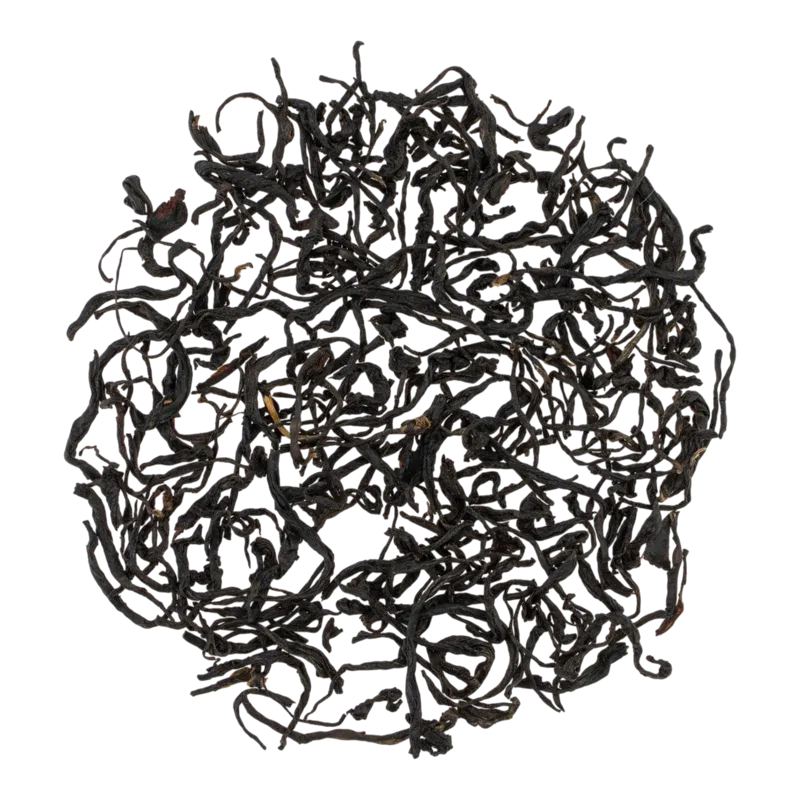
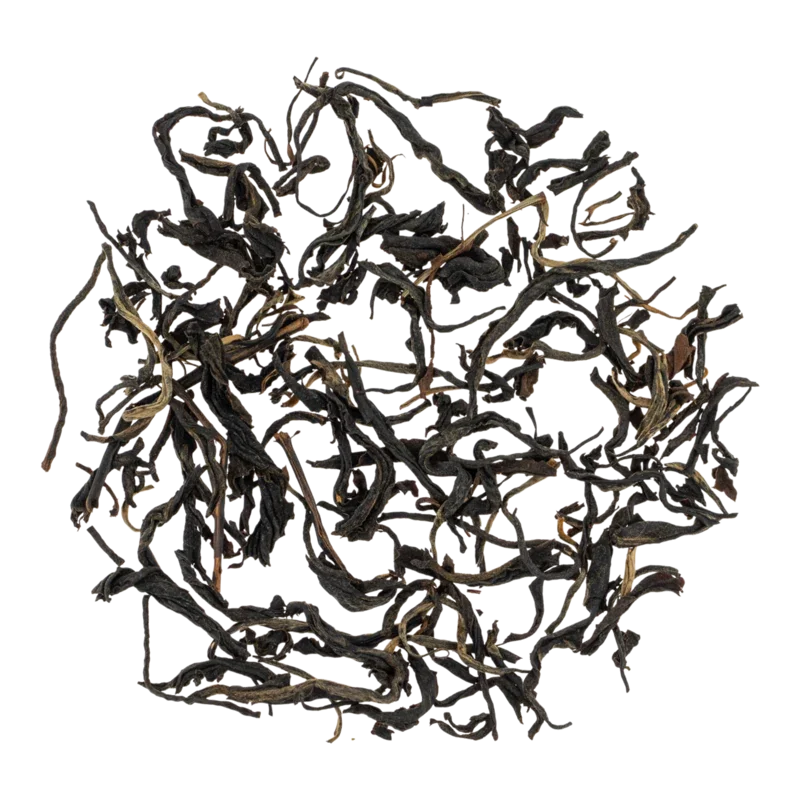
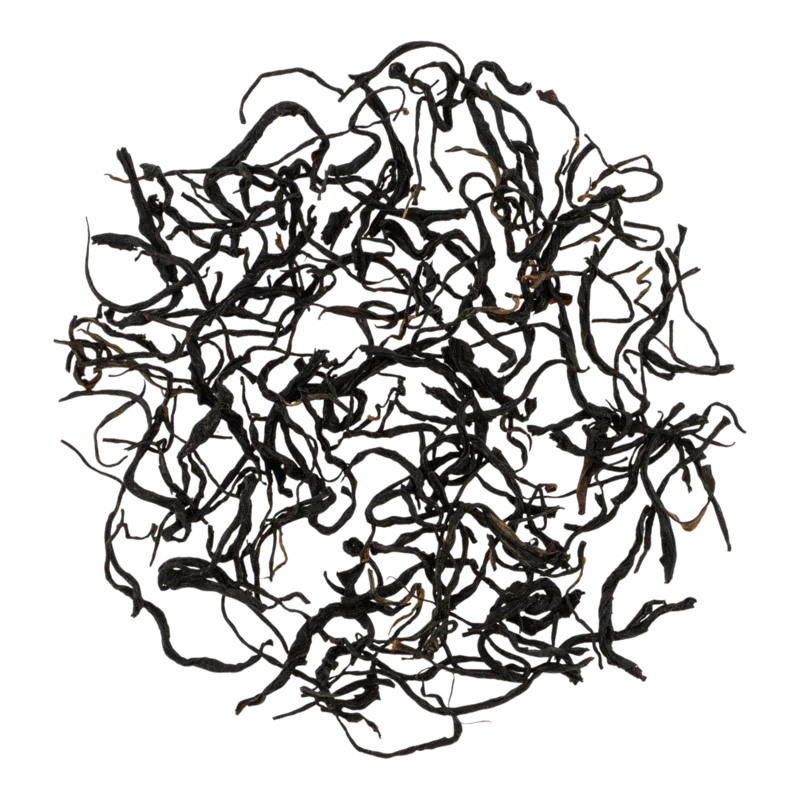
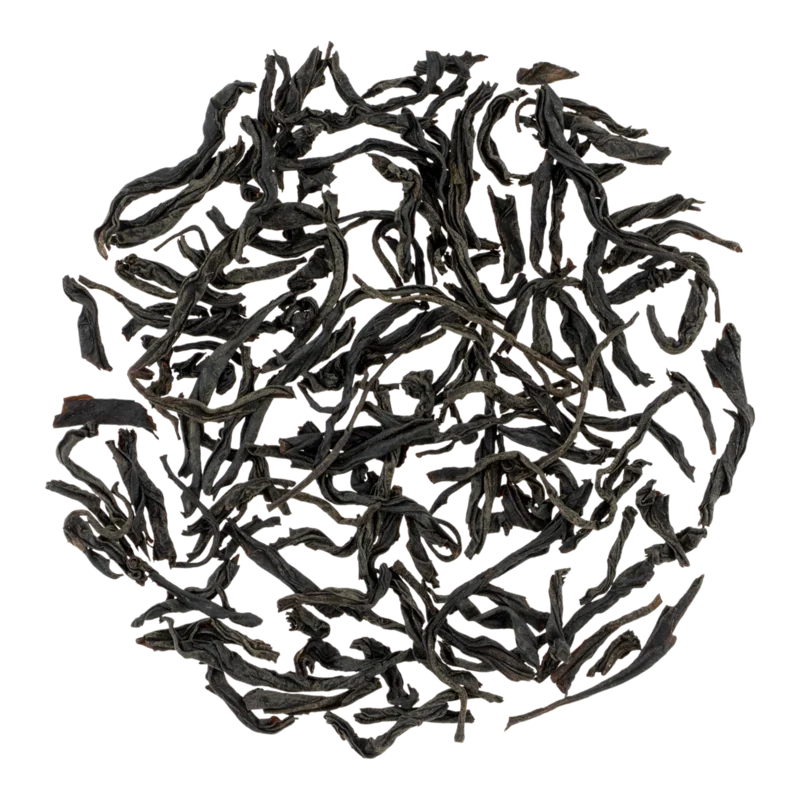
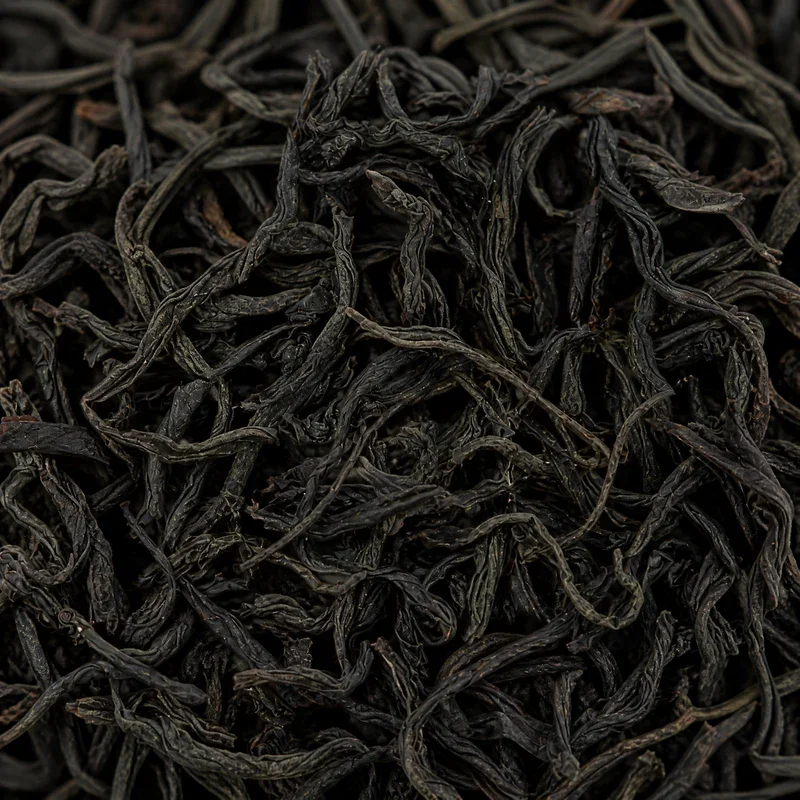
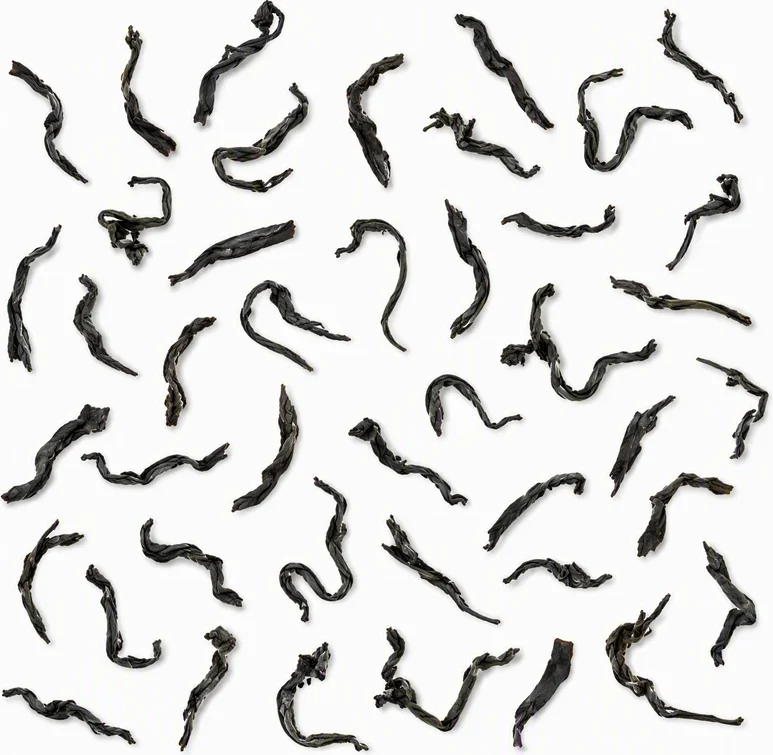
Dry Leaf Appearance: Dense, tight, small twist; leaf is thin, even, with characteristic small-leaf elegance. Color — dark chestnut to black, with golden tips on premium grades.
Dry Leaf Aroma: Sweet, natural, with notes of dry field flowers, light honey undertone and subtle spiciness. Aroma is less "large" and "heavy" than large-leaf Guangdong red teas — it is rather "thin and long" (细长, xì cháng), as described for Baitang tea.
Liquor Aroma: Warm, round, with pronounced notes of honey, sweet bread and light caramel. In middle steeps, fruity notes of longan and dried lychee appear — imprint of Guangdong terroir. For batches from purple-bud raw material — additional berry note.
Liquor Color: Red-amber, bright, clear. Slightly lighter and "softer" than large-leaf red teas — closer to honey red with golden reflection.
Spent Leaves: Small, even, uniformly colored leaves; color — copper-red to chestnut. Leaf is elastic, preserving characteristic small-leaf structure.
Taste: Concentrated and rich (浓厚, nónghòu) for small-leaf tea, with pronounced sweetness, mild astringency and long "returning sweetness" aftertaste (回甘, huígān). Harmonious balance of "gan-hua-xiang" (甘、滑、香) — sweet, smooth, aromatic — classic formula of Baitang tea, applicable to the red version as well.
Alkaloids: Caffeine — 2.5–3.5% of dry weight (typical for small-leaf varieties); theobromine, theophylline in trace amounts.
Amino Acids: Elevated relative content of amino acids (3–4% of dry weight), including L-theanine, explaining pronounced natural sweetness and mildness of taste.
In purple-bud batches (紫芽) — elevated content of anthocyanins with antioxidant activity.
Essential Oils: Complex of terpene alcohols (linalool, geraniol), characteristic of small-leaf mountain teas; Maillard reaction products — maltol, furfural.
Minerals: Potassium, magnesium, manganese, zinc, iron — reflection of organic-rich mountain soils of the Luofushan region.
Polyphenols: Small-leaf var. sinensis raw material contains moderate amounts of polyphenols (18–25% in fresh leaf), which after oxidation gives harmonious ratio of theaflavins and thearubigins without excessive astringency.
Vitamins: B₁, B₂, P (rutin), trace amounts of vitamin C.
Tea Amount: 4–5 g per 100–120 ml (small-leaf raw material extracts faster than large-leaf, so dosage is slightly lower).
Teaware: Gàiwǎn (盖碗) — universal option; porcelain teapot; Cháozhōu clay teapot (潮州砂壶) — appropriate in Guangdong context. Glass teapot emphasizes beautiful liquor color.
Water Temperature: 90–95°C.
Main Guangdong red tea — from large-leaf cultivar "Yinghong No. 9" (英红九号). Yingde Hong Cha is more powerful in "body," with notes of chocolate, dry rose and nutmeg. Bolo Hong Cha is more delicate: floral-honey, with small-leaf elegance and mineral purity of mountain terroir.
Yunnan red tea from var. assamica. Dian Hong is "large-caliber": peppery, honey, powerful. Bolo Hong Cha is fundamentally different style: small-leaf fineness, higher sweetness, less astringency, lighter "body."
Anhui small-leaf red tea with characteristic "Qimen aroma" (祁门香) — rose, fruity, slightly smoky notes. Stylistically closest analog to Bolo Hong Cha by raw material type, but terroir character differs: Qimen is more "northern," with acidity; Boluo is more "southern," tropically-honey and round.
Another Guangdong red tea, but from Chaozhou raw material (often — dancong cultivars). Distinguished by floral-orchid character. Bolo Hong Cha is more "earthy," mountain-honey, with accent on "gan-hua-xiang."
Price Category: Standard Bolo Hong Cha retail — from 200 to 500 yuan per 500 g (jin). Premium grades and batches from purple-bud raw material — from 1,000 yuan and higher per jin. Baitang Shan Cha (green) — market reference: average price 200–300 yuan per jin for standard batches, 500+ yuan for high grades.
No reviews yet. Tell us what you think of this tea.
Rate this tea and share your impressions. We review each submission before publishing it.