Brewing
Gongfu brewing
- Water temperature
- 75 °C
- Tea amount
- 5 g
- Water volume
- 100 ml
- First steep
- 10 s
- Time added per infusion
- 5 s
- Infusions
- 3

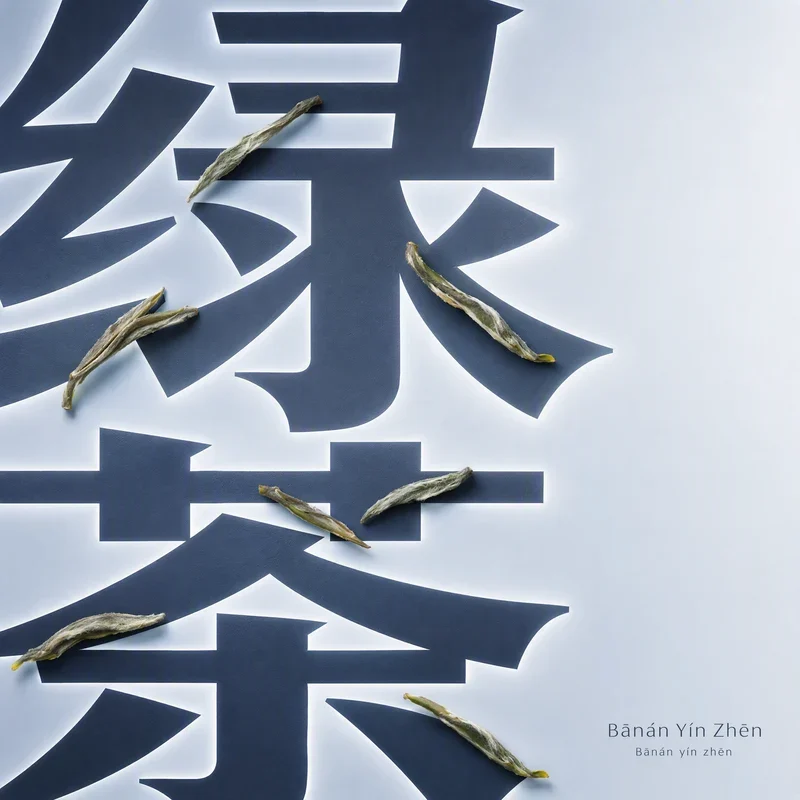
Bānán yín zhēn
Choose a brewing method. Start with the recommended quantities and time, then adjust to taste.
Brewing
Brewing
Taste
Tea encyclopedia
Category: Product with registered geographical indication trademark (国家地理标志商标注册, 2011). "China Famous Agricultural Product" (中国名牌农产品). Included in the "National Registry of Famous, Special, Superior and New Agricultural Products" (全国名特优新名录). The production technology "Banan Tea Production Techniques" (巴南茶叶制作技艺) is inscribed in the Registry of Intangible Cultural Heritage of Chóngqìng (重庆市非物质文化遗产, 2009). In 2004, the processing technology received a national invention patent (国家发明专利). Multiple...
Category: Product with registered geographical indication trademark (国家地理标志商标注册, 2011). "China Famous Agricultural Product" (中国名牌农产品). Included in the "National Registry of Famous, Special, Superior and New Agricultural Products" (全国名特优新名录). The production technology "Banan Tea Production Techniques" (巴南茶叶制作技艺) is inscribed in the Registry of Intangible Cultural Heritage of Chóngqìng (重庆市非物质文化遗产, 2009). In 2004, the processing technology received a national invention patent (国家发明专利). Multiple winner of "Zhong Cha Bei" competitions (中茶杯, first prize at 6th and 7th competitions), "Hua Ming Bei" (华茗杯, gold), "Sanxia Bei" (三峡杯, gold). "Chongqing Time-Honored Brand" (重庆老字号). The only officially designated tea of the Asia-Pacific Cities Mayors Summit (亚太城市市长峰会唯一指定用茶, 2005) and Shanghai World Expo (上海世博会指定用茶, 2010). The "Banan Yin Zhen" brand is valued at 1.41 billion yuan.
Coordinates: Approximately 29°30′ North latitude, 106°42′ East longitude.
Origin: China, Chóngqìng Municipality (重庆市, Chóngqìng Shì), Bānán District (巴南区, Bānán Qū). Production core—Mount Baixiangshan (白象山, Báixiàng Shān) in Èrshèng Town (二圣镇, Èrshèng Zhèn), Mingyueshan Range (明月山脉).
Type: Green tea (绿茶, lǜchá), non-oxidized. Belongs to needle-shaped green teas (针形绿茶, zhēnxíng lǜchá). Technologically combines pan-firing and hot-air drying with predominance of drying at the final stage—the proprietary method "初干以烘代炒" (chūgān yǐ hōng dài chǎo—"primary drying with hot air instead of pan-firing").
Cultural Significance: Banan Yin Zhen is one of the four main tea brands of Chongqing (alongside Yongchuan Xiuya, Nanchuan Gushucha and Jiming Gongcha). Banan District has historically been Chongqing's "tea district": "Previously in Banan, almost every family made tea"—recalls master Liu Guanlu. The "Dingxin" tea garden (定心茶园) on Mount Baixiangshan has become one of the main tourist attractions of Chongqing's suburbs, where the annual "Tea Picking Festival" (采茶节) is held, attracting tens of thousands of visitors. In 2019, "Dingxin" was recognized as "China's Most Beautiful Tea Garden" (中国最美丽茶园) by the China Association for the Promotion of International Agricultural Cooperation.
History: The tea tradition of Banan has deep roots. Lù Yǔ (陆羽) in "The Classic of Tea" (《茶经》, 8th century) wrote: "Tea is a noble tree of the south... In the mountains of Ba and the gorges [of the Yangtze] there are [trunks] that can only be embraced by two people" (其巴山峡川有两人合抱者)—direct evidence of the antiquity of tea cultivation in the region where modern Chongqing is located.
Cultivar: Several varieties of Camellia sinensis are used:
Picking: 100% of raw material for "Banan Yin Zhen" is harvested before Qīngmíng (明前, ~April 5). The most valuable batches are from the first spring "flush" (first layer of buds after wintering), harvested in late February—early March (thanks to the Bayu Tezao variety).
Raw Material: Shoots fresh, uniform, undamaged. Hand-picked. Processing—on the same day.
Altitude: 800–1200 meters above sea level. Production core—elevation belt 800–1000 m on Mount Baixiangshan, located in the "cloud zone" (云雾带).
Climate: Mount Baixiangshan is located in the zone of subtropical humid monsoon climate characteristic of Chongqing. Average annual temperature—18–20°C. Relative humidity—≥75%. Number of foggy days—more than 200 per year. Daily temperature fluctuations—significant, which stimulates amino acid accumulation in shoots. Amino acid content in spring tea—≥3.10%—an indicator explaining the bright "freshness" and sweetness of taste.
Soil: Yellow soils (黄壤, huáng rǎng) with pH 4.5–6.0, rich in humus and microelements, including selenium. Tea gardens are located in the water resource protection zone (水源保护区). Chemical fertilizers and pesticides are prohibited; an ecological system "pig → biogas → tea" (猪—沼—茶 ecological cycle) has been implemented.
National Elite Tea Variety Breeding Base "Baixiangshan" (白象山国家级茶树良种繁育基地) in Ersheng Town, Banan District. Total area—20,000+ mu (~1,340 ha), including 4,000 mu of standardized demonstration garden. The tea garden is equipped with a meteorological station for monitoring temperature, precipitation, humidity and illumination.
Shoots are spread in a thin layer for 4–8 hours. Prolonged spreading is a distinctive feature of Banan Yin Zhen technology: during this time moisture content decreases, chestnut aroma development begins, leaves acquire elasticity.
Rotary drum at ~150°C or microwave fixation. The principle is applied: "tender leaves—more intensive processing; mature leaves—gentler processing" (嫩叶老杀,老叶嫩杀). General tendency—toward the "tender" side (中度偏嫩) to preserve maximum freshness.
Light rolling to form basic structure without destroying down.
Additional operation for compacting tea leaf structure.
Key stage determining the "needle-shaped" silhouette. Leaves are straightened, shaped into thin straight "needles," while white down is "raised" to the surface (提毫), creating silvery luster.
Hot-air drying to moisture content ≤5%. It is at this stage that the patented innovation "以烘代炒" is implemented—hot-air drying instead of final pan-firing, which preserves down tenderness and aroma purity.
Careful sorting + final warming for "aroma lifting" and chestnut note fixation.
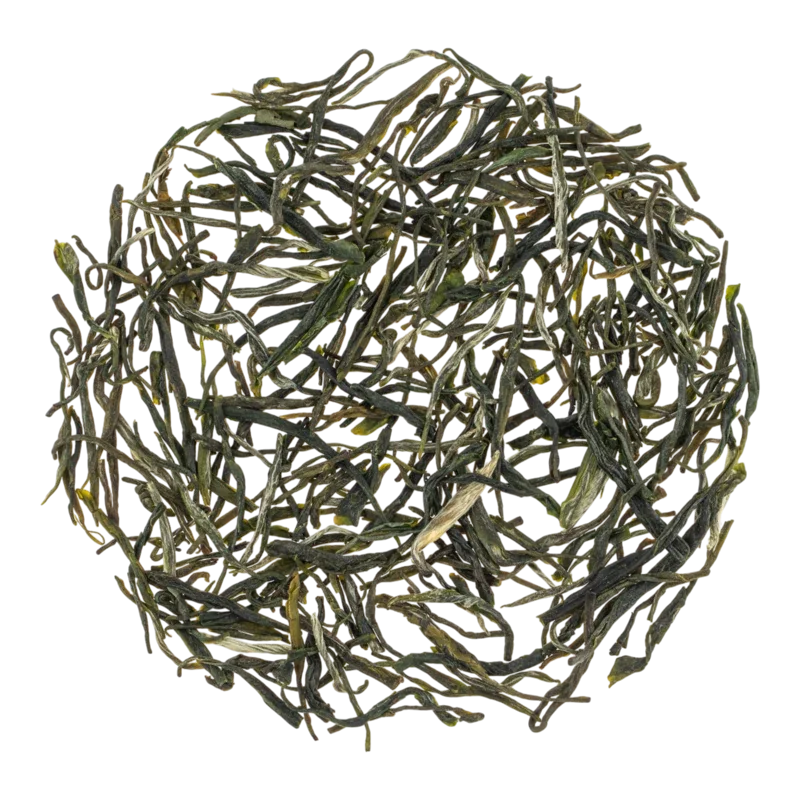
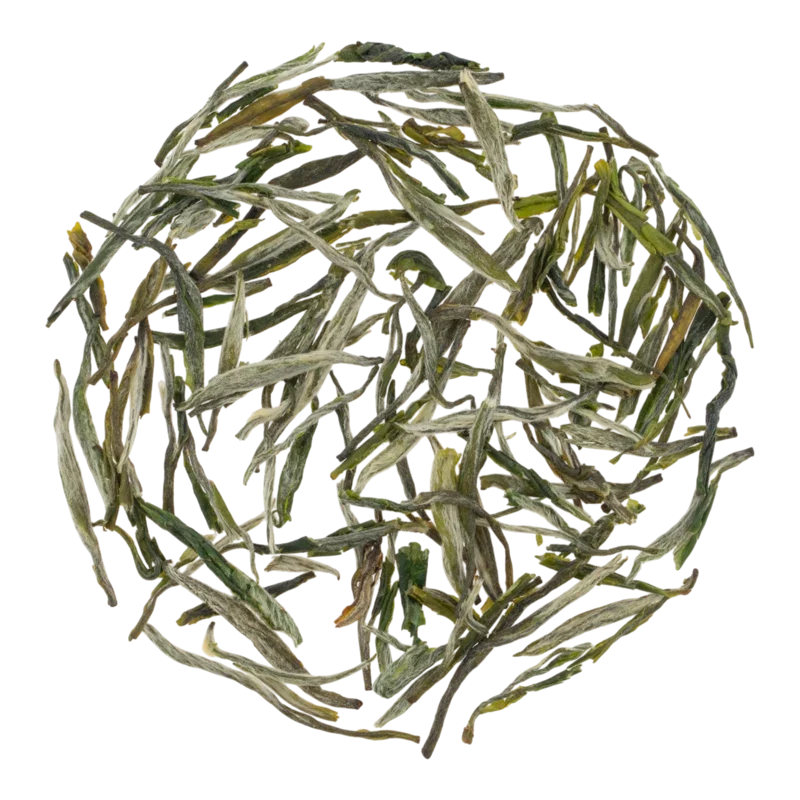
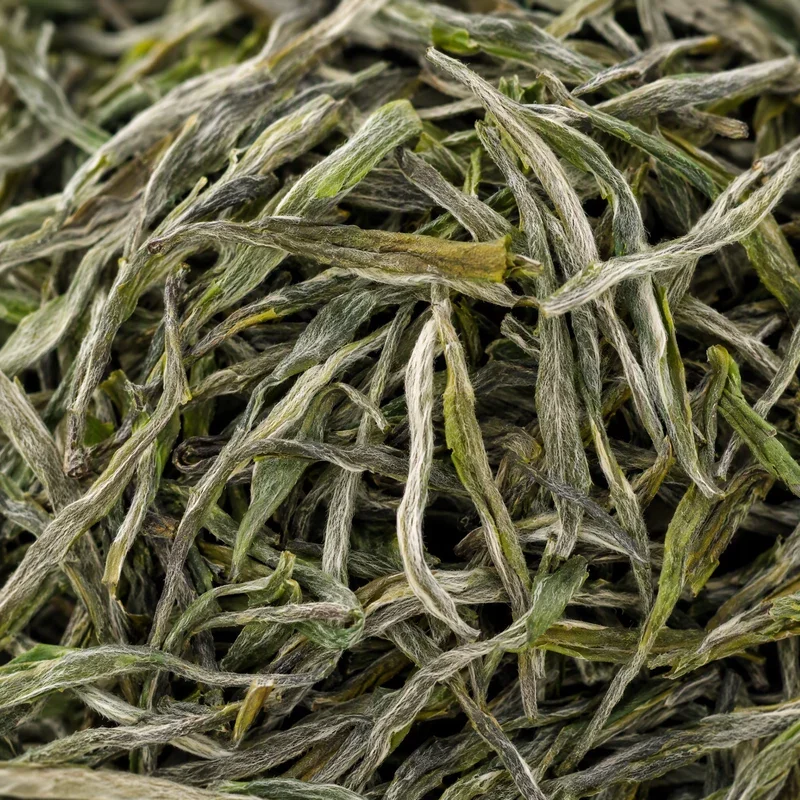
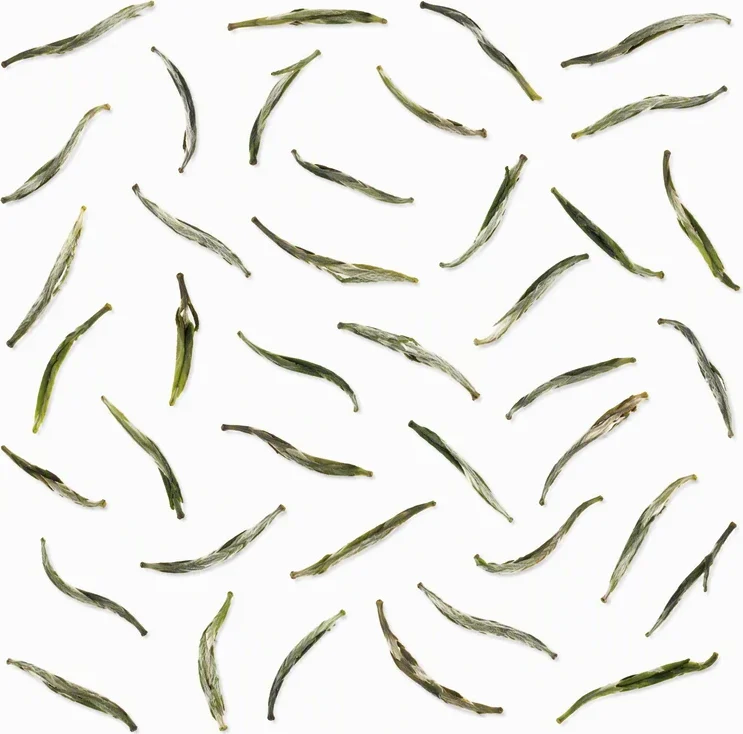
Dry Leaf Appearance: Straight, elegant "needles" (挺直似针, tǐngzhí sì zhēn), covered with abundant silvery down (绿润披毫, lǜ rùn pī háo). Color—rich green with silvery sheen. Tea leaves exceptionally uniform and even.
Dry Leaf Aroma: Chestnut (栗香, lìxiāng)—main note. Complemented by pure green freshness (清香, qīngxiāng) and light "downy" note reminiscent of young corn (毫香/玉米香).
Liquor Aroma: High chestnut aroma, persistent and long-lasting. In supreme grades—with additional honey nuancing.
Liquor Color: Yellow-green, bright and clear (黄绿明亮, huánglǜ míngliàng).
Spent Leaves: Tender green, uniform (嫩绿匀整). Shoots whole and "lively" (芽叶鲜活). When brewed in a glass cup, the characteristic "needle dance" is observed: tea leaves stand vertically, then slowly sink to the bottom—a spectacle that has become the visual calling card of Banan Yin Zhen.
Taste: Fresh and mellow (鲜醇, xiānchún), with pronounced sweetness that persists for a long time (甘爽, gānshuǎng). Light astringency quickly transforms into sweetness (微涩速化). Medium body, "juicy." Returning sweetness (回甘)—bright and prolonged.
Alkaloids: Caffeine (moderate content), theobromine, theophylline.
Amino Acids: ≥3.10% in spring tea. High content—key factor of taste "juiciness" and sweetness.
≥47.4%—one of the highest indicators among Chinese green teas, indicating exceptional richness of soluble components.
0.15–0.35 mg/kg. Baixiangshan soils contain selenium, which naturally accumulates in tea leaves.
Minerals: Potassium, magnesium, zinc, fluorine.
Polyphenols: ≥19.8%. Moderate indicator ensuring mellow taste without excessive astringency—result of "tender" kill-green.
Vitamins: Vitamin C, B-group vitamins (B1, B2), vitamin E, vitamin K.
Polyphenols (~20%) provide effective neutralization of free radicals.
Combination of caffeine and L-theanine (≥3.10% amino acids)—gentle, balanced alertness and improved concentration.
Catechins promote acceleration of fat breakdown and cholesterol level normalization.
Se content (0.15–0.35 mg/kg)—additional bonus for immune system and antioxidant protection.
Polyphenols stimulate digestive processes.
Traditional "cooling" effect of green tea—especially valuable in Chongqing's hot and humid climate.
Tea Amount: 3 g per 150 ml (glass cup, ratio 1:50).
Teaware: Glass cup (玻璃杯)—best choice: allows observing the "silver needle dance" when tea leaves stand vertically in water and slowly sink to the bottom—an effect for which Banan Yin Zhen is especially valued. White porcelain gaiwan—optimal for aroma concentration.
Water Temperature: 85–90°C for glass cup; 80–85°C for gaiwan. For supreme grade—no higher than 85°C. Overheating (>90°C) destroys freshness and causes bitterness.
Also from Chongqing, but from another district. Flat-straight form, "eyebrow-shaped." Banan—round "needles," more "downy."
Steam fixation (steaming), "marine" taste. Banan—pan-firing fixation, chestnut aroma.
Anhui. Also "needle-shaped," but from another province, with different terroir. Banan—from Mount Baixiang (White Elephant), 400–1000 m.
Price Category: Upper segment of Chongqing green teas. Approximate prices: "single bud" level—from 2,000 yuan per jin (500 g); supreme grade (特级)—from 700 yuan; first grade—400–600 yuan; second grade—200–400 yuan.
No reviews yet. Tell us what you think of this tea.
Rate this tea and share your impressions. We review each submission before publishing it.