Brewing
Gongfu brewing
- Water temperature
- 100 °C
- Tea amount
- 7 g
- Water volume
- 100 ml
- First steep
- 10 s
- Time added per infusion
- 5 s
- Infusions
- 12


Ānshùn Pùbù Lǜchá
Choose a brewing method. Start with the recommended quantities and time, then adjust to taste.
Brewing
Brewing
Taste
Tea encyclopedia
Category: One of the "Five Famous Teas of Guizhou" (贵州五大名茶, Guìzhōu Wǔ Dà Míngchá) — status awarded in 2010. Geographical indication product (中华人民共和国地理标志保护产品, dìlǐ biāozhì bǎohù chǎnpǐn) — since 2012–2013. Multiple winner of the national "Zhong Cha Bei" competition (中茶杯), including the highest award — "Special Prize" (特等奖, tèděng jiǎng) in 1994 — the first such case in Guizhou history. In 2023, it was honored with the title "One of China's Ten Best Teas" (全国十大名茶). Part of Guizhou Province's r...
Category: One of the "Five Famous Teas of Guizhou" (贵州五大名茶, Guìzhōu Wǔ Dà Míngchá) — status awarded in 2010. Geographical indication product (中华人民共和国地理标志保护产品, dìlǐ biāozhì bǎohù chǎnpǐn) — since 2012–2013. Multiple winner of the national "Zhong Cha Bei" competition (中茶杯), including the highest award — "Special Prize" (特等奖, tèděng jiǎng) in 1994 — the first such case in Guizhou history. In 2023, it was honored with the title "One of China's Ten Best Teas" (全国十大名茶). Part of Guizhou Province's regional brand system alongside Duyun Mao Jian, Meitan Cui Ya, Lübaoshi, and Zunyi Hong.
Coordinates: Approximately 26°15′ North latitude, 105°57′ East longitude (based on the production core near Huangguoshu Waterfall).
Origin: China, Guìzhōu Province (贵州省, Guìzhōu Shěng), Ānshùn City (安顺市, Ānshùn Shì). The production territory covers 15 townships within the entire Anshun municipal district.
Type: Green tea (绿茶, lǜchá), unfermented. Represented in several forms: curled (卷曲形, juǎnqū xíng) — for the "Pubu Maofeng" line; flat (扁平形, biǎnpíng xíng) — for the "Pubu Cuiya" and "Pubu Cuilong" lines.
Cultural Significance: Anshun tea is inextricably linked with two unique cultural layers. The first is the karst landscape of Huangguoshu, attracting millions of tourists annually; the "Pubu" brand consciously exploits the waterfall image as a metaphor for "purity" and "freshness" of the tea profile. The second is the "tunbao" culture (屯堡): descendants of Ming military settlers from Jiangnan have preserved archaic customs, clothing, dialect, and importantly, tea traditions from six centuries ago. Annual "Tea Picking Season Opening" (开茶季) and tasting competitions are held in Anshun, becoming notable tourist events.
History: Anshun's tea tradition is one of the most ancient in China. In the 1980s, in the Beipanjiang River basin (北盘江), in immediate proximity to Huangguoshu Waterfall, a fossilized tea seed was discovered, dated to 1.64 million years — a unique artifact confirming that the Guizhou Plateau was part of the ancient range of wild tea trees.
Cultivar: Several varieties of Camellia sinensis var. sinensis are used for production:
Picking: Spring picking is most valuable. "Mingqiancha" (明前茶) — before Qingming (~April 5); "yuqiancha" (雨前茶) — before Guyu (~April 20). Thanks to Guizhou's relatively warm climate, the season can begin as early as early to mid-March.
Raw Material: Size uniformity, integrity, absence of coarse leaves and stems. Freshly picked raw material must be delivered to production and processed the same day.
Altitude: Average plantation elevation — 1300 meters above sea level. Production core — at elevations of 1200–1500 m in karst mountain massifs around Huangguoshu Waterfall.
Climate: Anshun is located in a subtropical monsoon climate zone, modified by the elevation of the Guizhou Plateau. Average annual temperature — about 14–16°C. Annual precipitation — 1200–1400 mm. Key feature — exceptionally high cloudiness: tea plantations are shrouded in clouds and fog up to 80% of the time. Diffused light (散射光) predominates over direct sunlight, promoting slow shoot growth and intensive amino acid accumulation. Significant diurnal temperature variations enhance aromatic compound synthesis.
Soil: Weakly acidic yellow soils (黄壤, huáng rǎng), rich in organic matter and minerals — potassium, magnesium, zinc. Karst topography provides excellent drainage, preventing water stagnation at roots.
Hand or semi-mechanized picking in morning hours. Raw material strictly selected by grade.
Picked shoots are spread in a thin layer in shade for light withering and initial aroma development.
High-temperature treatment at 220–280°C. Inactivates oxidative enzymes, fixes green color, establishes aromatic foundation.
After fixation, leaves are spread to equalize residual moisture between outer and inner layers, ensuring uniformity of subsequent rolling.
"Light → heavy → light" method (轻—重—轻) is applied. Duration — 35–45 minutes. Goal — achieve tea strip formation (成条率) over 80% while preserving shoot integrity.
Stage determining final product form:
Final low-temperature drying at 80–110°C — slow, "locking" aroma inside the tea particle. Final moisture content — no more than 7%.
Finished tea is separated by size and grade.
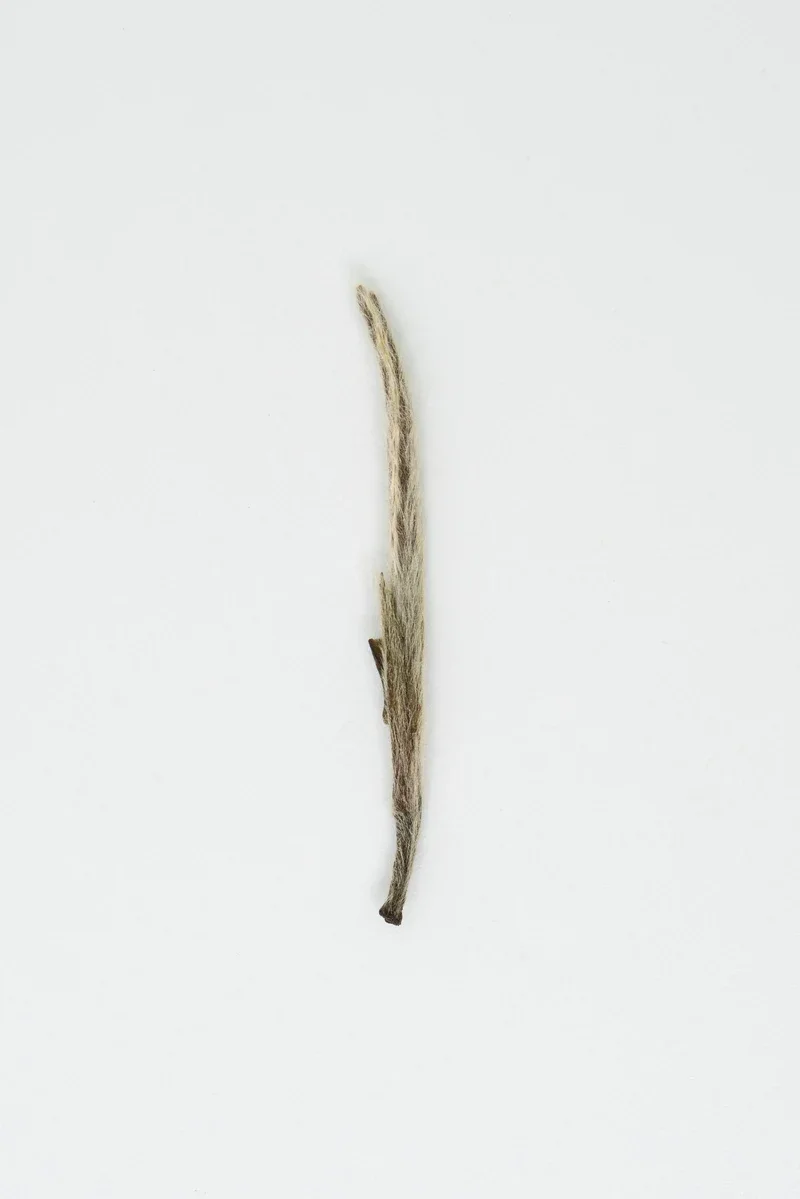
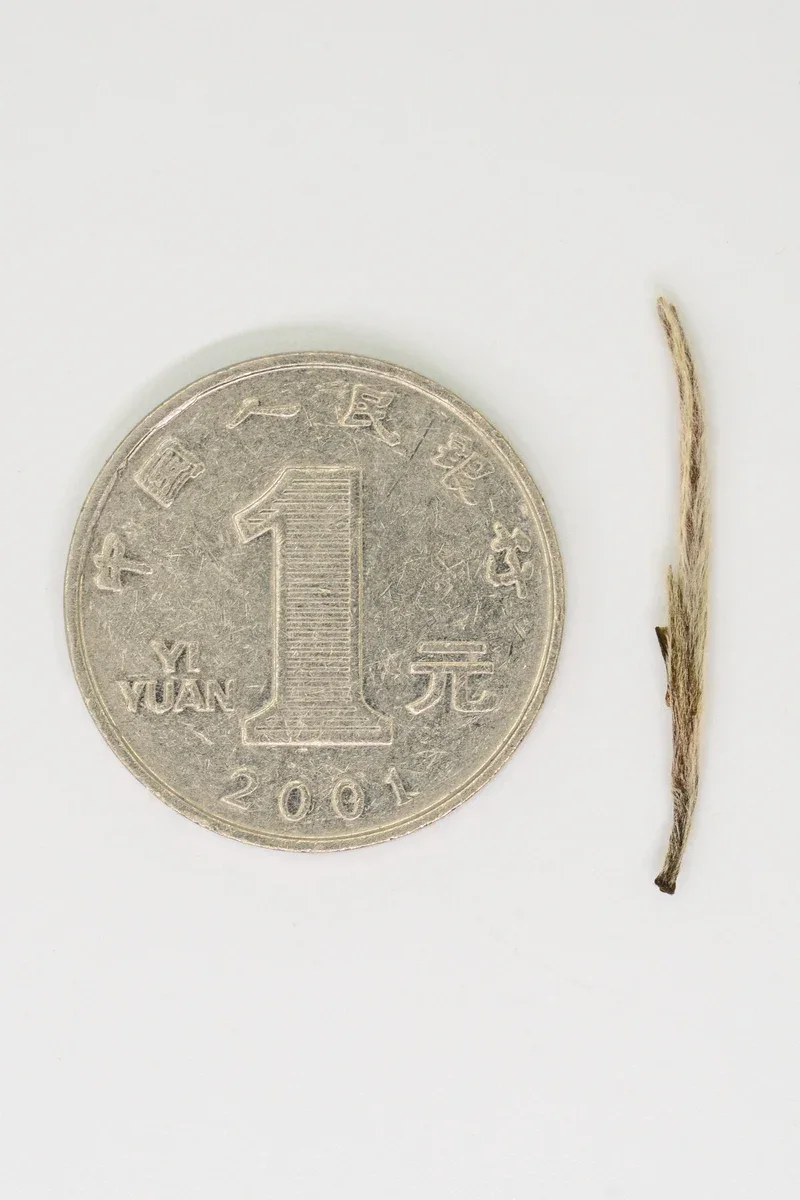
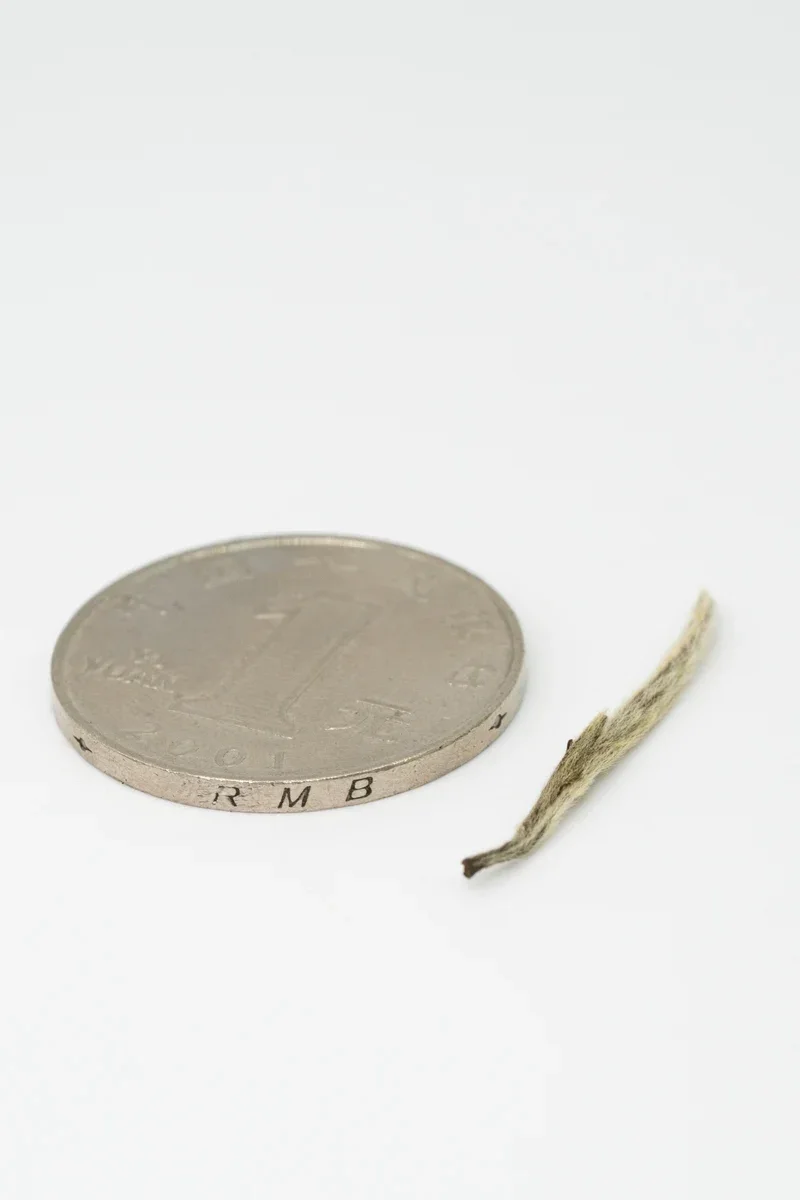
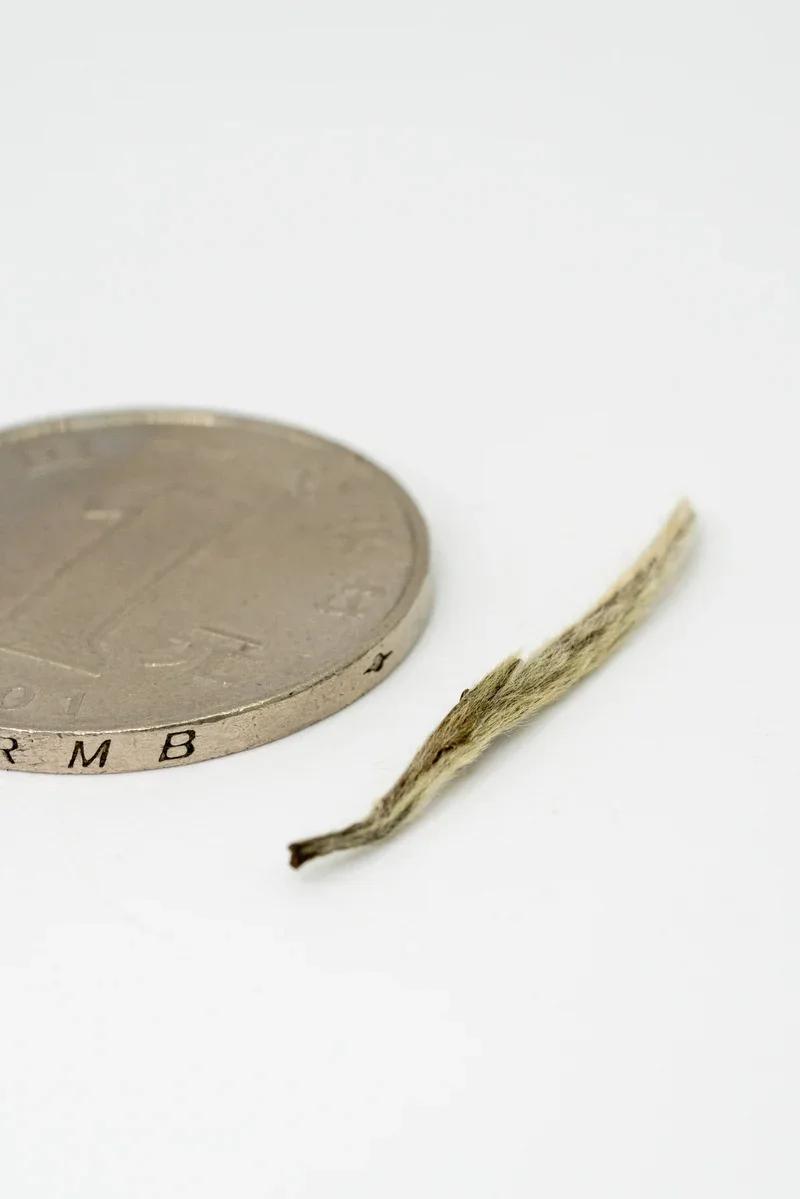
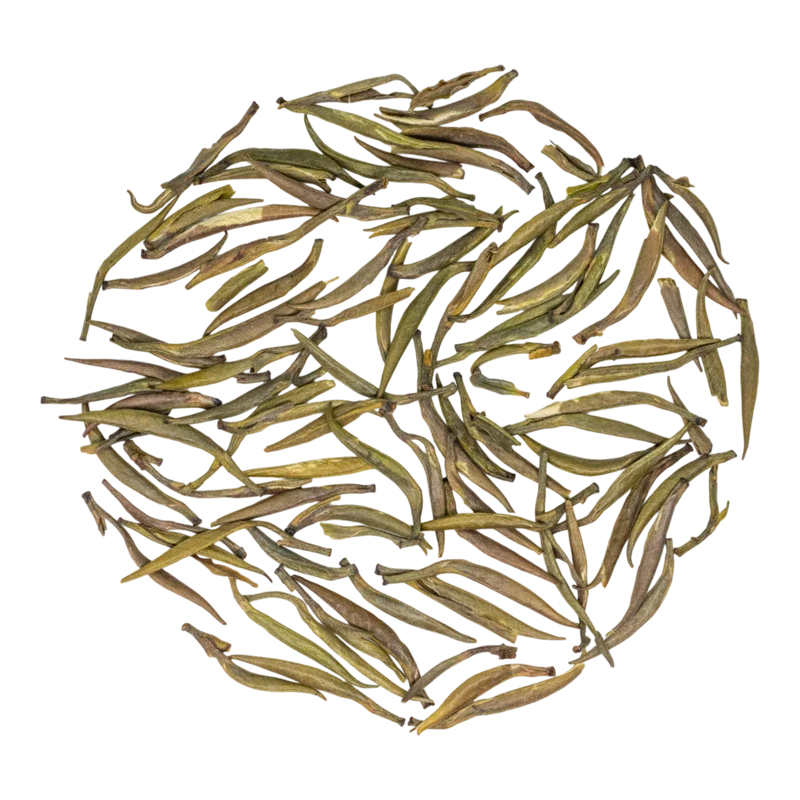
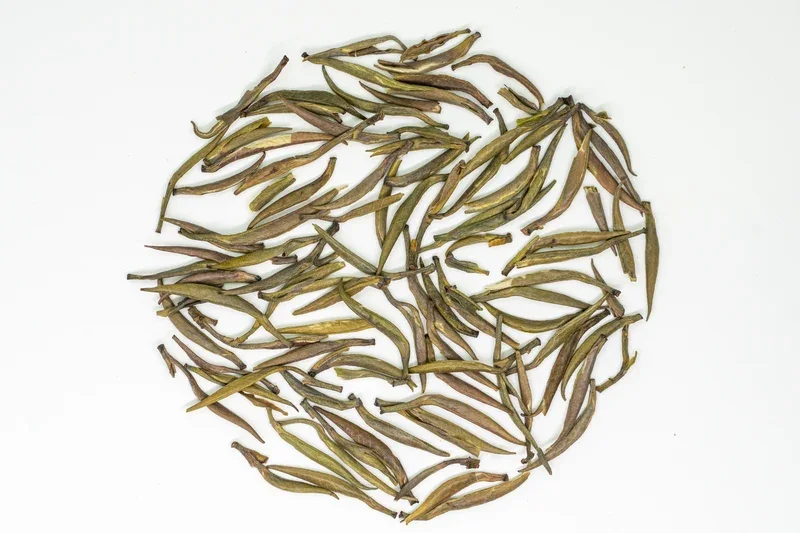
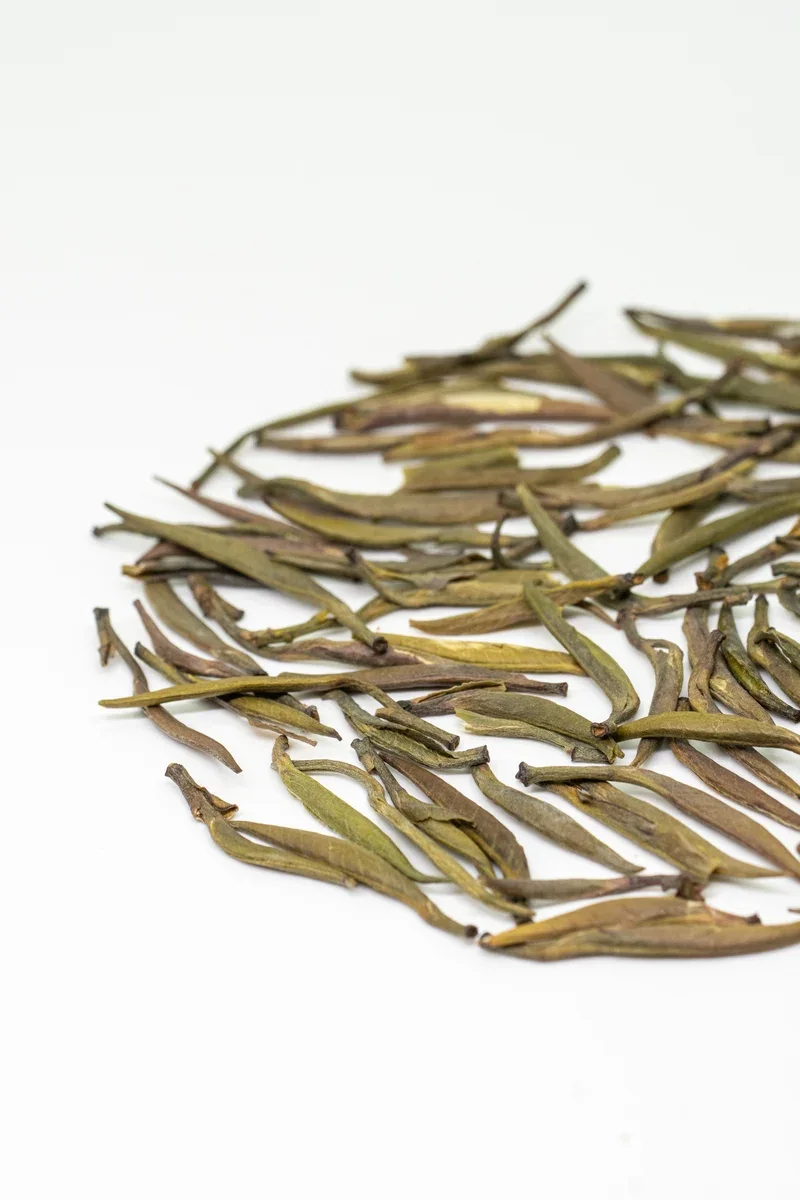
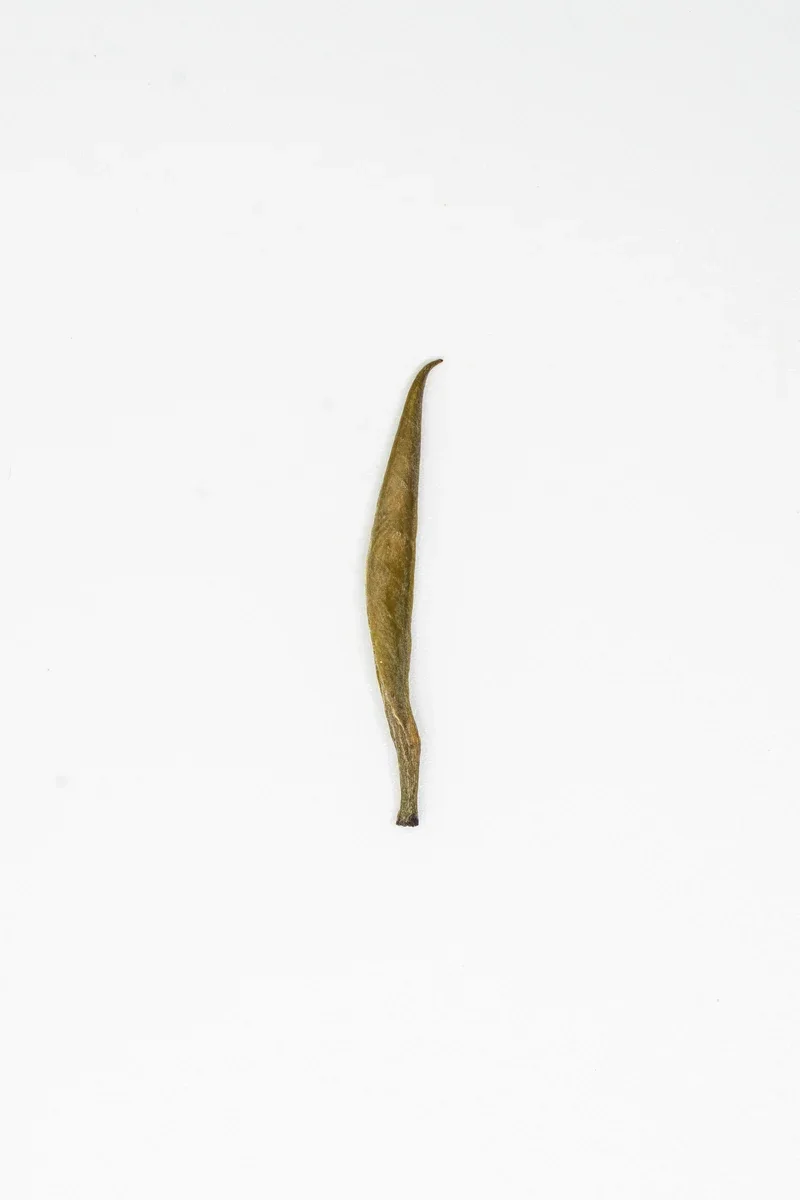
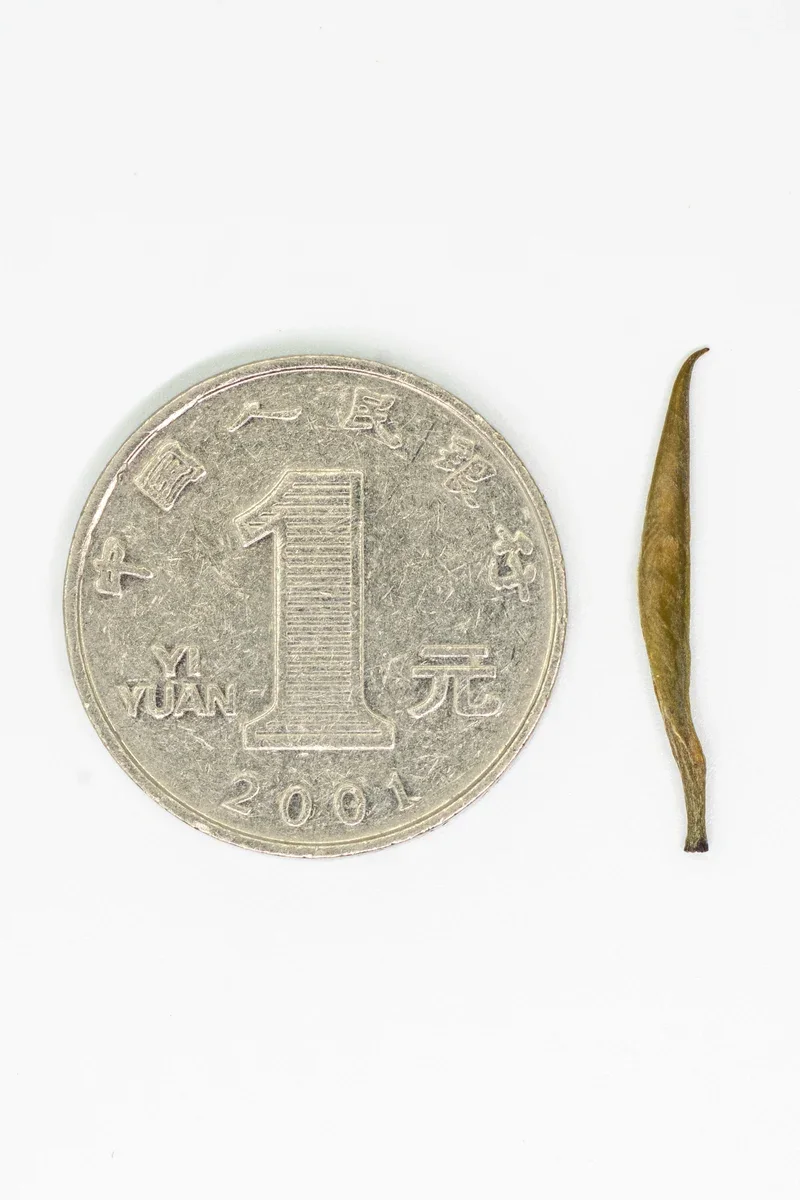
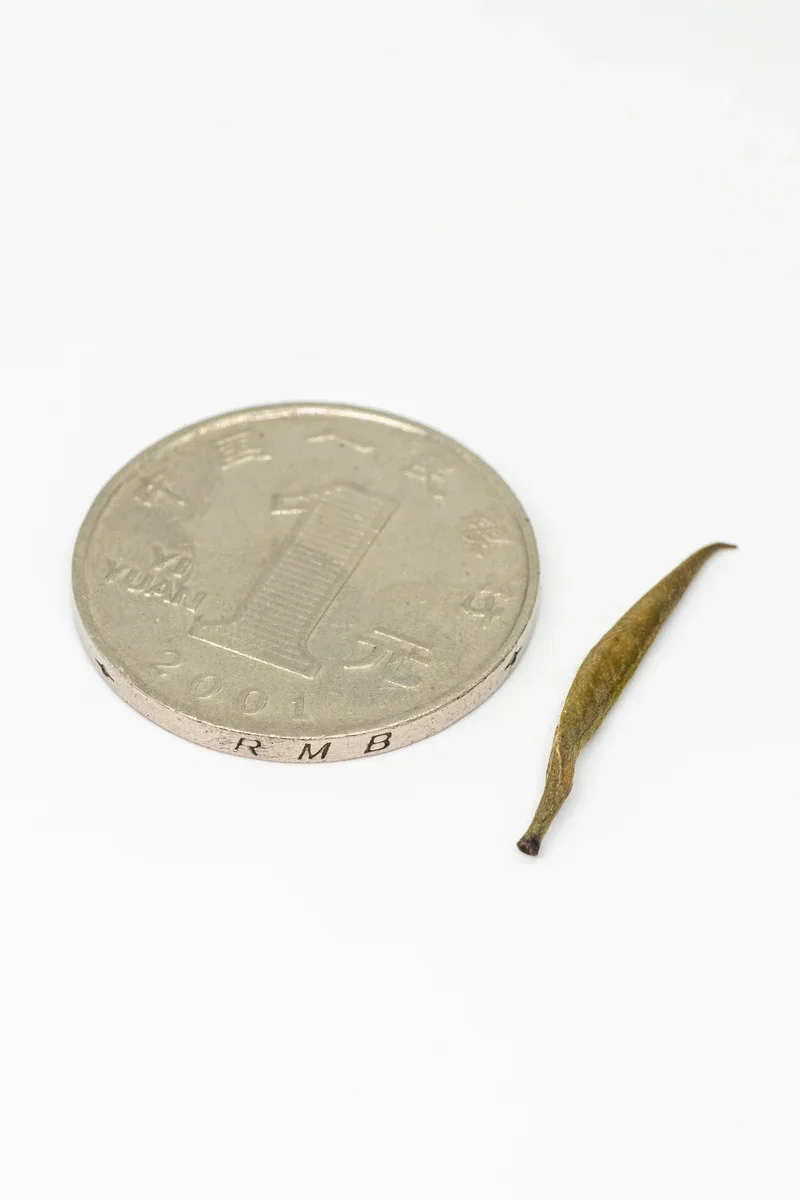
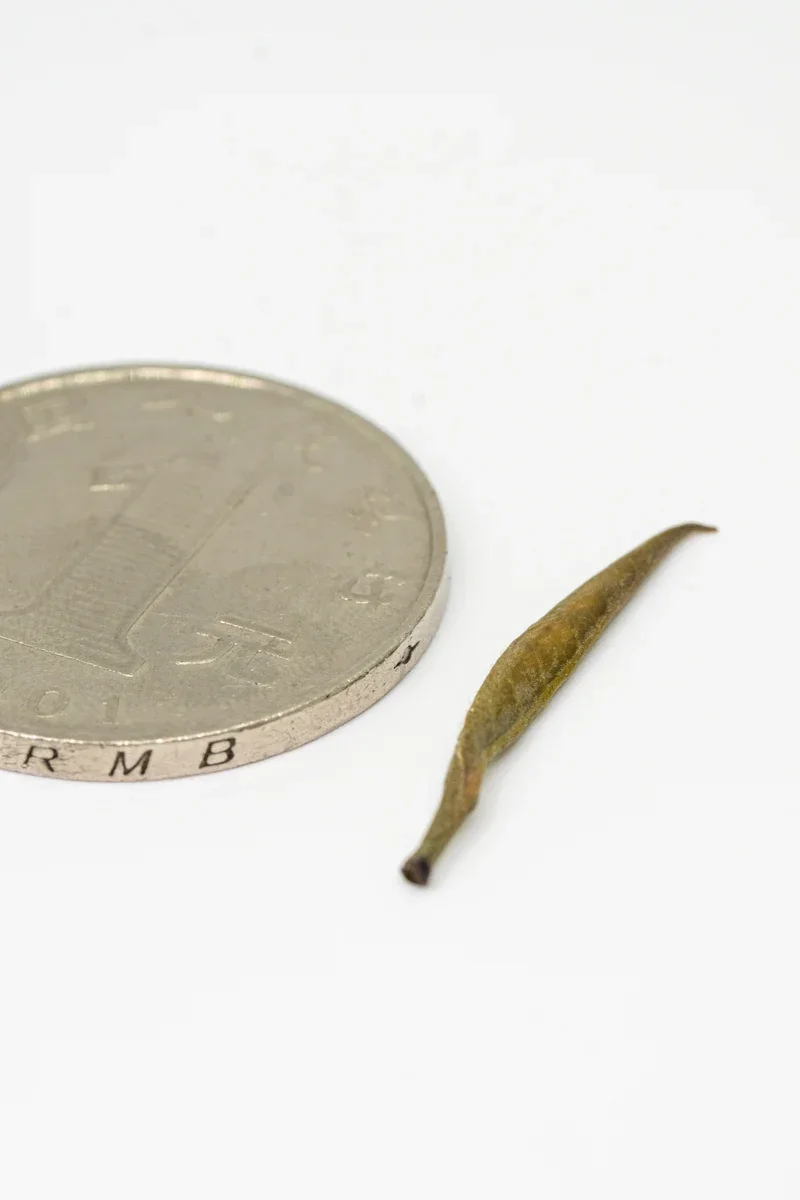
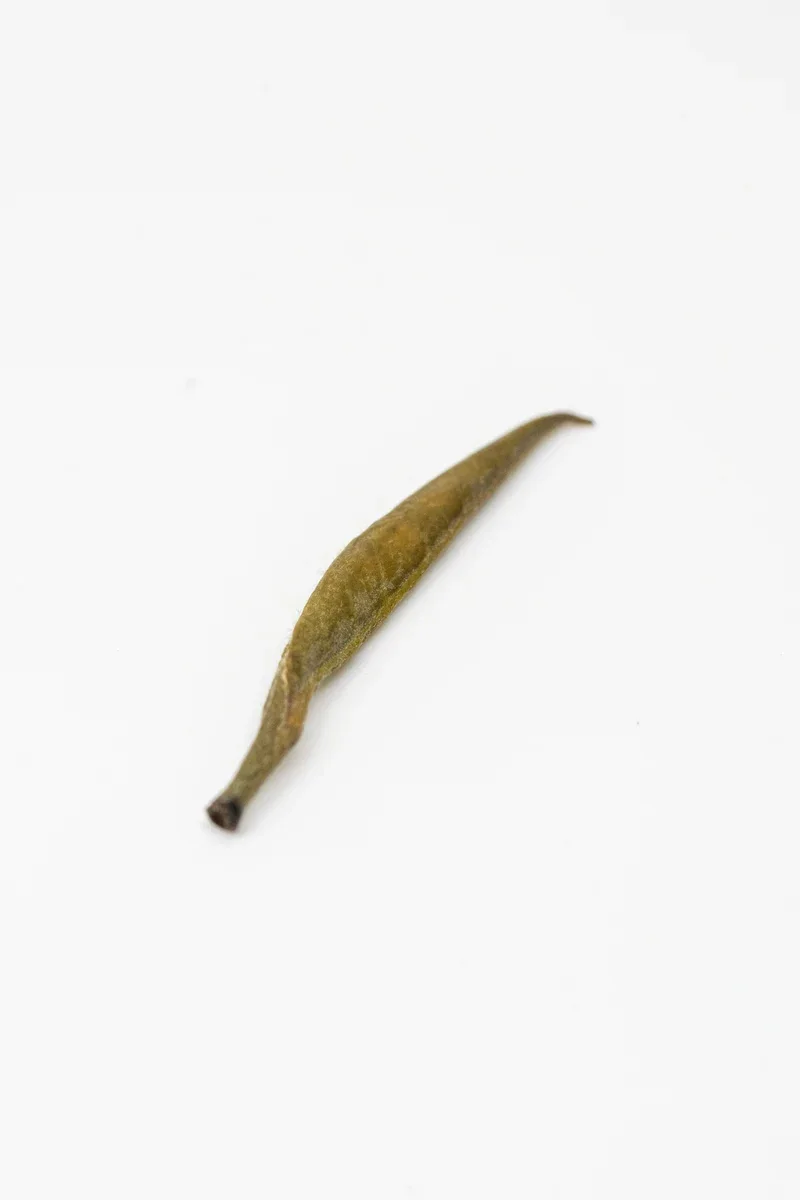
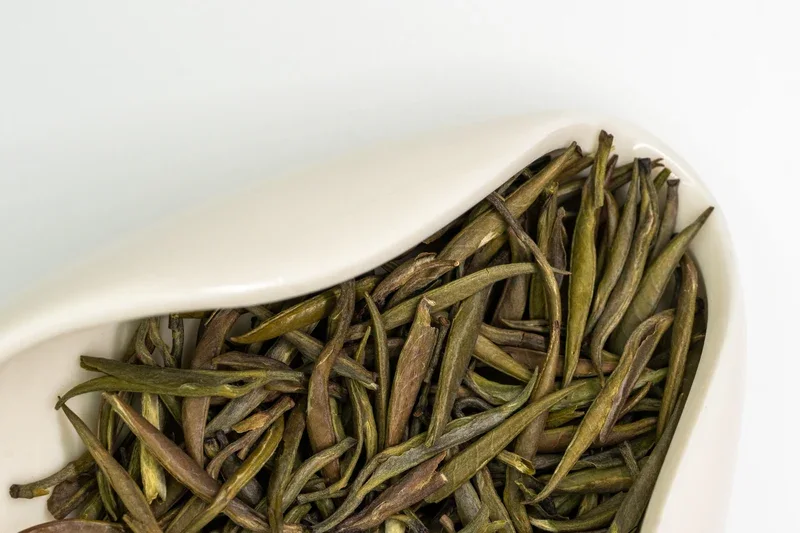
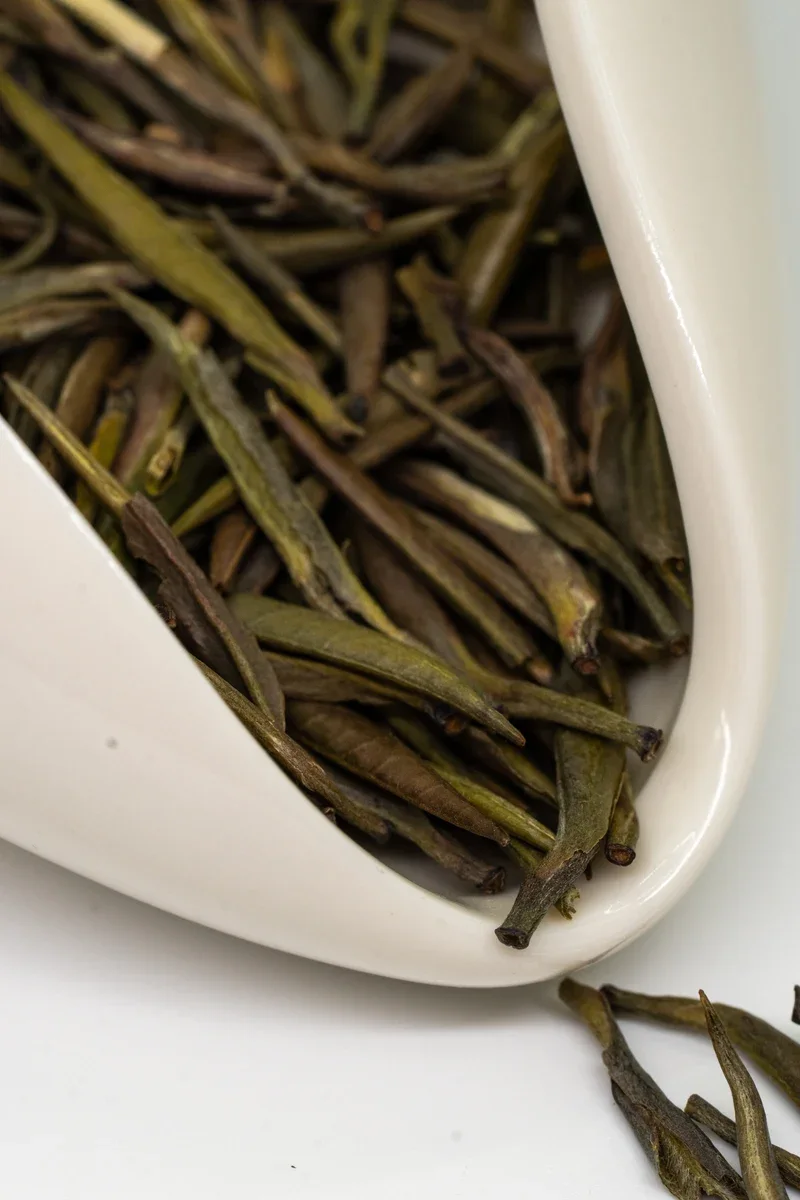
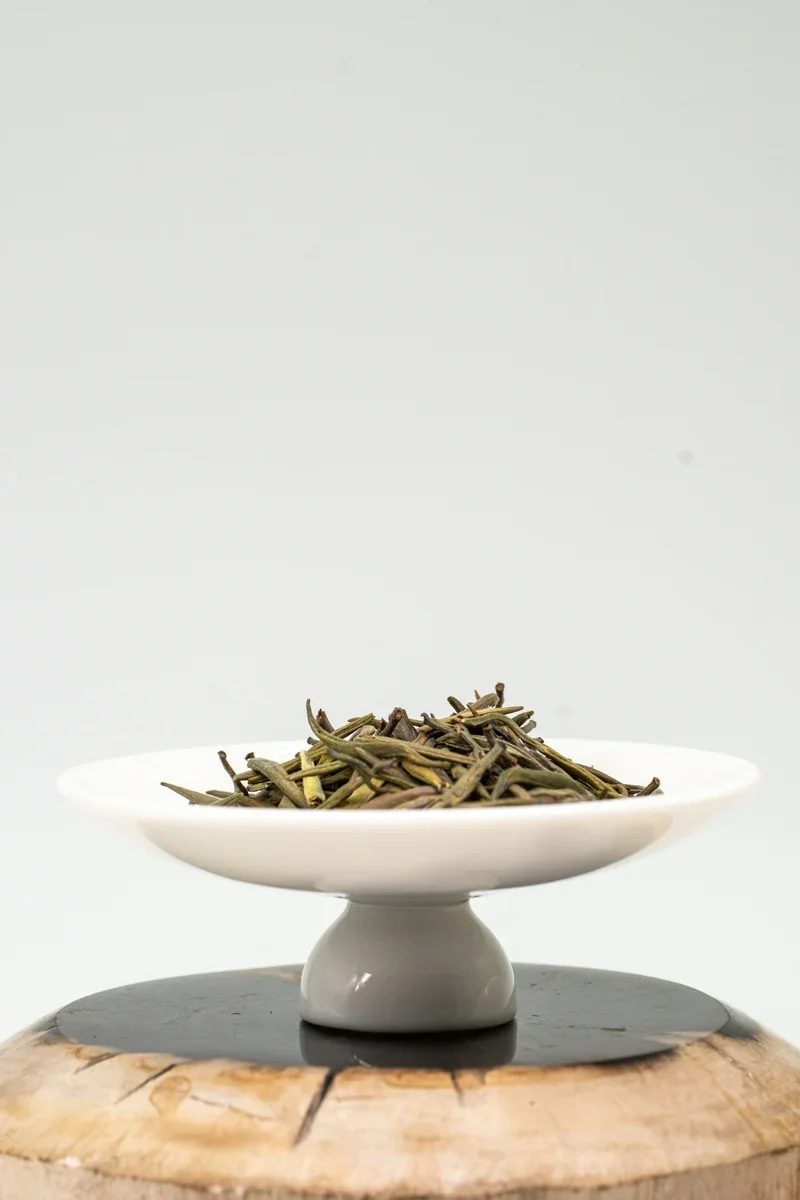
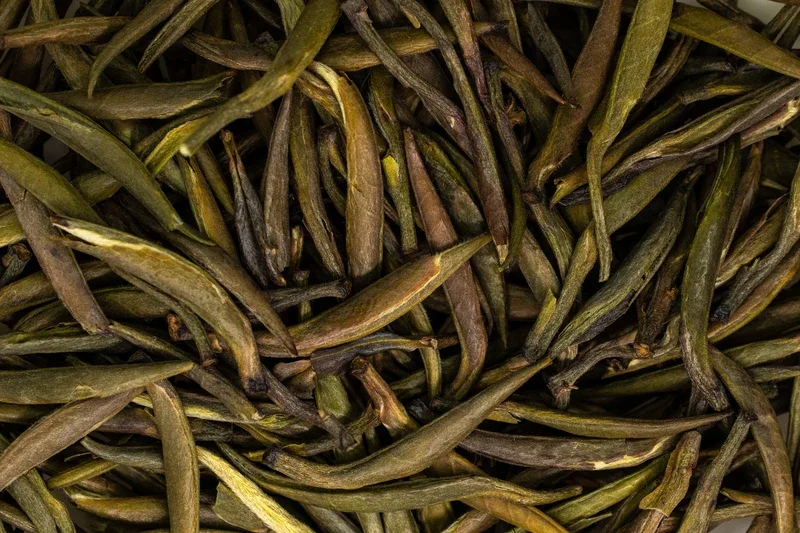
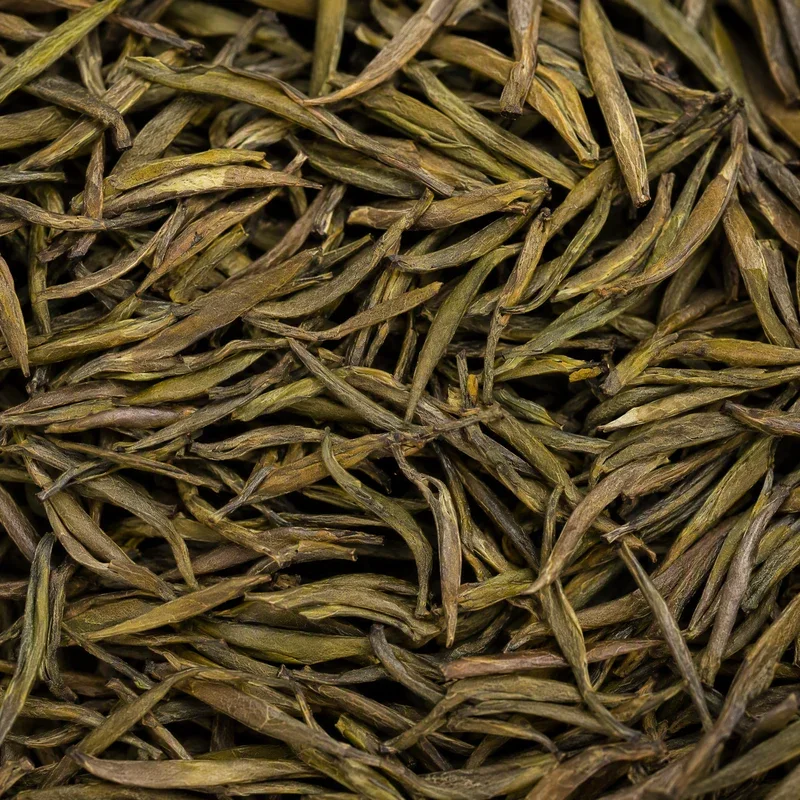
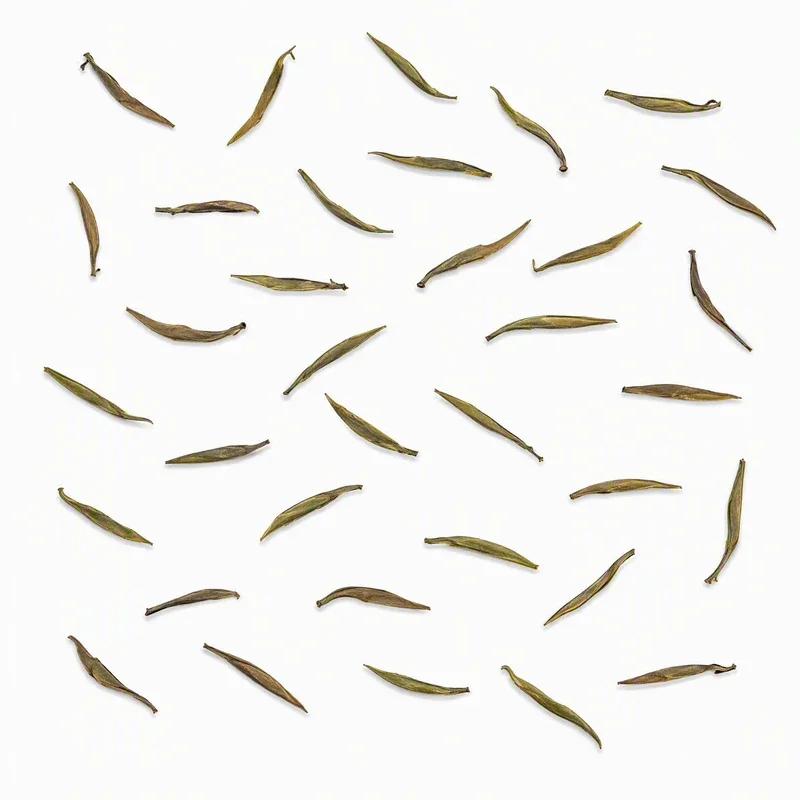
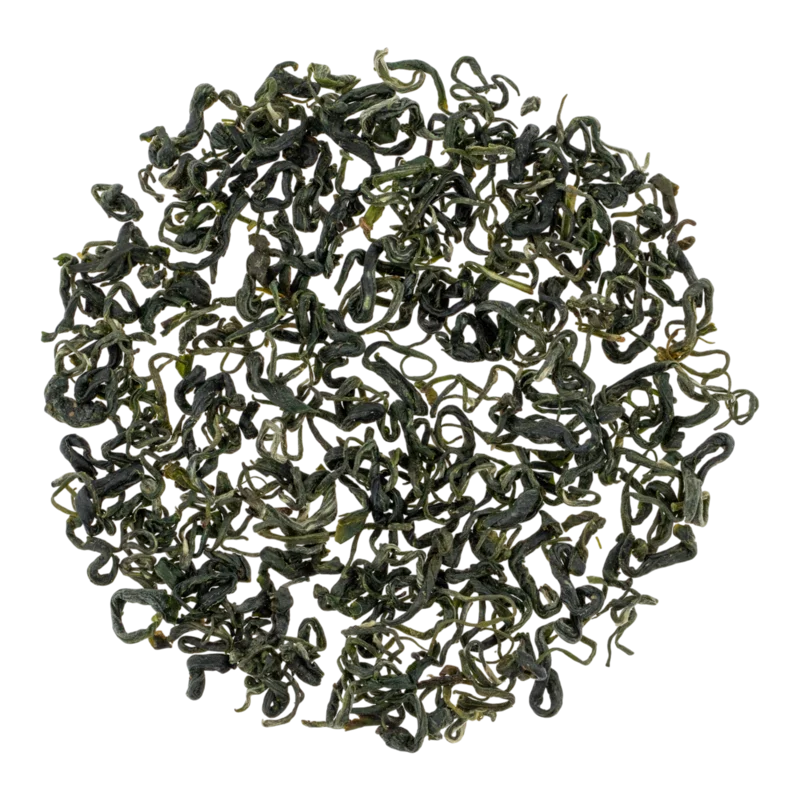
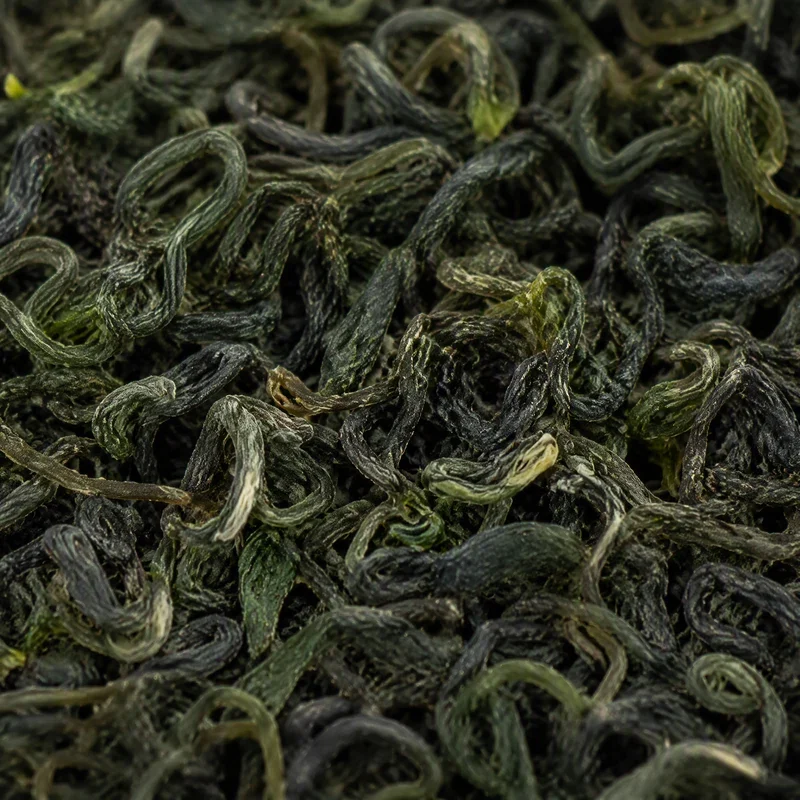
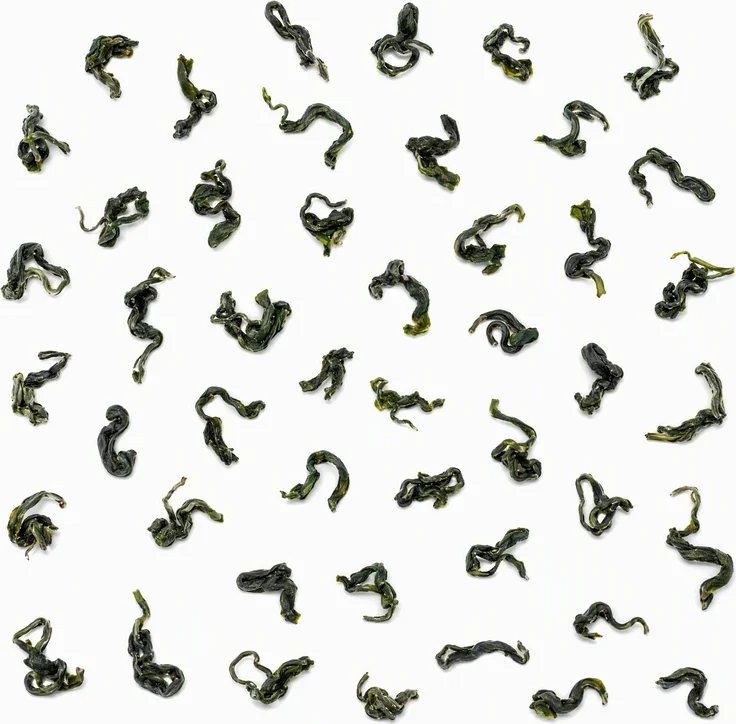
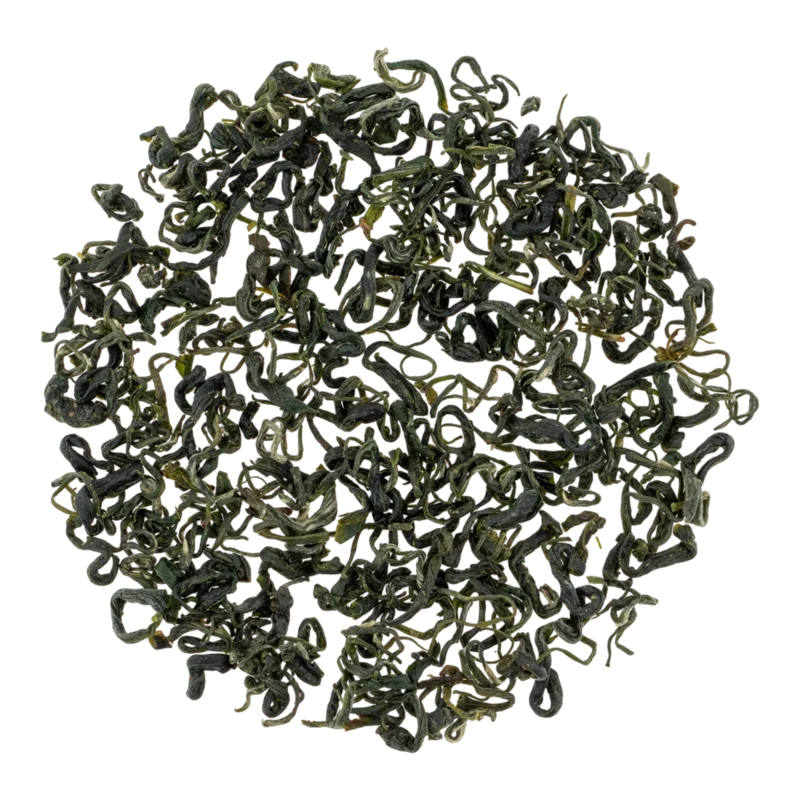
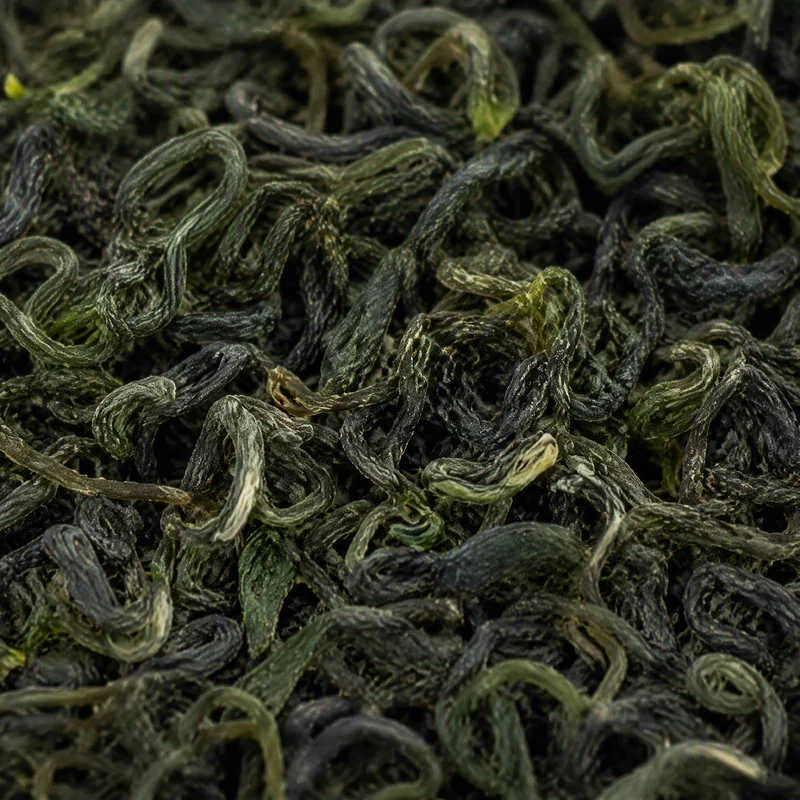
Dry Leaf Appearance: Depends on the line. Maofeng: tea particles tightly curled (条索紧细卷曲), with abundant silvery fuzz (茸毛显露), uniform. Cuiya: flat, smooth, with light hidden fuzz (隐毫), emerald green. Cuilong: flat, straight, bright emerald color.
Dry Leaf Aroma: Clean, high, elegant (清香高雅) with delicate "young" note of fresh greenery (嫩香). Aroma persistent and long-lasting.
Liquor Aroma: High, stable, with dominance of clean freshness (清香持久). In premium grades — with subtle floral undertone and young chestnut note.
Liquor Color: Light yellow-green, bright, transparent, with "lively" shine.
Spent Leaves: Tender green, uniform (嫩绿匀齐). In Maofeng — shoots unfold whole, small and neat. In Cuiya and Cuilong — flat, even leaves.
Taste: Pronounced freshness (鲜爽, xiānshuǎng) — result of high amino acid content. Body moderately dense (醇厚, chúnhòu), with perceptible sweetness (甘甜, gāntián). Returning sweetness (回甘, huígān) — distinct and prolonged. Bitterness and astringency minimal when temperature regime is observed.
Alkaloids: Caffeine (moderate level), theobromine, theophylline.
Amino Acids: Elevated content due to high cloudiness and predominance of diffused light. Amino acids specifically determine characteristic "freshness" (鲜爽) and soft sweetness of the profile. Polyphenol to amino acid ratio (酚氨比) — optimally balanced, ensuring harmonious taste without excessive astringency.
Essential Oils: Responsible for persistent floral-green aroma. Significant diurnal temperature variations at 1300 m elevation promote intensive synthesis of volatile aromatic compounds.
Minerals: Potassium, magnesium, zinc, manganese — conditioned by mineralization of karst yellow soils.
Polyphenols: Content typical for high-altitude Guizhou green teas. "Guizhou Lücha" standard (贵州绿茶) requires water-extractable substances content ≥40% — one of the highest thresholds in China.
Vitamins: Vitamin C (ascorbic acid), B-group vitamins.
High polyphenol (catechin) content provides effective free radical neutralization.
Combination of caffeine and L-theanine gives balanced alertness and improved concentration without nervousness.
In traditional Chinese medicine, green tea belongs to "cold" products, promoting internal heat dissipation — especially valuable quality during hot summer months.
Catechins normalize intestinal microflora and stimulate digestive processes.
Polyphenols promote lipid metabolism normalization and maintenance of vascular elasticity.
Complex of vitamins (C, B), minerals (K, Mg, Zn) and antioxidants.
Tea Amount: 3–5 g per 150–200 ml (glass cup or gaiwan).
Teaware: Glass cup (for observing leaf unfolding) or porcelain gaiwan. For Cuiya and Cuilong, a glass cup is especially good — flat tea particles effectively "dance" in water.
Water Temperature: 85–90°C. Avoid boiling water — it enhances bitterness and "harshness," destroys delicate aromatics.
Curled form (卷曲形). Tea particles thin, tightly curled, with abundant fuzz. Taste — fresh and soft, with pronounced sweetness. Spent leaves — small, uniform. Most famous and awarded line.
Flat form (扁平形). Smooth, even tea particles with minimal fuzz. Aroma — elegant, with floral note. Taste — clean, refreshing, "juicy." Style closer to Longjing.
Flat straight form. Color — bright emerald. Aroma — persistent, "lush" (馥郁). Taste — full, with long aftertaste. Visually most impressive line.
Price Category: Middle and upper segment of Guizhou green teas. Approximate retail prices: premium grade (特级, mingqiancha) — from 400–800 yuan per 500 g; first grade — 200–400 yuan; second grade — 100–200 yuan. Early spring batches significantly more expensive than summer-autumn ones.
No reviews yet. Tell us what you think of this tea.
Rate this tea and share your impressions. We review each submission before publishing it.