Brewing
Gongfu brewing
- Water temperature
- 90 °C
- Tea amount
- 6 g
- Water volume
- 100 ml
- First steep
- 10 s
- Time added per infusion
- 5 s
- Infusions
- 8


Ālǐshān zhū lù chá
Choose a brewing method. Start with the recommended quantities and time, then adjust to taste.
Brewing
Brewing
Taste
Tea encyclopedia
Category: Taiwanese high-mountain oolongs (高山烏龍, gāoshān wūlóng). Included in the list of Ten Famous Teas of Taiwan, compiled by Fàn Zēngpíng (范增平, Fàn Zēngpíng) — founder of the Chinese Tea Culture Society.
Category: Taiwanese high-mountain oolongs (高山烏龍, gāoshān wūlóng). Included in the list of Ten Famous Teas of Taiwan, compiled by Fàn Zēngpíng (范增平, Fàn Zēngpíng) — founder of the Chinese Tea Culture Society.
Coordinates: ≈23.49°N, 120.69°E (center of the Shizhuo tea district).
Origin: Táiwān (台灣, Táiwān), Chiayi County (嘉義縣, Jiāyì xiàn), Zhúqí Township (竹崎鄉, Zhúqí xiāng), Shízhuō district (石棹, Shízhōu). The production zone also encompasses the adjacent townships of Fānlù (番路鄉, Fānlù xiāng) and Ālǐshān (阿里山鄉, Ālǐshān xiāng), located along the Ālǐshān mountain highway (阿里山公路, Ālǐshān gōnglù).
Type: Oolong (semi-oxidized tea). Oxidation level — light, 15–25%. Roasting — from light to medium; traditional style involves slow charcoal roasting (炭火慢焙, tànhuǒ màn bèi).
Cultural Significance: Alishan Zhu Lu Cha occupies an honored place among Taiwanese teas. It is called the "green gold" (綠金, lǜjīn) of Zhuqi Township — the foundation of local agricultural prosperity. Inclusion in the list of Ten Famous Teas of Taiwan, approved by tea experts, secured its status as one of the most representative Taiwanese high-mountain oolongs. The Shízhuō Production and Marketing Class (石棹珠露產銷班, Shízhōu Zhūlù chǎnxiāo bān) has repeatedly received industry awards, including the "Special Prize for Selected Superior Quality Alishan Zhu Lu Cha" (阿里山珠露茶精選特優獎). The tea has become a symbol of the region, uniting traditions of hand-picking, artisanal approach to roasting, and collective responsibility of the farming community for product reputation.
History: Tea cultivation in the Shizhuo district has more than a century of history. The first tea bushes were planted during the Qīng dynasty (清代, Qīng dài): Táinán Prefecture (台南府, Táinán fǔ) selected promising tea varieties and entrusted the village head (保長, bǎozhǎng) surnamed Wú (吳氏, Wú shì) from the Méishān (梅山, Méishān) district to conduct trial plantings in the localities of Ruìfēng (瑞峰, Ruìfēng), Wàiliáo (外寮, Wàiliáo), and Shēngmáoshù (生毛樹, Shēngmáoshù). Subsequently, the Hóng family (洪氏, Hóng shì) transplanted these bushes to the Shizhuo district, where clan descendants still preserve the old plantings. However, large-scale cultivation began only in 1980, when the Qīngxīn Oolong cultivar (青心烏龍, Qīngxīn Wūlóng), also called "soft-branch oolong" (軟枝烏龍, ruǎnzhī wūlóng), was introduced. Trial plantings yielded excellent results, and with support from the Zhuqi Township administration, the local farmers' association (農會, nónghuì), and the Chiayi County government, active expansion of tea plantations began. In 1986, farmers created a Production and Marketing Research Class (產銷研究班, chǎnxiāo yánjiū bān) to standardize quality and protect against unscrupulous middlemen. Finally, on October 28, 1987, at the "Tea Journey" exhibition (茶之旅, Chá zhī lǚ) organized by the International Lions Club at the Taipei World Trade Center, former Vice President of Táiwān Xiè Dōngmǐn (謝東閔, Xiè Dōngmǐn) tasted this tea and, impressed by its quality, at the farmers' request gave it the official name — "
Name Breakdown: The name consists of three elements: 阿里山 (Ālǐshān) — the Alishan mountain range, one of Taiwan's most famous mountain regions; 珠 (zhū) — "pearl, bead," referring to the shape of the rolled leaves and to drops of morning dew; 露 (lù) — "dew." According to Xie Dongmin, the name was inspired by the image of morning dew that settles at dawn as pearl drops on tea leaves of high-mountain plantations — "甘珠玉露" (gān zhū yù lù), "sweet pearl jade dew." Thus, Zhu Lu Cha is "pearl dew tea from the Alishan mountains."
Cultivar: The main cultivar is Qīngxīn Oolong (青心烏龍, Qīngxīn Wūlóng), belonging to Camellia sinensis var. sinensis. This is a small-leaf variety with thin, tender shoots rich in amino acids and polyphenols. The leaves are distinguished by soft texture, dense flesh, and pronounced aromaticity, making Qingxin Oolong the standard raw material for Taiwanese high-mountain oolongs. A small portion of plantations is planted with the Jīn Xuān cultivar (金萱, Jīn Xuān, Taiwan Tea No. 12, 台茶12號), which brings characteristic milky-creamy nuances, however classic Zhu Lu Cha is produced precisely from Qingxin Oolong.
Picking: Two main seasons — spring (春茶, chūn chá, March–May) and winter (冬茶, dōng chá, October–November). Spring harvest yields the most aromatic and amino acid-rich tea; winter is valued for density and depth of flavor. Some farms also practice summer and autumn harvests, however their quality generally falls short of spring and winter.
Pluck Standard: Completely hand-picked (全手採嫩菁, quán shǒu cǎi nèn jīng). The top shoot is picked — bud with two to three young leaves (一芽二三葉, yī yá èr sān yè). This standard ensures optimal balance of aroma and liquor density.
Raw Material: Shoots must be whole, of uniform maturity, without mechanical damage. Absence of foreign odors and excessive leaf coarseness is important. Harvested raw material is quickly delivered to the processing facility to avoid overheating and premature oxidation.
Altitude: 1,200–1,600 m above sea level. The core quality zone is 1,300–1,500 m.
Climate: The district is located near the Tropic of Cancer (≈23.5°N), in a subtropical mountain climate zone. Tea gardens are year-round shrouded in clouds and mist (終年雲霧繚繞, zhōngnián yúnwù liáorào). Average temperature is significantly lower than on the plains; diurnal temperature variations are large — air warms during the day while nights remain cool. High humidity and abundant diffused light (漫射光, mànshèguāng) slow the growth of tea bushes, resulting in greater accumulation of amino acids, pectins, and aromatic substances in shoots, while the content of bitter catechins remains moderate. These conditions form the characteristic "high-mountain cold note" (高山冷韻, gāoshān lěng yùn) — the calling card of Alishan oolongs.
Soil: Acidic red mountain soils (紅土, hóng tǔ) saturated with mineral compounds predominate. Red soils are well-drained and provide the tea bush root system with necessary microelements. The mineral profile of soils varies from micro-site to micro-site, giving tea from different farms slightly different character.
Tea gardens are located on mountain slopes along the Ālǐshān highway (省道台18線, shěngdào Tái 18 xiàn), approximately from the 47th to 53rd kilometer, in Zhuqi Township and adjacent townships of Fanlu and Alishan. The core of the production zone is the Shízhuō district (石棹茶區, Shízhōu chá qū), where 80 to 120 hectares of tea plantations are concentrated.
Hand-picking of top shoots is conducted in early morning or during cool hours of the day. Harvested raw material is immediately delivered to the workshop to avoid overheating and uncontrolled oxidation.
Freshly picked leaves are spread in a thin layer under diffused sunlight for 15–30 minutes. The leaf loses part of its moisture, becomes pliable; formation of the aromatic base begins.
After solar exposure, leaves are moved to a room with natural ventilation, where they continue to slowly lose moisture and "rest," equalizing internal hydration.
Key stage in forming oolong aroma. Several cycles (usually 4–5) of shaking in bamboo sieves or rotating drums are conducted, interspersed with rest periods. Mechanical action damages cells at leaf edges, triggering controlled enzymatic oxidation. It is at this stage that floral and fruity notes characteristic of Zhu Lu Cha are born. Oxidation level is controlled at 15–25%.
High-temperature heating (in wok or roller) stops enzymatic processes and fixes aroma direction. Temperature and time are selected by the master individually depending on leaf condition.
Primary rolling forms initial leaf shape and destroys cell walls, facilitating future extraction during brewing.
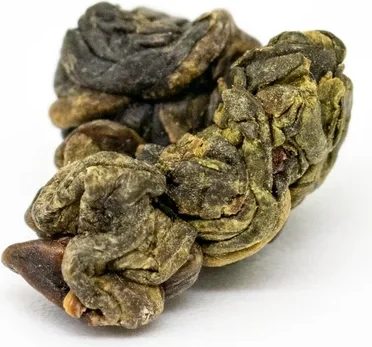
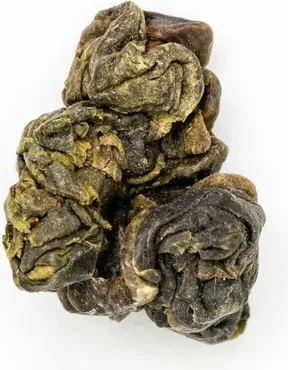
Leaves are wrapped in cloth and repeatedly pressed and rolled, forming the characteristic semi-spherical (ball-shaped) granule form. This stage is repeated several times, alternating with intermediate drying, until the leaf acquires dense, neat structure.
Traditional Zhú Lú Chá undergoes slow charcoal roasting (炭火慢焙, tànhuǒ màn bèi), which gives the liquor depth and honey-nutty nuances without suppressing high-mountain freshness. Modern productions often use electric drying with light roasting (輕焙火, qīng bèihuǒ), preserving the maximally "green," floral profile.
Final moisture stabilization to safe storage level (≤5%).
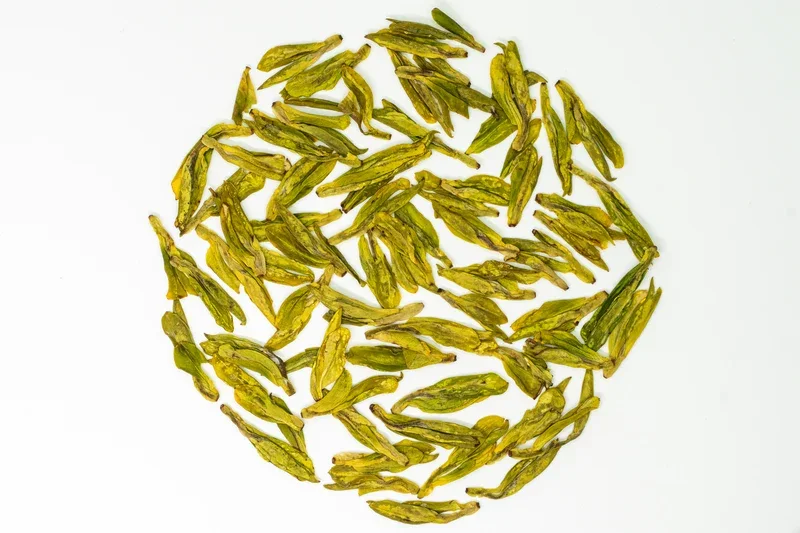
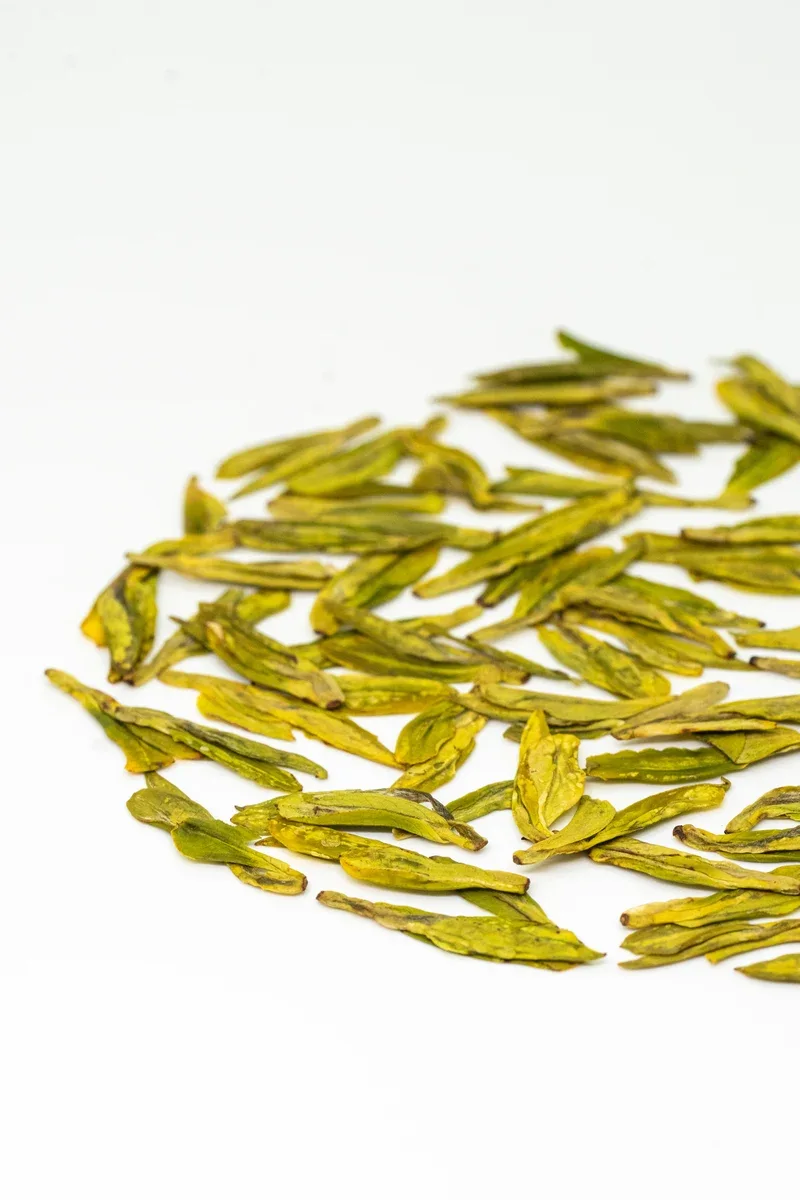
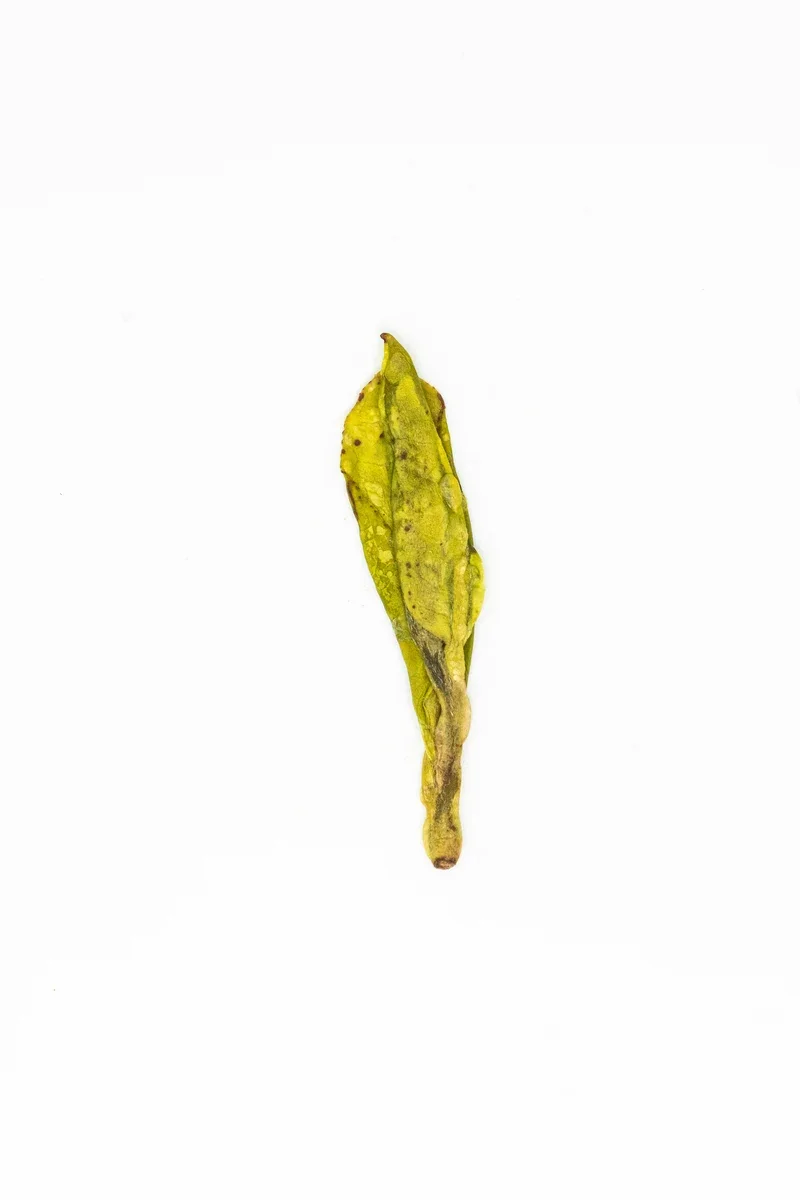
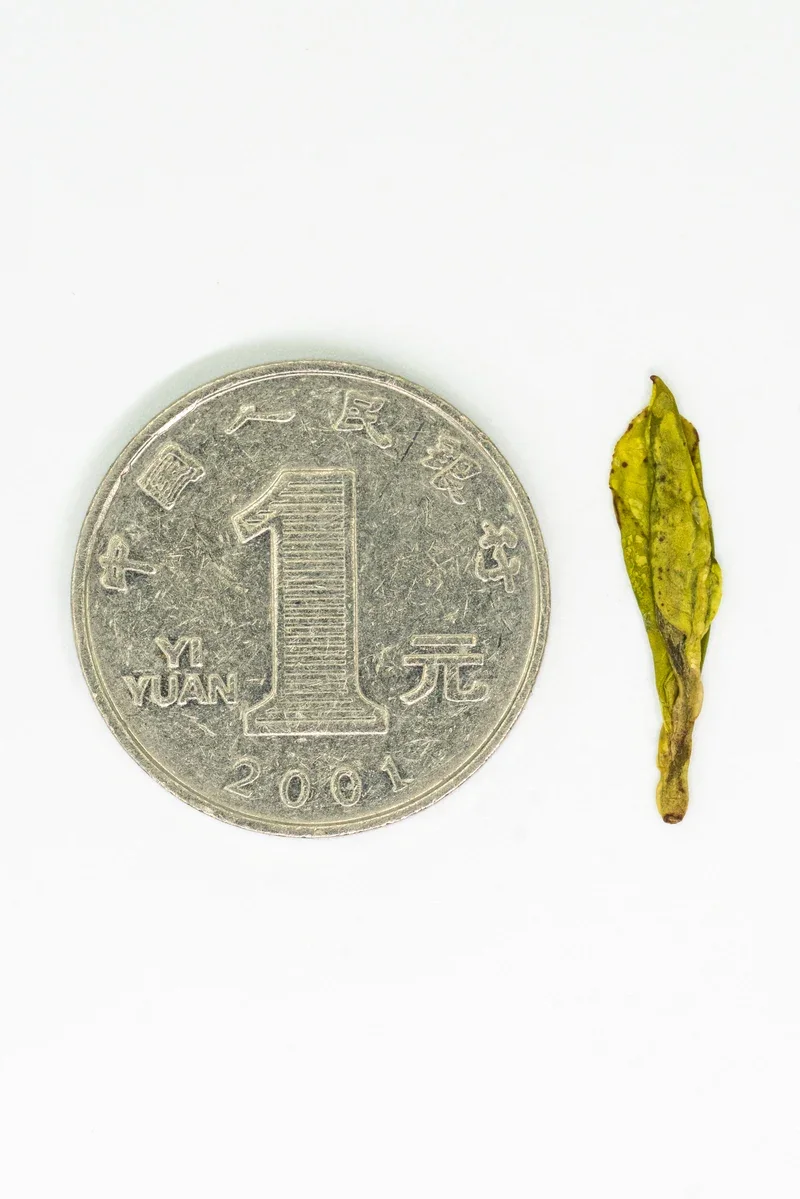
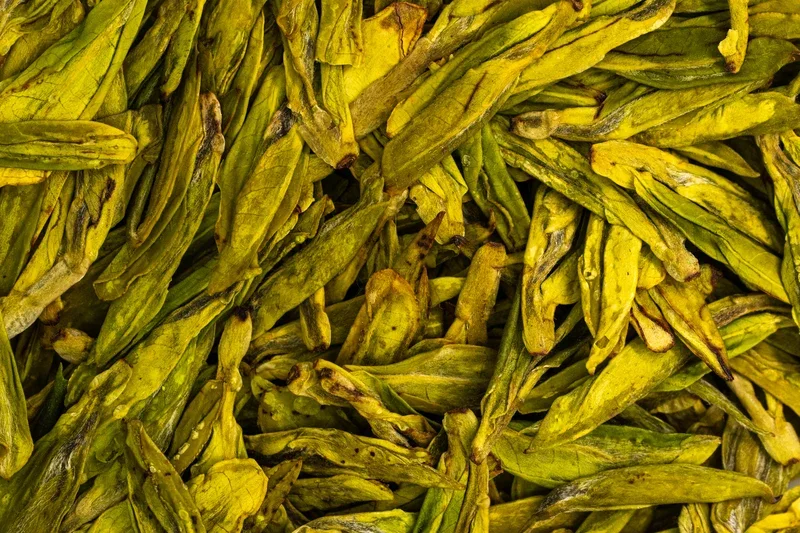
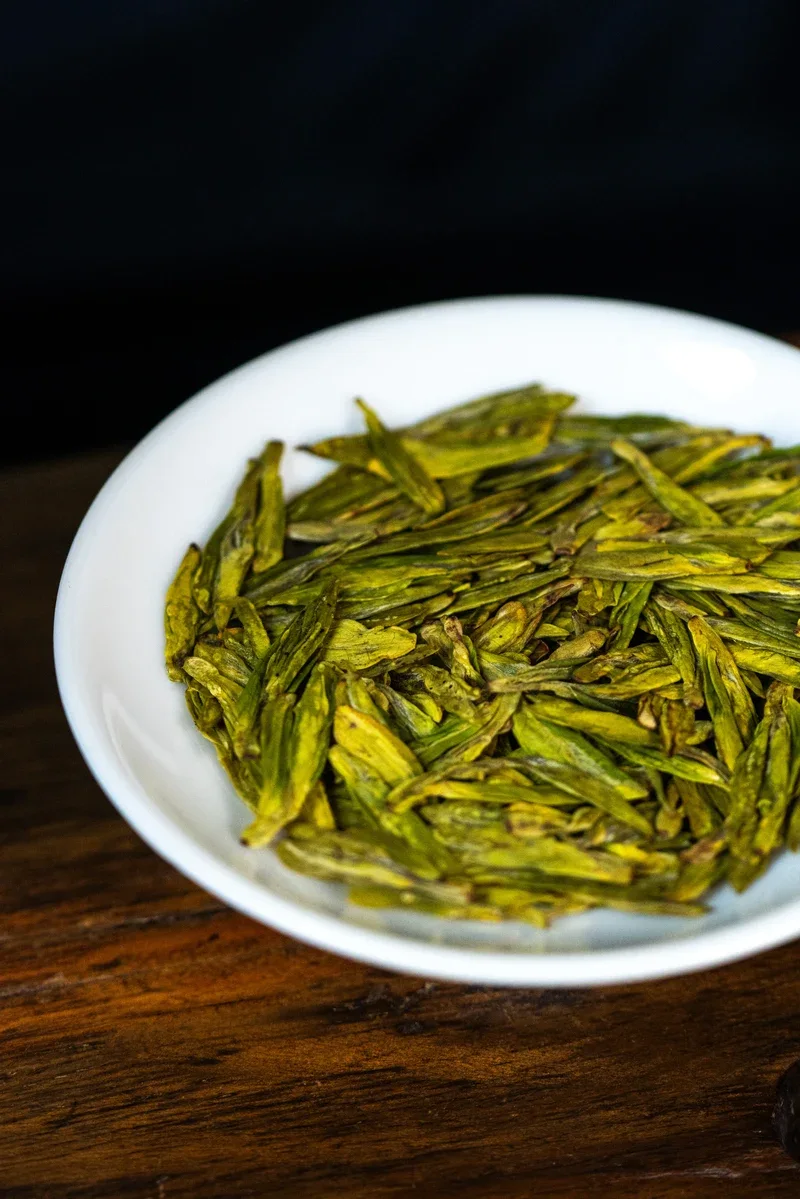
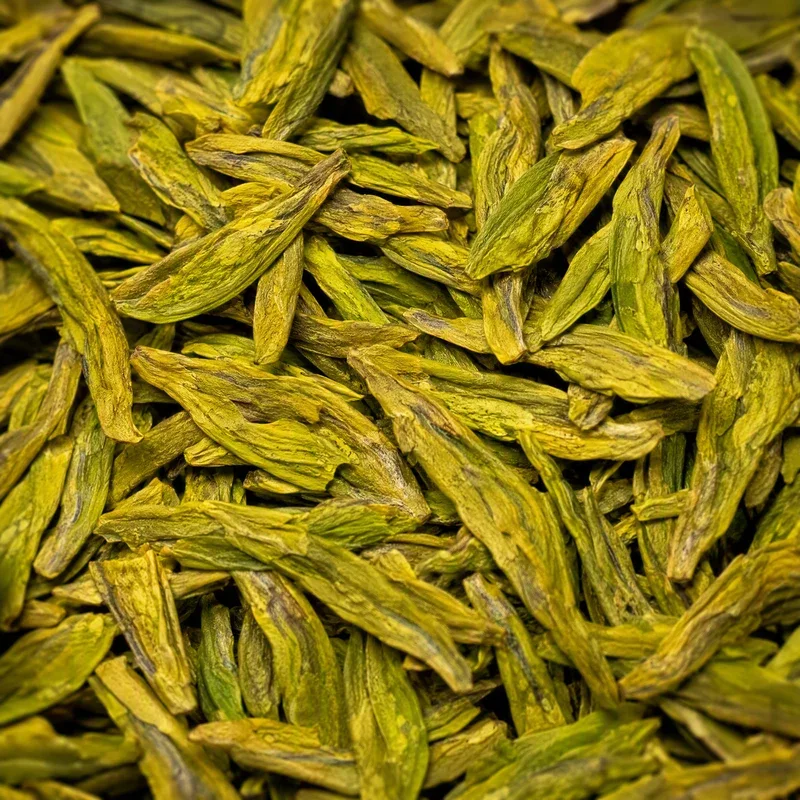
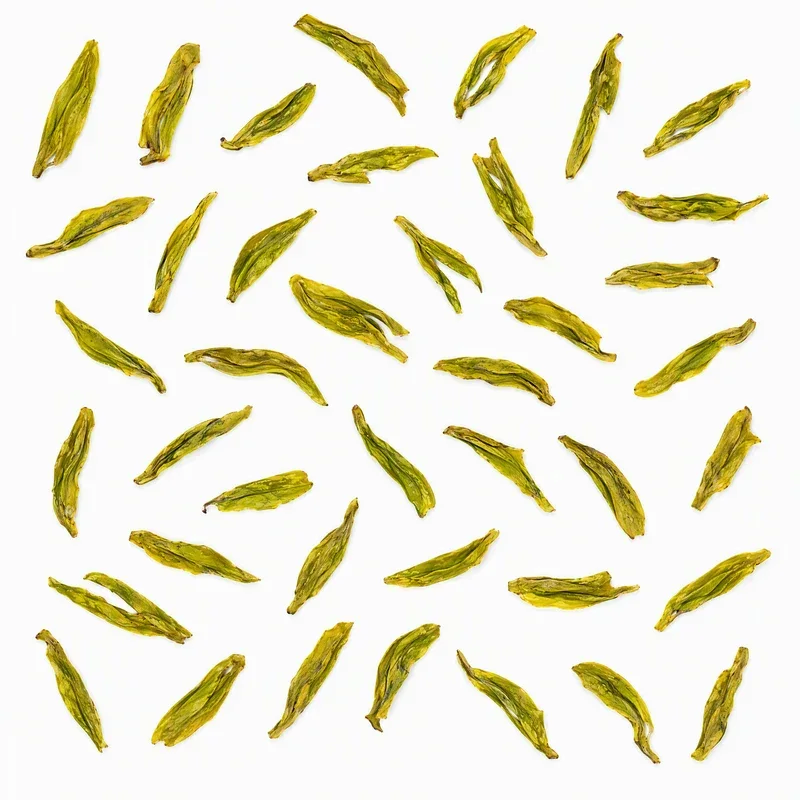
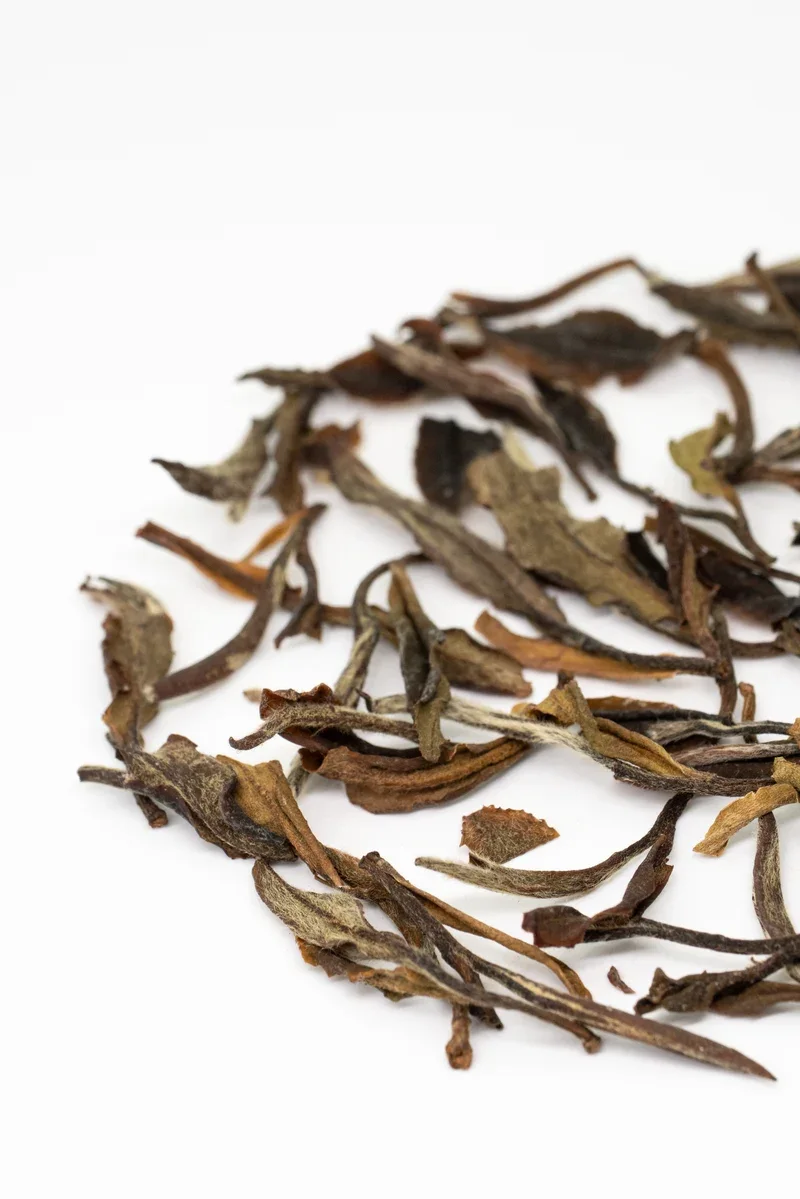
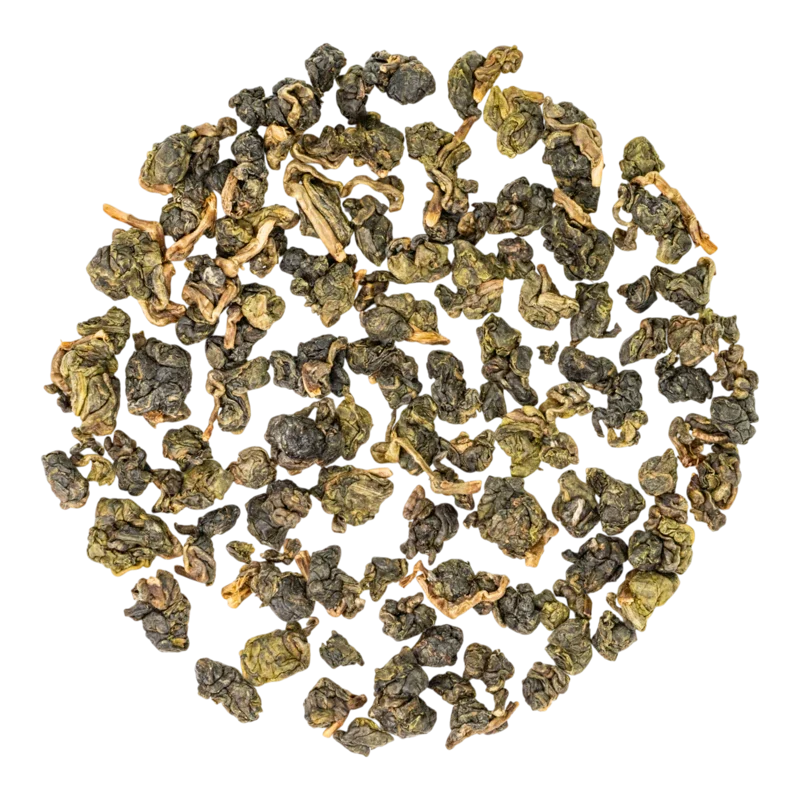
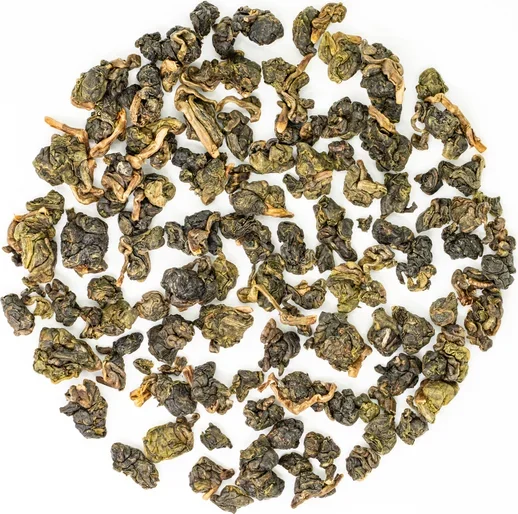
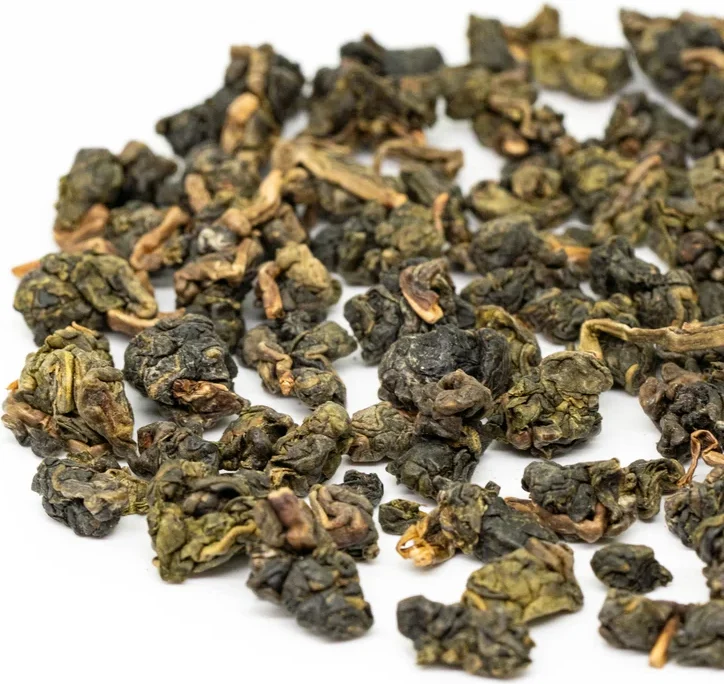
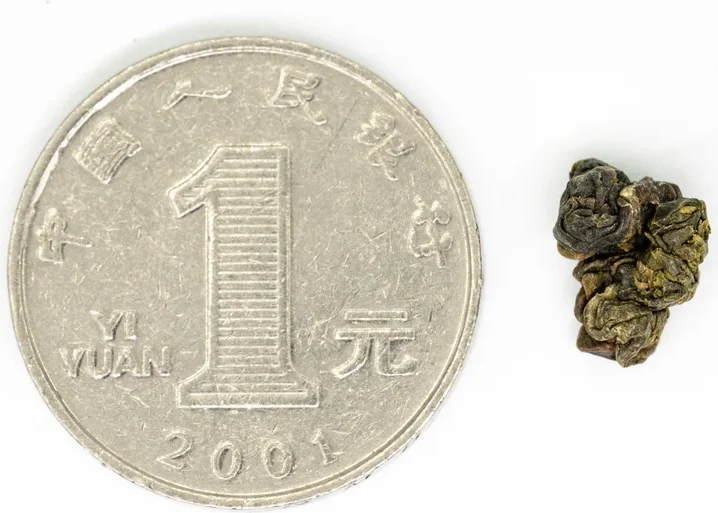
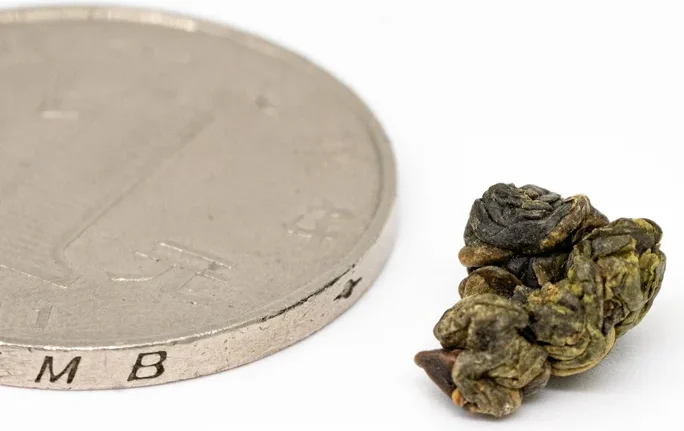
Dry Leaf Appearance: Tightly rolled semi-spherical granules (半球形, bàn qiú xíng), uniform in size, tight and compact. Color — rich dark green with oily luster (墨綠帶油亮麗色, mòlǜ dài yóu liàng lì sè).
Dry Leaf Aroma: Pure, elevated floral bouquet — orchid (蘭花香, lánhuā xiāng), notes of ripe fruits, light creamy sweetness. The aroma soars without being cloying (飄而不膩, piāo ér bù nì), with characteristic "high-mountain cold note" — cool, refreshing, almost menthol tonality.
Liquor Aroma: Unfolds in layers: first steeps give bright floral wave (orchid, osmanthus), then notes of ripe fruits, honey, and light caramel emerge. In roasted versions — additional nuances of chestnut and roasted nuts. Aroma is persistent and long-lasting, remaining on cup walls after emptying.
Liquor Color: Clear, honey-green (蜜綠, mì lǜ) — from light straw-green to warm golden-amber depending on roasting degree. Liquor is crystal clear with bright luster.
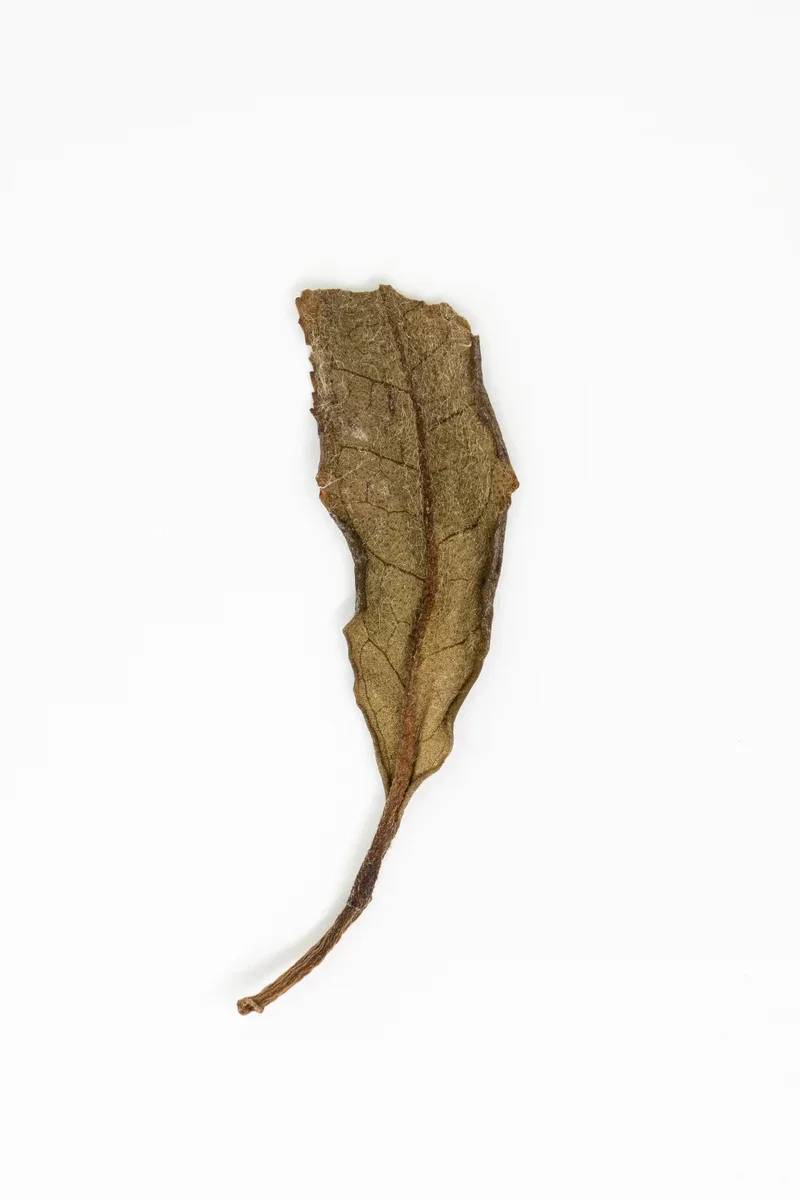
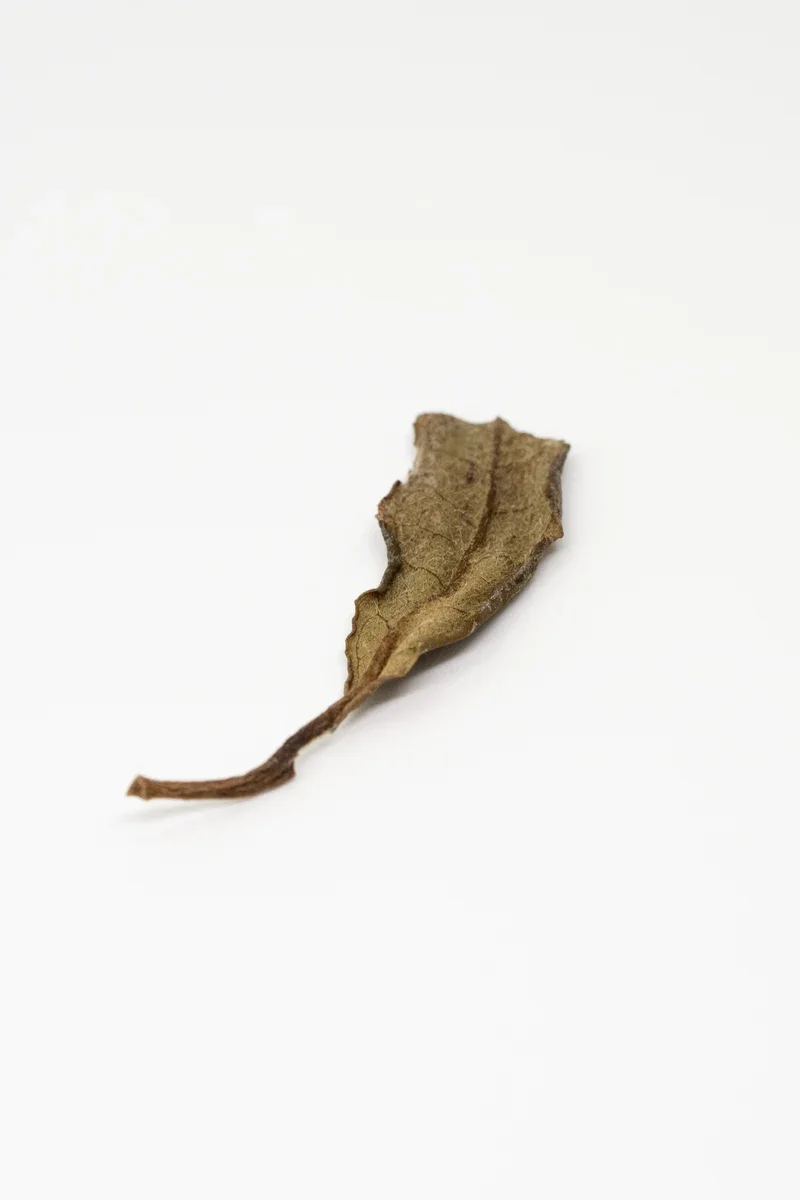
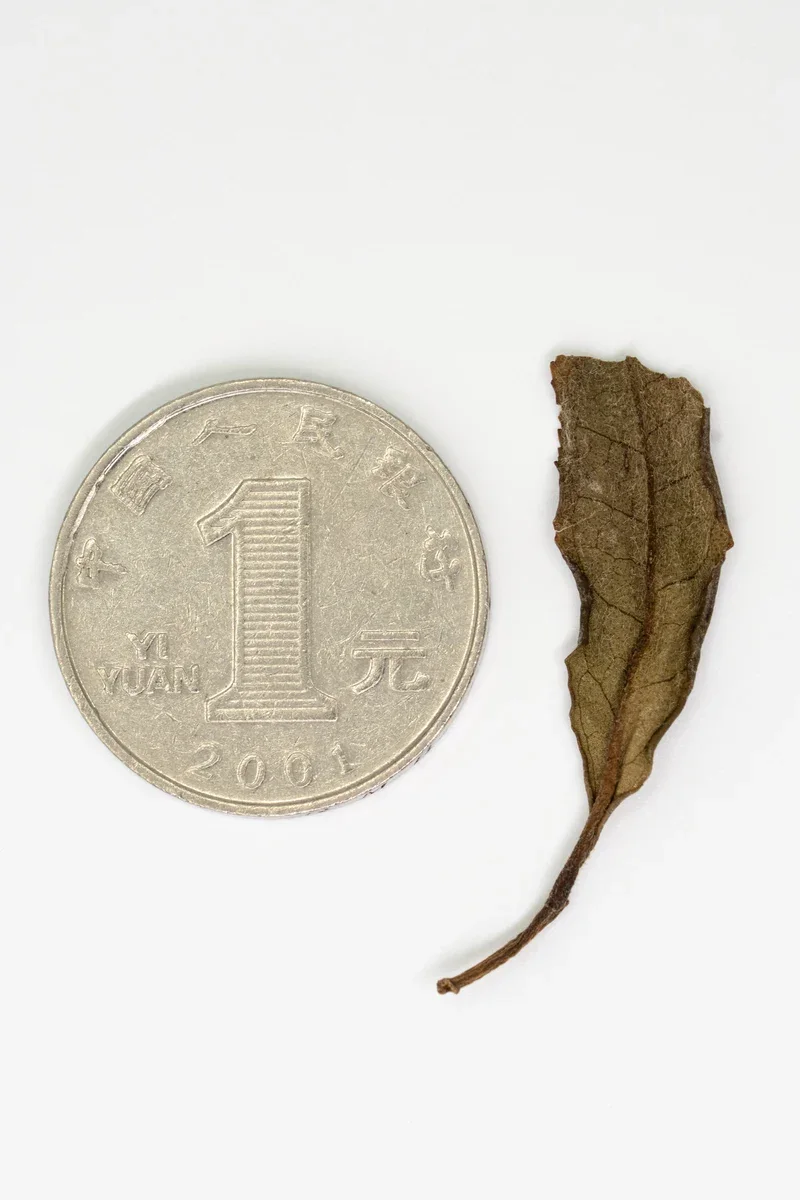
Spent Leaves: Whole, well-opened leaves with resilient flesh. Color — green-olive with reddish edge around margins (red edge — result of partial oxidation during shaking). Stems are soft, leaf texture uniform, without coarse inclusions.
Taste: Liquor body is silky, with pronounced density and viscosity due to high pectin content. First impression — pure sweetness and gentle liveliness (入口生津, rùkǒu shēngjīn). Middle register — tender floral bitterness, instantly transitioning to deep, enveloping returning sweet aftertaste (回甘, huígān), which lingers long in the throat (落喉甘滑, luòhóu gān huá). Astringency is minimal. Overall impression — 醇厚甘滑 (醇厚 — full-bodied; 甘滑 — sweet-smooth), fresh and invigorating.
Alkaloids: Caffeine (咖啡碱, kāfēi jiǎn) — main alkaloid, content in Taiwanese oolongs is approximately 2.5–3.5% dry weight. One cup (100 ml) of gongfu steep contains approximately 13–18 mg caffeine. Theobromine (可可碱, kěkě jiǎn) and theophylline (茶碱, chá jiǎn) are also present in trace amounts.
Amino Acids: High-mountain terroir and cool climate promote enhanced accumulation of free amino acids, especially L-theanine (茶氨酸, chá ānjīsuān). L-theanine comprises up to 50–60% of the total amino acid pool and is the main carrier of sweetness and "creamy" character of the liquor. Free amino acid content in Taiwanese high-mountain oolongs usually reaches 1.5–3.0% dry weight — noticeably higher than oolongs from lowland plantations.
Key aroma components — linalool, neryl acetate, geraniol, trans-nerolidol, phenylethyl alcohol, indole, benzaldehyde, and β-ionone. These substances form the characteristic floral-fruity profile of Zhu Lu Cha. High-mountain conditions enhance terpenoid biosynthesis responsible for the "cold note" aroma.
Slowed leaf growth at altitude leads to increased pectin accumulation, giving the liquor characteristic density and "viscosity."
Minerals: Potassium (K), magnesium (Mg), manganese (Mn), zinc (Zn), phosphorus (P), copper (Cu), iron (Fe), fluorine (F). Alishan red soils provide good microelement supply, positively affecting the tea's mineral profile.
Polyphenols: Tea polyphenol content in high-mountain oolongs is moderate compared to lowland analogues — slowed growth at altitude reduces catechin accumulation responsible for bitterness and astringency. Main components: epigallocatechin (EGC), epigallocatechin gallate (EGCG), epicatechin (EC), and epicatechin gallate (ECG). Partial oxidation during production transforms part of catechins into theaflavins and intermediate compounds, forming characteristic softness and multi-layered taste.
Vitamins: B-group vitamins (B₁, B₂), vitamin C (partially destroyed during heat treatment but preserved in light oolongs), trace amounts of vitamins A (as carotenoids) and E (tocopherols).
The combination of caffeine and L-theanine provides smooth, sustained energy boost without sharp peaks and drops. L-theanine stimulates alpha-wave generation in the brain, promoting a state of calm focus.
Tea polyphenols are powerful free radical scavengers. Even with moderate catechin content, high-mountain oolongs retain significant antioxidant potential due to diversity of phenolic compounds.
Regular oolong consumption is associated with reduced "bad" cholesterol (LDL) levels and improved vascular elasticity. Catechins promote normalization of blood lipid profile.
Oolong polyphenols and tannins stimulate digestive enzyme production and improve peristalsis. Lightly roasted versions of Zhu Lu Cha are particularly gentle on the stomach.
Oolongs are traditionally considered teas that promote metabolism acceleration and fat breakdown. Studies show that catechins combined with caffeine enhance thermogenesis and fatty acid oxidation.
Polyphenols exhibit moderate antibacterial activity, suppressing growth of certain pathogenic microorganisms in the oral cavity and intestines.
Tea's fluorine content promotes dental enamel mineralization; polyphenols inhibit growth of caries-causing bacteria.
Unhurried brewing in steeps in gongfu cha format creates a meditative ritual, helping reduce stress levels and restore emotional balance.
Around 60°C — at this temperature taste and aroma are perceived most fully. Not recommended to drink on empty stomach or before sleep.
Tea Amount: 5–7 g per 100–120 ml (gongfu method); 2–3 g per 200–250 ml (European steeping method).
Teaware: Porcelain gàiwǎn (蓋碗, gàiwǎn) — ideal choice for light oolongs, emphasizing aroma purity and liquor clarity. Yíxīng purple clay teapot (紫砂壺, zǐshā hú) is good for roasted versions — clay "rounds" the taste and adds velvety texture. Small porcelain teapot is also acceptable. For complete tasting, using a tall aroma cup (聞香杯, wénxiāng bēi) is helpful.
Water Temperature: 85–92°C. For light, lightly roasted versions — closer to the lower range (85–88°C) to avoid "burning" delicate aroma. For more roasted styles — 90–95°C.
Enemies: Moisture, heat, foreign odors, and direct light — four main factors shortening tea lifespan.
Shelf Life: With proper conditions — up to 12–18 months for light versions, up to 2 years for roasted. Over time aroma loses freshness, so consumption within the first year is recommended.
Store in airtight packaging — vacuum foil pack, tin can, or ceramic tea caddy with tight lid. Light oolongs are especially sensitive to moisture and foreign odors.
Avoid direct sunlight and fluorescent lighting — ultraviolet accelerates chlorophyll degradation and aromatic compound breakdown.
Temperature: Cool place. For lightly roasted versions, refrigerator storage (0–5°C) in airtight container excluding contact with food products is recommended. Roasted versions allow room temperature storage in dry place.
Direct purchase from registered Production and Marketing Class members guarantees authenticity and supports local farming community.
Established retailers with transparent supply chains and direct relationships with Alishan producers.
Annual competitions often feature award-winning Zhu Lu Cha lots available for purchase.
Some Shizhuo farms have organic certification, offering pesticide-free versions while maintaining traditional production methods.
Price Category: Alishan Zhu Lu Cha belongs to medium and upper price segments of Taiwanese high-mountain oolongs. Factors determining cost: plantation altitude (higher means more expensive), harvest season (spring and winter valued higher), production method (completely hand-picked and charcoal roasted increase price), membership in Shizhuo Production and Marketing Class (official quality mark), competition results, and specific farm reputation. "Special selection" grade tea (特級, tèjí) can cost several times more than standard batches.
No reviews yet. Tell us what you think of this tea.
Rate this tea and share your impressions. We review each submission before publishing it.