Classification and Origin
Category: Scented Taiwanese oolongs (台灣花茶, Táiwān huā chá).
Coordinates: ~23°50' North latitude, ~120°40' East longitude.
Origin: Taiwan (台灣), Nántóu County (南投縣, Nántóu Xiàn), Míngjiān Township (名間鄉, Míngjiān Xiāng) — the largest center for Sijichun production and scented teas in Taiwan.
Type: Oolong (semi-oxidized tea, oxidation 25–40%), scented with natural jasmine flowers (窨花, yìnhuā).
History and Culture
Cultural Significance: This tea is popular in Taiwan as an everyday beverage and for entertaining guests. Its accessibility (Sijichun is one of the most affordable Taiwanese oolongs) makes jasmine oolong an "entry ticket" to the world of scented teas for many consumers.
History: The Sijichun cultivar was discovered/developed in the 1980s by farmer Lǐ Cǎiyuān (李彩淵, Lǐ Cǎiyuān) in Mingjian Township. Presumably a natural hybrid of Qing Xin Oolong and a Wuyi variety or their close relatives. The cultivar quickly gained popularity due to exceptional productivity (up to 6–8 harvests per year) and natural floral aroma.
Botany and Raw Material
Unopened buds are collected in the evening when essential oil concentration is maximum. It is at night that buds open and release aroma — the scenting process is timed to this cycle.
Cultivar: Jasminum sambac (sambac jasmine) — the same species used in classic Fújiàn jasmine teas (茉莉花茶, Mòlì huā chá).
Pluck Standard: Bud + 2–3 leaves. Up to 6–8 harvests per year. For scenting, summer and autumn harvests are more often used — less valuable for "pure" oolong but excellent as a base for jasmine.
Terroir
Climate: Subtropical, with sufficient warmth and precipitation for year-round harvesting. Frequent fogs in the foothills.
Soil: Alluvial and lateritic, slightly acidic, well-drained.
Mingjian, Nantou — the district with the highest concentration of tea farms in Taiwan.
200–600 m — lowland and foothill plantations. Sijichun does not require high-altitude conditions, making it economically viable.
Can be grown in the same region or supplied from southern Taiwan / mainland China (Fujian, Guangxi).
Organoleptic Profile
Dry Leaf Aroma: Bright, intense jasmine — clean, natural, without chemical notes. In the background — light sweetness and herbaceous character of Sijichun (orchid, lilac).
Liquor Aroma: Rich, dominant jasmine. In good versions — light fruity (peach, apricot) and creamy notes from the base oolong.
Liquor Color: Clear, from light yellow to golden-amber.
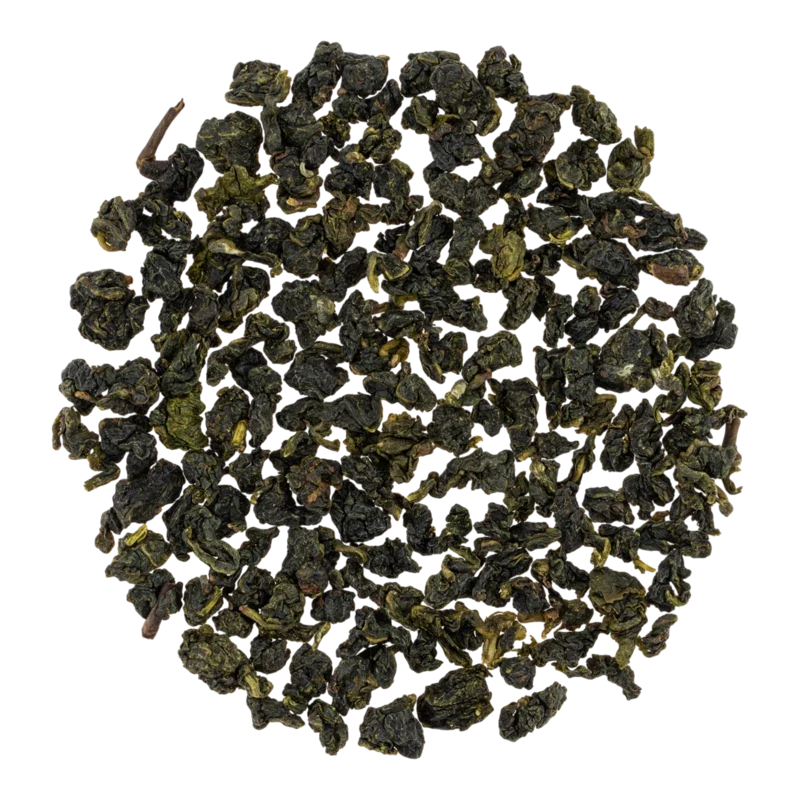
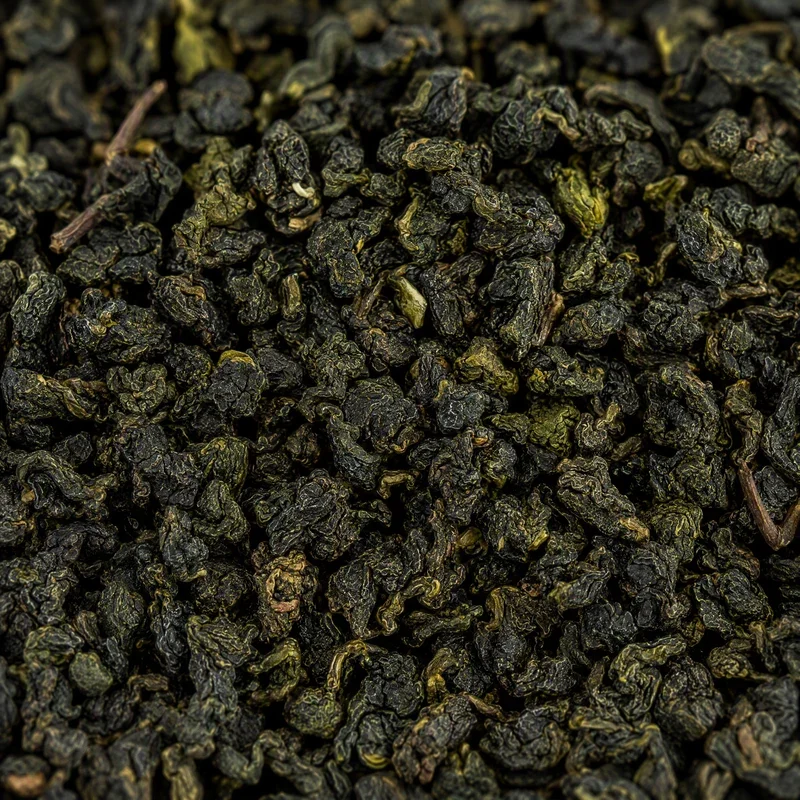
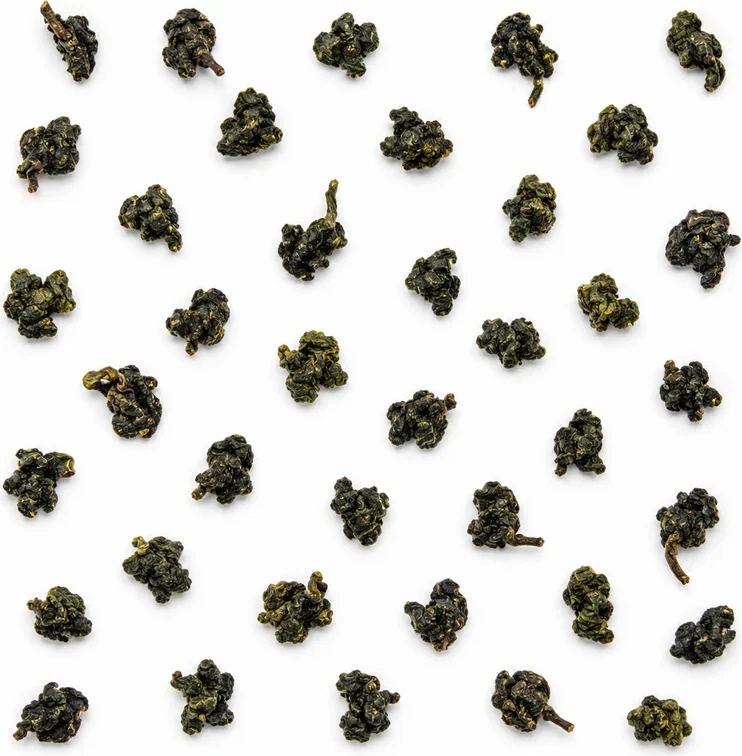
Dense semi-spheres of emerald-green or olive color. Individual jasmine buds may be present (decorative; main aroma is absorbed by the leaf).
Spent Leaves: Whole leaves from light green to olive color; edges slightly reddish (traces of oxidation).
Taste: Soft, smooth, refreshing. Jasmine sweetness harmonizes with the herbaceous-floral base of Sijichun. Light pleasant acidity. Astringency minimal or absent. Aftertaste — fresh, jasmine-like, with light creaminess.
Chemical Composition
Amino Acids: L-theanine — sweetness, relaxation.
Moderate (~2–2.5%).
Essential Oils: Linalool, benzyl acetate, indole, jasmone, methyl anthranilate — key carriers of jasmine aroma. These are absorbed by tea leaves during scenting.
Polyphenols: EGCG — antioxidant. Moderate content due to light oxidation.
Vitamins: C, B group, PP. Minerals: Potassium, manganese, fluorine, selenium.
Health Notes
Jasmine aroma is a proven natural anxiolytic; reduces cortisol levels, improves mood, promotes relaxation.
Catechins from base oolong.
Caffeine + L-theanine — gentle alertness.
Mild stimulation; suitable after meals.
Antioxidants + jasmine essential oils.
Oolongs are traditionally considered activators of fat metabolism.
Brewing
85–95°C. Lower (85°C) — to emphasize jasmine delicacy; higher (90–95°C) — for base oolong richness.
5–10 g per 1 L cold water, 4–8 hours in refrigerator. Excellent summer beverage — jasmine aroma unfolds gently and delicately.
Tea Amount: 5–7 g per 150 ml (flash steeps) or 2–3 g per 250 ml (steeping).
Teaware: Porcelain gaiwan or glass teapot — vessels that don't absorb odors, to preserve pure jasmine aroma. Yixing teapot not recommended — clay will absorb jasmine.