Brewing
Gongfu brewing
- Water temperature
- 75 °C
- Tea amount
- 5 g
- Water volume
- 100 ml
- First steep
- 10 s
- Time added per infusion
- 5 s
- Infusions
- 3

Zhúxī máojiān
Choose a brewing method. Start with the recommended quantities and time, then adjust to taste.
Brewing
Brewing
Taste
Tea encyclopedia
Category: Chinese regional green teas; organic production product with EU certification; tea from protected geographical indication area.
Category: Chinese regional green teas; organic production product with EU certification; tea from protected geographical indication area.
Coordinates: Approximately 31°31′–32°32′ N, 109°08′–109°29′ E. The county is located at the junction of Hubei Province, Shaanxi Province, and Chongqing Municipality, on the southern slope of the Qínlǐng Mountains (秦岭) and the northern slope of the eastern section of the Dàbā Mountains (大巴山脉).
Origin: China, Húběi Province (湖北省), Shíyàn City (十堰市, Shíyàn Shì), Zhúxī County (竹溪县). The production zone covers all 13 townships and towns of the county, as well as 9 state agricultural and forestry farms. The core of production — Lóngwángyà Tea Farm (龙王垭茶场, Lóngwángyà cháchǎng), which received European organic certification, Meiziya Tea Farm (梅子垭茶场) and high-altitude plantations of Huiwan Township (汇湾乡), collectively producing about 80% of the county's total tea output.
Type: Green tea (绿茶, lǜchá), non-oxidized. By fixation method — combined: pan-firing (杀青) followed by hot-air drying (烘干) and final heating for aroma enhancement (提香).
Cultural Significance: Zhuxi is a crossroads of three provinces and a historical transit point on the path of tea culture spread from the Ba-Shú region (巴蜀) eastward and northward. The county remains the largest tea market in the Qinba Mountains region. Tea culture is deeply woven into local folklore: in Xiangba village (向坝) — a bearer of provincial intangible cultural heritage — more than twenty traditional folk songs related to tea survive: "Caicha Ge" (《采茶歌》, "Tea Picking Song"), "Wu Bei Cha" (《五杯茶》, "Five Cups of Tea"), "Shua Cha Ge" (《耍茶歌》), "Quan Cha Ge" (《劝茶歌》, "Tea Invitation Song"). Local legend connects the origin of Longfengcha with the story of the Dragon's Daughter (龙女) and Zhenwu Dǎdǐ (真武大帝 — Great Emperor of True Martial Arts), who, according to tradition, "together planted tea on one mountain and drank green beverage together" (同植一山茶,共饮绿香茗).
History: Zhuxi is one of China's most ancient tea-producing regions, with a tea cultivation history spanning over three thousand years. During the Western Zhou era (11th–8th centuries BCE), the territory was part of the ancient state of Yòng (庸国, Yōngguó), which presented tribute to the Zhou court including lacquer, tea, and honey. Archaeological finds from the Han era (3rd century BCE – 3rd century CE) — ceramic braziers and cups — testify to a developed tea-drinking tradition in the region already in those times. During the Three Kingdoms period (Wei era, 3rd century CE), the level of tea production and processing in Zhuxi, according to the "Zhuxi County Annals" (《竹溪县志》), was not inferior to that of Sichuan.
Name Breakdown: 竹 (zhú) — "bamboo"; 溪 (xī) — "mountain stream, creek." The county is named after the Zhúxī River (竹溪河) flowing through its territory, and was established in 1476 (12th year of Chenghua reign, Ming dynasty) by separation from Zhúshān County (竹山县). 毛 (máo) — "down, fuzz"; 尖 (jiān) — "point, tip." "Maojian" is a classic designation for a category of Chinese green teas with abundant down on pointed buds, which also includes Xìnyáng Máojiān (信阳毛尖) and Dūyún Máojiān (都匀毛尖).
Cultivar: Main cultivar — local population variety (本地群体种, běndì qúntǐ zhǒng), belonging to the group of bush small-leaf teas (灌木中小叶种). This indigenous variety is distinguished by increased frost resistance, abundant pubescence of buds and shoots, and high content of bioactive substances. Propagation — predominantly vegetative (cutting, 扦插育苗).
Picking: Main season — spring (March–April), quality peak — before Qingming festival. Due to high-altitude location (800–1200 m), the growing season is extended, and late bud awakening ensures increased amino acid accumulation.
Pluck Standard: Special grade (特级) — individual buds or one bud with one beginning-to-unfold leaflet, length ≤ 2.0 cm; first grade (一级) — one bud with one leaflet (proportion ≥ 90%); second grade (二级) — one bud with two leaflets.
Raw Material: Young, clean, without foreign odors, without damage. Polyphenol content in spring fresh leaf — ≥ 32.94%, amino acids — ≥ 2.95%. Fully organic raw material: chemical fertilizers and pesticides prohibited; planting density — no more than 8,000 bushes per mu.
Altitude: 800–1200 m above sea level. Optimal zone for highest quality tea production — around 900 m, where the best ratio of nutrient elements, biochemical components, and aromatic substances is recorded.
Soil: Sandy loams (沙壤土, shā rǎngtǔ) with pH 4.5–6.0, distinguished by high permeability and rich organic matter content. Soils are naturally enriched with selenium (富硒, fù xī), which is a unique feature of Zhuxi terroir and gives the tea additional nutraceutical value.
Zhuxi County is located at 31°14′ N — this is the extreme northern latitude for tea tree cultivation in China, which gives local tea a special character of "borderland terroir." Average annual temperature — about 15°C, annual precipitation — about 1,600 mm. Number of cloudy-foggy days exceeds 200 per year. Daily temperature variation — more than 10°C, which significantly slows shoot growth and increases the period of nutrient accumulation — amino acid synthesis efficiency here is 30% higher than on flatland plantations.
Forest coverage of the county territory — 82.5%. Proportion of diffused light reaches 70%, which reduces bitter catechin content and increases amino acid proportion. Tea gardens are arranged in the "lincha jianzuo" system (林茶间作 — "forest-tea intercropping"), where forest isolation strips (林茶隔离带) provide physical protection from pollution and pest transfer. Frequency of pest and disease occurrence is 60% lower than in ordinary tea farms, allowing complete abandonment of pesticide use. Compliance with EU standards for pesticide residues — 100%.
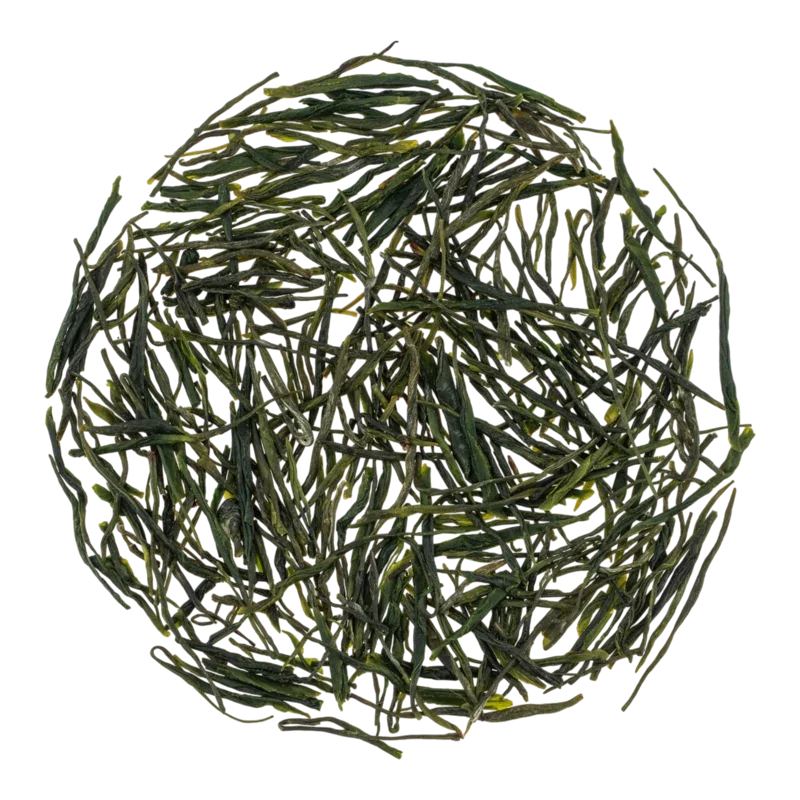
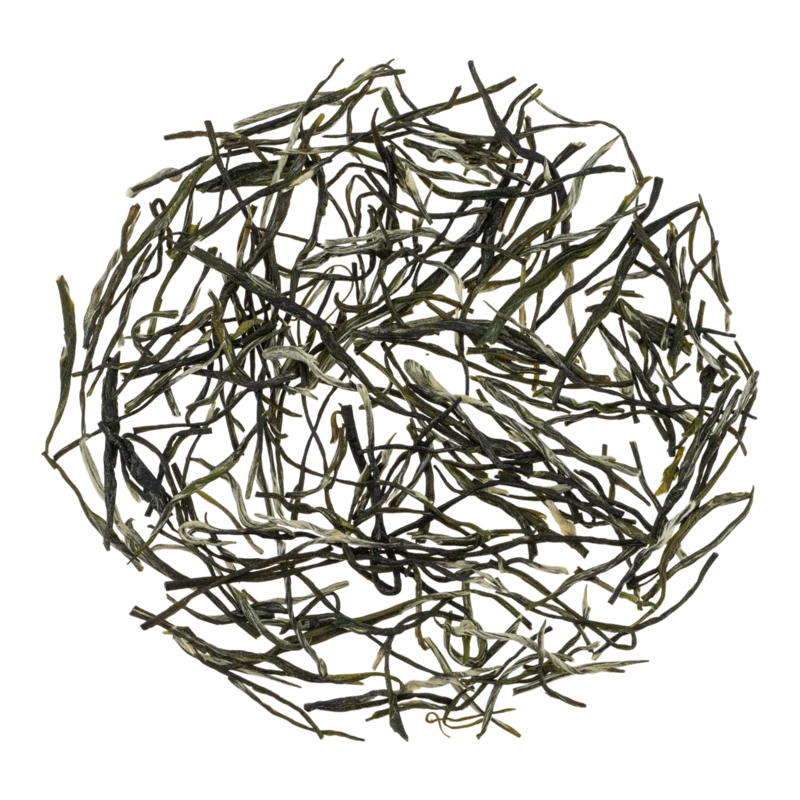
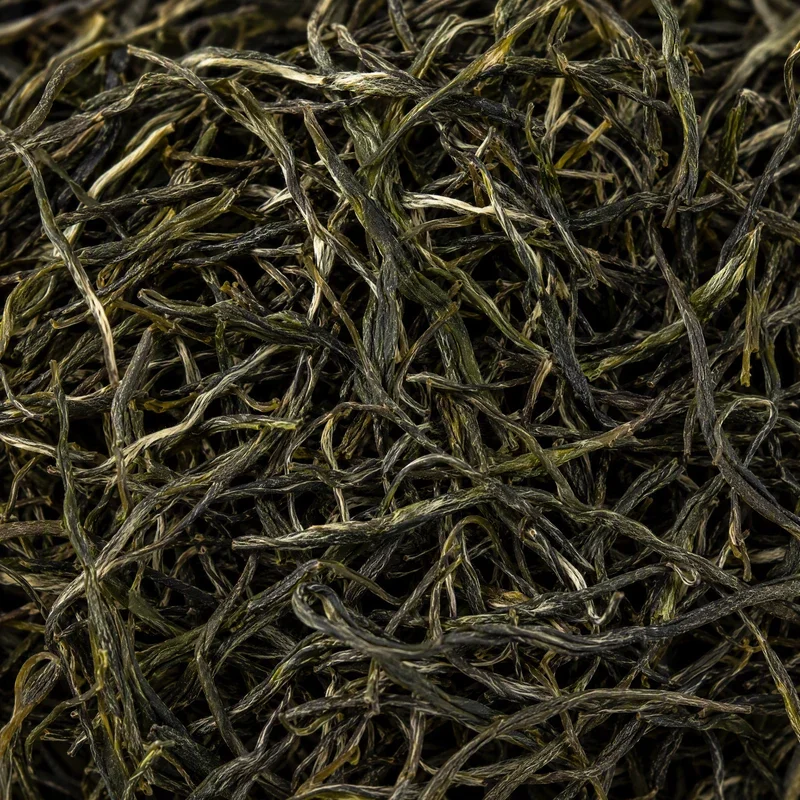
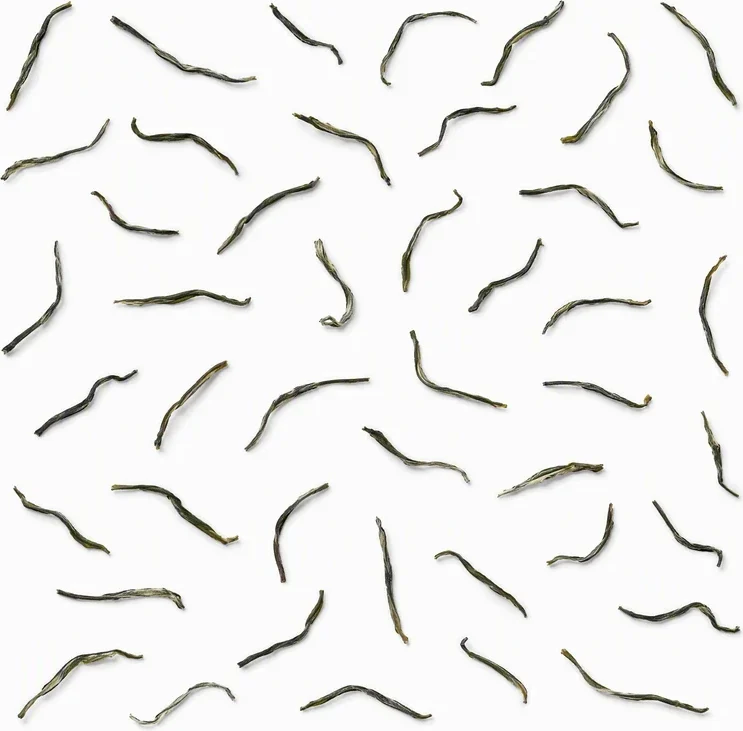
Dry Leaf Appearance: Tightly rolled, straight, sturdy tea leaves with pronounced tips (紧结壮实显锋苗, jǐnjié zhuàngshí xiǎn fēngmiáo). Color — emerald green with oily luster (翠绿). "Jiancha" style (箭茶, "arrow tea") — flat, straight, sword-like. "Longfengcha" style — thin, curved-downy.
Dry Leaf Aroma: Pure high aroma (清香, qīngxiāng) with pronounced floral note (花香, huāxiāng) — a characteristic feature distinguishing Zhuxi tea from many analogues in the maojian category. Aged batches develop honey overtones (蜜香, mìxiāng).
Liquor Aroma: Fresh, pure, high and persistent. Floral note (especially pronounced in "Longfengcha" style) is accompanied by grassy freshness of young greens. Gas chromatographic analysis showed that Zhuxi tea's aromatic profile is formed by predominance of alcohol components, followed by acid-ester and aldehyde-ketone compounds.
Liquor Color: Tender green, clear, bright (嫩绿明亮, nèn lǜ míngliàng).
Spent Leaves: Tender green, uniform (嫩绿匀齐), buds and leaflets unfold as "bouquets" standing vertically (芽叶成朵竖立).
Taste: Fresh and mellow-oily (鲜醇, xiānchún), with good body due to high polyphenol content. Clear invigorating freshness (浓爽, nóngshuǎng). Prolonged, persistent returning sweetness (huí gān) aftertaste. Resistance to multiple brewings — 5–7 infusions.
Alkaloids: Caffeine, theobromine, theophylline. Caffeine content typical for high-altitude green teas.
Amino Acids: Free amino acid content — ≥ 2.95%. Main component — L-theanine, providing mellowness, "body" and sweetness of taste. High content is explained by low average vegetation temperature and predominance of diffused light.
2.97% — contribute to sweet aftertaste.
Nitrogen — 5.47–6.65%, phosphorus — 0.41–0.50%, potassium — 0.97–1.13%, calcium — 0.10–0.14%, magnesium — 603–855 mg/kg, iron — 50–72 mg/kg, copper — 8.5–10.9 mg/kg, zinc — 22.9–36.5 mg/kg. Of special interest is natural selenium enrichment due to soil specificity.
Essential Oils: Form "pure aroma with floral tone"; alcohol and acid-ester fractions predominate.
Polyphenols: Content — ≥ 32.94%, which is 20–30% higher than the average indicator of ordinary green teas. According to Huázhōng Agricultural University laboratory data (华中农业大学, 2006), water extract constitutes 54% (with standard requirement of 36%), testifying to exceptional extractability.
Vitamins: Vitamin C (in fresh leaf), B-group vitamins, vitamin K.
Tea Amount: 3 g per 150 ml (1:50 ratio) for glass method; 5 g per 120 ml for gongfu in gaiwan.
Teaware: Glass tumbler — for observing bud unfolding (characteristic picture: tender shoots stand vertically, resembling "hundred dragons swimming in competition" — an image that gave name to the "Longfengcha" brand). White porcelain gaiwan — for maximum floral aroma revelation.
Water Temperature: 80–85°C (boiling water, cooled for 3 minutes). For special grade, reduction to 75°C is acceptable. Ideal water — soft mountain spring water.
One of China's "Ten Famous Teas," produced in Henan Province. Pan-fired green tea with thin, downy tea leaves. Compared to Xinyang Maojian, Zhuxi tea has higher polyphenol content (≥ 32.94% versus typical 20–25%) and pronounced floral note, while the Henan analogue tends toward pure bean-chestnut tone.
Famous green tea from Guizhou Province, also among the "Ten Famous." Abundant down, mellow taste. Difference: Duyun Maojian is produced from large-leaf raw material, has a more rounded and sweet profile, while Zhuxi Maojian is small-leaf, with higher strength and brewing resistance.
Related product from the same Zhuxi County, with flat sword-like tea leaf shape. Honored with the title "Ten Famous Teas of Hubei" (湖北十大名茶). Compared to Maojian, Jiancha has more restrained aroma, clear liquor and mild, delicate taste — it can be considered a "light" version of Zhuxi tea.
Rare steamed (蒸青) green tea from the same Hubei Province. Fundamentally different fixation method (steam instead of pan-firing) gives deep green color and "marine," iodine profile, contrasting with the floral-pure character of Zhuxi Maojian.
Price Category: Special grade: from 500 yuan per jin and higher (individual buds, high pure aroma, pronounced down, polyphenol content ≥ 32%). First grade: 200–500 yuan per jin (one bud with one leaflet, full taste, amino acids ≥ 2.9%). Second grade: 80–200 yuan per jin (one bud with two leaflets, good price-quality ratio). Average market price in the county — about 45 yuan per jin (mass production of all grades).
No reviews yet. Tell us what you think of this tea.
Rate this tea and share your impressions. We review each submission before publishing it.