Brewing
Gongfu brewing
- Water temperature
- 92 °C
- Tea amount
- 6 g
- Water volume
- 100 ml
- First steep
- 10 s
- Time added per infusion
- 5 s
- Infusions
- 8



Zhèngzhái chá
Choose a brewing method. Start with the recommended quantities and time, then adjust to taste.
Brewing
Brewing
Taste
Tea encyclopedia
Category: Mǐnnán oolongs (闽南乌龙, Mǐnnán Wūlóng). Historically classified as one of the seven great teas of Fújiàn (福建七大名茶, Fújiàn qī dà míngchá) during the Ming-Qing period.
Category: Mǐnnán oolongs (闽南乌龙, Mǐnnán Wūlóng). Historically classified as one of the seven great teas of Fújiàn (福建七大名茶, Fújiàn qī dà míngchá) during the Ming-Qing period.
Coordinates: ≈25.36°N, 118.69°E.
Origin: China, Fújiàn Province (福建省, Fújiàn Shěng), Pútián Prefecture (莆田市, Pútián Shì), Xiānyóu County (仙游县, Xiānyóu Xiàn). Historical source — Shèngquán Village (圣泉村, Shèngquán Cūn), Làidiàn Township (赖店镇, Làidiàn Zhèn), where the ancestral estate of the Zhěng clan (郑宅, Zhèngzhái) was located.
Type: Oolong (semi-oxidized, 乌龙茶, wūlóng chá) — main category. The range also includes green type (绿茶型, lǜchá xíng), bud tea (芽茶, yáchá) and pressed leaf tea (片茶, piànchá). Oxidation degree of oolong type — 20–40%, green type undergoes no oxidation.
Cultural Significance: Zhèngzhái Chá is one of the few teas whose authentic connection to the imperial court is documented in archival records of the Imperial Household Department (内务府, Nèiwùfǔ). Literary mentions by Cai Xiang, Zheng Qiao and in Emperor Qianlong's poetry place it alongside legendary Wuyi teas. For the Putian-Xianyou region, this tea is a key element of local identity: tea plantation area in the county exceeds 30,000 mu (≈2,000 ha), annual production volume — over 9,000 tons, and the tea industry value — over 200 million yuan.
History: Zhengzhai Cha is a tea with a millennial pedigree, inextricably linked to the cultural elite of southern Fujian. According to the "Xianyuxian Zhi" (仙游县志, Xianyou County Chronicle) from the Qiánlóng (乾隆, Qiánlóng) period, tea plantations in this area originated during the Suì dynasty (隋, Suí, 581–618), and by the Tāng era (唐, Táng, 618–907) in the locality of Xiaorenlizhengjzhai (孝仁里郑宅) there were already full-fledged tea gardens. According to one version, the Zhěng clan brought tea seeds from Jiànzhōu (建州, Jiànzhōu) — the famous tea region of northern Fujian, and the great Sōng calligrapher and tea connoisseur Cǎi Xiāng (蔡襄, Cài Xiāng, 1012–1067), author of "Chalu" (茶录, "Records on Tea"), personally approved this tea, after which he brought it to the capital. The emperor tasted the tea and granted it tribute status, securing for it the name of the Zheng clan.
Name Breakdown: Zhèngzhái Chá (郑宅茶, Zhèngzhái chá) literally means "tea from the Zheng estate." 郑 (Zhèng) — surname of the clan that established the tea plantations; 宅 (zhái) — "estate, residence"; 茶 (chá) — "tea." Historically also known as Zhèngshì Chá (郑氏茶, Zhèngshì Chá) — "tea of the Zheng clan." Alternative name for the bud subtype — Zhèngzhái Yáchá (郑宅芽茶, Zhèngzhái Yáchá).
Cultivar: Main cultivar — local population variety "Zhengzhai Caicha" (郑宅菜茶, Zhèngzhái Càichá), belonging to the bush medium-leaf type (Camellia sinensis var. sinensis). Bushes reach 1–2 m in height, leaves elliptical, fleshy, with pronounced cold resistance. In Fenglin Village, 16 century-old tea trees are preserved. After revival in the 20th century, production also uses varieties Shuǐxiān (水仙, Shuǐxiān) and Fóshǒu (佛手, Fóshǒu), introduced from Wuyi and Anxi.
Picking: Main seasons — spring (谷雨, Gǔyǔ — "grain rain" period, late April) and autumn. The "open-face picking" method (开面采, kāimiàn cǎi) is used: the shoot is picked when the terminal bud (驻芽, zhùyá) is fully formed and opened. For certain types (Leiming Cha, 雷鸣茶, Léimíng Chá — "thunder tea"), early spring picking before Qīngmíng (清明, Qīngmíng) is practiced.
Pluck Standard: For oolong type: shoot with 2–3 opened leaves with formed terminal bud. For "gongya" (贡芽, gòngyá — "tribute buds"): single large buds ≤2.0 cm long. For bud type: one bud + one leaf. For pressed leaf tea: mature leaves.
Raw Material: Leaves must be uniform in maturity, whole, without mechanical damage. Use of chemical fertilizers and pesticides is prohibited (requirement for tea gardens certified to EU standards). Saplings are propagated by cuttings; planting density — no more than 5,000 bushes per mu.
Altitude: Core — about 800 m above sea level (Fenglin Village). Topography — hilly foothills of central Fújiàn (闽中丘陵带, Mǐnzhōng qiūlíng dài), located near 25° N latitude.
Climate: Humid subtropical. Average annual temperature 17–19°C, annual precipitation 1,600–1,800 mm. Key feature — cloudiness over 180 days per year and daily temperature variation over 10°C, which slows shoot growth and promotes amino acid accumulation, ensuring characteristic sweetness and richness of flavor.
Soil: Red and yellow soils (红壤, hóng rǎng; 黄壤, huáng rǎng), pH 4.5–6.0, fertile layer depth over 1 m. Soils are rich in iron and zinc — content of these elements up to 8 times higher than lowland soils. Forest coverage — 78%, absence of industrial pollution, diffused light proportion — about 70%.
The production zone covers all of Xianyou County, including 7 townships and towns, but the core is concentrated in three points: Yuánzhuāng Township Fēnglín Village (园庄镇枫林村, Yuánzhuāng Zhèn Fēnglín Cūn) — base of century-old trees; Lónghuá Township Jīnxī Village (龙华镇金溪村, Lónghuá Zhèn Jīnxī Cūn) — organic plantations; Làidiàn Township Shèngquán Village (赖店镇圣泉村, Làidiàn Zhèn Shèngquán Cūn) — historical birthplace of tribute tea. These three zones account for about 85% of all county production.
Tea gardens are traditionally combined with oil tung plantings (油桐树, yóutóng shù), creating natural shading. This reduces pest incidence by 60%. Root systems of century-old trees extend to depths of 6 m, extracting deep mineral elements, forming the tea's unique mineral profile.
Shoots are picked using the "open-leaf" method (开面采, kāimiàn cǎi) during Gǔyǔ (谷雨), when the terminal bud is fully opened. Picking is manual, raw material is delivered to the workshop in bamboo baskets, avoiding compression and overheating.
Leaves are spread in thin layers on bamboo trays (竹帘, zhúlián). First stage — sun withering (晒青, shàiqīng), which initiates initial dehydration and activates enzymes. Then leaves are moved to a ventilated room for "cooling rest" (凉青, liángqīng). In cloudy weather, warm withering (加温萎凋, jiāwēn wěidiāo) is permitted.
Central stage forming varietal character. Leaves undergo 4–5 cycles of alternating shaking (摇青, yáoqīng) and rest (凉青, liángqīng). During shaking, leaf edges are mechanically damaged, triggering enzymatic oxidation; in the rest phase, oxidation continues inside cells, forming the floral-fruity profile and famous "green heart, red edge" structure (绿心红边, lǜ xīn hóng biān). The master continuously evaluates temperature, humidity and leaf condition, adjusting intensity and duration of each cycle — this is precisely the "kan tian zuo qing" method.
Heating in double wok (双锅, shuāng guō) at 180–200°C. High temperature inactivates oxidases and fixes the achieved oxidation balance. Simultaneously enhances aroma and evaporates excess moisture.
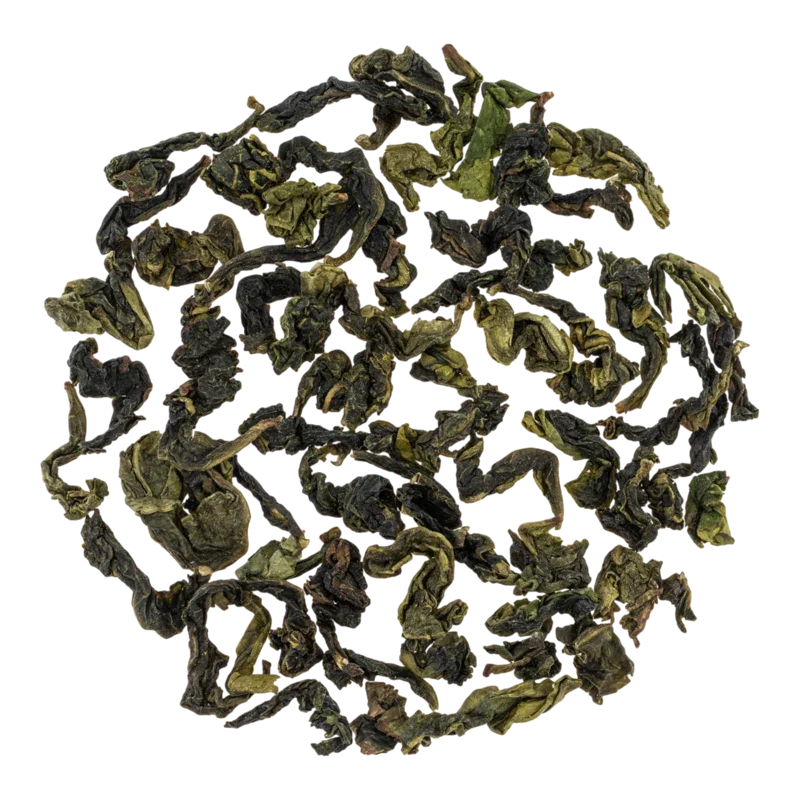
Unique technique of "warm wrapping rolling" (温包揉, wēn bāoróu): leaves are wrapped in cotton cloth (棉布, miánbù) and formed into tight balls through repeated rolling and compression. This technique, an exclusive development of local masters, gives the tea its characteristic spiral-spherical shape and enhances extractability while preserving red edge integrity.
Final moisture stabilization to ≤6.5% level through charcoal heating (炭焙, tàn bèi). Drying proceeds in several stages: maohuo (毛火, máohuǒ — "first fire"), zuhuo (足火, zúhuǒ — "sufficient fire") and chihuo (吃火, chīhuǒ — "absorbing fire"). Charcoal drying forms aroma depth and ensures storage stability.
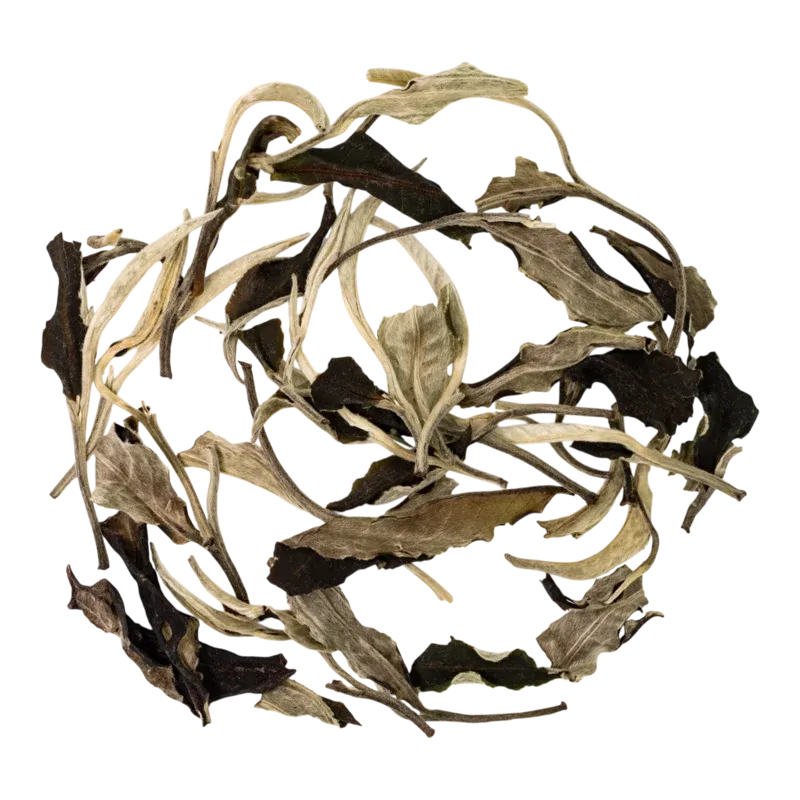
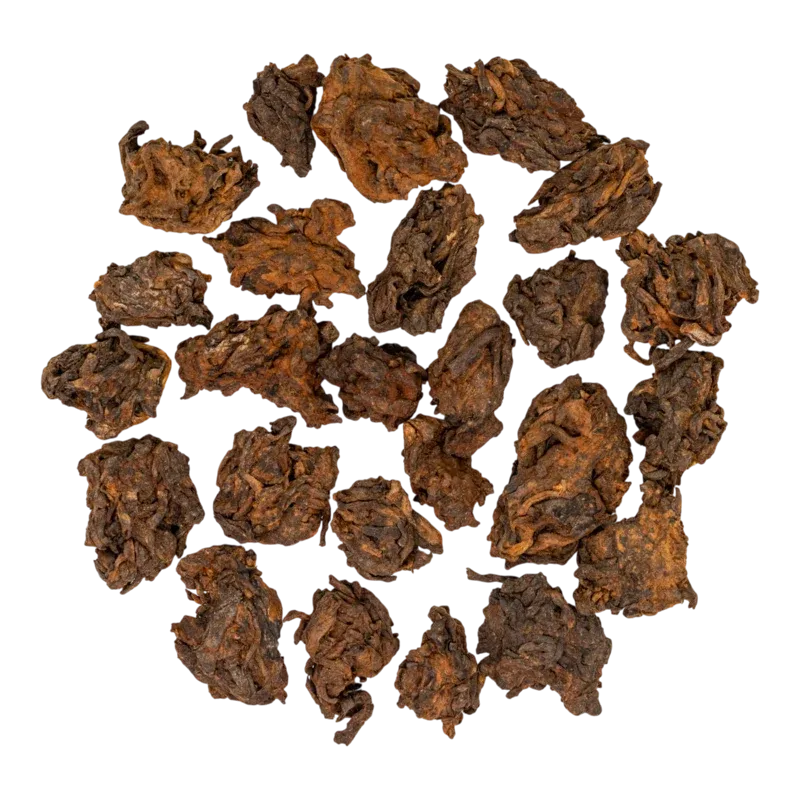
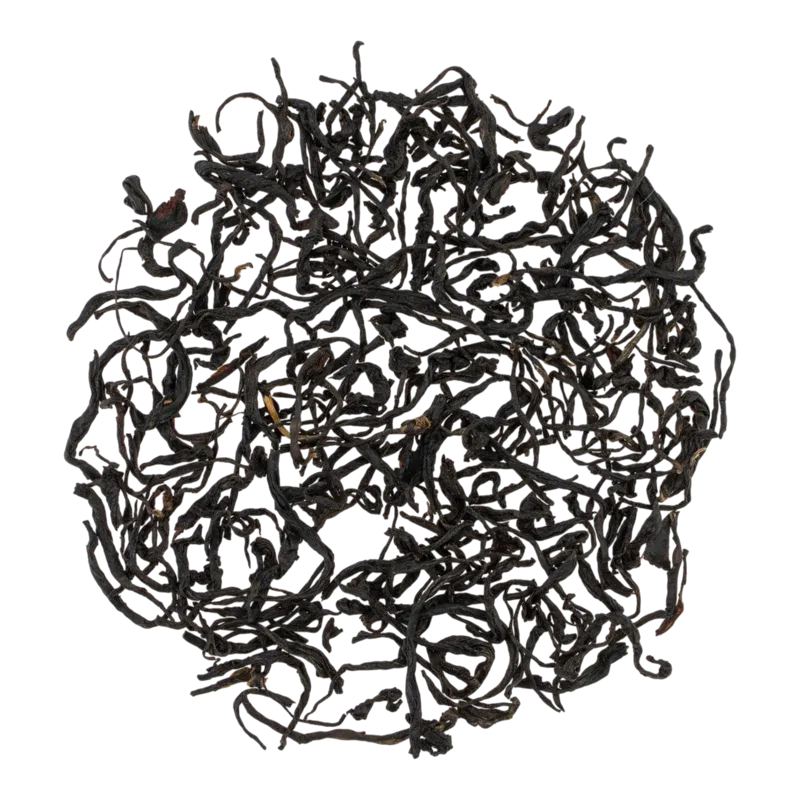
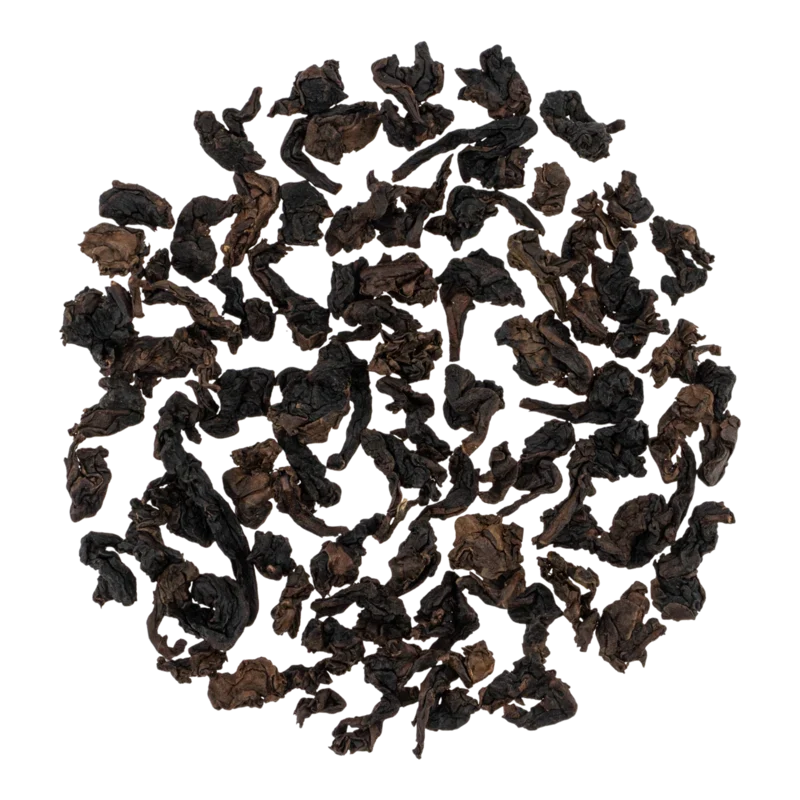
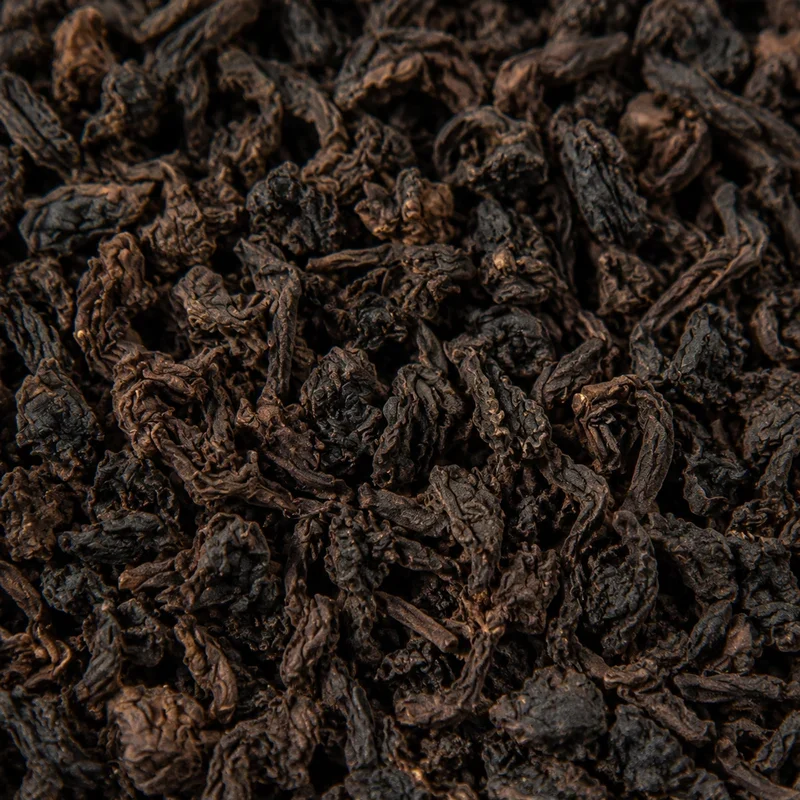
Dry Leaf Appearance: Oolong type — large, fleshy leaves, tightly rolled in spiral form, with dark emerald luster. Green type — dense straight shoots. Leaf surface shows slight luster resembling silk (叶面似"绸缎面", yèmiàn sì "chóuduàn miàn").
Dry Leaf Aroma: Dominant note — orchid (兰花香, lánhuā xiāng), pure, high and penetrating. Undertones of peach-nectarine (水蜜桃, shuǐmìtáo) and longan (桂圆, guìyuán). With extended aging, honey and medicinal-herbal nuances emerge (蜜香, mìxiāng; 药香, yàoxiāng).
Liquor Aroma: Floral-fruity spectrum with increasing sweetness from steeping to steeping. Orchid remains the backbone, but in middle steepings fruity nuances unfold — peach and longan. In roasted versions, nutty-caramel tones are added, contributed by charcoal roasting.
Liquor Color: Oolong type — golden-amber (金黄清澈, jīnhuáng qīngchè), transparent, bright. Green type — jade-green (碧绿明亮, bìlǜ míngliàng).
Spent Leaves: Fleshy, elastic, fully opened leaves with distinct red edge around margins (红边明显, hóngbiān míngxiǎn). Texture soft, glossy. Color from olive-green to copper-golden depending on oxidation degree and roasting.
Taste: Body is dense, rich (醇厚, chúnhòu) — consequence of high polyphenol content. Taste is balanced between sweetness, freshness (鲜爽, xiānshuǎng) and prolonged returning aftertaste (回甘, huígān) with characteristic cooling sensation resembling fresh olive — the so-called "olive melody" (橄榄韵, gǎnlǎn yùn). Tea withstands 7 or more full steepings without losing structure.
Alkaloids: Caffeine (咖啡碱, kāfēi jiǎn) — moderate level, typical for Minnan oolongs (≈2.5–3.5% dry weight). Theobromine (可可碱, kěkě jiǎn) and theophylline (茶碱, chájiǎn) — in trace amounts.
Amino Acids: Free amino acid content — ≥210 mg/100 g raw material. L-theanine (茶氨酸, chá ānjīsuān) is the main component, providing softness and sweetness to the liquor. High cloudiness (>180 days per year) and temperature variation >10°C slow theanine breakdown, ensuring its increased accumulation.
Linalool, nerol, geraniol, indole, cis-jasmone, methyl salicylate — components forming the signature orchid aroma. Aromatic substance content is enhanced by multi-cycle "making qing."
Minerals: Potassium, magnesium, manganese, iron, zinc, fluorine, phosphorus, selenium. Elevated iron and zinc content — distinctive feature of this terroir, due to mineral composition of red-yellow soils.
Polyphenols: Tea polyphenol content (茶多酚, chá duōfēn) in spring raw material reaches 37.04% — a record indicator among oolongs. The base consists of catechins: epigallocatechin gallate (EGCG), epicatechin gallate (ECG), epigallocatechin (EGC) and epicatechin (EC). Partial oxidation products — theaflavins and thearubigins — are present to a lesser degree than in fully oxidized teas, preserving pronounced astringent-refreshing character. Water extract (水浸出物, shuǐ jìnchūwù) in special grades reaches ≥45%.
Vitamins: Vitamins C (ascorbic acid), B₁, B₂, E (tocopherols), K, P (rutin). Vitamin C content decreases with charcoal roasting but is preserved in green varieties.
Synergy of caffeine and L-theanine provides focused alertness without sharp peaks and drops — an effect characteristic of quality oolongs with high amino acid content.
Record polyphenol content (37.04%) provides outstanding free radical neutralization capacity. According to regional studies, radical scavenging effectiveness of Zhengzhai Cha is 40% higher than average tea.
Polyphenols denature bacterial cell proteins; claimed effectiveness against dysentery bacillus (痢疾杆菌, lìji gǎnjūn) — over 95%.
Catechins, particularly EGCG, participate in cholesterol synthesis regulation and low-density lipoprotein (LDL) reduction.
Regional tests indicate enhanced strontium-90 absorption capacity (by 35%) and free radical neutralization during oxidative stress.
Roasted versions (after charcoal roasting) have soothing effect on gastric mucosa and facilitate heavy food digestion.
Antioxidants (polyphenols, vitamin E) contribute to cell protection from photodamage.
Regular oolong consumption is associated with normal blood pressure maintenance and vascular elasticity through complex action of polyphenols and minerals (potassium, magnesium).
Main category. Undergoes full cycle with withering, zuoqing, fixation, "warm wrapping rolling" and charcoal drying. Pronounced orchid aroma, rich flavor with long returning aftertaste. This type reproduces historical "tribute tea" (贡茶, gòngchá).
Early spring buds, pan-fired without oxidation stage. High penetrating aroma, clear jade-green liquor.
Single buds or "bud + one leaf," resembling silver needles in form. Delicate aroma with dominance of máo (毫香, háoxiāng — down aroma). Historically supplied as imperial tribute during Qing.
Made from mature leaves. Dense, rich flavor, high brewing resistance. Historical form mentioned in Qing sources.
Large single buds ≤2.0 cm long, highest orchid note, fresh, juicy flavor. Reproduces Qing tribute standard.
"One bud + one leaf" proportion — not less than 90%. Tight rolling, persistent floral aroma. Water extract ≥45%.
"One bud + two leaves." Notable red edge on spent leaves, rich and invigorating flavor.
Mature leaf, maximum durability (7+ steepings), optimal price-quality ratio.
Tea Amount: 7 g per 140 ml (gongfu, 1:20 ratio) or 3–4 g per 200–250 ml (European style).
Teaware: Yíxīng clay teapot from purple clay (紫砂壶, zǐshā hú) — ideal for concentrating aroma of roasted versions. White porcelain gàiwǎn (白瓷盖碗, bái cí gàiwǎn) — optimal for observing liquor color and evaluating light qingxiang versions. Glass teaware suitable for green types.
Water Temperature: 95–100°C (boiling water necessary for full orchid aroma development). For green varieties — 80–85°C.
Enemies: Moisture, high temperature, direct sunlight, foreign odors and oxygen.
Airtight packaging (vacuum or tightly closed tin), dark place, absence of foreign odors. Optimal temperature — cool, for green varieties — refrigerator (0–5°C).
Opened package recommended for consumption within 6 months to avoid aromatic component oxidation. Charcoal-roasted versions store significantly longer — up to several years. Aged Zhèngzhái Chá (陈化, chénhuà) develops honey and medicinal notes over time.
Most famous Minnan oolong from Anxi. Distinguished by lighter body and accentuated floral elegance in qīngxiāng style (清香). Zhengzhai Cha — denser, richer, with emphasized "olive" astringency and record-high polyphenol content. Tie Guanyin is rolled into spherical form; Zhengzhai Cha — into spiral form.
Northern Fujian oolongs from Wuyi, famous for "rock rhyme" (岩韵, yán yùn) and strong roasting. Zhengzhai Cha was historically mentioned alongside Wuyi tea as equal in status, but stylistically closer to Minnan tradition: more florality, less charcoal depth, pronounced green structure.
Oolong from neighboring Yongchun County, made from large-leaf Foshou cultivar. Distinguished by citrus-bergamot notes and fleshy texture. Zhengzhai Cha — more orchid-like and delicate, with longer aftertaste.
Pressed Minnan oolong from Zhangping County. Distinguished by square brick form and narcissus aroma. Zhengzhai Cha — classic loose form, more multi-layered aroma and richer history as imperial tribute.
Price Category: Cost varies in wide range depending on type (oolong, green, bud), grade, growing altitude, picking season and degree of manual processing. Highest categories — "gongya" (贡芽级) and "teji" (特级) — positioned as premium, especially if made from century-old tree raw material. More mass-market "erji" (二级, second grade) — democratic option with good price/durability ratio.
No reviews yet. Tell us what you think of this tea.
Rate this tea and share your impressions. We review each submission before publishing it.