Brewing
Gongfu brewing
- Water temperature
- 100 °C
- Tea amount
- 7 g
- Water volume
- 100 ml
- First steep
- 10 s
- Time added per infusion
- 5 s
- Infusions
- 12

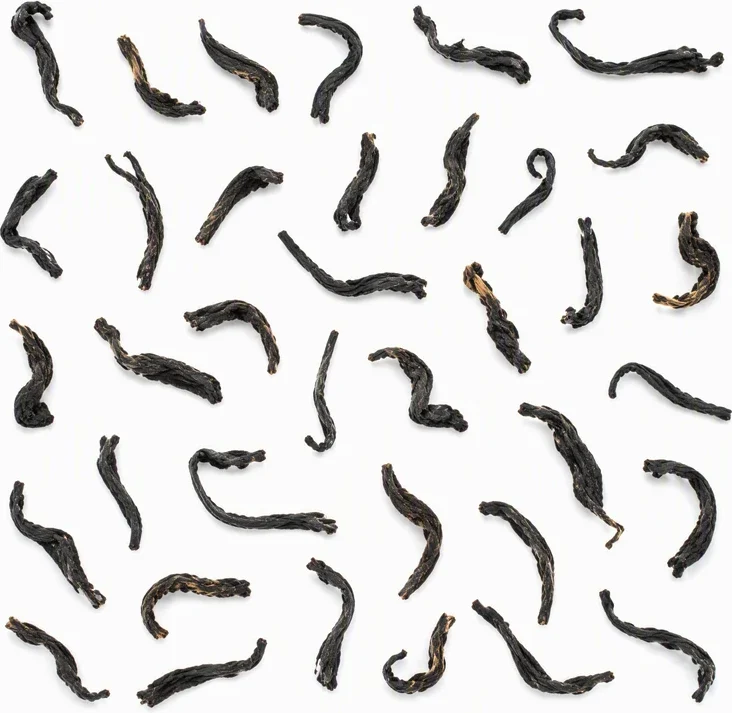
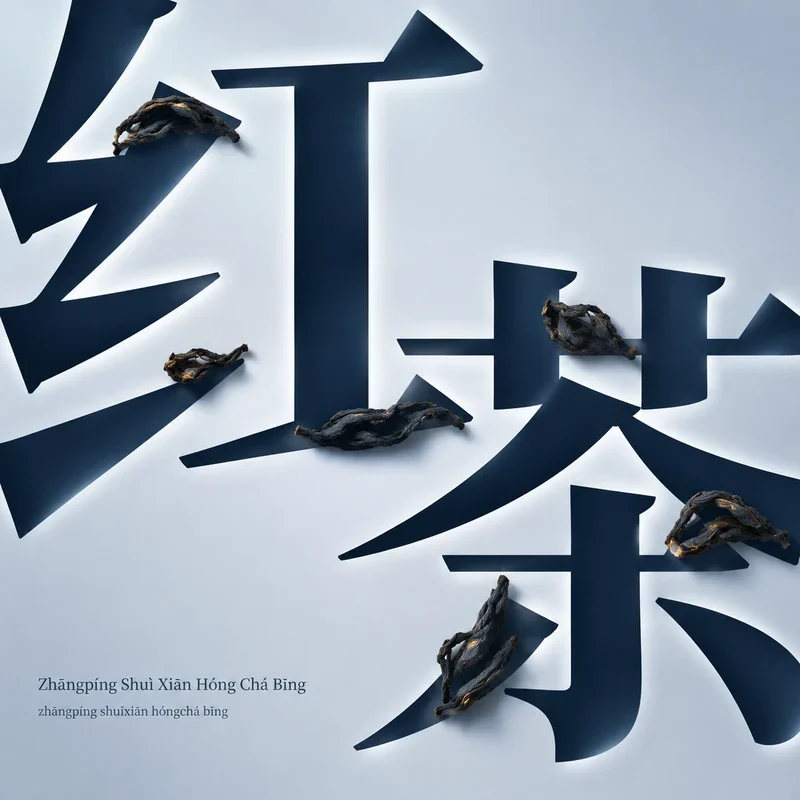
Zhāngpíng shuǐxiān hóngchá bǐng
Choose a brewing method. Start with the recommended quantities and time, then adjust to taste.
Brewing
Brewing
Taste
Tea encyclopedia
Category: Modern artisanal teas of Fujian. Pressed red teas (black teas).
Category: Modern artisanal teas of Fujian. Pressed red teas (black teas).
Coordinates: approximately 25°17′ North latitude, 117°24′ East longitude.
Origin: Zhāngpíng City (漳平市, Zhāngpíng Shì), Lóngyán City (龙岩市, Lóngyán Shì), Fújiàn Province (福建省, Fújiàn Shěng), PRC. Main production zones — Shuāngyáng Town (双洋镇, Shuāngyáng Zhèn) and Nányáng Township (南洋乡, Nányáng Xiāng), as well as the Jiǔpéngxī area (九鹏溪, Jiǔpéng Xī).
Type: Red tea (black tea) (红茶, hóngchá) — fully oxidized (oxidation degree 85–90%). Pressed form.
Cultural Significance: The traditional technology of making pressed Zhangping Shui Xian tea (in oolong form) was included in the Fifth Series of China's National List of Intangible Cultural Heritage in 2021, and in November 2022 became part of the large-scale application "Traditional Chinese Tea Processing Techniques and Associated Social Practices" (中国传统制茶技艺及其相关习俗, Zhōngguó chuántǒng zhìchá jìyì jí qí xiāngguān xísú), accepted into UNESCO's Representative List of the Intangible Cultural Heritage of Humanity. Tea master Zhāng Tiānfú (张天福, Zhāng Tiānfú), called the "patriarch of Chinese tea," spoke of Zhangping Water Narcissus as a tea that preserved the authentic spirit of oolong tradition. The red tea version inherits the cultural prestige of this tradition while offering a fundamentally different flavor profile.
History: The tradition of pressing tea into square cakes in Zhangping spans over a century. According to some sources, the technology was created by tea master Dèng Guānjīn (邓观金, Dèng Guānjīn) from Zhōngcūn Village (中村, Zhōngcūn) in Shuangyang Town around 1914. According to other sources, the first was Liú Yǒngfā (刘永发, Liú Yǒngfā) from Dàhuì Village (大会村, Dàhuì Cūn), who based his technique on Wuyi Mountain oolong technology, with Deng Guanjin being his student and successor. Traditionally, Zhangping produced exclusively oolong — pressed square cakes became the calling card of this region and the world's only example of pressed oolong. The production of specifically the red tea (hóng chá) version of Zhangping Shui Xian is a relatively recent phenomenon, beginning approximately in the mid-2010s. The appearance of this tea was a response to growing global demand for red teas (black teas) and local producers' desire to expand their product range using traditional pressing technology for a new type of tea.
Name Breakdown: "Zhangping" (漳平) — name of the producing city. "Shui Xian" (水仙, Shuǐxiān) — "Water Narcissus," name of the tea cultivar. "Hong Cha" (红茶, Hóngchá) — "red tea (black tea)," indication of oxidation type. "Bing" (饼, Bǐng) — "cake," "disc," designation of pressed form.
Cultivar: Shuì Xiān (水仙, Shuǐxiān) — an ancient large-leaf cultivar of Camellia sinensis var. sinensis. Originates from Jiànyáng County (建阳, Jiànyáng) in northern Fujian, from where it was brought to Zhangping in the late 19th — early 20th century. Shui Xian tea trees without pruning can reach heights of 3–4 meters. Leaves are large, up to 15 cm long, thick, leathery, elliptical in shape with a pointed tip. Petioles are thick, stems have a characteristic quadrangular cross-section. Spring buds are covered with pronounced silvery down.
Picking: For red tea version production, mature summer shoots (third harvest) are typically used, which differs from the oolong version, for which spring raw material is preferred. Harvesting standard — medium-opened shoots with two to three leaves (小至中开面二三叶). The choice of summer raw material is due to the fact that summer harvest leaves contain more polyphenols, which during full oxidation provide rich taste and deep liquor color. More tender spring raw material goes primarily to oolongs. Optimal harvesting time — from 10:00 to 15:00, when dew has already dried and moisture content in the leaf has stabilized.
Altitude: Plantations are located on mountain slopes at altitudes from 400 to 1100 meters above sea level.
Climate: Subtropical monsoon, with mild winter and humid summer. Average annual temperature is 16.9–20.7°C, annual precipitation — from 1450 to 2100 mm. Mountains create frequent fogs and provide diffused light, favorable for the formation of aromatic substances in tea leaves.
Soil: Predominantly acidic red soils (pH 5.0–5.5), formed on the basis of weathered mountain rocks, rich in organic matter and minerals. Loose soil structure provides good aeration of the root system.
Zhangping is located in the central part of Fujian Province, at the junction of the Southern Wuyi Mountain ranges and coastal hills. The main production zone — Jiǔpéngxī area (九鹏溪, Jiǔpéng Xī), as well as surroundings of Shuangyang and Nanyang towns.
Local farmers practice alternating tea plantations with forest areas, which maintains ecological balance and enriches the soil. In 2009, China's Ministry of Agriculture granted "Zhangping Shui Xian" tea the status of protected geographical indication (农产品地理标志, nóngchǎnpǐn dìlǐ biāozhì). By 2010, the area of Water Narcissus plantations in the county reached about 100,000 mu (≈ 6,700 hectares), and total production volume — over 5,000 tons per year.
Hand-picking of mature summer shoots.
Harvested leaves are spread in a thin layer on bamboo trays under canopies or in ventilated rooms. Leaves lose about 30% moisture over 3–4 hours, becoming soft and elastic. This stage activates enzymes, preparing the leaf for rolling.
Withered leaves are placed in rollers, where they undergo mechanical action for approximately 40 minutes. Cell wall destruction releases juice and enzymes, initiating oxidation. Rolling time for red tea (black tea) is significantly longer than for oolong to ensure maximum contact of cellular juice with oxygen.
Rolled leaves are spread in layers in cool, humid rooms (temperature +28…+32°C, humidity ≥85%). The process lasts several hours until leaves acquire a characteristic copper-red shade. Oxidation degree is brought to 85–90%. The master controls the process visually and by aroma.
Oxidation is stopped by rapid heating of leaves at high temperature (+120…+130°C) in woks or roller dryers.
Still warm leaves are tightly packed into square wooden forms (木模, mùmó) measuring approximately 5×5×1 cm. Molds are made from hard, odorless wood. The master places about 25–28 g of tea leaf into the form and presses with a wooden mallet (木槌, mùchuí). This is a key and unique stage that distinguishes the Zhangping tradition from all others.
Each formed cake is wrapped in special filter paper (previously used maobianzhi (毛边纸, máobiānzhǐ — unbleached bamboo paper). Paper prevents sticking and helps maintain shape during drying.
Wrapped cakes are laid on racks and dried over heated wood charcoal. The process is conducted in several stages: initial drying at 90–100°C for 6–8 hours, intermediate cooling (2–3 hours), then repeated drying at reduced temperature (60–70°C). Total baking duration can reach 35–40 hours. Finished tea contains no more than 5–6% moisture.
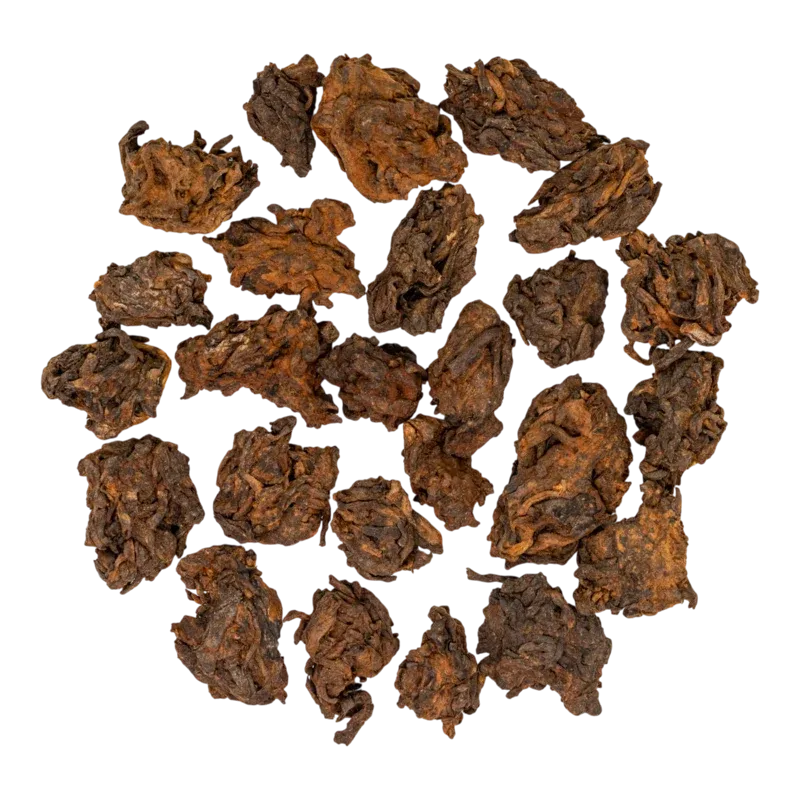
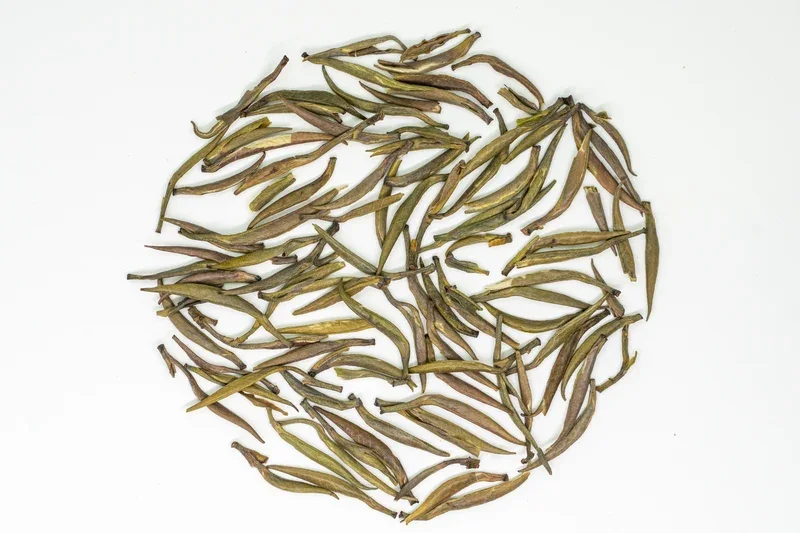
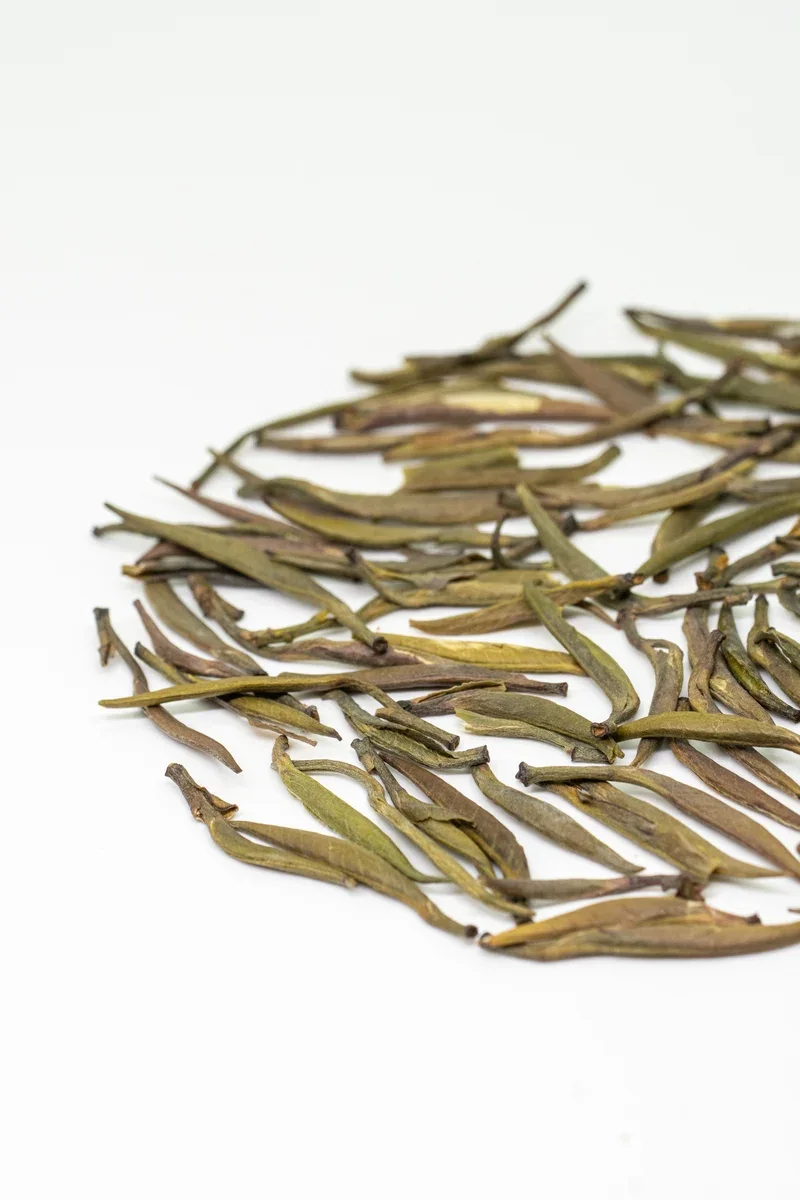
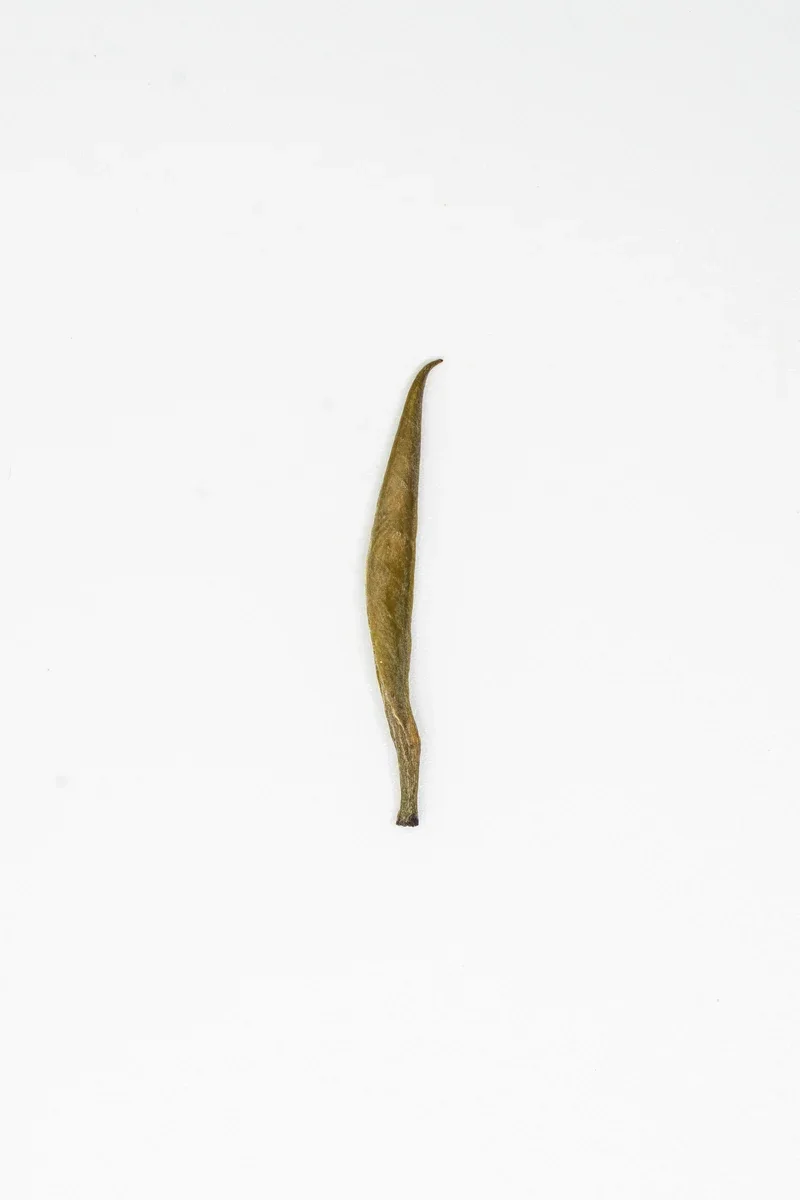
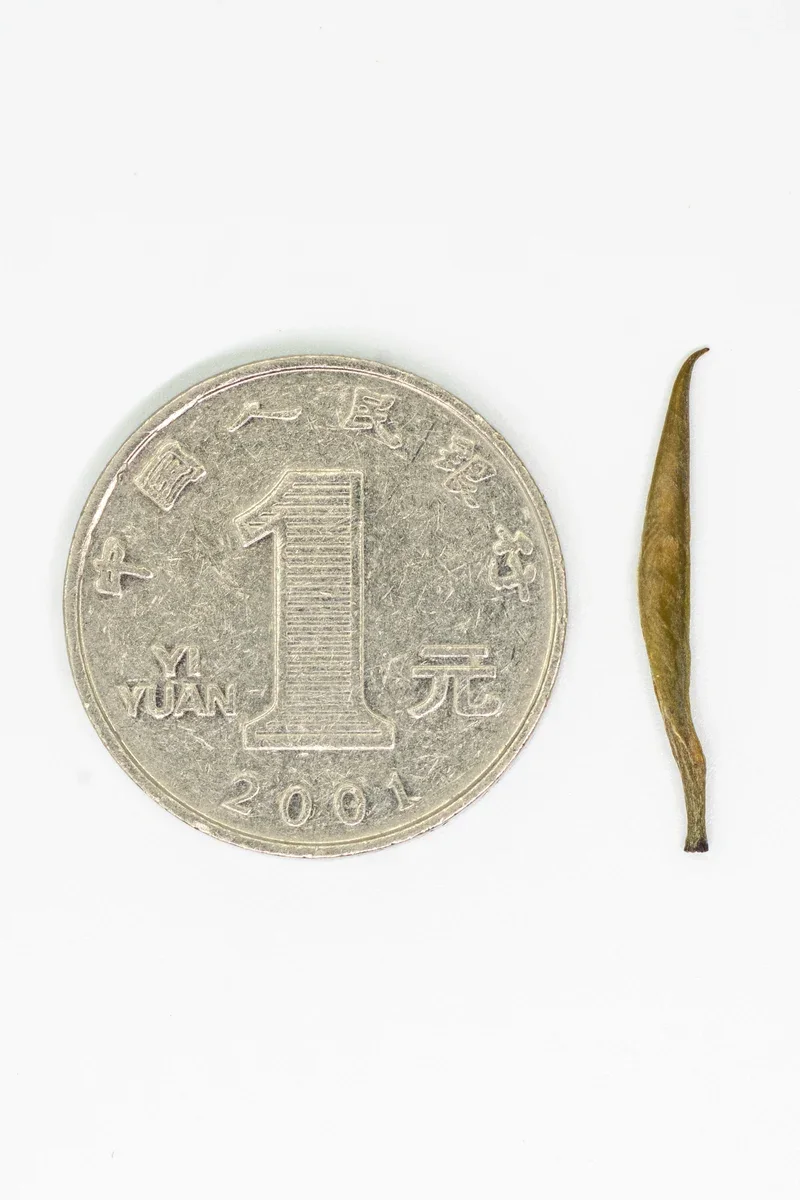
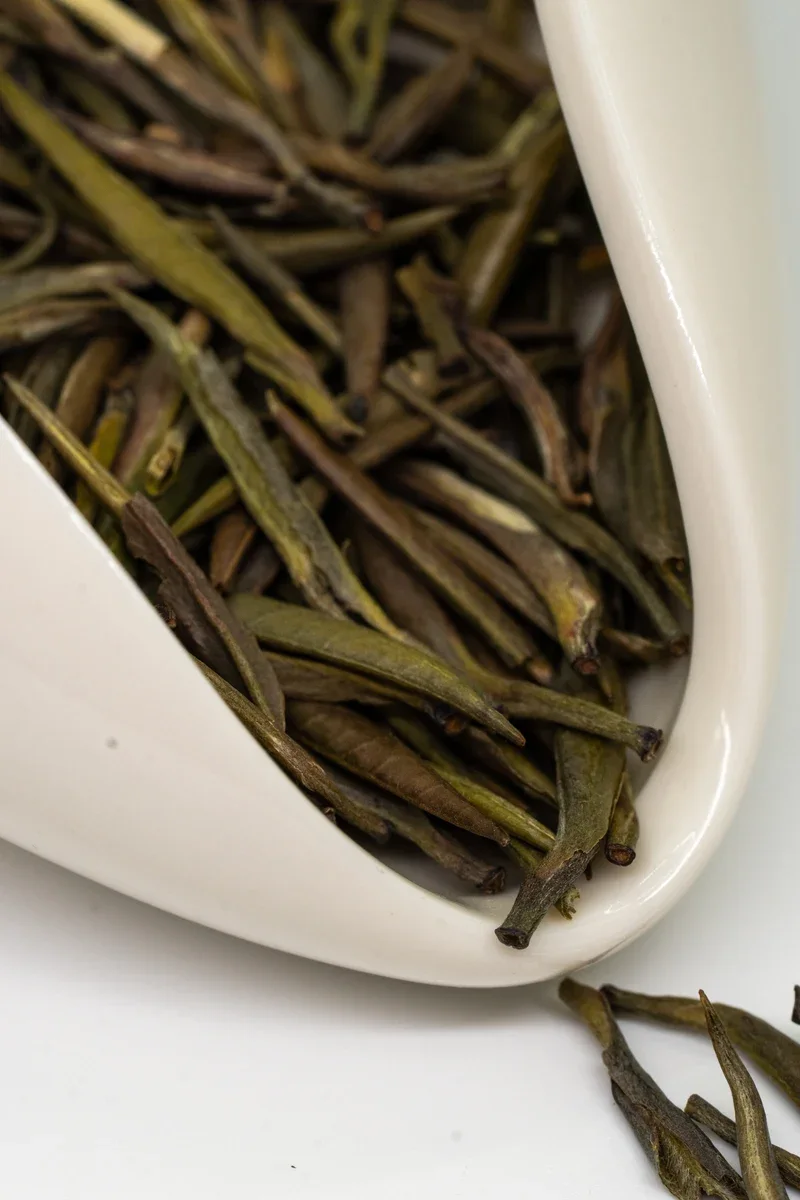
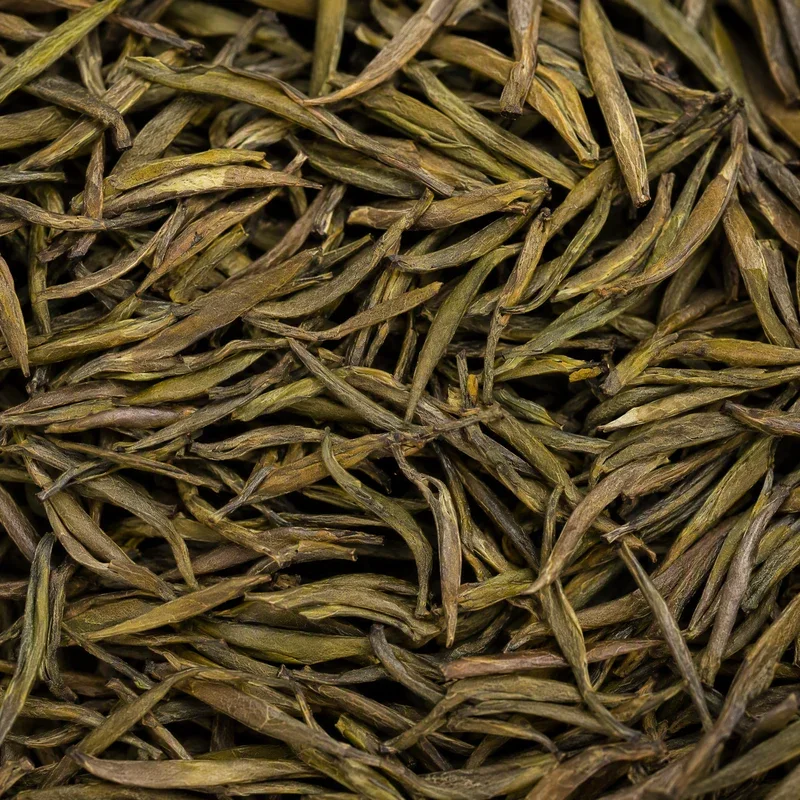
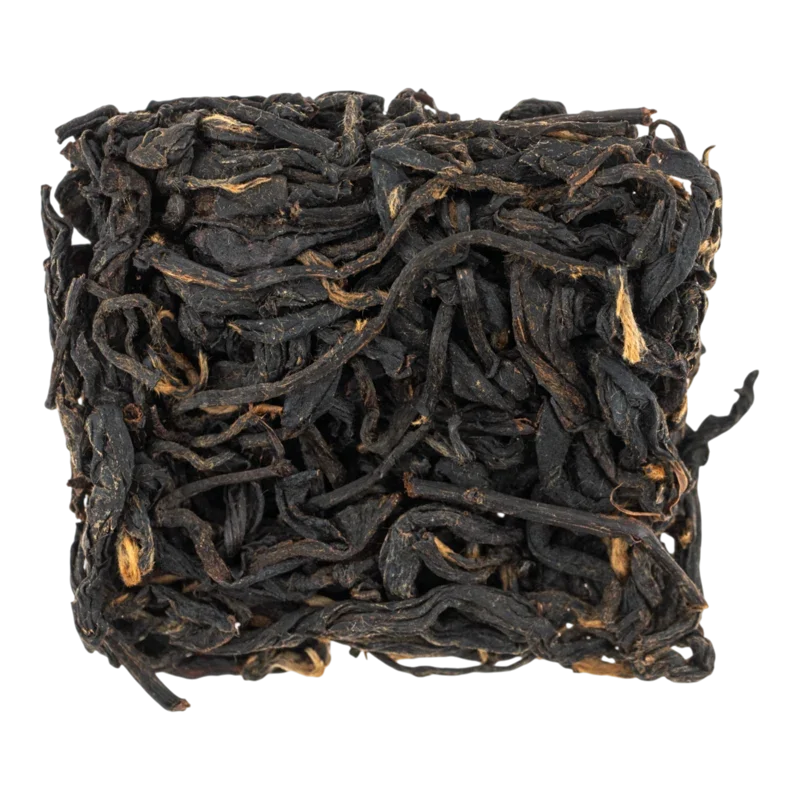
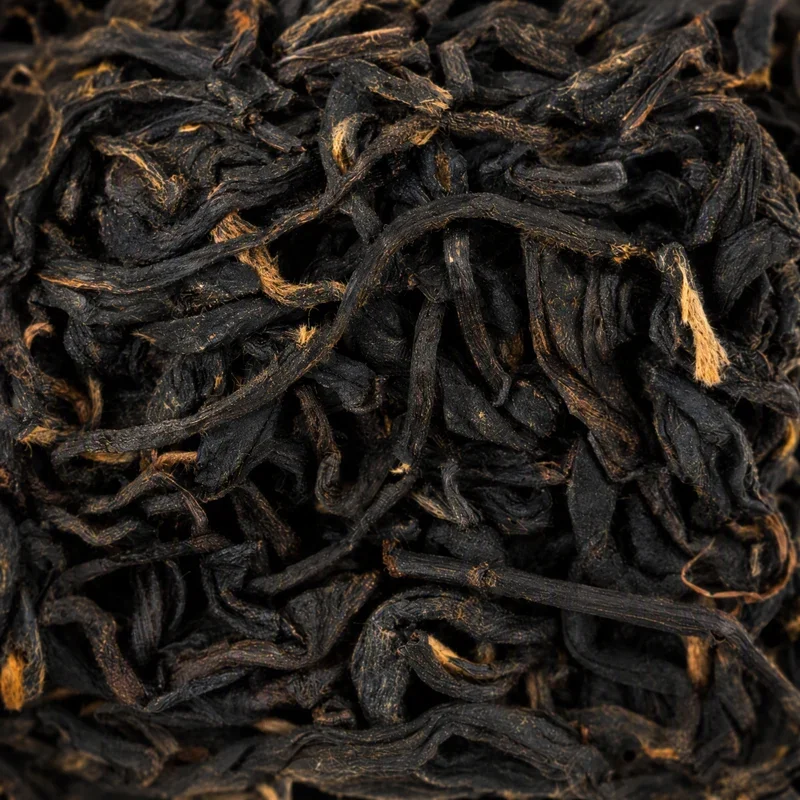
Dry Leaf Appearance: Neat square cakes of dark brown color, wrapped in white filter paper. When broken, whole, tightly pressed rolled leaves with golden veins are visible inside.
Dry Leaf Aroma: Intense, sweet, with floral notes (orchid, narcissus), honey tones, dried fruits (persimmon, pear) and light spicy touches (cardamom). Cocoa and malt tones may be present.
Liquor Aroma: Rich, warm, honey-floral, with more pronounced sweetness compared to dry leaf. Spicy and fruity notes deepen with each subsequent infusion.
Liquor Color: Bright, clear, from amber to rich cognac-red, depending on steeping time. High transparency.
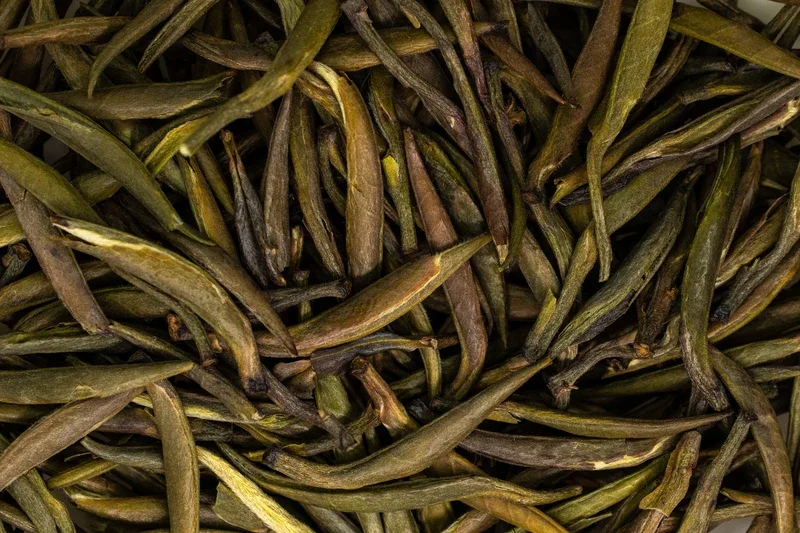
Spent Leaves: Opened leaves are whole, large, elastic, copper-brown color with uniform coloration.
Taste: Dense, smooth, oily, enveloping. Natural sweetness dominates, reminiscent of molasses or dark honey, balanced by light fruity acidity (red currant). Characterized by complete absence of astringency and bitterness — consequence of using mature summer raw material and prolonged baking.
Alkaloids: Caffeine — moderate content, typical for red teas (black teas) (approximately 2.5–3.5% of dry matter). Theobromine and theophylline are also present.
Amino Acids: L-theanine (theanine) — contained in moderate amounts, contributes to mild sweetness and promotes relaxation. Summer raw material is characterized by reduced amino acid content compared to spring.
Essential Oils: Contain geraniol, linalool, nerolidol and cis-jasmone — compounds forming the characteristic floral-honey aroma. The Shui Xian cultivar is genetically predisposed to high content of aromatic substances.
Minerals: Potassium, manganese, zinc, magnesium, fluorine. Mineral composition is enriched due to acidic red soils of the region.
Polyphenols: Theaflavins predominate (responsible for brightness and golden tint of liquor) and thearubigins (form deep red color, richness of body and taste smoothness). Residual content of epigallocatechin-3-gallate (EGCG) is small compared to the oolong version.
Vitamins: B-group vitamins, P (rutin) and K are present in small amounts.
Theaflavins and thearubigins possess pronounced ability to neutralize free radicals, comparable to the antioxidant activity of green tea catechins.
Regular consumption of red tea (black tea) may contribute to blood pressure normalization and improvement of vascular elasticity.
Fully oxidized tea has a mild and delicate effect on the gastrointestinal tract, without irritating mucous membranes — a property for which Zhāngpíng teas are traditionally valued (久饮多饮而不伤胃 — "can be drunk long and much without harming the stomach").
Caffeine combined with L-theanine provides steady alertness without sharp energy peaks and drops.
Red tea (black tea) belongs to "warm" beverages in traditional Chinese classification, making it particularly suitable for cold seasons.
Red tea (black tea) polyphenols possess antibacterial and antiviral properties.
One cake per 200–250 ml water, temperature 90–95°C, steeping time 3–5 minutes. Re-steeping — 2–3 times with increased time.
Pressed cake opens gradually — it should not be broken before brewing unless portioned dosing is necessary.
Tea Amount: One whole cake (6–8 g) per 150–200 ml water for flash steeping method; one cake per 200–250 ml water for European method.
Teaware: Porcelain gàiwǎn (盖碗, gàiwǎn) or small clay teapot (100–150 ml). Glass or porcelain teapot brewing is acceptable for European method.
Water Temperature: 90–95°C. Boiling water (100°C) is not recommended to avoid provoking bitterness.
Container: Airtight, opaque container — ceramic jar, tin box or foil bag with vacuum packaging. Individual paper wrapping of each cake provides additional protection.
Shelf Life: With proper storage, tea retains its properties for up to 5 years. Over time, floral notes may weaken, giving way to deeper woody and balsamic shades — some connoisseurs consider such flavor evolution an advantage.
Room temperature (+15…+25°C), air humidity no higher than 60%. Refrigerator is not required — fully oxidized tea is stable under normal conditions.
Protect from direct sunlight and store away from products with strong odors (spices, coffee, household chemicals).
Classic semi-oxidized oolong from the same raw material for the region. Differs in oxidation degree (20–40% instead of 85–90%), production technology (includes "making green" stage — 做青) and flavor profile: floral and green notes dominate instead of honey-fruity sweetness of the red tea version. Liquor is golden-amber instead of cognac-red.
Famous red tea (black tea) from Wuyi Mountain's Tóngmù Nature Reserve (桐木, Tóngmù). Uses small-leaf cultivars, distinguished by smoky notes (in classic version) and pronounced pine character. Zhangping Hong Cha Bing is milder, sweeter and lacks smokiness.
Premium Fujian red tea (black tea) made exclusively from buds. Distinguished by more delicate, refined taste with sweet potato and dried fruit notes. Zhangping Hong Cha Bing is denser and more oily due to mature leaf and pressing.
Yunnan red tea (black tea) from large-leaf var. assamica raw material. Possesses pronounced honey and pepper notes, powerful body. Zhangping Hong Cha Bing is more delicate, with floral character inherited from Shui Xian cultivar.
Price Category: Zhangping Shui Xian Hong Cha Bing belongs to medium and high price category teas. Cost is formed from several factors: quality raw material of Shui Xian cultivar, labor-intensive hand pressing, lengthy charcoal baking process (up to 40 hours) and relative novelty of the product. Products from factories with protected geographical indication (PGI) marking cost more.
No reviews yet. Tell us what you think of this tea.
Rate this tea and share your impressions. We review each submission before publishing it.