Brewing
Gongfu brewing
- Water temperature
- 95 °C
- Tea amount
- 7 g
- Water volume
- 100 ml
- First steep
- 10 s
- Time added per infusion
- 5 s
- Infusions
- 10

Yúnnán Jǐngmài yěshēng hóngchá
Choose a brewing method. Start with the recommended quantities and time, then adjust to taste.
Brewing
Brewing
Taste
Tea encyclopedia
Category: Wild ancient tree red tea (野生红茶, yěshēng hóngchá) — tea from raw material of wild or semi-wild ancient tea trees. Premium segment of Yunnan red teas.
Category: Wild ancient tree red tea (野生红茶, yěshēng hóngchá) — tea from raw material of wild or semi-wild ancient tea trees. Premium segment of Yunnan red teas.
Coordinates: Approximately 22°10′ N, 100°01′ E. The territory of ancient tea gardens extends from 99°59′14″ to 100°03′55″ East longitude and from 22°08′14″ to 22°13′32″ North latitude.
Origin: China, Yúnnán Province (云南省, Yúnnán shěng), Pu'er City (普洱市, Pǔ'ěr shì), Láncāng Lahu Autonomous County (澜沧拉祜族自治县, Láncāng Lāhùzú Zìzhìxiàn), Huìmín Township (惠民镇, Huìmín zhèn), Jingmaishan mountain range. Tea gardens are located predominantly in Jǐngmài (景迈, Jǐngmài) and Mángjǐng (芒景, Mángjǐng) villages.
Type: Red tea (black tea) (红茶, hóngchá) — fully oxidized. According to European classification, corresponds to black tea. Belongs to the group of Yúnnán red teas Diān Hóng (滇红, Diānhóng).
Cultural Significance: The tea forests of Jingmai are inseparably linked with the spiritual life of indigenous peoples. Before the beginning of each harvest season, the Bùlǎng and Dǎi peoples conduct a ritual of worship to the Tea Ancestor (茶祖, Cházǔ) — the guardian spirit of tea trees, asking for blessings for a good harvest. The local philosophy "万物有灵" (wànwù yǒu líng) — "all living things are animated" — determines the careful attitude toward the forest and tea as sacred entities. Villages conclude community agreements (village charters) prohibiting the cutting of trees in tea forests and protective strips about 40 meters wide around them. Tea plays a central role in daily life: weddings, funerals, dispute resolution — everything is accompanied by tea drinking. There exists a special custom of "tea invitation" (茶柬, chá jiǎn): to invite guests, the host wraps a pinch of tea and two candles in a banana leaf and ties it with a bamboo strip — such an invitation is considered the most respectful.
History: The tea forests of Jingmaishan are one of the world's oldest examples of continuous tea cultivation. According to records in the Dai language and oral traditions of the Bulang people, the history of tea cultivation on the mountain dates back to the 10th–14th centuries CE. Legend tells that chief Zhaonulak (召糥腊, Zhàonuòlà), guided by a golden deer, discovered these mountains and led his people there, and wild tea trees became the foundation for creating a unique agroforestry system. In 1950, Bùlǎng chief Sūlìyǎ (苏里亚, Sūlìyǎ) presented tea from Jingmai — small-leaf "Xiao Que Zui Jian Cha" (小雀嘴尖茶) — as a gift to Mao Zedong. In 2001, tea from Jingmai was included in the gift set presented to country leaders at the APEC forum in Shanghai. In 2013, the ancient tea gardens received the status of National Key Cultural Relic Protection Unit (全国重点文物保护单位). On September 17, 2023, the "Cultural Landscape of Pu'er Jingmaishan Ancient Tea Forest" (普洱景迈山古茶林文化景观, Pǔ'ěr Jǐngmàishān Gǔchálín Wénhuà Jǐngguān) was inscribed on the UNESCO World Heritage List at the 45th session of the World Heritage Committee — this is the world's first World Heritage site dedicated to tea themes and China's 57th UNESCO site.
Name Breakdown: Yúnnán (云南) — "south of the clouds," a province in southwestern China; Jǐngmài (景迈) — in the Dai language "jing" (景) means "city," "mai" (迈) — "new," meaning "new city"; Yè Shěng (野生) — "wild, wild-growing"; Hóng Chá (红茶) — "red tea." The full name emphasizes the tea's origin from wild raw material of Mount Jingmai.
Cultivar: Wild and semi-wild tea trees of the large-leaf Assam variety — Camellia sinensis var. assamica (Masters) Kitamura. Trees of arborescent (tree-like) form with powerful trunks and spreading crowns. In the ancient gardens of Jingmai, specimens close to Camellia taliensis (大理茶, Dàlǐ chá) and transitional forms — results of natural hybridization — are also found. Among the raw material, the purple-leaf variety Zī Yá (紫芽, Zǐyá), rich in anthocyanins, is also encountered.
Picking: Hand-picking according to the standard "bud and two-three young leaves" (一芽二三叶, yī yá èr sān yè). Main season — spring (March–April), when the raw material is most tender and rich in amino acids. Autumn harvest (September–October) is also practiced but valued somewhat lower. Harvesting is traditionally carried out by women who pass down skills from generation to generation.
Raw Material: Special importance is given to the age of trees: the older the tree, the deeper its root system penetrates the soil, allowing it to accumulate more minerals and form a more complex flavor-aromatic profile. The largest trees of Jingmai reach heights of 5–8 meters with trunk diameters at the base up to 50 cm. Leaves are large, leathery, up to 20 cm long, characteristic of the Assam variety. The total number of ancient tea trees in the heritage territory exceeds 1.2 million, with trees having trunk diameters of 10–30 cm comprising the majority.
Altitude: 1140–1600 meters above sea level, average altitude — about 1400 m.
Climate: Subtropical monsoon. Average annual temperature +18°C, annual precipitation — about 1800 mm. Characterized by abundant fogs, high humidity and significant diurnal temperature variations. A local saying states: "On clear days from morning to evening the earth is in fog, on cloudy days all day the mountains are in clouds" (晴时早晚遍地雾,阴雨成天满山云).
Soil: Red lateritic soils (赤红壤, chìhóng rǎng) with acidic reaction (pH 5–6), rich in organics thanks to the forest ecosystem. Research by Yunnan Agricultural University showed that soils of Jingmai's ancient tea gardens significantly exceed modern terraced plantations in content of organic matter, total nitrogen, phosphorus and available microelements (Zn, Mn).
Southwestern part of Yunnan Province, bordering Myanmar and Xishuangbanna Dai Autonomous Prefecture. Jingmaishan represents an isolated geographical unit, surrounded on three sides by the Nanlanghe (南朗河) and Nanmenhe (南门河) rivers.
The key uniqueness of Jingmai is the multi-story agroforest ecosystem (林下种植, línxià zhòngzhí). The upper canopy consists of tall trees (banyans, camphor trees, red cedar), the middle — tea trees, the lower — grasses, medicinal plants and epiphytes (including dendrobium orchids and moss). This system provides natural shading, protection from wind and erosion, maintains high biodiversity (more than 300 associated plant species). Chemical fertilizers and pesticides are not used — pest control is conducted by natural methods: spider populations that eat insect pests thrive in tea gardens. On trees, the epiphyte "螃蟹脚" (Pángxièjiǎo, "crab foot") — the parasitic plant Viscum articulatum, to which medicinal properties are attributed — is often found.
Careful hand-picking of young shoots in early morning. Standard — bud with two-three leaves.
Picked leaves are spread in a thin layer on bamboo trays (竹匾, zhú biǎn) for natural moisture loss — approximately 30%. Conducted in open air under sun or in a ventilated room. Duration — 8–12 hours depending on weather conditions. This stage initiates initial biochemical transformations in the leaf.
Withered leaves are rolled by hand or on roller machines to break down cell walls and release cell sap, which activates enzymatic oxidation. From large-leaf raw material, compact balls — "pearls" (珍珠, zhēnzhū) — are sometimes formed, which allows slowing extraction during brewing and extending the number of infusions.
Key stage for red tea. Rolled leaves are spread in a warm (+25…+28°C) and humid room for several hours — up to 36 hours to achieve complete oxidation of polyphenols. Catechins transform into theaflavins and thearubigins — compounds responsible for the characteristic red-amber color of the liquor, dense taste and sweetish aroma. The leaf acquires a dark red-brown shade.
Oxidized leaves are quickly dried at high temperature (about 90–100°C) in traditional wood-fired ovens or special drying cabinets. Goal — stop oxidation, fix aroma and reduce moisture to 3–5%. Wood-fired drying can introduce light smoky notes characteristic of artisanal production.
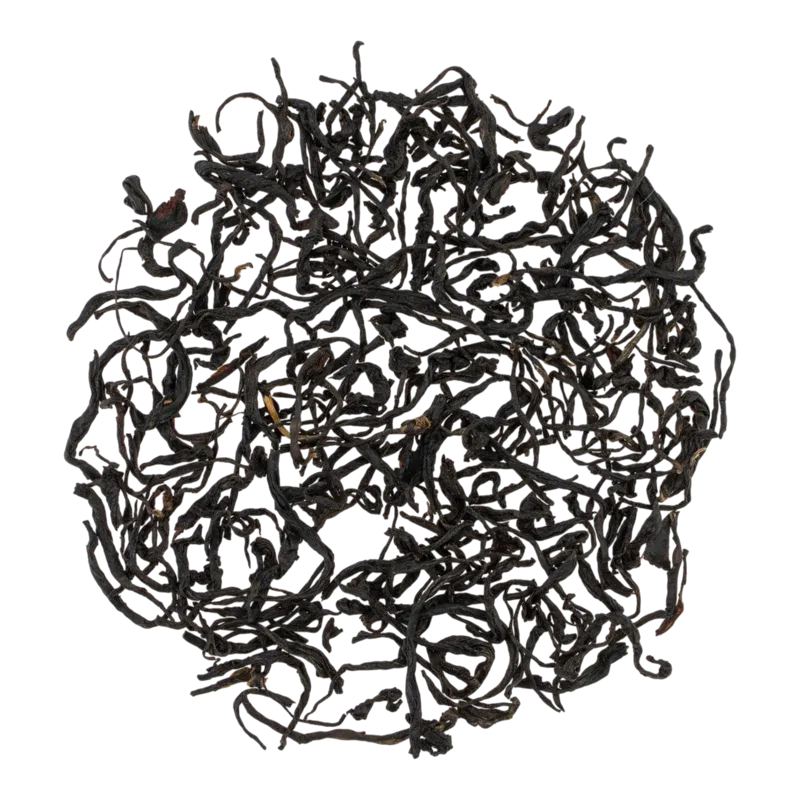
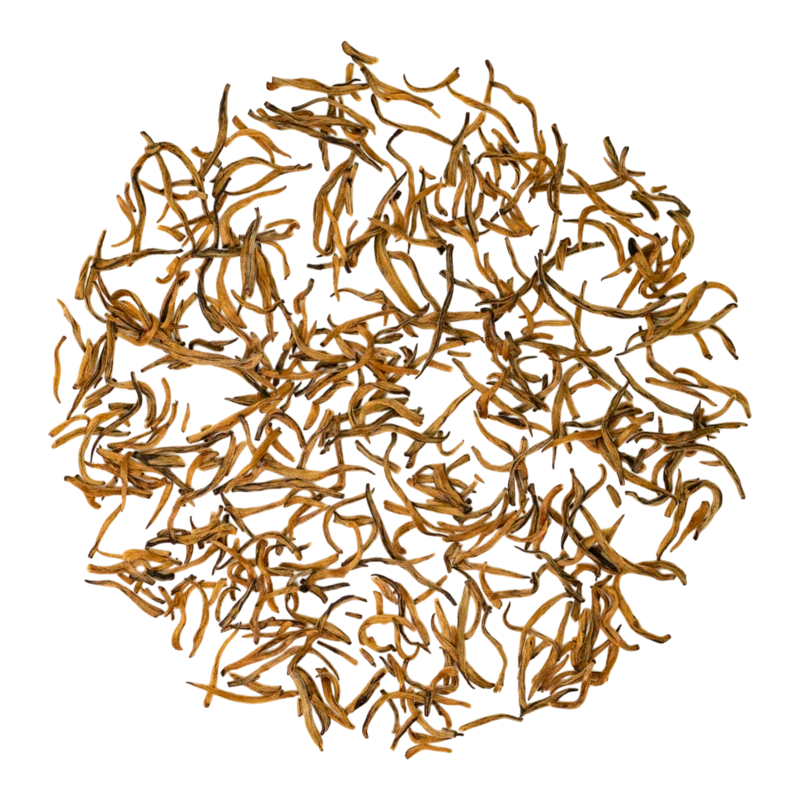
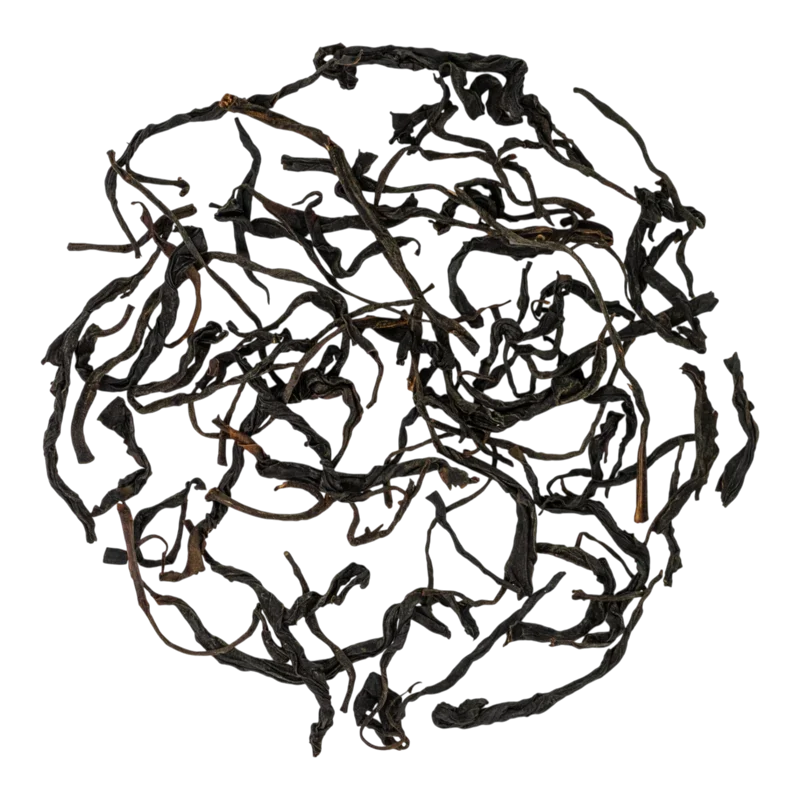
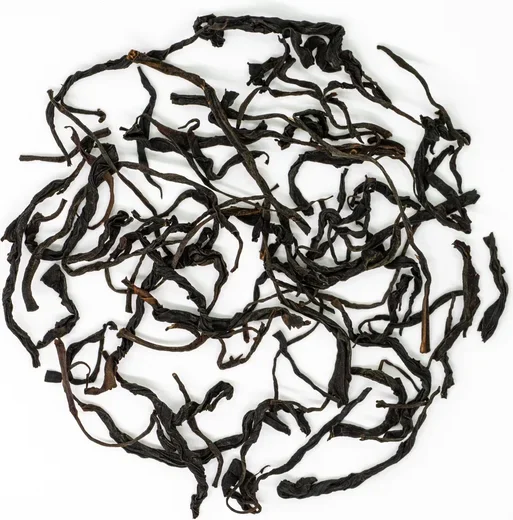
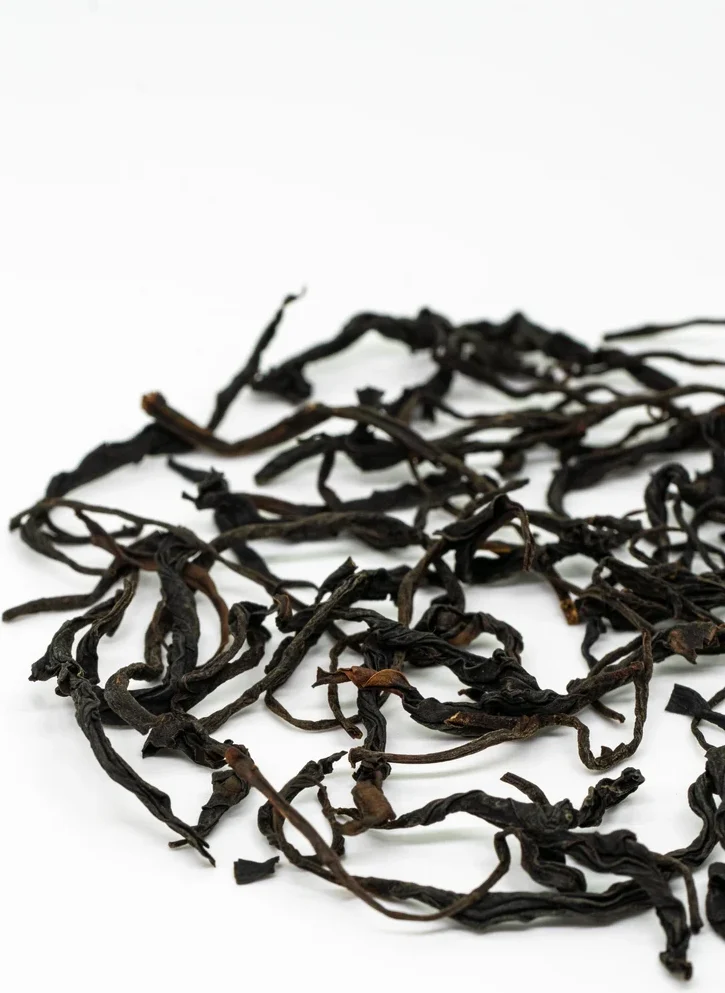
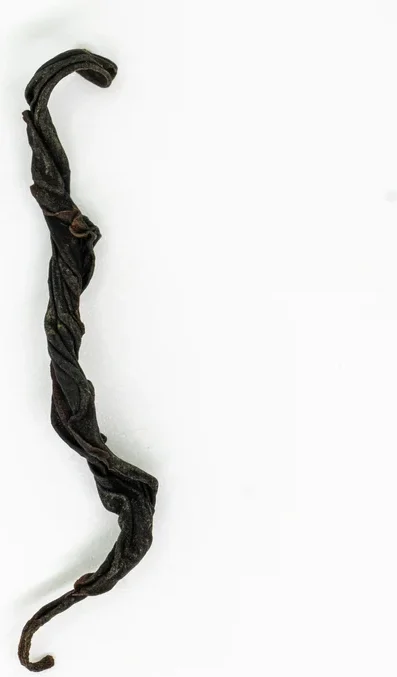
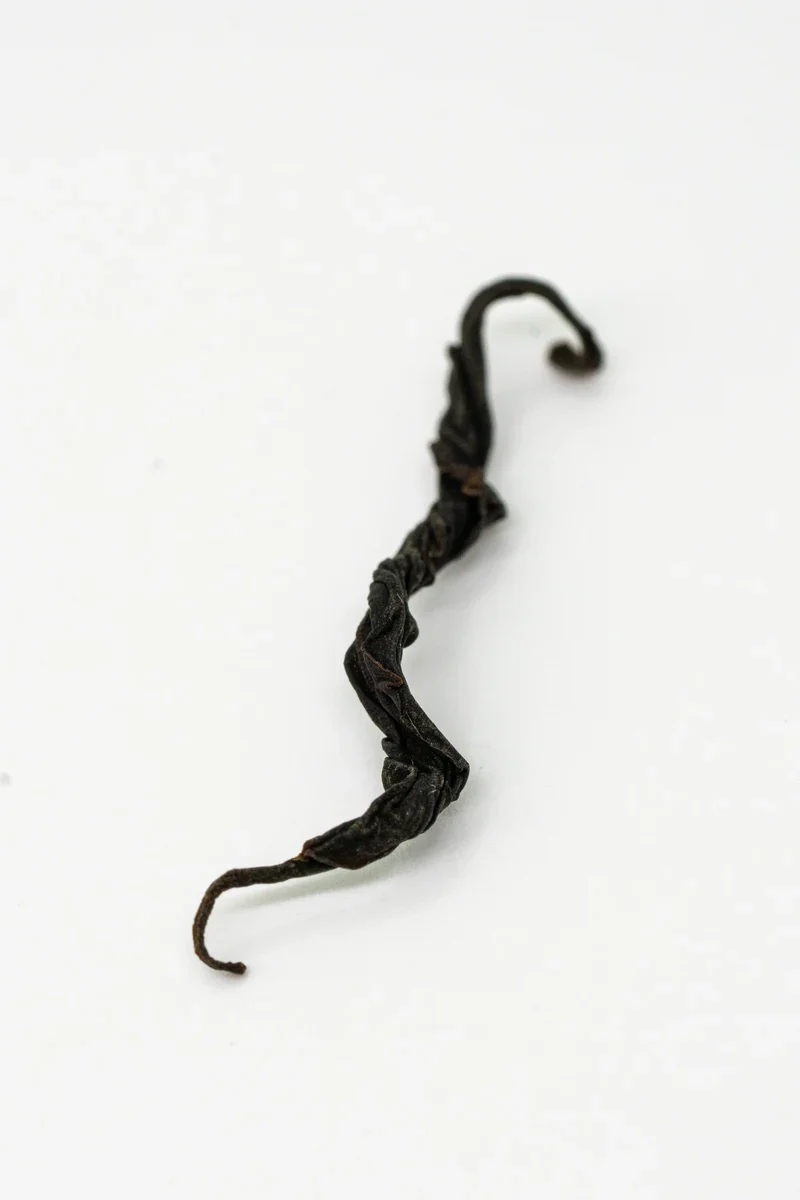
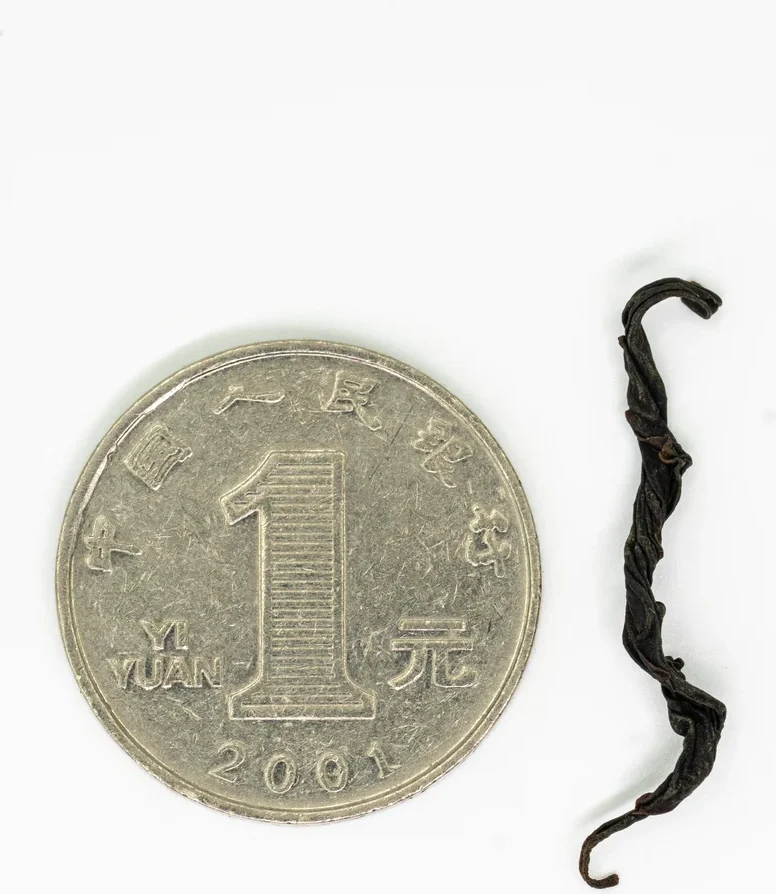
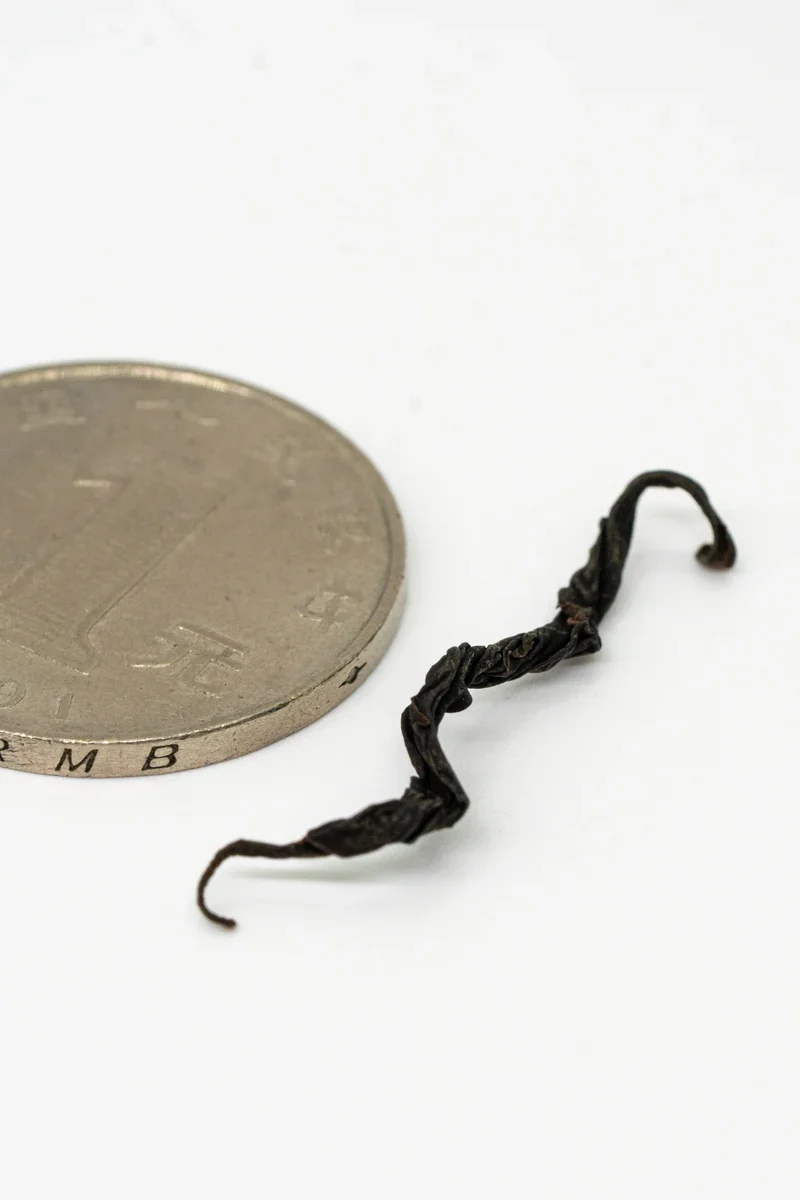
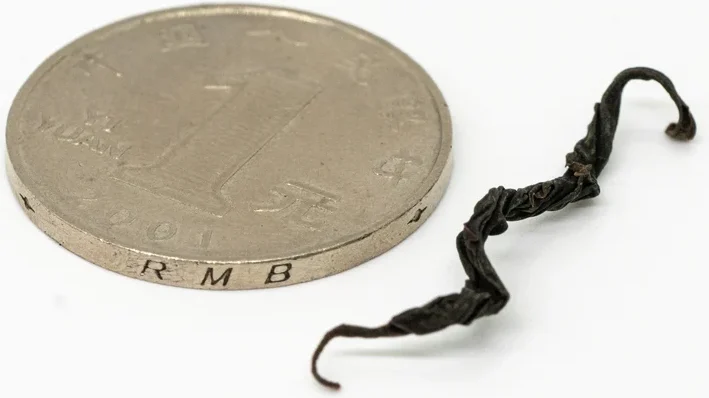
Dry Leaf Appearance: Large, dark brown or almost black leaves with golden buds (tips), strongly twisted into longitudinal strands or dense pearls. Down on tips gives a characteristic golden-reddish sheen.
Dry Leaf Aroma: Rich, warm, with pronounced notes of cocoa, dark chocolate, dried fruits (prunes, raisins), light floral and woody undertones. Characteristic "forest" tone — imprint of the understory ecosystem.
Liquor Aroma: Sweet, deep, multi-layered: malt, floral honey, baked fruits, cocoa and delicate floral notes. When cooling, shades of dried longan and caramel appear.
Liquor Color: Bright, clear, from rich golden-amber to deep ruby-red. Oily texture in light.
Spent Leaves: Soft, elastic leaves of reddish-brown color, large, well-preserved in form. Integrity and elasticity of the leaf testify to the quality of raw material and careful processing.
Taste: Dense, smooth, velvety, with minimal astringency. Sweet notes dominate — maltose, honey, caramel. In middle tones — dark chocolate, almonds, ripe fruits. Aftertaste is long, warming, with distinct minerality and returning sweetness (回甘, huígān). Raw material from old trees is distinguished by depth of taste (喉韵, hóuyùn) — a sensation penetrating the throat.
Alkaloids: Caffeine (咖啡碱, kāfēi jiǎn) — about 9–15 mg/g dry leaf; content in tea from wild trees is usually lower than plantation analogues, since large-leaf forest raw material grows in shaded conditions. Theobromine and theophylline are also present in trace amounts.
Amino Acids: Total content of free amino acids is elevated — about 5% (in plantation Dian Hongs — about 3.9%). Key component — L-theanine (L-茶氨酸, L-chá ānjīsuān), giving sweetish taste and contributing to a state of calm concentration. High amino acid content is a characteristic feature of tree tea from under forest canopy.
Elevated content in raw material from purple-leaf variety Zǐ Yá (紫芽), giving additional antioxidant properties and special taste nuances.
Linalool, geraniol, methyl salicylate and other terpenoid compounds form the characteristic sweet-floral-honey aroma of Dian Hong.
Minerals: Thanks to the deep root system of ancient trees and rich soils, the tea is distinguished by elevated content of calcium, magnesium, iron, zinc and manganese — according to research, significantly higher than terraced teas of the same region.
Polyphenols: Total content — about 16–17% of dry weight (lower than terraced plantation teas, which ensures taste softness). During complete oxidation, catechins transform into theaflavins (茶黄素, cháhuángsù) — 0.5–0.7% — responsible for brightness and liveliness of liquor, and thearubigins (茶红素, cháhóngsù) — 5–7% — giving density, color depth and velvetiness.
Vitamins: C (in residual amounts after oxidation), B vitamins, vitamin P (rutin).
Theaflavins and thearubigins are powerful antioxidants that help neutralize free radicals and slow oxidative stress.
Caffeine combined with L-theanine provides calm alertness without sharp spikes and subsequent energy drops. L-theanine softens the stimulating effect of caffeine.
Red tea stimulates production of digestive juices and supports gastrointestinal motility. Considered one of the most gentle teas for the stomach.
Red tea polyphenols may help improve vascular elasticity and normalize cholesterol levels with regular moderate consumption.
The complex of antioxidants and minerals supports the body's defense forces.
Studies show that catechins and their derivatives exhibit activity against a number of bacteria, including bacteria causing tooth decay.
In traditional Chinese medicine, red tea belongs to "warm" (温性, wēnxìng) beverages recommended in cold seasons for improving circulation and general well-being.
People with hypertension, insomnia and increased nervous excitability are recommended to limit consumption, especially in the second half of the day.
Moderate consumption is recommended due to caffeine content.
Not recommended to drink strong tea on empty stomach with gastritis or peptic ulcer in acute stage.
Excessive consumption of strong tea may slightly reduce iron absorption from food. Recommended to maintain 30–60 minute interval between meals and tea drinking.
Caution should be exercised with simultaneous intake of drugs affecting blood clotting or MAO inhibitors.
2–3 g per 200–250 ml, steep 3–5 minutes. 2–3 re-brewings are acceptable.
Tea Amount: 5–7 g per 150–200 ml water for flash steeping method (功夫茶, gōngfū chá); 2–3 g per 200 ml for steeping. For tea in pearl form — 5–8 pearls per gaiwan.
Teaware: Yíxīng clay teapot (宜兴紫砂壶, Yíxīng zǐshā hú) — ideal for emphasizing density and aroma depth. Porcelain gàiwǎn (盖碗, gàiwǎn) or glass teapot for admiring liquor color are also suitable.
Water Temperature: 90–95°C. Use fresh filtered water with low mineralization.
Container: Airtight, opaque container — ceramic tea caddy, tin with tight lid or vacuum foil bag.
Enemies: Moisture, light, oxygen, foreign odors (spices, coffee, household chemicals).
Humidity: No higher than 60%. Excess moisture can lead to mold appearance and aroma loss.
Shelf Life: With proper storage — 2–3 years. Over time tea may somewhat "round out" in taste, but pronounced improvement with aging, characteristic of pu-erhs, does not occur.
Dry, cool, dark place, away from heat sources, light and strong odors.
Temperature: Optimally +15…+20°C. Do not store in refrigerator — red tea does not need cooling and easily absorbs odors.
Classic Yunnan red tea from plantation large-leaf raw material. Distinguished by brighter astringency, pronounced malty character and strength. Jingmai Ye Sheng Hong Cha is significantly softer, deeper and more complex in taste, with longer aftertaste and characteristic minerality.
Elite Fujian red tea from buds of small-leaf C. sinensis var. sinensis. Distinguished by elegant, delicate profile with floral-fruity notes. Jingmai, in contrast, possesses powerful, oily density and chocolate-nutty depth characteristic of large-leaf Yunnan raw material.
Historical Fujian red tea (Lapsang Souchong). Traditional variant with smoked notes. Jingmai does not have pronounced smokiness (unless wood-fired drying was used), but exceeds it in body density and oiliness.
Closest analogue — also Yunnan ancient tree red tea, but from another region. Fengqing variant is more classically "Dian Hong" in character — with accent on honey and malt. Jingmai stands out with "forest" character, light florality and special minerality conditioned by understory tea ecosystem.
Price Category: Premium and super-premium segment. Cost significantly exceeds price of ordinary Dian Hongs due to rarity of raw material (ancient wild trees), limited production volume, exclusively manual labor and uniqueness of terroir that received UNESCO status. Tea from individual famous trees can be sold at auctions for very high sums.
Buy tea from reputable tea shops and suppliers with transparent chain of origin. Look for markings from producer associations of Pu'er region.
Authentic tea from ancient tree raw material is distinguished by large, whole leaf with golden tips and dark glossy coloring. Small, broken leaf indicates plantation raw material.
Real Jingmai possesses deep, "forest" aroma with notes of cocoa and honey. Weak, flat or unnaturally sharp aroma is an alarming signal.
Authentic tea gives clear, bright amber-ruby liquor with oily texture. Cloudy or dull liquor is a sign of low quality.
If price is significantly below market for this category, most likely it is not authentic Jingmai or not raw material from ancient trees.
Selling tea from other Yunnan districts as Jingmai; using young plantation raw material instead of old trees; mixing Camellia taliensis (大理茶) leaves with C. sinensis var. assamica; blending quality and cheap raw material.
Price Factors: Age of trees (older — more expensive), harvest season (spring valued higher), specific village and forest plot, producer reputation.
No reviews yet. Tell us what you think of this tea.
Rate this tea and share your impressions. We review each submission before publishing it.