Brewing
Gongfu brewing
- Water temperature
- 93 °C
- Tea amount
- 5 g
- Water volume
- 100 ml
- First steep
- 10 s
- Time added per infusion
- 5 s
- Infusions
- 4

Yúnnán jīngdiǎn 1938 hóngchá
Choose a brewing method. Start with the recommended quantities and time, then adjust to taste.
Brewing
Brewing
Taste
Tea encyclopedia
Category: Diān Hóng Gōngfū Chá (滇红工夫茶, Diān Hóng Gōngfū Chá) — Yunnan red tea (black tea) of the highest category. Belongs to modern artisanal teas based on the classic recipe of 1938–1939.
Category: Diān Hóng Gōngfū Chá (滇红工夫茶, Diān Hóng Gōngfū Chá) — Yunnan red tea (black tea) of the highest category. Belongs to modern artisanal teas based on the classic recipe of 1938–1939.
Coordinates: Approximately 24°35′ N, 100°05′ E (Fengqing County).
Origin: China (中国), Yúnnán Province (云南省, Yúnnán Shěng), Líncāng City (临沧市, Líncāng Shì), Fèngqìng County (凤庆县, Fèngqìng Xiàn).
Type: Red tea (black tea) (红茶, hóngchá) — fully oxidized (oxidation degree ~80–90%). In Western classification — black tea.
Cultural Significance: Dian Hong Jingdian 1938 occupies a special place in Chinese tea culture as a tea born in the fire of war and having become a symbol of national resilience. In 1959, Dian Hong of the highest category was approved as China's official diplomatic tea (外交礼茶, wàijiāo lǐchá), the production of which was assigned exclusively to Fengqing Factory. In 1986, during the visit of Queen Elizabeth II of Great Britain to Kunming, the governor of Yunnan presented her with "Dian Hong Gongfu Cha" as a state gift. In 2022, the technique of making Dian Hong was included in the UNESCO List of Intangible Cultural Heritage of Humanity.
History: The birth of Yunnan red tea (black tea) is one of the most dramatic pages in Chinese tea history. In 1937, after the beginning of the full-scale Japanese invasion, the main tea regions of eastern China — Qimen (Anhui), Tan Yang (Fujian), Ning Hong (Jiangxi) — found themselves in the occupation zone. The export of red tea (black tea), which brought the country critically important foreign currency, was practically paralyzed. In the summer of 1938, the China Tea Company (中国茶叶公司, Zhōngguó Cháyè Gōngsī) sent technical specialist Fēng Shàoqiú (冯绍裘, Féng Shàoqiú, 1900–1987) and authorized representative Zhèng Hèchūn (郑鹤春, Zhèng Hèchūn) to Yunnan to search for new tea resources. In November 1938, Feng Shaoqiu, having overcome a dangerous multi-day journey from Kunming through Dali — on horseback and on foot along cliffs above the Lancang River (Mekong) — reached Shùnníng County (顺宁, now Fengqing). Seeing the local tea trees with large, fleshy leaves covered with abundant down, he immediately began experiments. Using his experience working with Qimen red tea (black tea) and adapting the technology for large-leaf Yunnan raw material (Camellia sinensis var. assamica), Feng Shaoqiu created red tea (black tea) from the Yunnan large-leaf variety for the first time in history. Samples were sent to Hong Kong and received enthusiastic reviews — the tea was recognized as "the highest grade among China's red teas (black teas)." Initially the tea was named "Yun Hong" (云红, "Yunnan Red"), but
Cultivar: Yunnan large-leaf variety — Camellia sinensis var. assamica, known as Dà Yè Zhǒng (大叶种, Dà Yè Zhǒng). For the production of Jingdian 1938, the Fengqing large-leaf group variety (凤庆大叶种, Fèngqìng Dà Yè Zhǒng) is predominantly used — a recognized provincial elite variety. Trees can reach considerable height (up to 10–15 m for old specimens), with large, fleshy leaves of dark green color, abundantly covered with down.
Picking: Picking standard — one bud and two upper leaves (一芽二叶, yī yá èr yè). For premium batches, spring picking is preferable. According to the original recipe "Jingdian 58" of the Dianhong Group, exclusively beginning-to-unfold buds with one leaf (一芽一叶初展, yī yá yī yè chūzhǎn) of the Fengqing large-leaf variety are used. Raw material is often picked from mature trees, including old (古树, gǔshù) and semi-wild specimens of considerable age.
Raw Material: Large, fleshy buds and leaves abundantly covered with golden down. High content of tips is a key quality indicator of Dian Hong of this category.
Altitude: Tea gardens are located at altitudes from 1200 to 2200 m above sea level. High-altitude plantations and massifs of wild tea trees on the slopes of the Ailao Mountains provide raw material of the highest quality.
Climate: Subtropical monsoon, with mild winter (average January temperature about 10°C) and warm humid summer. Average annual temperature 13–15°C. Annual precipitation — about 1200 mm. Characterized by significant daily temperature fluctuations (up to 15°C), which promotes slow leaf growth and intensive accumulation of aromatic substances.
Soil: Red soils and yellow lateritic soils with acidic reaction (pH 5.0–6.0), rich in organic matter. High content of iron and mineral salts gives the tea leaf richness and complexity.
Fengqing County is located in the southwestern part of Yunnan Province, in the Lancang River (Mekong) basin. Fengqing is historically the cradle of Dian Hong and the largest tea-producing area in Yunnan with a total tea plantation area of about 20,000 hectares.
Many Fengqing plantations adhere to organic farming methods. Protective forest belts are used to prevent soil erosion. Local tea trees are among the oldest in the world: in Fengqing, specimens several thousand years old are preserved. Fèngqìng is located on a historic section of the Chamagudao (茶马古道, Chámǎ Gǔdào) — the Tea Horse Road.
Hand-picking of tender buds and young leaves, predominantly in the morning.
Picked leaves are spread in a thin layer on bamboo trays or in special withering troughs. Duration — 12–18 hours under natural conditions or 4–6 hours with forced air circulation. Moisture content is reduced to 60–65%. Leaves lose elasticity and acquire a characteristic floral aroma.
Withered leaves are rolled on rollers. For "Jingdian 58," a special technique is applied that forms straight, elegant strands (条索紧直, tiáosuǒ jǐnzhí) with clearly visible golden tips (金毫显露, jīn háo xiǎnlù).
Key stage. Rolled leaves are placed in conditions of controlled humidity and temperature. The degree of oxidation reaches 80% and higher. Catechins are transformed into theaflavins and thearubigins, forming the characteristic ruby-red color of the liquor and sweet malty aroma.
Additional stage characteristic of the "Jingdian 58" recipe — formation and fixation of straight leaf shape with simultaneous aroma enhancement under moderate heating.
Oxidized leaves are dried with hot air to 4–6% moisture. Drying fixes the achieved flavor-aroma profile and ensures long-term storage.
Finished tea is sorted by size, leaf integrity, and tip content.
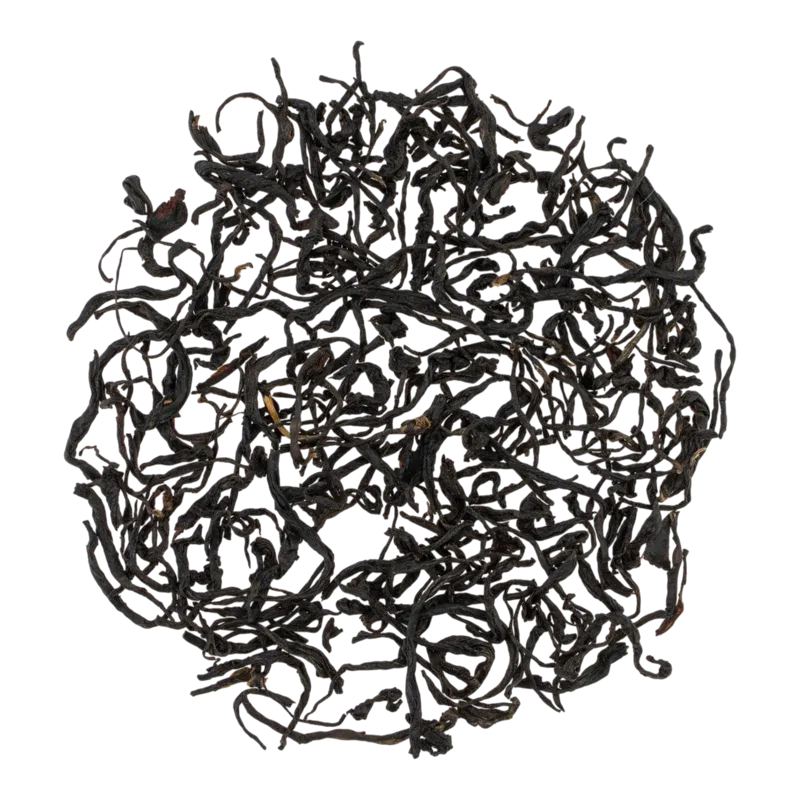
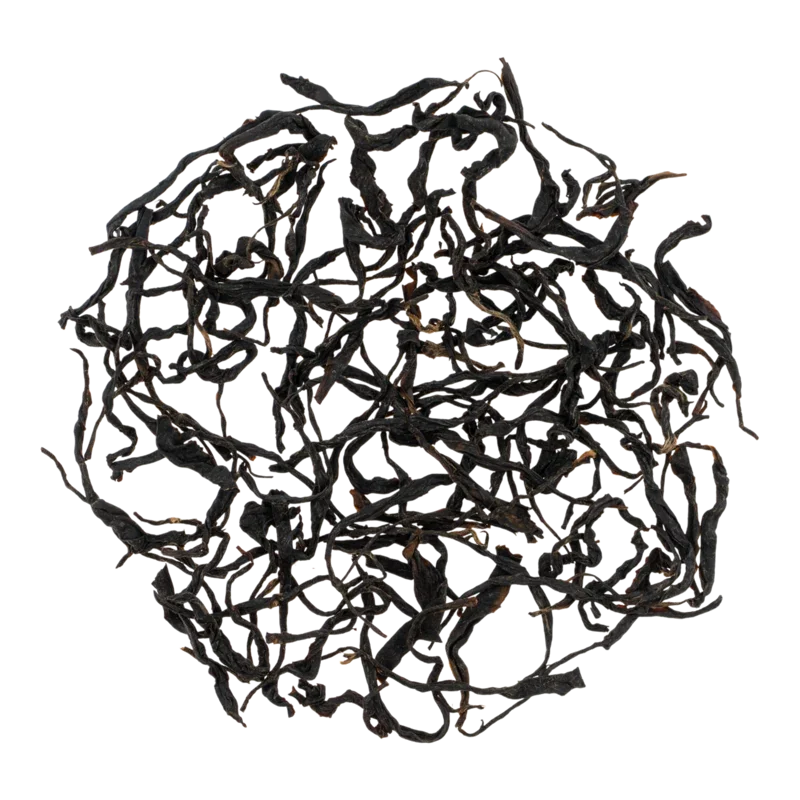
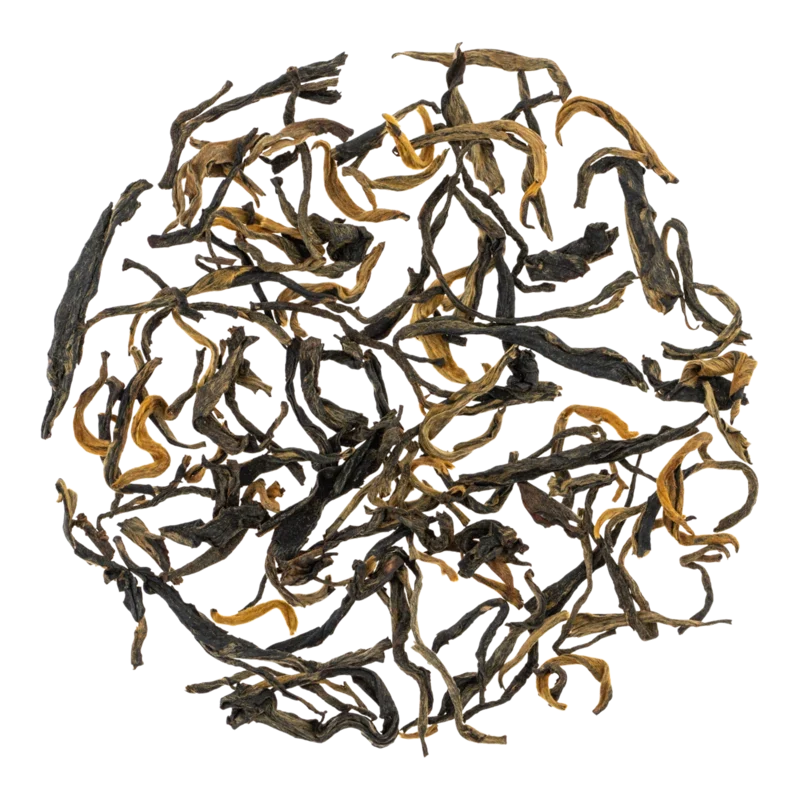
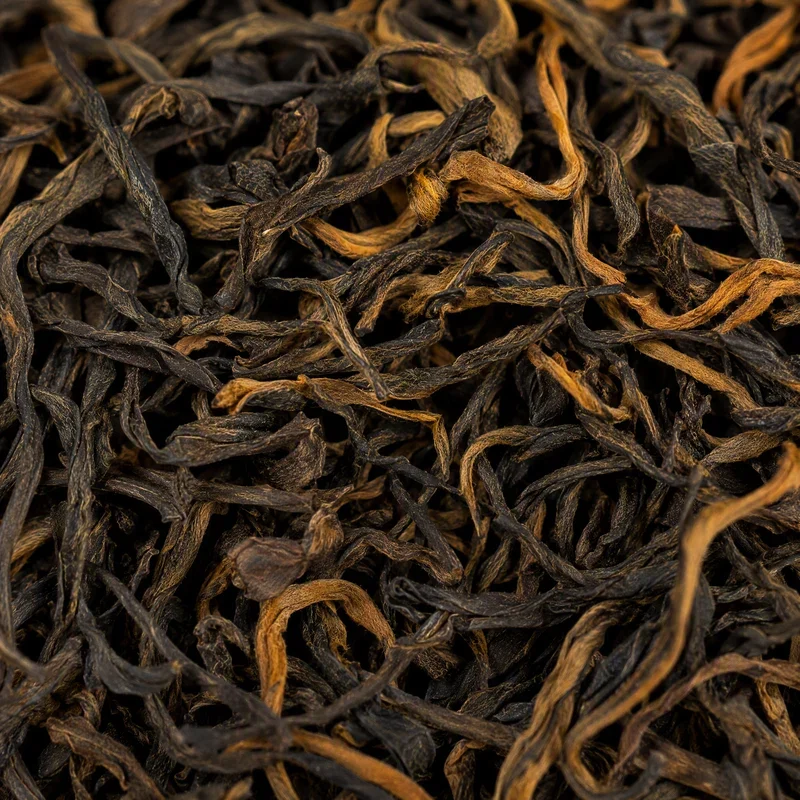
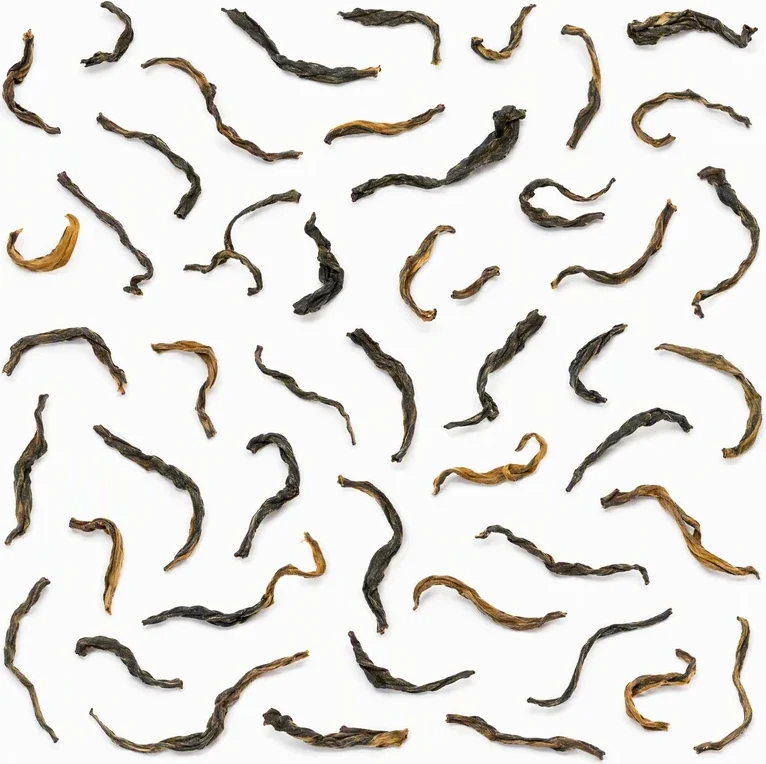
Dry Leaf Appearance: Large, straight, elegant strands (not short-rolled like traditional gongfu tea). Color — dark brown, almost black, with abundant content of golden and orange buds (tips). Leaf is whole, uniform, with pronounced "golden down."
Dry Leaf Aroma: Intense, sweet, with dominating notes of malt, honey, cocoa, dried fruits (prunes, dried apricots) and light floral or spicy undertones.
Liquor Aroma: Rich, warm, sweetish. Repeats and deepens the notes of dry leaf — malt, honey, baking — with addition of caramel and ripe fruit undertones.
Liquor Color: Bright, clear, rich ruby-red or cognac color. Characterized by a "golden rim" (金圈, jīnquān) around the edge of the cup — a sign of high theaflavin content and excellent quality.
Spent Leaves: Soft, elastic leaves of reddish-brown color, well preserving whole form. The leaf opens completely, showing the bud and one–two leaves.
Taste: Soft, full, enveloping, sweetish, practically without sharp astringency. Malty, honey, fruity (red berries, peach) and chocolate tones dominate. Aftertaste is long, sweet, with light minerality and floral notes (rose). The tea is ideally suited for pure drinking (清饮, qīngyǐn) thanks to its natural sweetness.
Alkaloids: Caffeine — about 3.5–4.1% of dry mass, providing a pronounced but mild tonic effect. Theobromine and theophylline — in trace amounts.
Amino Acids: Total content — about 1.5–2%, including L-theanine, responsible for forming the umami component and sweetish taste.
Water-soluble polysaccharides (about 4–6%) give the liquor density, oiliness and additional natural sweetness.
B vitamins, vitamins C and P (in limited quantities); potassium, manganese, zinc, selenium.
Essential Oils: Rich complex of volatile aromatic compounds — linalool, geraniol, citronellol, β-damascenone — forms the characteristic honey-malty aroma with floral and fruity nuances. The composition of essential oils is unique thanks to the high-altitude terroir.
Polyphenols: Total polyphenol content in the Yunnan large-leaf variety reaches 30–34% of dry mass — one of the highest among world tea varieties. During oxidation, catechins (EGCG, ECG) are transformed into theaflavins (TF, ~1–2%) and thearubigins (TR, ~8–15%), forming the color, body and antioxidant activity of the liquor.
Caffeine in combination with L-theanine provides mild, sustained increase in alertness and concentration without the characteristic coffee "spike" and subsequent crash.
Theaflavins and thearubigins are powerful antioxidants that help protect cells from oxidative stress and slow aging processes.
Regular moderate consumption is associated with improved vascular function, reduction of "bad" cholesterol (LDL) levels and potential blood pressure reduction.
Red tea (black tea) stimulates secretion of digestive enzymes. Polysaccharides have a prebiotic effect, supporting healthy intestinal microflora.
In traditional Chinese medicine, red tea (black tea) belongs to "warm" beverages, ideal for cold seasons and for people with "cold" constitution.
L-theanine promotes production of alpha brain waves, having a relaxing effect without drowsiness.
Antioxidants and polysaccharides have a general strengthening effect on the immune system.
Tea Amount: 5–7 g per 150–200 ml for flash steeping method; 2–3 g per 200 ml for steeping.
Teaware: Yíxīng clay teapot (紫砂, zǐshā) — smooths the taste and retains heat longer; porcelain gaiwan (蓋碗, gàiwǎn) — emphasizes purity and brightness of aroma; glass teaware — allows admiring leaf opening and liquor color. For daily brewing, a regular cup with infuser is suitable.
Water Temperature: 90–95°C. Lower temperature will not fully reveal the aroma, while boiling water may increase astringency.
More "tippy" Dian Hong, consisting predominantly of golden buds. Taste is softer, sweetness more pronounced, body slightly lighter. "Jingdian 1938" is more balanced, with greater depth and complexity due to the presence of unfolded leaves.
Leaves rolled into thin, long needles. Taste is more mineral and "clean." "Jingdian 1938" has similar straight shape but differs in greater body fullness and more saturated malty profile.
Qimen red tea (black tea) from small-leaf variety Camellia sinensis var. sinensis. Fundamentally different style: delicate, elegant aroma with orchid and smoke notes, light body, delicate sweetness. "Jingdian 1938" — by contrast — is rich, dense, sweet-malty.
Fujian red tea (black tea) with characteristic smoky aroma (smoking on pine wood). Completely different profile: "Jingdian 1938" lacks smokiness and is distinguished by pure fruity-malty sweetness.
Taiwanese red tea (black tea). Lighter and more floral, with pronounced high-altitude freshness. "Jingdian 1938" is significantly denser and thicker, with greater body and depth.
Price Category: "Yunnan Jingdian 1938" (or "Jingdian 58" in the Dianhong Group version) belongs to the premium segment of Yunnan red teas (black teas). Cost depends on raw material quality (tree age, tip content, hand or machine picking), harvest and producer. Historical reference: the first batch of Dian Hong in 1939 was sold in London at a price of 800 pence per pound — record for that time. Today the retail price for high-quality Dian Hong Jingdian ranges from 200 to 800 yuan (≈25–110 USD) per 100 g, depending on category.
No reviews yet. Tell us what you think of this tea.
Rate this tea and share your impressions. We review each submission before publishing it.