Brewing
Gongfu brewing
- Water temperature
- 92 °C
- Tea amount
- 6 g
- Water volume
- 100 ml
- First steep
- 10 s
- Time added per infusion
- 5 s
- Infusions
- 8


yùlán xiāng dāncóng
Choose a brewing method. Start with the recommended quantities and time, then adjust to taste.
Brewing
Brewing
Taste
Tea encyclopedia
Category: Fènghuáng Dāncóng (凤凰单丛, Fènghuáng Dāncóng), one of the ten classic floral-honey aromatic types (十大花蜜香型, shí dà huā mì xiāng xíng). Product with protected geographical indication (2010 — AQSIQ; 2020 — inclusion in EU–China protection registry).
Category: Fènghuáng Dāncóng (凤凰单丛, Fènghuáng Dāncóng), one of the ten classic floral-honey aromatic types (十大花蜜香型, shí dà huā mì xiāng xíng). Product with protected geographical indication (2010 — AQSIQ; 2020 — inclusion in EU–China protection registry).
Coordinates: Approximately 23°55′ N, 116°38′ E (Wudong Mountain area, Fenghuangshan peak — 1,497.8 m).
Origin: China, Guǎngdōng Province (广东省, Guǎngdōng shěng), Cháozhōu City (潮州市, Cháozhōu shì), Chao'an District (潮安区, Cháo'ān qū), Fènghuáng Town (凤凰镇, Fènghuáng zhèn), Fenghuangshan mountain range (凤凰山, Fènghuáng Shān). Highest quality specimens originate from Wūdǒng Mountain (乌岽山, Wūdǒng Shān) and surrounding high-altitude villages.
Type: Oolong (semi-oxidized tea, 乌龙茶, wūlóngchá). Guǎngdōng oolong (广东乌龙, Guǎngdōng wūlóng). Degree of oxidation — medium, usually 30–50%.
Yu Lan Xiang is one of the few dancongs receiving "double name": official (by aroma) and folk (by the name of peasant Wei Limin, who in the 1960s propagated and distributed this clone). Such double nomenclature is a typical feature of Fenghuang tradition, where trees are named by smell, by owner, by crown shape, and even by neighboring stone.
Most Fenghuang dancongs truly "sound" only at altitude from 800 m. Yu Lan Xiang is a rare exception: its genetics allow forming pronounced highly aromatic profile even at medium altitudes (400–600 m), which made it one of the most widespread clones beyond the elite Wudong zone.
Professor Dai Suxian's research (1996) identified 104 volatile aromatic compounds in different Fenghuang dancongs. In Yu Lan Xiang alone, more than 40 components were discovered — more than in many perfumery compositions.
The phenomenon of fǎnchūn (返春) — when tea aroma spontaneously intensifies after several months from production — is characteristic of many dancongs, but in Yu Lan Xiang it manifests especially clearly. Fenghuang tea cultivators say: "Spring dancong — drink in winter" (春茶冬饮).
Dancong is often called "tea perfume" (茶中香水). Academician Liú Zhōnghuá (刘仲华) after tasting left what became a winged evaluation: "First cup — love at first sight; second — persistent memory; third — inseparable fidelity." Yu Lan Xiang among the ten "perfumery notes" of Fenghuang is the white magnolia note: the quietest, most persistent, and most intimate.
Cultural Significance: Yu Lan Xiang occupies a special place among the ten canonical aromas: if Huangzhixiang, Milanxiang, and Zhilanxiang embody the "power" and "intensity" of the Fenghuang school, then Yu Lan Xiang represents its "graceful" pole. The tea is valued by connoisseurs of Cháozhōu gōngfū tea (潮州工夫茶, Cháozhōu gōngfū chá) for its ability to unfold gradually: the first infusions are restrained, but with each subsequent one the aroma gains strength, persisting for more than ten brewings. Dancong in general is "tea-perfume" (茶中香水, chá zhōng xiāngshuǐ), and Yu Lan Xiang is its most refined note.
History: Yu Lan Xiang is one of the ten canonical aromatic types of Fenghuang dancong, whose classification was scientifically established in 1996 by the research group of Professor Dài Sùxián (戴素贤, Dài Sùxián) from South China Agricultural University (华南农业大学). The three-year study identified 104 aromatic compounds in various dancongs and established that each of the ten types possesses a unique profile of volatile substances.
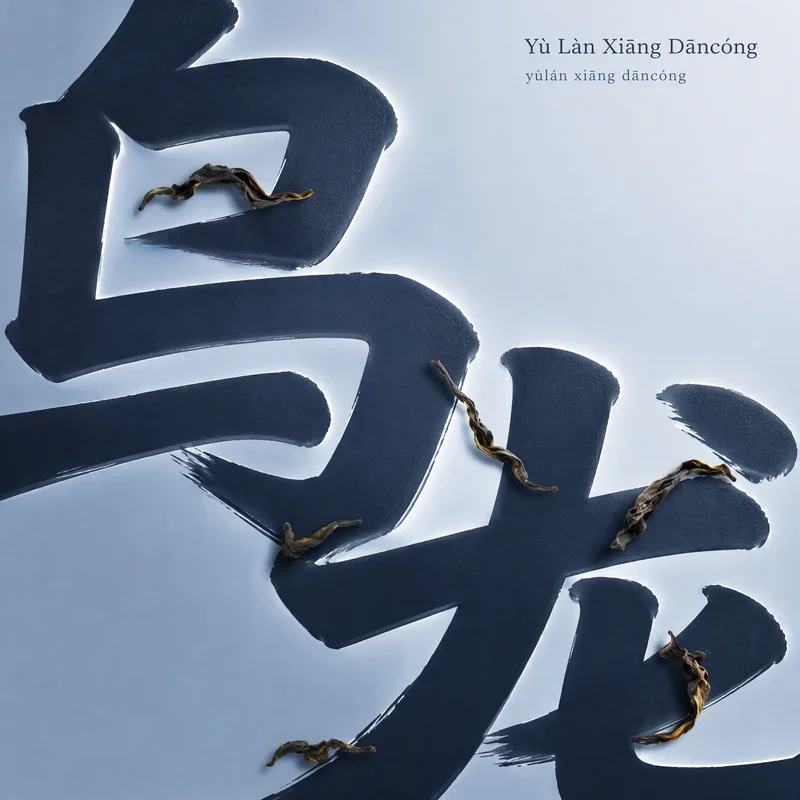
Name Breakdown: 玉兰 (Yùlán) — "magnolia" (literally "jade orchid"); 香 (xiāng) — "aroma"; 单丛 (dāncóng) — "single bush," indicating the principle of individual selection and processing. Full meaning: "dancong with magnolia aroma." Botanically, "yulan" in the context of South Chinese and Taiwanese culture most often refers to white magnolia/white champak (Michelia × alba), rather than Magnolia denudata — to a flower with intense sweet-cool aroma that street vendors in Southeast Asia sell for wearing on clothing.
Yù Làn Xiāng is a vegetative clone selected from the Fènghuáng Shuǐxiān (凤凰水仙, Fènghuáng Shuǐxiān) population, a national standard variety (Camellia sinensis var. sinensis). Small tree type (小乔木, xiǎo qiáomù), medium-leaf, late-maturing (迟芽种, chí yá zhǒng). Leaves elliptical, with characteristic petiole curve, serrated edge — sparse and sharp. Bud viability high, ensuring good productivity. Most famous subclones: Guanmushi Yǔ Lán Xiāng (官目石玉兰香), Jīn Yǔ Lán (金玉兰, Jīn Yùlán — "Golden Magnolia," named for the yellowish-green color of young leaves), Zimao Yǔ Lán (字茅玉兰), Niangzisan (娘仔伞, Niángzǐ Sǎn — "Daughter's Umbrella," for crown shape).
Picking: Yu Lan Xiang belongs to late-maturing varieties. Main harvest — late spring, from Gǔyǔ (谷雨, April 20) to Lìxià (立夏, early May). Autumn harvest (秋茶, qiūchá) is also practiced but valued lower. Harvest strictly manual: wait for the appearance of a stopped bud (驻芽, zhù yá), then pick a shoot of 2–5 leaves with "cavalry" grip (骑马采, qímǎ cǎi). Three strict prohibitions apply: do not pick under blazing sun, in rain, or with dew.
Pluck Standard: Shoot with stopped terminal bud and 2–3 mature leaves — standard for highest grades. Too tender shoots give excess bitterness (elevated catechin content), too mature — coarse taste and fibrous texture.
Raw Material: Whole shoot without mechanical damage, uniform maturity. Leaves are placed in tea baskets (茶罗, cháluó) loosely, without compacting, and immediately delivered to the workshop. Yu Lan Xiang peculiarity: the variety is capable of producing pronounced floral aroma even when cultivated at medium altitudes (400–600 m), whereas most dancongs require altitude ≥ 800 m to manifest "mountain melody" (shānyùn).
Altitude: Optimal zone for Yu Lan Xiang — 800–1,000 m (highest specimens from Wudong). Secondary zone — 400–600 m, where this variety, unlike many "capricious" dancongs, still forms highly aromatic tea. Not cultivated on plains and irrigated fields.
Climate: Southern subtropical monsoon. Characterized by three features creating unique conditions: early winter cold, prolonged spring coolness, and absence of extreme summer heat. Wudong Mountain — "three days out of ten are clear, and within a hundred steps no level ground is found" (山高高,雾蒙蒙,天无三日晴,地无百步坪): year-round fogs, abundant precipitation, short direct sunlight. These conditions slow shoot growth and promote accumulation of aromatic precursors and amino acids.
Soil: At altitude > 400 m — yellow and red soils (黄壤, 红壤), pH 4.5–6.5, deep profile, high organic content (3.8–4.3%) and wide spectrum of microelements. Mineral nutrition through the root system is transported to leaves, where it participates in biosynthesis of aromatic compounds. Tea gardens manage without artificial irrigation — mountain soils retain sufficient moisture thanks to fogs and forest cover.
Fenghuangshan mountain range in northeastern Chaozhou, maximum elevation — 1,497.8 m (Fenghuangding peak, 凤凰顶). Topography — steep mountain slopes, deep gorges dissected by mountain streams. Fenghuang town is located on the southeastern slope of the ridge, which locals call the "roof of Chaoshan" (潮汕屋脊). Forest coverage — 85.1%, total greening — 96.4%.
Shoots are picked manually at the moment of stopped bud appearance, most often in afternoon hours.
Fresh leaf is spread under open sun in a thin layer. Goal — initial moisture loss, softening of cell walls, and initiation of enzymatic processes. For Yu Lan Xiang, withering is moderate: the variety requires gentle handling to avoid destroying delicate aromatic precursors.
Transfer of leaf to a ventilated room for moisture redistribution equalization and tissue "rest" before the next stage.
Key stage including rhythmic alternation of shaking (摇青, yáoqīng), tossing (浪青, làngqīng), and collision (碰青, pèngqīng) with rest periods. Each cycle intensifies oxidation along the leaf edge, releasing aromatic compounds. For Yu Lan Xiang, the master strives for uniform but not excessive oxidation, preserving the purity and transparency of magnolia aroma. At this stage, the characteristic "green center — red rim" (青蒂绿腹红镶边, qīngdì lǜfù hóng xiāngbiān) forms and decisive transformation of the aromatic profile occurs.
High-temperature heating in a cylindrical roasting drum stops enzymatic oxidation and fixes the achieved aromatic profile.
Longitudinal rolling forms the characteristic long, tight, straight strips (条索, tiáosuǒ) of Guangdong oolong — unlike the spherical form of Taiwanese and Minnan oolongs. Rolling is moderate: excessive pressure destroys leaf integrity and spoils dancong aesthetics.
Multi-stage drying and roasting — the final stage determining aroma depth and stability. Yu Lan Xiang is usually roasted more gently than, for example, Huangzhixiang or Rouguixiang: the goal is to preserve transparent florality rather than build "fiery" depth.
After roasting, tea is aged approximately 15 days for "calming" the fire and aroma maturation. Only after this does the true character of Yu Lan Xiang reveal itself. By year's end, the phenomenon of "spring returning" (返春, fǎnchūn) occurs: aroma strengthens again, and taste acquires additional softness.
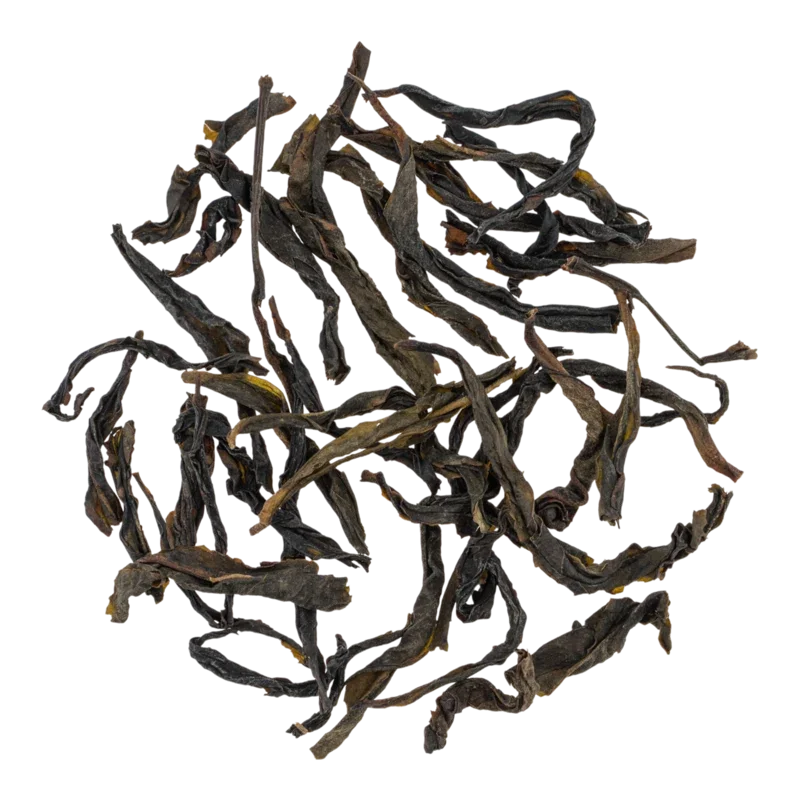
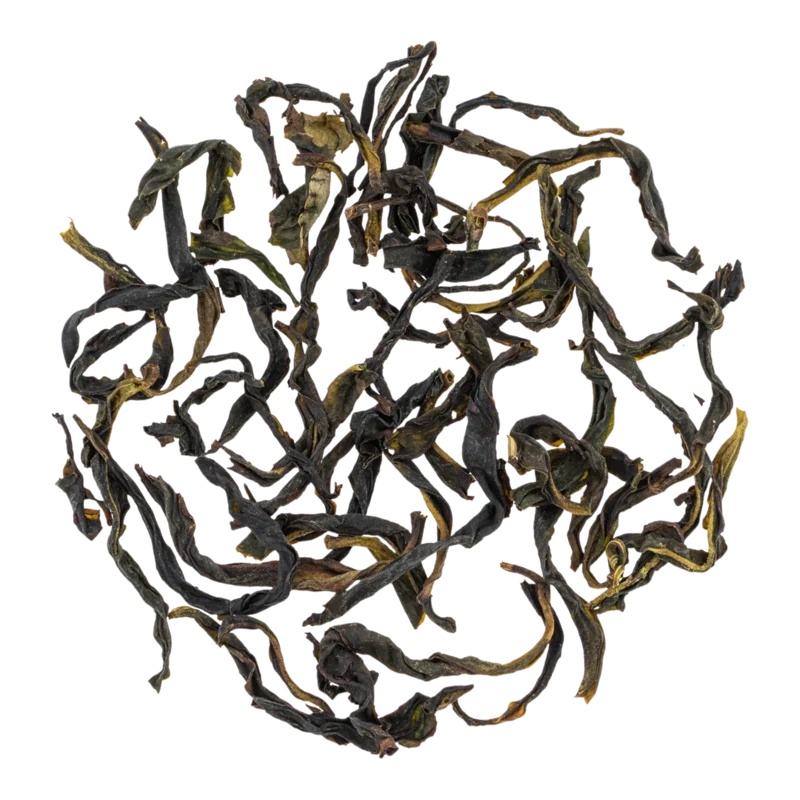
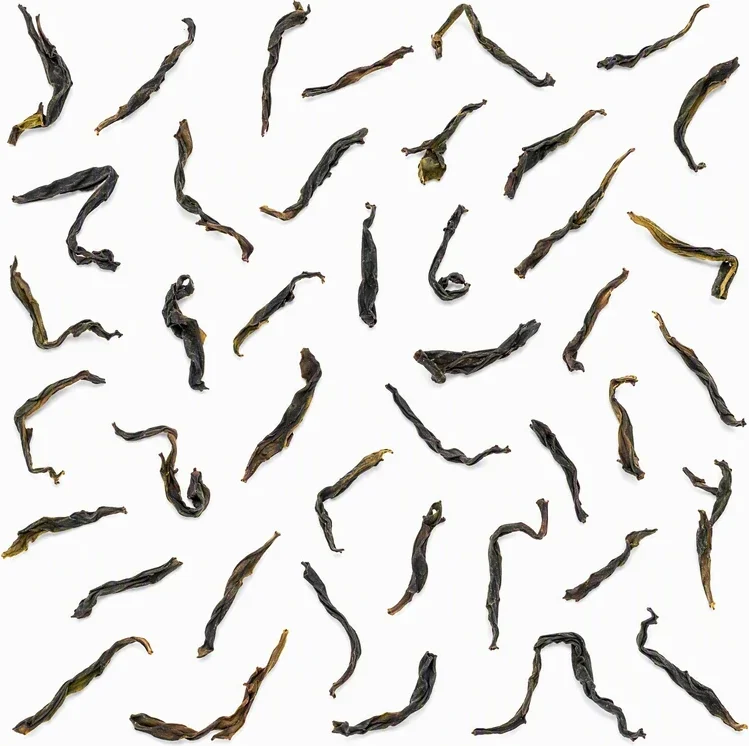
Dry Leaf Appearance: Lǒng straight strips (条索紧结, tiáosuǒ jǐnjié), massive, neat, dark brown (褐色) color with oily luster and characteristic reddish "cinnabar" dots (朱砂红点, zhūshā hóngdiǎn). Jin Yu Lan granules — larger and more twisted, with gray-brown tint.
Dry Leaf Aroma: Subtle, cool, clean. Does not "shout" from the tea container — unfolds when warming the vessel. Recognizable motif: white magnolia with greenish, slightly watery undertone.
Liquor Aroma: Main characteristic — purity and "airiness." Natural white magnolia aroma (玉兰花香清幽馥郁): cool-sweet, weightless, building with each infusion. Aroma does not overwhelm but hovers above the cup, penetrating the palate and persisting at the bottom of the empty glass (杯底香, bēidǐ xiāng). With proper roasting — without the slightest "fiery" note. After 15-day aging, a light honey overtone appears.
Liquor Color: Light yellow with golden tint (淡黄明亮, dàn huáng míngliàng), clear, transparent. Without cloudiness and reddish tones (unlike more oxidized Milanxiang or Huangzhixiang).
Spent Leaves: Whole large leaves with preserved shoot. Classic sign: "green stem, green center, red rim" (青蒂绿腹红镶边). Leaf blade elastic, oily-glossy, with distinct red dots along the serrated edge.
Taste: Yu Lan Xiang's distinguishing feature among dancongs — delicacy without emptiness. Liquor does not bitter or astringent (色黄而不苦涩, sè huáng ér bù kǔsè), taste clean but not watery (味清而不寡薄, wèi qīng ér bù guǎbó). Body — light and silky, with gentle sweetness and distinct returning sweetness (huígān) (回甘, huígān). Aftertaste — prolonged, floral-honey, with characteristic "throat resonance" (喉韵, hóuyùn). Tea withstands more than 10 infusions, while aroma and taste remain stable.
Alkaloids: Caffeine — moderate level (typical for semi-oxidized Guangdong oolongs), theobromine and theophylline — in trace amounts.
Amino Acids: L-theanine and other free amino acids provide softness, sweetness, and characteristic "transparent" texture. High-altitude specimens (> 800 m) distinguish themselves by elevated amino acid content due to slowed growth in fog and diffused light conditions.
Yu Lan Xiang profile, according to GC/MS analysis by Dai Suxian's group, is characterized by dominance of farnesol (法呢醇, fǎ ní chún), indole (吲哚, yǐnduǒ), farnesene (法呢烯, fǎ ní xī), linalool and its oxides (芳樟醇及其氧化物), as well as geraniol (香叶醇, xiāngyè chún). Precisely the high content of farnesol and geraniol forms the characteristic cool-floral profile distinguishing Yu Lan Xiang from other dancongs. Overall, more than 40 aromatic components have been identified in the composition.
Yu Lan Xiang, like other dancongs, contains a relatively high level of indole — a compound that in low concentrations gives pleasant jasmine-floral aroma, and in high concentrations — heavy "perfumery" tone. Processing mastery consists in keeping indole on the "floral" side of the spectrum.
Minerals: Potassium, magnesium, manganese, zinc, fluorine; mineral profile enriched thanks to ancient volcanic soils of Fenghuangshan (organic matter 3.8–4.3%).
Polyphenols: Total content in Fenghuang dancongs can reach 30%. In Yu Lan Xiang, thanks to late harvest and moderate oxidation, the polyphenolic complex is balanced: sufficient catechins for taste structure, but without excessive astringency.
Vitamins: C, B₁, B₂, P (rutin); vitamin C content decreases with deeper roasting.
Synergy of caffeine and L-theanine provides sustained increase in concentration and mental clarity without "caffeine peak" and rapid heartbeat.
Polyphenolic complex (catechins, theaflavins) neutralizes free radicals and reduces oxidative stress. Polyphenol content in dancongs is one of the highest among oolongs.
Semi-oxidized tea acts more gently on gastric mucosa than green tea. Roasted dancongs are especially comfortable for sensitive digestion, promoting fat breakdown after abundant meals.
Catechins assist in cholesterol level regulation and LDL reduction.
Systematic consumption of tea polyphenols is associated with blood pressure normalization.
Fluorine and polyphenols have antibacterial action, preventing caries and dental plaque formation.
Research indicates tea polyphenols' ability to reduce harmful effects of electromagnetic radiation.
Chaozhou gongfu tea is one of China's oldest and most ritualized tea traditions. Unhurried multi-infusion brewing of Yu Lan Xiang with gradual aroma unfolding is a practice that reduces stress and returns attention to the present moment.
Dancong does not tolerate over-steeping: the slightest "stewing" turns delicate purity into bitter astringency. Better to drain a second early than a second late. Between infusions, slightly open the gaiwan lid — this prevents leaf "stewing."
Tea Amount: 8 g per 100–120 ml (gongfu). For dancong "better slightly more than slightly less" — dense loading ensures aroma fullness.
Teaware: Cháozhōu porcelain gàiwǎn (盖碗, gàiwǎn) — ideal choice: thin porcelain does not absorb aroma and allows precise time control. Yíxīng purple clay teapot (紫砂壶) is acceptable, but for transparent floral dancongs like Yu Lan Xiang, gaiwan is preferable. Cups — small (30–50 ml), in Chaozhou gongfu tea tradition there are three.
Water Temperature: 95–100°C. Full boiling water for complete magnolia aroma unfolding; for very young spring batches — 95°C.
Enemies: Moisture, heat, light, foreign odors. Do not store near spices, perfumery, household chemicals.
Gardenia aroma — powerful, spicy, "shouting." Liquor denser and richer, with deeper body and pronounced astringency. Yu Lan Xiang is its complete opposite: instead of power — refinement, instead of spiciness — coolness. If Huangzhixiang is an orchestra, then Yu Lan Xiang is a solo flute.
Most widespread and "accessible" dancong, with dense honey-orchid profile. Liquor denser and sweeter, aroma more "warm" and enveloping. Yu Lan Xiang is drier and more transparent; its sweetness is not honey-like but "floral," with characteristic coolness.
Lilac orchid aroma — refined and long, closest to Yu Lan Xiang in "elegance." Difference is in character: Zhilanxiang is more spicy and deep, with pronounced "old bush character" (老丛特韵); Yu Lan Xiang is lighter, cooler, more "transparent."
Osmanthus aroma — warm, spicy-sweet, persistent. Liquor denser, with nutty overtones. Yu Lan Xiang is "colder" in tonality, less spicy, more floral-green.
Most "fashionable" dancong of recent years, with intense honeysuckle aroma. More powerful, sweet, and "dense," with pronounced honey note. Yu Lan Xiang is its stylistic antipode: where Yashixiang takes by assault, Yu Lan Xiang acts through silence.
Price Category: Cost varies in a wide range. Yu Lan Xiang from Wudong Mountain (altitude > 800 m, old trees) — from several thousand to tens of thousands of yuan per kilogram depending on specific tree and master. Mid-altitude specimens (400–600 m) — significantly more affordable, from 500 to 2,000 yuan/kg. Price-determining factors: growing altitude, tree age, season (spring more expensive than autumn), master's reputation, degree of manual labor.
No reviews yet. Tell us what you think of this tea.
Rate this tea and share your impressions. We review each submission before publishing it.