Brewing
Gongfu brewing
- Water temperature
- 75 °C
- Tea amount
- 5 g
- Water volume
- 100 ml
- First steep
- 10 s
- Time added per infusion
- 5 s
- Infusions
- 4

Yīngshān yúnwùchá
Choose a brewing method. Start with the recommended quantities and time, then adjust to taste.
Brewing
Brewing
Taste
Tea encyclopedia
Category: Geographical Indication Product of China (国家地理标志产品, approved by Order No. 128 of the General Administration of Quality Supervision, Inspection and Quarantine on December 28, 2009). One of the seven major regional tea brands of Hubei. Included in the "List of Products for Mutual Recognition of Geographical Indications between China and the EU" (中欧互认地理标志协定). Titles: "Hubei Shida Mingcha" (湖北十大名茶, "Ten Famous Teas of Hubei"), "First National Demonstration Product of Pollution-Free Ecol...
Category: Geographical Indication Product of China (国家地理标志产品, approved by Order No. 128 of the General Administration of Quality Supervision, Inspection and Quarantine on December 28, 2009). One of the seven major regional tea brands of Hubei. Included in the "List of Products for Mutual Recognition of Geographical Indications between China and the EU" (中欧互认地理标志协定). Titles: "Hubei Shida Mingcha" (湖北十大名茶, "Ten Famous Teas of Hubei"), "First National Demonstration Product of Pollution-Free Ecological Agriculture" (全国首批无公害生态农业示范产品). Official quality formula — "Three Greens, Three Aromas, Three Highs" (三绿三香三高, Sān Lǜ Sān Xiāng Sān Gāo).
Coordinates: Approximately 30°27′–31°00′ N, 115°34′–116°07′ E — the so-called "Golden Tea Belt at 30° North Latitude" (北纬30°黄金产茶带, Běiwěi 30° Huángjīn Chándài).
Origin: China, Húběi Province (湖北省), Huánggāng Prefecture (黄冈市), Yīngshān County (英山县). The geographical indication coverage zone includes 11 townships and towns: Nanhe (南河镇), Fangjiazui (方家咀乡), Wēnquán (温泉镇), Hóngshān (红山镇), Kongjiafang (孔家坊乡), Jinjiapu (金家铺镇), Shitouzui (石头咀镇), Yangliuwan (杨柳湾镇), Leijiadian (雷家店镇), Caopandi (草盘地镇), Taojiehe (陶家河乡). Since 2023, the brand has been expanded to the level of the entire Huanggang Prefecture, covering 7 counties, 2 county-level cities and 1 district.
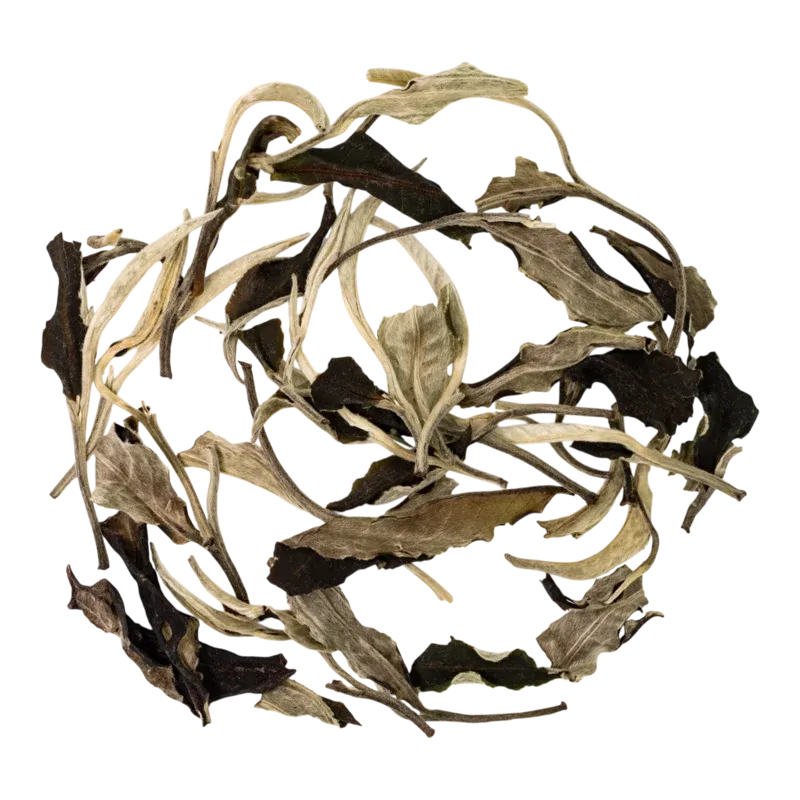
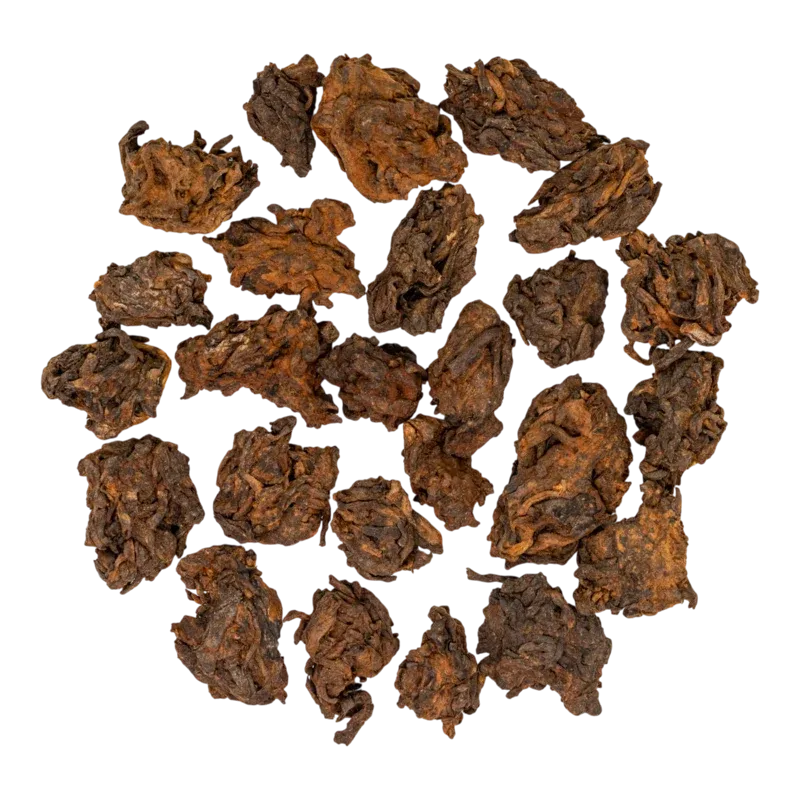
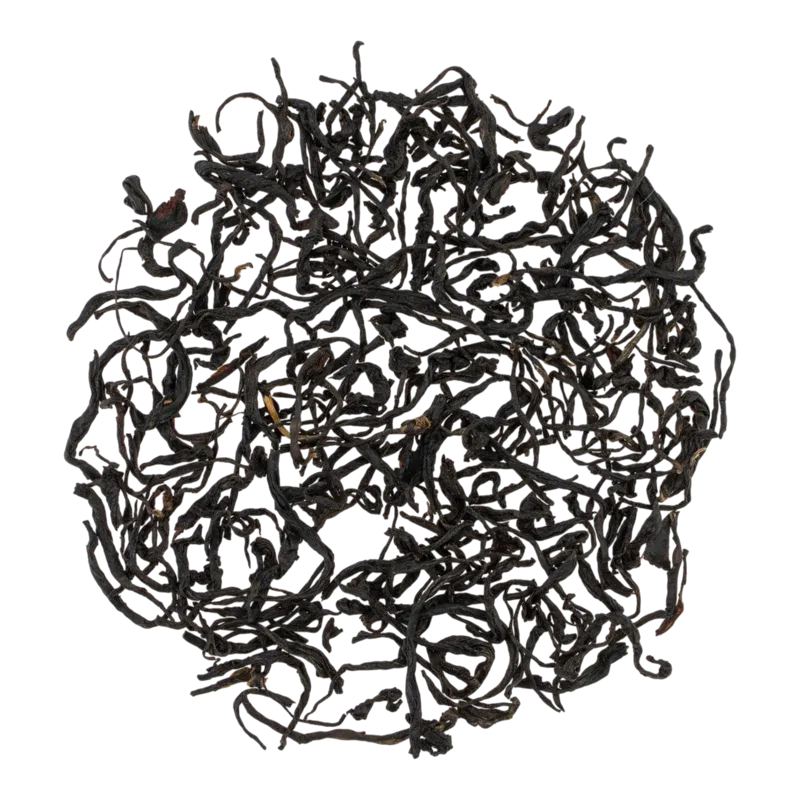
Type: Green tea (绿茶, lǜchá), unoxidized. Produced in five commercial forms: Chunsun (春笋, Chūnsǔn — "Spring Shoot," single bud, handcrafted), Chunrui (春蕊, Chūnruǐ — "Spring Core," spiral form), Chunming (春茗, Chūnmíng — "Spring Tea," spiral, semi-mechanical processing), Bijian (碧剑, Bìjiàn — "Jade Sword," flat form) and Longte (龙特, Lóngtè — "Dragon Special," strip form). Besides green tea, under the umbrella brand of Yingshan, the following are also produced: red tea "Yingshan Yunhong" (英山云红), white tea "Yingshan Yunbai" (英山云白), green brick tea "Yingshan Yunzhuan" (英山云砖) and oolong "Yingshan Yunqing" (英山云青).
Cultural Significance: The formula "三绿三香三高" (Three Greens, Three Aromas, Three Highs) is not a marketing slogan, but a set of parameters enshrined in the standard: three greens (外形翠绿, 汤色浅绿, 叶底嫩绿 — emerald appearance, pale green liquor, tender green spent leaves); three aromas (清香, 花香, 栗香 — clean, floral, chestnut); three highs (水浸出物≥45%, 茶多酚≥30%, EGCG≥8% — water-extractable substances, polyphenols, epigallocatechin gallate). Tea plays a system-forming role in the county's economy: one-third of the population is directly employed in the tea industry, another half — indirectly. A local saying goes: "The tea tree is a treasure from head to toe": tender leaves go to famous tea, coarse ones — to zhucha (珠茶, pearl tea), pruned branches — to brick tea, and seeds — to seedlings and tea oil.
Picking is strictly differentiated by five product lines:
Single bud. Completely handcrafted. Form of finished tea — straight "bamboo shoot" with abundant silvery down. Supreme grade (特级).
One bud + one leaf in initial opening stage. Hand rolling. Spiral form. First grade (一级).
One bud + one-two leaves. Semi-mechanical processing. Spiral form. Second grade (二级).
Single bud, flat form, mechanical pressing in Longjing style.
One bud + one-two leaves, strip form, fully mechanical processing.
Cultivar: Main — Yingshan Quntizhong (英山群体种, Yīngshān Qúntǐzhǒng) — local population variety, centennial, medium-leaf and small-leaf (Camellia sinensis var. sinensis). Characterized by high adaptation to the cold winters of the Dabie Mountains, increased bud "awakening ability" (萌芽力强) and extended "tenderness retention" period (持嫩性) — 7–10 days longer than standard cultivars. Additional cultivars introduced as part of the modernization program: Echa 1 (鄂茶1号, È Chá 1 Hào), Echa 5 (鄂茶5号, È Chá 5 Hào), Baihaozao (白毫早, Báiháo Zǎo — "Early White Down"), Bixiangzao (碧香早, Bìxiāng Zǎo — "Early Jade Aroma"), Fuding Dabai Cha (福鼎大白茶, Fúdǐng Dàbái Chá) — all distinguished by early vegetation, good yield and increased amino acid content. Age of most trees — more than 30 years. Weight of 100 shoots — about 45 g.
Altitude: Tea gardens are located at altitudes from 300 to 1400 m above sea level. The core of high-quality production — towns of Leijiadian (雷家店镇, Léijiādiàn Zhèn — "First Tea Town of Dabie Mountains"), Nanhe (南河镇), Hóngshān (红山镇) and Wēnquán (温泉镇) — at altitudes of 600–1400 m. Highest point of the county — Mount Tiantangzhai (天堂寨, 1729 m).
Climate: Yingshan is located in the "Golden Belt at 30° North Latitude" (北纬30°黄金产茶带), in the subtropical monsoon climate zone characteristic of the mountainous regions of the Dabie Mountains. Average annual temperature — 16.4°C. Precipitation — about 1400 mm per year. Number of foggy days — more than 200 per year. Daily temperature difference during the growing season — more than 10°C, which promotes the accumulation of amino acids and sugars in tea leaves. Predominance of diffused light due to constant cloudiness favors chlorophyll and L-theanine synthesis. Number of days with favorable air quality — more than 300 per year.
Soil: Yellow-brown soils (黄棕壤, huáng zōng rǎng), comprising 86.97% of the county's territory. Acidic (pH 4.5–6.5), based on granite-gneiss parent rocks. Enriched with zinc (Zn) and selenium (Se). Four large reservoirs provide clean first-class water.
Forest cover — 72–87.6% depending on the area. Negative ion content in the air — 50–100 times higher than urban indicators. The county is certified as a "Chinese Natural Oxygen Bar" (中国天然氧吧). European organic certification has been obtained for individual gardens. Yellow sticky traps and ultraviolet lamps are used in tea gardens for physical pest control instead of pesticides. Multiple inspections by China's Ministry of Agriculture showed 100% compliance of tea quality and safety with standards.
Freshly picked leaves are spread in a thin layer on bamboo sieves in a well-ventilated room for 4–6 hours. Partial moisture evaporation and initial aroma development occur.
For "Chunsun" and "Chunrui" lines (highest grades) — hand pan-firing in a special wok: each batch — 150–200 g, initial temperature — 100–110°C, then gradual reduction to 60–70°C. Method — "first shake-fry, then smother-fry, alternating" (先抖炒,后闷炒,抖闷结合). Time — about 7 minutes. For mass lines — rotary drum at 180–200°C.
Three-stage method "light → heavy → light" (轻—重—轻三段). For "Chunrui" and "Chunming" — spiral rolling with formation of characteristic curls. For "Bijian" — flat pressing.
For "Chunsun": after the first kill-green, two additional firing stages are conducted — "second green" (炒二青, at 90°C, ~8 min, with rubbing-rolling "搓条") and "third green" (炒三青, at 70°C → 50°C, ~8 min, with "raising down" 提毫 until white fuzz appears). This is the key stage forming the characteristic "bamboo" shape and silvery down of the "Spring Shoot."
Depends on the line. For spiral forms — "tightening strips" (紧条, jǐntiáo). For "Chunsun" — "hand rubbing-rolling and raising down" (手工搓揉提毫, shǒugōng cuōróu tíháo), completely manual operation.
Temperature — about 80°C. Final moisture content — no more than 6.5%.
Final stage — removal of non-standard leaves, stems and dust.
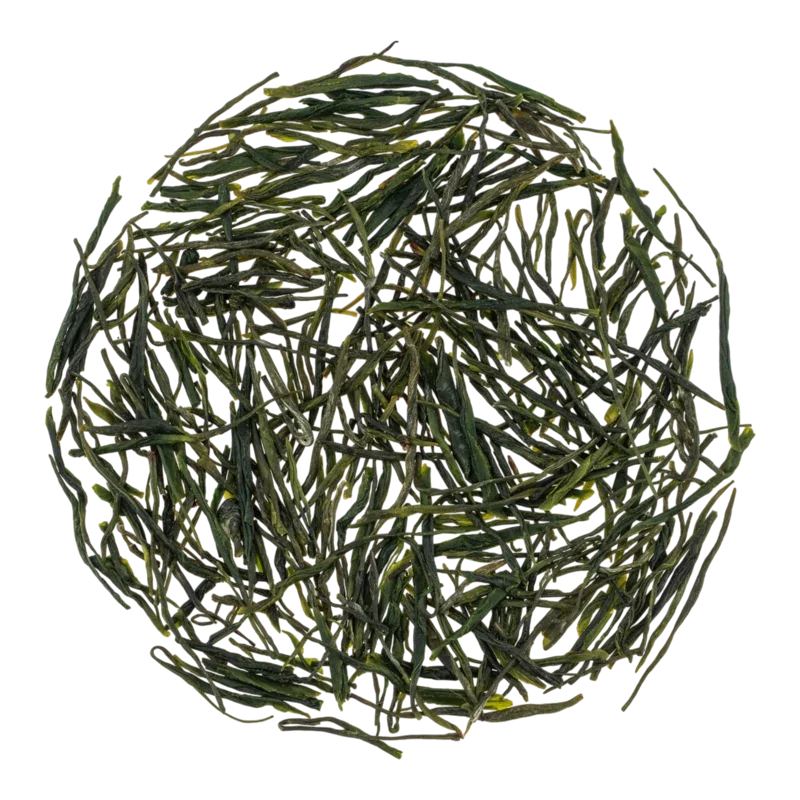
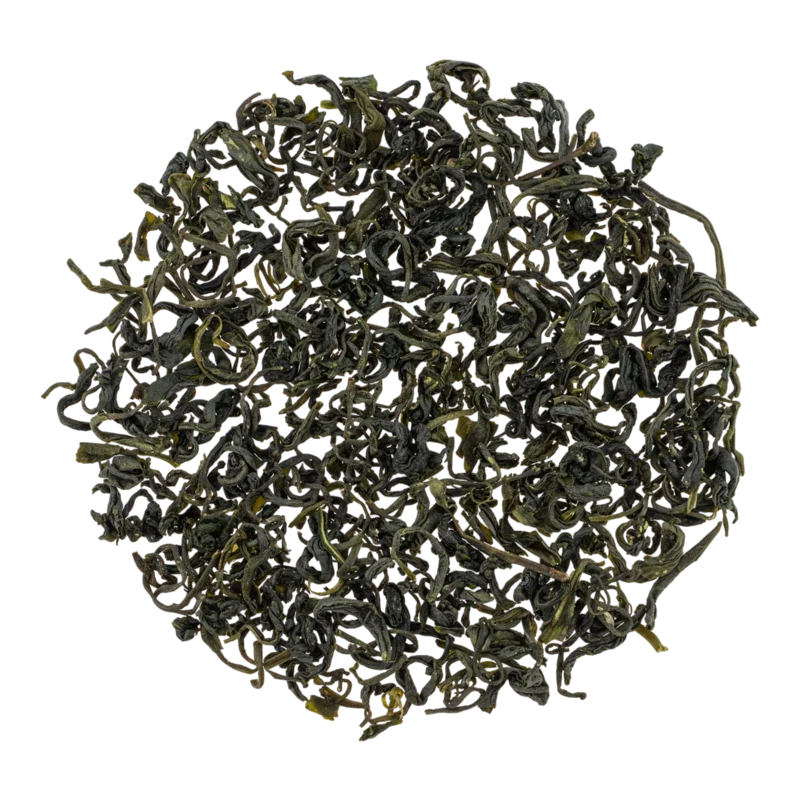
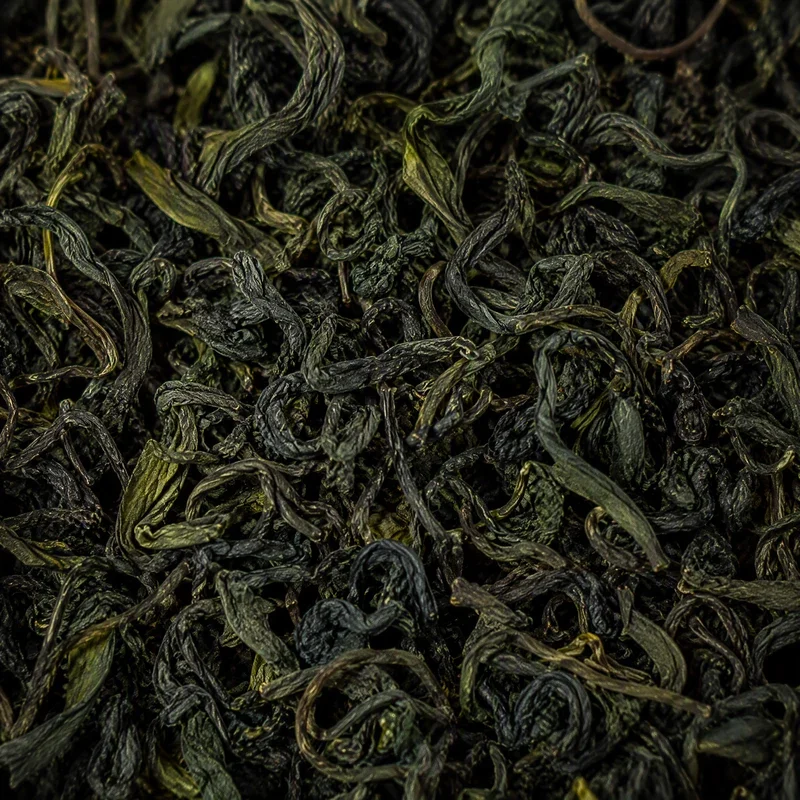
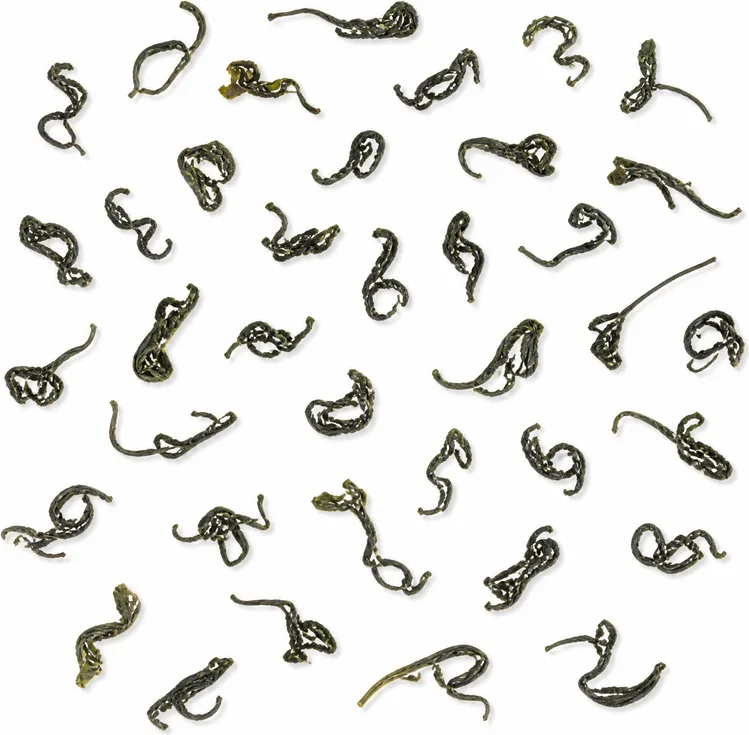
Dry Leaf Appearance: Varies by line. Spiral (春蕊/春茗): thin, elegant spirals, emerald green color with oily luster and silvery down (细秀蜷曲、翠绿油润显银毫). Flat (碧剑): straight, slender, resembling Longjing, with smooth surface. Shoot (春笋): straight, like a bamboo sprout, with abundant white fuzz, compact and elegant. Strip (龙特): dense, even strips.
Dry Leaf Aroma: Pronounced chestnut aroma (栗香, lìxiāng) — the main and most recognizable note of Yingshan Yunwucha. In highest grades of spring picking, additional tones of clean freshness (清香, qīngxiāng) and light floral undertone (花香, huāxiāng) are present.
Liquor Aroma: Chestnut aroma unfolds more fully, becomes warm and enveloping. Floral note intensifies in second and third infusions. Aroma is persistent — remains in the cooled cup.
Liquor Color: Tender green, bright and clear (嫩绿明亮, nèn lǜ míng liàng). In highest grades — with a light yellowish tint.
Spent Leaves: Tender green, uniform, "alive" — leaves are soft, elastic, with clearly distinguishable buds (嫩绿匀齐鲜活).
Taste: Fresh (鲜爽, xiānshuǎng) — due to high amino acid content (≥3.32%). Mellow and rich (醇厚, chúnhòu), with pronounced "viscosity" (粘稠感) — effect of high level of water-extractable substances (≥45%). Returning sweetness (回甘, huígān) — persistent and prolonged. Aftertaste — clean, with chestnut warmth.
Amino Acids: ≥3.32%, including L-theanine (L-茶氨酸) — amino acid unique to tea, providing characteristic "freshness" (鲜爽) and mild tonic effect. High amino acid content is the result of many foggy days (diffused light slows the conversion of amino acids to polyphenols) and significant daily temperature differences.
≥45% — exceptionally high indicator, significantly exceeding the average value for Chinese green teas (~36–40%). Water-extractable substances determine the "body" and richness of the liquor.
≥8% — separately highlighted indicator in the regional standard. EGCG is the most biologically active catechin, responsible for the main antioxidant properties of green tea.
Moderate content, typical for green teas — approximately 2.5–3.5%.
Essential Oils: Form chestnut aroma and floral notes. Content is increased due to high-altitude origin.
Minerals: Zinc (Zn) and selenium (Se) — enrichment from Dabie Mountain soils; potassium (K), magnesium (Mg), phosphorus (P).
Polyphenols: ≥30%. Include catechins (主要: EGCG, EGC, ECG, EC), providing antioxidant activity and light astringency that quickly transitions to sweetness.
Vitamins: Vitamin C (ascorbic acid) — high content, characteristic of unoxidized teas; B vitamins (B1, B2); vitamin E.
Polyphenols ≥30% and EGCG ≥8% provide one of the highest antioxidant potentials among green teas. Catechins neutralize free radicals, reducing the risk of oxidative stress.
The combination of caffeine and L-theanine (≥3.32% amino acids) provides mild stimulation without sharp peaks: concentration improves, mood enhances, anxiety decreases.
Catechins and polyphenols help reduce LDL cholesterol levels and maintain vascular elasticity.
Polyphenolic compounds stimulate digestive enzymes, promote fat breakdown and relieve heaviness after meals.
Zinc participates in immune defense and cell renewal; selenium is an essential cofactor of glutathione peroxidase, a key antioxidant enzyme.
Polyphenols and caffeine suppress the growth of pathogenic oral bacteria, reducing the risk of caries and gum inflammation.
Catechins activate lipolysis and thermogenesis, helping maintain healthy body weight.
Polyphenolic compounds and vitamin C help protect cells from electromagnetic radiation exposure.
1 g tea per 50 ml cold water, steeping in refrigerator for 30 minutes. In cold brewing, sweetness increases by approximately 20% due to predominance of amino acids over polyphenols at low extraction temperature.
Tea Amount: 3 g per 150 ml water (1:50 ratio).
Teaware: Glass tumbler (for observing leaf opening and liquor color — recommended for Chunsun and Chunrui), white porcelain gaiwan (盖碗, gàiwǎn) with "top pouring method" (上投法, shàng tóu fǎ — water first, then tea) or porcelain teapot.
Water Temperature: 80–90°C. For highest grades (Chunsun, Chunrui) — 80–85°C; for Chunming and Longte — 85–90°C.
Airtight opaque packaging (aluminum foil, vacuum bags), refrigerator at 0–5°C. Main enemies of tea — light, moisture, foreign odors and oxygen.
New tea is recommended to "rest" 5–7 days after production for aroma stabilization. After opening package — consume within 7–10 days to maintain maximum freshness. Unopened with proper refrigerator storage — up to 12–18 months.
Do not store near products with strong odors. Before opening refrigerated package, let it warm to room temperature to avoid moisture condensation on leaves.
Classic "cloud tea" from Mount Lushan (Jiangxi). Song "gongcha." Form — rather coarse large strips; taste — milder and sweeter, with pronounced "lanhuaxiang" (兰花香, orchid aroma). Yingshan Yunwucha is denser, with pronounced chestnut aroma and higher biochemical indicators (water-extractable ≥45% vs ~38–42% for Lushan).
Famous green tea from neighboring Henan Province, also from the Dabie Mountain zone, but from the northern side of the ridge. Form — thin straight needles with abundant down. Aroma — more "cold" and grassy. Taste — fresh, but less dense than Yingshan. Xinyang Maojian is among the "Ten Famous Teas of China"; Yingshan — among the "Ten Famous Teas of Hubei."
The only surviving steamed green tea (蒸青, zhēngqīng) in China, from western Hubei. Form — dark green needles. Taste — pronounced umami, marine undertone, closer to Japanese teas. Yingshan Yunwucha is typically "pan-fired" (炒青) tea with chestnut warmth instead of marine freshness.
Tea from the sacred Wudang Mountains (Hubei). Wild or semi-wild. Aroma — herbal, with "mountain" purity. Production is minimal, mainly for Taoist monasteries. In scale incomparable with industrial Yingshan Yunwucha.
Green tea from Wǔfēng County (五峰, western Hubei). Spiral form, aroma — clean and floral. Another of the "Ten Famous Teas of Hubei," competing with Yingshan in volume but inferior in brand value.
from 800 yuan (~110 USD) — completely handcrafted, single bud.
200–500 yuan (~28–69 USD).
100–300 yuan (~14–41 USD).
from 50–150 yuan — mass lines.
Price Factors: Grade (single bud significantly more expensive), picking time (early spring — more expensive), processing method (hand — more expensive than mechanical), origin (high-altitude gardens of Leijiadian and Hongshan — premium).
No reviews yet. Tell us what you think of this tea.
Rate this tea and share your impressions. We review each submission before publishing it.