Brewing
Gongfu brewing
- Water temperature
- 92 °C
- Tea amount
- 6 g
- Water volume
- 100 ml
- First steep
- 10 s
- Time added per infusion
- 5 s
- Infusions
- 8

Xīngníng dān cóng
Choose a brewing method. Start with the recommended quantities and time, then adjust to taste.
Brewing
Brewing
Taste
Tea encyclopedia
Category: Guangdong aromatic oolong, related to the Fènghuáng Dān Cóng (凤凰单丛, Fènghuáng Dān Cóng) family. Sometimes classified as "Meizhou dancong" — a regional branch that developed based on seedlings brought from Chaozhou.
Category: Guangdong aromatic oolong, related to the Fènghuáng Dān Cóng (凤凰单丛, Fènghuáng Dān Cóng) family. Sometimes classified as "Meizhou dancong" — a regional branch that developed based on seedlings brought from Chaozhou.
Coordinates: Approximately 24°09′ N, 115°44′ E (center of Xinning County); tea mountains are located in the mountain belt at 300–800 m above sea level to the south and southeast of the city.
Origin: China, Guǎngdōng Province (广东省, Guǎngdōng shěng), Méizhōu Prefecture (梅州市, Méizhōu shì), Xinning County (兴宁市, Xīngníng shì). The protected zone of origin covers the entire territory of Xinning, including 13 townships and street committees; the core of production is concentrated in Jìngnán Township (径南镇, Jìngnán zhèn) and Héshuǐ Township (合水镇, Héshuǐ zhèn).
Type: Oolong (semi-oxidized tea, 乌龙茶, wūlóng chá). Degree of oxidation — medium, approximately 25–50%, with subsequent charcoal roasting.
Cultural Significance: Xinning is a Hakka city (客家, Kèjiā), historically famous as a "city of literati, footballers, and overseas Chinese." Tea is organically integrated into Hakka hospitality culture: treating guests with freshly brewed dancong is an integral ritual when receiving visitors. Local tea culture combines traditions of Chaozhou gongfu tea ceremony with Hakka informality. Annual spring tea fairs in Jingnan Township have become a point of attraction for tea enthusiasts from all over Guangdong. The creation of the "Xinning Dancong Tea Culture Museum" (兴宁单丛茶文化馆) in Zhuóshuǐ Village (浊水村) reflects the aspiration to preserve and popularize local tea heritage.
History: Tea cultivation in Xinning has deep roots. According to a manuscript copy of "Xinning County Gazetteer" (兴宁县志), compiled by calligrapher Zhú Zhīshān (祝枝山) during the Zhengde reign (正德, 1506–1521) of the Ming dynasty, local residents were already engaged in tea cultivation at that time. In the Qing era, green tea from Lóngběi Township (龙北镇, Lóngběi zhèn), known as "Guantian Green Tea" (官田绿茶), was among the "eight famous teas of Jiaying Prefecture" (嘉应州八大名茶) and was exported to Southeast Asia. In the 20th century, the tea industry underwent transformation: in the 1960s–70s, state tea farms were established, such as Nanshegang (南蛇岗茶林场). The turning point came in 1985, when dancong seedlings were brought from Ráopíng County (饶平, Ráopíng) of Chaozhou Prefecture, and local farmers began transitioning from green tea production to oolongs. By the 1990s, tea farms Huangfengwo (黄蜂窝茶场) and Bǎoshān (宝山茶场) in Jingnan Township became flagships of the new industry. In 1997, at the International Tea Exhibition in Beijing, Xinning products won gold awards, and Meizhou itself was awarded the honorary title "Hometown of China's Famous Dancong" (中国著名单丛茶之乡). In 2021, the "Xinning Dan Cong Tea" brand received national geographical indication status; in 2022, the production technology was recognized as intangible cultural heritage; in 2023, the tea was included in the National Catalog of Famous, Special and Premium New Agricultural Products (全国名特优新农产品名录). As of 2025, the total area of Xinning's tea
Name Breakdown: Xinning (兴宁) — a toponym dating back to the Eastern Jīn era (东晋, Dōng Jìn, 331 CE), when the county of the same name was established; literally — "prosperity and peace." Dān Cóng (单丛) — a technical term meaning "single tree" or "individual bush": historically, the best tea was collected and processed from each outstanding bush separately, preserving its unique aromatic profile.
Cultivar: The main cultivar is Bái Yè Dān Cóng (白叶单丛, Bái Yè Dān Cóng, "white-leaf dancong"), which accounts for about 70% of plantings. This is a bush-type plant of medium-leaf type (Camellia sinensis var. sinensis), distinguished by high frost resistance and pronounced aromatic intensity. Additionally cultivated are Méi Zhàn (梅占, Méi Zhàn) — an early-ripening high-yield variety brought from Fujian, suitable for producing concentrated aromatic teas — as well as Huáng Jīn Guì (黄金桂, Huáng Jīn Guì). Propagation is predominantly vegetative — by cuttings using traditional methods; in Jingnan Township on Huangfengwo Mountain, century-old mother trees are preserved.
Picking: Four seasons: spring (清明 Qīngmíng — 谷雨 Gǔyǔ, March–April) — the most valuable harvest; summer (after 立夏 Lìxià, May–June); autumn (around 白露 Báilù, September); winter "snow leaf" (雪片茶, xuěpiàn chá) — harvested before 小雪 Xiǎoxuě (November), valued for its cold aroma and resistance to multiple brewings.
Pluck Standard: Spring tea of highest grade — whole bud or bud with one leaf; for first grade — bud with two leaves; for mass production — bud with three leaves. Harvest is conducted after morning dew has dried.
Raw Material: Uniform shoot maturity, absence of mechanical damage and foreign odors. Leaf integrity is critically important for forming characteristic aroma during subsequent shakings.
Altitude: 300–800 m above sea level. The best plots are above 500 m, in the zone of stable cloud cover.
Climate: Southern subtropical monsoon, transitioning to mid-subtropical. Average annual temperature — 20.4°C; average annual precipitation — 1,600–1,900 mm; number of foggy days — over 180 per year; daily temperature range — more than 10°C; proportion of diffused light — about 70%. High humidity and abundant fog slow shoot growth, promoting accumulation of aromatic substances and amino acids.
Soil: Acidic red-yellow mountain soils (红黄壤, hóng huáng rǎng), pH 4.5–6.5, with high organic matter content. Distinctive feature — elevated selenium content: 0.018–0.066 mg/kg, which is 1.3 times higher than the average Chinese oolong. Selenium enhances the antioxidant potential of tea. Absence of industrial enterprises in mountain zones ensures ecological purity of raw materials.
Xinning is located in northeastern Guangdong Province, in the upper reaches of the Dongjiang and Hanjiang rivers, in the zone of influence of the Lianhuashan (莲花山脉) and Luofushan (罗浮山脉) ranges. Topography is mountainous-hilly: southern and northern parts of the county are elevated (highest point — Yangtianzhang Peak, 阳天嶂, 1,107 m), with the Ningjiang Depression in the center. Tea plantations occupy the altitudinal belt of 300–800 m, predominantly on southern and southeastern slopes.
Shoots of "bud + 2 leaves" standard are collected after morning dew has dried. Raw material is promptly delivered to the workshop to prevent overheating and premature oxidation.
Collected leaves are spread on bamboo sieves and kept under sun for about 30 minutes. Leaves lose part of their moisture, become pliable, initial biochemical transformations begin.
4–5 cycles of shaking and rest. Mechanical impact on leaf edge destroys cell walls, initiating partial oxidation of polyphenols. It is at this stage that the floral-fruity aroma spectrum is formed. Shaking time is deliberately shortened compared to Fenghuang tradition to preserve the fresh, "bright" note.
Drum fixation at temperature around 260°C. High-temperature heating stops enzymatic processes and fixes aroma direction. Fixation intensity is one of the markers of Xinning style.
Combined — mechanical with subsequent hand finishing of form. Rolling destroys cellular structure, increasing extractability, and gives leaves characteristic appearance — tight, dense strips.
Charcoal roasting at temperature around 90°C on lychee wood charcoal (荔枝木炭, lìzhī mù tàn). The choice of lychee charcoal is considered the secret of Xinning dancong's "honey sweetness."
Final drying at 60°C to moisture content ≤ 5%. Stabilizes aroma and ensures storage stability.
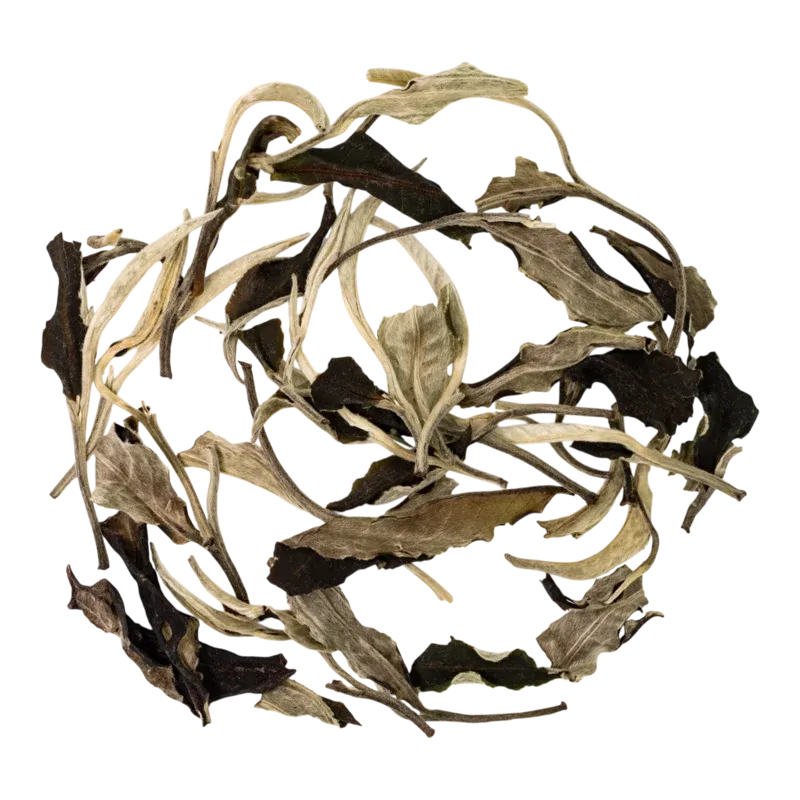
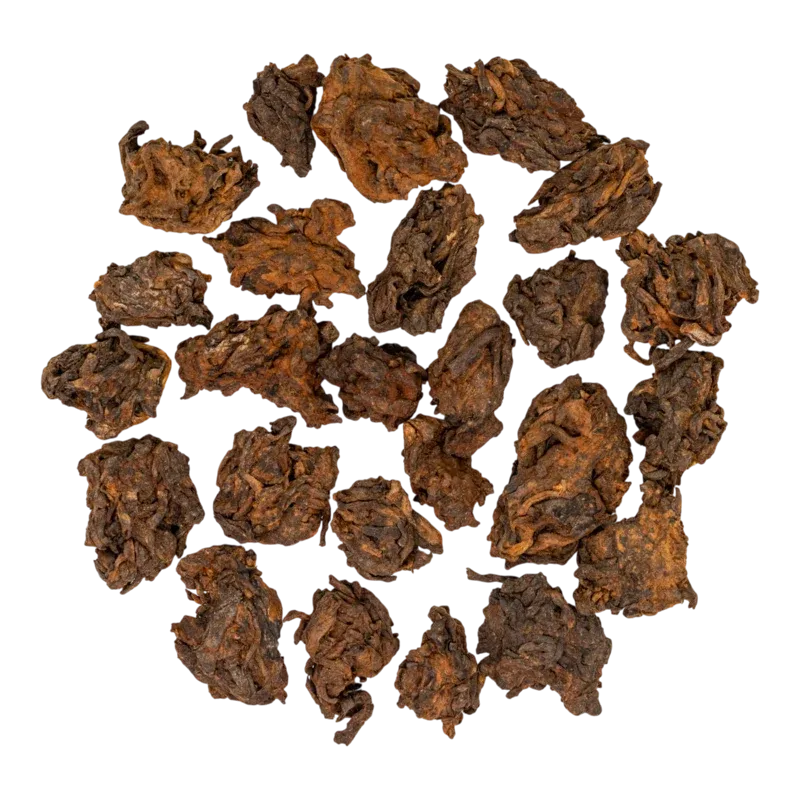
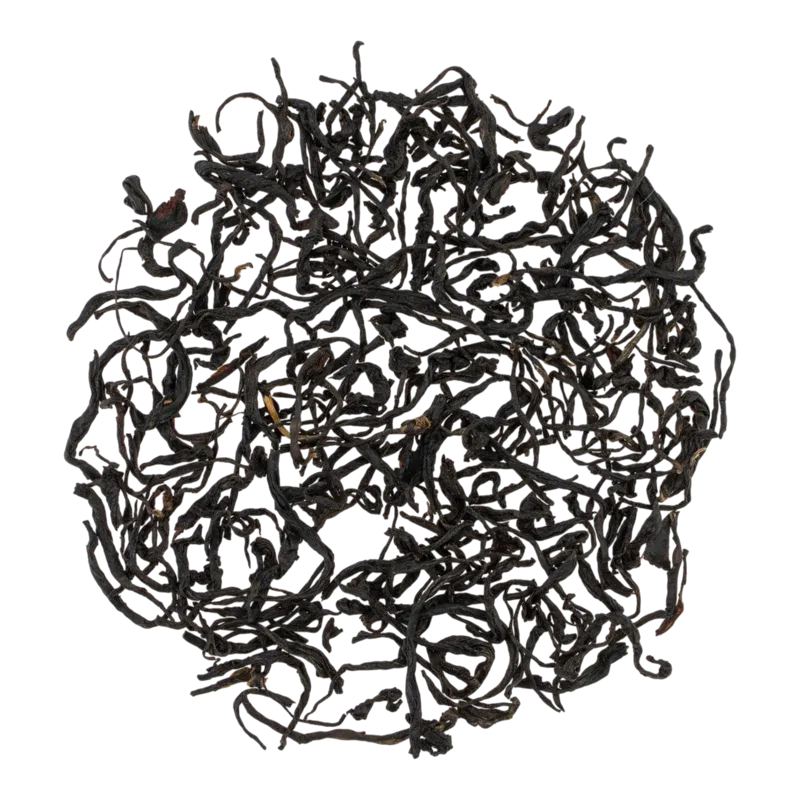
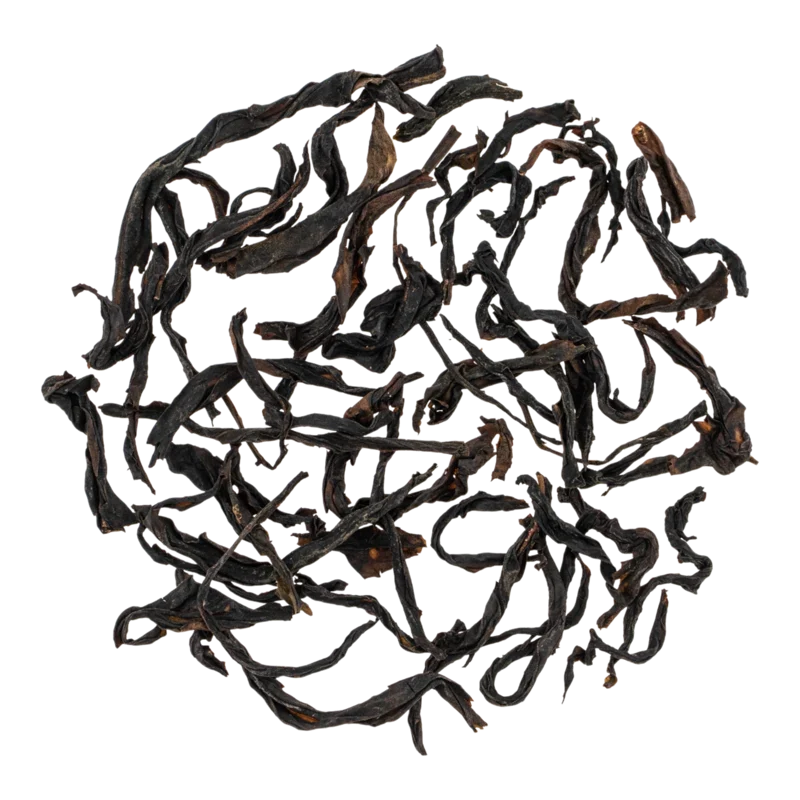
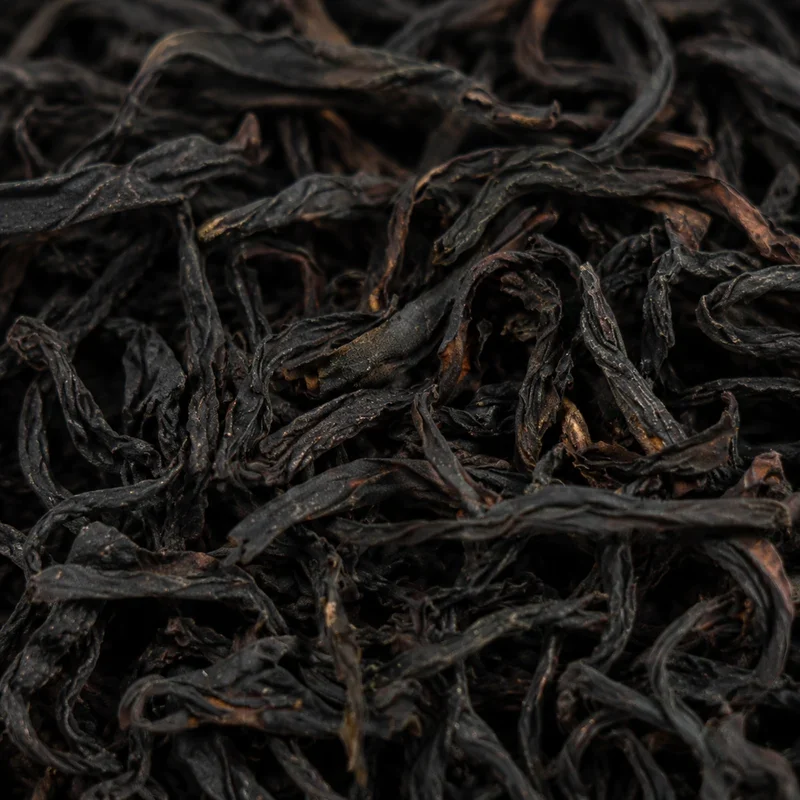
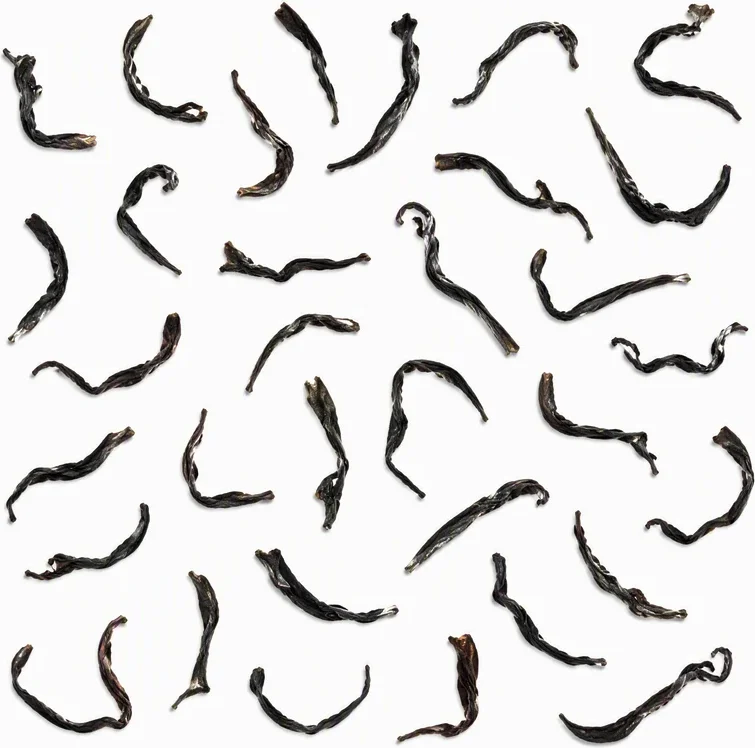
Dry Leaf Appearance: Tight, firmly twisted strips (条索紧结壮实, tiáosuǒ jǐnjié zhuàngshí), dark chestnut with oily luster (乌褐油润). Leaf is uniform, well-calibrated; granulated form (CTC-style) also occurs for mass market segment.
Dry Leaf Aroma: Intense honey-orchid note (蜜兰香, mìlán xiāng) — the tea's calling card. When warming the gaiwan, layers unfold: first pure floral sweetness, then peach and apricot overtones, light honey shade.
Liquor Aroma: High, persistent and multi-layered. Honey-orchid theme dominates with emergence of zhilan notes (芝兰香, zhīlán xiāng — cymbidium orchid aroma), fruity shades of water peach (水蜜桃, shuǐ mì táo). In roasted batches — warm nutty and caramel nuances. With aging, honey sweetness manifests.
Liquor Color: Golden-amber with crystal clarity (金黄莹亮, jīnhuáng yíngliang) for spring tea; autumn — slightly warmer, orange-yellow.
Spent Leaves: Whole, fleshy, soft and elastic leaves. Characteristic sign of quality dancong — "green belly, red edge" (绿腹红边, lǜ fù hóng biān): central part of leaf retains olive-green color, while edge, subjected to oxidation, acquires reddish-copper shade.
Taste: Rich, full (浓醇, nóng chún), with pronounced freshness (鲜爽, xiān shuǎng), provided by high amino acid content. Tea body is dense but not heavy. Astringency is soft, harmoniously balanced by polyphenols. Aftertaste (回甘, huígān) — strong and prolonged, with characteristic "mountain cool resonance" (高山韵清凉感). Best batches give sensation of "sweetness returning from throat" for several minutes.
Alkaloids: Caffeine — about 3.8% (above average for oolongs), providing pronounced tonic effect. Theobromine and theophylline are present in trace amounts, complementing mild stimulating action.
Amino Acids: Total content in spring raw material — ≥ 2.8%. L-theanine constitutes the main portion and is responsible for sweetness, "umami-like" softness and relaxing effect.
0.018–0.066 mg/kg — unique feature of Xinning terroir. According to local research, this indicator exceeds the average for Chinese oolongs by approximately 1.3 times. Selenium is a key cofactor of the antioxidant enzyme glutathione peroxidase.
Essential Oils: Rich and complex terpene complex, including linalool, geraniol, nerol, indole, jasmone and methyl salicylate. The terpene profile is responsible for the characteristic "high" honey-orchid aroma that distinguishes dancongs from other oolongs. Charcoal roasting on lychee charcoal adds caramel and furan compounds.
Minerals: Potassium, magnesium, manganese, zinc, phosphorus. Mountain acidic soils provide intensive mineral profile, which manifests in aftertaste structure.
Polyphenols: Content in spring fresh leaves of Bai Ye Dan Cong cultivar — ≥ 28.3% (by dry weight). During semi-oxidation, part of catechins oxidizes to theaflavins and thearubigins, forming body and color of liquor. Balance between residual catechins and oxidation products determines soft astringency without rough bitterness.
Vitamins: Vitamin C (ascorbic acid), B-group vitamins (B₁, B₂), vitamin E (tocopherols), vitamin P (rutin). Vitamin C content in oolongs is lower than in green teas due to partial destruction during oxidation.
High caffeine content (3.8%) combined with L-theanine provides mild but sustained central nervous system stimulation — alertness without "nervous" edge.
Polyphenols and natural selenium jointly neutralize free radicals. According to Chinese researchers' estimates, free radical scavenging efficiency of Xinning dancong is 25% higher than standard oolongs — predominantly due to selenium.
Semi-oxidized nature of oolong makes it gentler on stomach compared to green tea. Catechins help suppress absorption of excess fats, traditionally valued when consuming fatty foods.
Regular oolong consumption is associated with maintaining normal cholesterol levels and improving vascular elasticity — effect attributed to polyphenols and theaflavins action.
Caffeine and L-theanine synergy improves attention concentration and working memory — one of the most well-documented synergies in tea biochemistry.
Antioxidants (polyphenols, selenium, vitamin E) potentially slow photoaging processes.
Oolongs are traditionally viewed as tea promoting body weight control — through thermogenesis stimulation and fat oxidation.
Process of multiple brewing in gongfu format creates pause, contributing to psychoemotional tension reduction.
High pour (高冲, gāo chōng) — pouring water from height of 10–15 cm — helps "activate" aroma, especially in first three-four pours.
Tea Amount: 8 g per 110 ml (classic gongfu proportion — 1:20 by weight).
Teaware: White porcelain gàiwǎn (盖碗, gàiwǎn) — optimal choice: porcelain doesn't "steal" aroma and allows precise extraction control. For more roasted batches, Yíxīng purple clay teapot (紫砂壶, zǐshā hú) is acceptable, emphasizing depth and roundness of taste.
Water Temperature: 95–100°C. Boiling water is recommended for full revelation of dancong's voluminous aroma; for lighter spring batches, reduction to 92–95°C is acceptable.
Enemies: Moisture (most dangerous factor — Xinning tea is hygroscopic), foreign odors, direct sunlight, heat. Do not store near spices, coffee or perfumery.
Airtight packaging, cool dry place, protection from light. For maximum preservation of honey-orchid aroma, refrigerator (0–5°C) in vacuum or foil packaging is recommended. After opening — consume within 6 months.
Tea with pronounced charcoal treatment can be stored at room temperature (in dry place) and even develop over time — after 1–2 years honey notes deepen, aroma becomes calmer and more enveloping.
Tin cans with tight lid, foil bags with zip closure or vacuum packaging. Ceramic tea caddies acceptable with silicone seal.
Classic Chaozhou dancong from Fenghuang Mountain. Compared to Xinning, usually more intensively shaken, giving deeper and more complex aromatic profile with pronounced structure. Xinning — lighter, fresher, with more obvious "honey" sweetness and less astringency.
Dāncóng from Ráopíng County (饶平) of Chaozhou Prefecture, sometimes called "Bai Ye Dan Cong" — actually the same cultivar grown in Xinning. However, differences in terroir (Raoping is lower and warmer) and technology form somewhat different profile: Lingtou more rounded, Xinning more mineral and "cool."
Specific aromatic subtype of Fenghuang dancongs with cymbidium orchid profile. In Xinning lineup, Zhilan Xiang is just one of five types, with local version generally softer and sweeter than Chaozhou due to shorter shaking.
Oolong from same Meizhou region, but produced from Qí Lán cultivar (奇兰) brought from Fujian. Aromatic profile — more spicy and "Fujian-like" (cinnamon, clove notes), unlike honey-fruity accent of dancong.
Mass Guangdong oolong produced from unsorted Shui Xian bushes without individual processing approach. Significantly inferior to dancongs in aromatic complexity, but more affordable in price. Xinning dancong occupies intermediate niche: more complex than shui xian, more accessible than top Fenghuang varieties.
Price Category: Xinning Dan Cong market is segmented by season, growing altitude, handwork and brand. Approximate prices of domestic Chinese market: special grade (特级) — from 600 yuan/jin (500 g) and higher; first grade (一级) — 200–400 yuan/jin (main commercial segment); mass tea for catering (大宗茶) — 80–150 yuan/jin. High-mountain spring batches from Huangfengwo Mountain or from century-old trees from Heshui can reach significantly higher prices at auctions.
No reviews yet. Tell us what you think of this tea.
Rate this tea and share your impressions. We review each submission before publishing it.