Brewing
Gongfu brewing
- Water temperature
- 75 °C
- Tea amount
- 5 g
- Water volume
- 100 ml
- First steep
- 10 s
- Time added per infusion
- 5 s
- Infusions
- 3

xié bèi chá
Choose a brewing method. Start with the recommended quantities and time, then adjust to taste.
Brewing
Brewing
Taste
Tea encyclopedia
Category: National Geographical Indication Product (中国国家农产品地理标志产品, 2018). In the 1970s — one of the "Ten Famous Teas of Fujian" (福建十大名茶). The only green tea from Longyan included in the "Zhongguo Chajing" — the authoritative "Registry of Regional Famous Teas" (地产名茶名录). Gold award at the "Red Fields" competition (红古田杯, 2023). 16 century-old ancient tea trees are under state protection.
Category: National Geographical Indication Product (中国国家农产品地理标志产品, 2018). In the 1970s — one of the "Ten Famous Teas of Fujian" (福建十大名茶). The only green tea from Longyan included in the "Zhongguo Chajing" — the authoritative "Registry of Regional Famous Teas" (地产名茶名录). Gold award at the "Red Fields" competition (红古田杯, 2023). 16 century-old ancient tea trees are under state protection.
Coordinates: Approximately 25°17′ North latitude, 117°05′ East longitude.
Origin: China, Fújiàn Province (福建, Fújiàn), Lóngyán City (龙岩市, Lóngyán Shì), Xīnluó District (新罗区, Xīnluó Qū), Jiāngshān Township (江山乡, Jiāngshān Xiāng). The terroir core is Lǎozhài Village (老寨村, Lǎozhài Cūn) (elevation 1,248 m — highest point), villages Xinzhai (新寨村), Beiyang (背洋村), Měixī (梅溪村) and Shàntóu (山头村) — tea gardens covering ~700 mu (47 hectares), producing 90% of the output.
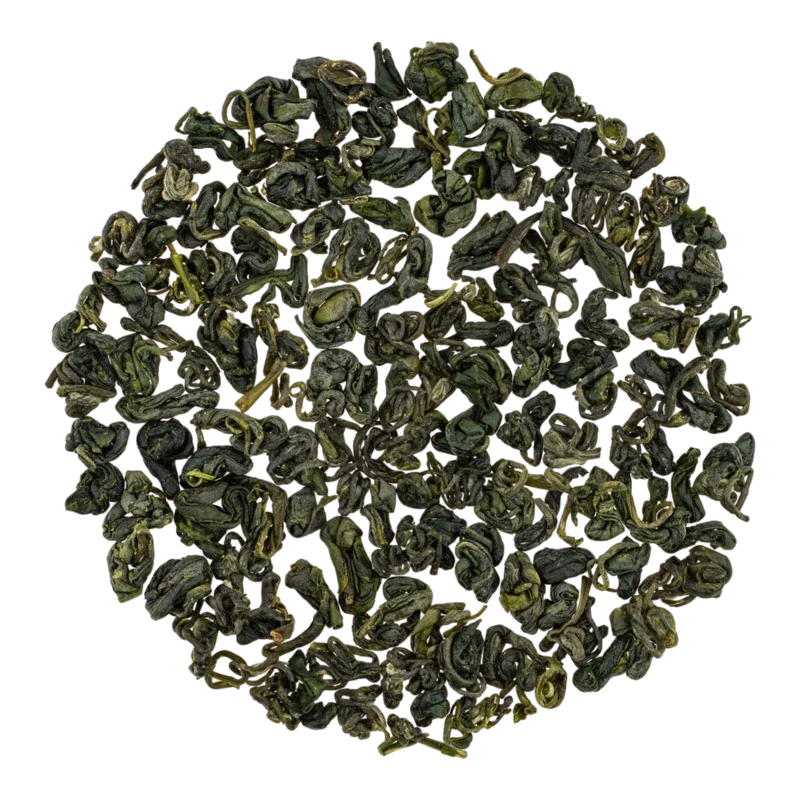
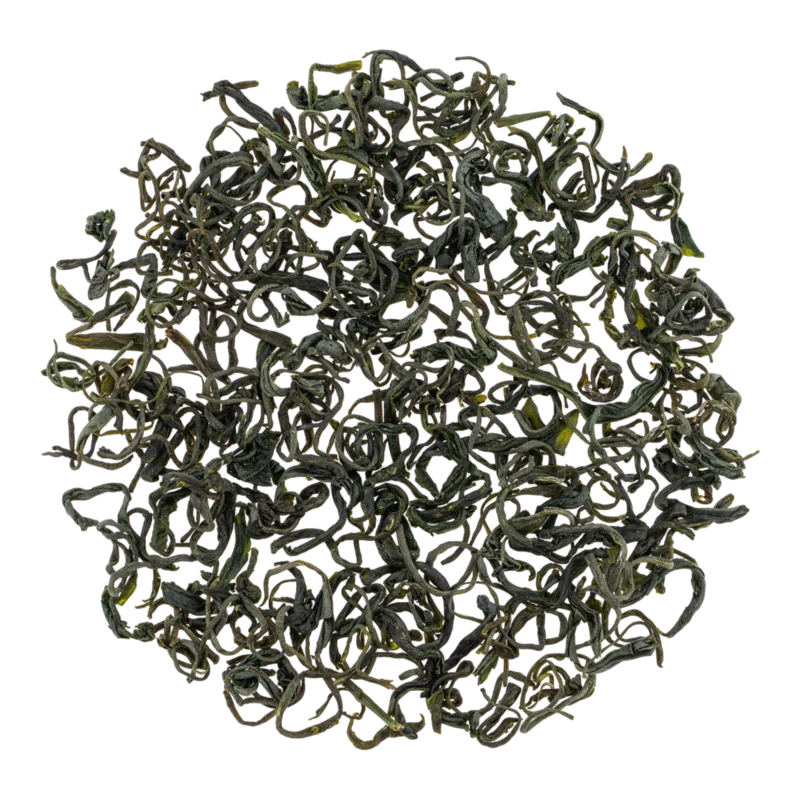
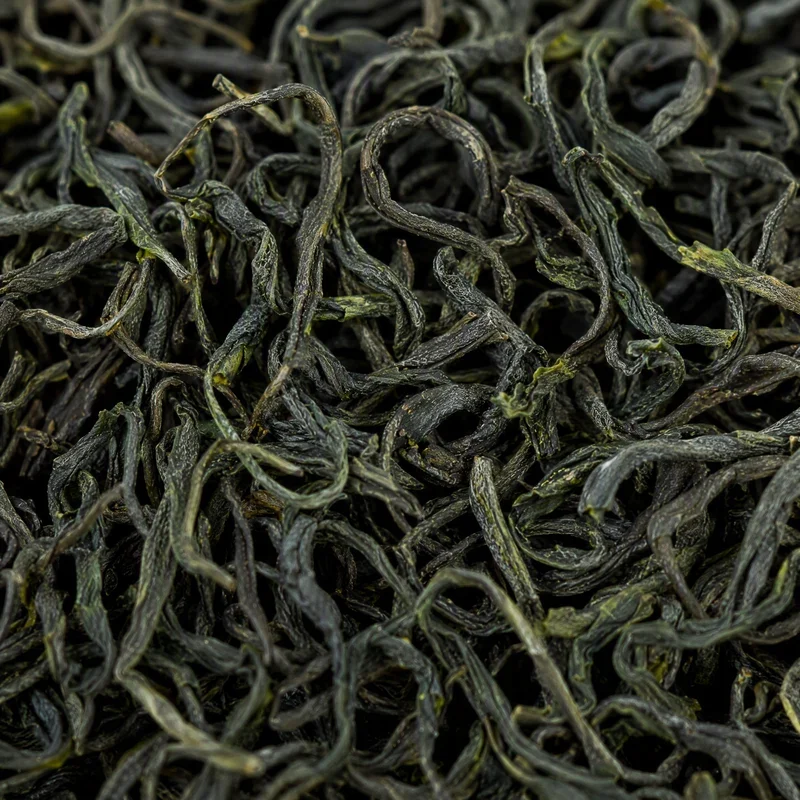
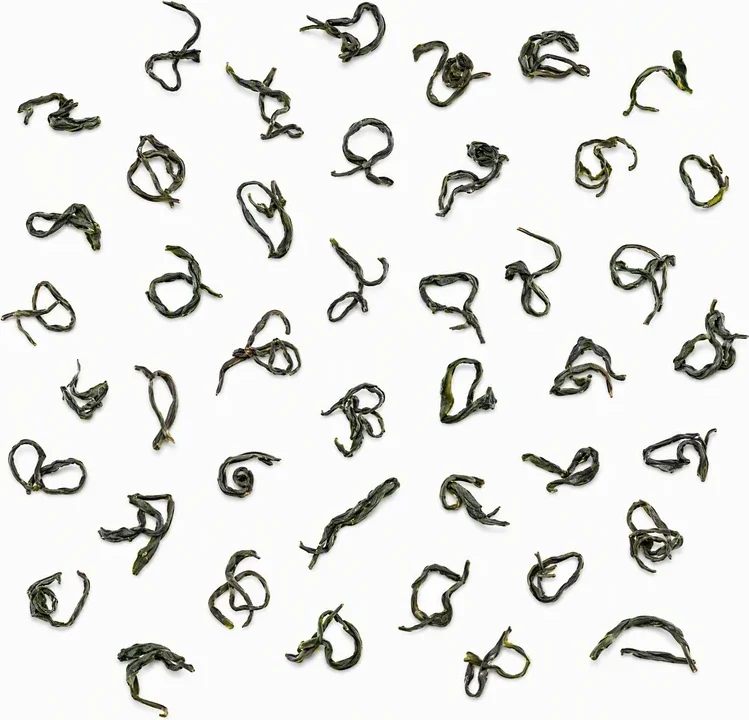
Type: Green tea (non-oxidized). Belongs to pan-fired green teas (炒青绿茶, chǎoqīng lǜchá). Shape — tight straight strips of gray-green color with yellowish tint (紧实条形,灰绿带黄).
Cultural Significance: Xie Bei Cha is a living relic of Fujian "pre-oolong" tea cultivation: in a province where almost all tea is semi-oxidized (oolong) or minimally processed (white), Xie Bei Cha represents an ancient green tradition preserved in an isolated high-altitude village. Its "garden tea bushes" (菜茶) — sexually reproduced, without cloning — are genetically closer to primitive tea populations than any modern cultivar.
History: Tea cultivation in Xiebei village dates back to the end of the Míng era (明末, 17th century) — over 300 years ago. The "Records of Longyan City" (龙岩市志, Lóngyán Shìzhì) confirm: tea began to be cultivated at the end of Ming, and by the beginning of Qing it had already become a local famous tea.
Six levels:
4–6 leaves of large opening. Tight strips, gray-green. High artemisia aroma. Taste — olive returning sweetness. Highest quality.
Gradually coarser raw material, decreasing aroma intensity, but maintaining brewing endurance.
Cultivar: Xiebei Caicha Youxingquntichong (斜背菜茶有性群体种) — local indigenous "garden" variety of Camellia sinensis from sexual reproduction. Semi-arboreal type (半乔木型, bànqiáomù xíng), height — 1–2 m. Leaf large (length 10–16 cm). Young shoots — yellow-green, fleshy, with long internodes. Polyphenol content — high. Five subtypes: large-leaf (大叶种, 80% of plantings, with pronounced artemisia aroma), seed-leaf (瓜子叶种), bamboo-leaf (竹叶种), round-leaf/white-leaf (圆叶/白叶种), red-leaf/purple (红叶/紫芽种, with elevated anthocyanin content and fruity aroma).
Picking: Unique feature — harvest is conducted during Lìxià (立夏, "Beginning of Summer," ~May 5–7) — significantly later than most green teas (usually before Qingming or Guyu). Standard — 4–6 leaves of "large opening" (大开面新梢, dà kāimiàn xīnshāo) — fully unfolded, mature shoots. This radically differs from the standard of most green teas (tenderest buds). Using mature raw material is not a compromise but a conceptual choice: precisely mature leaves give the characteristic artemisia aroma and olive taste.
Altitude: 1,000–1,248 meters — one of the highest tea villages in Fujian. Lǎozhài village (1, 248 m) — the "roof" of tea-growing Longyan.
Climate: Average annual temperature — 17°C, annual precipitation — 1,683 mm. Average annual number of foggy days — >200. Daily temperature variations — >10°C. Extended growing season (due to altitude) ensures deeper accumulation of nutrients.
Soil: Yellow and gray-brown soils (黄壤、灰棕壤) with inclusions of quartz pebbles (石英细砾), providing excellent permeability and aeration. pH 4.5–6.5. Organic matter — high. Forest coverage — 78%. Diffused light proportion — 70%. Diseases and pests — rare (thanks to altitude and isolation).
High-altitude location causes "yellowing" of shoots (芽叶黄绿色变): chlorophyll content is reduced, while polyphenols and water extract are elevated. This creates the "three yellow-greens" — the visual calling card of Xie Bei Cha.
Manual harvest during Lixia, 4–6 mature leaves.
Two woks with different temperatures are used: first — 140–160°C, second — 110–130°C. Leaves are transferred from the hot wok to the less hot one and back — this technique ensures even heating of large mature raw material.
Formation of strip structure.
At 90–100°C / 70–90°C — intermediate "tempering."
Moisture redistribution.
Additional processing.
Fraction separation.
Final "roasting."
Moisture content — ≤6.5%.
Dry Leaf Appearance: Tight, strong strips (紧实条形), gray-green color with yellowish tint (灰绿带黄). Leaf noticeably larger than most green teas — result of late harvest of mature raw material.
Dry Leaf Aroma: Artemisia aroma (艾香, àixiāng) — the main and unique aromatic note, not found in any other famous green tea. Grassy-green freshness (草木清香, cǎomù qīngxiāng). With aging, honey note appears (陈化后显蜜香, chénhuà hòu xiǎn mìxiāng).
Liquor Aroma: Artemisia, clean, high.
Liquor Color: Yellow-green, clear and transparent (黄绿清澈).
When brewed in a glass cup, shoots stand vertically (芽叶竖立杯中).
5–7 infusions — significantly higher than usual for green tea, explained by use of mature raw material.
Spent Leaves: Tender, yellow-green, bright (嫩黄绿亮).
Taste: Dense and rich (浓厚, nónghòu) — result of high polyphenol content. Returning sweetness resembling fresh olives (回甘持久,似鲜橄榄) — key descriptor: initial light bitterness instantly transforms into long, "oily" sweetness, like chewing green olives. Powerful salivation generation (生津强, shēngjīn qiáng). Formula: "微苦转甘" — "light bitterness transforming to sweetness".
Alkaloids: Caffeine — significant content. Together with polyphenols ensures fat breakdown.
High — ensures richness and endurance.
High content — forms protective "fluorapatite" layer on enamel, increasing acid resistance by 40%.
Minerals: Quartz soils provide unique mineral profile.
Polyphenols: Significantly above average — result of high altitude and mature raw material. Coagulate bacterial proteins with 30% higher efficiency than ordinary green tea — pronounced antibacterial action.
Vitamins: Vitamin C, carotenoids.
Record polyphenols coagulate bacterial proteins with 30% higher efficiency — suppression of dysentery and enteritis pathogens.
Caffeine + polyphenols break down fats and regulate cholesterol — 25% more effective than red tea (black tea).
Fluorine — enamel acid resistance +40%.
Polyphenols.
not medical advice.
Tea Amount: 3 g per 150 ml (1:50).
Teaware: Glass cup (observing vertically standing shoots) or white porcelain gaiwan.
Water Temperature: 85–90°C — higher than for most green teas (mature raw material withstands high temperature). Mountain spring water — ideal.
From Guizhou. Also from mature raw material (one bud + two-three leaves). Lübaoshi — granulated, chestnut; Xie Bei Cha — strip, artemisia-olive. Both challenge the "tenderness = quality" paradigm.
Xie Bei Cha is the antipode: late-season (Lixia vs. Qingming), mature (4–6 leaves vs. one bud), yellow-green (vs. emerald), artemisia-olive (vs. chestnut-orchid). This is "anti-green green tea" — and therein lies its uniqueness.
Also from large-leaf raw material, also with high polyphenol content. Yingde — from Yunnan cultivar, with "微苦无涩"; Xie Bei Cha — from indigenous Fujian "菜茶", with "微苦转甘似橄榄".
No reviews yet. Tell us what you think of this tea.
Rate this tea and share your impressions. We review each submission before publishing it.