Brewing
Gongfu brewing
- Water temperature
- 75 °C
- Tea amount
- 5 g
- Water volume
- 100 ml
- First steep
- 10 s
- Time added per infusion
- 5 s
- Infusions
- 3

Xiázhōu bìfēng
Choose a brewing method. Start with the recommended quantities and time, then adjust to taste.
Brewing
Brewing
Taste
Tea encyclopedia
Category: Regional Chinese tea; national geographical indication product (2017).
Category: Regional Chinese tea; national geographical indication product (2017).
Coordinates: Approximately 30°42′–31°06′ N, 110°51′–111°11′ E.
Origin: China, Húběi Province (湖北, Húběi), Yíchāng City (宜昌, Yíchāng), Yílíng District (夷陵区, Yílíng Qū). Ancient name of the region—Xiázhōu (峡州, Xiázhōu).
Type: Green tea (non-oxidized). Half-roasted half-baked type (半烘炒, bàn hōngchǎo)—combination of drum roasting (杀青, shāqīng) with final charcoal drying (木炭烘焙, mùtàn hōngbèi).
Cultural Significance: Xiazhou Bifeng is the modern heir to the most ancient tea tradition, documented in the "Classic of Tea". This is one of the few teas whose history can be traced directly to the figure of Lu Yu, which gives it special symbolic weight in Chinese tea culture. Tāng poet Pí Rìxiū (皮日休, Pí Rìxiū) praised tea from Xiaojiang Garden: "Neither Wu monk about Mount Ya will speak better, nor Shu elder will boast of Wuzui tea"—this 9th-century poetic text testifies that already in early Tang, local tea surpassed famous varieties from Jiangxi and Sichuan. For Yiling District, tea is the calling card of the territorial brand and an integral part of Yangtze gorge culture.
History: The tea tradition of Xiazhou is one of the most ancient in China. Already during the Southern and Northern Dynasties period (420–589), Xiazhou was a notable tea-producing region. A key moment in the region's history was the assessment given in the treatise "Classic of Tea" (《茶经》, Chájīng, c. 780), where Lù Yǔ (陆羽, Lù Yǔ) recorded: "In Shannan, Xiazhou is the best, Xiangzhou and Jingzhou follow" (山南,以峡州上). Tea from Xiazhou thus received the status of first among all teas of the southern mountain region. Northern Sòng literatus Ōuyáng Xiū (欧阳修, Ōuyáng Xiū), who served as magistrate of Yiling County, left the famous line: "The domain of Chu at the western edge of spring and autumn, the first province in Lu Yu's 'Classic of Tea'" (陆羽茶经第一州). Poet Lù Yóu (陆游, Lù Yóu), tasting tea in Sanyou Cave (三游洞), praised its color, aroma and taste. In Wang Xiangjin's (王象晋) "Collection of Fragrances" (《群芳谱》, Qúnfāng Pǔ), tea from Xiaojiang Garden (小江园) in Xiazhou was included among the highest.
Name Breakdown: "Xiazhou" (峡州)—ancient name of the Yichang region, dating back to the Tang era and associated with the Yangtze gorges. "Bifeng" (碧峰)—"jade peaks"—a poetic image from Ming poetry, referring to the mountain landscapes of Xīlíng Gorge (西陵峡, Xīlíng Xiá).
Cultivar: Main cultivar—Yíchāng Large Leaf (宜昌大叶种, Yíchāng Dàyè Zhǒng), registered as Huacha-29 (华茶29号)—one of the first 30 local elite varieties in the national registry. Auxiliary cultivars—Yíhóng Zǎo (宜红早, Yíhóng Zǎo), also known as Echa-4 (鄂茶4号), and Echa-9 (鄂茶9号). Trees older than 30 years; leaves elliptical, 14.7 ± 2.4 cm long; weight of 100 buds is about 57 g; polyphenol content in raw material reaches 35.8%. The variety is distinguished by high frost resistance and is suitable for planting at altitudes up to 1400 m.
Picking: Spring harvest (peak quality). Strictly observes the standard of "nine prohibitions" (九不采, jiǔ bù cǎi): purple shoots, insect-damaged leaves, diseased leaves and other defective fractions are not collected.
Pluck Standard: Special grade (特级)—single bud or bud with one leaf, shoot length about 3 cm; bud proportion ≥ 90%; made entirely by hand. First grade (一级)—bud with one leaf in initial opening stage (一芽一叶初展), content ≥ 80%; partial mechanical processing of rolling is permitted. Second grade (二级)—predominantly bud with two leaves; withstands more than five infusions, leaf in spent leaves even and uniform.
Altitude: 200–1000 m; core production zone—600–900 m (cloud belt).
Climate: Average annual temperature 16.6°C; annual precipitation 1100–1300 mm; foggy days per year more than 180; daily temperature difference > 8°C. Predominant diffused light promotes amino acid accumulation (spring tea amino acid content ≥ 1.64%).
Soil: Yellow-brown soils (黄棕壤, huáng zōng rǎng) with pH 4.5–6.5, organic matter content ≥ 1.0%, elevated zinc and selenium content.
Tea plantations are located on the northern bank of Xīlíng Gorge (西陵峡, Xīlíng Xiá) of the Yangtze, in the semi-high mountain tea zone (半高山茶区, bàn gāoshān cháqū) of Yiling District. The Yangtze flows through the production zone for 17.4 km; the area abounds with small rivers and streams—Baisuixi (百岁溪), Tàipíngxī (太平溪) and others. Forest coverage exceeds 70%, and negative ion content in the air is 50 times higher than urban levels.
Tàipíngxī Township (太平溪镇), Letianxi Township (乐天溪镇), Dèngcūn Village (邓村乡), Sandouping Township (三斗坪镇). All core territories are located on the northern bank of Xiling Gorge, in the cloud belt at 600–900 m altitude. Dengcun Village, unofficially called "Hubei's tea village", plays a key role in production—it is here that the oldest plantations with trees over 30 years old are concentrated. The combination of fog, soft diffused light and mineralized soils on selenium-zinc substrate forms the unique terroir profile that distinguishes Bifeng from other Hubei green teas.
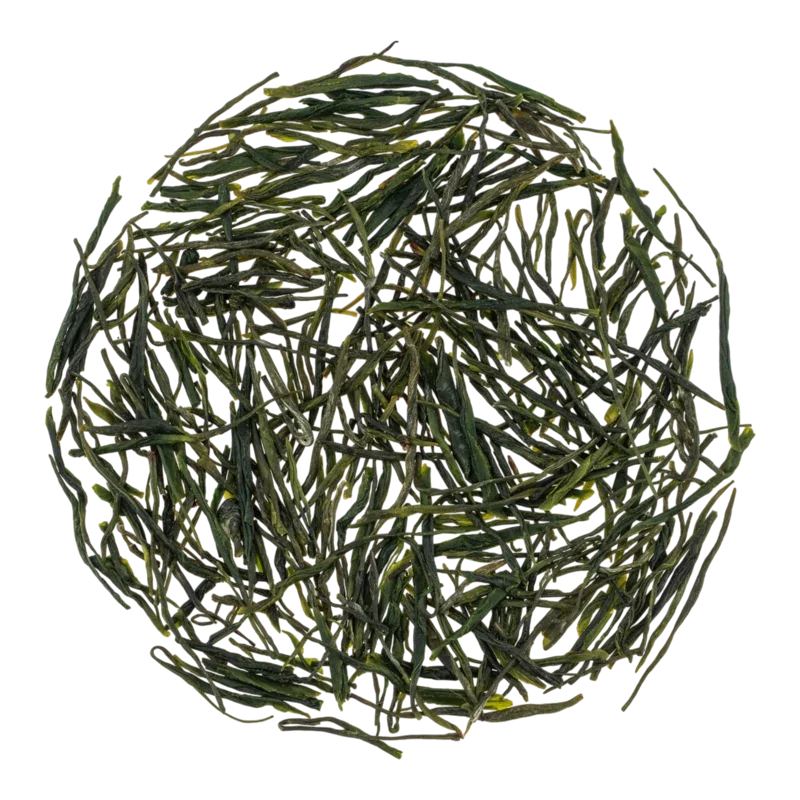
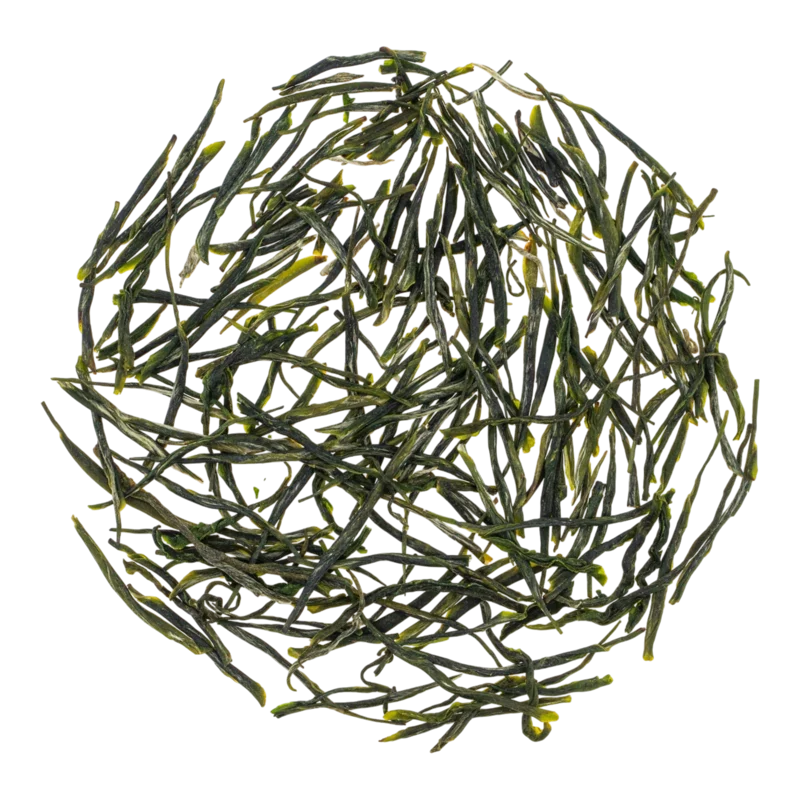
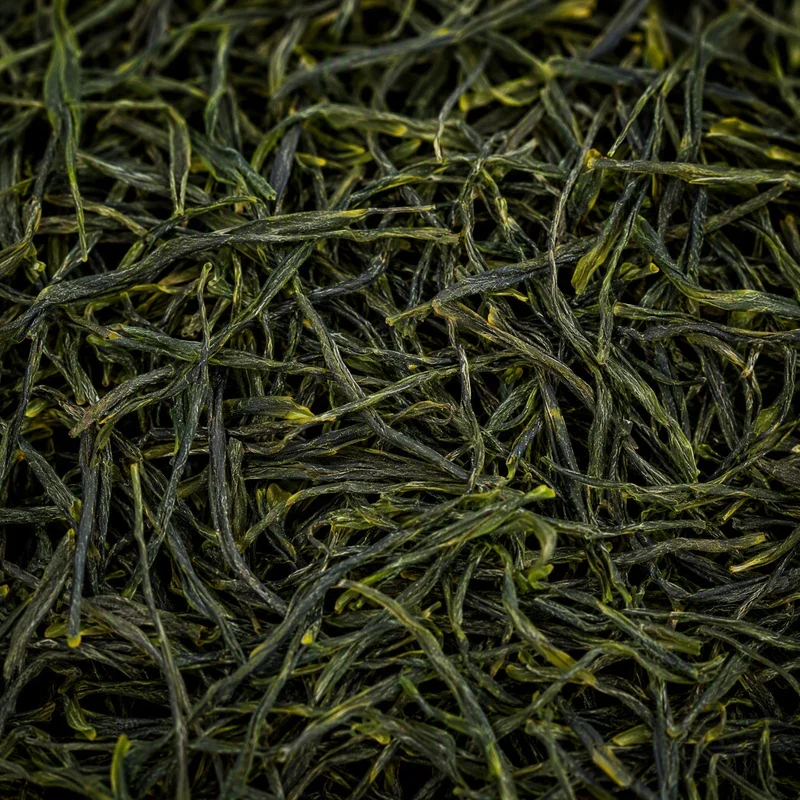
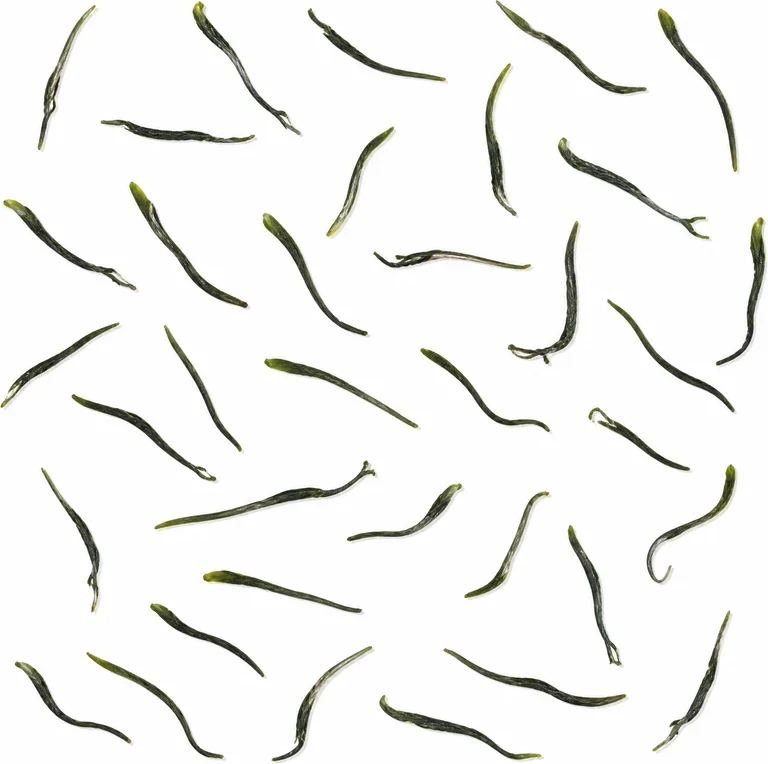
Dry Leaf Appearance: Straight thin leaf (条索形, tiáosuǒ xíng), tightly rolled, elegant, with noticeable white down; color—bright emerald green with oily luster (翠绿油润).
Dry Leaf Aroma: Pronounced chestnut aroma (栗香, lì xiāng)—dominant; in the background—clean vegetal freshness (清香, qīng xiāng).
Liquor Aroma: Chestnut aroma unfolds deeper, becoming persistent and high; fresh note remains as upper register.
Liquor Color: Yellow-green, bright and clear (黄绿明亮).
Spent Leaves: Tender green color, even, lively and elastic (嫩绿匀整鲜活).
Taste: Bright freshness (鲜爽, xiān shuǎng), due to high amino acid content; distinct and prolonged sweet aftertaste—returning sweetness (回甘, huígān). Body light but rich.
Amino Acids: In spring tea ≥ 1.64%; polyphenol to amino acid ratio (酚氨比, fēn'ān bǐ)—12.1, indicating good balance of freshness and body.
≥ 45.8%—significantly above average for green teas, indicating high taste density.
4.2%.
Essential Oils: Chestnut aromatic profile is formed during drum fixation and charcoal drying—pyrazines and furan compounds predominate.
Minerals: Elevated zinc (Zn) and selenium (Se) content, due to local soil geochemistry.
Polyphenols: ≥ 30% (in raw material up to 35.8%); main antioxidant group—catechins (EGCG, EGC, ECG).
Vitamins: Vitamin C (in fresh raw material), B vitamins, vitamin K.
High polyphenol content provides active free radical binding.
Combination of caffeine with L-theanine gives mild and sustained alertness without sharp fluctuations.
Catechins promote acceleration of fat breakdown.
Natural enrichment with zinc and selenium is beneficial for immune system and antioxidant protection.
Moderate tannin content promotes normal GI function after meals.
L-theanine supports focused, calm state of consciousness.
Regular moderate consumption of green tea with high catechin content is associated with supporting vascular elasticity.
According to some data, green tea polyphenols help reduce oxidative stress caused by electromagnetic radiation from household devices.
Pour water along the vessel wall in a smooth stream—abrupt flow disturbs the down and makes the liquor cloudy. Fresh tea is recommended to rest without light for about 7 days after purchase to "awaken" from processing fire (醒茶, xǐng chá). After opening—store in refrigerator and consume within a month.
Tea Amount: 3 g per 150 ml (1:50 ratio).
Teaware: Glass tumbler (for observing leaf dance); thin porcelain gaiwan.
Water Temperature: 80°C (boiling water is categorically not recommended—temperature above 80°C destroys chlorophyll and gives bitterness).
Also from Hubei, but steamed (蒸青) in Japanese style—has a more grassy, "marine" profile. Xiazhou Bifeng, drum-roasted with charcoal finish drying, gives a deeper chestnut aroma.
Henan neighbor with similar down, but more rounded, beany taste. Xiazhou Bifeng is distinguished by slightly more pronounced returning sweetness and specific terroir mineral undertone from zinc-selenium soils.
Anhui large-leaf flat-form tea—visually and texturally complete opposite of Bifeng's thin downy leaf. Both are valued for high extractability, but Houkui tends toward orchid notes, while Bifeng toward chestnut.
Sichuan tea with similar combined processing (roasting + drying). Ganlu is more curved, with floral-beany notes; Bifeng—straighter, with more pronounced nutty dominance and characteristic Xiling minerality.
Jiangxi mountain green tea from analogous foggy terroir. Yunwu gives a softer, gentler profile with floral overtones, while Bifeng demonstrates greater taste density due to high extractability (≥ 45.8%) and more roasted chestnut character.
Price Category: Special grade (特级): 600–800 yuan/jin (handmade, single buds); first grade (一级): 250–400 yuan/jin; second grade (二级)—significantly more affordable, positioned as everyday tea with good brewing endurance.
Price Factors: Raw material grade, harvest season (early spring—more expensive), proportion of manual labor, presence of geographical indication certification.
No reviews yet. Tell us what you think of this tea.
Rate this tea and share your impressions. We review each submission before publishing it.