Brewing
Gongfu brewing
- Water temperature
- 75 °C
- Tea amount
- 5 g
- Water volume
- 100 ml
- First steep
- 10 s
- Time added per infusion
- 5 s
- Infusions
- 3

Wǔdāng dào chá
Choose a brewing method. Start with the recommended quantities and time, then adjust to taste.
Brewing
Brewing
Taste
Tea encyclopedia
Category: Regional tea with protected origin — a national geographical indication product (全国农产品地理标志, registered by the Ministry of Agriculture of the PRC on November 15, 2010). Since 2014, it bears the title "China's No. 1 Cultural Tea" (中国第一文化名茶), awarded by the China Quality Agricultural Products Development Association.
Category: Regional tea with protected origin — a national geographical indication product (全国农产品地理标志, registered by the Ministry of Agriculture of the PRC on November 15, 2010). Since 2014, it bears the title "China's No. 1 Cultural Tea" (中国第一文化名茶), awarded by the China Quality Agricultural Products Development Association.
Coordinates: Approximately 32.40° N, 110.80° E (Wudang Mountain area and adjacent tea estates of Shiyan Prefecture).
Origin: China, Húběi Province (湖北, Húběi), Shíyàn Prefecture (十堰, Shíyàn). The protected origin zone includes Zhúxī County (竹溪, Zhúxī), Zhúshān County (竹山, Zhúshān), Fáng County (房县, Fáng Xiàn), former Yùn County (郧县) and Yunxi County (郧西), Dānjiāngkǒu City (丹江口, Dānjiāngkǒu), and Zhangwan (张湾) and Máojiān (茅箭) districts of Shiyan City.
Type: Green tea (non-oxidized). The main product of the line is green tea; under the general umbrella brand, red tea, oolong, and dark tea are also produced, however the signature product remains green Wudang Dao Cha.
Cultural Significance: Wudang Dao Cha is one of China's two major religious teas alongside Buddhist Chán tea (禅茶). The Taoist tea tradition rests on three pillars: healing (饮茶消病 — "drink tea, expel illness"), body strengthening (养生健身 — "nourish life, strengthen health"), and spiritual cultivation (修身养性 — "cultivate oneself, nurture nature"). The principle "hé jìng yí zhēn" (和静怡真 — "harmony, tranquility, joy, authenticity"), which guides Taoists in the practice of sitting meditation (坐禅), is directly transferred to the tea ceremony. In Wudang's Taoist monasteries, annual ceremonies on the third day of the third lunar month and the ninth day of the ninth lunar month include offerings of the finest tea to the deity Zhenwu (真武). Historically, the Shiyan region was a key node of the "Great Tea Road" (万里茶道): tea from the Qinling-Babashan region descended via the Han River to Xiangyang, then through Xi'an to the Silk Road, and via the northern branch — through Inner Mongolia — to Russia.
History: Wudang Dao Cha is one of the most ancient teas of Hubei, whose history is inseparably linked with the Taoist monasteries of Wǔdāng Mountain (武当山, Wǔdāng Shān), the first of China's four sacred Taoist mountains. According to Taoist legends, the inhabitants of Wudang began chewing fresh tea leaves for mental clarity in ancient times, gradually transitioning from chewing to boiling, and then to classical brewing. Taoists called this beverage Tàihé Chá (太和茶, "tea of Great Harmony") — after the second name of Wudang Mountain — Taihshan (太和山). During the Tāng dynasty (唐, 618–907), tea from the Zhuxi-Meizigong area (竹溪梅子贡) was already listed as an imperial tribute gift. Legend tells that Crown Prince Li Xian (future Emperor Tang Zhongzong), passing through Zhuxi, was cured of heat stroke by local tea, after which he presented it to Empress Wu Zetian, who declared Meizigong tea a court tea. 48 ancient tea trees in Meiziya (梅子垭) have survived to this day. Under the Míng dynasty (明, 1368–1644), the emperor mobilized 200,000 craftsmen for a 14-year reconstruction of Wudang's palace temples; during this period, Taoists supplied their tea to the court as tribute goods (贡品). In 2009, Wudang Dao Cha was honored with the title "Hubei Province's No. 1 Cultural Tea" (湖北第一文化名茶). In 2010, it was registered as a national geographical indication product. In 2014, it received the title "China's No. 1 Cultural Tea." In 2017, Zhejiang University developed a new brand strategy with the motto "Pú shǒu
Name Breakdown: "Wudang" (武当) — sacred mountain and region; "Dao" (道) — the Way, central concept of Taoism; "Cha" (茶) — tea. Literally: "Taoist tea from Wudang Mountain." Alternative historical name — "Taihe Cha" (太和茶), where "taihe" means "great harmony" — a state of absolute peace and equilibrium toward which Taoist practice strives. Taoists said: "Drink this tea — and the heart is clear, the spirit calm, harmony supreme, this is taihe" (心平气舒,人生至境,平和至极,谓之太和).
Predominantly local population plantings (群体种, qúntǐ zhǒng) — genetically diverse lines adapted to the mountain terroir of Qin-Ba. Both small-leaf (小叶种) and large-leaf (大叶种) forms are found. In the Fang County area, wild tea trees with trunk circumferences up to 3.2 m and ages over a thousand years have been discovered — probably among the oldest in central China.
Cultivar: Camellia sinensis var. sinensis.
Picking: Predominantly in spring (March–April); premium batches — early spring harvest before Qīngmíng (清明). For mass batches, summer and autumn harvests are permitted.
Pluck Standard: For highest grades — single bud or bud with one upper leaf (一芽一叶); for standard grades — bud with two upper leaves (一芽二叶).
Raw Material: Whole, freshly picked, without mechanical damage. Raw material is delivered to the factory in the shortest possible time to prevent spontaneous oxidation.
Altitude: 500–1200 m above sea level. The main premium tea zone is mid-mountain (700–1000 m).
Climate: Northern subtropical monsoon, continental subtype. Average annual temperature around 15.3°C, frost-free period ~242 days. Average annual precipitation ~834 mm. Annual sunshine ~1835 hours. Mild winters, summer without extreme heat; pronounced diurnal temperature amplitude promotes accumulation of aromatic substances.
Soil: Yellow-brown (黄棕壤) and sandy soils predominate, based on metamorphic and carbonate rocks. pH 4.0–6.5 (acidic and slightly acidic). Organic matter content 1.0–2.0%. Soils are enriched with microelements — phosphorus, zinc, and selenium, which positively affects the tea's mineral profile.
Mountain terrain with elevation differences, deep river valleys, three large reservoirs (including Danjiangkou) create a powerful "water-mist effect": frequent clouds and mists diffuse direct sunlight, increasing the proportion of diffuse radiation — optimal conditions for synthesis of amino acids and aromatic compounds in tea leaves.
The region is one of China's largest zones of ecologically clean and organic tea cultivation. Rich forest cover, natural predators of pests (birds, spiders), and minimal industrial proximity allow plantations to be maintained with very low pesticide loads. Many farms have organic certification.
Hand selection of buds and young leaves. For premium batches, picking is conducted in early morning hours, with raw material immediately delivered to the workshop.
Freshly picked raw material is spread in a thin layer in a ventilated room for 2–4 hours. Goal — moisture equalization, beginning of light evaporation, and preparation for fixation. Leaves slightly wither, becoming softer and more pliable.
Key stage: at 180–220°C (in wok or rotary drum), enzymes are quickly inactivated, stopping oxidation. The foundation of chestnut-nutty aroma (栗香, lì xiāng) — Wudang Dao Cha's characteristic note — is formed. Duration 3–5 minutes depending on batch size.
Mechanical destruction of cell walls to release juices and form flavor depth. Simultaneously, the leaf acquires primary form — tight twist or rolled "cord."
Creating the final characteristic form — flat leaf, needle-like, or spiral, depending on the specific sub-product of the line. This stage may include hand pressing in a wok or on a shaping machine.
Bringing to stable moisture content (≤6.5%) at 80–100°C. Final aroma stabilization, removal of residual "green" grassiness, consolidation of chestnut-sweet tone.
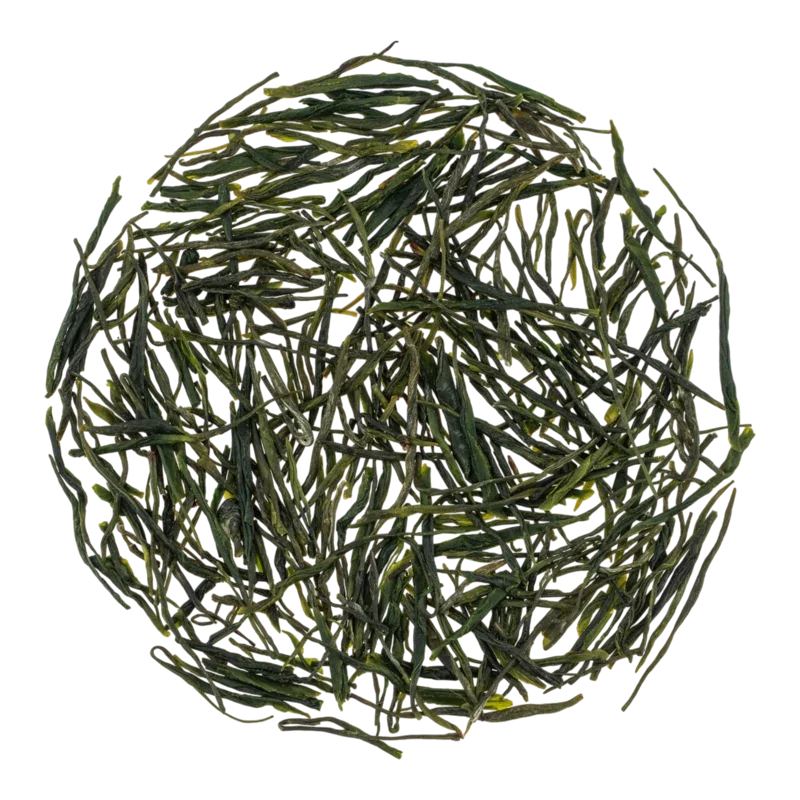
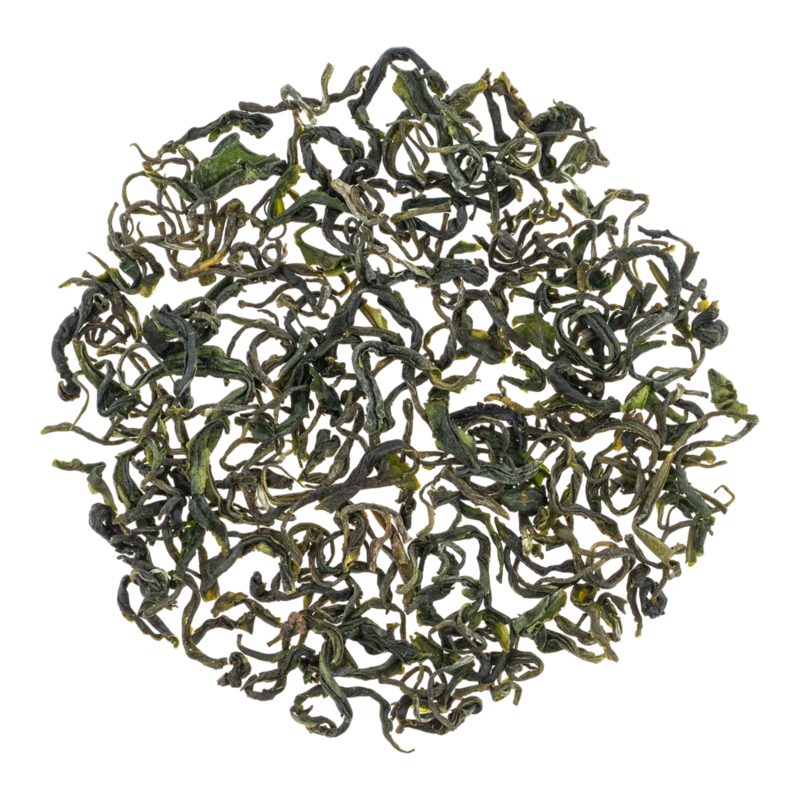
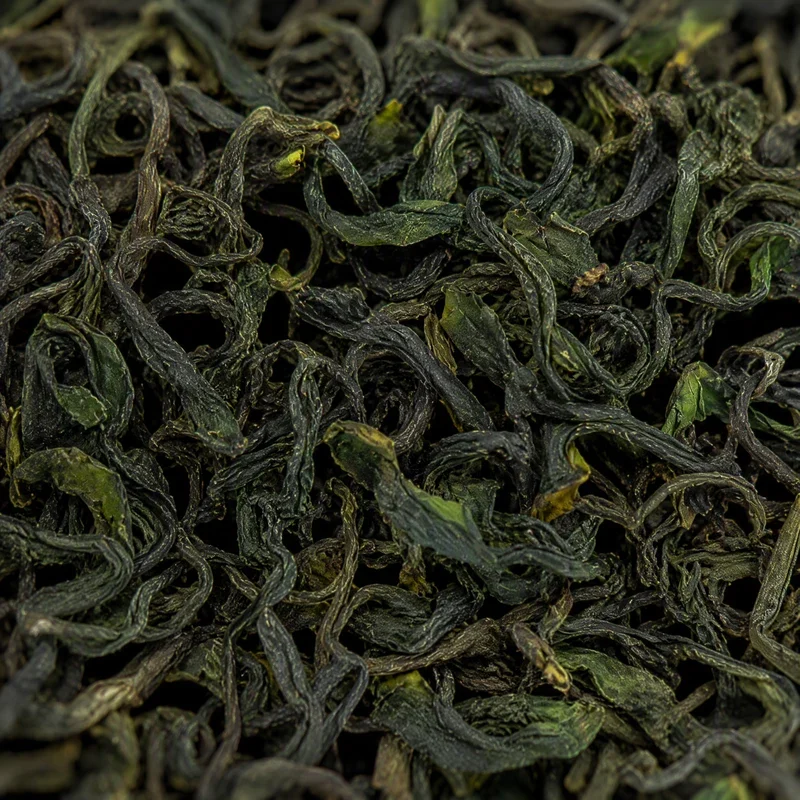
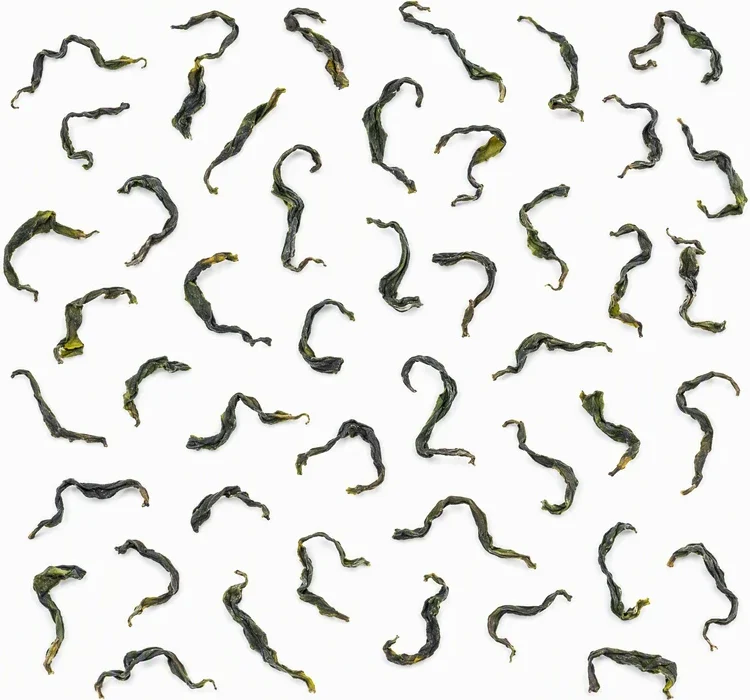
Dry Leaf Appearance: Small, tender, uniform leaves with dense structure. Color — emerald green (翠绿, cuìlǜ), surface glossy, with light silvery down on buds of highest grades.
Dry Leaf Aroma: Clean, fresh, with distinct chestnut (栗香) notes — the signature marker of Wudang Dao Cha. Light floral undertones in the background.
Liquor Aroma: High, persistent, bright. Chestnut-nutty theme dominates, complemented by grassy-meadow freshness and barely perceptible floral nuancing. Aroma persists through several infusions.
Liquor Color: Tender green (嫩绿) or yellow-green, bright, transparent, with good light "liveliness."
Spent Leaves: Tender green, uniform, with well-opened whole leaves and buds. Leaf texture is resilient, juicy.
Taste: Fresh, clean, lively. Medium body, smooth texture. In the foreground — pronounced sweetness (鲜甜) and soft "juiciness" (鲜爽, xiānshǎung). Bitterness and astringency are minimal. Lǒng aftertaste with growing returning sweetness (回甘, huígān) and sensation of freshness.
Alkaloids: Caffeine (~2–3% dry mass), theobromine and theophylline in trace amounts.
Amino Acids: Elevated content compared to average indicators for regional green teas, due to high-mountain terroir and frequent mists. L-theanine — key component responsible for mild sweetness, umami undertone, and relaxing effect.
According to indirect data — at least 38–42%, ensuring multiple infusions.
Essential Oils: Complex composition of over 300 volatile compounds forms the chestnut-floral aromatic profile. Key components — linalool, geraniol, cis-jasmone, and pyrazines.
Minerals: Zinc (Zn), selenium (Se) — noted as significant microelements from the region's mineralized soils. Also present are phosphorus, potassium, manganese, fluorine.
Polyphenols: Moderate content for green teas — main source of antioxidant potential. Epigallocatechin-3-gallate (EGCG) and epicatechin gallate (ECG) dominate.
Vitamins: C (ascorbic acid — one of the highest indicators among Chinese green teas thanks to gentle processing), B group (B₁, B₂), vitamin E.
High catechin content (especially EGCG) provides free radical neutralization and general cellular protection.
Combination of caffeine and L-theanine provides steady, anxiety-free energy boost and improved concentration without the characteristic coffee "crash."
Studies indicate green tea polyphenols' ability to enhance the body's antiviral resistance.
Catechins help maintain healthy cholesterol levels and vascular elasticity.
Gently stimulates peristalsis and digestive enzyme secretion, suitable for accompanying meals.
L-theanine stimulates brain alpha rhythms, improving attention and mental clarity — not coincidentally, Taoist monks used this tea for meditative practices for centuries.
The region's microelement profile additionally supports the body's antioxidant enzyme systems (glutathione peroxidase, etc.).
The complex of polyphenols and vitamins (C, E) slows cellular oxidation processes, traditionally associated with aging deceleration — not coincidentally, Taoists considered their tea an "elixir of longevity."
Tea Amount: 3 g per 150 ml (gaiwan) or 5–7 g per 200–250 ml (glass cup).
Teaware: Porcelain gàiwǎn (盖碗) — ideally reveals chestnut aroma and allows precise extraction control. Glass cup or glass flask — for visual enjoyment of leaf dance. For daily tea drinking, porcelain teapot is acceptable.
Water Temperature: 75–85°C. For the most delicate spring grades (single buds) — 75–80°C; for more mature leaves — up to 85°C.
Flat pressed leaf, bright green. Aroma — roasted chestnut and bean; taste more "dense" and oily. Wudang Dao Cha is lighter, fresher, and with more pronounced Taoist "etherealness."
Closest "neighbor" — also green tea from the Qin-Ba — Huaihe zone, but from neighboring Henan Province. Similar climate, however Xinyang Maojian — twisted needle-like leaf with more pronounced grassy notes. Wudang Dao Cha is usually sweeter and with more noticeable chestnut character.
Sub-product within the Wudang Dao Cha umbrella brand, from Zhuxi County. Historically — separate tribute brand. Distinguished by maximally fine raw material (single buds), delicate aroma, and most tender sweetness.
The only surviving Chinese green tea processed by steaming (蒸青), from southern Hubei. Completely different profile — "marine," with pronounced umami and deep green liquor. Wudang Dao Cha, as wok-fixed tea, is significantly drier, nuttier, and brighter in aroma.
Price Category: Spring grade from single buds (明前茶) — most expensive; mass batches from rainy season (谷雨后) — more affordable. Wide range — from budget daily tea to collectible micro-lots from specific farms.
Price Factors: Harvest season (early spring — more expensive), raw material grade (single buds → bud + leaf → two leaves), growing altitude, specific sub-region (teas from Zhuxi and Fang County are traditionally valued higher).
No reviews yet. Tell us what you think of this tea.
Rate this tea and share your impressions. We review each submission before publishing it.