Brewing
Gongfu brewing
- Water temperature
- 75 °C
- Tea amount
- 5 g
- Water volume
- 100 ml
- First steep
- 10 s
- Time added per infusion
- 5 s
- Infusions
- 3

túnlǜ
Choose a brewing method. Start with the recommended quantities and time, then adjust to taste.
Brewing
Brewing
Taste
Tea encyclopedia
Category: Traditional Chinese export green teas; regional brand with over 150 years of history. Product with protected geographical indication (地理标志产品, dìlǐ biāozhì chǎnpǐn).
Category: Traditional Chinese export green teas; regional brand with over 150 years of history. Product with protected geographical indication (地理标志产品, dìlǐ biāozhì chǎnpǐn).
Coordinates: ≈ 29°43′ N, 118°19′ E (Tunxi area, regional trading center).
Origin: China (中国, Zhōngguó), Ānhuī Province (安徽省, Ānhuī shěng), southern mountainous part — area of Huángshān Prefecture (黄山市, Huángshān shì), former Huīzhōu Prefecture (徽州, Huīzhōu). Main production counties: Xiūníng (休宁县, Xiūníng xiàn), Shèxiàn (歙县, Shèxiàn), Qímén (祁门县, Qímén xiàn), Yīxiàn (黟县, Yīxiàn), Jìxī (绩溪县, Jìxī xiàn). Adjacent production zones: counties of Zhèjiāng (浙江) and Jiāngxī (江西) provinces — Chun'an (淳安), Jiande (建德), Kāihuà (开化), Wùyuán (婺源).
Type: Green tea (绿茶, lǜchá) — unoxidized. By primary processing technology, belongs to the chaoqing (炒青, chǎoqīng) category — teas with pan-fired fixation, subcategory chang-chaoqing (长炒青, cháng chǎoqīng), that is «long pan-fired green tea», forming the characteristic elongated twisted leaf shape. The finished product, having passed the refining stage, is classified as meicha (眉茶, méichá) — «eyebrow tea», named so for the thin curved leaves resembling women's eyebrows.
Cultural Significance: Tunlü — one of the symbols of Huīzhōu (徽州) trading culture. Huìzhōu merchants (徽商, huīshāng), who were among the «five great merchant guilds» of China, made tea trade one of the main sources of their wealth. A literary monument of the prosperity era are the «Bamboo Songs of Tunxi Tea Market» (《屯溪茶市竹枝词》), vividly describing the trading bustle of late Qing Tunxi. Tunlü played a key role in forming the world culture of green tea consumption: it was precisely meicha from Tunxi that were among the first Chinese green teas to massively enter the markets of North Africa, the Middle East and Western Europe.
History: The origins of Tunlü trace back to the famous Sōngluó Chá (松萝茶, Sōngluó chá) — green tea from Xiuning County, whose processing technology was established during the Ming era. The actual «Tunlü» as a commercial brand formed during the Jiaqing — Dàoguāng period of the Qīng dynasty (清嘉庆—道光年间, approximately 1796–1850), when the refining technology of Songluo Cha was perfected and transformed into a system of standardized grades for export. Already in the Ming era, during the Wànlǐ period (万历, 1573–1620), local tea first appeared on the international market. By the end of the 19th century, Tunxi had become the largest tea trading hub of the region. The «Draft History of Qing» (《清史稿》) calls Tunxi the «capital of tea trade» (茶务都会, chá wù dūhuì). During the peak period (Tongzhi reign years, 同治, 1862–1874), annual Tunlü exports exceeded 10,000 yin (引, yǐn; 1 yin ≈ 50 kg), that is more than 500 tons. The Liangjiang Governor-General (两江总督) established in Túnxī the Southern Ānhuī Tea Tax Bureau (皖南茶厘局), whose annual collections reached 400,000 yuan. A folk saying of those years stated: «Without seeing Tunxi's face, you smell tea from ten li away; enter a tea house — and forget your native village» (未见屯溪面,十里闻茶香;踏进茶号门,神怡忘故乡). In 1896, the owner of the Fuhechang (福和昌) tea house, Yu Botao, improved the refining technology and extracted from the mass of meicha an elite grade «Chou Zhen» (抽珍, chōuzhēn — «extracted treasure»), which instantly conquered the European market. In 1913, Tunlü was al
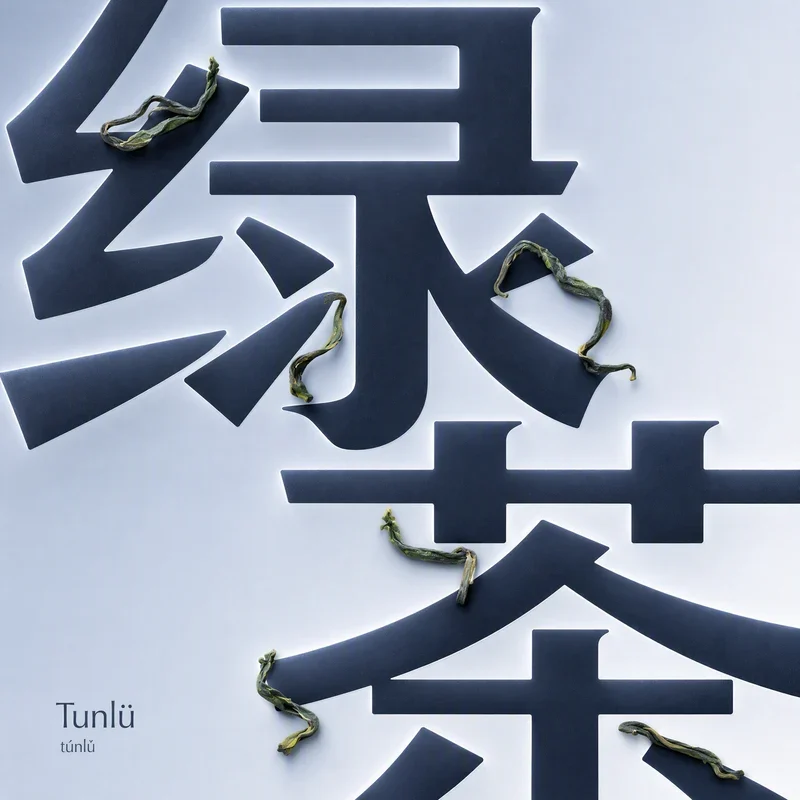
Name Breakdown: Tunlü (屯绿) — abbreviation of Tunxi Lücha (屯溪绿茶). The character 屯 (tún) — name of Tunxi city; 绿 (lǜ) — «green», indication of tea type. Thus, this is a toponymic name: «green tea from Tunxi». Alternative name — meicha (眉茶, méichá, «eyebrow tea»), by the shape of the finished leaf.
Cultivar: Traditional raw material base — local population varieties (群体种, qúntǐzhǒng), formed over centuries of natural selection in southern Anhui conditions. These are genetically diverse small-leaf bushes adapted to mountain climate. In modern production, zoned cultivars are also used, including local selections.
Picking: Main season — spring (March — April); for highest grades (特珍, te zhen) early spring raw material is used. Summer and autumn harvest goes to production of mass grades.
Pluck Standard: One bud and one-two leaves (一芽一叶至一芽二叶, yī yá yī yè zhì yī yá èr yè) for highest categories; one bud and two-three leaves for mass grades. Selection of shoots with well-developed, fleshy buds and white down is required.
Climate: Subtropical monsoon, with abundant precipitation (1400–1800 mm per year) and frequent fogs, especially in spring. Average annual temperature 15–16°C. The difference between day and night temperatures in the mountains promotes accumulation of amino acids and aromatic substances.
Soil: Acidic and slightly acidic mountain yellow and red-yellow soils predominate (pH 4.5–5.5) with high organic content and good drainage — optimal conditions for tea bushes.
Tea plantations are located predominantly on the slopes of southern Anhui mountains, at the foot of the Huangshan range and along the banks of the Xin'an River (新安江, Xīn'ānjiāng). Growing altitude — from 200 to 800 m above sea level; best lots originate from heights of 400–700 m.
A significant part of plantations is located in mixed forest zones. Forest cover of the region exceeds 82%, ensuring clean air and water. Many farms adhere to ecological farming principles.
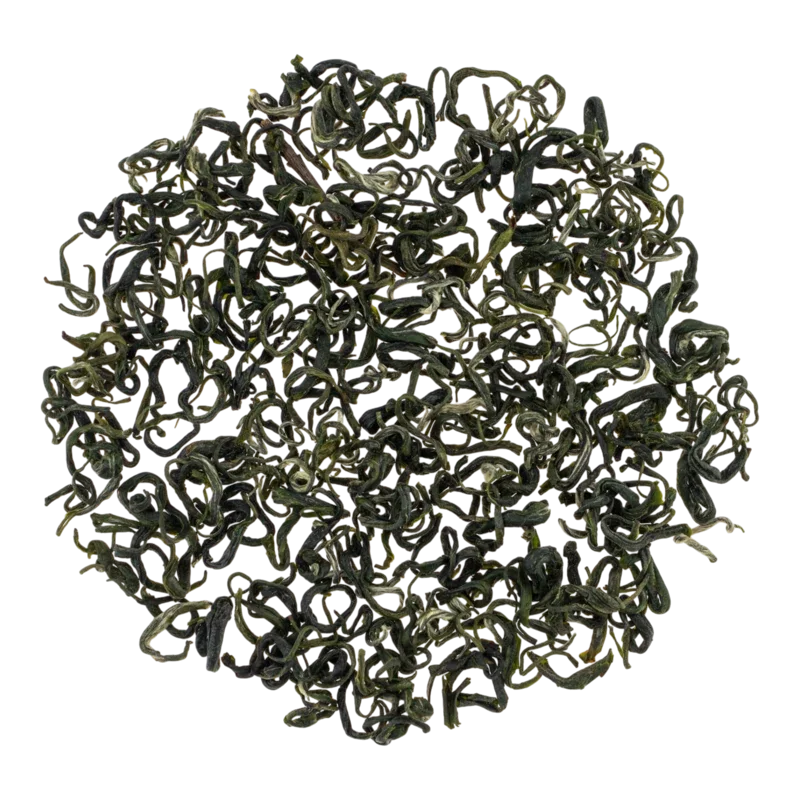
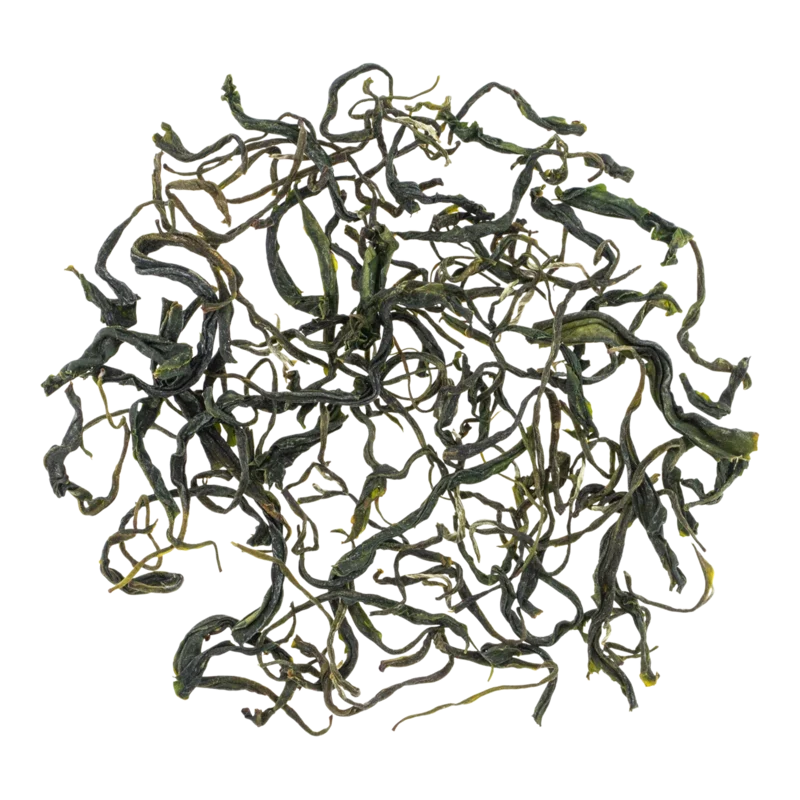
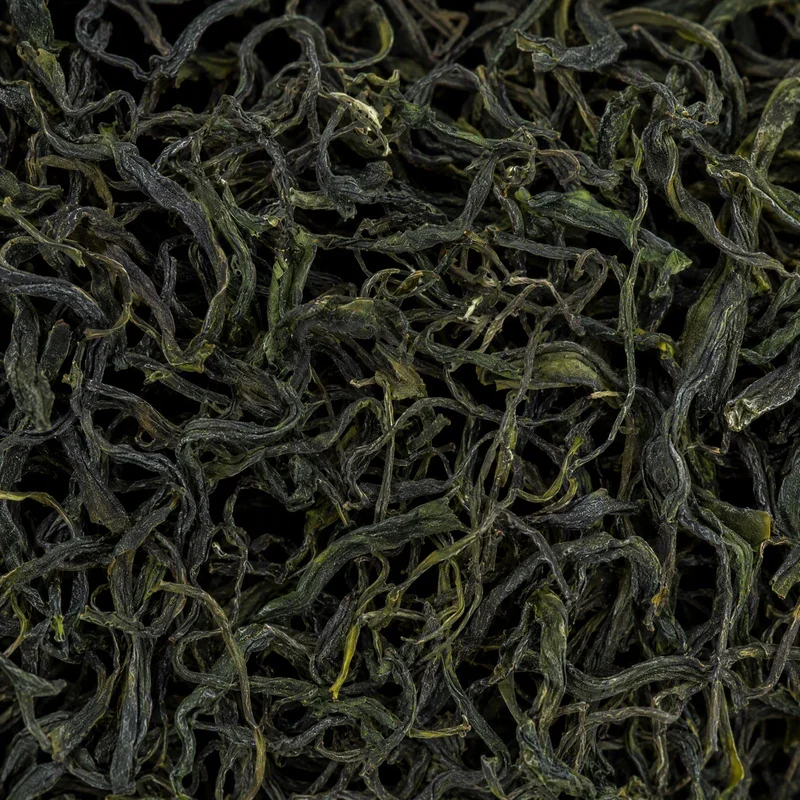
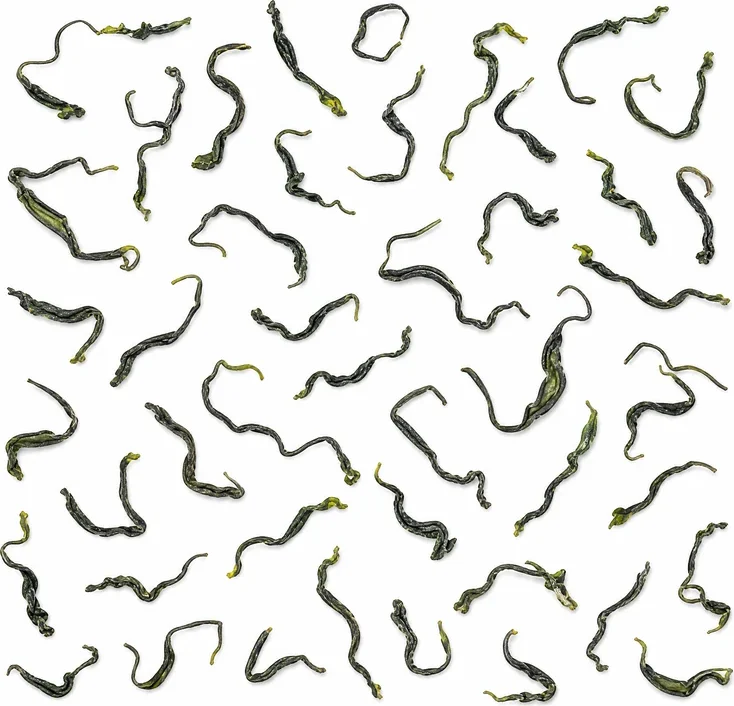
Dry Leaf Appearance: Thin, tightly twisted strips, slightly curved like eyebrows (hence the name «meicha»). Color — dark green with silvery-gray bloom (起霜, qǐshuāng — «covered with frost»), oily luster. In highest grades, bud tips are clearly visible.
Dry Leaf Aroma: Pronounced, clean, with distinct chestnut notes (栗香, lìxiāng) — the signature aromatic profile of Tunlü. Light floral and sweet undertones may be present.
Liquor Aroma: High, clean, persistent. Chestnut-nutty profile dominates, complemented by soft grassy-floral tones. Aroma persists through several infusions.
Liquor Color: Green or yellow-green, clear, transparent, with bright luster.
Spent Leaves: Leaves unfold evenly, soft, elastic, greenish-yellow color with well-preserved structure.
Taste: Rich, full-bodied, with good density (醇厚, chúnhòu). Sweet, fresh, without pronounced bitterness or astringency in properly brewed tea. Aftertaste is long, clean, with returning sweetness (回甘, huígān) and refreshing finish.
Amino Acids: Total content — 2.5–4% of dry mass, with L-theanine predominating (L-茶氨酸). Relatively high amino acid level is due to mountain terroir and frequent cloudiness, reducing photosynthesis intensity. It is precisely amino acids that give the tea its characteristic sweetness and fullness of taste.
About 2.5–3.5% of dry mass (approximately 30–45 mg per 150 ml cup with standard brewing). Together with theanine provides mild, prolonged tonic effect.
Chestnut aroma is primarily due to pyrazines and Maillard reaction products formed during pan-fired fixation (shaqing). The aromatic complex also includes linalool, geraniol, cis-jasmone and other terpenoids.
Minerals: Potassium, magnesium, manganese, zinc, fluorine, phosphorus. Individual production zones (Ziyang, adjacent areas) are distinguished by increased selenium content in soils, which is reflected in tea composition.
Polyphenols: Tea polyphenol content in Tunlü is about 18–24% of dry mass. Main catechins — EGCG, EGC, ECG — provide antioxidant activity and form the basis of the taste profile.
Vitamins: Vitamin C (30–60 mg/100 g dry tea), B vitamins (B1, B2, B6), vitamin E, vitamin K.
Combination of caffeine and L-theanine provides alertness without sharp peaks — gentle increase in concentration and mental activity, characteristic of quality green teas.
High catechin content (especially EGCG) promotes neutralization of free radicals and slowing of cellular oxidative stress.
Moderate tannicity stimulates digestive enzyme production; traditionally considered good accompaniment to food.
Green tea polyphenols are associated with cholesterol level normalization and maintaining vascular elasticity.
Vitamin C and catechins strengthen the body's protective mechanisms.
Fluorine and catechin content provides antibacterial action, promoting caries prevention.
L-theanine improves attention quality and reduces anxiety, complementing caffeine's stimulating effect.
«Especially precious» — highest grade. Thin, even, tightly twisted leaves with silvery bloom and clearly visible buds. Grades: special (特级), first (一级), second (二级).
«Precious eyebrow» — main export grade. Grades from first to fifth, plus «ungraded» (不列级).
«Rain tea» — small fraction formed during sifting.
«Tribute harmony» — leaves twisted into pellets. Grades: Tè Gōng (特贡), first — third, plus ungraded.
«Elegant eyebrow» — coarser, lighter leaves. Grades: special, first — third.
Flat leaf fragments — most mass and cheapest grade.
Tea Amount: 3 g per 150 ml water (European method); 5–6 g per 100–120 ml (gongfu brewing method in gaiwan).
Teaware: Porcelain or glass gàiwǎn (盖碗, gàiwǎn), glass cup, porcelain teapot. Glass teaware allows observation of leaf unfolding and liquor color.
Water Temperature: 80–85°C for highest grades (特珍, 珍眉 high grades); 85–90°C for denser mass grades (贡熙, 秀眉).
Neighboring Zhèjiāng green tea (杭绿, 温绿, 遂绿) also belongs to the meicha category. Zhejiang production is generally somewhat lighter and more delicate in taste, with more pronounced floral notes, while Tunlü is valued precisely for body fullness, chestnut depth and oily density.
Green tea from neighboring Wuyuan County (now Jiangxi Province, historically — Huizhou). Close relative of Tunlü by terroir and technology, but slightly lighter in taste. Historically, part of Wuyuan raw material also went to Tunxi for processing and export under the «Tunlü» brand.
Direct predecessor of Tunlü. Songluo Cha is produced from more tender raw material (one bud — one leaf) and does not undergo complex refining stage. Taste is finer, aroma cleaner, but without the characteristic chestnut depth of Tunlü.
Guangdong meicha — more southern and heavy in character, with less pronounced aromatic profile. Tunlü is considered the «northern» and most refined variety of meicha.
Price Category: Tunlü covers a wide price range — from affordable mass grades (秀眉, 雨茶), comprising the export base, to premium Tè Zhèn Tèjí (特珍特级), whose price is significantly higher. Main cost factors: harvest season (spring — more expensive), refining grade, production year, specific county of origin.
No reviews yet. Tell us what you think of this tea.
Rate this tea and share your impressions. We review each submission before publishing it.