Brewing
Gongfu brewing
- Water temperature
- 75 °C
- Tea amount
- 5 g
- Water volume
- 100 ml
- First steep
- 10 s
- Time added per infusion
- 5 s
- Infusions
- 3

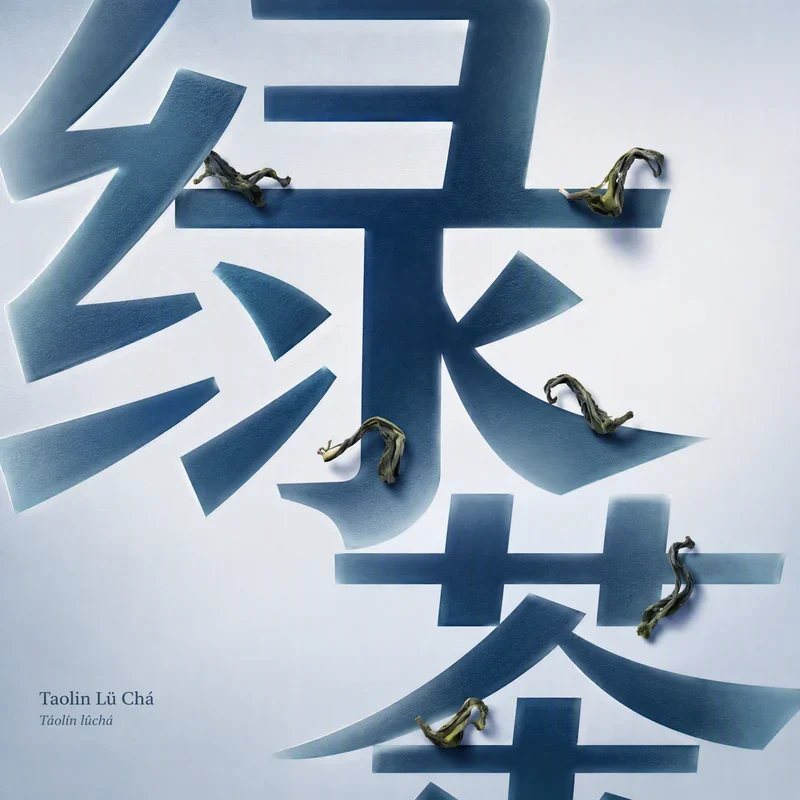
Táolín lǜchá
Choose a brewing method. Start with the recommended quantities and time, then adjust to taste.
Brewing
Brewing
Taste
Tea encyclopedia
Category: Regional famous tea (地方名茶). Linxiang-Taolin is among the main tea-producing territories of Hunan, historically connected to the «万里茶道» (Great Tea Road). Green teas from the region have repeatedly received provincial awards.
Category: Regional famous tea (地方名茶). Linxiang-Taolin is among the main tea-producing territories of Hunan, historically connected to the «万里茶道» (Great Tea Road). Green teas from the region have repeatedly received provincial awards.
Coordinates: Approximately 29.40° N, 113.48° E.
Origin: China, Húnán Province (湖南, Húnán), Yuèyáng Prefecture (岳阳, Yuèyáng), Línxiāng City (临湘市, Línxiāng Shì), Táolín Township (桃林镇). Adjacent to the tea district are also Hengpu Township (横铺乡) and Zhongfang Township (忠防镇), with the combined area of tea gardens in the region exceeding 5,000 mu (over 333 hectares) in Taolin alone.
Type: Green tea (unoxidized), subcategory — pan-fired (炒青, chǎoqīng).
Cultural Significance: The Linxiang-Taolin district is located at the junction of Hunan and Hubei provinces, on the border between «lake» and «mountain» tea regions. Tea culture here is historically connected to the «tea road»: through Taolin and Neshizhen townships, tea was transported to the Yangtze and further north. The most important trading posts — Neshizhen (聂市镇) and Yanglousi (羊楼司镇) — were Hunan's largest tea factories, where dozens of merchant houses engaged in purchasing, pressing, and shipping tea to Russia, Mongolia, and Central Asia. Linxiang is also known as the «Capital of Tea and Bamboo» (茶竹之乡). Annual spring tea fairs and tasting competitions in Yueyang are important events for local producers, where Taolin Lü Cha is regularly presented alongside Baishi Maojian and other regional green teas.
History: Linxiang is one of Hunan's oldest tea counties, whose history is closely connected to the Great Tea Road. From the Qīng dynasty (清, 1644–1912), beginning with the Kāngxī reign (康熙), Línxiāng was a major center for production and trade of border tea (边茶): qingzhuan (青砖) and fuzhuan (茯砖) from Línxiāng were exported to Russia and Mongolia through trading posts at Neshizhen (聂市镇) and Yanglousi (羊楼司镇) — key nodes of the «万里茶道». Táolín Township received its name in the early Míng dynasty (明, 1368–1644), when an ancestor of the Yǔ clan (喻) from Jiangxi, having relocated here, discovered a dense grove of wild peach trees on a river islet — hence «Taolin» (桃林, «Peach Grove»). Under the Qing, the post of Táolín Inspector (桃林巡检司) was established. Taolin's tea gardens supplied raw material for both dark and green tea production in the region.
Name Breakdown: «Taolin» (桃林) — «Peach Grove» — the historical name of the township. «Lü Cha» (绿茶) — green tea. Full meaning: «Green tea from Peach Grove» — a poetic and geographically precise name, echoing the image of «Peach Blossom Spring» (桃花源) from the famous text by Tao Yuanming.
Cultivar: Local population small-leaf plantings (群体种), adapted to the subtropical climate of northeastern Hunan. These genetically diverse lines were formed over centuries of natural and directed selection under conditions of «intermediate» terroir between lake lowlands and mountain massifs. Part of the plantations are planted with improved clonal varieties introduced from neighboring provinces (Zhejiang, Fujian) to increase yield and quality stability. Nevertheless, connoisseurs prefer tea from old population plantings for their more complex and deep flavor profile.
Picking: Spring (late March — mid-April) for premium grades; summer-autumn — for mass production. Spring raw material is predominantly used for Taolin Lü Cha.
Pluck Standard: Bud with one to two upper leaves (一芽一叶 — 一芽二叶). For highest grades — single bud or bud with one leaf.
Raw Material: Whole, freshly picked, undamaged, uniform in size. Rapid delivery to the workshop to prevent spontaneous oxidation.
Altitude: 100–400 m. Tea gardens are located on gentle hills with good drainage.
Climate: Subtropical monsoon, with pronounced influence from Dongting Lake. Average annual temperature ~16.5 °C. Precipitation 1,300–1,500 mm/year. Abundant spring fogs create diffused light conditions — ideal for amino acid accumulation. Frost-free period ~260 days. Hot and humid summers, relatively mild winters — conditions under which tea bushes receive sufficient vegetation period and accumulate a rich set of internal substances. Daily temperature amplitude in mountain areas is higher than on the plain near the lake, which promotes formation of more aromatic leaves.
Soil: Red-yellow acidic soils (红黄壤), typical for hilly areas of Hunan. pH 4.5–6.0. High organic matter content due to abundant vegetation. Good natural drainage — excess moisture does not accumulate.
Ecologically oriented tea cultivation with minimal application of agrochemicals. Proximity to the Great Tea Road zone stimulates certification of «green» and «safe» (无公害) production. Timely pruning and shade control (natural) are standard agricultural practices.
Hand-picking in the morning, in dry weather. Raw material is delivered to the factory in bamboo baskets.
Leaves are spread in a thin layer (3–5 cm) in shade for 4–8 hours. The leaf loses 15–20% moisture, becomes soft, a light fresh aroma appears. Turned twice for uniformity.
Pan-firing at 160–200 °C for 3–5 minutes. Enzymes are inactivated, the foundation of chestnut aroma is formed. Both manual and rotary machine methods are used. Readiness criterion: leaf is dark green, soft, slightly sticky, stem does not break, «raw» green smell disappears, tea aroma appears.
Mechanical destruction of cell walls, formation of primary shape. 10–15 minutes on a roller or by hand.
If necessary — additional shaping (理条, lǐ tiáo — «straightening strips»). For Taolin Lü Cha, the shape is usually thin twisted «strips» (条形), although individual enterprises produce flat variants.
Final drying at 80–100 °C to moisture content ≤6.5%. Aroma stabilization, removal of residual grassiness, fixation of chestnut-sweet tone. Some enterprises use two-stage drying: primary at higher temperature (~100 °C) for rapid removal of main moisture, then final «finishing» (提香, tí xiāng — «lifting aroma») at 70–80 °C for maximum development of chestnut notes. Finished tea is brittle, when rubbed between fingers crumbles into fine powder, indicating proper moisture level.
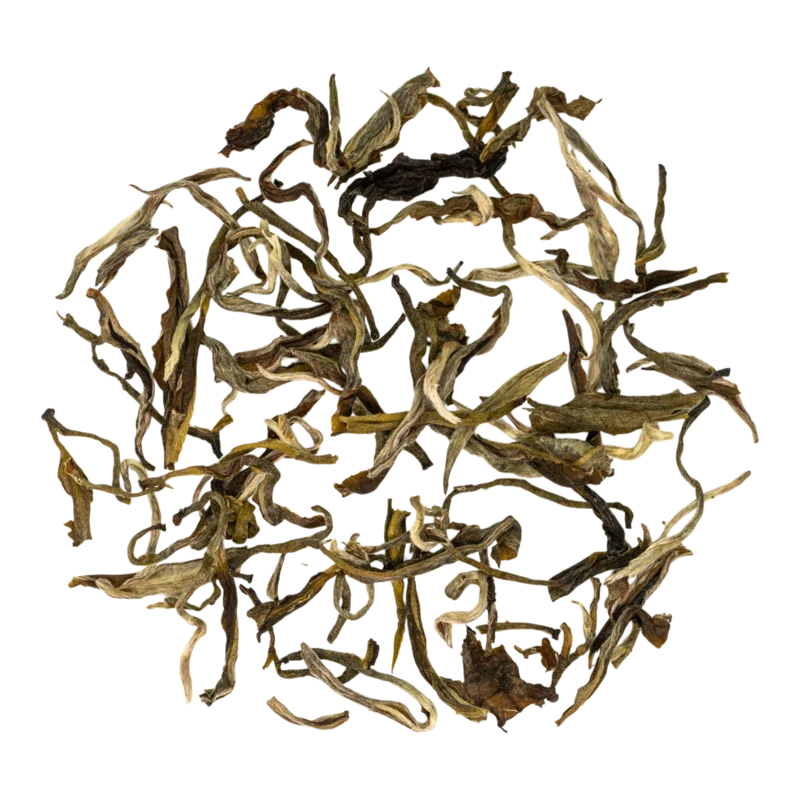
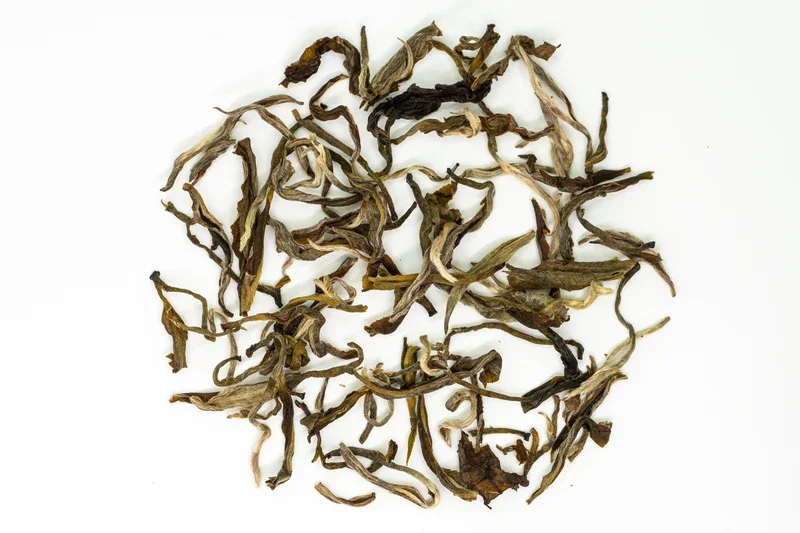
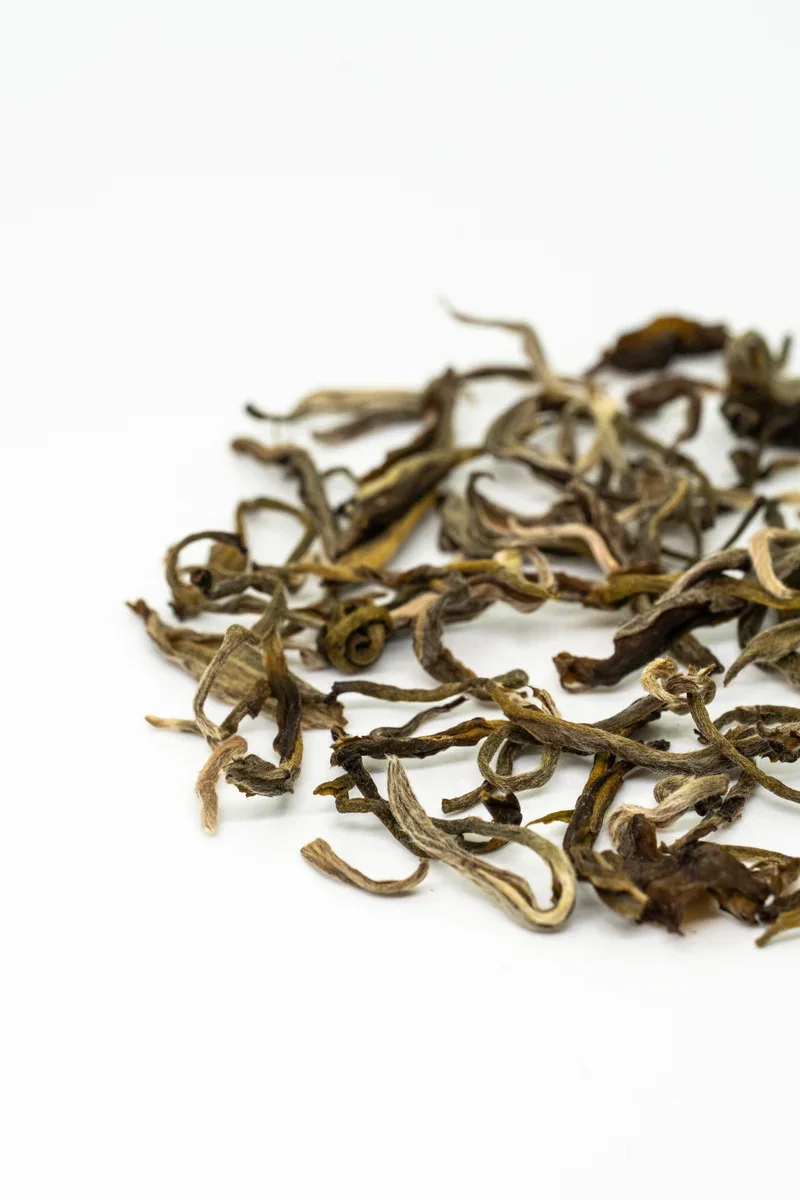
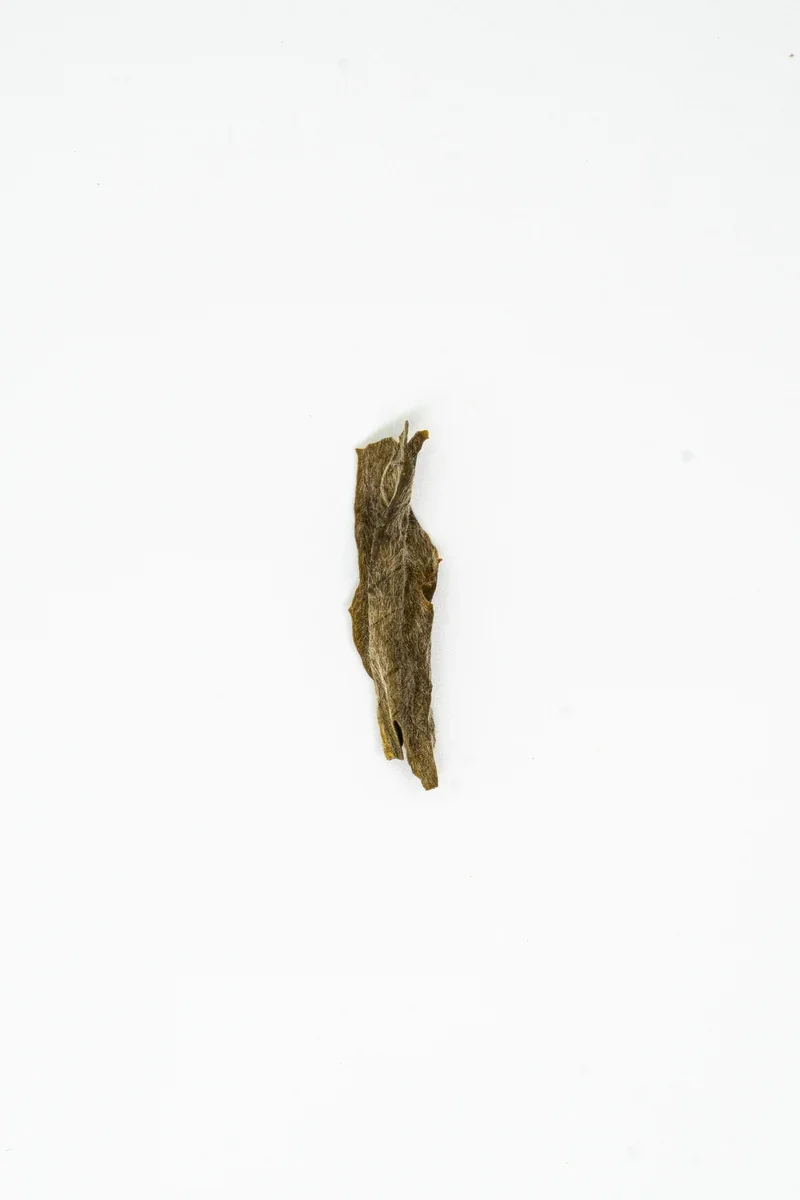
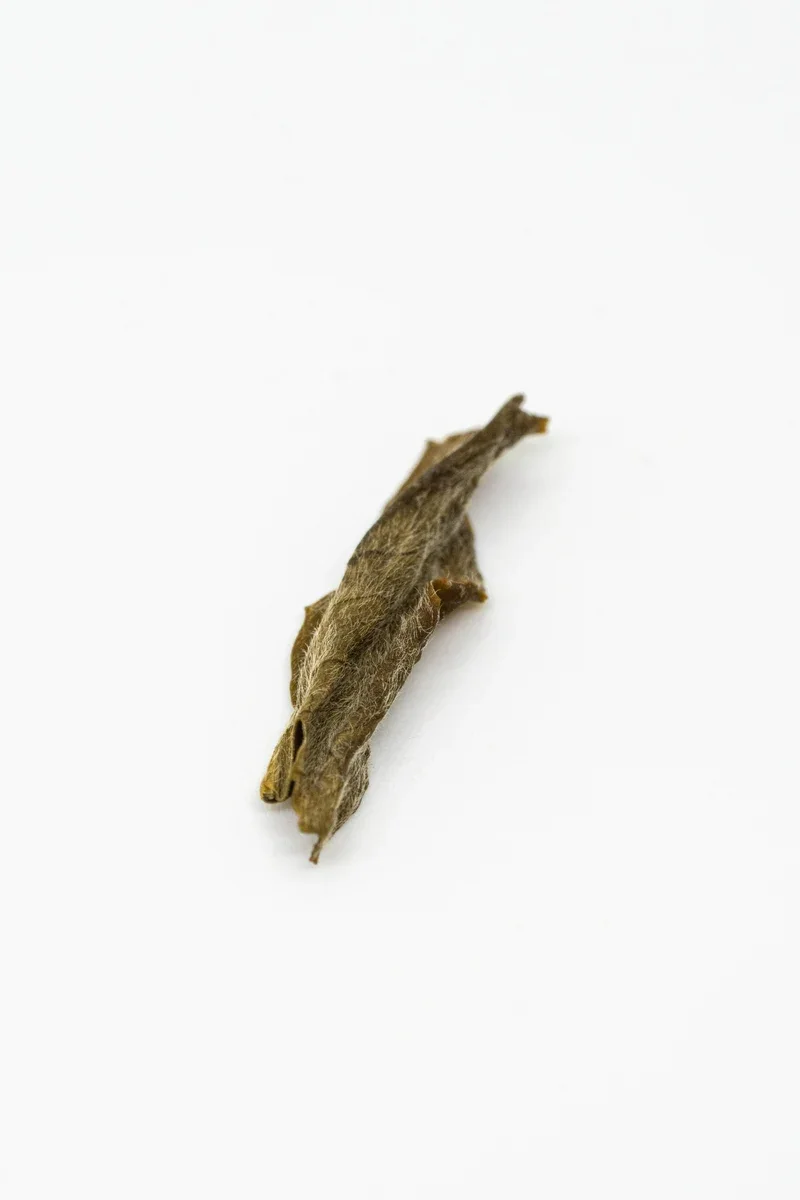
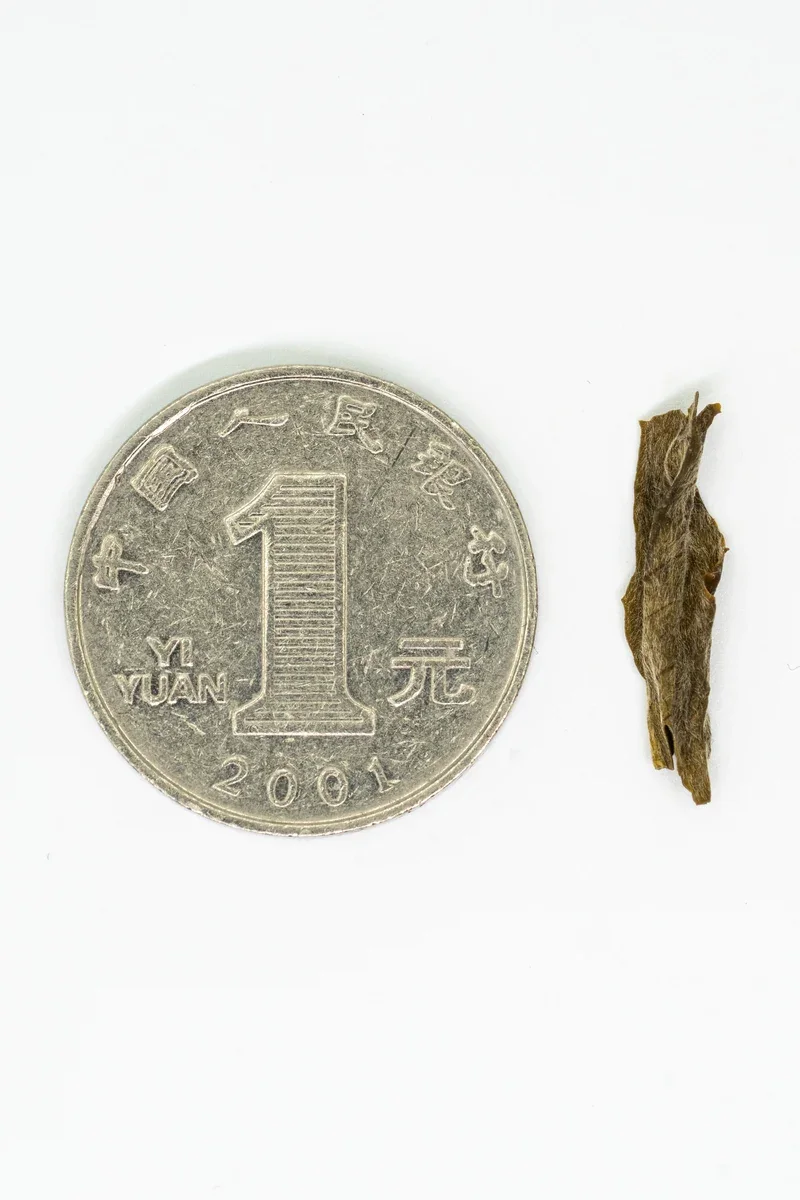
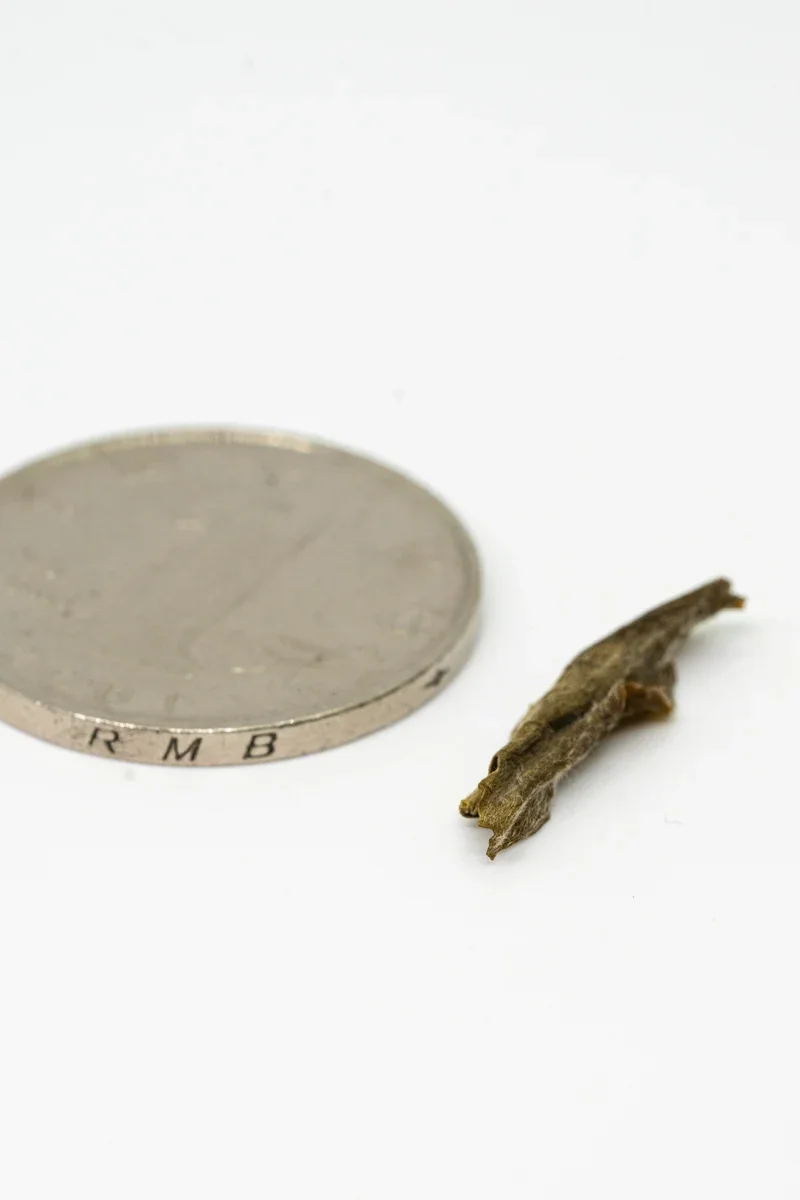
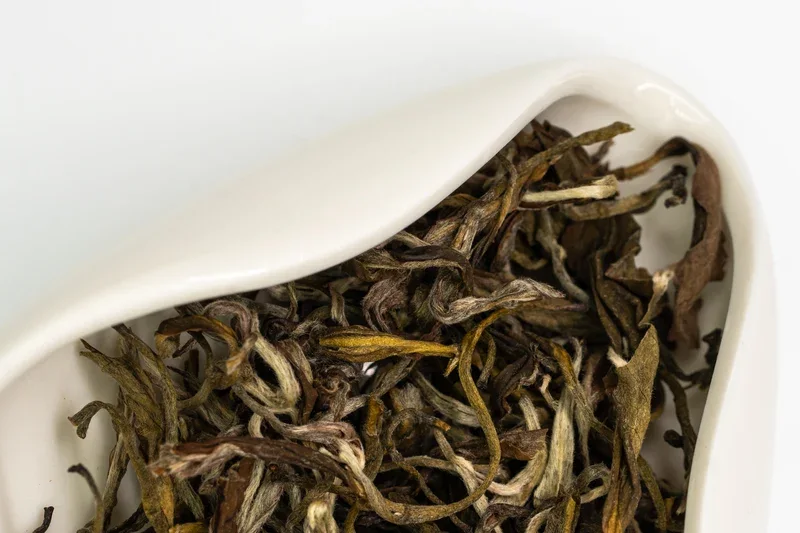
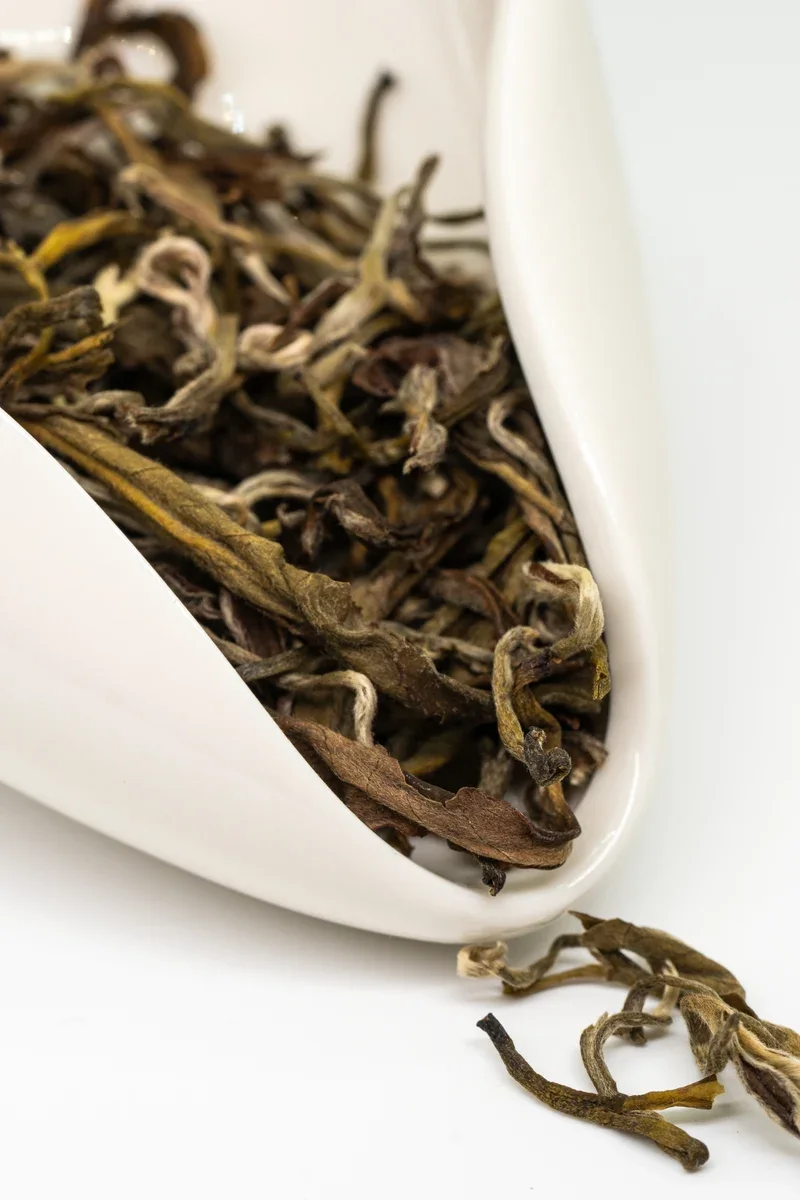
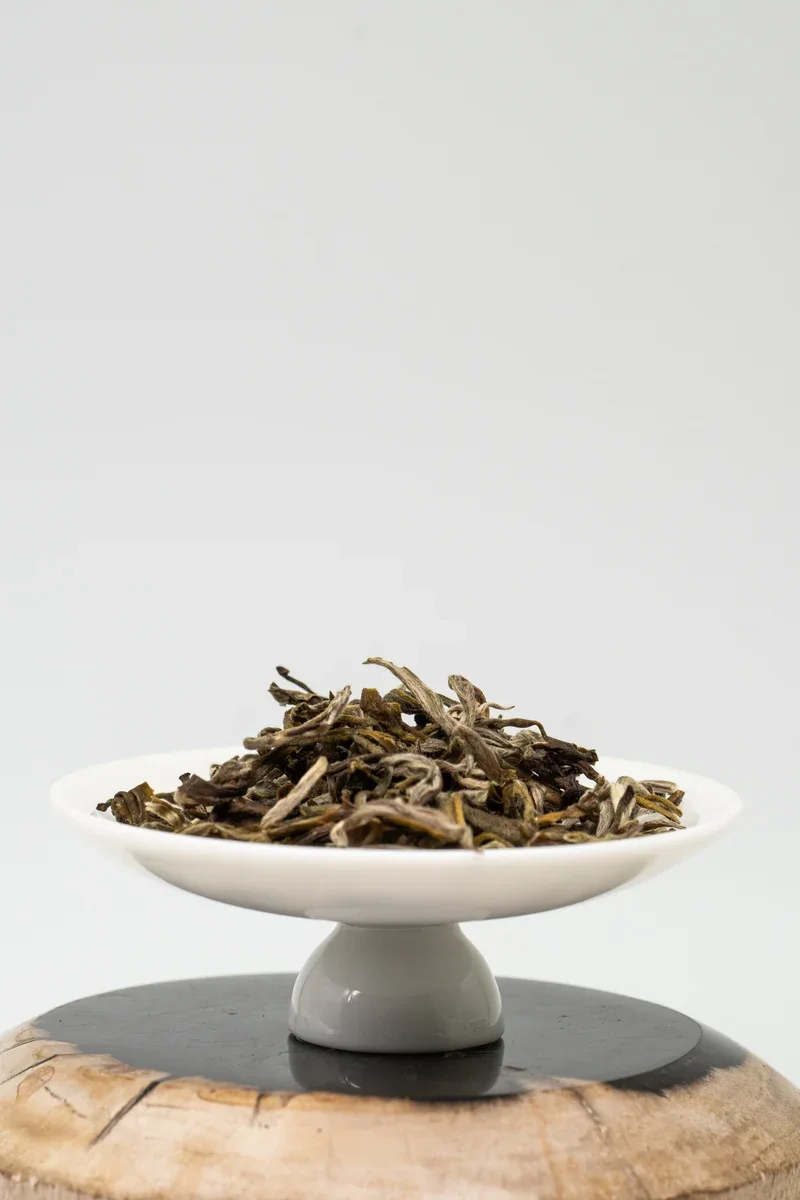
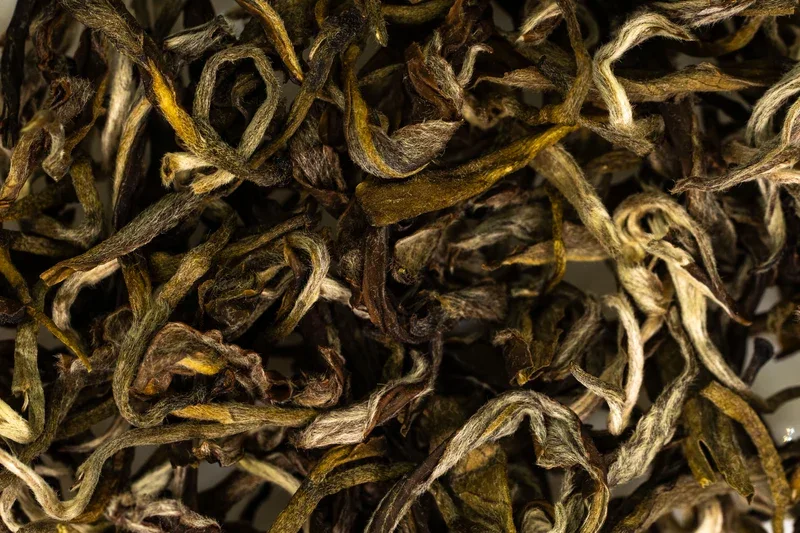
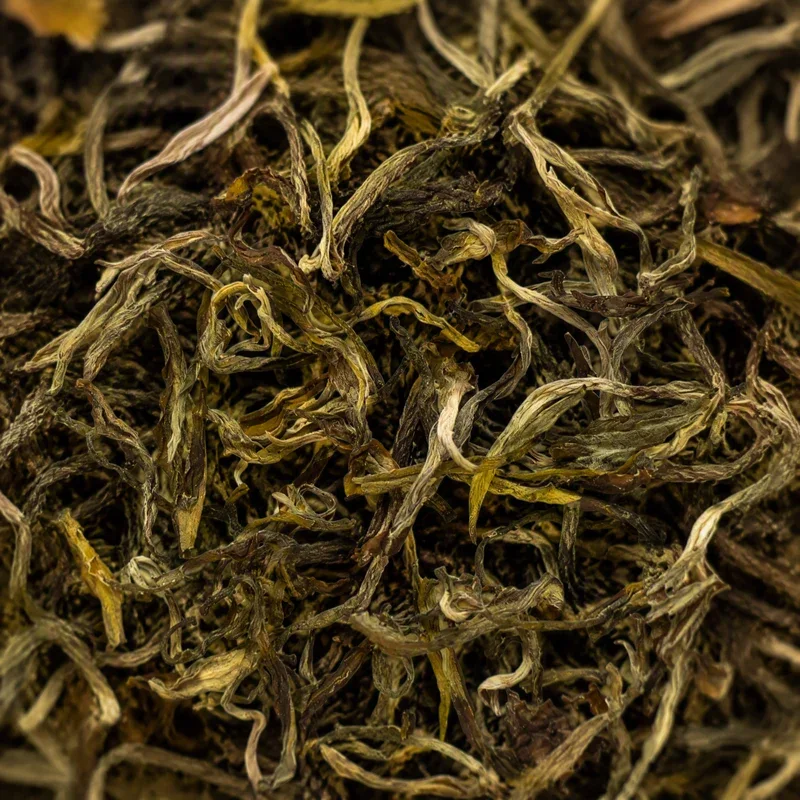
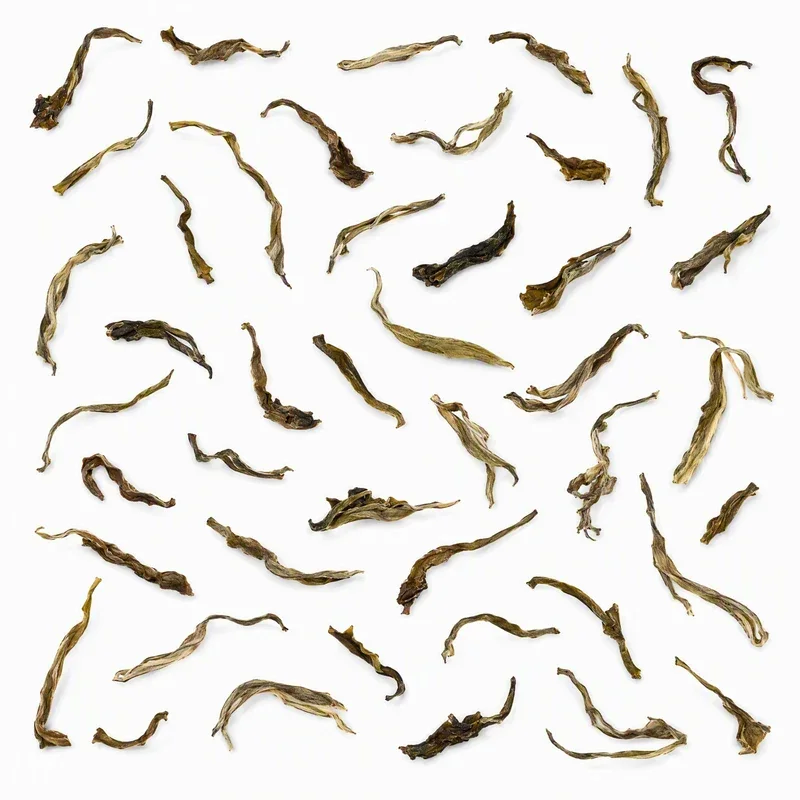
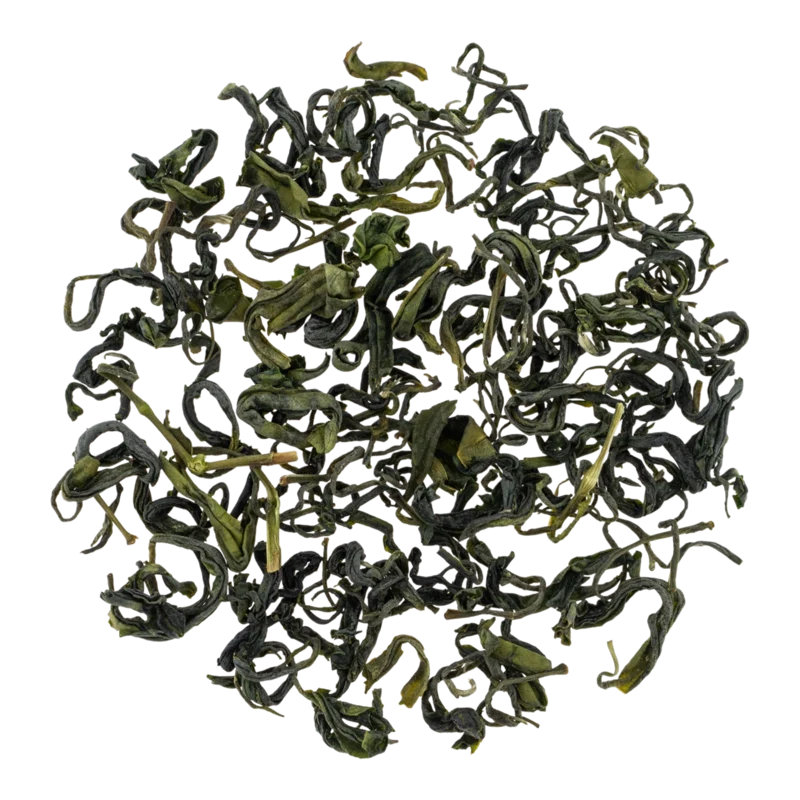
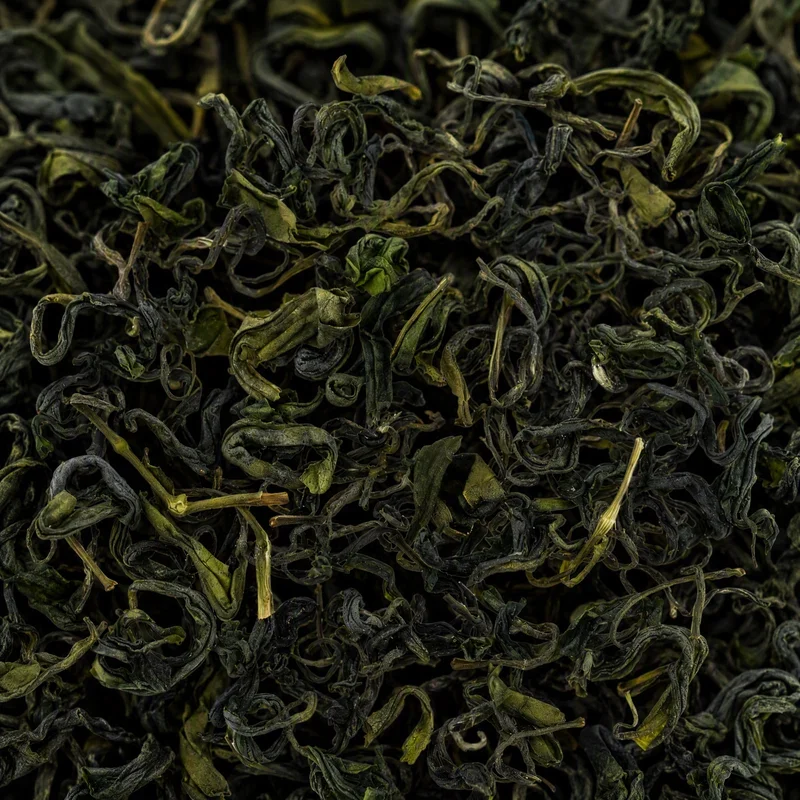
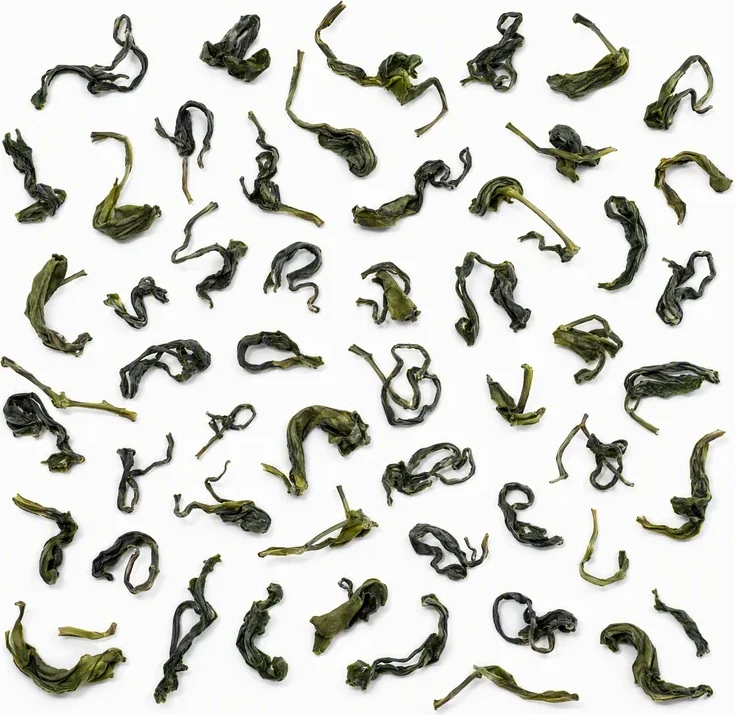
Dry Leaf Appearance: Thin, tightly twisted «strips» (条索紧结), uniform in size. Color — rich dark green with light luster. Higher grades are characterized by delicate silvery down on buds.
Dry Leaf Aroma: Fresh, clean, with noticeable chestnut-nutty notes (栗香) — the region's calling card. Background — light, grassy-floral.
Liquor Aroma: High, bright, persistent. Chestnut-nutty theme is complemented by fresh green note. Aroma does not disappear over 3–4 infusions.
Liquor Color: Green or yellow-green, bright, clear (绿亮明净).
Spent Leaves: Tender green, uniform, leaves well-opened, resilient.
Taste: Fresh, soft and «juicy» (鲜爽, xiānshuǎng). Sweetness is pronounced, astringency minimal. Body medium-light, texture smooth. Aftertaste clean, refreshing, with returning sweetness (回甘).
Alkaloids: Caffeine (~2.5–3.5%), theobromine, theophylline — in trace amounts.
Amino Acids: Elevated content compared to average indicators for regional green teas — result of subtropical «lake» microclimate with abundant fogs and diffused light. L-theanine is the key component providing sweetness and umami note.
≥45% (according to source) — above average for green teas, indicates high taste saturation and resistance to multiple brewing.
Essential Oils: Chestnut-nutty and grassy-floral aromatic profile is formed by a complex of pyrazines, linalool, geraniol, and other volatile compounds.
Minerals: Zinc, selenium (noted in source), potassium, manganese, fluorine.
Polyphenols: Moderate content. Main ones — EGCG, ECG. Ratio of polyphenols to amino acids is optimal for soft, sweet taste.
Vitamins: C, B₁, B₂, E. Fresh green tea from early spring raw material is one of the best plant sources of vitamin C.
Catechins and vitamin C are powerful neutralizers of free radicals, protecting cells from oxidative stress.
Synergy of caffeine and L-theanine provides steady alertness, improved attention and memory without anxiety.
Green tea polyphenols help maintain healthy cholesterol levels and vascular elasticity.
Gentle stimulation of digestive enzyme secretion, improved peristalsis. Good choice for accompanying light meals.
Polyphenols enhance antiviral and antibacterial activity of the immune system.
Fluorine and catechins have antibacterial action, promote caries prevention.
Green tea antioxidants (EGCG, vitamin C) help protect skin from photoaging and UV radiation effects.
Catechins combined with caffeine promote metabolism acceleration and fat oxidation — an effect confirmed by numerous clinical studies of green tea.
Tea Amount: 3 g per 150 ml (gaiwan); 5 g per 200–250 ml (glass cup).
Teaware: Porcelain gaiwan — for precise extraction control and chestnut aroma development. Glass cup or flask — for daily tea drinking. Porcelain is preferable for delicate aroma.
Water Temperature: 75–85 °C. For delicate early spring grades — 75–80 °C; for denser leaf — up to 85 °C.
Closest «neighbor» — green tea from neighboring Hengpu Township in the same Linxiang City. Needle-shaped (条形), with pronounced silvery down and more «green», grassy aromatics. Taolin Lü Cha is more chestnut-like, drier and cleaner in aroma.
Famous yellow tea from Yueyang — completely different category (lightly oxidized). Softer, with pronounced «honey» and «corn» tone. Taolin Lü Cha is fresher, greener and more invigorating.
Regional green tea from Dongting «lake» district — finely twisted, with silvery down, soft and sweet. Profile related to Taolin Lü Cha, but Changsha Lü Cha is usually lighter and more delicate, while Taolin is slightly more saturated.
Famous green tea from western Hunan (Xiangxi). Mountain-grown, pronouncedly «green», with powerful returning sweetness and deep body. Gu Zhang Mao Jian is one of the «four great green teas of Hunan» (alongside Huangjincha, Jietancha, and Shimen Yinfeng). Taolin Lü Cha is softer and more «lake-like» in character, with less sharp flavor profile, but more accessible in price.
Regional brand of Yueyang yellow teas, including Junshan Yin Zhen and Beigang Maojian. Yellow tea is lightly oxidized, softer and more «rounded», with honey-corn notes. Taolin Lü Cha, as unoxidized green tea, is fresher, brighter in aroma and more toning.
Price Category: Medium. Early spring grade (明前茶) — more expensive; summer-autumn — more affordable. Prices lower than famous first-tier teas (Longjing, Xinyang Maojian), making Taolin Lü Cha attractive in price/quality ratio.
Price Factors: Harvest season, raw material grade, specific enterprise, hand vs. machine processing.
No reviews yet. Tell us what you think of this tea.
Rate this tea and share your impressions. We review each submission before publishing it.