Brewing
Gongfu brewing
- Water temperature
- 75 °C
- Tea amount
- 5 g
- Water volume
- 100 ml
- First steep
- 10 s
- Time added per infusion
- 5 s
- Infusions
- 3

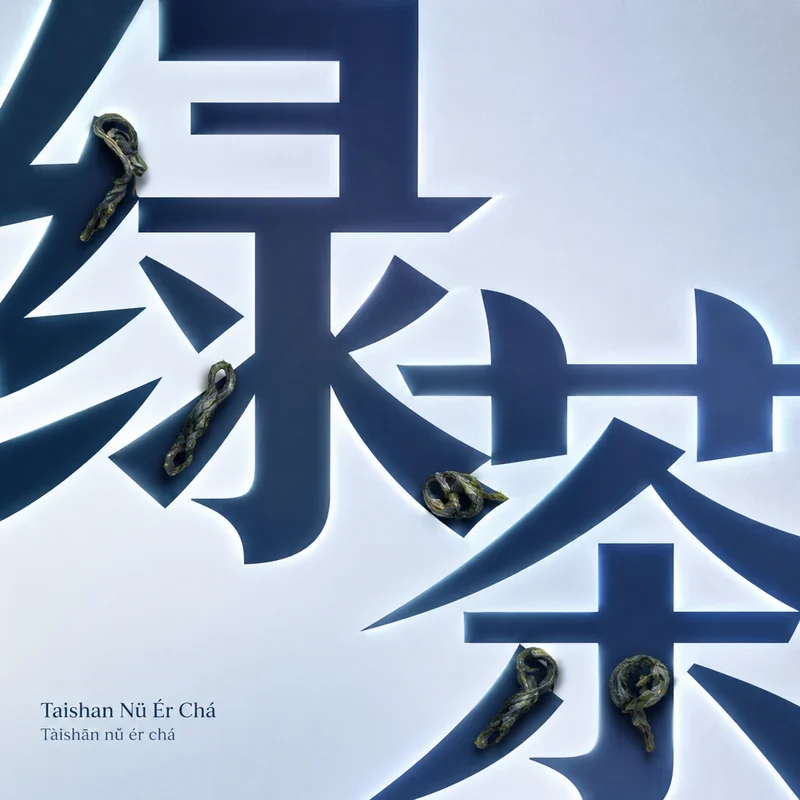
Tàishān nǚ ér chá
Choose a brewing method. Start with the recommended quantities and time, then adjust to taste.
Brewing
Brewing
Taste
Tea encyclopedia
Category: Regional famous tea of Shāndōng (山东名茶, Shāndōng míngchá). Product with geographical indication protection (中国国家地理标志产品, Zhōngguó guójiā dìlǐ biāozhì chǎnpǐn).
Category: Regional famous tea of Shāndōng (山东名茶, Shāndōng míngchá). Product with geographical indication protection (中国国家地理标志产品, Zhōngguó guójiā dìlǐ biāozhì chǎnpǐn).
Coordinates: approximately 36.25° N, 117.10° E (eastern slope of Taishan, tea plantation area).
Origin: China, Shāndōng Province (山东省, Shāndōng shěng), Tai'an Prefecture-level City (泰安市, Tài'ān shì). Tea gardens are located on the eastern slope and at the foot of Mount Tàishān (泰山, Tàishān), within the scenic area of Taishan National Park.
Type: Green tea (绿茶, lǜchá), unoxidized. Belongs to the subcategory of chǎoqīng (炒青, chǎoqīng) — tea with fixation by pan-firing in a wok.
Leaves are noticeably thicker and denser than southern green teas — a result of slower growth under conditions of large diurnal temperature differences. This ensures high extractability and resistance to multiple infusions.
Cultivar: State-approved regional varieties (国家级茶树良种, guójiā jí cháshù liángzhǒng) are used, specially selected for northern conditions. Base plantings include cold-adapted small-leaf varieties. There are also plots of local population variety (群体种, qúntǐ zhǒng).
Picking: Spring harvest (春茶, chūnchá) — the main and most valuable. Due to the northern location, the tea season is short: the dormancy period of bushes is longer than southern analogues, which promotes accumulation of amino acids and aromatic compounds. Harvest begins later than in southern provinces — typically from mid-April.
Pluck Standard: Predominantly one bud and one-two young leaves (一芽一叶 or 一芽二叶). For premium batches — only tender terminal shoots.
Altitude: 200–600 m above sea level (eastern slope of Taishan and foothill areas).
Climate: Temperate monsoon, continental in character. Average annual temperature about 12.9°C (in the main tea area). Annual precipitation — about 697 mm. Duration of frost-free period — about 195 days. Significant difference between day and night temperatures — a key factor slowing growth and enhancing amino acid accumulation.
Soil: Brown forest and mountain-meadow soils, slightly acidic (pH 5.0–6.5), rich in organic matter. The slopes of Taishan are covered with forests (high forest coverage), which ensures air purity and soil fertility. The area belongs to a water conservation zone, use of chemical fertilizers and pesticides is strictly limited.
Frequent fogs, especially in morning hours. Mountain topography creates natural shading, increasing the proportion of diffused light — a favorable factor for synthesis of L-theanine and chlorophyll.
Plantations are managed according to pollution-free and organic tea cultivation standards (无公害 / 有机, wúgōnghài / yǒujī). Joint work with Shandong Agricultural University provides scientific support: selection of frost-resistant clones, optimization of pruning, monitoring of phytosanitary conditions.
Hand-picking of tender shoots in morning hours. Raw material is promptly delivered to the factory.
Freshly picked leaves are spread in a thin layer in a cool, ventilated room for 2–4 hours to equalize moisture and begin development of volatile aromatic compounds.
Pan-firing in a wok (or mechanical drum) at high temperature. Key stage that stops enzymatic oxidation and lays the foundation for chestnut aroma. Temperature regime and duration are selected depending on leaf moisture and maturity.
Light or medium pressure — sufficient to break cell walls and release juices, but without excessive leaf damage. Duration — 10–20 minutes.
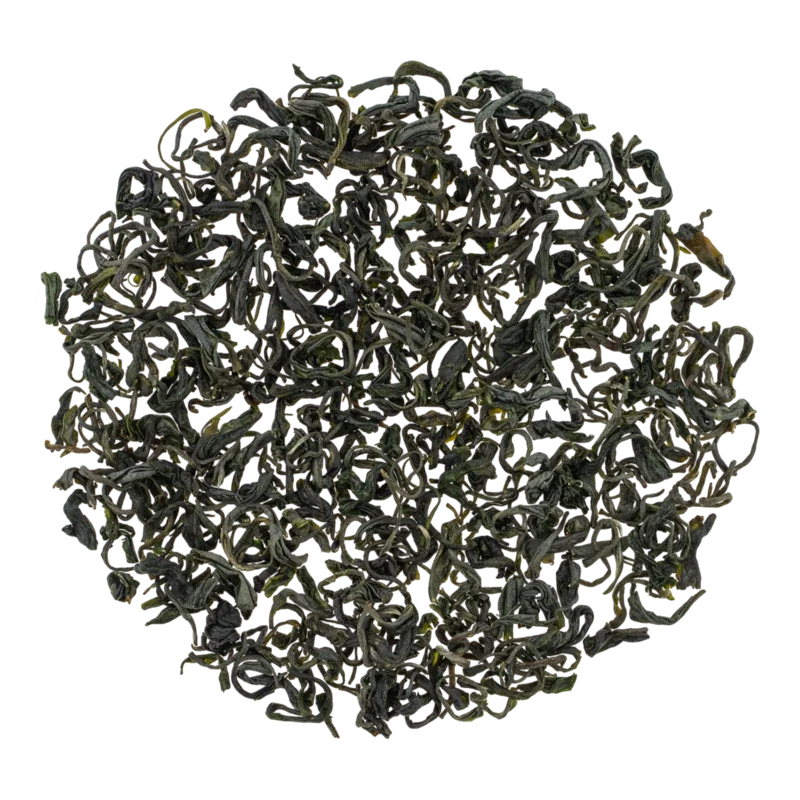
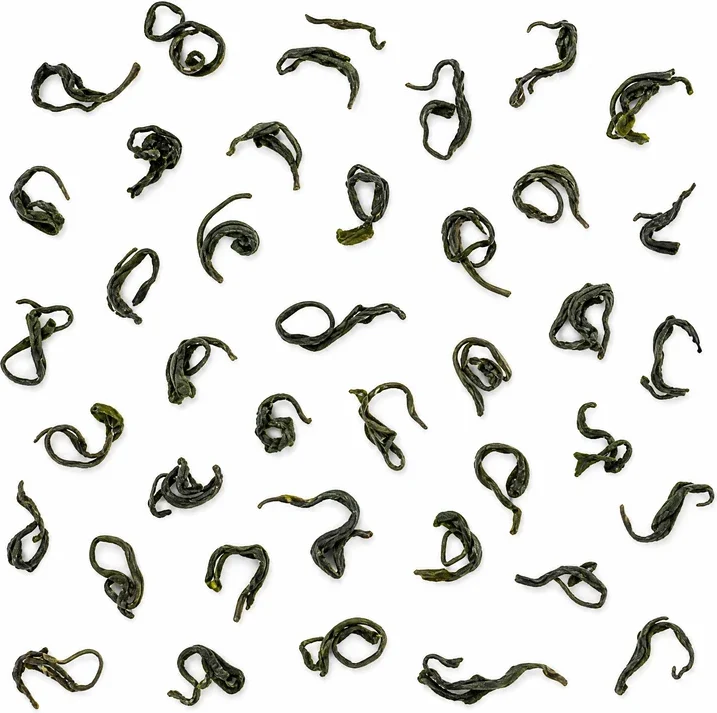
Leaves are given their characteristic curved shape (曲卷形, qūjuǎn xíng). The finished tea is described as "beautifully curved" — when brewed, leaves settle to the bottom and unfold, resembling dancing girls. A "longxing" (龙形, lóngxíng) — flat form, created based on Longjing technology — is also produced.
Final drying at moderate temperature to stable moisture content (≤6.5%). Aroma fixation and shape setting.
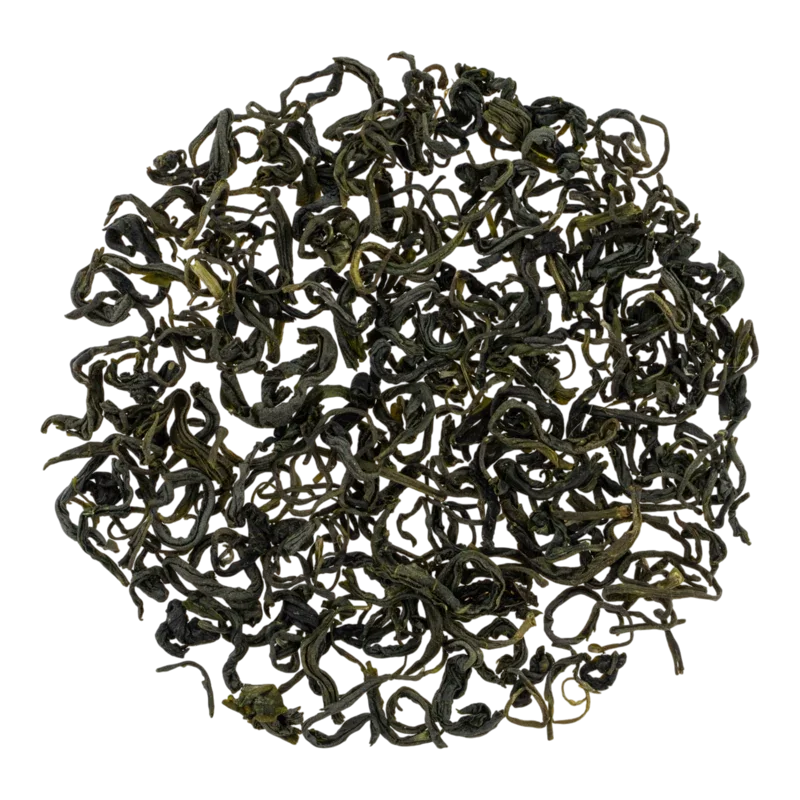
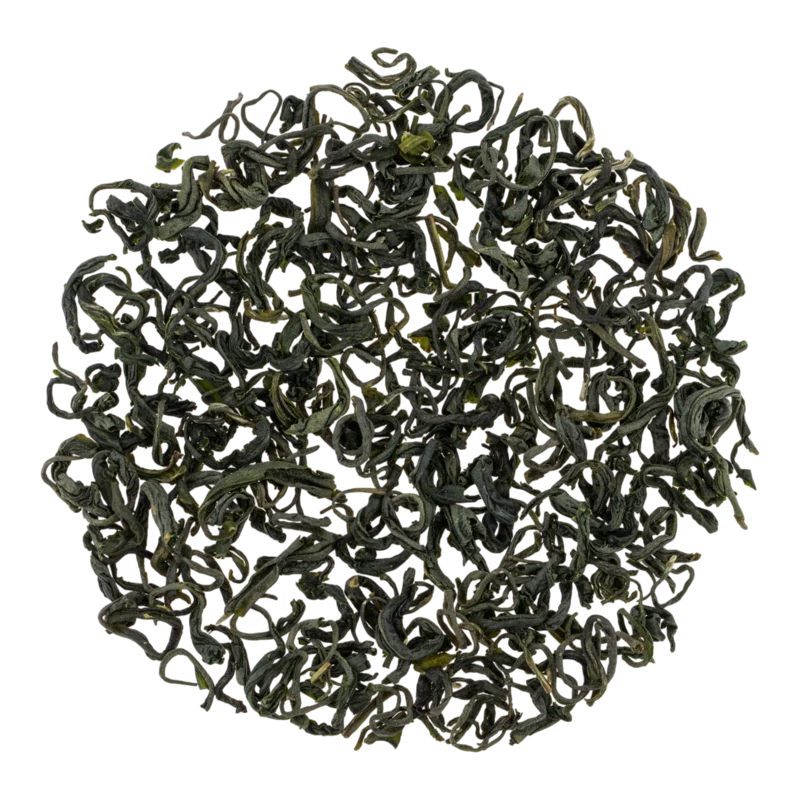
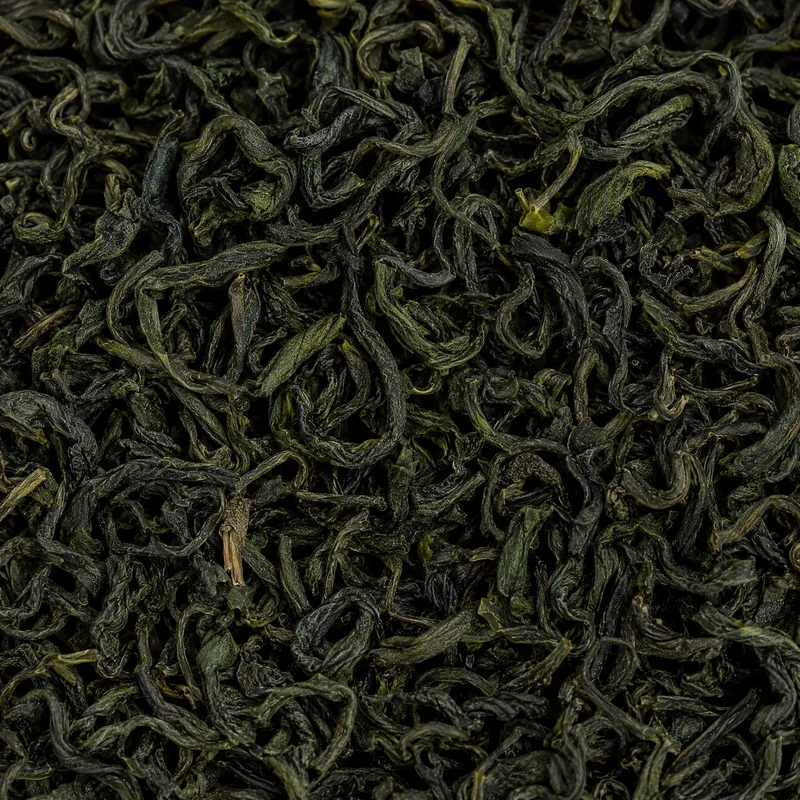
Dry Leaf Appearance: Elegantly curved, tightly rolled leaves with noticeable white down (bai hao) coverage. Color — from dark green to olive, with oily luster. Leaf is noticeably thicker and more fleshy than typical southern green teas. The "longxing" version — flat, smooth, tender green color.
Dry Leaf Aroma: Pronounced chestnut (栗香, lìxiāng) — the main aromatic signature of the tea. In nuances — roasted nuts, light sweetness of baked chestnut, undertone of fresh greenery.
Liquor Aroma: Clean, high, with chestnut dominance. As it cools, soft floral and grassy notes unfold. Aroma is persistent and prolonged.
Liquor Color: Clear, from tender green to yellow-green. With correct temperature — clean and bright, with light opalescent glow.
Spent Leaves: Leaves unfold evenly, color — tender green, uniform. Leaf is elastic, thick, "fleshy" — visual evidence of northern origin.
Taste: Full, dense, with perceptible body, but without coarseness. Sweet, with balanced freshness. Bitterness is minimal with correct water temperature. Characteristic returning sweetness (huí gān) (回甘, huígān) — sweetness that builds after swallowing. Taste unfolds gradually: first infusions are light, peak intensity comes at the 3rd–4th infusion, after which taste gradually fades — an unusual feature for green tea.
Alkaloids: Caffeine (咖啡碱, kāfēijiǎn) — content typical for green teas (2.5–3.5% of dry weight). Theobromine and theophylline are present in trace amounts.
Amino Acids: Elevated content — one of the distinguishing features. L-theanine (L-茶氨酸) provides characteristic sweetness and umami undertone. High amino acid level — result of long winter accumulation during a short growing season.
Not less than 45% — a high indicator confirming the density and richness of the liquor.
Rich in potassium (K), zinc (Zn), iron (Fe), manganese (Mn), sodium (Na) and selenium (Se). Elevated trace element content — a characteristic noted by producers as a feature of Taishan terroir.
Essential Oils: Dominant aromatic components — pyrazines and furan compounds, responsible for chestnut aroma formed during pan-firing (shaqing).
Polyphenols: Content is moderate for green tea — about 18–24% of dry weight. Main catechins: EGCG, ECG, EC, EGC. Relatively low polyphenol content compared to southern analogues explains the mildness and absence of pronounced astringency.
Vitamins: Vitamin C (ascorbic acid), B vitamins (B₁, B₂), vitamin E.
Caffeine combined with L-theanine provides mild, steady tone without sharp excitement peaks — a state of calm concentration and mental clarity.
Catechins, especially EGCG, are powerful antioxidants that help neutralize free radicals and slow oxidative stress in cells.
Traditionally, tea is attributed with the ability to soften blood vessel walls (软化血管, ruǎnhuà xuèguǎn). Polyphenols help normalize cholesterol levels and blood pressure.
Polyphenols stimulate gastric juice secretion and accelerate fat metabolism, making tea a good meal companion.
Contained fluoride and catechins suppress the activity of cariogenic bacteria.
High content of potassium, zinc, iron and manganese supplements the daily diet.
Tea polyphenols have the ability to bind certain heavy metals and radionuclides — a property significant for people working with electronic devices.
Soft, with low mineralization. Traditionally, Taishan spring water is considered ideal — clean and soft, it emphasizes chestnut sweetness.
Tea Amount: 2–3 g per 150 ml (European method); 5–7 g per gaiwan 100–120 ml (gongfu).
Teaware: Porcelain gàiwǎn (盖碗) or cup made of white/blue-white porcelain. Glass tumbler — for visual enjoyment: leaves slowly sink to the bottom and unfold, creating a picturesque scene.
Water Temperature: 80–85°C. Hotter water (>85°C) leads to yellowing of the liquor, appearance of bitterness and loss of delicate aroma. It is recommended to boil water and let it cool to the required temperature.
Container: Foil vacuum bags, tin cans or ceramic containers with tight lids. Exclude contact with air.
Enemies: Light, moisture, high temperature, foreign odors. Do not store near spices, coffee and other aromatic products.
Shelf Life: For maximum flavor — consume within 6–12 months after production. After opening packaging, it is recommended to drink within 2–4 weeks, especially with room temperature storage.
Temperature: Optimally — in refrigerator at 0–5°C, in airtight packaging. This is the standard recommendation for all green teas — low temperature slows oxidation and preserves freshness.
Another famous green tea of Shandong, from the Qingdao area. Both teas are "northern," with characteristic leaf thickness and chestnut profile. Laoshan tea often has a more pronounced "bean" (pea) shade and slightly denser body. Taishan — softer, with emphasis on pure chestnut sweetness.
The largest by volume green tea of Shandong. Grown on the coast, where climate is milder. Profile is similar — chestnut aroma, dense leaf — but Rizhao tea is slightly more astringent and less "mountainous" in character.
Famous green tea of Henan Province — also "northern" by Chinese standards. Thinner, needle-like leaf, pronounced freshness and florality. Taishan Nü Er Cha — denser and more "chestnutty," less floral.
The "Taishan Longxing" version directly orients toward Longjing in technology (flat shape). However, the Taishan variant is noticeably thicker in leaf, with coarser texture, and chestnut aroma dominates instead of Longjing's bean-floral freshness.
Give preference to products from companies with certification and geographical indication status. Reference point — "Taishan Nü'er" (泰山女儿) brand and cooperative farms of the Tai'an region.
Genuine tea has characteristic curved shape, dense, "fleshy" leaf with noticeable down. Counterfeits are often — thin, weakly rolled leaf without pronounced texture.
Signature characteristic — persistent chestnut aroma. Artificial flavoring betrays itself with sharp, "chemical" or overly sweet smell that quickly dissipates.
Clear, bright green or yellow-green, without turbidity. Muddy or dull liquor — sign of old or poor-quality raw material.
Northern tea is expensive to produce (short season, small volume). Price significantly below market — reason for suspicion: possible substitution with raw material from other regions.
No reviews yet. Tell us what you think of this tea.
Rate this tea and share your impressions. We review each submission before publishing it.