Brewing
Gongfu brewing
- Water temperature
- 100 °C
- Tea amount
- 7 g
- Water volume
- 100 ml
- First steep
- 10 s
- Time added per infusion
- 5 s
- Infusions
- 12

shuǐ xiān
Choose a brewing method. Start with the recommended quantities and time, then adjust to taste.
Brewing
Brewing
Taste
Tea encyclopedia
Category: Famous Teas of China, one of the most well-known and widely cultivated oolong varieties.
Category: Famous Teas of China, one of the most well-known and widely cultivated oolong varieties.
Originates from the Wǔyí Mountains (武夷山, Wǔyí Shān), Wuyishan City, Fújiàn Province (福建, Fújiàn). Considered a rock oolong (Yan Cha).
Originates from the southern part of Fujian Province, the Mǐnnán region (闽南, Mǐnnán), particularly from Ānxī County (安溪, Ānxī), Yǒngchūn County (永春, Yǒngchūn), and Zhāngpíng County (漳平, Zhāngpíng).
Produced in Guǎngdōng Province (广东, Guǎngdōng), Cháozhōu Prefecture (潮州, Cháozhōu), in the Phoenix Mountains area (凤凰山, Fenghuang Shan). Less well-known than the Fujian varieties.
Origin: There are two main varieties of Shui Xian:
Type: Oolong (oxidation level varies, but usually medium or high, 30-70%). Can be either dark or light, depending on the degree of roasting.
Facts: Interesting Facts
Cultural Significance: Shui Xian is one of the most popular and beloved oolongs in China. It is valued for its multifaceted flavor, bright floral aroma, and is considered a tea that brings harmony and tranquility.
History: The history of Shui Xian spans several centuries. It is believed to have been developed in Fujian Province and then spread to other regions.
There is a legend about the origin of the name "Shui Xian." It tells of a farmer who found an unusual tea bush growing by a stream. He tried tea made from its leaves and was amazed by its delicate floral aroma, reminiscent of narcissus. He named the tea "Shui Xian" - "Water Narcissus," as the tea bush grew by water and the aroma resembled narcissus.
Shui Xian leaves are generally larger than those of Tieguanyin and have a more elongated shape.
The leaf blade is dense and leathery.
The leaves have a rich dark green color.
The leaves often have a characteristic shine.
The veins are clearly visible on the leaves.
The Shui Xian cultivar is distinguished by a pronounced floral aroma, often compared to the scent of narcissus, orchid, or butter cookies.
Cultivar: For Shui Xian production, the tea bush cultivar of the same name is used - Shuǐ Xiān (水仙, shuǐ xiān). This cultivar is distinguished by:
Picking: Harvesting occurs in spring, summer, and autumn, but spring Shui Xian is considered the most valuable.
Pluck Standard: One bud and two to three upper leaves are picked, sometimes with more mature leaves.
Raw Material: High standards, only healthy, undamaged leaves are used.
Altitude: Varies by region, usually from 400 to 1000 meters above sea level and higher.
Climate: Subtropical monsoon, with warm winters and hot summers. High humidity, abundant precipitation.
Shui Xian is grown in different regions, which affects its flavor characteristics.
A unique mountain range composed of red sandstone, with a characteristic "rock" landscape. The soils are rich in minerals, which gives the tea its "rock" character ("rock rhyme (yán yùn)" (岩韵)). The climate is humid with frequent fogs. Wuyi Shui Xian is distinguished by a powerful, rich flavor and aroma, with pronounced mineral and "rock" notes.
Hilly terrain with a subtropical monsoon climate. The soils are fertile. Shui Xian from this region generally has a milder flavor and more pronounced floral notes.
Described above.
The picked leaves are spread outdoors (in sun or shade) or indoors for several hours.
The leaves are gently shaken on bamboo trays to initiate the oxidation process. This stage is conducted several times with intervals for the leaves to "rest." For Shui Xian, the intensity and duration of shaking may vary depending on the region and desired result.
The oxidation process that occurs during shaking and "resting" of the leaves. The degree of oxidation of Shui Xian can vary from medium to high (30-70%), which classifies it as a dark oolong, but lighter, "green" versions are also found.
High-temperature pan-firing to stop the oxidation process.
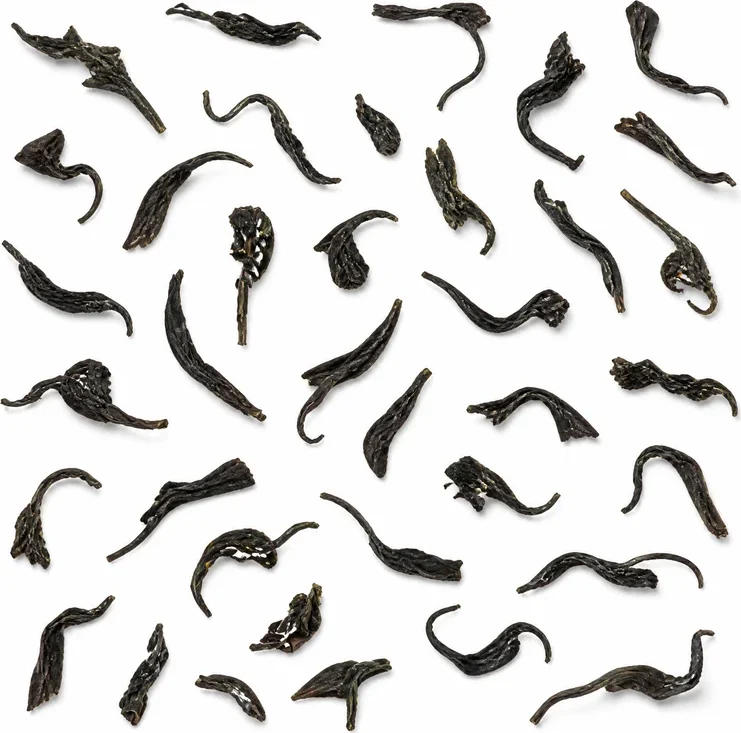
The leaves are shaped into longitudinally twisted strips. Shui Xian is usually not rolled as tightly as Tieguanyin.
The tea is dried to remove moisture.
Shui Xian can undergo both light and heavy roasting, depending on the region and producer. Roasting can be done over charcoal or in special ovens. It affects the taste and aroma of the tea, adding notes of "fire," caramel, and nuts. Wuyi Shui Xian often undergoes longer charcoal roasting than southern Fujian varieties.
The finished tea is sorted by size and quality.
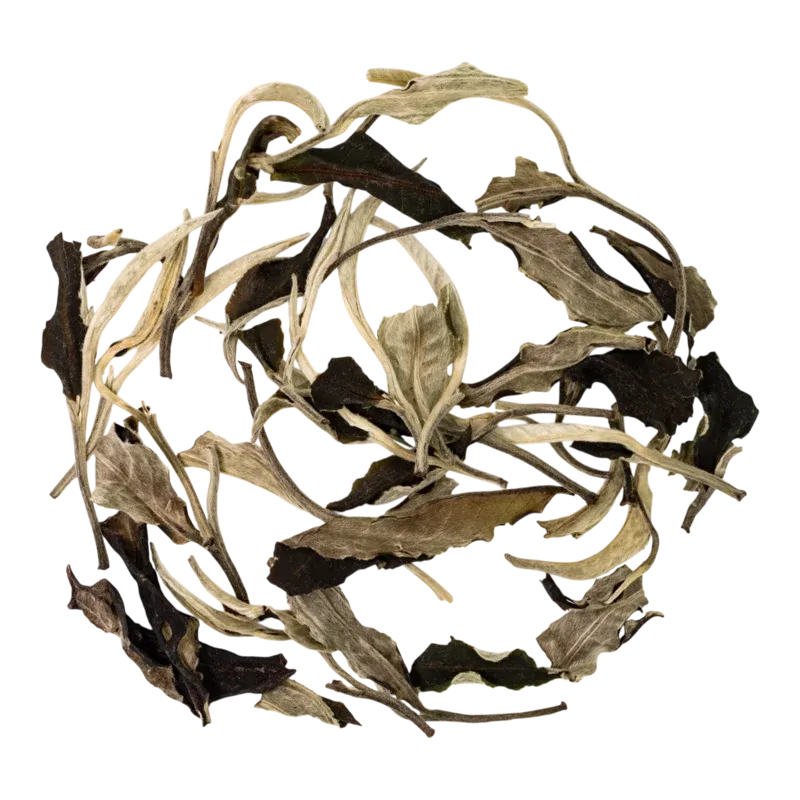
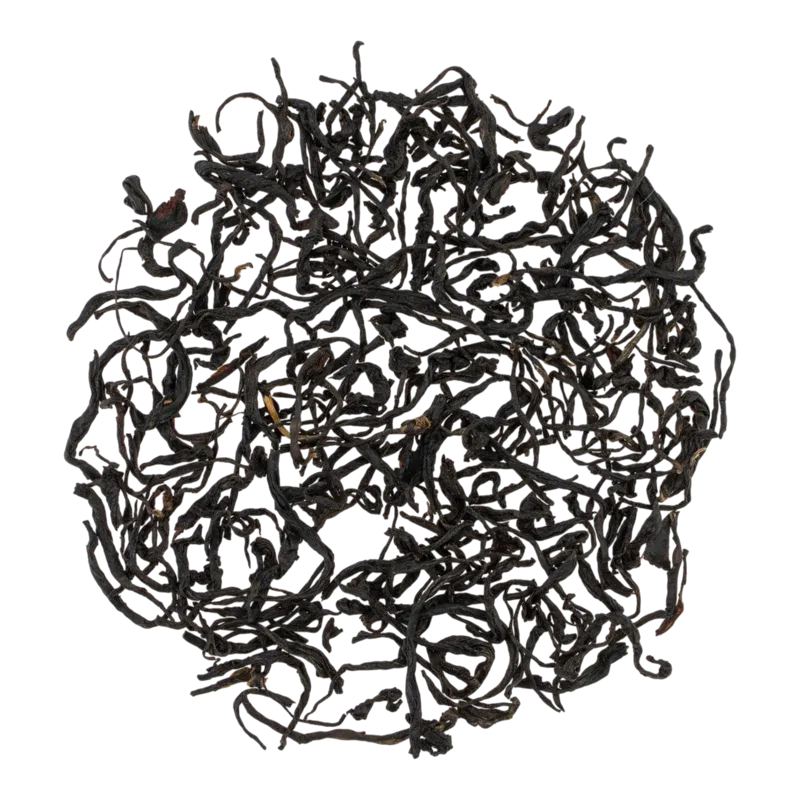
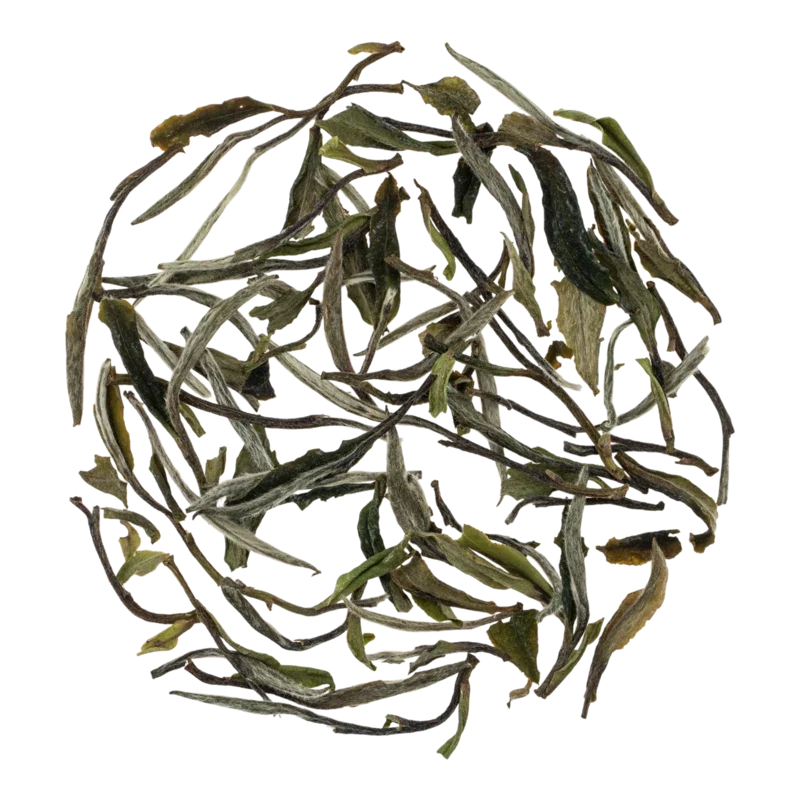
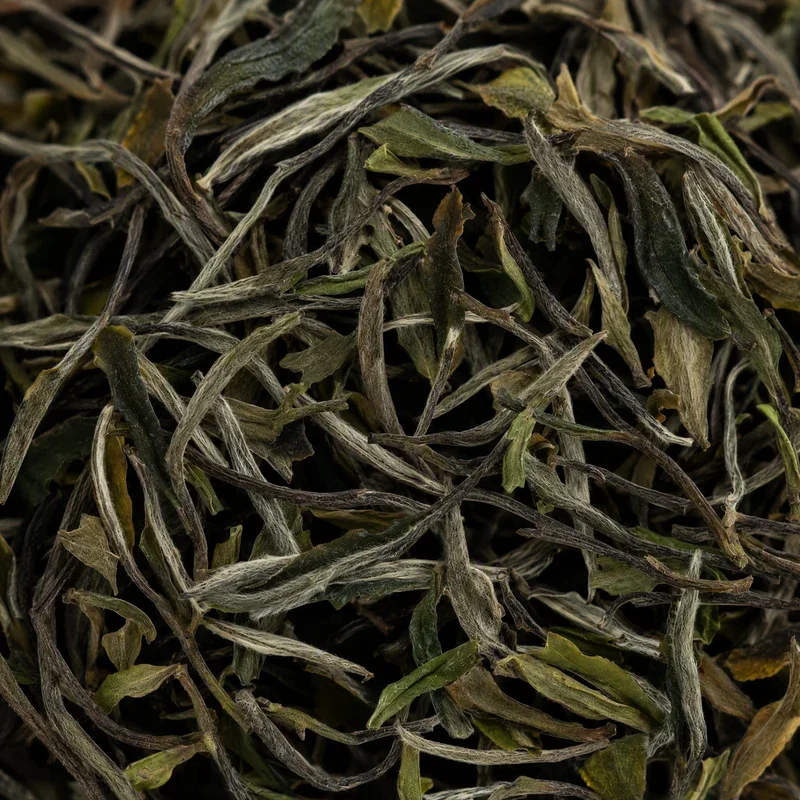
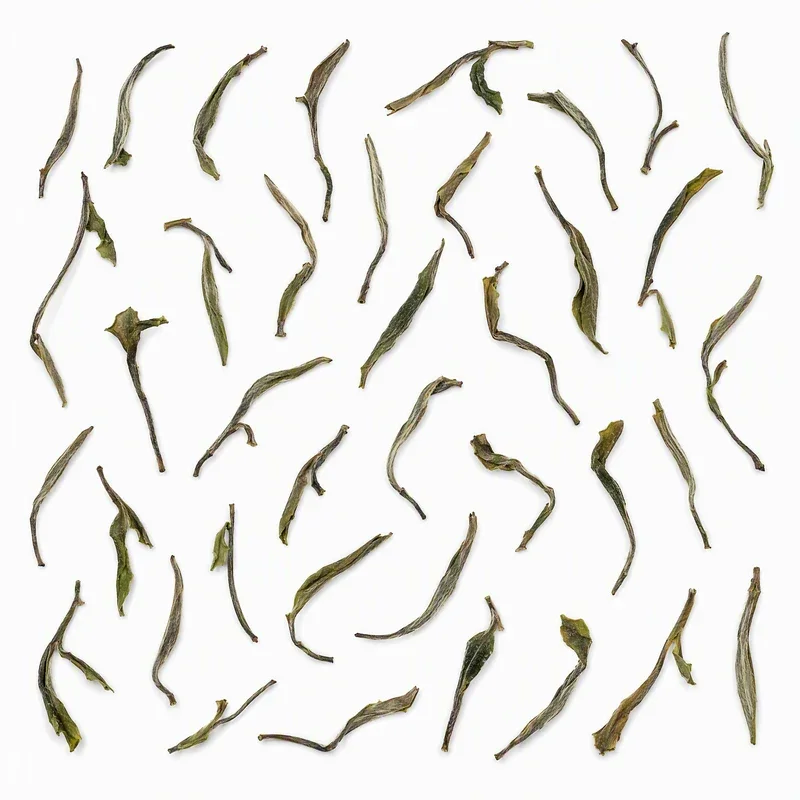
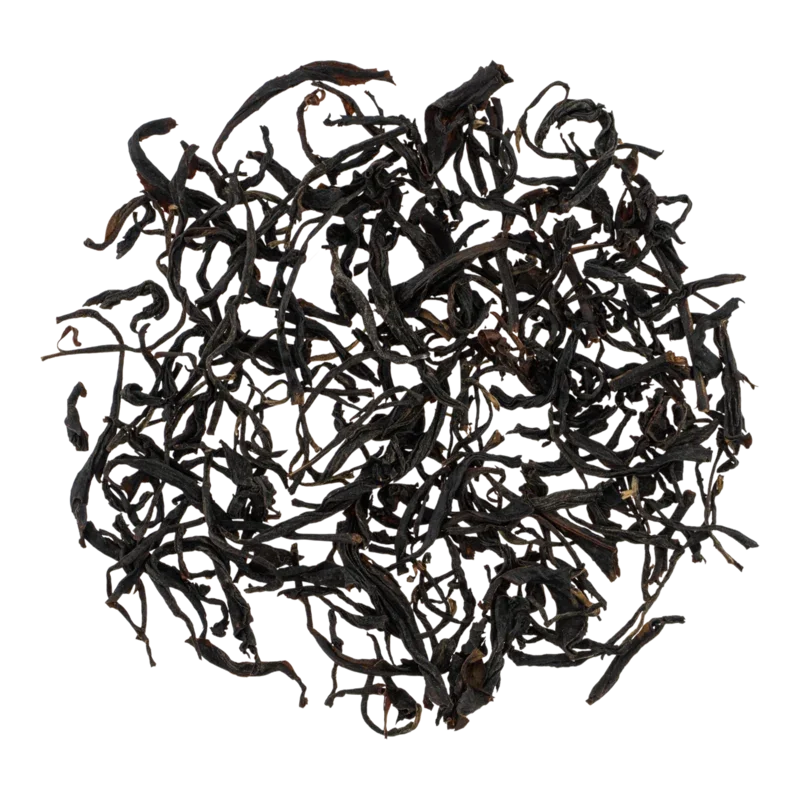
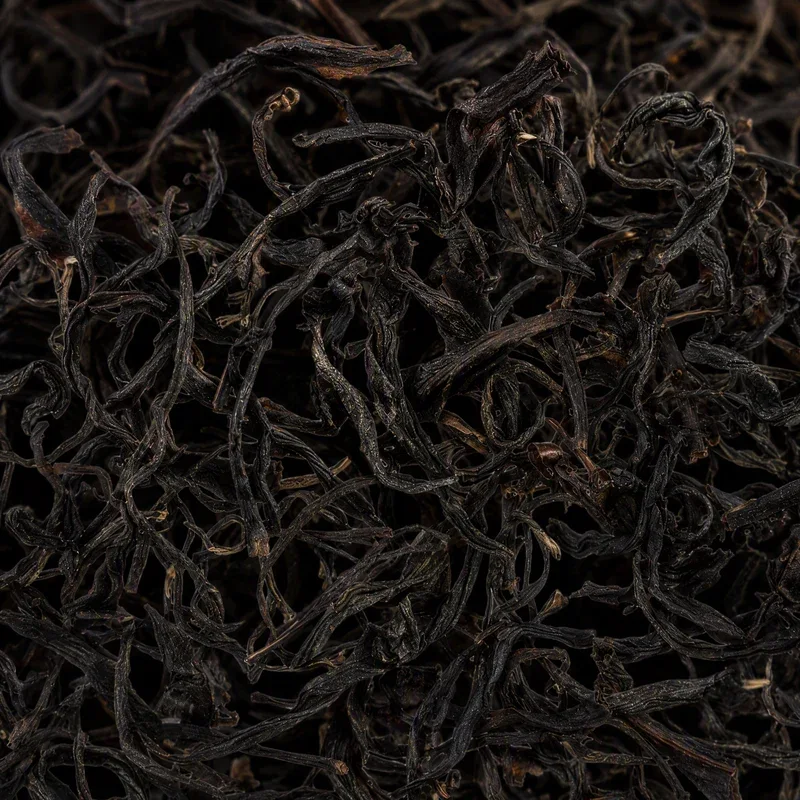
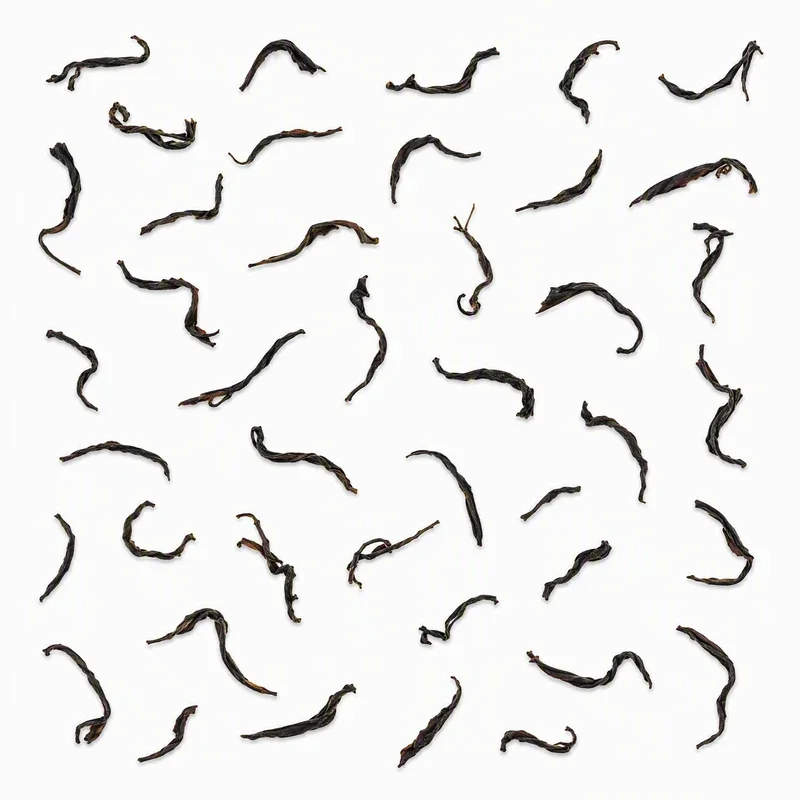
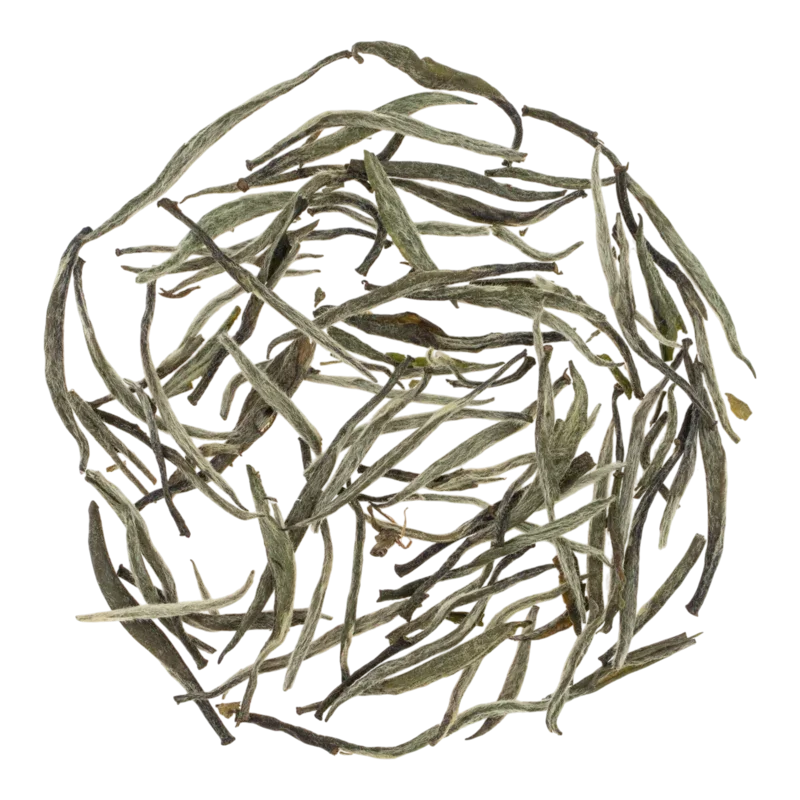
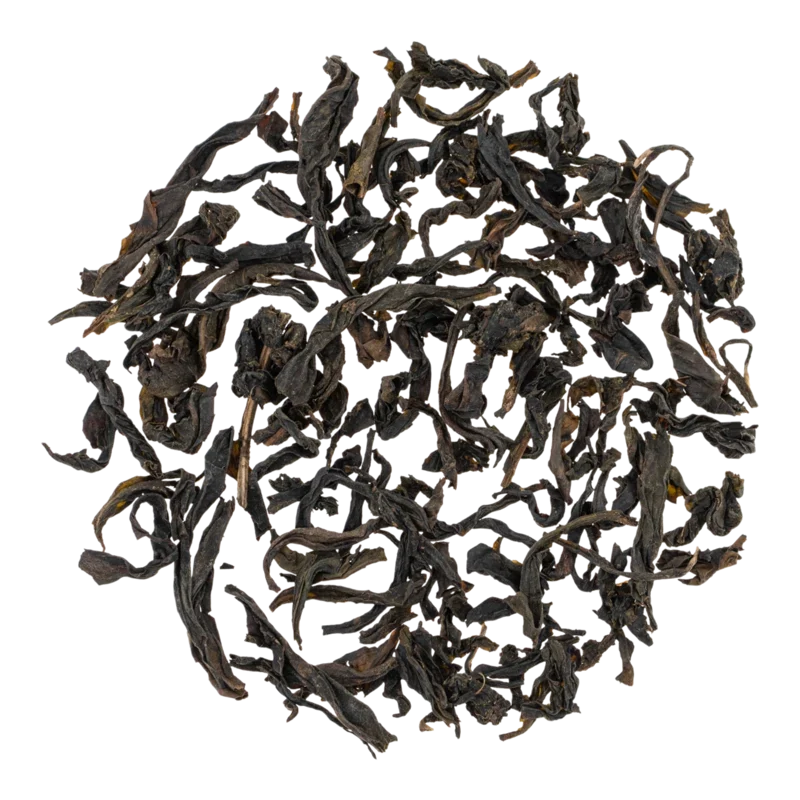
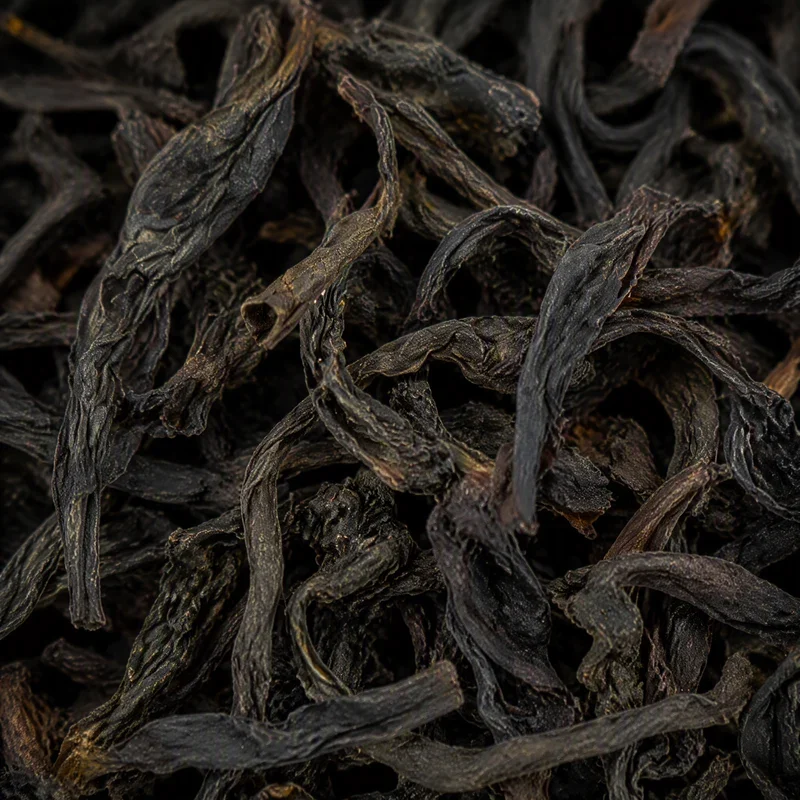
Dry Leaf Appearance: Rather large, longitudinally twisted leaves, dark green, brownish-green, or brown in color (depending on the degree of oxidation and roasting), with a slight shine. Tips covered with light down may be present.
Dry Leaf Aroma: Rich, with pronounced floral notes, often reminiscent of narcissus, orchid, or gardenia. Fruity, honey, creamy, nutty, spicy, and woody nuances may also be present, as well as roasting notes. Wuyi Shui Xian often has a characteristic "rock" aroma ("rock rhyme (yán yùn)" (岩韵)).
Liquor Aroma: Bright, floral, sweetish, with hints of fruits, honey, and cream.
Liquor Color: From golden-yellow to amber-red, transparent, clear, with shine. The color depends on the degree of oxidation and roasting.
Spent Leaves: Whole, elastic leaves that unfold after brewing, from greenish-brown to reddish-brown in color.
Taste: Full, rich, viscous, with light astringency and a sweet, creamy aftertaste. The bouquet is dominated by floral notes (narcissus, orchid), with nuances of fruits, honey, cream, nuts, and spices. Wuyi Shui Xian has pronounced mineral, "rock" notes in the taste.
Alkaloids: Caffeine, theobromine, theophylline.
Amino Acids: Including L-theanine.
Essential Oils: Responsible for the rich floral aroma.
Minerals: Potassium, fluorine, magnesium, manganese, iron.
Polyphenols: Antioxidants.
Vitamins: C, B group, E, K.
Energizes, relieves fatigue, increases performance, improves concentration.
Protects cells from free radical damage, slows aging processes.
Stimulates digestion, promotes food absorption.
Provides good warmth in cold weather.
May help reduce "bad" cholesterol levels and strengthen blood vessel walls.
Despite the tonic effect, the aroma and L-theanine in the tea promote relaxation and stress relief.
Effectively quenches thirst.
Traditional production technology, including long charcoal roasting, also contributes to the formation of "rock rhyme (yán yùn)" (岩韵).
Rocky, mineral-rich soils of the Wuyi Mountains.
High humidity, frequent fogs, diffused sunlight.
Too long steeping can make the taste astringent.
Vary water temperature and steeping time to find the optimal variant for yourself.
Tea Amount: 5-7 grams per 150-200 ml of water.
Teaware: Gaiwan, Yixing clay teapot (especially recommended for Wuyi oolongs), or porcelain teaware.
Water Temperature: 85-95°C (depending on tea quality, roasting degree, and desired strength). More heavily roasted Wuyi varieties are often brewed with water closer to 95°C.
Storage: Storage
Shui Xian should be stored in a dry, dark, cool place, in an airtight container (ceramic, porcelain, glass, or tin), away from foreign odors.
The most valued type, especially that originating from the "Zhengyan" ("True Rock") zone. Characterized by powerful taste, pronounced "rock rhyme" ("rock rhyme (yán yùn)" (岩韵)), and long aftertaste. Usually undergoes medium or heavy charcoal roasting.
Produced in the southern part of Fujian Province (Minnan region). Often has a lighter, "greener" flavor profile compared to Wuyi varieties. Roasting degree is usually lighter.
Aged Shui Xian. Over time, the taste and aroma of the tea change, becoming softer, deeper, and more complex.
Belongs to Guangdong oolongs, produced in Phoenix Mountains (Guangdong Province) from raw material from individual bushes (Dan Cong). This is a separate, distinctive variety that has little in common with Fujian Shui Xian except for the cultivar name.
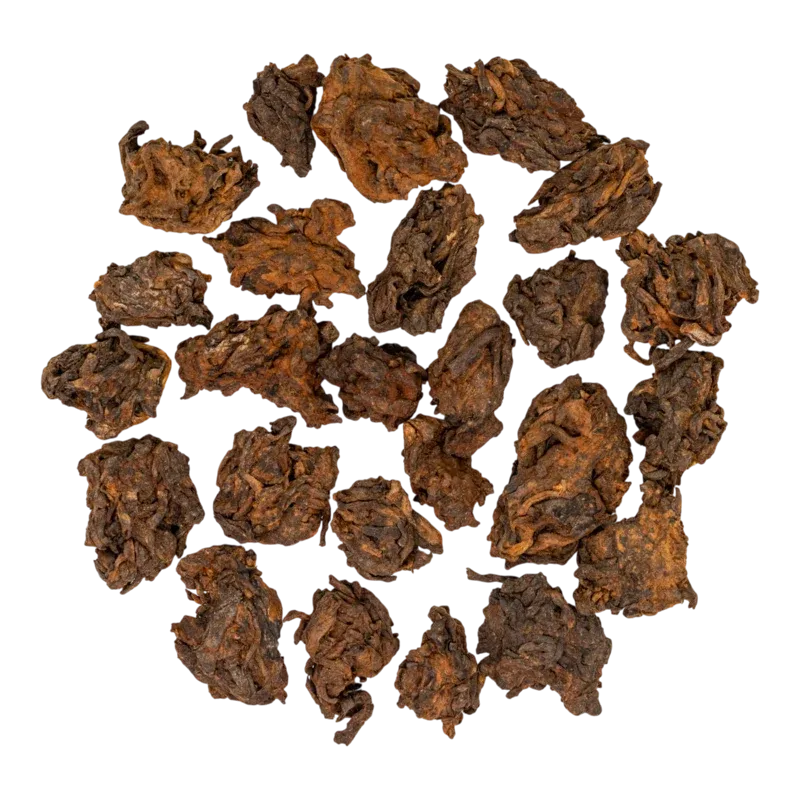
In the Minnan region (southern Fujian), Shui Xian is often pressed into small bricks resembling pu-erh "bing cha" (cakes) in shape but significantly smaller in size. Such tea is convenient to store and take on trips.
under the name 水仙 in Guangdong, there lives a completely independent tea population from the Fenghuang mountain range in Chaozhou — the very base from which, through the selection of the best bushes, the Phoenix dan cong (單叢) teas grew. Its only commonality with the Fujian Shui Xian is the hieroglyphic name: this is a different population, a different terroir, and a different taste canon, with its own system of "ten aromatic types". Discussed separately — see the article "Feng Huang Shui Xian (鳳凰水仙)".
Look for specialized tea shops with good reputation that can provide information about tea origin.
Too low a price should be alarming.
Leaves should be whole, large, with characteristic shine and color.
Dry tea should have a rich, floral aroma with characteristic nuances described above.
Liquor color should be from golden-yellow to amber-red, transparent.
Conclusion: Differences Between Wuyi Shui Xian and Southern Fujian (Minnan)
| Feature | Wuyi Shui Xian | Southern Fujian (Minnan) Shui Xian | |-----|-----|-----| | Appearance | Darker, with reddish tint, tightly twisted | Lighter, greenish, less tightly twisted | | Aroma | More intense, with roasting notes, dried fruits, "rockiness" | Fresher, floral, creamy | | Taste | Denser, astringent, with mineral notes, "rock rhyme (yán yùn)" (岩韵) | Softer, sweetish, with floral notes | | Liquor color | Darker, amber-red | Lighter, golden-yellow | | Roasting degree | Usually medium or heavy, over charcoal | Usually light or medium | | Aftertaste | Long, with mineral and spicy notes | Lighter, with floral notes | | Effect | Stronger, tonic, warming | Softer, refreshing |
In conclusion:
Shui Xian is a multifaceted and interesting oolong that offers tea connoisseurs a wide spectrum of taste and aromatic sensations. Depending on place of origin, processing technology, and roasting degree, it can be both delicate and floral, or powerful, rich, with pronounced mineral notes. Wuyi Shui Xian is undoubtedly a jewel among rock oolongs, an embodiment of the famous "rock rhyme" - "rock rhyme (yán yùn)" (岩韵). To try authentic Shui Xian means to discover the amazing world of Chinese tea, feel the harmony of nature, and touch ancient tea-making traditions. This tea is suitable both for daily tea drinking and for special occasions when you want to enjoy something
No reviews yet. Tell us what you think of this tea.
Rate this tea and share your impressions. We review each submission before publishing it.