Brewing
Gongfu brewing
- Water temperature
- 100 °C
- Tea amount
- 7 g
- Water volume
- 100 ml
- First steep
- 10 s
- Time added per infusion
- 5 s
- Infusions
- 12

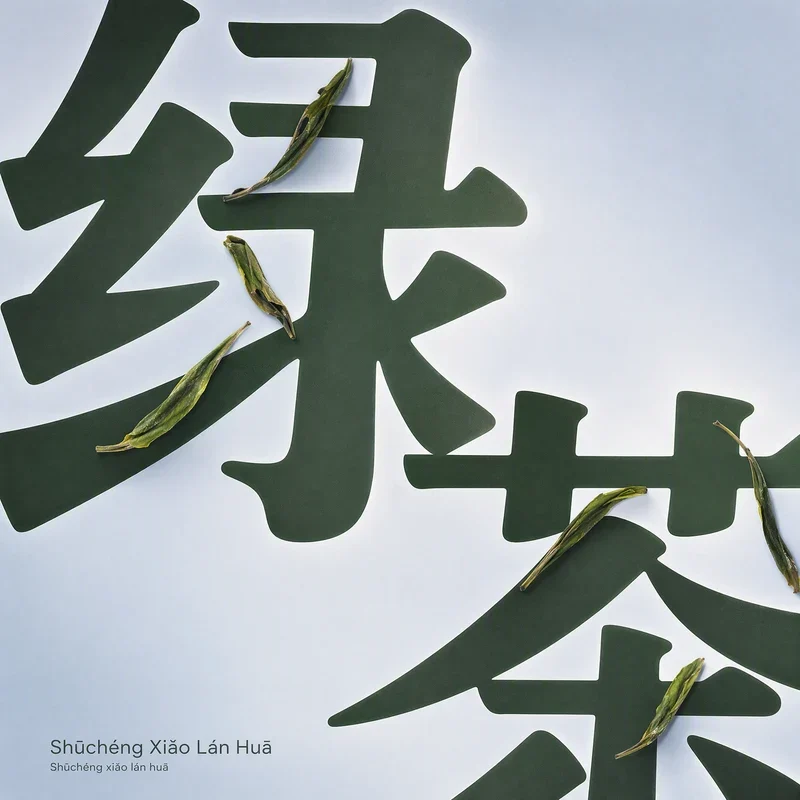
Shūchéng xiǎo lán huā
Choose a brewing method. Start with the recommended quantities and time, then adjust to taste.
Brewing
Brewing
Taste
Tea encyclopedia
Category: Historical famous tea of Ānhuī (安徽历史名茶); one of the ten traditional famous teas of the province (安徽十大传统名茶). Representative of the "orchid-fragrant" type of green teas (兰香型绿茶).
Category: Historical famous tea of Ānhuī (安徽历史名茶); one of the ten traditional famous teas of the province (安徽十大传统名茶). Representative of the "orchid-fragrant" type of green teas (兰香型绿茶).
Coordinates: 31°01′–31°34′ N, 116°26′–117°15′ E (according to the original county reference). Core production area — 31°27′–31°48′ N, 116°49′–117°01′ E.
Origin: China, Ānhuī Province (安徽, Ānhuī), Shūchéng County (舒城, Shūchéng), Lu'an Prefecture (六安, Lù'ān). Located on the eastern slopes of the Dàbié Mountain range (大别山, Dàbiéshān), between the Yangtze River and Huai River. The protected geographical indication zone covers the mountainous areas of the county: townships and towns of Xiaotian (晓天), Tangchi (汤池), Luzhen (庐镇), Hepeng (河棚), Gāofēng (高峰), as well as Wuxian (五显), Chunqiu (春秋), Nángǎng (南港), Shúchá (舒茶).
Type: Green tea (non-oxidized); belongs to the category of hongqing (烘青, hōngqīng) — with a dominant role of charcoal roasting (烘焙) in the final stage; however, fixation is performed by pan-firing (锅炒杀青), making the technology a combined "pan-fired and roasted" method (炒烘结合).
Cultural Significance: Shucheng Xiao Lan Hua is the county's calling card, its "golden name" (金名片). The tea is registered as a national geographical indication trademark (证明商标), included in the list of "National Famous, Special and High-Quality New Agricultural Products" (全国名特优新农产品), and awarded the status of "Famous Trademark of Anhui" (安徽省著名商标). By 2022, the county's tea garden area was 13.3 万 mu (approximately 8,867 hectares), annual production — 4,000 tons of dry tea, total tea industry value — 23.5 billion yuan. Tea cultivation involves 20 townships and towns, more than 55,000 farming households, and 200,000 tea workers.
History: Shucheng is an ancient tea region. According to the "New Book of Tang" (《新唐书·地理志》), as early as the Tang and Song dynasties, local tea was famous and among those presented to the imperial court. However, the technologies of those times differed fundamentally from modern ones: the current appearance of "Orchid Tea" (兰花茶, Lánhuā chá) with its characteristic aroma was created during the Qīng dynasty (清朝), presumably in the late 17th to early 18th century. The renowned tea scholar Chén Chuán (陈椽, Chén Chuán) noted in the "Anhui Tea Canon" (《安徽茶经》): "even before the Qing, the local elite paid special attention to orchid tea production." In his fundamental works "Selected Studies of Famous Chinese Teas" (《中国名茶研究选集》) and "Tea Manufacturing Science" (《制茶学》), Shūchéng Xiǎo Lán Huā is placed alongside such masterpieces as Bìluóchūn (碧螺春), Tàipíng Hóukuí (太平猴魁), Yǒngxī Huoqing (涌溪火青), Lu'an Guāpiàn (六安瓜片), and Tiěguānyīn (铁观音). Thus, the tea's history spans at least 300 years.
Name Breakdown: Shūchéng (舒城) — the county name. Xiǎo (小) — "small," distinguishing this tea from the larger-leafed "Da Lan Hua" (大兰花, made from raw material with 4–5 leaves). Lán Huā (兰花) — "orchid": the name refers both to appearance (shoots connected with leaves resembling an orchid flower) and aroma (genuine orchid note). The accepted quality formula is "three orchids" (三兰, sān lán): orchid form (兰花形), orchid color (兰草色), orchid aroma (兰花香).
Cultivar: Based on local population plantings (当地群体种, dāngdì qúntǐzhǒng), adapted over centuries to Dabie Mountain conditions and distinguished by high cold resistance. Three nationally recognized cultivars have been developed from this base: Shūchá Zǎo (舒茶早, Shūchá Zǎo) — early variety, Shanpo Lü (山坡绿, Shānpō Lǜ), and Gǔyǔ Chūn (谷雨春, Gǔyǔ Chūn). The area of clonally propagated plantations (无性系良种) has reached 6.6 万 mu, with varietal purity level around 50%.
Picking: Period from Gǔyǔ (谷雨, mid-April) onwards. Xiao Lan Hua requires tender, succulent raw material with abundant down, uniform yellow-green color, without purple shoots (紫芽). For highest grades, the bud should be longer than the leaf. Harvest coincides with the blooming of wild orchids in the mountains — it is believed that tea shoots absorb their aroma.
Pluck Standard: One bud with one beginning-to-unfold leaf (一芽一叶初展) — for special and first grade; one bud with two to three leaves (一芽二叶至一芽三叶) — for standard Xiao Lan Hua; one bud with four to five leaves — for Dà Lán Huā (大兰花). Harvested raw material is processed the same day (现采现制).
Raw Material: Whole, undamaged shoots without signs of overheating, wilting, or mechanical damage.
Altitude: The geographical indication standard requires at least 300 m. Main tea mountains: Baisangyuan (白桑园), Jiaozishi (珓子石), Moziyuan (磨子园), Longmianshan (龙眠山), Xiaomailling (小麦岭), Gujizhai (古迹寨), Tianzizhai (天子寨). Highest point in the county — Wanfoshan Mountain (万佛山, 1,539 m).
Climate: Northern subtropical humid zone (北亚热带湿润气候). Average annual temperature 15°C; annual precipitation 1,200–1,600 mm (mountains receive the highest amount); average annual number of foggy days — over 280; relative humidity ≥ 80%; significant diurnal temperature variations. Diffused light conditions promote amino acid accumulation.
Soil: Yellow-brown soils (黄棕壤), pH 5.5–6.5, organic matter content ≥ 1.5%, soil profile depth ≥ 1.0 m. Soils are enriched with trace elements: selenium (硒) and zinc (锌), which positively affects the tea's mineral composition.
The county practices a unique "tea-forest-green manure" model (茶—林—绿肥): tea bushes grow among trees and wild grasses (rhododendrons, orchids, ferns), forming a "hat" of forest at the top, a "belt" of shrubs and grasses on the slope, and "shoes" of turf at the foot (头戴帽,腰系带,脚穿鞋). Long-term coexistence with forest saturates tea plants with natural aromatic compounds. Forest coverage — 93%; industrial pollution is absent. Fertilizers are predominantly oil cake (饼肥) and organic. The county is certified as a "National Organic Product Base (tea)."
Fresh shoots are spread to lose surface moisture and remove defective leaves.
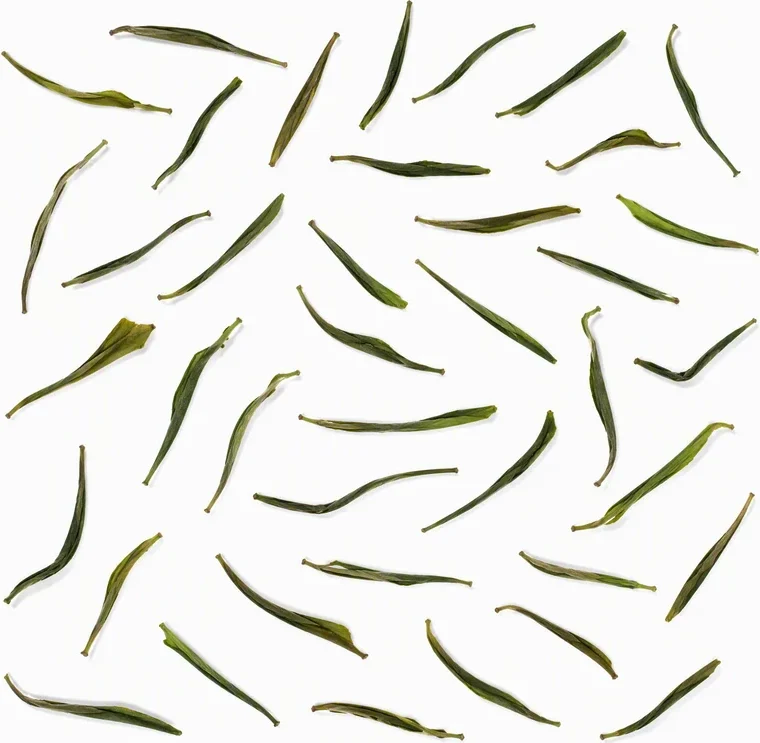
Performed in two connected inclined pans (两口并连斜锅) on a special stove. The master works with a bamboo tea whisk made from solid bamboo (实心竹丝把), making circular movements in one direction. Principle: "whisk doesn't leave tea, tea doesn't leave pan" (把不离茶,茶不离锅). In the front (hot) pan, tossing predominates; in the back (cooler) pan — rolling and pressing, forming the characteristic "hook-shaped" shoot form (弯钩状). The task is to bring the leaf to "five parts dry" (五成干), when a "sha-sha" sound appears and distinct aroma emerges.
Traditionally uses charcoal from oak or tung trees (黄栗树/桐树). Semi-finished product is spread on woven bamboo trays (篾制烘斗) and dried at 100–120°C to 70–80% dryness. This stage establishes the foundation of orchid aroma.
Removal of yellow leaves, stems, and substandard material.
Temperature decreases to 80–100°C; leaf is dried to moisture content ≤ 6%. It is precisely at this moment that orchid aroma unfolds most fully — "in heat emerges one aroma" (热气上冒一支香).
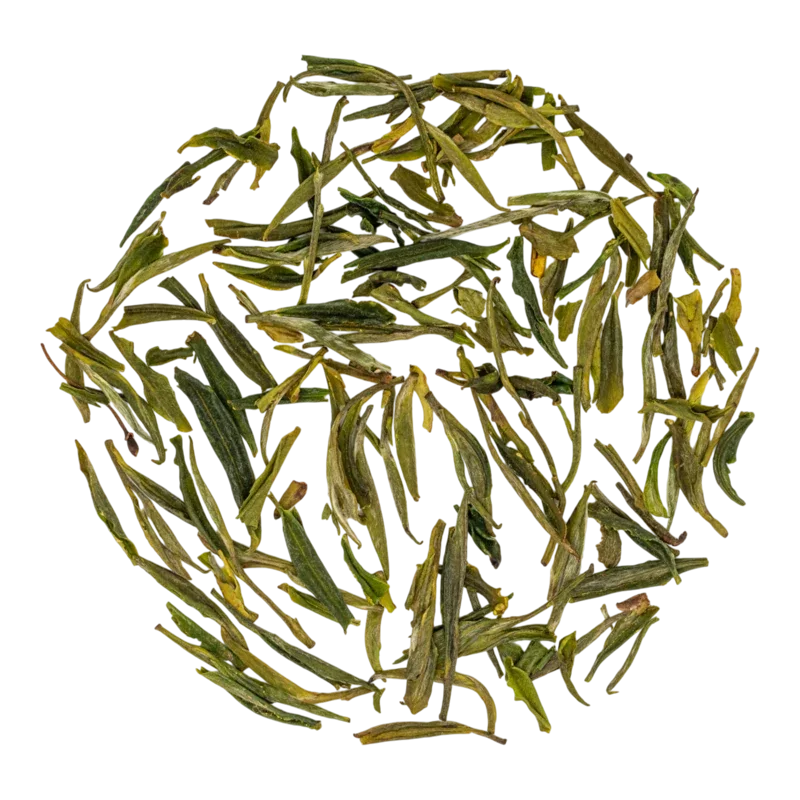
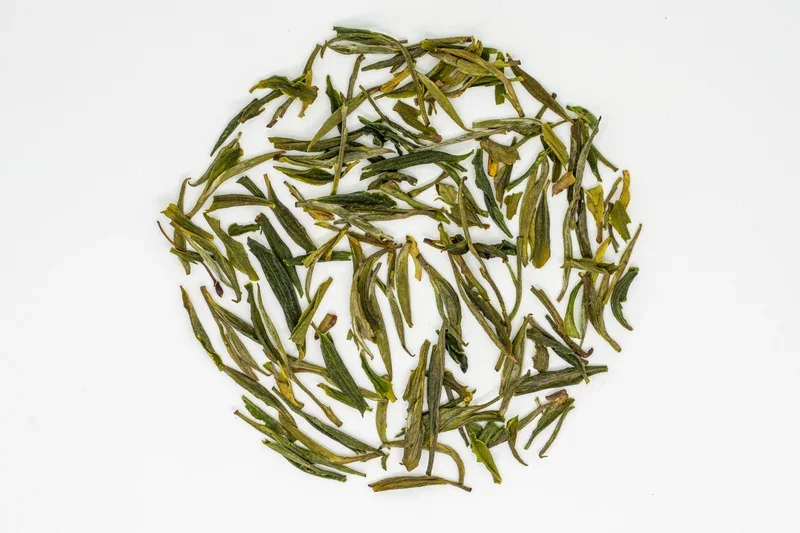
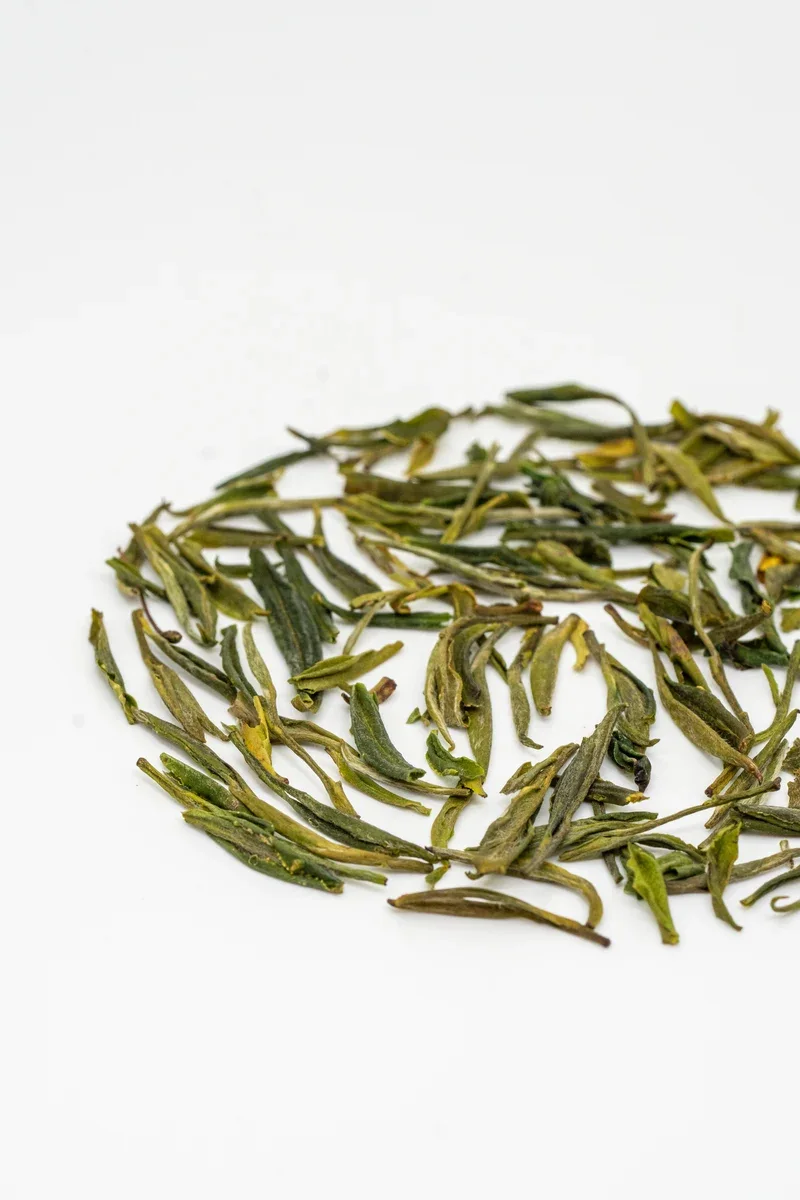
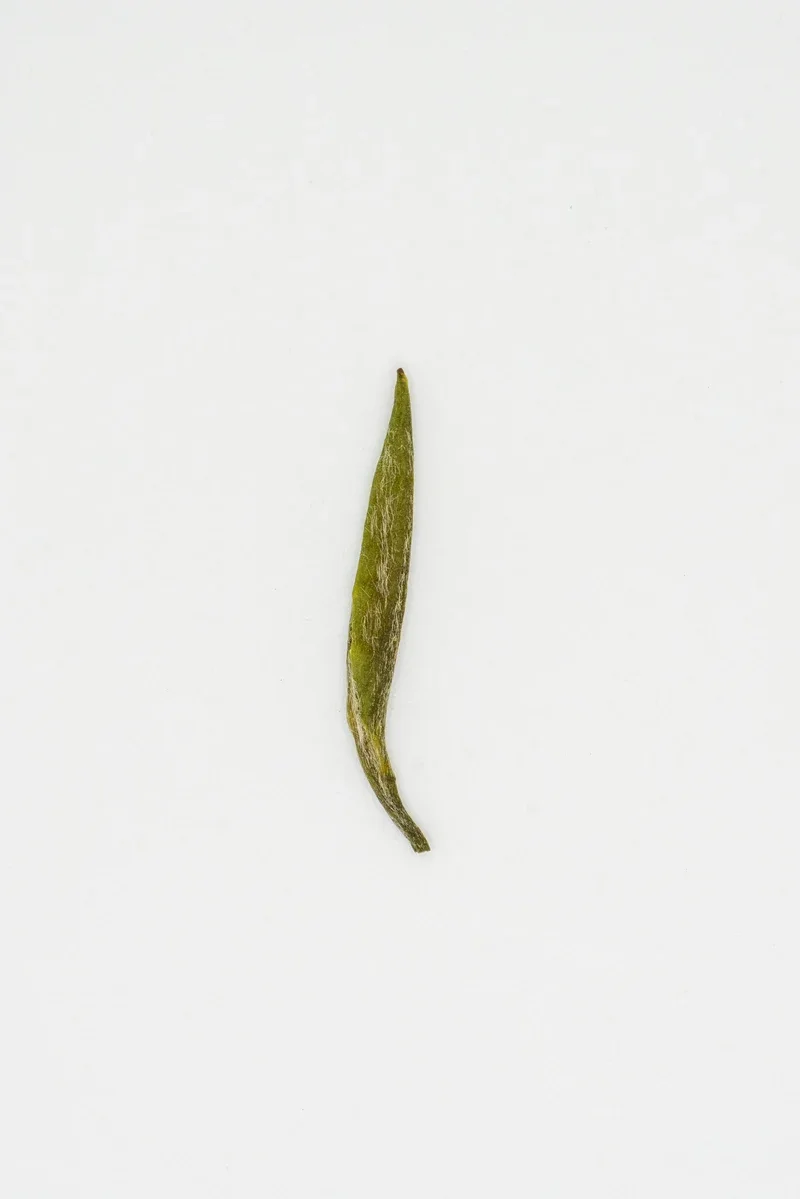
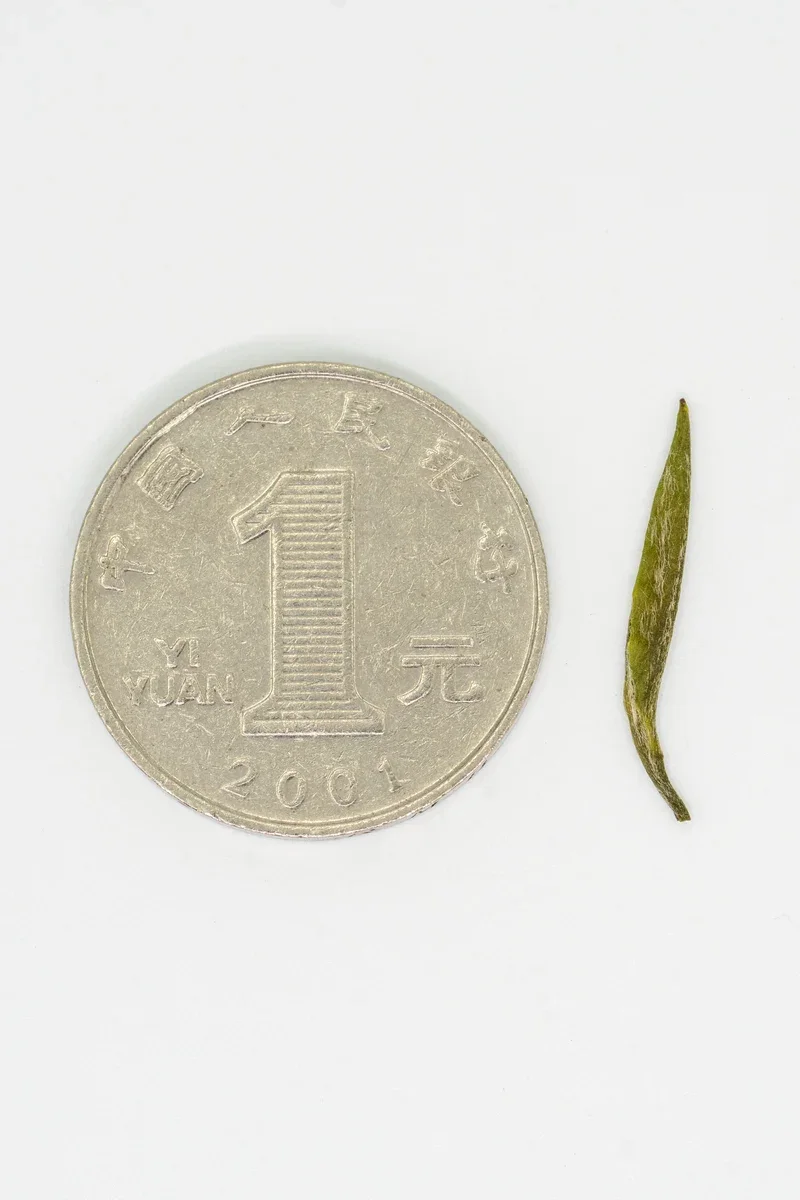
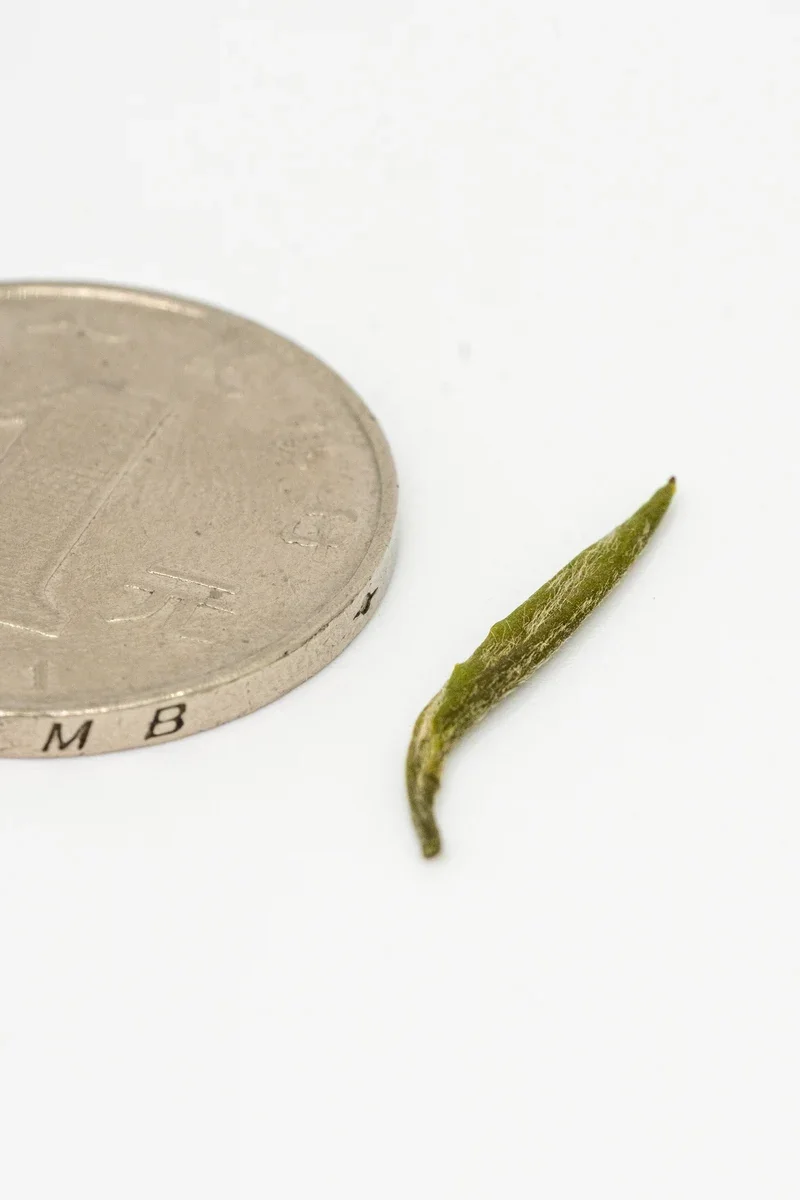
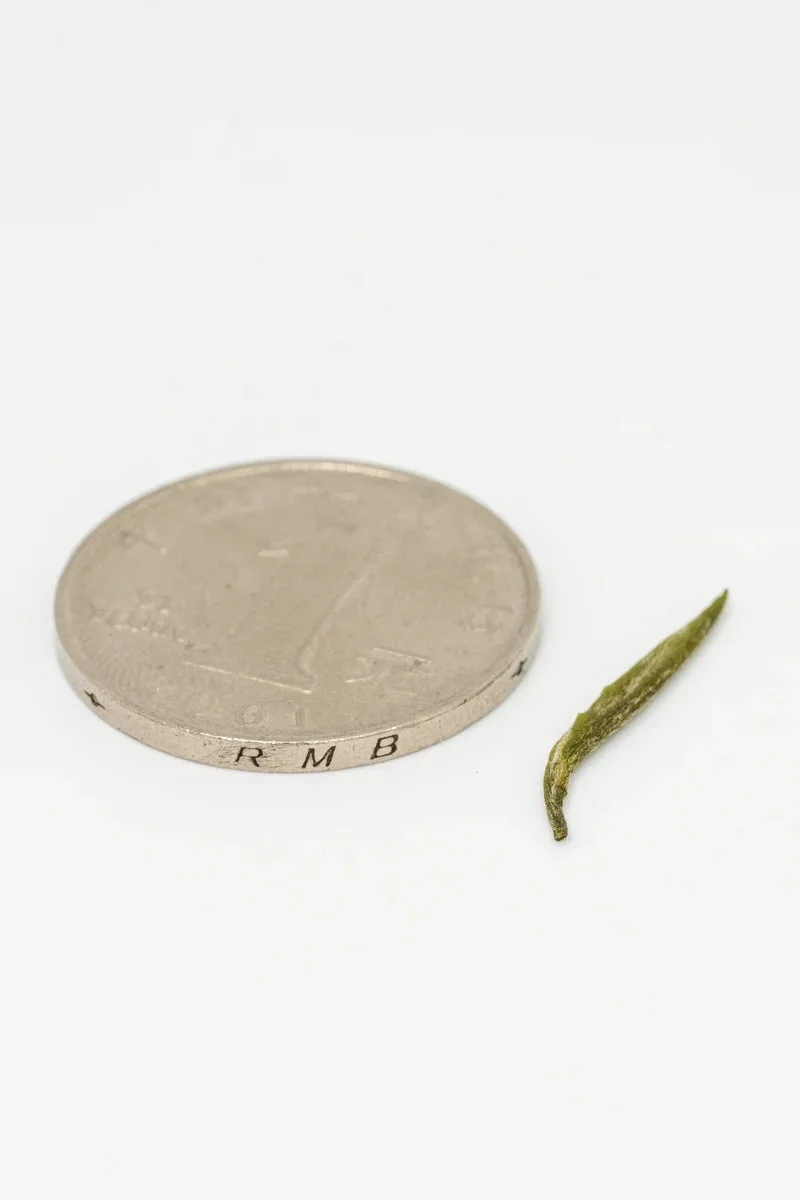
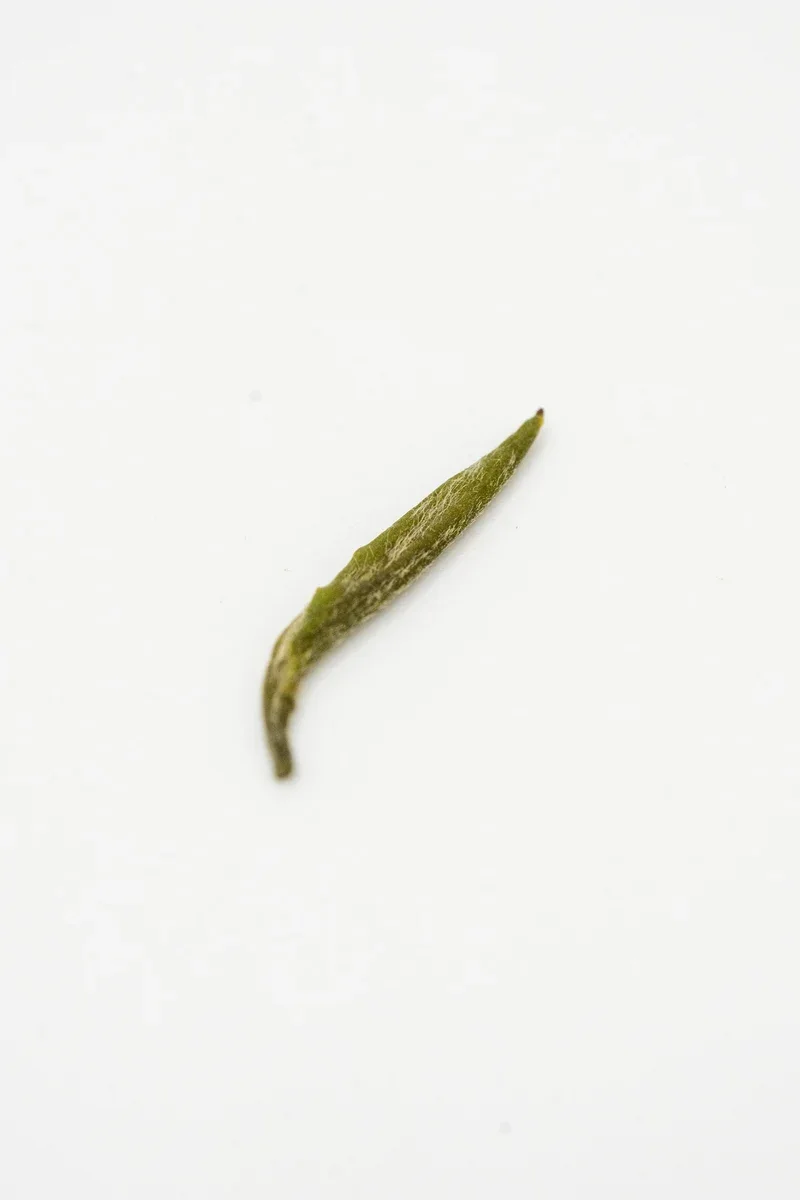
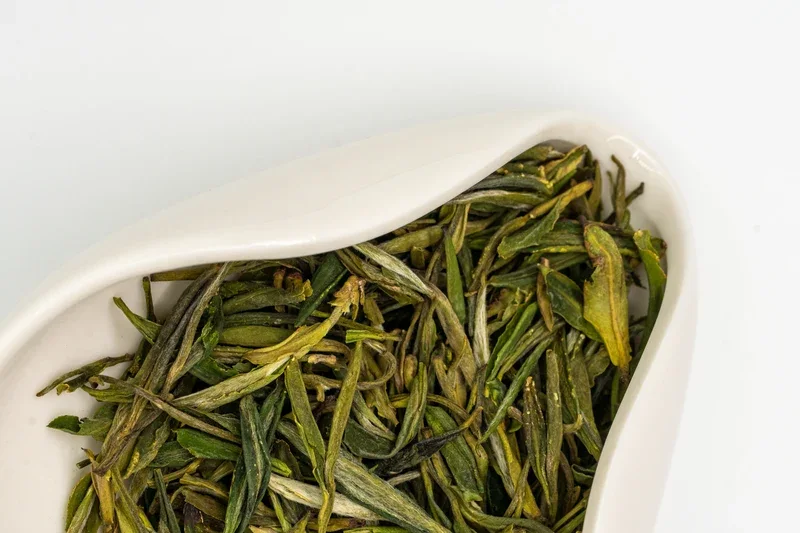
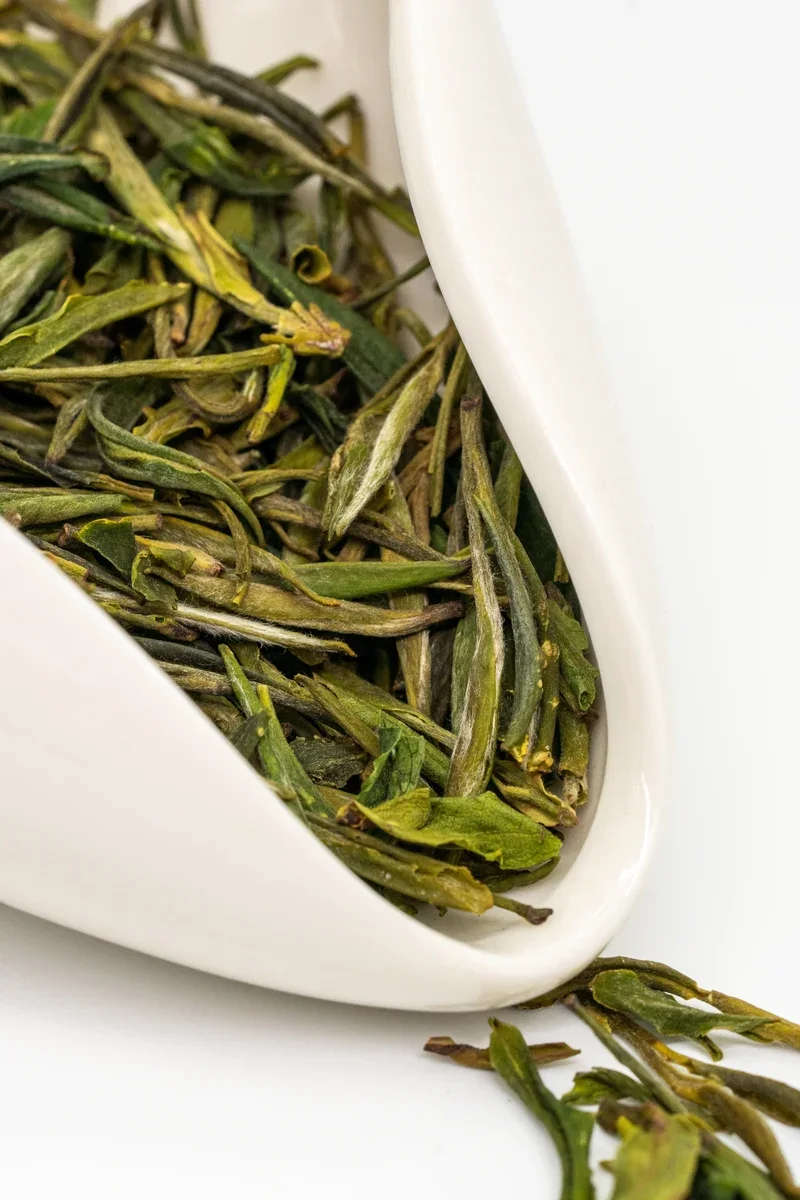
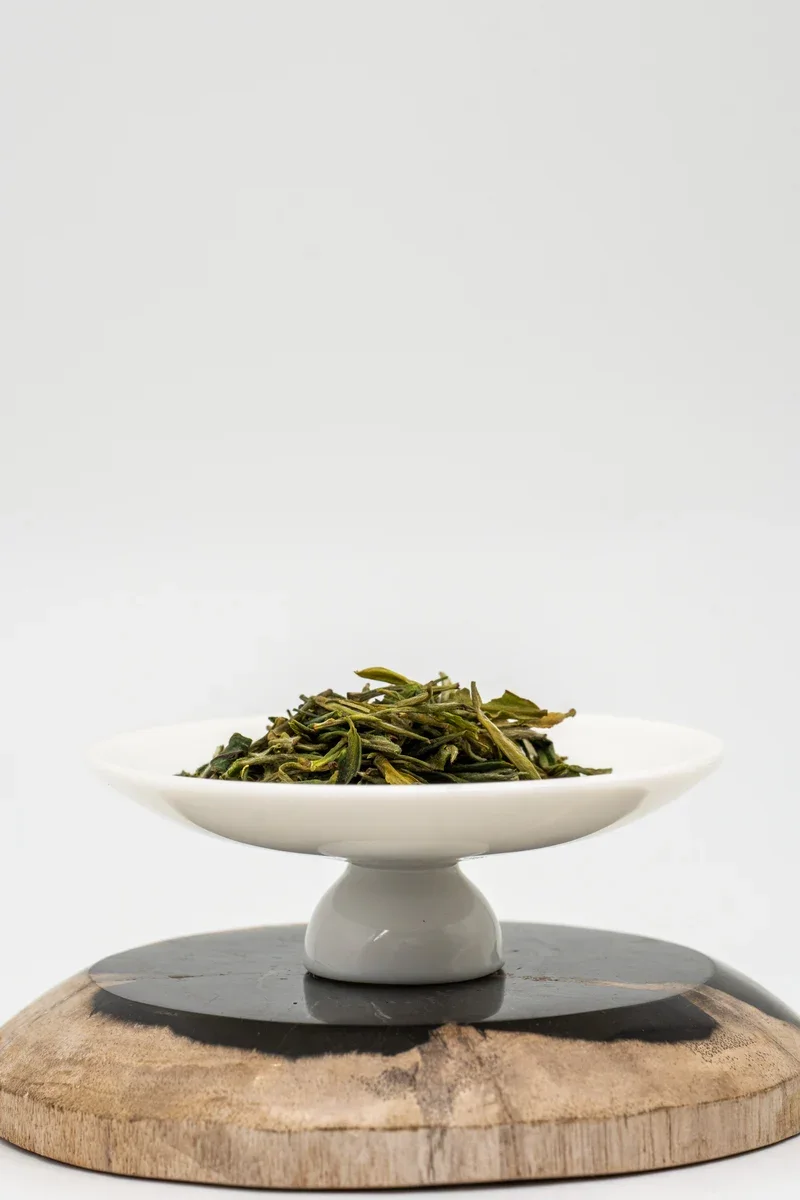
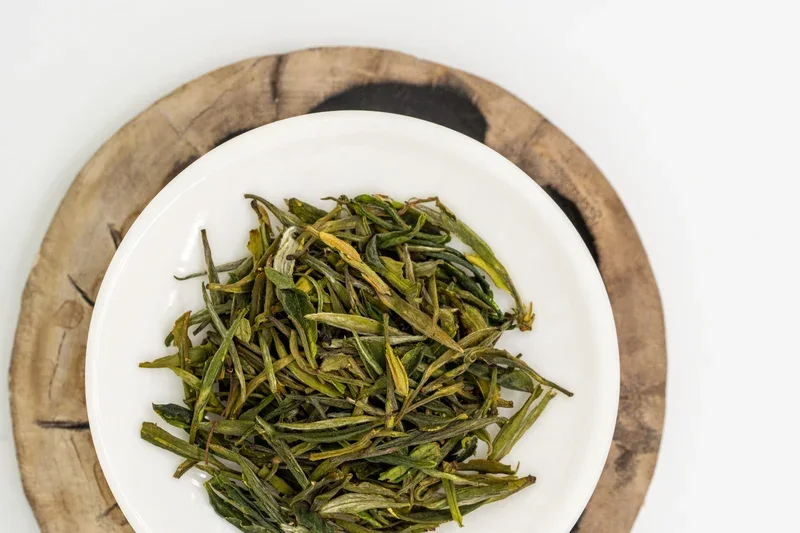
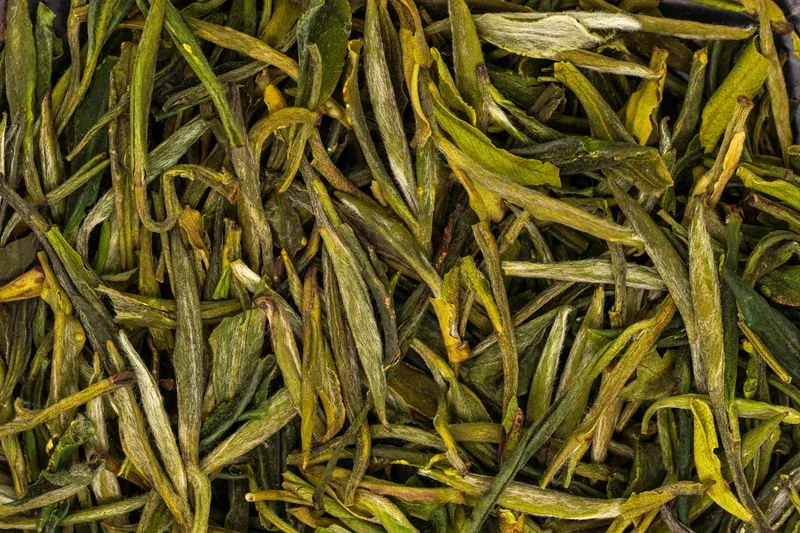
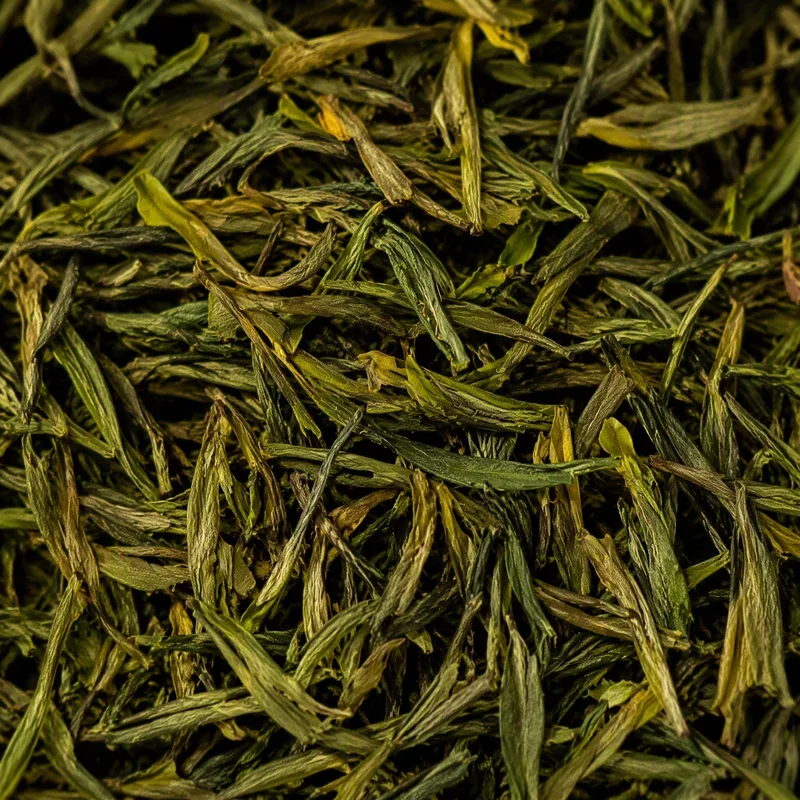
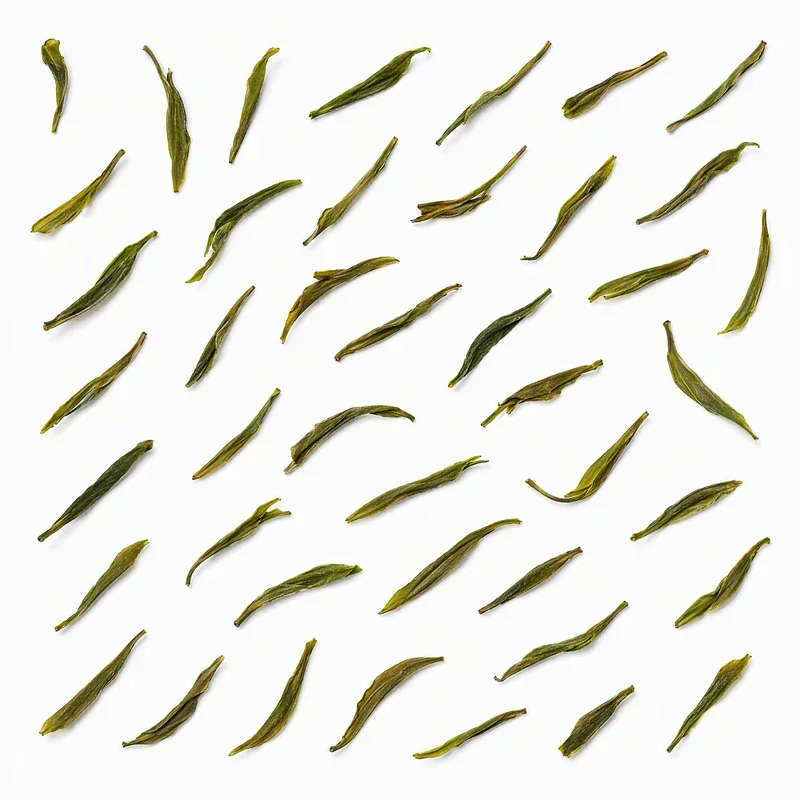
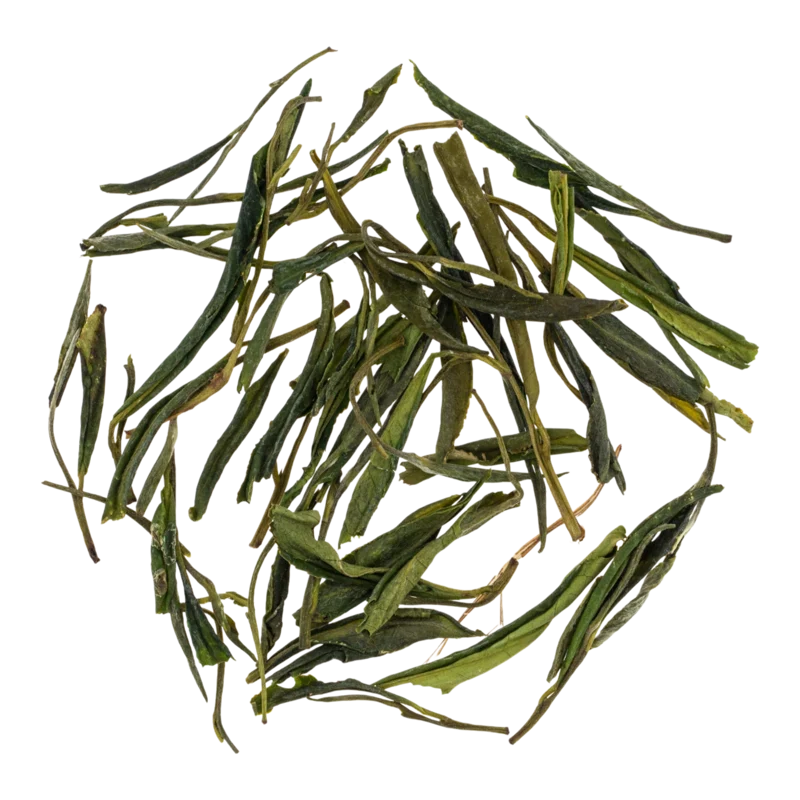
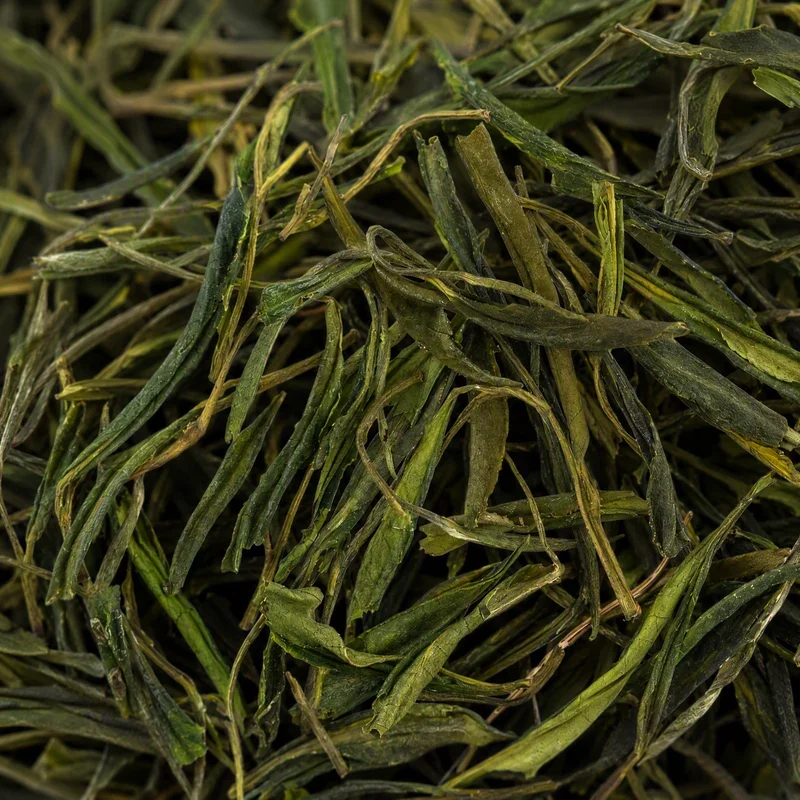
Dry Leaf Appearance: Shoots with leaves connected resembling a blooming orchid; form — thin twisted "hooks" (条索细卷呈弯钩状), naturally spread. Color — bright emerald green (翠绿匀润) with noticeable silvery down (毫锋显露).
Dry Leaf Aroma: Pure, fresh with distinct orchid note and chestnut undertone. Formula of "three aromas" (三香): first aroma — when opening the package (清香扑鼻, "pure aroma strikes the nose"), second — at first sip (满口生香, "whole mouth fills with aroma"), third — in aftertaste (齿颊留香, "aroma remains between teeth and cheeks").
Liquor Aroma: Fresh, persistent, with pronounced orchid note (兰花香型) — the tea's main organoleptic signature. Chestnut (栗香) and floral tones harmoniously interweave.
Liquor Color: Tender green, bright and clear (汤色嫩绿明净). With more mature raw material — greenish-yellow.
Spent Leaves: Shoots gathered in "bouquets" (叶底成朵), color — tender yellow-green (嫩黄绿色), uniform; fleshy texture indicating good raw material quality.
Taste: Fresh, brisk (鲜爽), sweet-mellow (甘醇), with lasting returning sweetness (回甘持久). When properly brewed — not a trace of bitterness; sensation of "briskness" (爽) and "anticipation" of the next sip.
Alkaloids: Caffeine — content noted as "high" (咖啡碱含量高); synergy with theanine provides pronounced stimulation while maintaining mellowness.
Amino Acids: High L-theanine content due to foggy high-mountain climate with diffused light. Amino acids provide the characteristic "xian shuang" taste (鲜爽).
Orchid aroma forms comprehensively: natural prerequisites (growing among orchids, absorption of aromatic molecules during harvest) are supplemented by technological revelation during charcoal roasting. Key components: linalool, nerol, geraniol, cis-jasmone.
According to some sources, the ability of Xiao Lan Hua polyphenols to neutralize free radicals is 18 times higher than vitamin E.
Minerals: Selenium (硒) and zinc (锌) — trace elements enriched in local soils, distinguishing Shucheng among other tea regions of Anhui.
Polyphenols: Content characteristic of mountain hongqing teas — moderate, ensuring taste mellowness. According to sources, the antibacterial effectiveness of Xiao Lan Hua polyphenols against pathogenic microorganisms is higher than that of several other green teas.
Vitamins: C, B₁, B₂, E, carotenoids.
Enhanced effectiveness of polyphenols against pathogens — one of the features highlighted in Chinese sources.
High caffeine content combined with theanine provides mental clarity and vigor without anxiety.
Catechins and vitamin C support cellular health and slow oxidation processes.
Polyphenols stimulate peristalsis and normalize microflora.
Regular consumption helps maintain vascular elasticity and normal cholesterol levels.
L-theanine supports brain alpha rhythm.
Complex of vitamins and trace elements (selenium, zinc) strengthens protective functions.
Soft (low mineralization) emphasizes sweetness and orchid tone. Hard water suppresses aroma.
Tea Amount: 3–5 g per 150 ml (glass method); 5–7 g per 100–120 ml (gaiwan gongfu style).
Teaware: Glass tumbler (玻璃杯) — allows observing how shoots "stand up" in the cup like blooming orchids; porcelain gaiwan (盖碗) — for controlled brewing with short infusions.
Water Temperature: 80–85°C. Boiling water is contraindicated — it destroys chlorophyll, the liquor yellows, and aroma loses refinement.
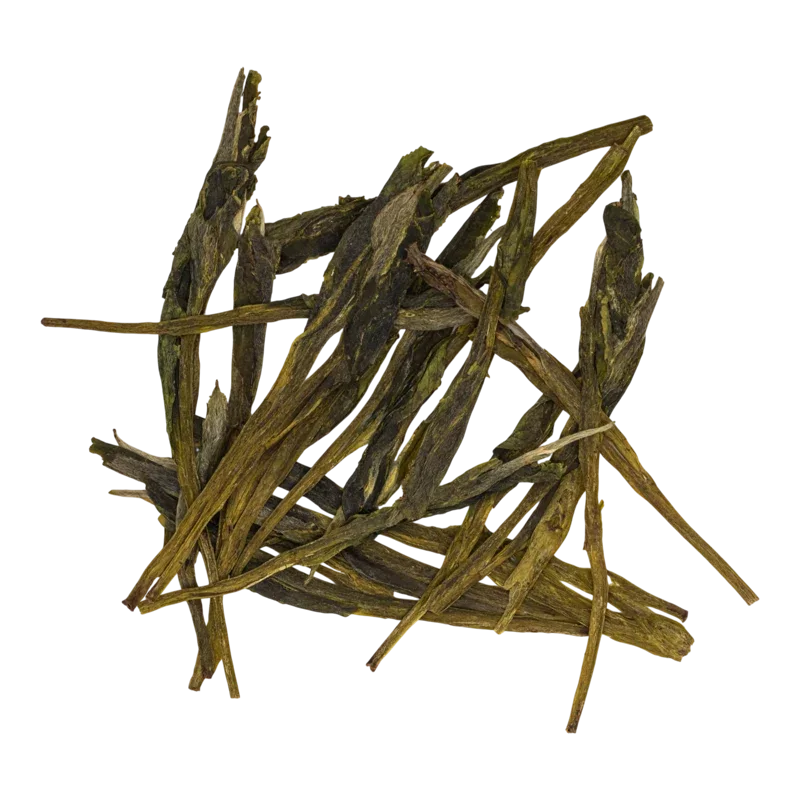
Anhui neighbor — the world's only green tea without buds and stems, only leaf blade. Completely different appearance and taste: Guapian is denser, richer, with bright "fiery" character thanks to the "lao huo" technique (拉老火). Xiao Lan Hua is more elegant, lighter, with pronounced orchid tone.
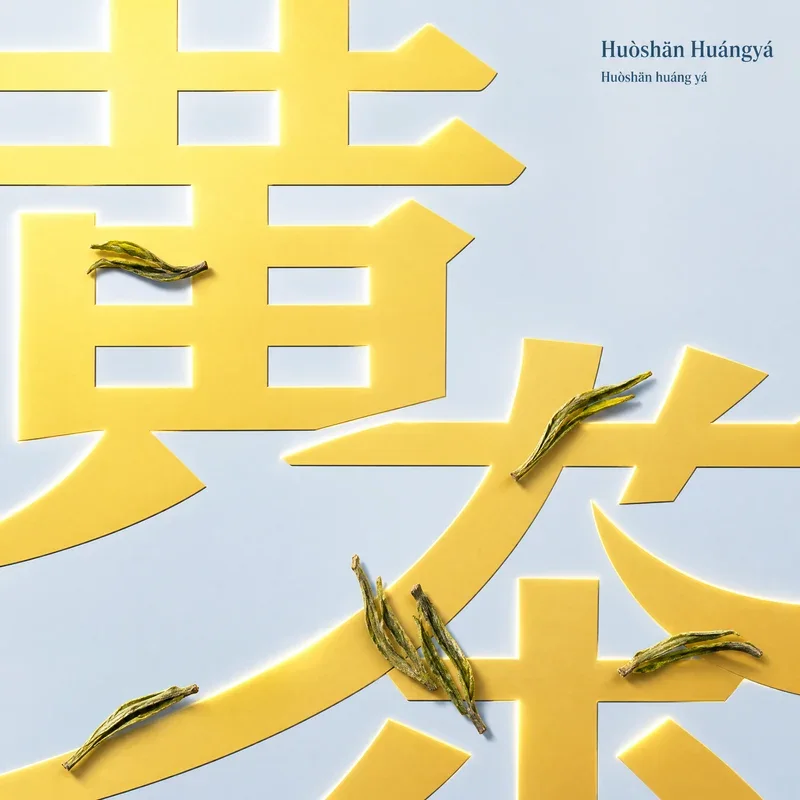
Yellow tea from neighboring Huoshan County, also located in Dabie Mountains. Huòshān Huáng Yá undergoes the mēnhuáng procedure (闷黄, "yellowing"), giving it a milder, sweeter character. Xiao Lan Hua is purely green, fresher and brighter in aroma.
Another famous Anhui green tea with large flat leaves and characteristic "orchid" aroma. However, its orchid note is less intense, and leaf form differs dramatically — Houkui is monumental, Xiao Lan Hua is miniature and elegant.
Green tea from neighboring Jingxian County — another "orchid" representative of the Anhui school. Similar in style, but Shucheng Xiao Lan Hua is distinguished by characteristic "hook-shaped" form and more pronounced chestnut base.
No reviews yet. Tell us what you think of this tea.
Rate this tea and share your impressions. We review each submission before publishing it.