Brewing
Gongfu brewing
- Water temperature
- 75 °C
- Tea amount
- 5 g
- Water volume
- 100 ml
- First steep
- 10 s
- Time added per infusion
- 5 s
- Infusions
- 3

Rǔchéng báimáochá
Choose a brewing method. Start with the recommended quantities and time, then adjust to taste.
Brewing
Brewing
Taste
Tea encyclopedia
Category: Regional tea of Húnán Province (湖南, Húnán); tea from rare local resource (珍稀地方茶树种质资源, zhēnxī dìfāng cháshù zhǒngzhì zīyuán). One of four particularly valuable local tea populations of Hunan. Product with protected geographical indication (农产品地理标志, nóngchǎnpǐn dìlǐ biāozhì, certificate 2021) and registered trademark (地理标志证明商标, 2016).
Category: Regional tea of Húnán Province (湖南, Húnán); tea from rare local resource (珍稀地方茶树种质资源, zhēnxī dìfāng cháshù zhǒngzhì zīyuán). One of four particularly valuable local tea populations of Hunan. Product with protected geographical indication (农产品地理标志, nóngchǎnpǐn dìlǐ biāozhì, certificate 2021) and registered trademark (地理标志证明商标, 2016).
Coordinates: 25°18′38″–25°53′19″ N, 113°36′07″–113°59′56″ E.
Origin: China, Húnán Province (湖南, Húnán), Chēnzhōu Prefecture (郴州, Chēnzhōu), Rǔchéng County (汝城县, Rǔchéng xiàn). Historical center of origin — primitive secondary forests of Jiǔlóngjiāng (九龙江, Jiǔlóngjiāng) and surroundings of Sānjiāngkǒu town (三江口镇, Sānjiāngkǒu zhèn), particularly Lándòng village (兰洞村, Lándòng cūn). The geographical indication protection zone covers 14 townships and towns, as well as 4 forest farms of Rucheng County, with a total area of 38,600 hectares.
Type: In commercial releases most often — green tea (绿茶, lǜchá, unoxidized). White tea (白茶, báichá, lightly oxidized, ~5–10%) and red tea (black tea) (红茶, hóngchá, fully oxidized) are also produced. The type is determined by the chosen processing technology, not by the properties of the raw material itself.
Rucheng County Tea Professional Cooperatives, particularly those in Sanjiangkou town and surrounding areas.
Companies with geographical indication certification and proper processing facilities.
Reputable dealers specializing in Hunan regional teas.
Tea gardens and processing facilities in the protected geographical indication zone.
Always request certificates of origin, geographical indication marks, and processing facility licenses.
Most common commercial product. Dense, pubescent tea particles; bright freshness, grassy-floral nuances; light amino acid sweetness. Optimal for daily tea drinking.
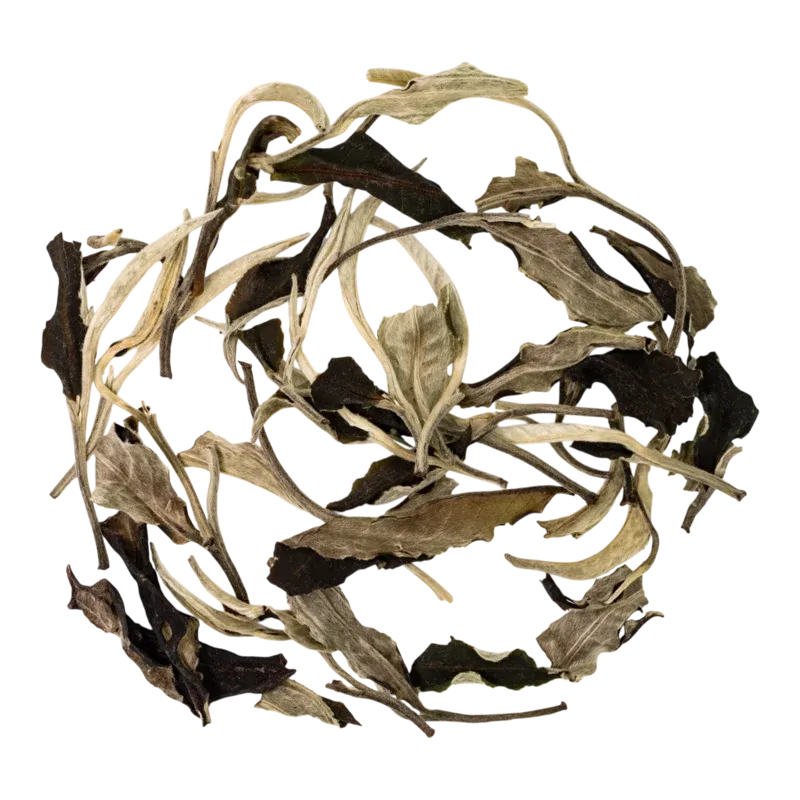
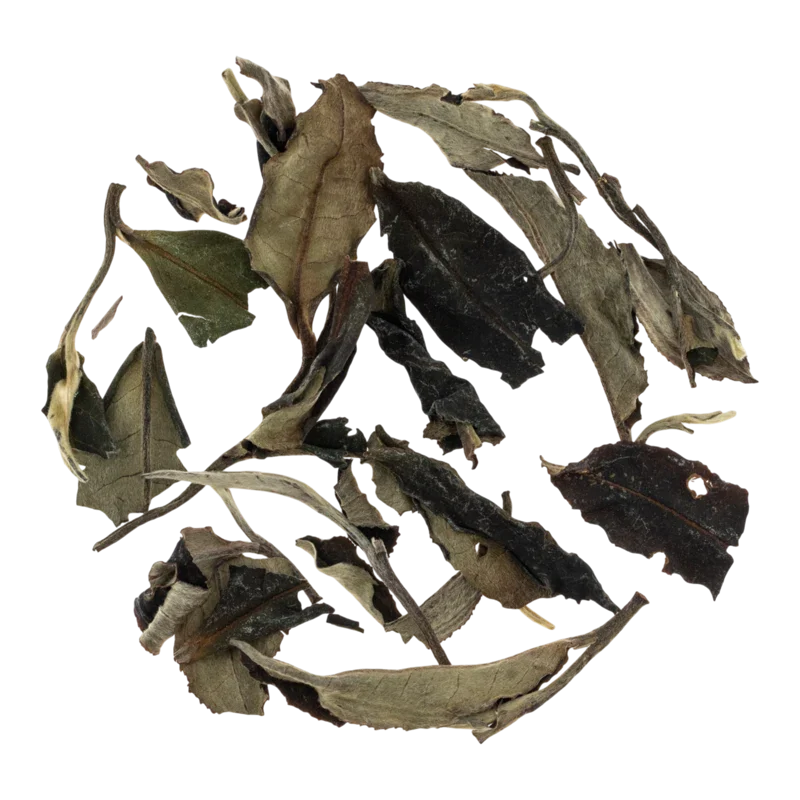
Produced from select buds; minimal processing. Appearance — thick silvery "needles," densely covered with down. Aroma — watery peach and orchid. Taste — most delicate, "creamy-sweet," with long aftertaste. Potential for multi-year aging.
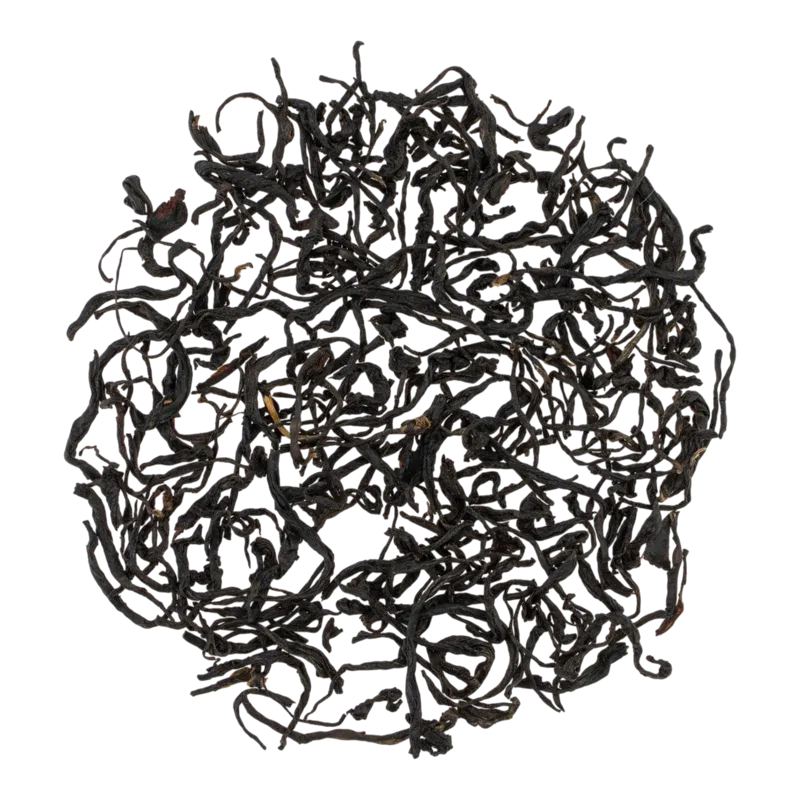
Golden tips, powerful honey-fruity aroma, dense sweet liquor of red-amber color. High content of theaflavins and thearubigins makes this tea exceptional in "brightness" and "liveliness" — particularly valued in blending.
Cultural Significance: Rucheng Bai Mao Cha is a symbol of the "thousand-year tea county" (千年古县). Tea is firmly embedded in the seasonal lifestyle of southern Hunan mountain communities; early spring pubescent leaves are perceived as a gift of nature and embodiment of the region's ecological purity. In a local saying, tea is called "green elixir of immortality, pearl among teas" (绿色仙丹,茶中明珠, lǜsè xiāndān, chá zhōng míngzhū). In 2023, the Chinese White-Haired Tea Culture Festival was held in Rucheng for the first time.
History: Rucheng's tea tradition spans more than a thousand years. The origin of Rǔchéng Bái Máo Chá can be traced to the Sōng dynasty (宋, Sòng, 960–1279), when local residents began collecting and consuming wild tea with characteristic pubescent buds and large leaves. During the Míng (明, Míng, 1368–1644) and Qīng (清, Qīng, 1644–1912) dynasties, white-haired tea from Rǔchéng was presented to the court as tribute tea (贡茶, gòngchá). Systematic scientific study of the population began in the late 1970s: Lín Mufang (林睦芳) studied biological growth characteristics, while Chén Xingyan (陈兴琰) and colleagues established the evolutionary position and relationships of this tea resource. In 1983, during the period of large-scale cultivation implementation, academician Yuán Lóngpíng (袁隆平, Yuán Lóngpíng) visited the county, highly praised the tea quality and left a calligraphic inscription "Bai Hao Han Xiang" (白毫含香, Báiháo hánxiāng, "White down contains fragrance"). In 1987, the Húnán Provincial Committee for Agricultural Crop Variety Certification (湖南省农作物品种审定委员会) officially recognized Rucheng Bai Mao Cha as a provincial variety. In the 1990s, against the backdrop of general tea market decline, the industry fell into decline, but from the early 2010s revival began with county government support and scientific guidance from tea academician Liú Zhōnghuá (刘仲华, Liú Zhōnghuá) from Hunan Agricultural University. Currently, 56 elite lines have been selected, and three main products developed: broken red te
Plants reach heights up to 6 m. Crown semi-spreading (半开张型), trunk relatively straight, sparse branching. Leaves large, long-elliptical or elliptical, green with yellowish tinge, slightly convex, with deep serration along edges, thick and rigid. Main distinguishing feature — exceptionally abundant pubescence (茸毛特多): white down covers both sides of young leaves and buds. Maximum recorded leaf dimensions — 27.8 × 11.1 cm. Weight of 100 buds (one bud + three leaves) — about 59.2 g. Flower large (3.8–4.0 cm diameter), 6–9 petals, ovary pubescent, style three-parted. Seeds large: diameter ~1.4 cm, weight of 100 seeds — 119.5 g.
Cultivar: Rucheng Bai Mao Cha — local wild (subsequently domesticated) population of Camellia sinensis var. pubilimba Chang (according to some classifications — C. sinensis var. assamica or transitional form), classified as "small tree" type (小乔木型, xiǎo qiáomù xíng), large-leaf class (大叶类, dàyè lèi), early maturation (早生种, zǎoshēng zhǒng), diploid (二倍体, èrbèitǐ). One of four unique local tea populations of Húnán (湖南四大特色地方茶树种质资源). 56 elite lines selected for further breeding.
Picking: Spring harvest — primary for quality releases; buds begin awakening in mid-March (春茶萌发期在3月中旬). Summer-autumn batches possible, but simpler in aroma and usually used for mass red tea.
Pluck Standard: For green tea (Bai Mao Jian) — one bud + one-two young leaves. For white tea (Bai Hao Yin Zhen) — predominantly single buds or bud + first leaf. For red tea — more mature leaf acceptable (one bud + two-three leaves) for density and sweetness of liquor.
Raw Material: Clean, undamaged buds and leaves without "over-maturity"; minimal contact with foreign odors; careful transport without crushing to avoid damaging down (critical for appearance and sensory perception).
Altitude: Tea plantations and natural stands located predominantly on mountain slopes at 300–900 m above sea level. Most valuable batches — from cooler and foggier zones.
Soil: Sandy loams (砂壤土) developed on granite foundations; deep soil layer rich in organics; pH 4.5–6.0 — optimal for tea plants.
Rucheng County is located at the junction of the Luoxiao and Nanling ranges — a mountainous region of southern Hunan with humid subtropical monsoon climate. Average annual temperature — 16.8°C (July — 25.6°C, January — 6.5°C); frost-free period — about 270 days; effective temperature sum — 5703.6°C. Formula: "summer without scorching heat, winter without severe cold" (夏无酷暑,冬无严寒). Average annual precipitation — 1543.3 mm; relative humidity — 82.2%; average annual sunshine duration — 1694.2 hours. Frequent fogs and abundant diffused light are characteristic — ideal conditions for amino acid accumulation and delicate aroma formation.
Regional forest coverage — 78.53%; tea stands surrounded by primitive secondary forest, ensuring ecological purity and biodiversity. Wild populations of Rucheng Bai Mao Cha in Jiulongjiang exist in conditions close to natural forest.
Current plantation area — about 1000 hectares (15,000 mu), annual production volume — about 960 tons; annual processing value exceeds 500 million yuan. Total area of geographical indication protection zone — 38,600 hectares.
In cool hours; sorting by grade.
Brief, 2–4 hours; leaf becomes pliable, "raw greenness" disappears.
In inclined wok at ~180°C. For abundantly pubescent material, critically important not to overheat: overheating gives dry bitterness and "harsh" coarse aroma. Movements — predominantly shaking (抖炒, dǒuchǎo) combined with brief steaming (闷炒, mēnchǎo).
Gentle, delicate, to preserve integrity of pubescent buds and avoid dust formation. Principle: "first light, then stronger, again light".
At moderate temperature to stabilize shape.
Bringing moisture to standard level (~6–7%).
Extended — about 48 hours; natural (in sun, 日光萎凋, rìguāng wěidiāo) or indoor (室内萎凋, shìnèi wěidiāo). Kill-green stage completely absent — enzymes inactivated spontaneously during drying.
~50°C.
~80°C.
Until leaf pliability achieved.
Intensive, to break cell walls and initiate oxidation.
Under controlled humidity and temperature conditions until copper-red leaf color and characteristic fruity-honey aroma achieved.
Stopping oxidation and fixing aroma.
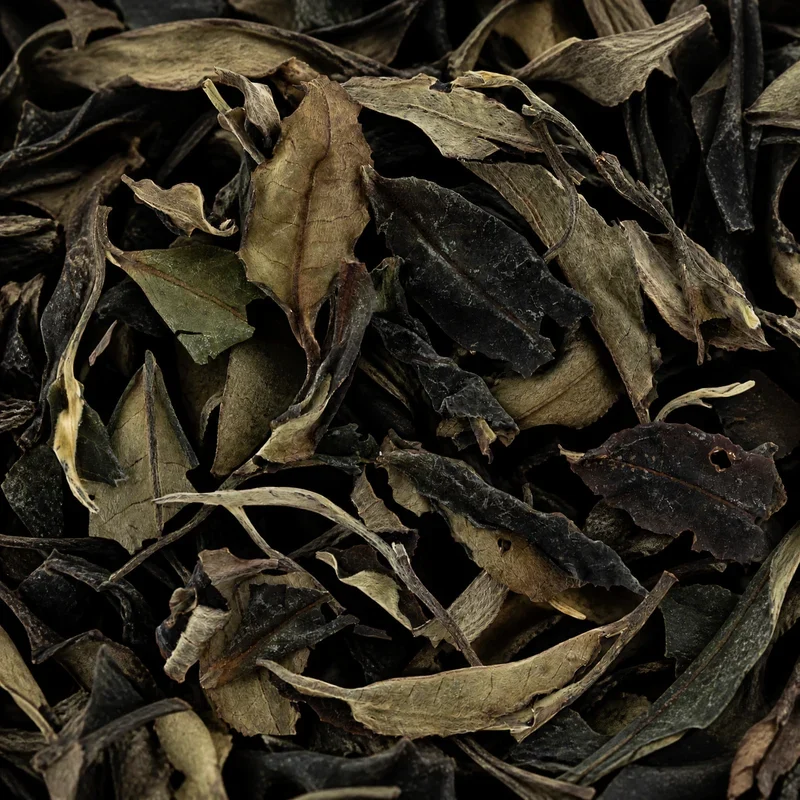
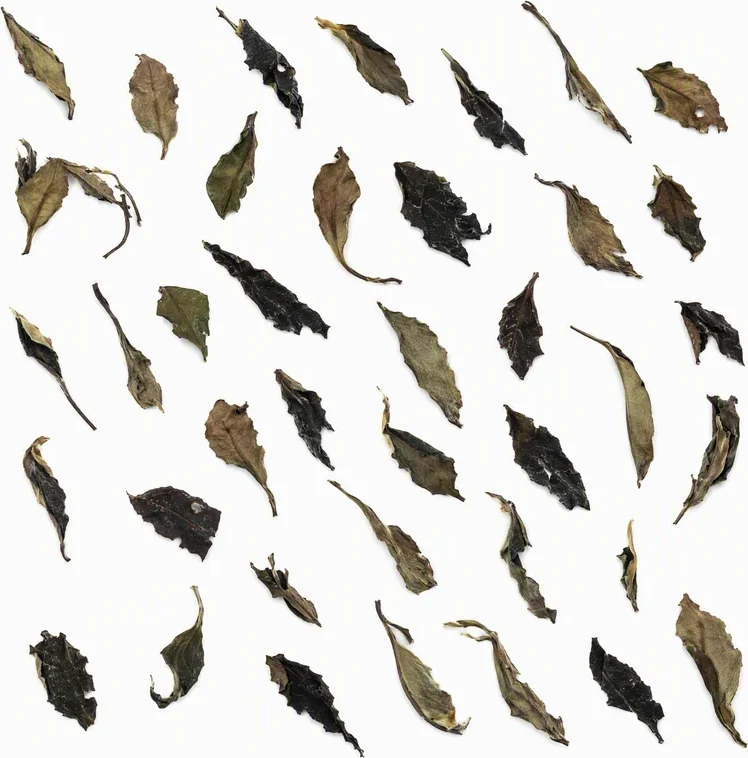
Dry Leaf Aroma: Fresh, clean; notes of white flowers, green almond, young grass. In white style — watery peach (水蜜桃香, shuǐmìtáo xiāng) and orchid-zhilan (芝兰香, zhīlán xiāng). In red — honey, dried fruits, floral notes.
Liquor Aroma: Floral-fruity, persistent; in white tea — delicate and "weightless"; in red — rich, with honey depth.
When brewing green Rucheng Bai Mao Cha, buds stand vertically in water — bud up, stem down — and perform oscillating up-down movements, resembling spring bamboo shoots. This spectacle is called "water ballet" (水中芭蕾).
Alkaloids: Caffeine (咖啡碱, kāfēi jiǎn) — 3.94–7.27%; typical value for spring material — about 3.8–4.27%. Theobromine, theophylline — in trace amounts.
Amino Acids: 2.67–7.63% (different samples); typical spring value — about 2.9%; separate analysis — 43.86 mg/g. High amino acid content, especially L-theanine, provides pronounced "amino acid" sweetness in early spring batches.
About 12.84% (laboratory analysis data). In white tea from Rucheng Bai Mao Cha, 7 monomers identified: EGCG (6.91%), GCG (2.25%), ECG (1.90%), GC, EGC, DL-C, EC.
42.19–57.94% — exceptionally high indicator, testifying to richness of internal content.
Minerals: Potassium (K), magnesium (Mg), fluorine (F), zinc (Zn), manganese (Mn).
Polyphenols: Spring samples — 19.76–43.04% dry mass (Baidu Baike data); typical content for spring "one bud + two leaves" material — about 36.5%. According to Hunan Tea Research Institute analysis: 29.83% (for specific sample). This is significantly higher than most green teas, reflecting the large-leaf nature of the material.
Vitamins: C, B group, A (carotenoids).
High polyphenol content (up to 43% in individual samples) provides powerful free radical neutralization — significantly exceeding indicators of most cultivated varieties.
Clinical trials on 64 middle-aged and elderly patients with hyperlipidemia showed that Rucheng Bai Mao Cha reduces cholesterol, triglycerides, chylomicrons and β-lipoproteins faster and more effectively than ordinary green tea, with differences reaching highly significant statistical levels.
Caffeine and L-theanine in synergy provide gentle concentration enhancement, alertness without nervousness.
Traditionally in Rucheng, tea (especially aged, 陈茶, chénchá) with a pinch of salt is used for acute gastrointestinal disorders — folk remedy with rapid symptomatic effect.
Vitamin C and polyphenols jointly support immune function; in local tradition tea is used for first cold symptoms.
Fluorine and polyphenol content suppresses cariogenic bacteria growth.
Pronounced thirst-quenching property (生津止渴) — valuable in hot and humid climate of southern Hunan.
With increased caffeine sensitivity and on empty stomach, green batches may be perceived as "harsh" — recommended to reduce dosage and water temperature.
15–20 seconds.
5–7 infusions.
Tea Amount: 4–5 g per 100 ml.
Teaware: Gàiwǎn (盖碗, gàiwǎn) of porcelain or glass cup (for observing "water ballet").
Water Temperature: 90–95°C.
Enemies: Moisture, light, high temperature, foreign odors, oxygen.
Airtight packaging, dry, dark, cool. Optimally — in refrigerator at 0–5°C. Shelf life — 6–12 months; maximum freshness — first six months.
Can be stored significantly longer; with proper packaging (airtight, without foreign odors, in dry cool place) quality not only preserves but improves with years. Local saying: "One year — tea, three years — treasure on shelf, seven years — precious" (一年茶,三年藏,七年宝). White Rucheng Bai Mao Cha — candidate for aging.
Airtight container, dry cool place. Shelf life — 1–3 years; over time taste softens, but aroma brightness decreases.
The most widespread commercial product. Dense, downy tea leaves; bright freshness, herbal-floral nuances; light amino acid sweetness. Optimal for daily tea drinking.
Produced from select buds; minimal processing. Appearance — thick silvery "needles," densely covered with down. Aroma — watery peach and orchid. Taste — most delicate, "creamy-sweet," with long aftertaste. Potential for multi-year aging.
Golden tips, powerful honey-fruity aroma, dense sweet infusion of red-amber color. High content of theaflavins and thearubigins makes this tea exceptional in "brightness" and "liveliness" — it is especially valued in blending.
Price Category: Varies from affordable (mass red tea batches) to high (early spring green and white batches from buds). Raw material rarity, hand picking and limited growing area — main cost factors.
Main threat — substitution with any "hairy" green or white tea from neighboring regions (Guangdong, other Hunan counties), or artificial down addition (dust, plant fiber fractions) to imitate visual effect.
No reviews yet. Tell us what you think of this tea.
Rate this tea and share your impressions. We review each submission before publishing it.