Brewing
Gongfu brewing
- Water temperature
- 75 °C
- Tea amount
- 5 g
- Water volume
- 100 ml
- First steep
- 10 s
- Time added per infusion
- 5 s
- Infusions
- 3



Nánjīng yǔhuā chá
Choose a brewing method. Start with the recommended quantities and time, then adjust to taste.
Brewing
Brewing
Taste
Tea encyclopedia
Alt Names: Yǔhuā Chá (雨花茶, Yǔhuā Chá—abbreviated form); previously (before 1959) raw material from this region was known as Zhōngshān Yúnwù Chá (钟山云雾茶, Zhōngshān Yúnwù Chá—"Cloud Tea of Mount Zhongshan").
Alt Names: Yǔhuā Chá (雨花茶, Yǔhuā Chá—abbreviated form); previously (before 1959) raw material from this region was known as Zhōngshān Yúnwù Chá (钟山云雾茶, Zhōngshān Yúnwù Chá—"Cloud Tea of Mount Zhongshan").
Category: One of China's Ten Famous Teas (中国十大名茶, Zhōngguó Shí Dà Míngchá), first included in this list in 1959 at the National Famous Tea Evaluation. National product with geographical indication (地理标志产品, dìlǐ biāozhì chǎnpǐn), protected by standard GB/T 20605-2006. Since 2020—in the list of geographical indications of the China-EU Agreement.
Coordinates: Approximately 32°03' North latitude, 118°46' East longitude (center of Nanjing).
Origin: China, Jiāngsū Province (江苏, Jiāngsū), sub-provincial city Nánjīng (南京, Nánjīng). Original territory—Sun Yat-sen Mausoleum on Mount Zijinshan (中山陵, Zhōngshān Líng) and Yǔhuātái Memorial Park (雨花台, Yǔhuātái). Modern production zone covers the entire territory of Nanjing metropolitan area: nine districts, thirty-one townships, with total tea plantation area of about 8,000 hectares. Production core—tea gardens in the memorial zones of Zhongshanling and Yuhuatai, as well as districts Jiangning (江宁), Líshuǐ (溧水), Gaochun (高淳), Pukou (浦口), Luhe (六合), Qīxiá (栖霞).
Type: Green tea (绿茶, lǜchá), unfermented (non-oxidized). By processing technology, belongs to chao-qing (炒青, chǎoqīng)—"pan-fired green teas," in which enzyme fixation ("kill-green") is carried out in a heated wok. By morphology—needle-shaped (针形, zhēnxíng) tea.
Cultural Significance: Yuhua Cha is not merely a beverage, but a true "business card" of Nanjing. According to fifth-generation master-keeper (传承人, chuánchéngrén) Chén Shèngfēng (陈盛峰, Chén Shèngfēng), "in Yuhua Cha one can taste the unique historical flavor of Nanjing." The tea embodies three layers of meaning: ancient Buddhist legend of heavenly flower rain, memory of revolution's victims, and modern pride in a living craft tradition recognized at the world level. Yuhua Cha is also considered the standard of needle-shaped forming technology: all major tea universities in China use it as a teaching sample when studying needle-shaped green tea production technology.
Although Yuhua Cha itself is a young tea, the history of tea cultivation in Nánjīng dates back to the era of the Six Dynasties (六朝, Liùcháo, 3rd–6th centuries). It was in the then Jiankang (建康, Jiànkāng—ancient name of Nanjing) that Chinese tea culture as a phenomenon was born: the custom of "replacing wine with tea" (以茶代酒, yǐ chá dài jiǔ) is attributed to the court of Wǔ ruler Sǔn Háo (孙皓), who resided in Nanjing. In the Tang era, "tea saint" Lù Yǔ (陆羽, Lù Yǔ) personally visited Qīxiá Temple (栖霞寺, Qīxiá Sì) on Mount Qixia to collect and taste tea, as evidenced by poet Huángfǔ Rǎn (皇甫冉, Huángfǔ Rǎn) in the poem "Seeing Off Lu Hongjian to Qixia Temple to Collect Tea" (《送陆鸿渐栖霞寺采茶》). On the rear slopes of Qixia Temple, ruins of the "Tea Tasting Pavilion" (试茶亭, Shìchá Tíng) and the inscription "White Milk Spring" (白乳泉, Bái Rǔ Quán), associated with Lu Yu, survive to this day. Míng Emperor Zhū Yuánzhāng (朱元璋, Zhū Yuánzhāng), who established the capital in Nanjing, issued the famous decree on "abolishing compressed tea and introducing loose tea" (废团茶而兴散茶), thereby forever changing China's tea culture.
In 1907, Jiāngsū official Zhèng Shìhuáng (郑世璜, Zhèng Shìhuáng) established the "Jiangnan Tea Plantation Society" (江南植茶公所, Jiāngnán Zhíchá Gōngsuǒ) on Mount Zijinshan—the first state tea research institution in Chinese history. This event is considered the starting point of modern Chinese tea science. Lù Yíng (陆溁, Lù Yíng)—a tea master called the "patriarch" of Nanjing tea—organized production of "Cloud Tea from Mount Zhongshan" (钟山云雾茶, Zhōngshān Yúnwù Chá) at the Society and first applied the technique of "cuo tiao" (搓条, cuōtiáo)—rolling tea leaves into straight strips, laying the foundation for the future form of Yuhua Cha.
In 1958, as part of the nationwide call for tea cultivation development, the party leadership of Jiangsu Province set the task: create a new famous tea as a gift for the tenth anniversary of the PRC and as a tribute to revolutionaries. A "Commission for Creating Famous Teas of Jiangsu Province" (江苏省名特茶创制委员会) was formed, including more than ten of the province's best tea masters. They gathered in the gardens of Zhongshan Mausoleum. During experiments, various tea leaf shapes were considered: sickle and hammer, long spear, saber, axe, flower petals—but all these variants required separate additional processing and contradicted the principles of traditional chao-qing. Then master Yú Yōngqì (俞庸器, Yú Yōngqì)—subsequently recognized as a key figure in forming Yuhua Cha technology—sought advice from Lu Ying. Lu Ying proposed to improve his straight-line "yunwu cha," making it even thinner, rounder and denser—like cedar needles (雪松, xuěsōng) on Mount Zijinshan. Yu Yongqi, in turn, introduced the technique of "zhua tiao" (抓条, zhuātiáo)—"grasping and pulling," borrowed from Longjing technology—and combined it with Lu Ying's "cuo tiao." After more than sixty experiments, on April 20, 1959, the first batch of new tea was successfully produced. It was named "Yuhua Cha"—after the Yuhuatai district, site of Communist executions during Kuomintang rule. The pine needle shape symbolized the evergreen spirit (万古长青, wàngǔ chángqīng) of revolutionary martyrs.
For Yuhua Cha production, bush-type (灌木型, guànmù xíng) tea plants of small- and medium-leaf varieties (中小叶种, zhōng xiǎo yè zhǒng) with leaf blade area ≤ 20 cm² are used. Among recommended asexual (clonal) varieties (无性系良种, wúxìngxì liángzhǒng): Qímén Zhú Yè (祁门槠叶), Jiūkēng (鸠坑), Lóngjǐng Cháng Yè (龙井长叶), Longjing 43 (龙井43), Zhong Cha 108 (中茶108). When selecting cultivars for Yuhua Cha, the following characteristics are considered: green leaf coloration, elongated bud and leaf shape, good tenderness retention ability (持嫩性, chínènxìng), moderate hairiness, high amino acid content, and good adaptability to local conditions.
The production core applies the system of "lin cha jian zuo" (林茶间作, lín chá jiānzuò)—intercropping of tea and trees. Particularly characteristic is the "meilin tao zhong" (梅林套种) model—planting tea bushes under the canopy of plum (meihua) groves. Diffused light and absorption of plum floral aromas create a unique microclimate that increases leaf tenderness and enriches its aromatic profile.
Picking: Spring harvest, strictly before or around the Qīngmíng festival (清明, Qīngmíng—early April). Highest quality—pre-Qīngmíng harvest (明前茶, Míngqián chá).
Pluck Standard: One bud and one beginning-to-unfurl upper leaf (一芽一叶初展, yī yá yī yè chū zhǎn). Total shoot length—no more than 3 cm (for highest grades—1.5–2.5 cm). Ratio of bud length to leaf—from 1:3 to 2:3. Angle between bud and leaf—no more than 15° (for highest grades) and no more than 45° (for standard). Hollow buds (空心芽), buds damaged by pests or diseases (病虫芽), and buds collected in rain (雨水芽) are not permitted. For 500 g of finished tea of highest quality, 50,000 to 60,000 buds with leaves are required.
Raw Material: Exceptionally high. Raw material must be fresh, whole, without mechanical damage, uniform in size. Minimal leaf coarseness is a mandatory condition for forming the correct needle shape.
Climate: Nánjīng is located in the subtropical humid monsoon climate zone (亚热带湿润气候, yàrèdài shīrùn qìhòu). Average annual temperature—15.5°C. Annual precipitation—900–1,000 mm. Frost-free period—about 225 days. Four clearly defined seasons: warm, humid summer and mild winter. Characteristic spring fogs and abundant dew during tea harvest period promote amino acid accumulation and formation of tender, "airy" aromatics.
Soil: Yellow-brown (黄棕壤, huáng zōng rǎng) soils characteristic of Nanjing hills. Slightly acidic: pH 4.1–6.1—optimal range for tea bushes. Rich in organic matter, well-drained. In the core zone (Zijinshan and Yuhuatai districts), volcanic deposits are present, enriching soil with minerals.
Tea plantations are located on gentle hill slopes (丘陵岗坡地, qiūlíng gǎngpō dì) at about 60 meters above sea level (production core). In suburban districts (Jiangning, Lishui, Gaochun), elevations vary from 20 to 200 m.
Water: Proximity to the Yangtze River (长江, Chángjiāng) and numerous Nanjing lakes ensures stable air humidity, so important for tender tea buds.
Described in section 3.
Manual sorting and removal of substandard leaves, fragments, impurities. Strictest visual control of raw material uniformity.
Freshly picked raw material is spread in a thin layer on clean bamboo trays in a shaded, ventilated room at 20–25°C for 3–5 hours. During this time, leaf moisture slightly decreases, grassy smell disappears, mild polyphenol oxidation begins, reducing astringency; protein molecules partially hydrolyze into amino acids (providing "freshness" to taste), and starch partially transforms into soluble sugars (providing "sweetness"). This stage is a kind of "preliminary tuning" of the flavor-aromatic profile. Leaves are turned 1–2 times with gentle movements.
Pan-firing in a heated wok (锅, guō) to inactivate oxidase enzymes and stop oxidation. Temperature—about 180–200°C. Goal—preserve bright green color, remove residual grassy taste, and fix the main aromatic profile.
Leaves are rolled by hand or with mechanical devices, breaking cellular structure and releasing cell juice to the surface. This lays the foundation for full extraction during brewing and begins forming the longitudinal "needle-like" orientation of tea particles.
Brief exposure to moderate heat to reduce moisture to intermediate level and prepare leaf for final shaping.
Key and technically most complex stage, constituting the "soul" of Yuhua Cha technology. Here the famous combination "cuo tiao—zhua tiao" (搓条抓条, cuōtiáo zhuātiáo) is applied:
Technique inherited from first-generation master Lu Ying. Leaf is rolled between palms along the wok wall, forming straight-line, elongated structure.
Technique brought by Yu Yongqi from Longjing technology and adapted for needle shape. Palm "pushes" and "rubs" tea leaf along wok surface, simultaneously compacting and rounding it.
Multi-stage drying at gradually decreasing temperature for uniform removal of residual moisture (to ≤ 7%), final fixation of form, and formation of final aroma.
Final calibration: removal of tea dust, fragments, size and shape alignment, ensuring finished product uniformity.
Since 1986, fully mechanical Yuhua Cha production lines have operated successfully. By 2010, about 90% of total volume was produced mechanically. Nevertheless, hand production is preserved as a quality standard and living craft tradition, protected as intangible cultural heritage.
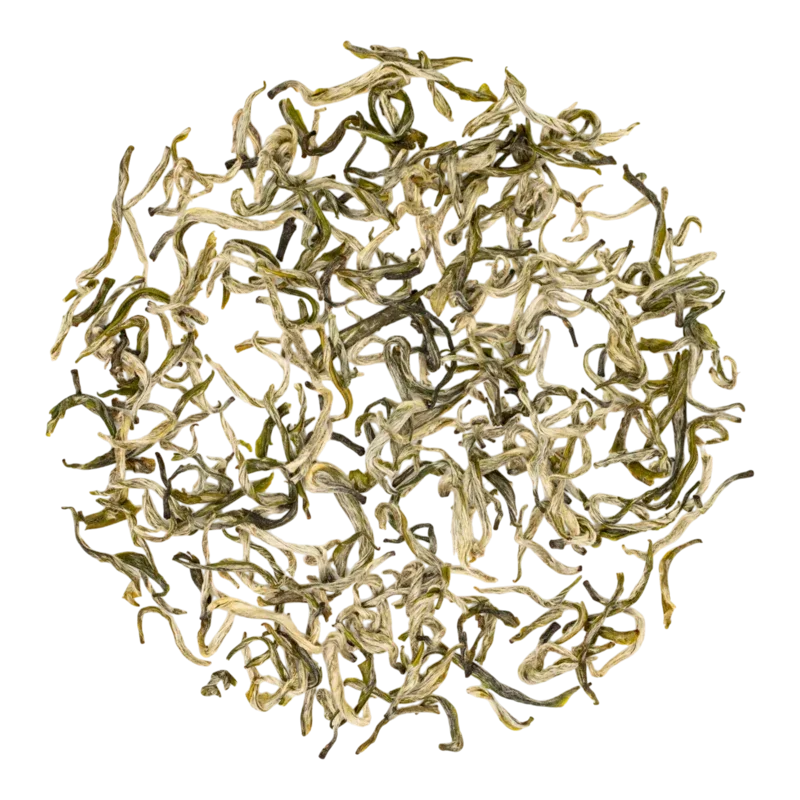
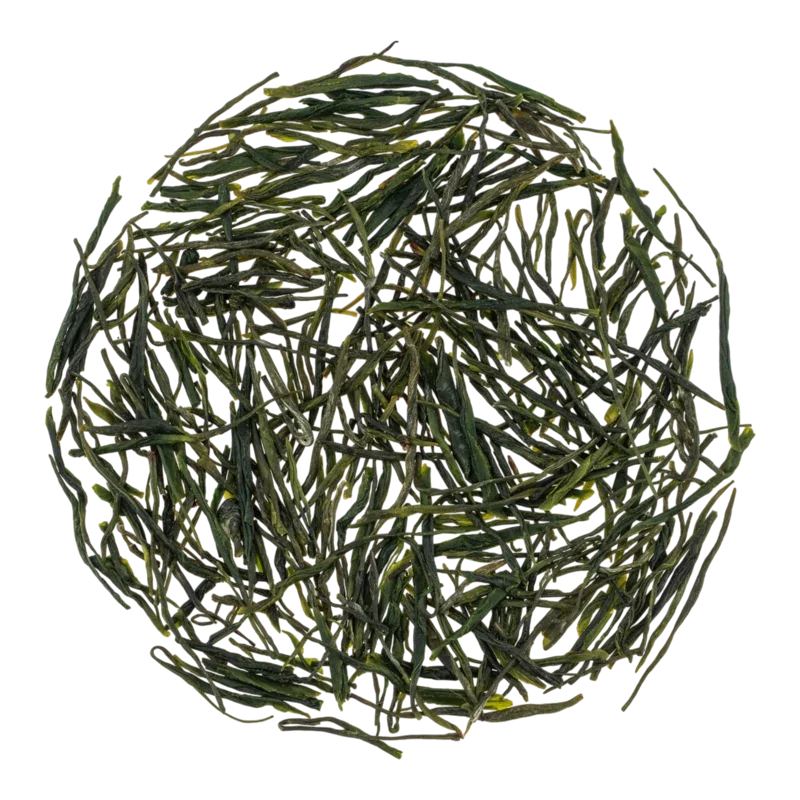
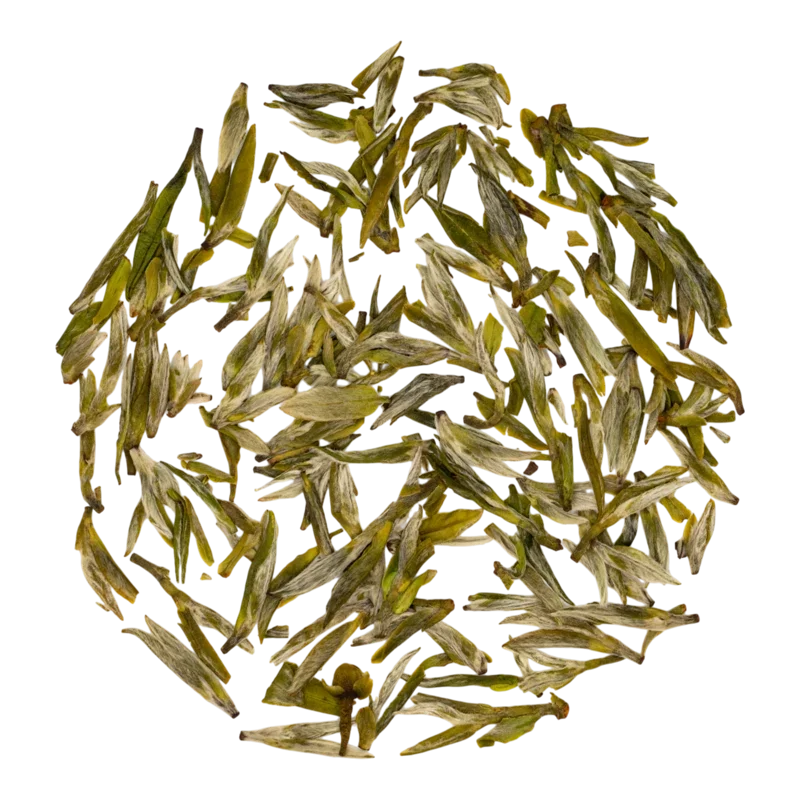
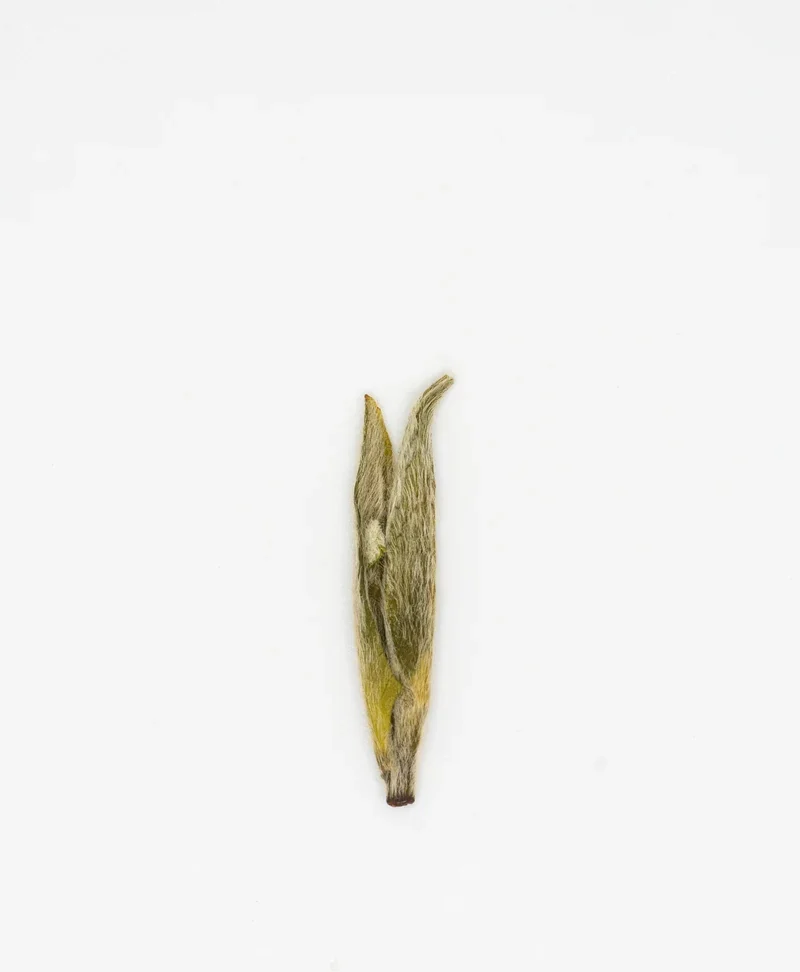
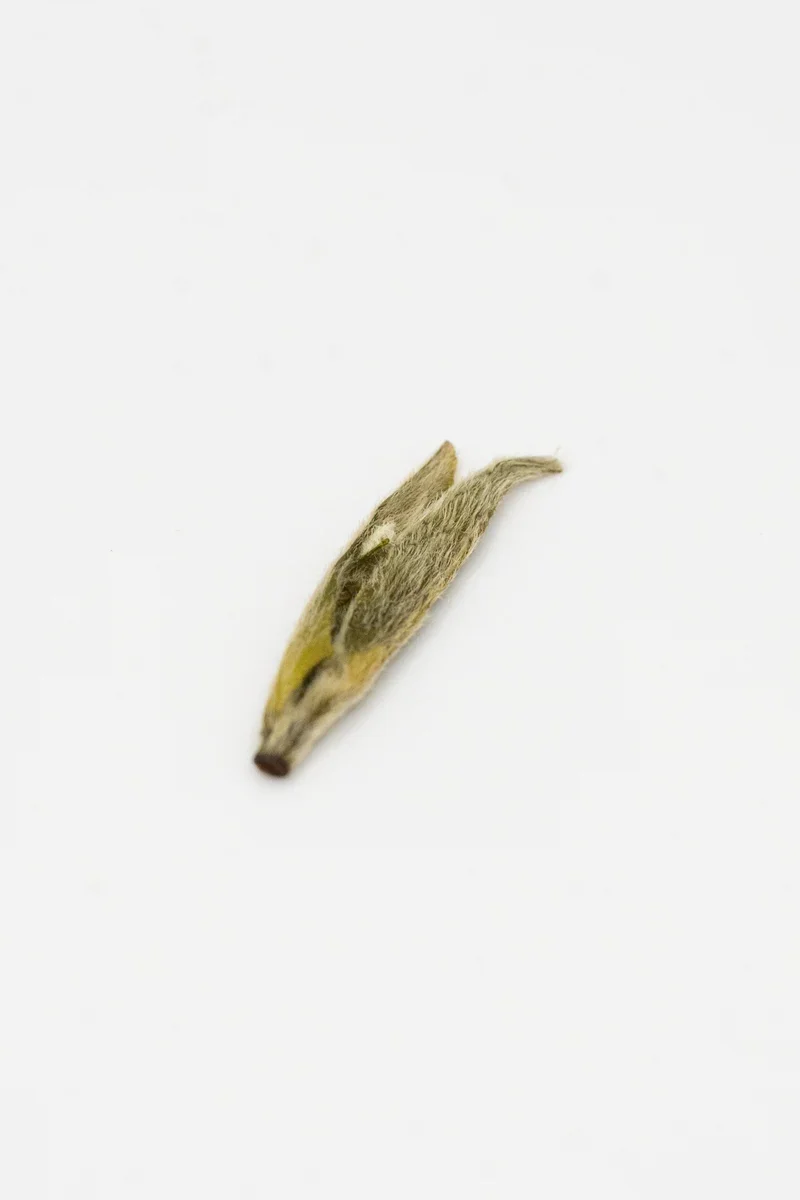
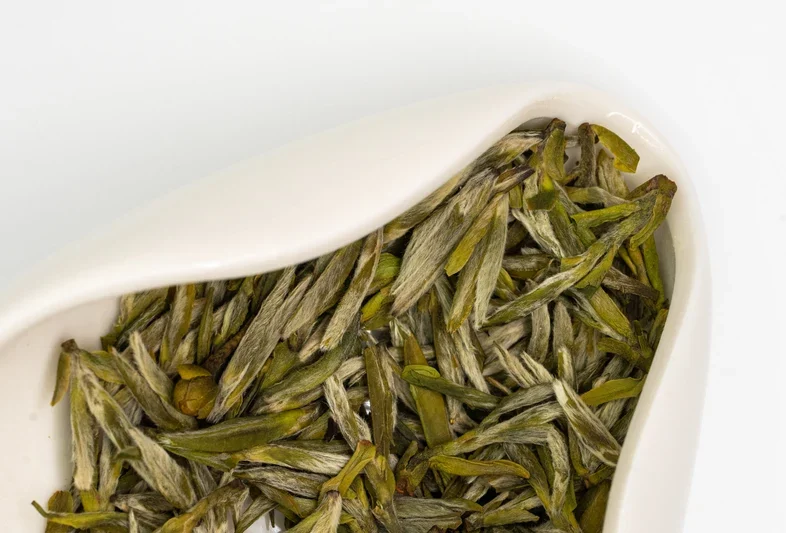
Dry Leaf Appearance: Thin, tightly rolled needle-shaped tea particles—"jin zhi" (紧直, jǐnzhí)—resembling cedar needles on Mount Zijinshan. Tea particles are straight, round in cross-section, elastic, with pointed tips (锋苗挺秀, fēngmiáo tǐngxiù). Color—dark green with light gloss (色泽绿润, sèzé lǜrùn). Hidden silvery-white tip hairs are present (白毫隐露, báiháo yǐnlù).
Dry Leaf Aroma: Clean, fresh (清香, qīngxiāng)—with pronounced green, floral notes (orchid) and light nutty nuances.
Liquor Aroma: Elegant, clean (清香幽雅, qīngxiāng yōuyǎ)—with dominating floral-herbal tones and subtle roasting note; when brewed with soft water, "airy" floral shades unfold.
Liquor Color: Tender green, clean, transparent, with lively bright shade (碧绿清澈, bìlǜ qīngchè). When brewed using "shang tou fa" method (上投法), white "haze" of hairs instantly appears on water surface, and tea particles, slowly descending, "dance" in the glass—a spectacle often compared to "swirling snowflakes" or "dance of jade needles."
Spent Leaves: Tender, uniform, bright green, elastic (嫩绿匀亮, nènlǜ jūnliàng). Buds and leaves are whole, undamaged, demonstrating high raw material quality and careful processing.
Taste: Fresh, soft and simultaneously rich (鲜醇甘爽, xiān chún gān shuǎng). Perceptible sweetness (甘, gān), pleasant freshness (鲜, xiān), soft fullness (醇, chún), and invigorating lightness (爽, shuǎng). Aftertaste—long, with growing sweetness hui-gan (回甘, huígān). Due to higher coefficient of mechanical action during shaping compared to other green teas, Yuhua Cha possesses denser "body"—this is one of its distinguishing features.
Alkaloids: Caffeine (咖啡碱, kāfēi jiǎn)—moderate content, typical for green teas. Theobromine (可可碱, kěkě jiǎn) and theophylline (茶碱, chá jiǎn)—in trace amounts. Caffeine in complex with L-theanine provides mild, prolonged stimulation without sharp excitement peaks.
Amino Acids: High content of free amino acids—characteristic feature of pre-Qingming teas, as in cool spring conditions catechin synthesis is slowed while amino acid synthesis is enhanced. Key component—L-theanine (L-茶氨酸, L-chá ānjī suān), giving taste characteristic "sweet freshness" (鲜甜, xiāntián) and "umami." L-theanine also provides relaxing effect without drowsiness, modulating caffeine action.
More than 300 volatile components, including linalool, geraniol, cis-3-hexenol (providing "green" freshness), phenylacetaldehyde (floral notes).
Minerals: Fluorine (promotes tooth enamel strengthening), potassium, magnesium, zinc, manganese. Mineral composition is enriched by volcanic deposits of core zone soils.
Polyphenols: Main active substances of green tea. Include catechins (儿茶素, ér chá sù), among which EGCG (epigallocatechin-3-gallate) stands out—the most powerful natural antioxidant. Polyphenol content in Yuhua Cha is moderately high for green tea from small-leaf varieties (typically lower than in large-leaf Yunnan teas, but sufficient for pronounced antioxidant effect). Catechins ECG and EGC and their oxidized forms (theaflavins) provide astringency and binding sensation of liquor, as well as its cardioprotective potential.
Vitamins: Vitamin C (ascorbic acid)—green tea preserves it significantly better than fermented teas. B-group vitamins (B₁, B₂, B₃).
Catechins and vitamin C neutralize free radicals, protect cell membranes and DNA from oxidative damage.
Catechins ECG and EGC promote reduction of "bad" cholesterol levels, prevent platelet aggregation, and maintain vascular elasticity.
Polyphenols accelerate fat breakdown and reduce their absorption in intestines.
Combination of caffeine and L-theanine provides balanced mental stimulation: increases attention concentration, improves memory and work productivity without "caffeine jump."
Stimulates digestive enzyme secretion, facilitates fatty food processing.
Caffeine and theobromine mildly stimulate diuresis, promoting excess fluid and toxin elimination.
Fluorine in tea composition strengthens enamel and prevents caries development.
Polyphenols have ability to bind radioactive isotopes strontium-90 and cobalt-60.
Ideal in hot weather—cools, refreshes, restores.
People with increased caffeine sensitivity are not recommended to consume tea in evening and before sleep.
Concentrated green tea liquor contains high amounts of polyphenols and caffeine capable of irritating stomach mucosa. Recommended to drink tea after meals or with light snack.
Freshly produced Yuhua Cha is recommended to age at least two weeks (preferably half a month) before consumption. Non-oxidized polyphenols, aldehydes, and alcohols in very fresh tea may cause stomach and intestinal discomfort.
Moderate consumption is acceptable, but doctor consultation is recommended due to caffeine content.
Caution should be observed—polyphenols and caffeine may stimulate hydrochloric acid secretion.
In traditional Chinese medicine, green tea belongs to "cold" (寒, hán) products, and women during menstruation are recommended to limit its consumption.
Catechins may affect absorption of iron preparations and some antibiotics. Recommended to separate tea and medication intake by at least one hour interval.
Optimal—50–60°C. Too hot tea (above 65°C) may damage esophageal mucosa.
Classic and most recommended method for Yuhua Cha. Transparent walls allow admiring the "needle dance"—one of the main aesthetic pleasures of this tea. Glass cup volume 200–250 ml.
White porcelain volume 100–150 ml—for more detailed aroma and taste tasting in short infusion mode.
Suitable for group tea drinking and liquor beauty demonstration.
When tasting, let liquor completely wash entire tongue surface—this best reveals hui-gan (回甘, huígān—growing returning sweetness). Don't drink tea on empty stomach—high polyphenol concentration may cause stomach discomfort. Optimal drinking temperature—50–60°C.
Tea Amount: 3–5 g per 150–200 ml water ("European" brewing method in glass); 6–8 g per 100–120 ml (gongfu cha method in gaiwan, short infusions).
Water Temperature: 80–85°C (for special grades—closer to 80°C, for 1st–2nd grades—up to 90°C). Boiling water is categorically prohibited—it destroys tender leaf structure, "kills" aroma, and imparts bitterness (忌用沸水, jì yòng fèishuǐ).
Mandatory. Yuhua Cha is porous, hygroscopic material (疏松多孔的亲水茶) with powerful ability to absorb moisture and odors. Store in airtight container (foil bag with vacuum packaging, jar with tight lid).
Light accelerates chlorophyll and polyphenol oxidation, causing color loss and aroma "burning out."
Categorically not allowed to store near spices, perfumery, household chemicals, and other aromatic products.
Oxidation leads to liquor browning, freshness loss, and nutritional value reduction.
Store main supply in freezer or refrigerator in airtight packaging. For current consumption, set aside small portion (for 1–2 weeks)—don't take out entire package daily to avoid moisture condensation during temperature changes. After opening—consume as quickly as possible: Yuhua Cha freshness directly determines its aroma and taste.
Temperature: Optimally—0–5°C (refrigerator). Elevated temperature accelerates decomposition of amino acids, vitamins, and aromatic compounds.
Standard of flat green tea. Completely different morphology (flat vs. needle-shaped), different main shaping technique (pressing in wok vs. rolling and pulling). Longjing—bean-nutty, with light "wok" aroma; Yuhua Cha—more floral-herbal, with greater body density due to increased mechanical action. In technical production complexity, Yuhua Cha surpasses Longjing.
Classic twisted green tea from Jiangsu (Lake Taihu). Shape—small spiral; Yuhua Cha—straight needle. Both teas—spring, small-leaf, with high amino acid content. Biluochun—more delicate, with fruity notes; Yuhua Cha—more straightforward, "mineral," with dense body.
Hunan needle-shaped tea from "Three Famous Needles." Similar in shape but differs in raw material variety (Hunan medium-leaf cultivars), terroir (Xuefengshan mountains), and taste profile (more astringent, with pronounced bitterness).
Hubei needle-shaped tea, but belonging to "zheng-qing" (蒸青, zhēngqīng) category—"steamed" green teas (steam fixation, not pan-firing). Yulu—more "Japanese" in character, with pronounced seaweed taste; Yuhua Cha—"purely Chinese," with roasting note and floral aromatics.
Henan finely twisted green tea. Also belongs to "famous ten" category, but morphologically—rather thin strip than perfect needle. Maojian—more hairy, with dominating chestnut note; Yuhua Cha—smoother, with floral accent.
Price Category: Yuhua Cha is medium and high price segment tea. Special grades of pre-Qingming hand-picked tea may cost significantly more. Price depends on harvest time (before Qingming/after Qingming), grade, hand or machine processing, producer reputation, and geographical indication certificate presence.
By 2026, tea plantation area is planned to reach 120,000 mu (about 8,000 ha), annual production volume—600 tons, primary product value—500 million yuan, total value chain worth—over 1 billion yuan, industry employment—more than 30,000 people.
No reviews yet. Tell us what you think of this tea.
Rate this tea and share your impressions. We review each submission before publishing it.