Brewing
Gongfu brewing
- Water temperature
- 75 °C
- Tea amount
- 5 g
- Water volume
- 100 ml
- First steep
- 10 s
- Time added per infusion
- 5 s
- Infusions
- 3

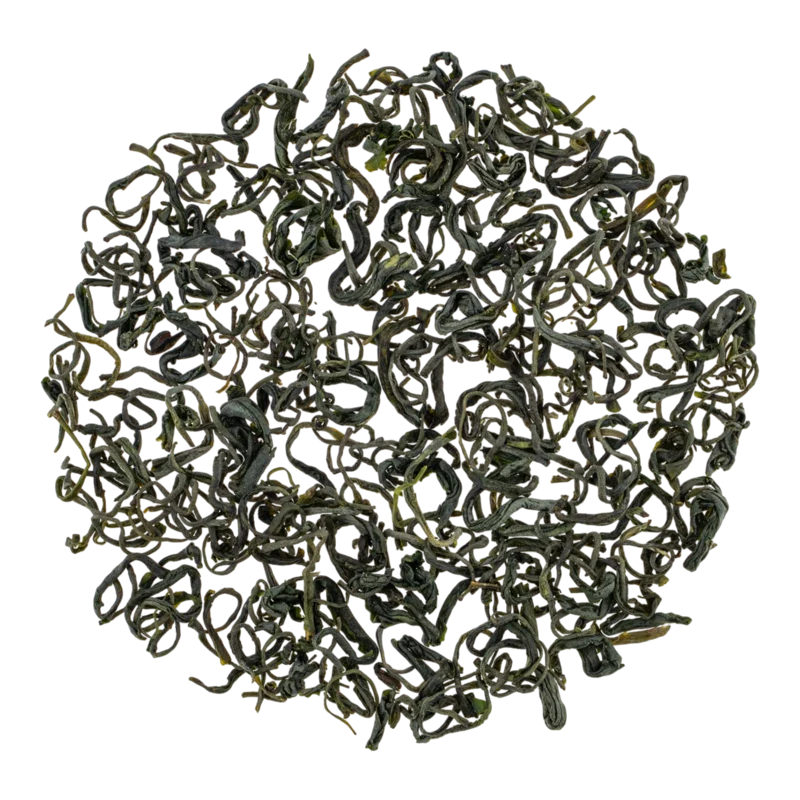
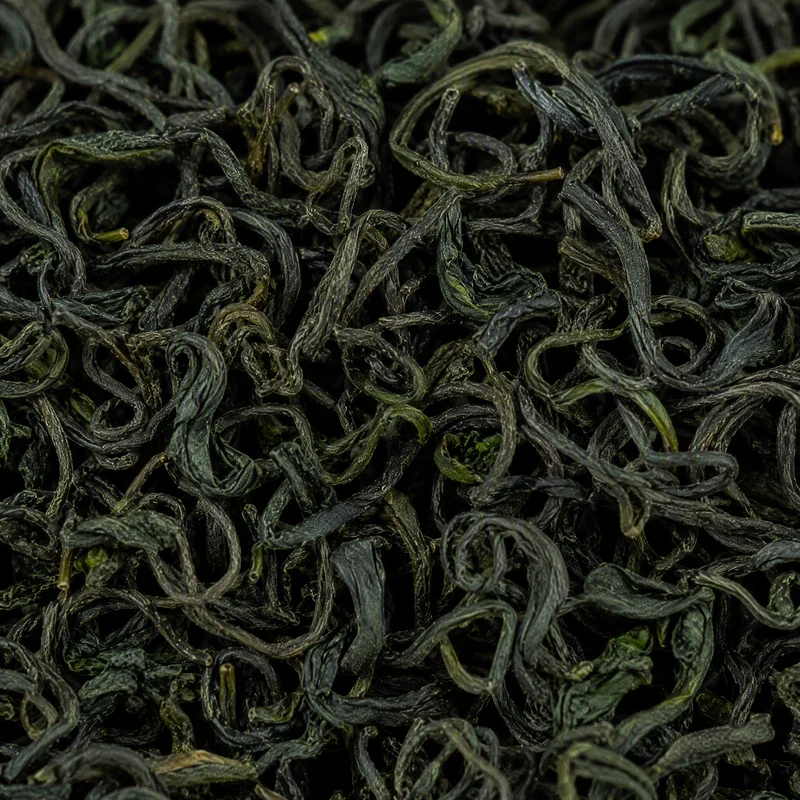
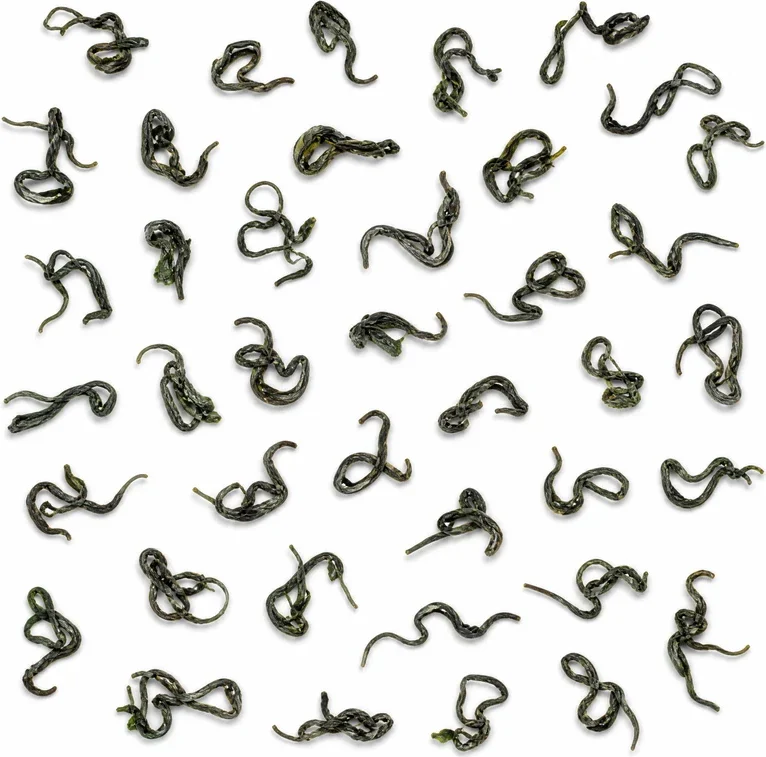
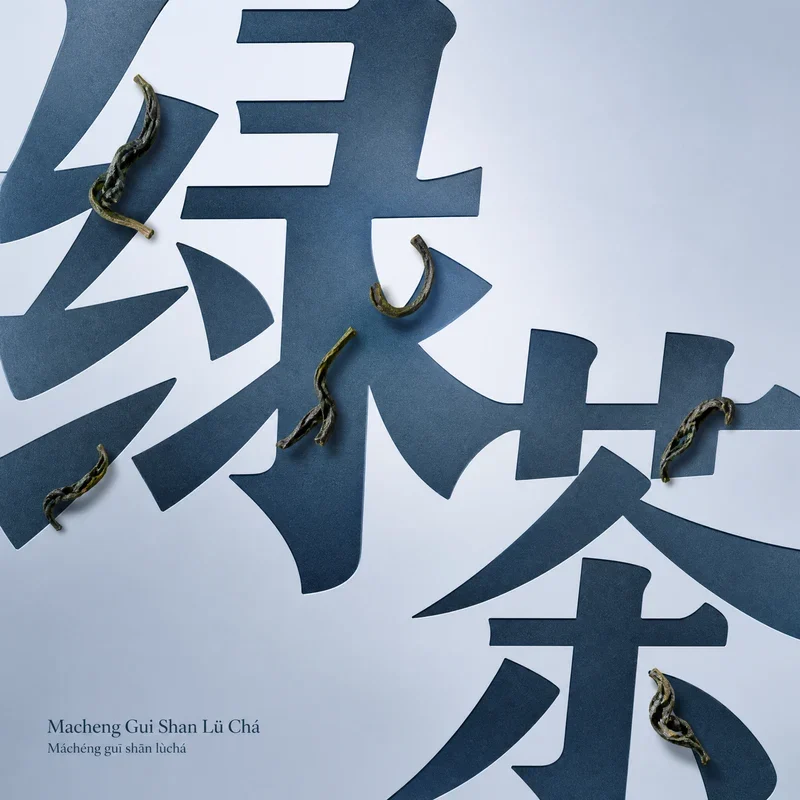
Máchéng guī shān lǜchá
Choose a brewing method. Start with the recommended quantities and time, then adjust to taste.
Brewing
Brewing
Taste
Tea encyclopedia
Category: Chinese geographical indication product (国家地理标志产品, 2012). One of "China's Five Famous Teas" (全国五大名茶, 1980). Winner of the Ministry of Agriculture Quality Award (农牧渔业部优质奖, 1988). Included in "Collection of Research on Famous Chinese Teas" (《中国名茶研究选集》). Tāng dynasty tribute tea (唐代贡茶). Sōng dynasty imperial product (宋代御品). Mentioned in Lu Yu's "Classic of Tea." As of 2024 — tea garden area comprises 35,000 mu (~2,333 hectares), annual production volume — 150 tons, total product value...
Category: Chinese geographical indication product (国家地理标志产品, 2012). One of "China's Five Famous Teas" (全国五大名茶, 1980). Winner of the Ministry of Agriculture Quality Award (农牧渔业部优质奖, 1988). Included in "Collection of Research on Famous Chinese Teas" (《中国名茶研究选集》). Tāng dynasty tribute tea (唐代贡茶). Sōng dynasty imperial product (宋代御品). Mentioned in Lu Yu's "Classic of Tea." As of 2024 — tea garden area comprises 35,000 mu (~2,333 hectares), annual production volume — 150 tons, total product value — 60 million yuan.
Coordinates: Approximately 31°10′ N, 115°10′ E.
Origin: China, Húběi Province (湖北省, Húběi Shěng), Huanggang Prefecture-level City (黄冈市, Huánggāng Shì), Macheng County-level City (麻城市, Máchéng Shì). Dàbié Mountain range (大别山), Mount Guifengshan (龟峰山, 1,320 m). Production zone includes five tea districts: Guìshān Tea Farm (龟山茶场, "Guishan Tea Plantation"), Guishanzhen Township (龟山镇), Sanhekou Township (三河口镇), Muzidian Township (木子店镇), Zhangjiafan Township (张家畈镇).
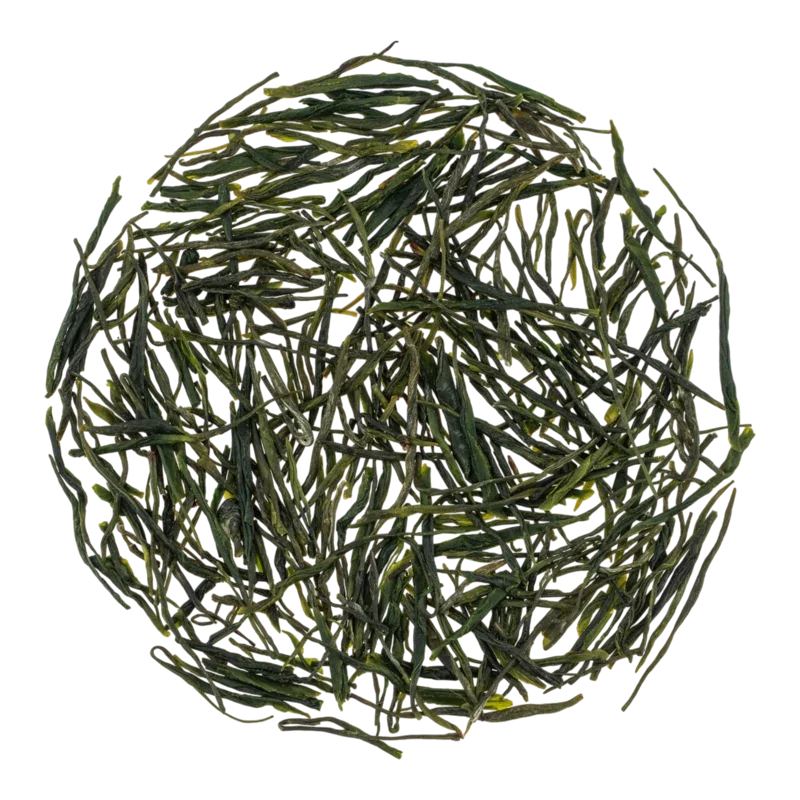
Type: Green tea (绿茶, lǜchá), non-oxidized. Belongs to strip-shaped green teas (条形绿茶, tiáoxíng lǜchá) with pan-firing fixation technology. Tea leaf shape — tight, straight, thin, with pronounced down (紧细圆直、锋毫显露). Proprietary technology — "slow pan-firing over low heat followed by aroma enhancement over high heat" (小火长炒+旺火提香, xiǎohuǒ chángchǎo + wànghuǒ tíxiāng).
Single bud or one bud + one leaf, harvested before Qingming. Abundant down. Chestnut aroma with "tender" notes (嫩香). Price — from 450 yuan per 500 g.
One bud + one leaf, harvested before Guyu. Price — 200–300 yuan per 500 g.
One bud + two leaves. Mass grade, also used for packaged products.
Villages of Luobaichuan (罗百川村), Guiwei (龟尾村, "Turtle Tail Village"), and Shibingshan (柿饼山村, "Persimmon Mountain Village") at elevations of 800 m and above. These villages account for up to 70% of supreme grade production.
Cultivar: The raw material base consists mainly of local population cultivars Guicha-1 (龟茶一号, Guīchá Yīhào) and Guicha-2 (龟茶二号, Guīchá Èrhào) — medium- and small-leaf varieties (Camellia sinensis var. sinensis), distinguished by high frost resistance and fleshy buds with pronounced "tenderness retention" (持嫩性强). Wild ancient tea trees over 100 years old are also preserved on the slopes of Guifengshan. Biochemical profile of fresh leaves: polyphenols — 17.69%, amino acids — 4.36% (~20% higher than flatland green teas from Hubei).
Picking: Main season — spring. Supreme grade is harvested before Qīngmíng (清明, Qīngmíng, ~April 5); first grade — before Gǔyǔ (谷雨, Gǔyǔ, ~April 20). Harvest standard for supreme grade — single bud or one bud with one barely opened leaf.
Climate: The region is located at the junction of three provinces — Hubei, Henan, and Anhui — in the central part of the Dabie Mountains. Climate — transitional between northern subtropical and temperate. Average annual temperature — 16°C. Annual precipitation — 1,200–1,300 mm. Number of cloudy and foggy days — more than 180 per year. Proportion of diffused light — over 70%. Daily temperature variation — more than 8°C, which promotes amino acid accumulation and slows L-theanine breakdown, ensuring high "freshness" (鲜爽, xiānshuǎng) of the tea.
Soil: Yellow-brown mountain soils (黄棕壤, huángzōngrǎng), pH 4.0–6.5. Organic matter content ≥1%. Soils are rich in iron (Fe) and zinc (Zn), which is favorable for polyphenol biosynthesis. Soil layer thickness — at least 60 cm.
Tea gardens are located at 600–1,000 m elevation. Production core — above 800 m. Maximum elevation of the massif — 1,320 m (Xiandaofeng peak, 险刀峰).
Forest coverage of Guifengshan — 95% (one of the highest indicators among Chinese tea regions). Negative ion concentration — up to 200,000 per cm³. Water resources — first class purity; the sources of the Jushui (举水) and Bashui (巴水) rivers are located directly in the tea garden zone. Guifengshan has the status of National Ecological Tourism Demonstration Zone (国家生态旅游示范区).
3–4 hours at room temperature 20–25°C. Layer thickness — no more than 5 cm. Leaves lose excess moisture (to 60–65% content) and begin to release "grassy" aroma.
Pan temperature — 120–150°C. Gentle pan-firing that deactivates oxidase while preserving leaf tenderness. Control is conducted manually — by color change and tactile elasticity.
Following the principle "light → heavy → light" (轻→重→轻). Task — to break cellular structure for subsequent extraction without damaging tea leaf integrity.
80–120°C. Moisture reduction to intermediate level.
Method of "palm rolling" (掌心搓揉, zhǎngxīn cuōróu) — master forms tight, straight, thin strips exclusively with palms. Mechanical pressing is categorically prohibited by standard — only handwork ensures the characteristic structure "紧细圆直" (tight, thin, round, straight).
Temperature — 60°C. Slow prolonged pan-firing until moisture reduction to approximately 20%. This stage forms the "body" of the chestnut aroma.
Temperature — 120°C. Rapid final heating that "locks" the chestnut aroma inside the tea leaf. The contrast between slow accumulation of aromatic compounds and their instantaneous fixation at high temperature is the key technological feature distinguishing Guishan Yanlü from other Hubei green teas.
Dry Leaf Appearance: Tight, thin, straight strips (紧细圆直) with pronounced silvery-white down (锋毫显露). Color — emerald green with oily luster (翠绿油润). Tea leaves uniform in size, without fragments and "tea dust."
Dry Leaf Aroma: Clean, high, with pronounced chestnut notes (栗香, lìxiāng). Supreme grade additionally shows "tender aroma" (嫩香, nènxiāng) — delicate note of fresh greens and young corn.
Liquor Aroma: Chestnut aroma — persistent, primary (栗香持久). Spring tea has "clean aroma" (清香, qīngxiāng) with light floral overtones. Cup aroma after cooling persists more than 10 minutes — indicator of high volatile aromatic compound content.
Liquor Color: Emerald green, clear and bright (碧绿清亮, bìlǜ qīngliàng). Transparency — high, without cloudiness or sediment.
Spent Leaves: Yellow-green, tender, uniform (黄绿嫩匀). Leaves retain elasticity and resilience after 3–4 infusions, testifying to high brewing durability.
Taste: Mellow and rich (醇厚, chúnhòu) and fresh and brisk (鲜爽, xiānshuǎng). Returning sweetness (回甘, huígān) — distinct and prolonged. Characteristic taste formula — "astringency transforming to sweetness" (涩中泛甜, sè zhōng fàn tián): initial light astringent note transforms into clean mineral sweetness. Aftertaste — long, with "chestnut echo."
Amino Acids: 4.36% — ~20% higher than flatland green teas from Hubei. High amino acid content, primarily L-theanine, ensures pronounced "freshness" (鲜爽) and sweet taste of the liquor. Polyphenol/amino acid ratio is approximately 4:1 — optimal proportion for "醇厚鲜爽" (mellow and fresh) taste profile.
~4.5% — above average for green tea (typical level — 2–4%). Provides enhanced tonic effect.
39.93% — high indicator (national standard — ≥39%), testifying to richness of internal composition.
2.65% — contribute to "returning sweetness" and taste roundness.
Minerals: Fe, Zn, K, Mg, Mn. Zinc (Zn) content is elevated — characteristic feature of Dabie Mountain soils.
Polyphenols: 17.69% — moderate indicator for green tea, below average level (20–30%), explained by high-mountain origin and increased proportion of diffused light. Low polyphenol level means less bitterness and astringency.
Vitamins: Vitamin C, B-group vitamins (B₁, B₂), vitamin E — typical set for quality green tea.
Catechins (EGCG, ECG) and vitamin C jointly neutralize free radicals, slowing cellular aging.
Caffeine (~4.5%) combined with L-theanine provides "gentle tone" — increased concentration without sharp nervous excitement.
Caffeine accelerates lactic acid removal from muscles after physical exertion, promoting faster recovery.
Polyphenols help reduce "bad" cholesterol (LDL) levels and maintain vascular elasticity.
Tannins and soluble sugars stimulate digestive enzyme secretion and normalize peristalsis.
Catechins show bacteriostatic activity against a wide spectrum of pathogens.
L-theanine promotes alpha brain wave generation, improving attention concentration and working memory.
Complex of vitamin C, zinc, and polyphenols supports the body's immune response.
Tea Amount: 3 g per 150 ml water (1:50 ratio).
Teaware: Glass tumbler (玻璃杯) — for observing tea leaf "dance"; gaiwan (盖碗) with 120–150 ml capacity; porcelain teapot — for daily brewing.
Water Temperature: 85–90°C for first and second grades; 80°C — for supreme grade (more delicate raw material requires lower temperature to prevent bitterness).
Container: Hermetic vacuum packaging from aluminum foil — optimal option. Storage in tin can with tight lid is acceptable.
Enemies: Moisture, light, foreign odors, high temperature. Do not store near products with strong aroma (spices, coffee).
Shelf Life: 12 months under proper conditions. After opening package, recommended consumption within 1 month.
Temperature: Refrigerator, 0–5°C. For long-term storage — freezer (−18°C) in opaque hermetic packaging.
Also produced in Hubei, but uses Japanese steaming method (蒸青) instead of pan-firing. Taste more "green," with umami; aroma — marine, "seaweed-like." Guishan Yanlü — pan-fired tea with pronounced chestnut aroma and fuller body.
Produced in neighboring Henan Province, also in Dabie Mountains. Similar terroir, but different rolling and drying technology. Maojian — more "sharp," with pronounced down and fresh greens in aroma. Guishan — more "rounded" and chestnut-like.
"Cloud and Mist of Mount Lushan" — famous tea from neighboring Jiangxi Province. Dong Biwu compared Guifengshan to Lushan. Both — high-mountain "cloudy" teas, but Lushan Yunwu has more pronounced "beany" aroma (豆香), while Guishan — chestnut.
Tea from Anhui, also produced in Dabie Mountain system (eastern continuation). Comparable elevation and cloudiness. Maofeng — lighter, with floral-herbal aroma and "orchid" notes. Guishan — fuller, with more pronounced chestnut base.
Large-leaf tea from Anhui. Fundamentally different form (large flat leaves), but similar terroir principle — high-mountain mist, acidic soils. Houkui — "orchid-like," elegant; Guishan — more "robust," with pronounced structure.
Supreme grade (特级, pre-Qingming tea) — from 450 yuan per 500 g. First grade — 200–300 yuan per 500 g. Second grade — 80–150 yuan per 500 g.
Harvest season (pre-Qingming tea — most expensive), raw material grade, growing elevation (tea from villages above 800 m — most valuable), hand vs. mechanical processing.
No reviews yet. Tell us what you think of this tea.
Rate this tea and share your impressions. We review each submission before publishing it.