Brewing
Gongfu brewing
- Water temperature
- 93 °C
- Tea amount
- 5 g
- Water volume
- 100 ml
- First steep
- 10 s
- Time added per infusion
- 5 s
- Infusions
- 4

Máchéng guī shān hóngchá
Choose a brewing method. Start with the recommended quantities and time, then adjust to taste.
Brewing
Brewing
Taste
Tea encyclopedia
Category: Regional Chinese red teas, gongfu red tea (工夫红茶, gōngfu hóngchá).
Category: Regional Chinese red teas, gongfu red tea (工夫红茶, gōngfu hóngchá).
Coordinates: ≈ 31.17° N, 115.01° E.
Origin: China, Húběi Province (湖北省, Húběi Shěng), Huánggāng Prefecture (黄冈市, Huánggāng Shì), Macheng County-level City (麻城市, Máchéng Shì), Guifengshan Mountain Range (龟峰山, Guīfēng Shān). Tea plantations are located in the villages of Guiwei (龟尾), Shibingshan (柿饼山), Dakuaidi (大块地), Dafengjian (大峰尖), Hanjiamiao (韩家庙), Yuhuangdian (玉皇殿) and others, at elevations from 600 to 1000 m.
Type: Red tea (black tea) (红茶, hóngchá) — fully oxidized.
Cultural Significance: Guifengshan is a major historical and cultural monument of Hubei, connected not only with tea but also with Buddhist heritage (Nengren Temple, 能仁寺, founded during the Tang), military history (the Battle of Baiju, 柏举之战, 506 BCE, one of the key victories of general Sun Wu), and nature tourism (the world's largest population of wild rhododendrons). Tea from Guishan is perceived as the "voice of Dabie Mountain" — an embodiment of the harsh and generous nature of the ridge that separates Central and Eastern China. For the residents of Macheng, it remains a symbol of local identity.
History: The tea tradition of Macheng can be traced back at least to the Tang dynasty (618–907). In the classic "Cha Jing" (《茶经》, "The Classic of Tea", 760 CE) by Lù Yǔ (陆羽, Lù Yǔ), it is recorded: «黄州茶生麻城县山谷,品与荆州、梁州同» — "Tea from Huangzhou grows in the mountain valleys of Macheng County, its quality is comparable to teas from Jingzhou and Liangzhou." Thus, Guishan is one of the few tea regions documented in the world's first tea treatise. Folk memory preserves a legend about a visit by Tāng Emperor Taizong (唐太宗, Li Shìmín) to Guifengshan in 630 CE, where, after tasting the local tea, he left a poetic line: «龟涎煮龟茶,天下第一家» — "Turtle spring brews turtle tea — the first house under Heaven." In the later period, under the Qing, Guishan continued to be a notable tea producer, as evidenced by a record in the "Macheng Xianzhi" (《麻城县志》, "Macheng County Chronicle"): "Tea from Huangzhou in Macheng — from Turtle Peak is the best, its taste is clear and noble." In the 20th century, many historical teas of Dabie Mountain fell into decline. For their revival, in 1958 the State Tea Farm Guìshān (国营龟山茶场, Guóyíng Guī Shān cháchǎng) was established, based in the depths of the Guifengshan mountain range. On its territory, plantations were established in more than twenty villages at elevations of 600–1000 m. In 1959, based on local raw materials, the signature green tea Guishan Yanlü (龟山岩绿, "Rock Green of Turtle Mountain") was developed, becoming the region's calling card. The red version — Guishan Hong C
Name Breakdown: 麻城 (Máchéng) — the name of the county-level city located at the southern foothills of Dabie Mountain. The character 麻 (má) means "hemp" or "flax" and is connected to the history of the textile industry in the region. 龟山 (Guī Shān) — "Turtle Mountain": the Guifengshan mountain range extends for more than a hundred li, and its main peak (1300+ m) resembles a giant turtle in outline. 红茶 (Hóngchá) — red tea, indicating the processing method.
Cultivar: Local group populations of Camellia sinensis var. sinensis (群体种, qúntǐ zhǒng), adapted to the mountain conditions of Dabie Mountain over many centuries. Selective cultivars introduced after the establishment of the state farm in 1958 may also be used. The bushes are medium-sized, well-adapted to cold winters with sub-zero temperatures, with small to medium leaves. The leaf blade is elliptical, moderately serrated, with delicate texture and high content of aromatic precursors.
Picking: Spring to early summer. The main high-quality harvest is in April (before and immediately after Qingming), the second harvest in May. Due to the elevation and northern location (compared to southern provinces), vegetation begins later, which increases the period of substance accumulation in the bud.
Pluck Standard: Bud and one to two leaves (一芽一叶 — 一芽二叶). For premium batches — predominance of "bud + one leaf" harvest with dense, fleshy buds.
Raw Material: Whole, elastic, undamaged leaf. Raw material from high-altitude gardens (800+ m) is considered most valuable due to increased content of amino acids and aromatic substances.
Altitude: 600–1000 m above sea level. Main plantations are at medium elevations (700–900 m) of the Guifengshan range.
Climate: Temperate subtropical monsoon, with pronounced seasonality. Average annual temperature around 13–16 °C — noticeably cooler than in southern tea zones. Notable difference between day and night temperatures (up to 10–12 °C at elevations), frequent fogs and cloudiness, abundant precipitation (1200–1500 mm/year). These conditions slow growth and promote accumulation of amino acids and aromatic compounds.
Soil: Deep, fertile, slightly acidic mountain soils, rich in minerals (weathering products of granites and gneisses of Dabie Mountain). Good natural drainage. The mineral composition gives the tea its characteristic "rocky" density of flavor.
Mountain slopes are covered with dense broad-leaved and mixed forests, abundance of rock outcrops, clean streams — the ecological condition of production zones is considered exemplary. Centuries-old practice of organic farming (without industrial fertilizers and pesticides) is largely preserved: remoteness and inaccessibility of mountain gardens protect them from intensive economic pressure. Soils are rich in microorganisms, and the understory provides natural shading, favorable for forming tender, amino acid-rich raw material.
Hand selection of tender raw material, typically in morning hours.
Extended (12–18 hours) natural withering in a well-ventilated room. Due to the relatively low humidity of Dabie Mountain air, the process proceeds evenly. Moisture loss — 35–40%. At this stage, primary floral and grassy notes are formed.
Tight, dense rolling — the leaf acquires the characteristic form of "conditionally straight wire" (条索紧细). Release of cellular juice activates enzymatic oxidation.
Controlled oxidation at 25–28 °C, duration 4–6 hours. Northern mountain raw material with high amino acid content requires slightly more gentle oxidation to preserve sweetness. Masters orient by leaf color (transition to copper-red), aroma (appearance of pronounced fruity-honey notes), and surface moisture. Excessive oxidation threatens loss of characteristic chestnut note and appearance of "empty" sourness.
Hot air at 100–110 °C to stop oxidation, then final drying at lower temperature (60–80 °C). Several farms experiment with a "warm" heating profile that enhances honey and cocoa-caramel tones.
Division into fractions by leaf size, proportion of tips, and degree of wholeness.
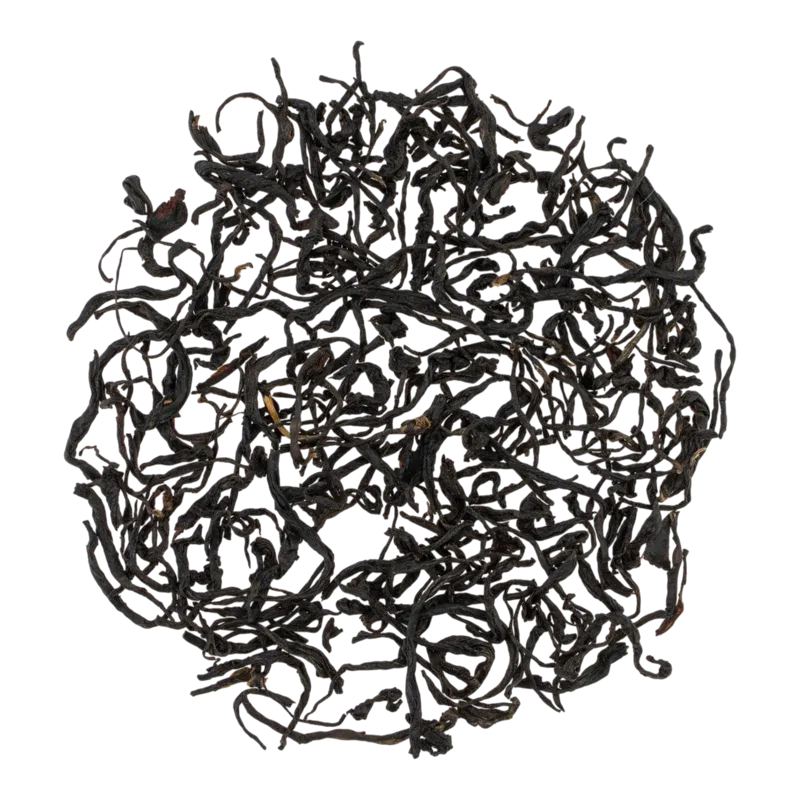
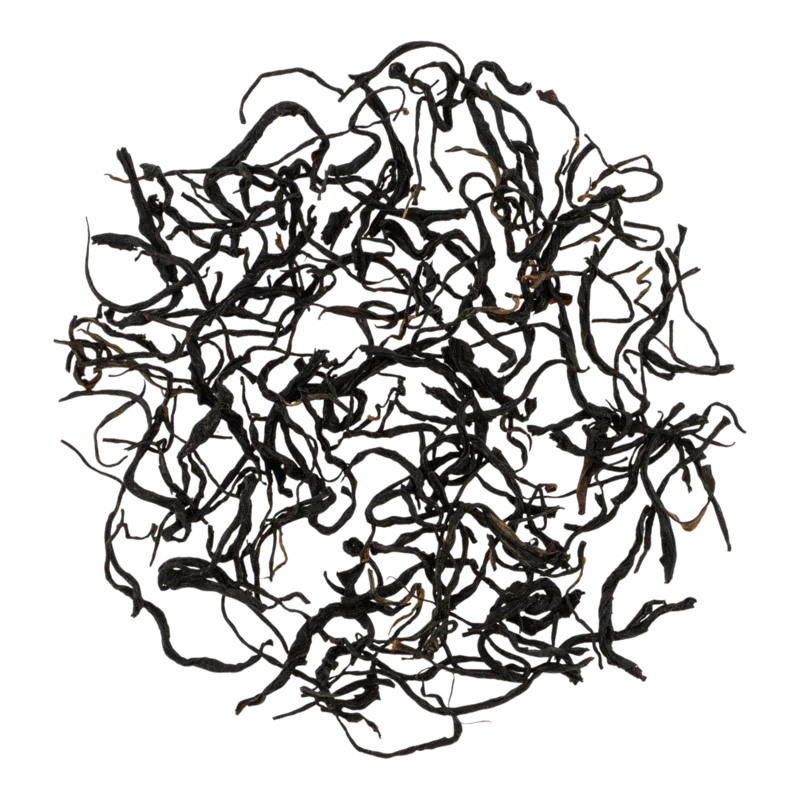
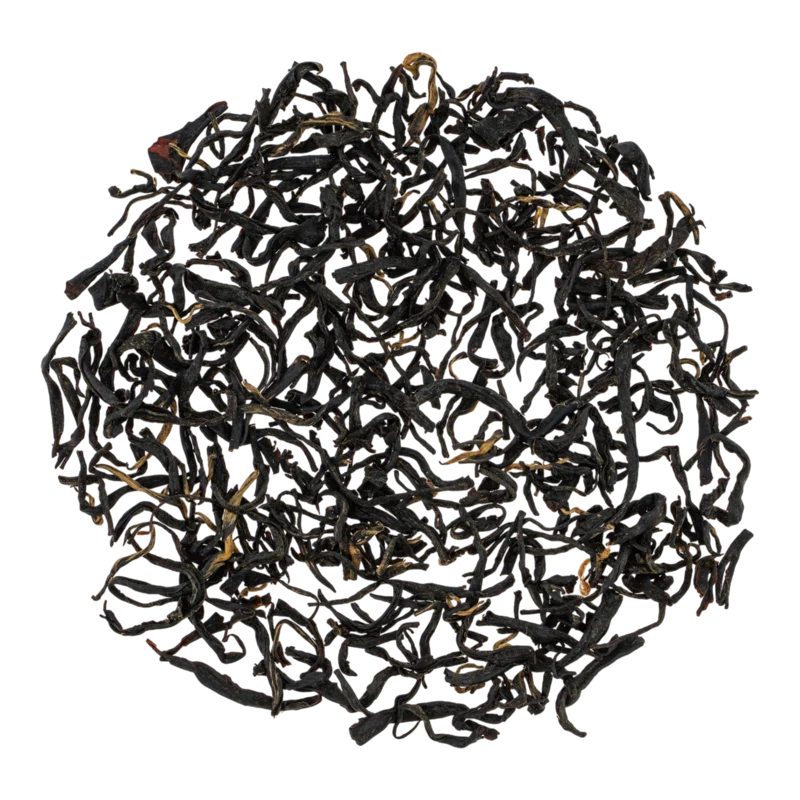
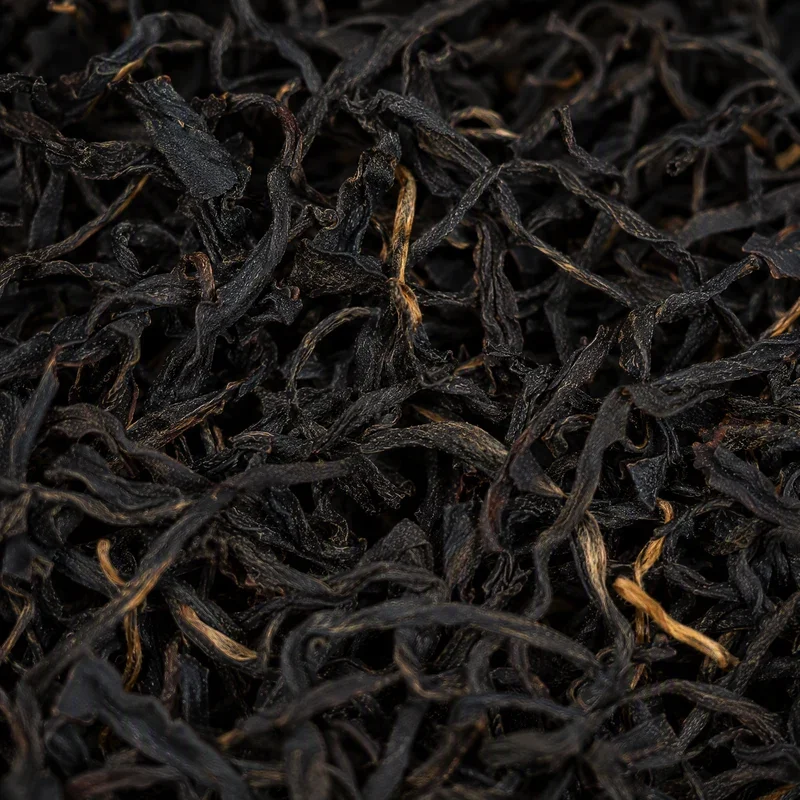
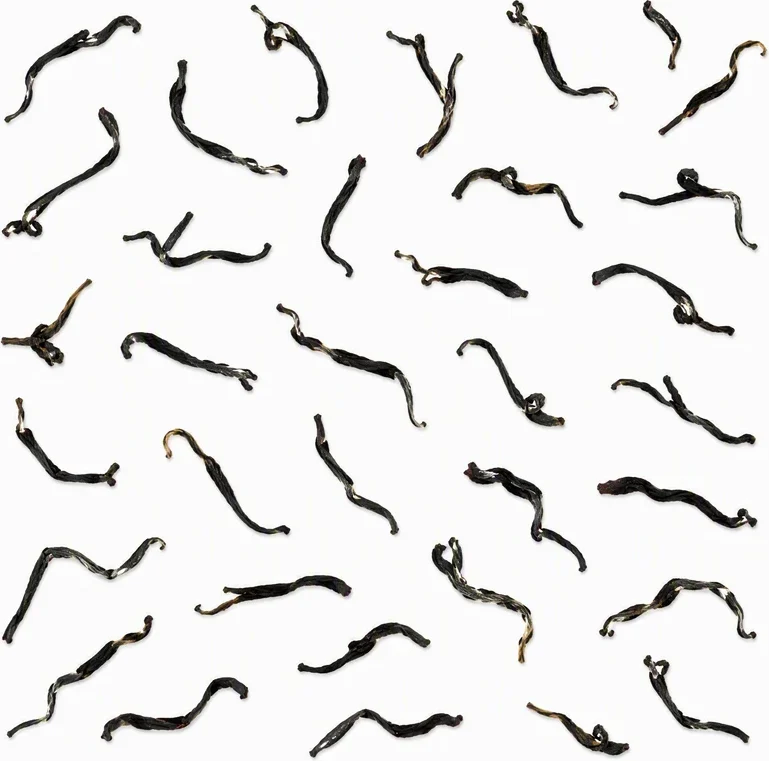
Dry Leaf Appearance: Tight twist, thin wiry tea leaves (条索紧细, tiáosuǒ jǐn xì), dark brown color with golden tips (金毫). Leaf is even, neat, without dust.
Dry Leaf Aroma: Clean, honey-like, with bread and nutty overtones. Possible light chestnut shade — a characteristic feature of Dabie Mountain teas.
Liquor Aroma: Warm and sweet, with transition from honey and dried fruits to bread-caramel tones. In the cooling cup, subtle woody-grassy notes emerge, reminiscent of dry autumn leaves.
Liquor Color: From amber to red-chestnut, clear and bright. Color depth depends on degree of oxidation and harvest standard.
Spent Leaves: Leaf unfolds elastically and evenly; shades from copper-brown to reddish-chestnut. Structure is clearly visible: whole buds and leaves without tears.
Taste: Dense and rounded, with pronounced natural sweetness and moderate, unobtrusive astringency. Aftertaste is long, warming, with shades of roasted chestnut and honey. In the best batches — noticeable "minerality," which local tasters associate with the granite soils of Guifengshan.
Alkaloids: Caffeine — moderate level (3–4%), theobromine, theophylline — in trace amounts.
Amino Acids: Increased content of free amino acids, including L-theanine, due to the extended period of "winter dormancy" and cool mountain conditions. This provides soft, clean sweetness.
B vitamins (B₁, B₂), traces of ascorbic acid, potassium, magnesium, manganese, zinc, fluorine. Manganese and other trace elements from granite mountain soils contribute to the mineral flavor tone.
Complex of terpenes (linalool, geraniol, nerolidol), aldehydes, and Maillard reaction products. Cool mountain terroir slows evaporation of volatile substances from the leaf, promoting their accumulation.
According to data for the related green Guishan Yanlü — about 38–42%, indicating high extract saturation and good durability with multiple brewings.
Polyphenols: In finished red tea, oxidized forms predominate — theaflavins (TF) and thearubigins (TR), forming liquor color and taste "body." Total polyphenol content approximately 15–20% (calculated on dry mass of finished tea).
Caffeine combined with L-theanine provides gentle, sustained alertness and increased concentration without anxiety.
Theaflavins and thearubigins are powerful antioxidants that help protect cells from oxidative stress.
Red tea with moderate astringency gently stimulates digestive processes, especially after a heavy meal.
Fully oxidized tea from northern mountain terroir has a pronounced "warm" nature — ideal for the cold winters of Central China.
Regular moderate consumption of red tea is associated with maintaining vascular tone and elasticity of vessel walls.
Polyphenolic compounds have moderate antimicrobial and immunomodulating activity.
Tea from mountain terroir rich in minerals is an additional source of potassium, magnesium, and manganese.
Warming red tea reduces subjective feelings of fatigue and helps restore strength in cold weather, which is especially relevant for residents of northern mountain regions.
Tea Amount: 4–6 g per 100–120 ml of water.
Teaware: Porcelain gàiwǎn (盖碗) — for clean, "transparent" brewing; Yíxīng teapot (宜兴紫砂壶) — for a more enveloping, oily profile; glass teapot — if you want to observe the dance of unfolding leaves.
Water Temperature: 90–95 °C.
The most famous red tea of Hubei, produced in the western part of the province (Yichang, Enshi). Yi Hong is an industrial gongfu red tea with a more even, "standardized" profile. Guishan Hong Cha is an intimate mountain product with more pronounced minerality and chestnut notes.
Neighboring (across Dabie Mountain) great red tea of Anhui. Qimen is famous for its refined "Qimen rose" in aroma. Guishan Hong Cha does not aspire to such exquisite high notes but offers more "substantial," mineral, slightly "smoky" depth dictated by the granite terroir of Hubei.
Red tea from neighboring Henan Province, made from raw material of the famous Xinyang Maojian. Both teas originate from the Dabie Mountain area and share a "northern" character — increased sweetness and moderate astringency. Xinyang Hong Cha is typically slightly lighter and more floral; Guishan Hong Cha is denser and "warmer."
Experimental red teas from Anhui made from raw material of famous green teas — a related trend. Like Guishan Hong Cha, they represent an attempt to expand the palette of historical tea terroirs of Dabie Mountain.
Price Category: Regional niche product. Price is determined by harvest elevation (higher is more expensive), leaf standard (tippy batches are more expensive), farm reputation, and presence of award certificates. Tea from upper zones of Guifengshan (800–1000 m) costs noticeably more than lowland raw material.
No reviews yet. Tell us what you think of this tea.
Rate this tea and share your impressions. We review each submission before publishing it.