Brewing
Gongfu brewing
- Water temperature
- 75 °C
- Tea amount
- 5 g
- Water volume
- 100 ml
- First steep
- 10 s
- Time added per infusion
- 5 s
- Infusions
- 3

Lóngjí lǜchá
Choose a brewing method. Start with the recommended quantities and time, then adjust to taste.
Brewing
Brewing
Taste
Tea encyclopedia
Category: Product of Geographical Indication of China (国家农产品地理标志产品, 2015; code AGI2015-02-1699). One of the "Four Treasures of Longji" (龙脊四宝, Lóngjí Sìbǎo). Included in the "Dictionary of Chinese Tea Studies" (《中国茶学辞典》, Zhōngguó Cháxué Cídiǎn) as one of China's 28 famous teas. Qīng dynasty tribute tea (贡茶) from the Qianlong era. Standard: "Technical Regulations for Longji Tea Production and Processing" (《龙脊茶生产加工技术规程》). Meets the standards of "Green Food Products — Tea" (NY/T 288-2012). By 201...
Category: Product of Geographical Indication of China (国家农产品地理标志产品, 2015; code AGI2015-02-1699). One of the "Four Treasures of Longji" (龙脊四宝, Lóngjí Sìbǎo). Included in the "Dictionary of Chinese Tea Studies" (《中国茶学辞典》, Zhōngguó Cháxué Cídiǎn) as one of China's 28 famous teas. Qīng dynasty tribute tea (贡茶) from the Qianlong era. Standard: "Technical Regulations for Longji Tea Production and Processing" (《龙脊茶生产加工技术规程》). Meets the standards of "Green Food Products — Tea" (NY/T 288-2012). By 2014 — 2,000 hectares of tea gardens, annual output — approximately 3,000 tons.
Coordinates: 25°29′–26°12′ N, 109°43′–110°21′ E (core — Longji terraces area: approximately 25°46′ N, 110°08′ E).
Origin: China, Guǎngxī Zhuāng Autonomous Region (广西壮族自治区, Guǎngxī Zhuàngzú Zìzhìqū), Guìlín City (桂林市), Longsheng Multi-ethnic Autonomous County (龙胜各族自治县). The production territory covers 10 townships (乡镇) and 119 administrative villages with a total area of 2,370.8 km².
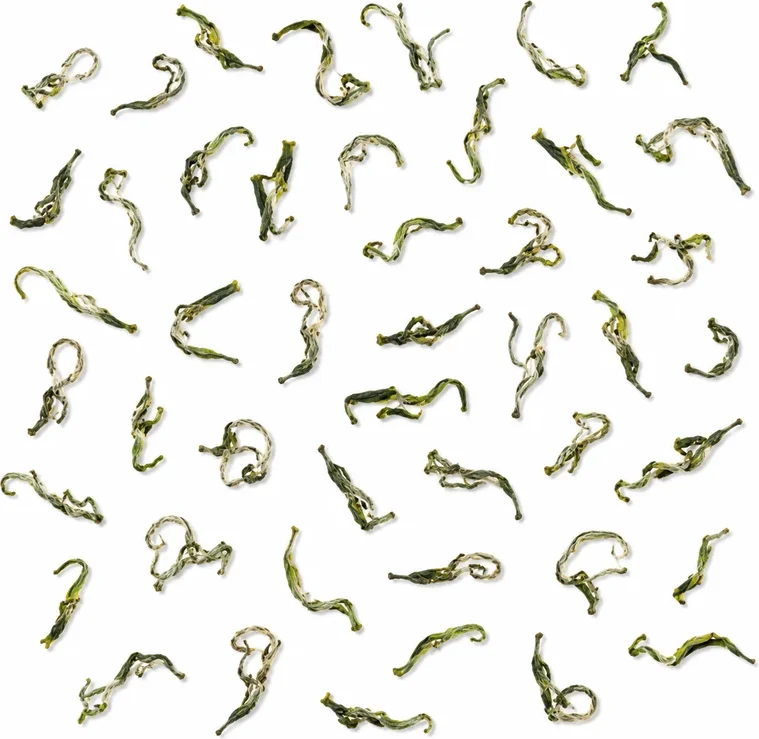
Type: Green tea (绿茶, lǜchá), non-oxidized, category hongqing (烘青绿茶, hōngqīng lǜchá — green tea fixed by heating). Produced in two forms: strip-shaped (条形, tiáoxíng) — the main product, and spiral-shaped (螺形, luóxíng) — with pronounced fruity undertones.
Full bud (单芽) or one bud + one leaf (一芽一叶). Fuzziness ≥90%. Delicate, "clean" aroma (清香). Price from 600 yuan per 500 g.
One bud + one-two leaves. Chestnut aroma (栗香). 200–400 yuan per 500 g.
One bud + two-three leaves. Mass product. Up to 150 yuan per 500 g.
Cultivar: The main cultivar is Longsheng Daye Zhong (龙胜大叶种, Lóngshèng Dàyè Zhǒng, "Longsheng large-leaf variety"), belonging to the species Camellia sinensis var. sinensis. Semi-arboreal type (小乔木型, xiǎo qiáomù xíng), height — up to 5 m. Buds are large, fleshy; leaves thick, with pronounced juiciness. Biochemical profile: polyphenols — 13–19%, amino acids — 5.0–5.8% (15% higher than low-altitude teas of the same group). Ancient trees aged 200+ years in Longjiguzhai village are used for producing the highest grade.
Picking: Spring harvest — primary (April–May). Summer harvest — supplementary. Hand-picking for highest and first grades; mechanized — for mass grades.
Raw Material: Plantation management involves a complete ban on pesticides; only wood ash and oil cake are used as fertilizers. The standard complies with "Green Food Products" norms (NY/T 288).
Altitude: Main tea gardens — at altitudes of 800+ m. Production core — Lóngjí Township (龙脊镇, Lóngjí Zhèn) and Jiāngdǐ Township (江底乡, Jiāngdǐ Xiāng), providing about 60% of total output.
Climate: Subtropical monsoon. Average annual temperature — 18.1°C (extreme maximum — 39.5°C, minimum — −4.8°C). Frost-free period — 314 days. Precipitation — 1,500–2,400 mm per year. Cloud cover — more than 180 days per year. Diffused light comprises about 70% of total insolation flow. Average annual sunshine duration — 1,223.3 hours. Daily temperature range — more than 10°C. Average annual relative humidity — 82%. Formula: "summer without heat, winter without cold, year-round — clouds, fog, and light wind" — ideal conditions for amino acid accumulation.
Soil: Slightly acidic red earth (赤红壤, chìhóngrǎng; pH 5.8–6.9). Soil layer is deep, loose, well-drained. Organic matter content ≥2.5%. Soils are rich in iron (Fe), manganese (Mn), and zinc (Zn) — precisely these minerals form the characteristic "yanyun" (岩韵) — mineral aftertaste, usually associated with Wuyi oolongs, but here manifesting in green tea.
Forest cover — 78.8%. County territory — without industrial enterprises, "zero three pollutions" (三废, sānfèi — industrial waste, sewage, emissions). Water resources — more than 480 rivers and streams flowing into the Xúnjiāng River (浔江); water quality meets national drinking water supply standards. The territory is one of China's priority water resource protection areas.
Freshly picked leaves are spread in a thin layer on bamboo sieves in a ventilated room. Duration — 4–6 hours. Goal — gentle evaporation of excess moisture, beginning formation of aromatic precursors.
Main fixation stage. Rotary drum at approximately 300°C — "高温短时" method. Rapid heating deactivates polyphenol oxidase, preventing oxidation. High temperature in a short time reduces "grassy" notes by 30%, simultaneously forming chestnut aroma.
Following the "light → heavy → light" scheme (轻-重-轻). Breaking cellular structure to release juices and form strip shape. For spiral shape (螺形), an additional rolling stage into a "snail" is performed, giving the tea fruity undertones.
Temperature — 120°C. Rapid removal of primary moisture.
Temperature — 90°C. Drying to residual moisture ≤6%. Stabilization of aroma and taste.
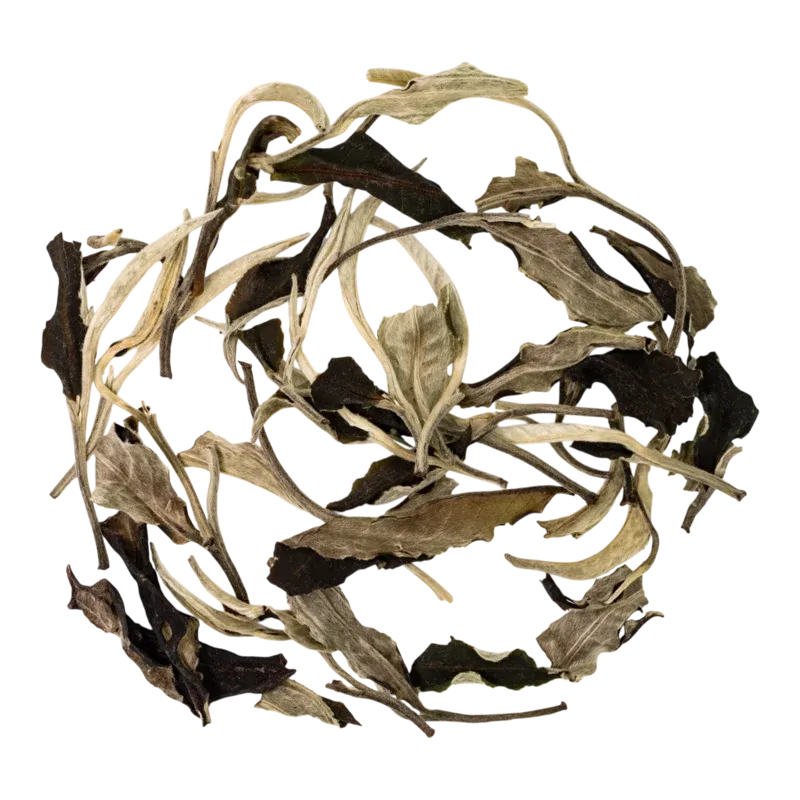
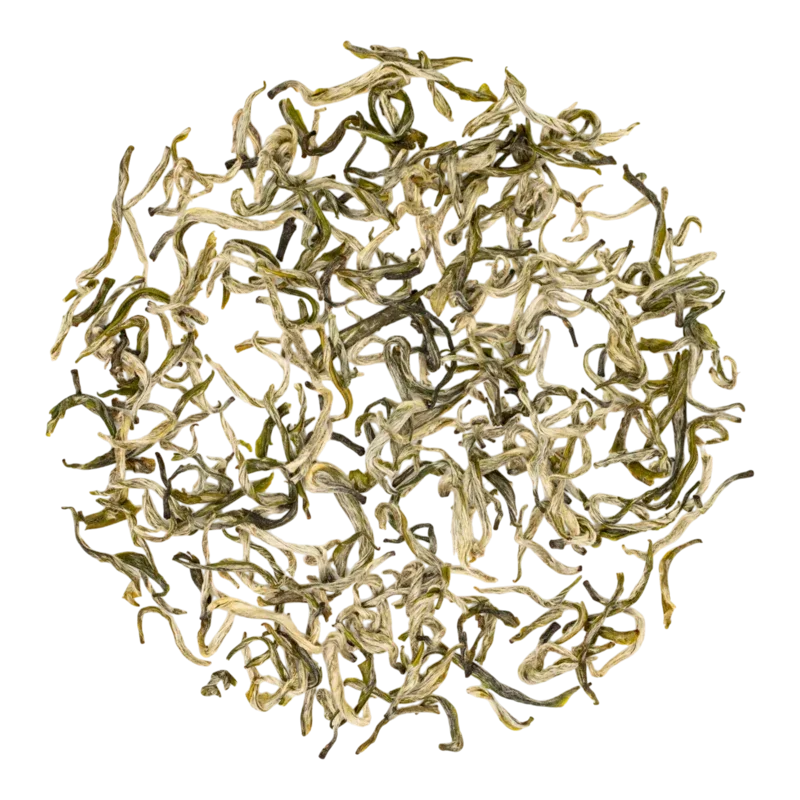
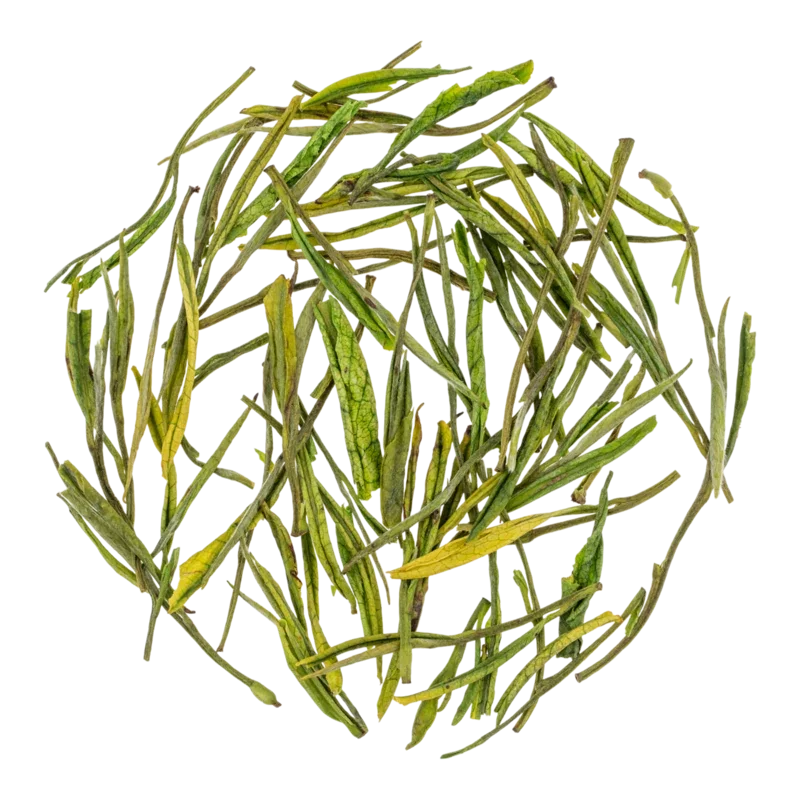
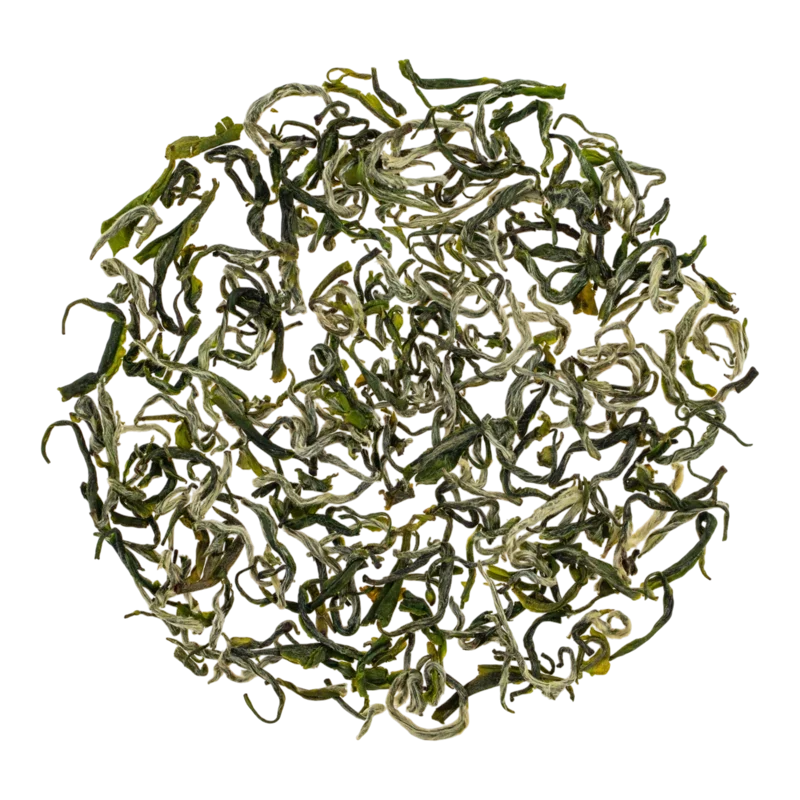
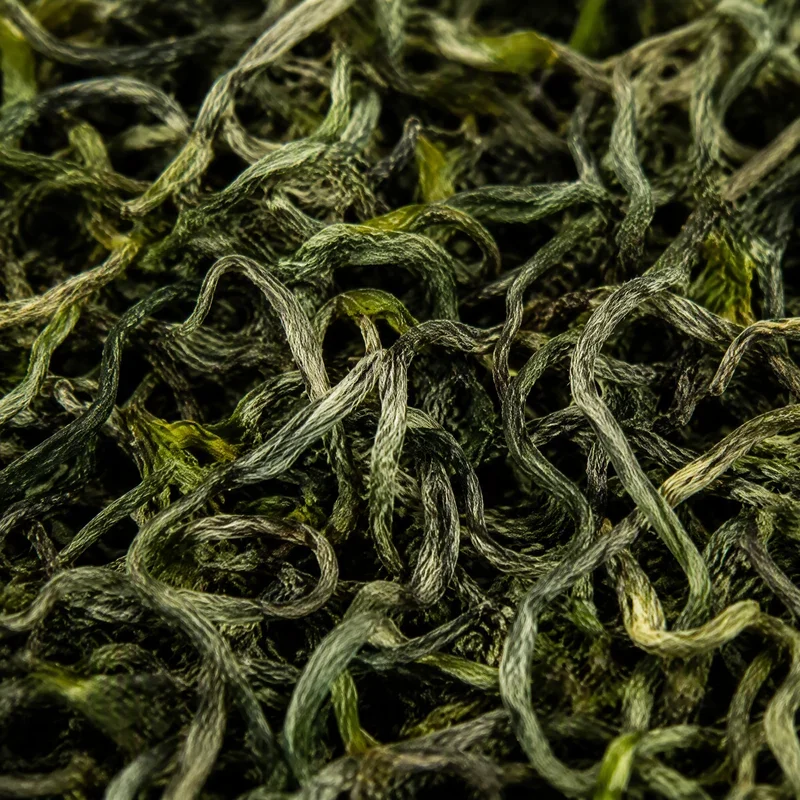
Dry Leaf Appearance: Strip shape (条形): dense, straight, well-twisted strips of emerald-green color with abundant white fuzz. Spiral shape (螺形): tight, firm spirals, surface covered with silvery fuzz.
Dry Leaf Aroma: Clean, fresh (清香, qīngxiāng) — for highest grade. "Tender" (嫩香, nèn xiāng) — for spring harvest. Chestnut (栗香, lìxiāng) — for first grade. Fruity (果香, guǒxiāng) — distinctive characteristic of spiral shape.
Liquor Aroma: Clean, persistent. Chestnut notes with light floral overtones. Aroma in cold cup persists for more than 15 minutes — indicator of high aromatic compound content.
Liquor Color: Highest grade — emerald-green, bright and clear (碧绿清澈, bìlǜ qīngchè). Mass grades — yellow-green, clear.
Spent Leaves: Tender green, glossy, fleshy. Leaves are elastic, buds intact.
Taste: Fresh (鲜爽, xiānshuǎng) — dominant characteristic, due to high amino acid content. Mellow (醇和, chúnhé) — result of moderate polyphenol content (13–19%). Pronounced returning sweetness (回甘, huígān) — persistent, described by the poetic term "高山冷韵" (gāoshān lěngyùn, "high-mountain cold rhyme"). Light "yanyun" (岩韵) — mineral aftertaste contributed by iron and manganese from red earth soils. This is an unusual characteristic for green tea: the term "yanyun" is traditionally applied to Wuyi oolongs, but in this case describes a real mineral profile.
Amino Acids: 5.0–5.8% — one of the highest indicators among Chinese green teas. Main component — L-theanine, providing taste freshness and calming effect.
2–4% (typical for green tea range), providing tonic effect. In combination with high L-theanine content, stimulation is mild and sustained without sharp peaks.
30% higher than average for green tea — enhanced tooth enamel protection through fluorapatite formation.
Essential Oils: Terpene compounds forming the chestnut-floral profile. Content somewhat lower than in oolongs, which is typical for green teas with minimal processing.
Minerals: Iron (Fe), manganese (Mn), zinc (Zn) — from red earth soils. Elevated Mn content correlates with antioxidant activity; Zn participates in immune regulation.
Polyphenols: 13–19% — moderate level for green tea (typical range — 15–35%), which explains the mildness and absence of pronounced bitterness. Main components — catechins, including epigallocatechin gallate (EGCG).
Vitamins: Vitamin C — 100–300 mg per 100 g dry tea (characteristic of green teas subjected to gentle processing). B vitamins (B₁, B₂, B₃), vitamin E (~35 mg/100 g), carotenoids.
Tea Amount: 3 g per 150 ml water (1:50 ratio).
Teaware: Glass tumbler (玻璃杯, bōlíbēi) — for observing leaf unfurling and liquor color. Porcelain gàiwǎn (盖碗, gàiwǎn) volume 100–150 ml — for controlled brewing.
Water Temperature: 80–85°C for standard grades. For highest grade — 75°C (lower temperature preserves delicate aroma and prevents "overcooking" of buds).
Enemies: Moisture, direct sunlight, foreign odors, high temperature.
Shelf Life: Unopened package — up to 18 months with proper storage. After opening — recommended consumption within 3 months. Tea is not suitable for aging — amino acid profile degrades over time.
Airtight packaging (vacuum bags or jars with tight lids). Refrigerator storage at 0–5°C — optimal for preserving amino acid profile freshness.
Flat shape, wok-firing, chestnut aroma with bean undertones. Amino acids — 3–4%. Longji Lü Cha exceeds in amino acid content (5.0–5.8%) and possesses mineral "yanyun" absent in Longjing.
Spiral shape, fruity-floral aroma, light body. Amino acids — 3–4%. Spiral-shaped Longji has similar form but denser body and pronounced mineral overtones.
Fuzzy, delicate, orchid aroma, altitude 700–1,800 m. Amino acids — 4–5%. Closest analogue in high-altitude character, but without "yanyun" and with more pronounced floral notes.
Fuzzy, fresh, somewhat astringent. Polyphenols — higher (18–25%). Compared to it, Longji is significantly milder and sweeter due to higher amino acid to polyphenol ratio.
Record amino acids — 5–7%. Light body, delicate taste with umami. In amino acid profile Longji is comparable, but differs in denser body and mineral aftertaste, which Anji lacks.
Highest grade (特级) — from 600 yuan per 500 g. First grade — 200–400 yuan. Grades 2–6 — up to 150 yuan. Leaves from ancient trees (200+ years) — significantly more expensive, sold primarily within the region.
No reviews yet. Tell us what you think of this tea.
Rate this tea and share your impressions. We review each submission before publishing it.