Brewing
Gongfu brewing
- Water temperature
- 93 °C
- Tea amount
- 5 g
- Water volume
- 100 ml
- First steep
- 10 s
- Time added per infusion
- 5 s
- Infusions
- 4

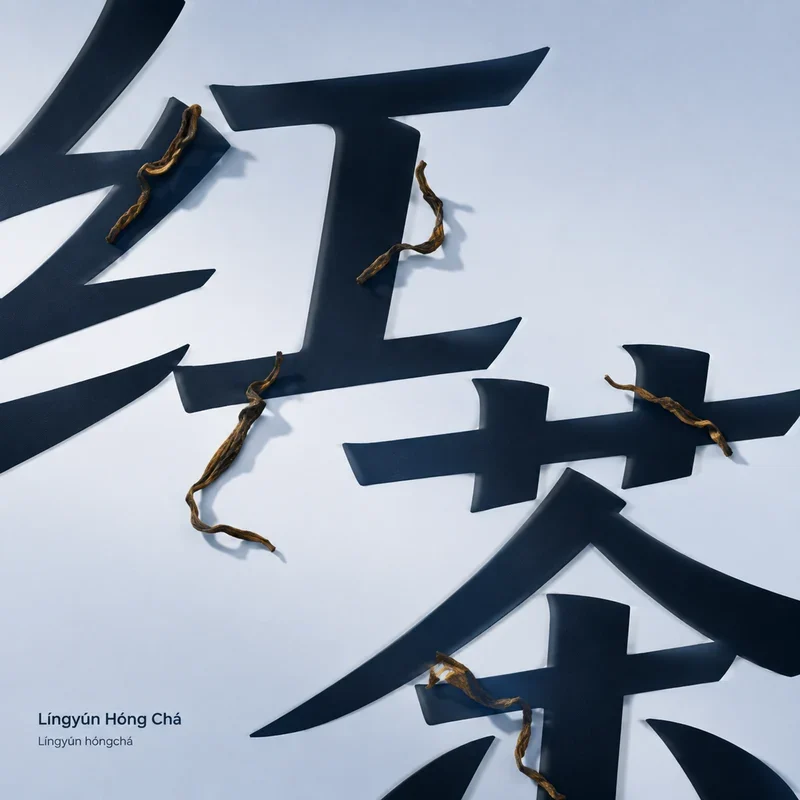
Língyún hóngchá
Choose a brewing method. Start with the recommended quantities and time, then adjust to taste.
Brewing
Brewing
Taste
Tea encyclopedia
Category: Regional Chinese red teas (black teas); gongfu red tea (工夫红茶) from large-leaf raw material.
Category: Regional Chinese red teas (black teas); gongfu red tea (工夫红茶) from large-leaf raw material.
Coordinates: ≈ 24.35° N, 106.56° E (reference point at Lingyun county center).
Origin: China, Guǎngxī Zhuāng Autonomous Region (广西壮族自治区, Guǎngxī Zhuàngzú Zìzhìqū); Bǎisè Prefecture (百色市, Bǎisè Shì); Língyún County (凌云县, Língyún Xiàn). Main production zones are concentrated in the mountain ranges of Cénwáng Lǎoshān (岑王老山, Cénwáng Lǎoshān) and Qinglongshan (青龙山, Qīnglóng Shān), as well as in the townships of Yùhóng (玉洪乡, Yùhóng Xiāng) and Jiāyóu (加尤镇, Jiāyóu Zhèn).
Type: Red tea (black tea) (红茶, hóngchá) — fully fermented/oxidized.
Cultural Significance: Lingyun is one of the officially recognized "Chinese tea cities" (中国名茶之乡, Zhōngguó Míngchá zhī Xiāng) and is among the "ten ecological tea counties of China." Tea is the pillar of the local economy and cultural identity. There exists a legend about the visit of tea sage Lù Yǔ (陆羽) to Lingyun: supposedly, after tasting the local white-down tea, Lu Yu was so impressed that he passed on his tea mastery secrets to the Lingyun people. In memory of this, the "Tea Sage's Skill Transmission Pavilion" (茶圣传艺亭) was erected on Xianfengling Hill (先锋岭). The uniqueness of the cultivar, capable of transforming into tea of any of the six categories (绿, 红, 白, 黄, 黑, 青), gives Lingyun Bai Hao the status of "universal tea soldier" of Chinese tea cultivation.
History: The Lingyun Bai Hao tea trees have been growing on the slopes of Cenwang Laoshan and Qinglongshan for over a thousand years. The "Dictionary of Chinese Famous Teas" (《中国名茶志》) records: "凌云白毛茶为历史名茶,创于清乾隆以前" — Lingyun white-down tea is a historical famous tea, created before the Qianlong reign. The first purposeful tea tree plantings in the county date to 1488 (Hongzhi period, 弘治, Ming dynasty), when local residents established the first tea garden. During the Qing era, Língyún tea became an imperial tribute (贡茶). The "Records of Guangxi Special Products" (《广西特产物品志》, 1937) describes the local tea trees: "白毛茶,树大者高约二丈,小者七尺,嫩叶如银针,老叶尖长如龙眼树叶而薄,皆有白色茸毛,故名,概属野生" — the trees reach two zhang (≈ 6 m), young leaves like silver needles, covered with white down.
Name Breakdown: "凌云" (Língyún) — the county name; literally "凌" — "to rise, soar," "云" — "cloud," which accurately reflects the high-altitude, cloudy character of the locality. "红茶" (hóngchá) — red tea. Full name — "red tea from Lingyun." Alternative trade name — Língyún Bái Háo Hóng Chá (凌云白毫红茶) — "red tea from Lingyun white-down raw material."
Cultivar: Língyún Bái Háo (凌云白毫, Língyún Báiháo), also known as Língyún Bái Máo Chá (凌云白毛茶) — "white-down tea from Lingyun." Official designation — Huacha No. 26 (华茶26号, Huáchá 26 Hào). Recognized as one of the first 30 state-certified elite tea tree varieties of China in 1984. Belongs to the type of small-tree large-leaf varieties (小乔木大叶种, xiǎo qiáomù dàyè zhǒng) Camellia sinensis. Trees grow up to 9 m; crown upright, with sparse branching; leaves large, thick, fleshy, positioned horizontally or drooping. Characteristic feature — abundance of white down (白毫, báiháo) on the underside of leaves and on buds, which gave the variety its name. Strong shoot-forming ability; weight of 100 buds with three leaves — about 99 g. Late flowering (November–December), insignificant fruiting.
Picking: Spring — main season; buds awaken in mid-March, peak harvest of "bud + three leaves" — late March to early April. For red tea, summer and autumn leaves are also used, which give a denser and more astringent profile.
Pluck Standard: One bud and one leaf (一芽一叶) for premium batches like "Jingou Hong Tiao" (金钩红条, Jīngōu Hóng Tiáo — "Golden Hook"); one bud and two leaves (一芽二叶) for standard; for export red broken tea (红碎茶, hóng suì chá), more mature leaves are used.
Raw Material: Whole, fresh shoots with pronounced white down; absence of mechanical damage and coarsened leaves.
Altitude: 800–2,000 m a.s.l. Main massifs are located at altitudes of 800–1,500 m, however individual wild trees are found higher — up to 2,000 m on the slopes of Cenwang Laoshan.
Climate: High-altitude subtropical; average annual temperature 19–23°C; summer not hot, winter mild. Annual precipitation 1,700–1,800 mm. Characterized by constant high cloudiness and fogginess: "晴时早晚遍山雾,阴雨成天满山云" — "on clear days morning and evening — mountains in fog, in bad weather — continuous clouds all day." Diffused light and short direct sunlight stimulate accumulation of amino acids and aromatic compounds.
Soil: Red, red-yellow and yellow mountain soils with pH 4.5–6.0. High organic content thanks to the Cenwang Laoshan forest massif. Fertile layer depth — more than 40 cm. Soils loose, well-drained, rich in iron and manganese.
A significant part of plantations are certified as organic (more than 23,000 mu). Green farming methods are applied: use of organic fertilizers (peat composts, oil cake), biological pest protection (light traps, plant insecticides), hand picking for highest grades.
Water: Lingyun County is located in northwestern Guangxi, near the Yunnan-Guizhou Plateau. Relief — high and dissected, with numerous mountain streams. Ecological situation excellent — absence of industrial pollution.
Hand selection of tender shoots; for premium batches — exclusively spring raw material.
Fresh leaves are spread on bamboo trays in well-ventilated rooms. The large fleshy leaves of the Lingyun variety require prolonged withering — up to 14–18 hours with the natural method. Moisture loss to 60–65%, leaves become soft, their aromatics evolve from grassy to floral-fruity.
Withered leaves are rolled to break cell walls and release enzymes. Due to the large leaf size, moderate, gradually increasing pressure is applied to avoid completely tearing the leaf, but to form the characteristic twisted shape.
Rolled leaves are laid in layers in a chamber with controlled temperature (25–28°C) and humidity (≥95%). Duration — 2–4 hours. Controlled by color change (from green to red-copper) and aroma (from grassy to fruity-honey).
With hot air at 100–110°C — fixation of enzymatic processes.
Tea is spread for uniform cooling and moisture redistribution.
Specific stage for Lingyun tea — additional twisting and light shaking, allowing golden tips (金毫) to appear on the tea particle surface.
Drying to residual moisture of 5–6%.
Division into grades; removal of defective leaves and stems.
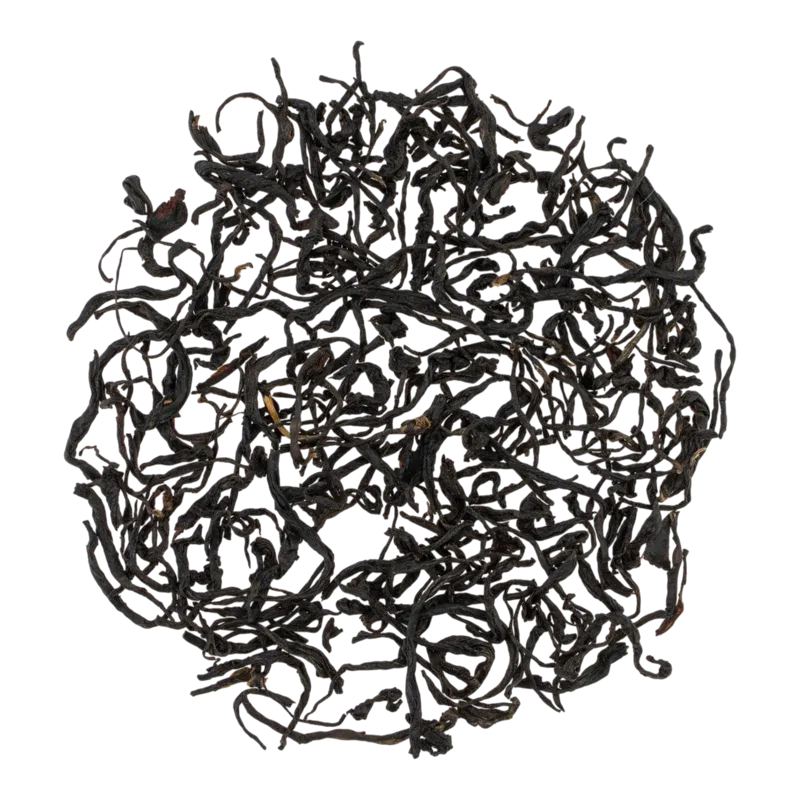
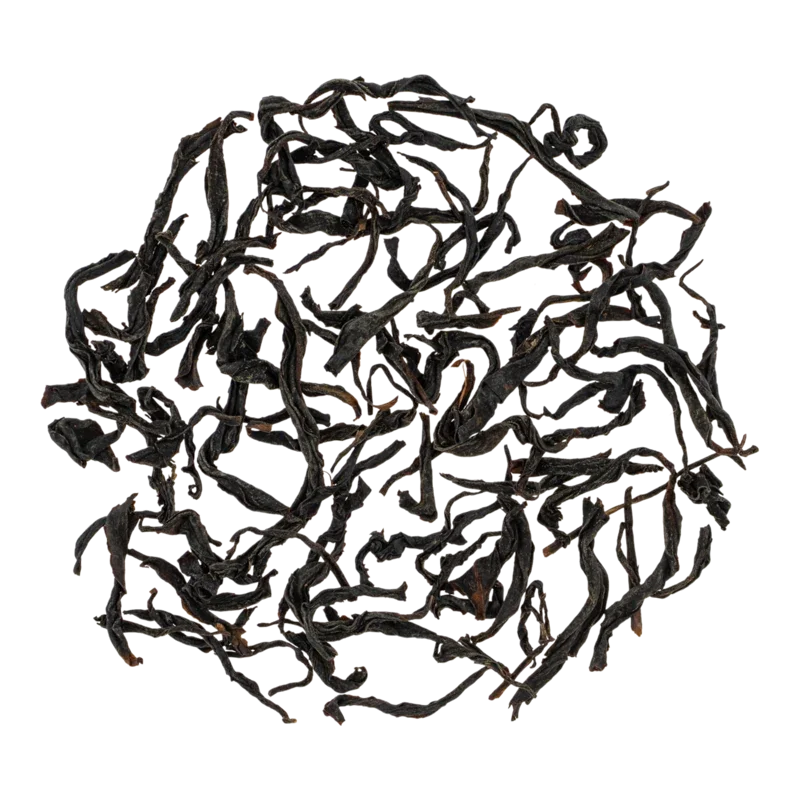
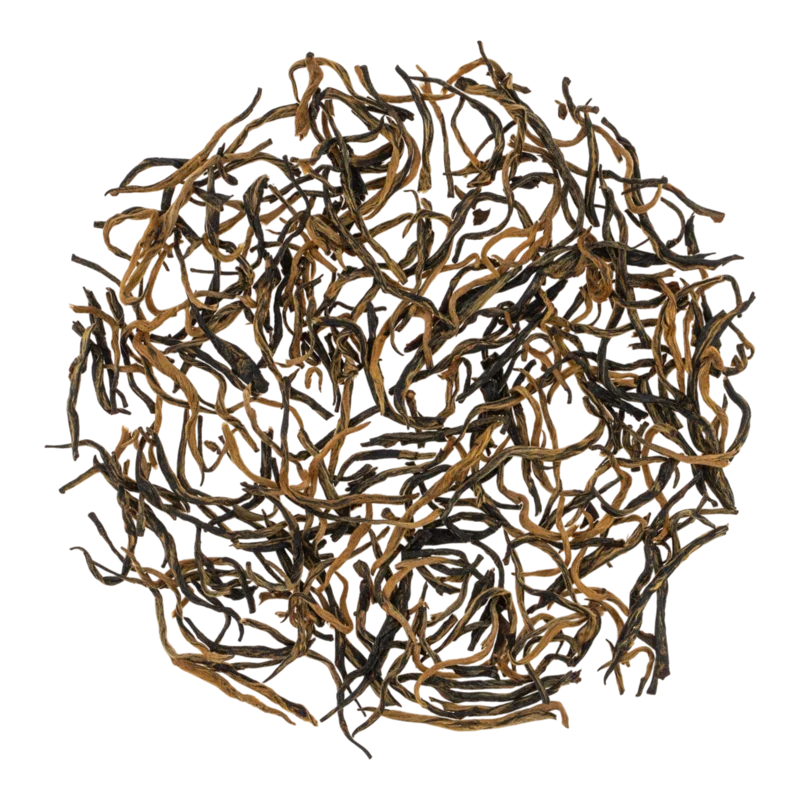
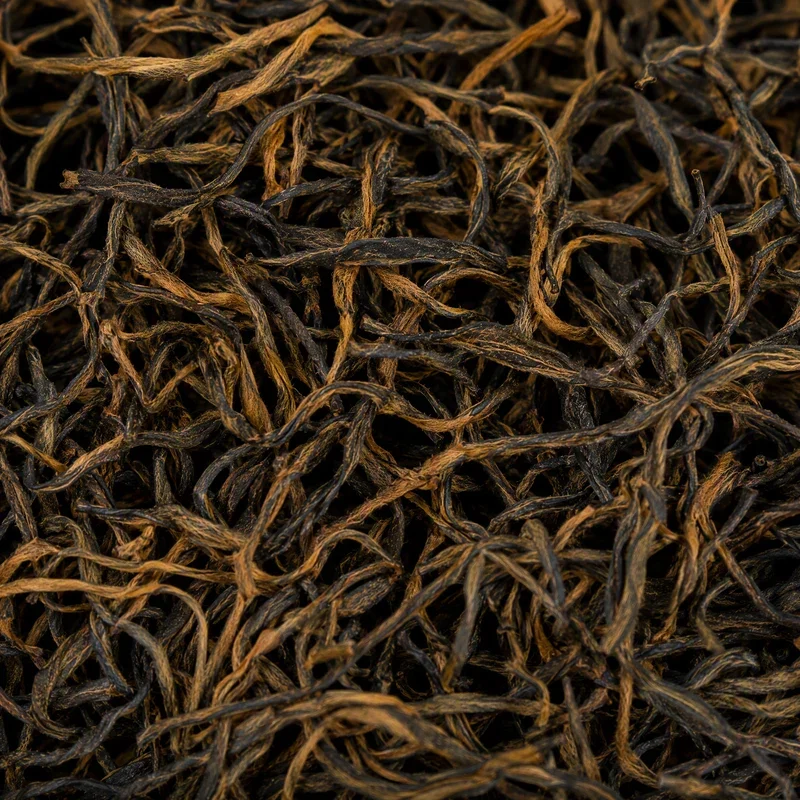
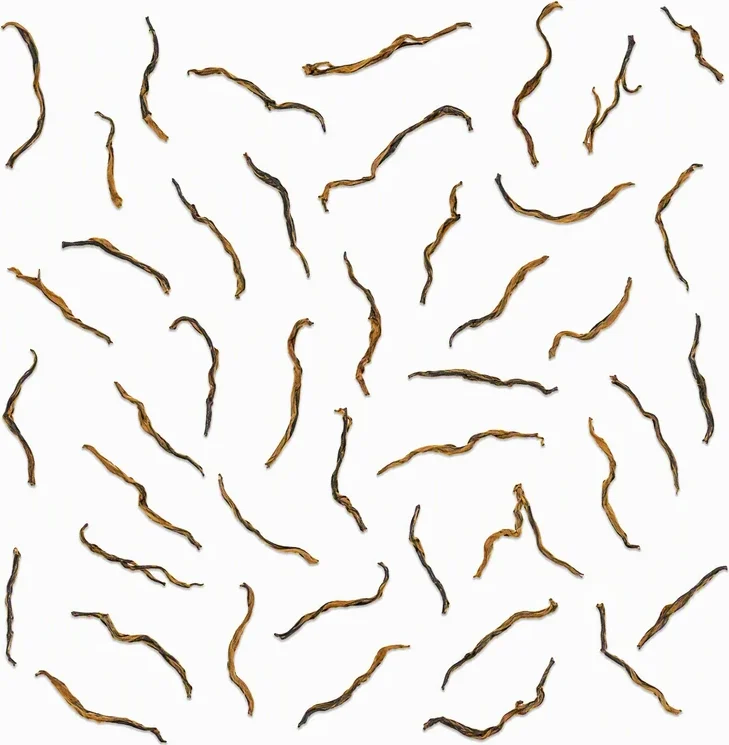
Dry Leaf Appearance: Tightly twisted, slightly curved tea particles ("golden hooks" — hence the name "Jingou Hong Tiao"). Color — dark brown with oily sheen. On the surface — abundant golden tips (金毫, jīnháo), transformed from white down to golden in the oxidation process.
Dry Leaf Aroma: Intense, honey-sweet with warm tones of chestnut, dried fruits and light floral overtone. White-down raw material gives the aroma a special "soft" note that small-leaf red teas lack.
Liquor Aroma: Rich, multi-layered — honey, ripe fruits (apricot, persimmon), caramel. As brewing progresses, warm bread and nutty overtones unfold. Aroma persistent, long-lasting on cup walls.
Liquor Color: Red-amber, bright, transparent (红艳明亮, hóngyàn míngliàng). With golden rim at cup walls.
Spent Leaves: Large, fully opened leaves of red-copper color; fleshy, elastic, uniform. Traces of white down visible on underside — distinguishing feature of Lingyun raw material.
Taste: Dense, full-bodied, with pronounced round sweetness and soft astringency. Body — thick, "velvety" (浓醇, nóng chún). Aftertaste long, with notes of chestnut honey and light spiciness. Characteristic feature — "回甘" (huígān) — returning sweetness, building after swallowing.
Alkaloids: Caffeine — about 4.9% (above average among Chinese teas, explained by large-leaf variety and mountain growing). Theobromine and theophylline — in trace amounts.
Amino Acids: Content (3.36% in green) — relatively high for a large-leaf variety. L-theanine provides soft sweetness and relaxing effect. In red tea, part of amino acids enter Maillard reactions, forming caramel and bread notes.
Linalool, geraniol, phenylethyl alcohol, furfural. Abundance of aromatic compounds forms multi-layered honey-fruity aroma with floral overtones.
Minerals: Potassium, magnesium, manganese, zinc, fluorine, selenium. Red mountain soils of Lingyun are rich in iron and manganese.
Polyphenols: Catechins oxidize to theaflavins and thearubigins. High initial polyphenol content (35.6% for green) provides red tea with dense body, bright liquor color and taste intensity.
Vitamins: B-group vitamins, vitamin C (significantly reduced with full fermentation), rutin.
High caffeine content (≈ 4.9%) combined with L-theanine provides powerful but gentle tonic effect — vigor, concentration and mental clarity without anxiety.
Theaflavins and thearubigins — polyphenol oxidation products — retain pronounced antioxidant activity.
Tannins stimulate digestive enzyme secretion; red tea is especially recommended after heavy fatty meals.
In Chinese dietetics, large-leaf red teas belong to products of "warm nature" — they warm the stomach and improve circulation.
Moderate red tea consumption is associated with maintaining vascular elasticity.
Mineral complex (zinc, selenium, manganese) combined with polyphenols supports natural body defense functions.
Combination of caffeine, theanine and B-group vitamins makes Lingyun Hong Cha a good "restorative" beverage.
Tea Amount: 4–5 g per 100–120 ml (gongfu method); 3–4 g per 200–250 ml (European method).
Teaware: Gàiwǎn (盖碗) of white porcelain — optimal for aroma development. Yixing teapot — adds softness. Glass teapot — beautiful for observing liquor color and large leaf opening.
Water Temperature: 90–95°C.
Yunnan large-leaf red tea from var. assamica. Similar to Lingyun Hong Cha in its "large-leaf" character — dense body, honey sweetness, abundance of golden tips. However, Dian Hong is typically more powerful and malty, while Lingyun is slightly more elegant, with floral notes and cleaner, more "transparent" sweetness.
Small-leaf gongfu red tea from Hubei. Noticeably finer in twist, with a more pronounced caramel-bread profile and less "fluffy" appearance. Lingyun Hong Cha is larger, more "voluminous," with a more powerful body.
Red tea from Jiujiang County, Jiangxi. Medium-leaf, with a delicate profile. Lingyun Hong Cha is noticeably larger and more intense.
Another red tea from Guangxi (Longsheng County), but based on local wild large-leaf varieties. Longji is "wild," forest-like, with woody-nutty tones; Lingyun is more "cultivated," with pronounced fluffy tips and a floral-honey profile. Both teas are bright representatives of Guangxi's "hidden tea potential," still little known outside the region.
Price Category: Medium and above-medium price segment: standard batches — 150–400 yuan/500 g; premium "Jingou Hong Tiao" — 500–1,500+ yuan/500 g. Price depends on harvest standard, bud proportion, season and certification (organic production — more expensive).
No reviews yet. Tell us what you think of this tea.
Rate this tea and share your impressions. We review each submission before publishing it.