Brewing
Gongfu brewing
- Water temperature
- 92 °C
- Tea amount
- 6 g
- Water volume
- 100 ml
- First steep
- 10 s
- Time added per infusion
- 5 s
- Infusions
- 8

Lí shān wūlóng
Choose a brewing method. Start with the recommended quantities and time, then adjust to taste.
Brewing
Brewing
Taste
Tea encyclopedia
Category: High-mountain Taiwanese oolongs (高山茶, Gāo Shān Chá) — teas from plantations above 1000 m. Lishan is the elite within this elite.
Category: High-mountain Taiwanese oolongs (高山茶, Gāo Shān Chá) — teas from plantations above 1000 m. Lishan is the elite within this elite.
~2000–2600 m — the highest and most prestigious point. Tea from here is considered the pinnacle of Taiwanese tea cultivation.
~1800–2200 m.
~1600–2000 m — a more extensive zone.
~2300 m — one of the highest points.
Coordinates: ~24°15' North latitude, ~121°15' East longitude.
Origin: Taiwan (台灣), Taichung City (台中市, Táizhōng Shì), Líshān mountain range (梨山). Key sub-locations:
Type: Oolong (lightly oxidized, 10–25% oxidation). Without roasting or with minimal roasting. One of Taiwan's "greenest" oolongs.
Cultural Significance: Lishan is a symbol of Taiwan's "tea highlands" (高山, Gāo Shān). Giving a packet of Lishan oolong is a sign of special respect. In Taiwan there exists an informal "prestige ladder" of high-mountain teas: Alishan → Shanlinxi → Lishan → Dayuling. Lishan is the penultimate step before the absolute summit.
History: Tea cultivation on Lishan began in the 1970s, when pioneers of Taiwanese high-mountain tea began developing territories previously occupied by fruit orchards (pears, apples, peaches — hence the name "Pear Mountain"). The first experimental plantings of Qing Xin Oolong at altitudes above 1600 m showed remarkable results: slow growth in the cold mountain climate produced leaves of incredible tenderness, with record amino acid content.
"Green Heart Oolong" — the main cultivar. Produces the most pronounced "high-mountain" character.
Adds natural creaminess. Encountered less frequently.
Refreshing profile. Even rarer.
Spring (春茶, April–May) — most valuable: maximum sweetness and aroma. Winter (冬茶, October–November) — more concentrated, slightly denser. Summer and autumn — less prestigious.
Slow growth in cold conditions (3–4 months between pickings instead of 1.5–2 on plains) gives leaves increased amino acid content (L-theanine), reduced catechin content (astringency) and high concentration of essential oils. Result — exceptional sweetness and minimal bitterness.
Pluck Standard: Bud + 2–3 upper leaves. Only hand-picking — mechanization on steep mountain slopes is impossible.
Altitude: 1600–2600 m — extreme for tea camellia. Fushoushan (~2600 m) is one of the highest tea points in the world.
Climate: Cool subtropical mountain. Average annual temperature 12–16°C (significantly cooler than lowland regions). Winters are cold, sometimes with snow. Diurnal temperature variations 10–15°C and more. Humidity 80–90%. Mists — practically daily.
Soil: Mountain soils rich in organic matter and minerals. Good drainage on steep slopes.
Dense clouds envelop plantations most of the day, creating diffused lighting. This slows photosynthesis, reduces catechin synthesis (less bitterness) and stimulates L-theanine accumulation (more sweetness). Precisely mist is the "secret" of Lishan's flavor.
The area of high-mountain land suitable for tea is extremely small. Steep slopes, harsh climate and limited access (some plantations are reachable only by mountain trails) make production labor-intensive and expensive.
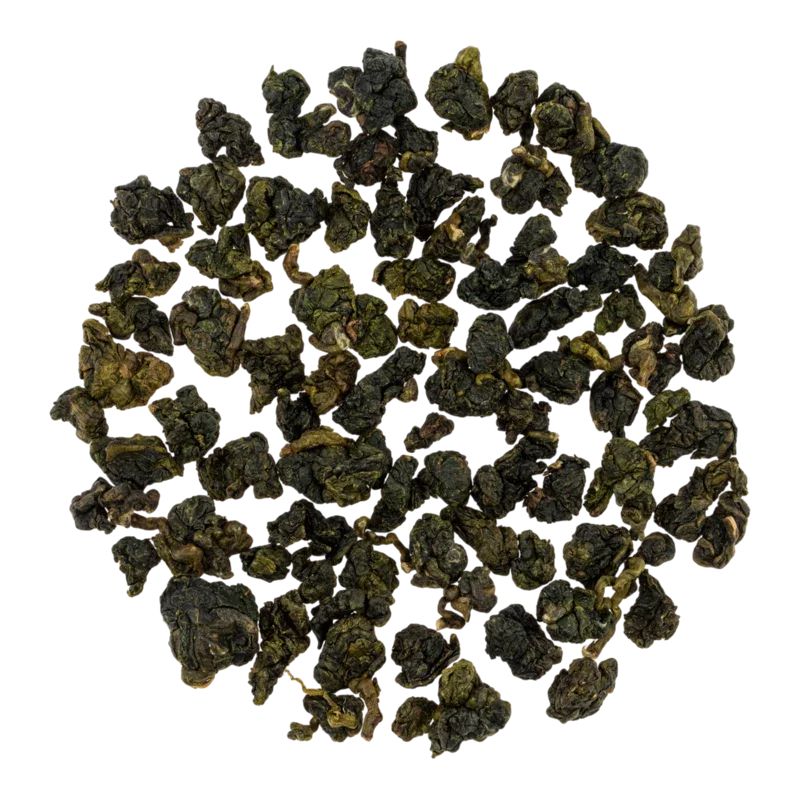
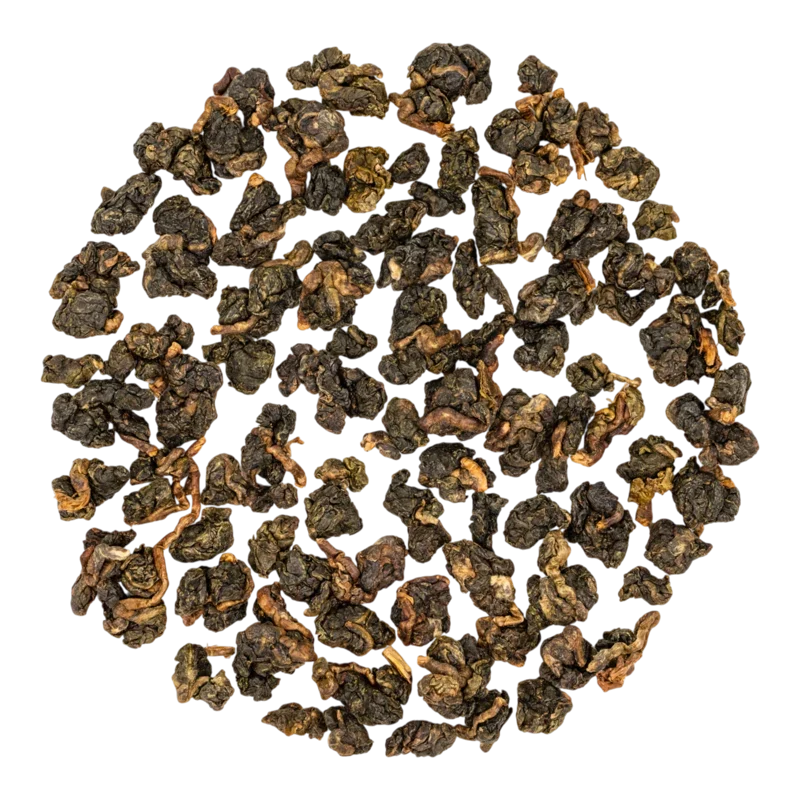
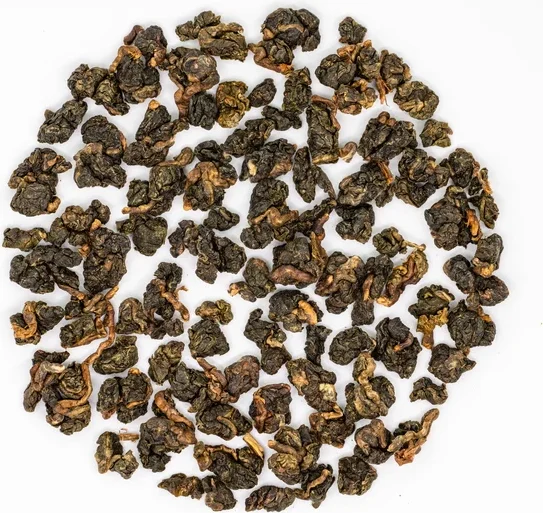
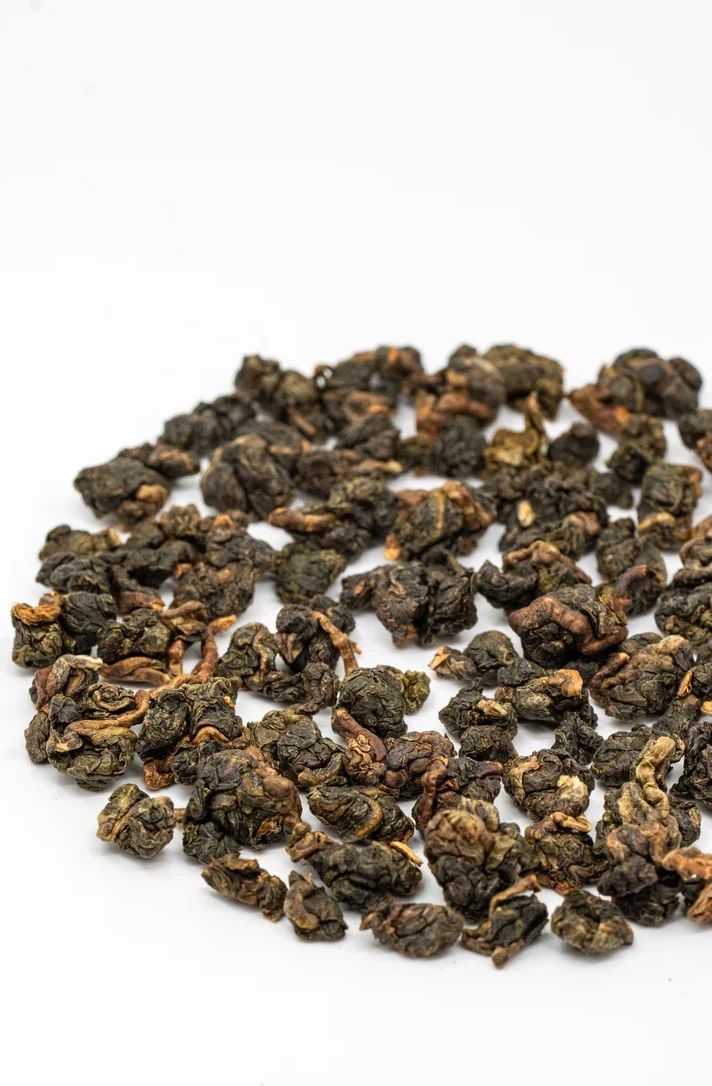
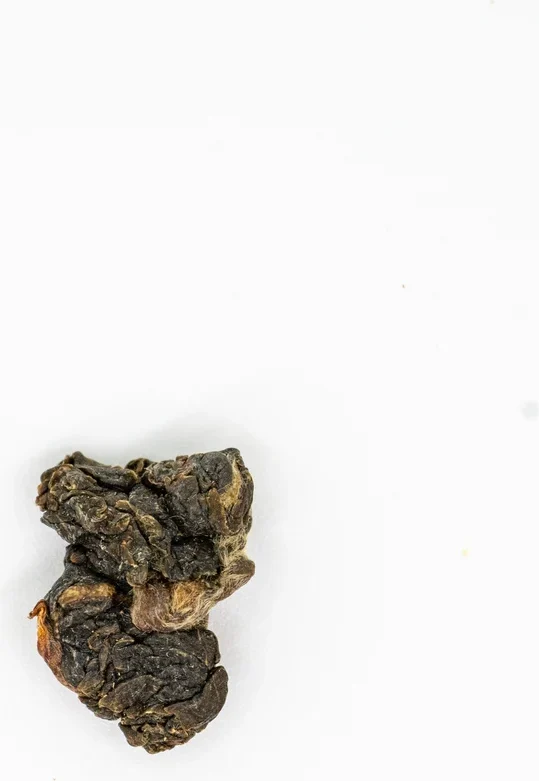
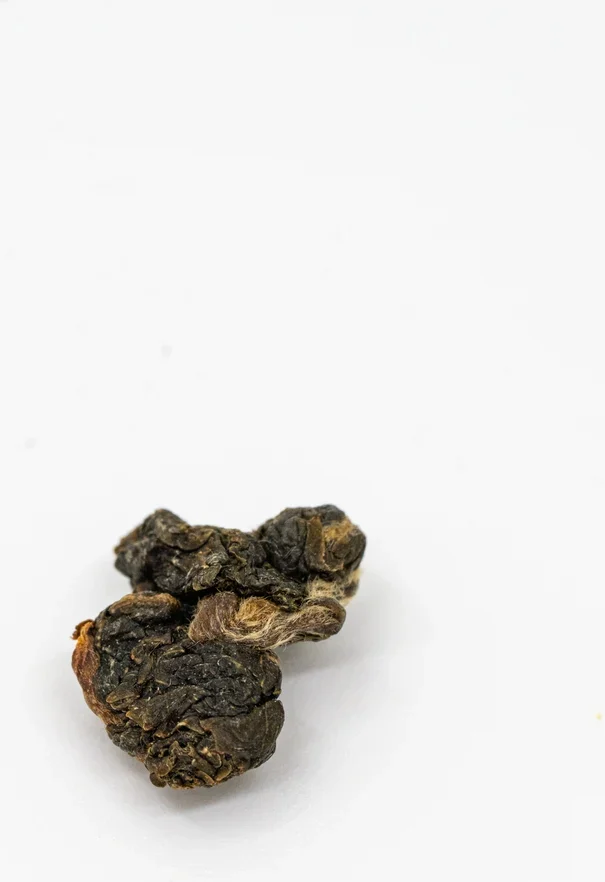
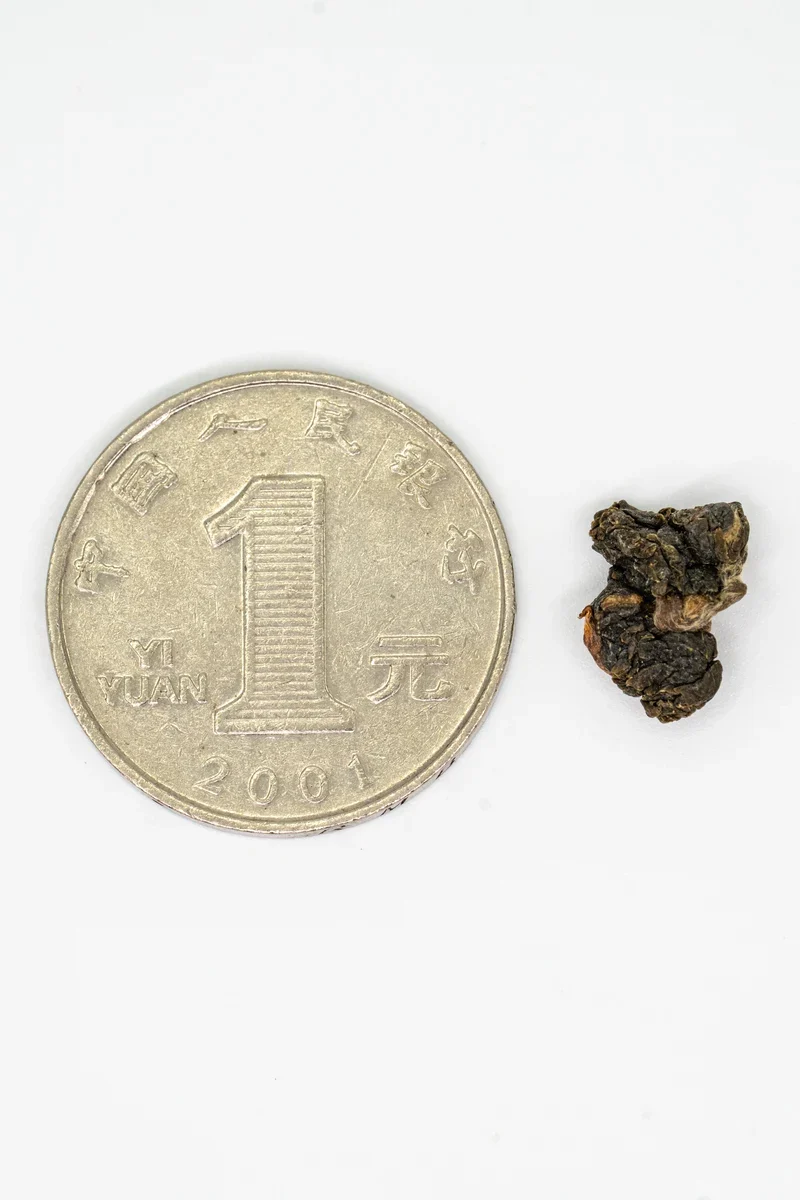
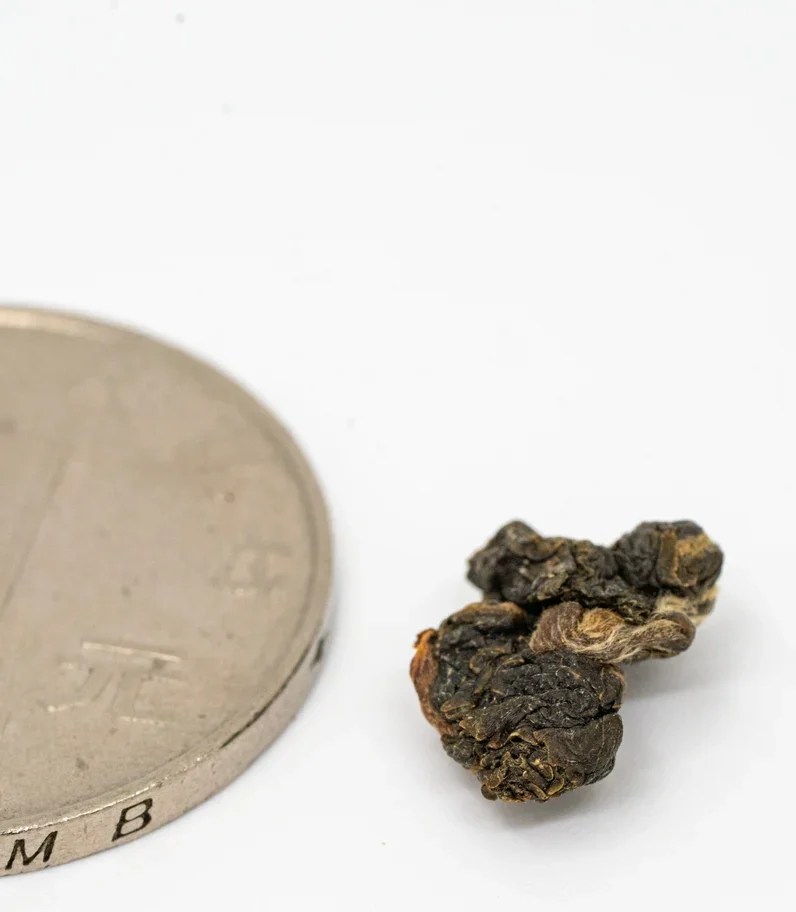
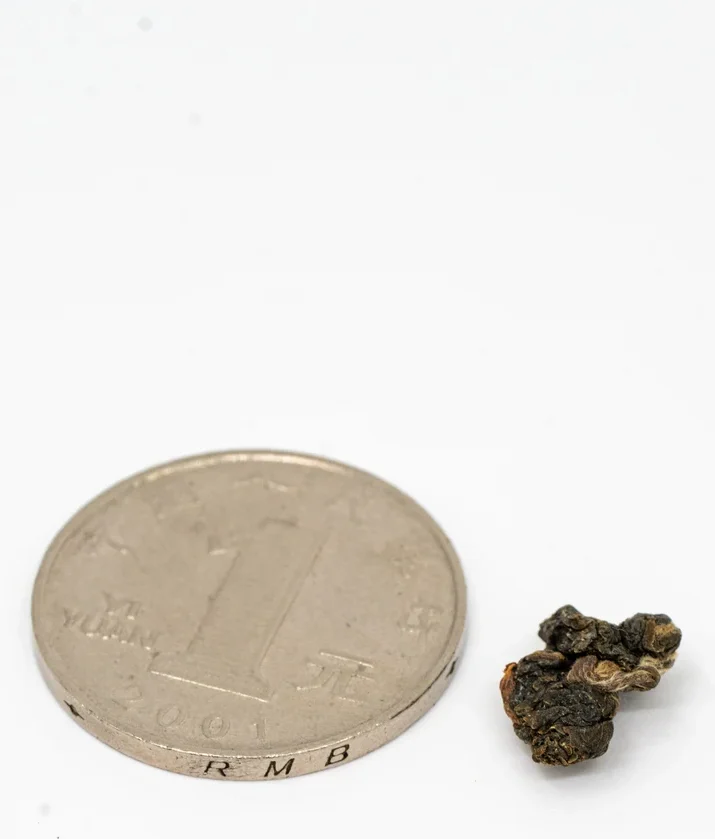
Dry Leaf Appearance: Tightly rolled hemispheres, from emerald-green to dark green, with luster. Pellets larger than average — high-mountain leaf is more fleshy. Possible tips with white down.
Dry Leaf Aroma: Fresh, bright, "high-mountain" — like mountain air: clean, with notes of orchid, gardenia, lily of the valley. Creamy, fruity (peach, pear, lychee) and grassy nuances. Characteristic "cool" note — distinction from "warmer" low-altitude oolongs.
Liquor Aroma: Rich, floral, sweetish — cream, fruits, honey. Persistent, "alive," changing from infusion to infusion.
Liquor Color: Light yellow, golden-green with barely perceptible pearlescent sheen. Transparent, clear.
Spent Leaves: Whole elastic leaves of emerald-green color. Large, fleshy — sign of high-mountain raw material.
Taste: Silky — the main word for Lishan. Soft, oily, with minimal astringency and pronounced natural sweetness. Floral notes (orchid, gardenia), creamy, fruity (pear, peach, lychee). Light acidity, refreshing long aftertaste with returning sweetness (回甘, huígān). The higher the plantation — the softer and sweeter the tea; Fushoushan gives practically "velvety" texture.
Alkaloids: Caffeine — moderate (~20–25 mg/g). Slightly lower than low-altitude teas.
Amino Acids: Record high L-theanine content among Taiwanese oolongs — cold nights stimulate its accumulation. L-theanine is the basis of sweetness and umami, as well as relaxing effect.
Essential Oils: Linalool, nerol, geraniol (floral notes); octanal, hexenal (freshness, "mountain air"). Essential oil concentration is high due to slow growth.
Minerals: Potassium, fluoride, magnesium, manganese.
Polyphenols: Content lower than low-altitude oolongs — cold and mist inhibit catechin synthesis. This explains minimal astringency.
Vitamins: C (elevated — high-altitude plants synthesize more ascorbic acid as antioxidant protection), B group, E, K.
Record L-theanine content — pronounced calming action without drowsiness. Lishan is a "meditative" tea.
Caffeine + L-theanine — alertness without nervousness.
Catechins + elevated vitamin C content.
"Cool" character, quenches thirst.
Combination of L-theanine and rich aroma — mild antidepressant action.
Low tannin content makes Lishan one of the "gentlest" oolongs for the stomach.
80–90°C. For the most delicate spring pickings from Fushoushan — 80–85°C. Boiling water is categorically not recommended — will destroy delicate notes.
5 g per 500 ml, 8–10 h in refrigerator. Exceptional result — reveals all the "silkiness" of Lishan.
Tea Amount: 5–7 g per 150 ml.
Teaware: Porcelain gaiwan — ideal for evaluating subtle aroma and liquor clarity. Yixing teapot — acceptable, but only "clean," not having absorbed aromas of other teas.
Most tender, maximum florality and sweetness. Most expensive.
More concentrated, slightly denser. Also highly valued.
Standard; pure "high-mountain" character.
Natural creaminess; some confuse with "milk oolong."
No reviews yet. Tell us what you think of this tea.
Rate this tea and share your impressions. We review each submission before publishing it.