Brewing
Gongfu brewing
- Water temperature
- 98 °C
- Tea amount
- 7 g
- Water volume
- 100 ml
- First steep
- 10 s
- Time added per infusion
- 5 s
- Infusions
- 12


jīnguā gòngchá
Choose a brewing method. Start with the recommended quantities and time, then adjust to taste.
Brewing
Brewing
Taste
Tea encyclopedia
Alt Names: Rén Tóu Gōng Chá (人头贡茶, Réntóu Gòngchá — "Human Head Tribute Tea"); Tuán Chá (团茶, Tuánchá — "Round Tea," "Ball Tea"); Jīnguā Rén Tòu Gòng Chá (金瓜人头贡茶, Jīnguā Réntóu Gòngchá).
Alt Names: Rén Tóu Gōng Chá (人头贡茶, Réntóu Gòngchá — "Human Head Tribute Tea"); Tuán Chá (团茶, Tuánchá — "Round Tea," "Ball Tea"); Jīnguā Rén Tòu Gòng Chá (金瓜人头贡茶, Jīnguā Réntóu Gòngchá).
Category: Special form of compressed pu-erh (紧压茶, jǐnyā chá); historical imperial tribute (贡茶, gòngchá). One of the most famous and expensive pu-erhs in history. Included among legendary old pu-erhs alongside Fù Yuán Cháng (福元昌) and Tóng Qīng Háo (同庆号).
Coordinates: Approximately 22°08' North latitude, 101°28' East longitude (Yibang-Mansong area, Mengla County).
Origin: China, Yúnnán Province (云南, Yúnnán). Historical homeland — territory of the Six Great Tea Mountains (六大茶山, Liù Dà Cháshān) in Xīshuāngbǎnnà Dǎi Autonomous Prefecture (西双版纳, Xīshuāngbǎnnà). Original production was conducted in Pu'er Prefecture (普洱府, Pǔ'ěr fǔ), Ning'er County (宁洱, Níng'ěr), now Ning'er Hani and Yi Autonomous County. According to leading pu-erh researchers, including Dèng Shihai (邓时海), raw material for original Jīnguā Gòng Chá came from Yǐbāng Mountain (倚邦, Yǐbāng), and presumably from the famous Mànsōng village (曼松, Mànsōng).
Type: Post-fermented tea (dark tea, 黑茶). Historically — sheng pu-erh (生普洱, shēng pǔ'ěr) with natural aging. Modern replicas are produced both as sheng pu-erh (unfermented, subject to long-term natural post-fermentation) and as shu pu-erh (熟普洱, shú pǔ'ěr), which has undergone accelerated fermentation through the wet piling method (渥堆, wò duī).
Cultural Significance: Jingua Gong Cha occupies an absolutely unique place in Chinese tea culture. This is not simply a type of pressing — it is a symbol of the highest status of pu-erh tea at the Qing court. As the last emperor Pú Yī (溥仪, Pǔyí) said in conversation with writer Lǎo Shě (老舍, Lǎo Shě): "In summer at the palace we drank Longjing, and in winter — pu-erh," and Jingua Gong Cha was the pinnacle of this winter preference. The tea became the embodiment of the connection between Yunnan mountains and the Forbidden City, evidence that a modest leaf from Yibang Mountain could attain the status of imperial treasure. Qīng scholar Ruǎn Fú (阮福, Ruǎn Fú) exclaimed in "Records of Pu-erh Tea" (《普洱茶记》, Pǔ'ěr Chá Jì): "The fame of pu-erh tea has spread throughout the realm; its taste is the most concentrated."
History: Production of Jingua Gong Cha began in the seventh year of Emperor Yongzheng's reign (雍正, Yōngzhèng) of the Qīng dynasty (清朝, Qīngcháo), that is, from 1729. During this period, Yunnan Governor-General E'ertai (鄂尔泰, È'ěrtài) established a special workshop for producing tribute tea (贡茶厂, gòngchá chǎng) at Pu'er Prefecture in Ning'er County. By his order, the finest raw material from Xishuangbanna was selected — so-called "maiden tea" (女儿茶, nǚ'ér chá) — from which large round compressed teas, loose tea, and tea paste (茶膏, chá gāo) were formed for tribute to the imperial court.
Name Breakdown: Each component of the name carries deep meaning:
Cultivar: The foundation for Jingua Gong Cha is the Yunnan large-leaf variety — Yúnnán Dǎ Yè Zhǒng (云南大叶种, Yúnnán Dàyèzhǒng), botanically belonging to Camellia sinensis var. assamica. These are tree-form tea plants with large, fleshy leaves containing high levels of polyphenols and extractive substances.
Picking: Spring picking (春茶, chūnchá), predominantly in March-April. Historically, preference was given to the earliest spring raw material, when buds are maximally filled with sap after winter dormancy. Autumn picking (秋茶, qiūchá) is also used for individual batches — it differs in more pronounced aroma with somewhat less body density.
Pluck Standard: Exclusively select buds (芽茶, yáchá) and young shoots — one bud (单芽, dānyá) or one bud with one young leaf (一芽一叶, yī yá yī yè). According to historical descriptions, picking was carried out by unmarried girls from local ethnic groups — Yī (彝族, Yízú), Wa (佤族, Wǎzú), Bùlǎng (布朗族, Bùlǎngzú), Jinuo (基诺族, Jīnuòzú) — who carefully pinched buds with fingernails (rather than plucking with fingers, so as not to damage the tender shoot). Collected buds, according to tradition, were initially placed in the bosom and only then transferred to bamboo baskets. This practice is an echo of an ancient ritual designed to ensure the purity and "virginity" of tea raw material.
Raw Material: Tea buds must be uniform, whole, without mechanical damage. Dense, with abundant down (金毫, jīnháo — "golden tips"). Historically, only the highest grade raw material was used — specially selected tips from the harvest of the Six Great Tea Mountains. For modern elite replicas, preference is given to old trees (古树, gǔshù) from ecologically clean areas.
Altitude: Core — so-called Prince Mountain (王子山, Wángzǐ Shān), 1200–1400 m above sea level; secondary zone — Beiyinshan Mountain (背阴山, Bèiyīn Shān), 1200–1375 m.
Climate: Subtropical monsoon, with pronounced vertical zonality. Average annual temperature 17–20°C, annual precipitation 1400–1600 mm. Significant diurnal temperature differences slow shoot growth and promote concentration of aromatic substances. The territory is surrounded by primary tropical forest with rich biodiversity.
Soil: Unique purple-red sandstone soils (紫红土, zǐhóng tǔ) with high content of zinc (Zn), iron (Fe) and other microelements. A local saying states: "Wet it becomes mud, dry it becomes stone" (遇水成泥,遇风成石). These are acidic red soils (pH 4.5–5.5) with excellent air permeability, drainage and moisture retention — ideal conditions for accumulation of amino acids and sugars in tea leaves.
Altitude 1700–2200 m, red-brick soils based on weathered purple shales, rich in zinc and selenium. Gives concentrated, powerful flavor profile.
Altitude 1500–1800 m, ancient tea gardens with trees over 100 years old.
Altitude up to 2000 m and higher, used for individual lines of elite replicas.
Hand picking of select buds and young shoots, carried out with special care — historical tradition prescribed pinching with fingernails (指甲采摘, zhǐjia cǎizhāi), not plucking with fingers. Raw material was immediately delivered for processing.
Collected buds were spread in a thin layer on bamboo trays in a well-ventilated place to remove excess moisture. Time — from several hours to a day, depending on air humidity. This stage initiates initial oxidative processes and forms primary aroma.
Hand pan-firing in a wok (锅, guō) at high temperature to deactivate enzymes and stop oxidation. The master controls temperature and duration by touch — for tender bud raw material the process is maximally gentle to preserve integrity and fuzziness of tips.
Light hand rolling, breaking cellular membranes and releasing cell sap. For elite bud raw material rolling is minimal — the goal is not strong leaf deformation, but ensuring conditions for subsequent post-fermentation.
Key stage distinguishing Yunnan sheng pu-erh from most other green teas. Rolled shoots are spread in a thin layer and dried under open sun. Sun-drying preserves enzyme and microorganism activity necessary for subsequent multi-year post-fermentation. This produces so-called shaiqing maocha (晒青毛茶, shàiqīng máochá) — "sun-dried semi-finished tea."
This is a unique stage characteristic specifically of historical Jingua Gong Cha. Collected and initially processed buds were placed in bamboo baskets (竹篓, zhúlǒu) and stored in a ventilated room for at least two years (and often longer) under constant supervision of an experienced master. During aging, buds acquired characteristic golden-yellow color — precisely this transformation gave the tea the epithet "golden" (金). During this period natural slow post-fermentation occurred with participation of endogenous tea leaf enzymes and microorganisms.
After aging, raw material was additionally air-dried, sorted and prepared for forming.
Careful selection of uniform buds of required size and quality. For Jingua Gong Cha only the best, most whole and "golden" buds were used.
Microflora control to ensure safety and stability of finished product.
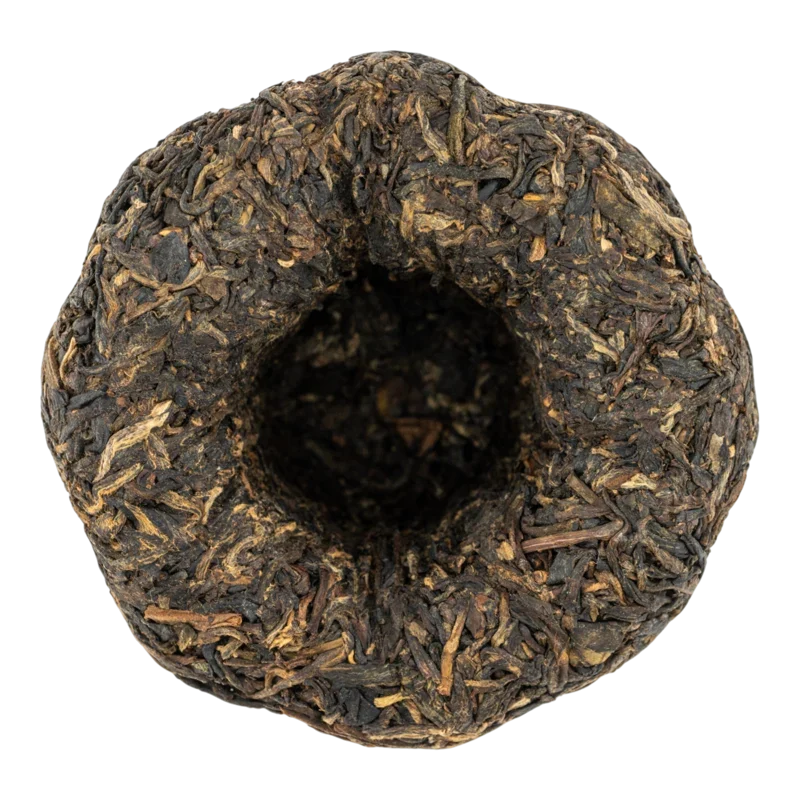
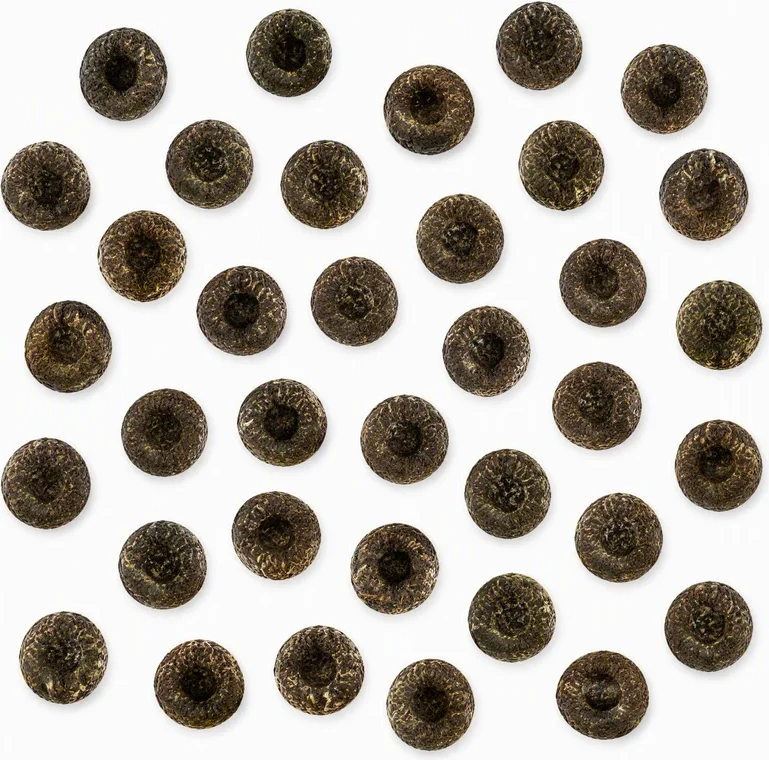
Prepared raw material was treated with steam to give it plasticity, after which it was hand-formed into characteristic pumpkin-like (南瓜形) shape. The largest historical specimens weighed about five jīn (斤, jīn) — approximately 2.5 kg — and indeed resembled a human head in size and shape (hence the second name 人头茶). Modern replicas are released in various weight categories: from miniature 7-gram balls to classic large forms of several kilograms.
Pressed teas were dried under natural conditions to required moisture level.
Finished pressed tea was stored for long-term aging — at least 10 years (traditional recommendation). With multi-year aging under controlled ventilation and humidity conditions, tea continues to slowly transform: taste becomes ever deeper, softer, more oily, developing notes of camphor, sandalwood, medicinal herbs.
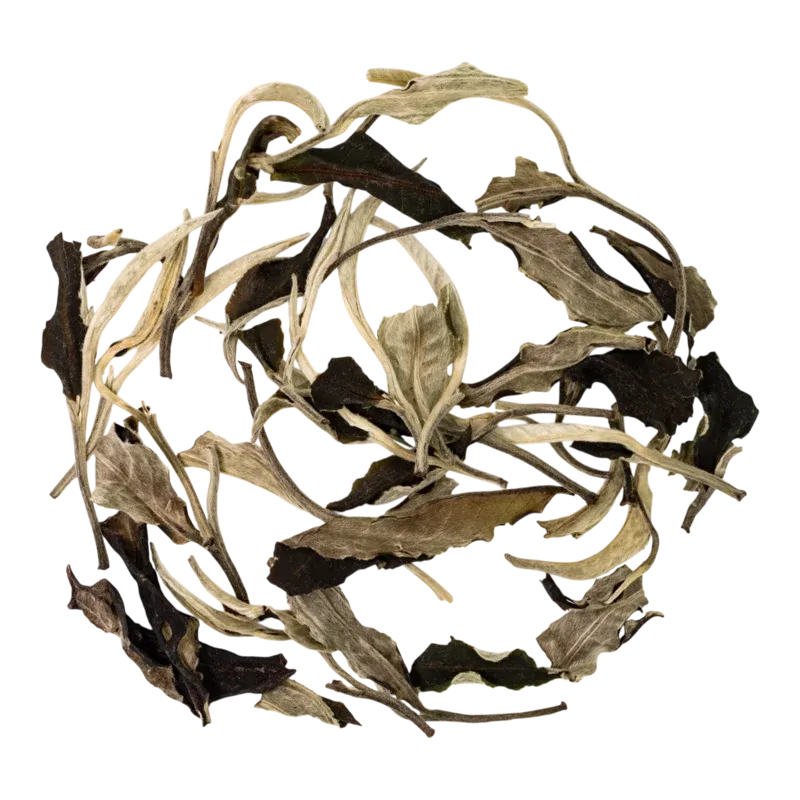
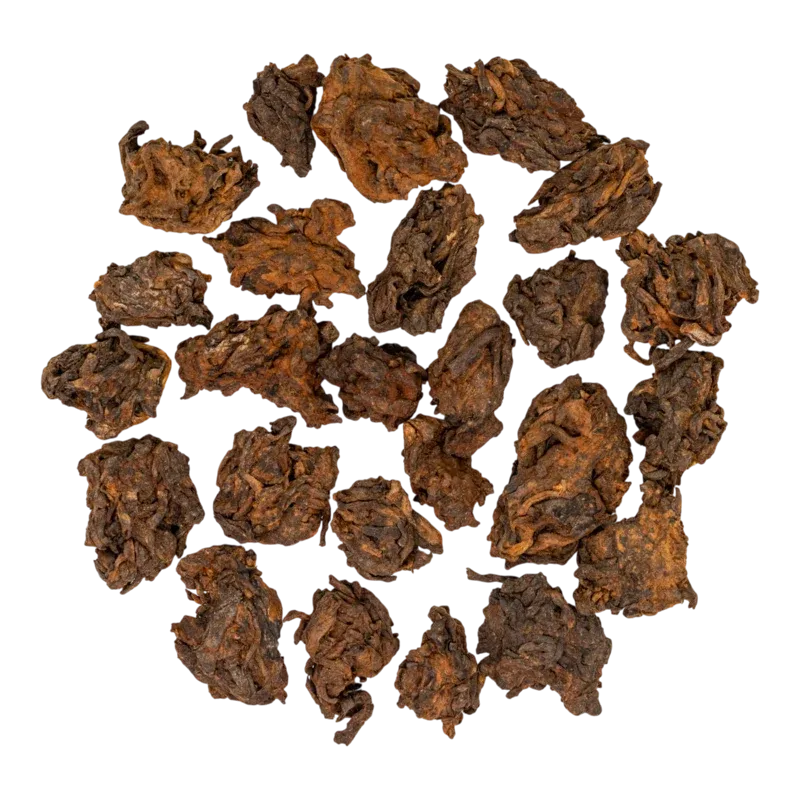
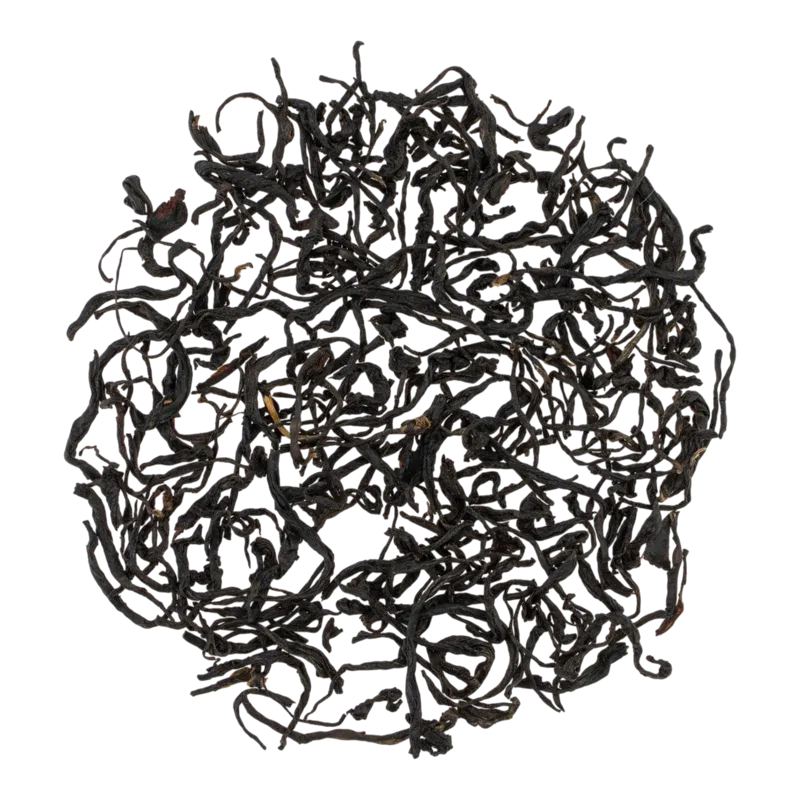
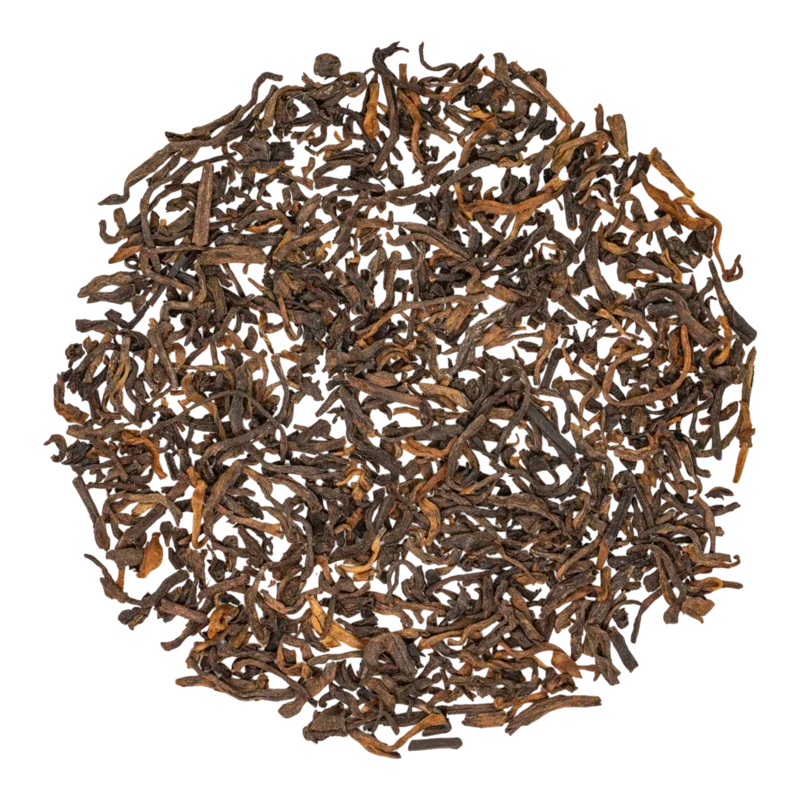
Dry Leaf Appearance: Pressed tea has characteristic pumpkin-like or spherical form — squat-round, with relief edges resembling pumpkin segments. Surface is dense, smooth or slightly bumpy. Color depends on age: young sheng pu-erh has dark green with silvery down shade; aged (5–15 years) — chestnut-brown; deeply aged (over 20 years) — dark chestnut, reddish-brown (described as "pig liver color," 猪肝色, zhūgān sè). Loose raw material of highest grade demonstrates abundance of golden buds (金毫, jīnháo), dense, compact, covered with fine down.
Dry Leaf Aroma: Aged tea possesses deep, warm aroma with notes of dried longan (桂圆干, guìyuán gān), old wood, camphor. Shǔ versions are distinguished by notes of red dates (枣香, zǎo xiāng), walnuts and moist earth. Young sheng pu-erh in Jingua form demonstrates floral-honey notes with light smoky shade.
Liquor Aroma: Deep, multi-layered. Dominated by "chen xiang" (陈香, chénxiāng) — "aged aroma," combining notes of old wood, parchment, dry medicinal herbs (药香, yào xiāng), ginseng (参香, shēn xiāng). Shu versions add earthy notes and red date aroma. Characteristic is prolonged "cold cup" (冷杯留香, lěng bēi liú xiāng) — aroma persists in empty cup for over 30 minutes.
Liquor Color: Sheng pu-erh: from yellow-green (young) through amber (5–15 years) to deep ruby-chestnut (20+ years). Shu pu-erh: rich dark ruby, red-chestnut (红浓, hóng nóng — "red and thick"), clear, with oily sheen.
Spent Leaves: High-quality Jingua Gong Cha from bud raw material demonstrates whole, tender, compact buds with golden shade. Sheng version — reddish-brown, elastic. Shu version — dark chestnut, soft but preserving structure. Uniformity of spent leaves is a sign of high quality.
Taste: Dominated by characteristics "chunhou" (醇厚, chúnhòu — "dense, thick, oily"), 甘 (gān — "sweet, with long aftertaste"), 滑 (huá — "silky-smooth, gliding"). Body — full, enveloping, with viscous texture (粘稠感, niánchóu gǎn). Returning sweetness (回甘, huígān) is expressed extraordinarily long and deep — it begins in throat and rises in waves to mouth cavity. Sheng version when young may give light astringency and freshness, which with aging completely transform into silky smoothness. Shu version — soft, round, with notes of chocolate, prunes, caramel.
Alkaloids: Caffeine (2.5–4.5% of dry weight in raw material), theobromine, theophylline. With aging the perceived stimulating effect somewhat softens due to caffeine binding with polyphenolic complexes.
Amino Acids: L-theanine, glutamic acid and other free amino acids. Their content in bud raw material is higher than in mature leaves, which explains pronounced sweetness and "thickness" of liquor. For Mansong raw material, with its unique soils, elevated amino acid content is characteristic.
Unique feature of shu pu-erhs and aged sheng pu-erhs — presence of lovastatin and its analogs produced by microorganisms during post-fermentation. This is associated with pu-erh's hypolipidemic properties.
Responsible for characteristic viscous texture of liquor (粘稠感). With age, soluble polysaccharide content increases.
Minerals: Potassium, manganese, zinc, selenium, fluorine, magnesium, calcium. Zinc and selenium content may be elevated due to mineral profile of Yunnan soils (especially Mansong and Bulangshan).
Polyphenols: In young sheng raw material polyphenol content is high (25–35% of dry weight), with dominance of catechins (EGCG, EGC, ECG). With aging catechins oxidize and polymerize, forming thearubigins, theabrownins and other complex polyphenolic complexes responsible for liquor darkening and taste softening. In shu pu-erh a significant part of catechins is transformed during piling, and thearubigins dominate (up to 8–12% dry weight).
Vitamins: B-group vitamins (B1, B2, B3), vitamin C (in young sheng; decreases with age), vitamin E.
Proven ability to lower "bad" cholesterol (LDL) and triglyceride levels. Thearubigins and theabrownins inhibit cholesterol synthesis; lovastatin formed during post-fermentation enhances this effect. Numerous clinical studies conducted at Yunnan University and Tea Research Institute CAAS confirm this activity.
Pu-erh stimulates digestive enzyme secretion, promotes fat and protein breakdown, facilitates digestion after heavy, fatty meals. Historically this is why pu-erh was valued by peoples of Tibet and Mongolia, whose diet is rich in meat and dairy fat.
Pu-erh polyphenols possess pronounced ability to neutralize free radicals. Antioxidant activity of tea polyphenols, according to some studies, significantly exceeds that of vitamin E.
Unlike green tea, aged pu-erh gives soft, prolonged stimulation without sharp excitement peaks — caffeine is released gradually, bound with polyphenolic complexes.
Promotes vessel elasticity, moderately lowers blood pressure with long-term regular consumption.
Fat metabolism stimulation, metabolic process acceleration. Numerous studies conducted at Kunming Medical University confirm statistically significant effect.
High fluorine content in pu-erh leaf (especially large-leaf Yunnan varieties) promotes tooth enamel strengthening and caries prevention.
According to traditional Chinese medicine classification, aged pu-erh (and especially shu pu-erh) belongs to "warm" (温, wēn) products, warming the "middle jiao" (中焦) — stomach and spleen.
Ideal choice, especially "zini" or "duanni" clay. Porous structure of Yixing clay absorbs and returns aromas, creating teapot "memory" that enriches each subsequent brewing. For Jingua it's recommended to dedicate a separate teapot exclusively for aged pu-erhs.
White porcelain gaiwan of 100–150 ml volume — universal and neutral option allowing objective tea quality assessment.
Suitable for admiring liquor color, especially when demonstrating aged pu-erh beauty.
Tea Amount: 5–7 g per 100–150 ml water when brewing by gongfu cha method. When brewing in large vessels — 5 g per 250 ml (1:50 ratio).
Water Temperature: 95–100°C. For Jingua Gong Cha only just-boiled or nearly boiling water is used — high temperature is necessary for full opening of densely compressed bud raw material and extraction of deep aromatic and flavor compounds.
Container: Paper box, bamboo or reed basket, kraft bag. Do not seal completely — tea needs air access to continue post-fermentation. Historical recommendation — storage in ceramic Yíxīng vessels (紫砂陶器, zǐshā táoqì), providing optimal microclimate.
Enemies: Direct sunlight, strong foreign odors (spices, perfumery, household chemicals), dampness, temperature fluctuations.
Humidity: 50–70%. Excessive humidity (over 75%) provokes unwanted mold growth; insufficient (below 40%) slows post-fermentation to complete stop.
Dry, ventilated room with stable microclimate. Ideally — separate room or cabinet devoted exclusively to pu-erh. Categorically avoid kitchens, bathrooms, places with sharp odors.
Tea should be placed on shelves not lower than 10 cm from floor and not close to walls — to ensure air circulation (离地离墙, lí dì lí qiáng).
Jingua Gong Cha is strongly recommended to be stored separately from other teas — its aroma may be "contaminated" by foreign tea "qi" (茶气, cháqì). This is especially critical for elite specimens.
Temperature: 20–30°C, without sharp fluctuations. Optimally — 25°C.
Also elite shu pu-erh from fine bud raw material, but this designation refers to grade (finest fraction after sorting), not to special pressing form or historical tribute. Gong Ting is usually sold loose or in standard forms (cakes, bricks). Jingua Gong Cha is form + raw material + historical tradition.
Classic pu-erh pressing form as flat disc weighing about 357 g (seven discs in one bundle). Most common pu-erh format. Unlike Jingua, cakes do not presuppose exclusively bud raw material and are not connected with imperial tribute institution.
Pu-erh (more often shu) pressed in bowl-shaped (沱, tuó) form from bud "golden" raw material. By raw material quality may be comparable to Jingua, but differs in form, size and does not carry historical tribute burden.
Strictly speaking, this is not pressing form, but origin designation — tea from Mansong village, Yibang Mountain, historically recognized as tribute. According to experts, precisely Mansong raw material was the basis for original Jingua Gong Cha. Mansong tea in pure form (without forming into "pumpkin") is sheng pu-erh with pronounced sweetness, honey aroma and exceptional delicacy.
Price Category: Jingua Gong Cha is one of the most expensive pu-erhs on the market. Original historical specimens from Gugong are priceless — they are museum artifacts. Modern premium replicas (from select bud raw material of old trees, handwork) cost from several thousand to tens of thousands of yuan per kilogram. Factors determining cost: raw material origin (Mansong significantly more expensive), tree age, production year, aging age, producer reputation, specimen size and form. Mansong tea, even without pressing into pumpkin form, can reach 30,000–80,000 yuan per kilogram for old trees.
Authentic high-quality Jingua has even, dense, symmetrical form with clear ribs. Raw material should be uniform, with abundance of golden buds. Suspicious are loose, uneven pressing with coarse stems.
Aroma should be clean, deep, without moldy, sour or musty notes. "Storage taste" (仓味, cāng wèi) is acceptable in minimal degree for old teas, but should not dominate.
Liquor should be clear (without turbidity), with oily sheen. Turbid, dull or muddy-brown liquor is a sign of low quality or improper storage. Taste should be clean, without "fishy," putrid or sour notes.
Suspiciously low price for "Jingua Gong Cha from old Mansong trees with 20-year aging" is practically a guarantee of fake. The market massively presents cheap imitations from ordinary plantation raw material.
No reviews yet. Tell us what you think of this tea.
Rate this tea and share your impressions. We review each submission before publishing it.