Brewing
Gongfu brewing
- Water temperature
- 75 °C
- Tea amount
- 5 g
- Water volume
- 100 ml
- First steep
- 10 s
- Time added per infusion
- 5 s
- Infusions
- 3

jīngāng bì lǜ
Choose a brewing method. Start with the recommended quantities and time, then adjust to taste.
Brewing
Brewing
Taste
Tea encyclopedia
Category: Artisanal named green teas of Henan; representative of the Xìnyáng Máo Jiān (信阳毛尖, Xìnyáng Máojiān) tradition. Part of the "Shangcheng Gaoshan Cha" (商城高山茶) system — high-mountain teas of Shangcheng County.
Category: Artisanal named green teas of Henan; representative of the Xìnyáng Máo Jiān (信阳毛尖, Xìnyáng Máojiān) tradition. Part of the "Shangcheng Gaoshan Cha" (商城高山茶) system — high-mountain teas of Shangcheng County.
Coordinates: Approximately 31°48′ N, 115°32′ E.
Origin: China, Hénán Province (河南省, Hénán Shěng), Xìnyáng City (信阳市, Xìnyáng Shì), Shāngchéng County (商城县, Shāngchéng Xiàn). Production core — Jingangtai mountain massif (金刚台, Jīngāng Tái) and adjacent tea zones: Bilian Peak (碧莲峰, Bìlián Fēng, also called Dahuangjian — 大黄尖), Sūxiānshí village (苏仙石, Sūxiānshí), Donghe Bailongtan valley (东河白龙潭) and Yinwan (殷塆).
Type: Green tea (绿茶, lǜchá), non-oxidized. By processing method belongs to combined hongchao-type (烘炒型绿茶, hōngchǎo xíng lǜchá) — green tea in whose production pan-firing and hot air drying (charcoal fire) are combined.
Classic famous green tea from the same Xinyang city, included in China's ten great teas. Distinguished by thin needle form with abundant down, tender chestnut aroma and pronounced umami. Jingang Bi Lü has flat, not needle form, more complex multi-layered aroma (from orchid to chestnut) and higher polyphenol content, giving denser body and pronounced taste layering.
Great flat green tea from Zhejiang. Jingang Bi Lü is formally similar in flat form, however differs in greater fleshiness, pronounced white down (Longjing has practically no down), multi-layered orchid-chestnut aroma (versus "beany" aroma of Longjing) and significantly higher polyphenol content.
Famous green tea from neighboring Anhui Province, also growing in Dabie Mountains, but on its other side. Distinguished by unique technology from pure leaf without buds, flat "seed-like" form and denser, heavier taste. Jingang Bi Lü, conversely, is made from young buds and leaves, possesses fresher and brighter taste with orchid aroma.
Anhui large-leaf green tea of flat form. Significantly larger than Jingang Bi Lü in leaf size, with different aromatic profile (orchid aroma present, but with more "mineral" base). Jingang Bi Lü is more compact, fleshier and higher in polyphenol content.
Cultural Significance: Jingang Bi Lü is the pride of Shangcheng County's tea culture and the broader Xinyang region, which has long been famous as the birthplace of one of China's ten classic teas — Xinyang Mao Jian. Shāngchéng is located in the very heart of the Dàbié Mountains (大别山, Dàbiéshān) at the junction of Henan and Anhui provinces — a historic tea-growing region mentioned in Lu Yu's "Classic of Tea" (《茶经》, Chá Jīng). The tea symbolizes local masters' striving for innovation within tradition: not simply to reproduce the famous Mao Jian, but to create something fundamentally new, uniting the best features of different tea schools. This approach — synthesis of southern (Zhejiang) flat elegance with northern (Henan) strength and fullness — made Jingang Bi Lü a symbol of creative principle in Henan tea cultivation. The tea is also associated with "eight excellences" (八最, bā zuì): highest elevation, northernmost latitude, best budding period, greatest number of infusions, richest nutritional composition, latest market entry, most distinctive characteristics, most refreshing taste.
History: Jingang Bi Lü is a relatively young, purposefully created tea. Its development began in 1984 under the guidance of tea master Yáng Zhìdòng (杨智栋, Yáng Zhìdòng), who experimented for five years, striving to unite the virtues of two great green teas: the flat elegant form of Lóngjǐng (龙井) and the downy, aromatic essence of Máo Jiān (毛尖). By 1989 the unique technology was completed, and the tea entered serial production. In 1990 at the Henan provincial famous tea exhibition, Jingang Bi Lü was recognized as "New Famous Tea of Henan Province" (河南省新名茶). In 1992 the tea passed certification by the Tea Quality Control Center under the Ministry of Agriculture, confirming compliance with famous tea standards. Triumphant was the Hangzhou International Tea Exhibition of 1999, where Jingang Bi Lü was awarded the gold prize (国际名茶金奖, guójì míngchá jīnjiǎng), becoming the first tea from Shangcheng County to receive international recognition. In 2003 the eponymous trademark was registered, and in 2007 it became the first "Famous Trademark of the Province" (河南省著名商标) among Shangcheng teas. In 2020 the Jingang Bi Lü production technology was included in the intangible cultural heritage registry of Xìnyáng City (信阳市非物质文化遗产). In 2023 a group standard (团体标准, tuántǐ biāozhǔn) was published with introduction of an official grading system.
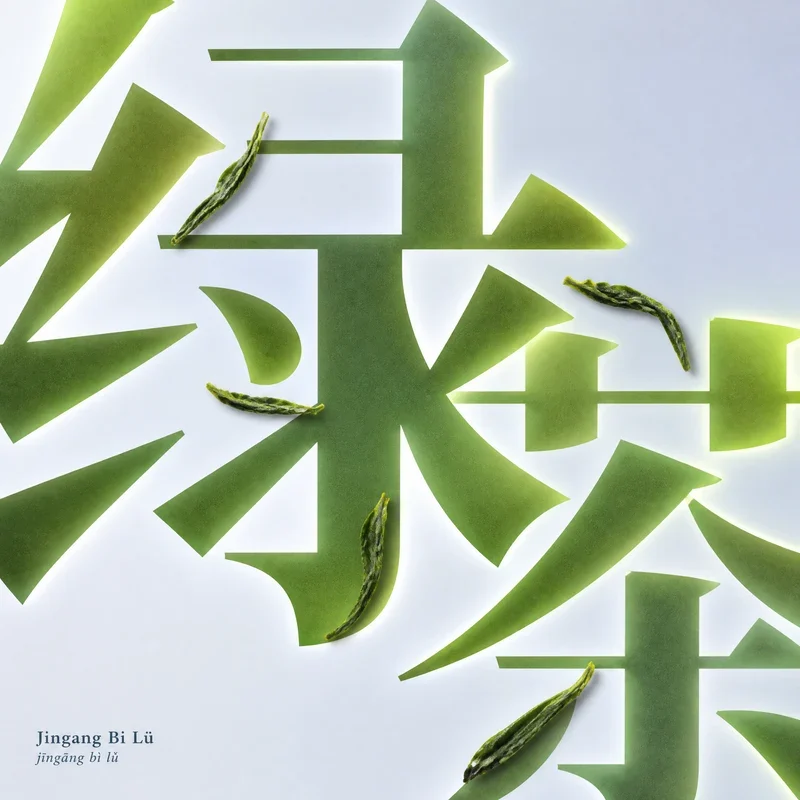
Name Breakdown: Jīngāng (金刚) — "Diamond," "Vajra" — reference to Jingangtai Mountain (金刚台), the main peak of the Dabie Mountains range at 1584 m elevation, on whose slopes the tea grows. The mountain's name, in turn, is connected to Buddhist symbolism of indestructible firmness. Bǐ (碧) — "emerald," "jade-green." Lü (绿) — "green." Thus, the full name means "Emerald Green of Diamond Mountain" — a poetic reflection of the tea's color and place of origin.
Cultivar: Main local cultivar — Guìhuā zhǒng (桂花种, Guìhuā zhǒng, literally "Osmanthus variety") — endemic tree-form population variety with thick fleshy leaves, polyphenol content reaching 25% and more. Suitable for producing rich, strong green teas. Additionally cultivated are Báiháo Zǎo (白毫早, Báiháo Zǎo) — early-ripening variety with abundant white down, and Longjing-43 (龙井43, Lóngjǐng 43) introduced from Zhejiang — early awakening, with dense down, enhancing freshness and brightness of taste.
Picking: Main period — spring, with quality peak during Qingming–Gǔyǔ (清明–谷雨, early–late April). Due to high growing elevation, the tea enters market later than most green teas of eastern China — this is one of its "eight excellences."
Pluck Standard: Highest grade — bud with one leaf (一芽一叶, yī yá yī yè), first grade — predominantly bud with one leaf with allowance of small amount of buds with two leaves, second grade — bud with two leaves. Buds and leaves must be whole, without damage, with removal of diseased, purple and coarse leaves.
Altitude: 800–1584 m above sea level. Jingangtai (1584 m) — main peak of the entire Dabie Mountains range.
Soil: Micro-acidic red soils (微酸性红壤, wēi suānxìng hóng rǎng) based on volcanic rocks, pH 4.5–6.0, with organic matter content ≥ 15 g/kg. Soils are rich in zinc and selenium. Water supply is provided by mountain streams and springs, water quality corresponds to first national class.
Tea plantations are located deep in the Dàbié Mountains (大别山), on slopes of Jingangtai Peak and adjacent summits at elevations from 800 to 1584 m. Average annual temperature — 15.3°C, annual precipitation — about 2200 mm (one of the highest indicators among China's tea-growing regions). Foggy days more than 200 per year, diffused light comprises over 70%. These conditions are close to ideal for formation of rich amino acid and aromatic complexes.
Forest cover comprises 89% — exceptionally high indicator. Tea gardens grow in proximity to rhododendrons (杜鹃), wild orchids (兰草) and other mountain flowers, which enriches the tea's aromatic profile. Chemical pesticides are completely prohibited; biological control using ladybugs (瓢虫, piáochóng) and other beneficial insects is used for pest control.
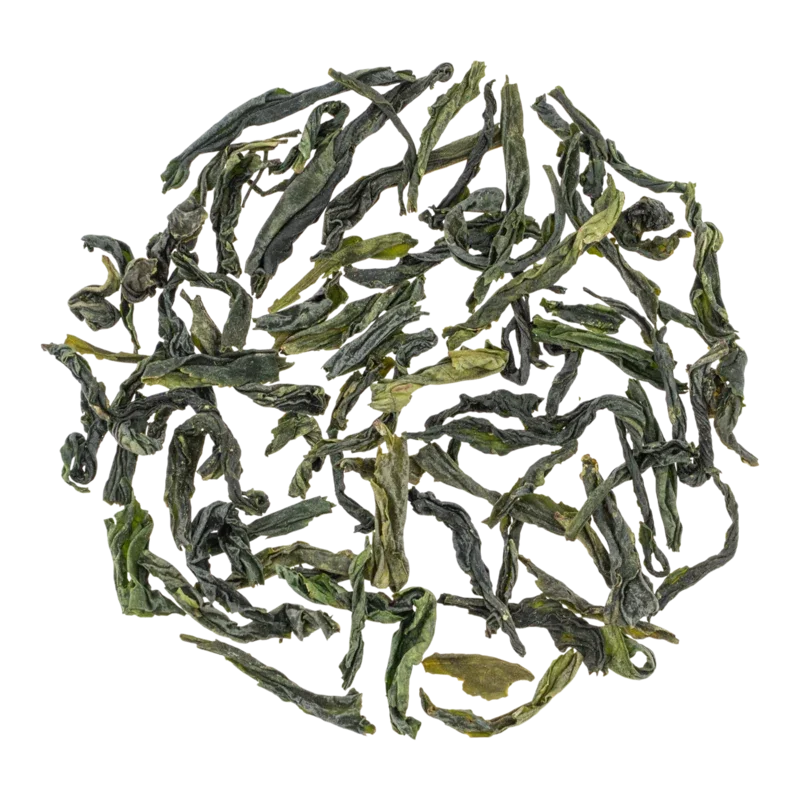
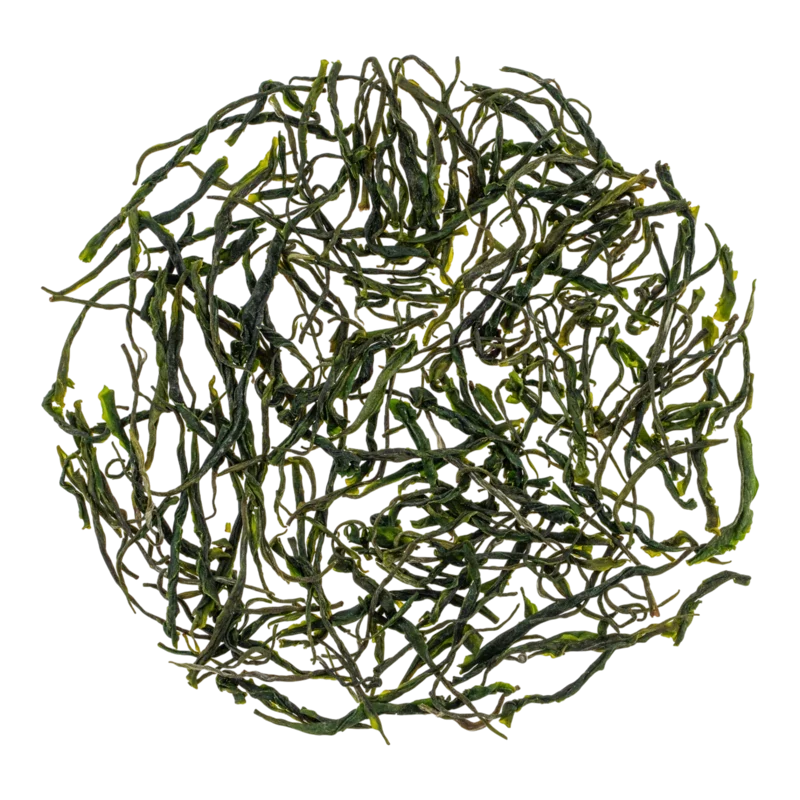
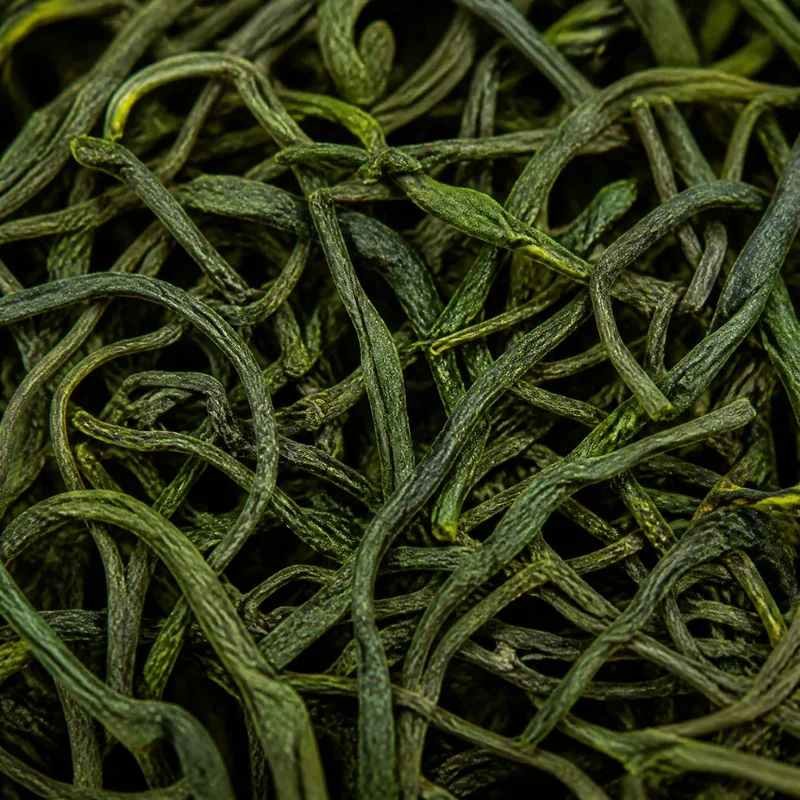
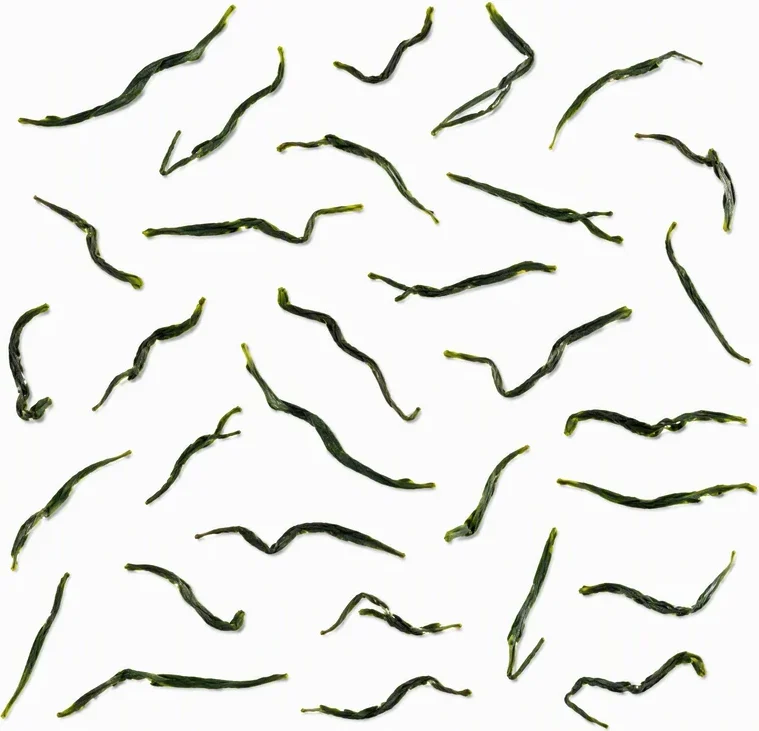
Dry Leaf Appearance: Flat, straight, elegant tea leaves (扁直挺秀, biǎnzhí tǐngxiù), fleshy and dense, with pronounced white down (显毫, xiǎn háo). In form resembles Longjing, but differs in greater fleshiness and abundance of down — "form like Longjing, spirit like Mao Jian."
Dry Leaf Aroma: Pure, high and persistent, with primary note of orchid aroma (兰花香, lánhuā xiāng).
Liquor Aroma: Multi-layered, unfolding through successive infusions: first brewing — orchid aroma (兰花香); second — tender chestnut (嫩栗香, nèn lì xiāng); third — rich, full (浓香, nóng xiāng); fourth — pure, light (清香, qīng xiāng). Aroma in cooled cup persists more than 5 minutes.
Liquor Color: Tender green, clear and bright (嫩绿清亮, nèn lǜ qīngliàng).
Spent Leaves: Tender green, fleshy, elastic leaves, gathered in characteristic "bouquets" (匀整成朵, yúnzhěng chéng duǒ), testifying to high raw material quality and careful processing.
Taste: Fresh and brisk (鲜爽, xiānshuǎng), sweet-mellow (甘醇, gānchún). Polyphenolic base (≥ 25%) ensures dense taste structure with light, quickly passing astringency, transitioning to pronounced and persistent "returning sweetness" (回甘, huígān). Soluble sugars create harmonious coordination. Taste has distinct layering — rare quality for green tea.
Alkaloids: Caffeine (咖啡碱, kāfēi jiǎn) — about 3%, theobromine, theophylline.
Amino Acids: About 4.9%, including L-theanine. High content is due to mountain terroir with abundance of diffused light and fogs.
High, indicating rich extractive profile.
10–15 mg/100 g — relatively high content, favorable for dental health.
Essential Oils: Form characteristic orchid-chestnut aromatic profile; their accumulation is promoted by proximity of tea bushes to mountain flowers.
Minerals: Zinc, selenium, potassium, manganese, phosphorus and other trace elements, due to volcanic origin of soils.
Polyphenols: 25–28% — one of the highest values among China's famous green teas. Base comprises catechins (EGCG, ECG and others), ensuring powerful antioxidant effect.
Vitamins: C (in fresh raw material), B group, K, E.
Exceptionally high polyphenol content (25–28%) ensures effective neutralization of free radicals and protection of cells from oxidative stress.
Caffeine (3%) combined with high L-theanine content (4.9% amino acids) gives smooth, prolonged toning with simultaneous sensation of clarity and concentration — without sharp spikes.
Increased fluorine content (10–15 mg/100 g) favorably affects tooth enamel mineralization.
Catechins actively suppress fat absorption and synthesis, contributing to maintenance of healthy cholesterol levels.
Tea stimulates gastrointestinal tract function when consumed after meals.
Synergy of caffeine and L-theanine improves concentration, memory and reaction speed.
Complex of vitamins, minerals and biologically active polyphenols contributes to immune support and general tone maintenance.
Tea Amount: 3 g per 150 ml water (1:50 ratio).
Teaware: Glass tumbler (玻璃杯, bōli bēi) — for observing "tea leaf dance"; white porcelain gaiwan (白瓷盖碗, báicí gàiwǎn) — for full aroma.
Water Temperature: 80–85°C. Recommended to boil water and let it cool approximately 90 seconds. Use neutral or slightly acidic mineral water (alkaline water worsens taste).
A classic famous green tea from the same city of Xinyang, included in China's ten great teas. Distinguished by its thin needle-like shape with abundant down, delicate chestnut aroma and pronounced umami. Jingang Bi Lü has a flat rather than needle-like shape, a more complex multi-layered aroma (from orchid to chestnut) and higher polyphenol content, giving a denser body and pronounced layered flavor.
The great flat green tea from Zhejiang. Jingang Bi Lü is formally similar in flat shape, however it differs in greater fleshiness, pronounced white down (Longjing has practically no fuzz), multi-layered orchid-chestnut aroma (versus the "bean" aroma of Longjing) and significantly higher polyphenol content.
Famous green tea from neighboring Anhui province, also growing in the Dabie Mountains range, but on its other side. Distinguished by unique technology using pure leaves without buds, flat "seed-like" shape and denser, heavier taste. Jingang Bi Lü, in contrast, is made from young buds and leaves, possessing a fresher and brighter taste with orchid aroma.
Anhui large-leaf green tea of flat shape. Significantly larger than Jingang Bi Lü in leaf size, with a different aromatic profile (orchid aroma is present, but with a more "mineral" base). Jingang Bi Lü is more compact, fleshier and higher in polyphenol content.
Price Category: Highest grade (特级, tèjí) — completely bud with one leaf, 90% bud composition — about 550 yuan per jin (500 g). First grade — about 350 yuan per jin. Second grade — about 260 yuan per jin.
Price Factors: Picking season (early spring significantly more expensive), growing elevation, raw material grade (percentage of buds), hand work, charcoal drying. Tea from Jingangtai Mountain is objectively more expensive than flatland analogues due to plantation inaccessibility and later ripening.
No reviews yet. Tell us what you think of this tea.
Rate this tea and share your impressions. We review each submission before publishing it.