Brewing
Gongfu brewing
- Water temperature
- 75 °C
- Tea amount
- 5 g
- Water volume
- 100 ml
- First steep
- 10 s
- Time added per infusion
- 5 s
- Infusions
- 3

Jìng'ān Báichá
Choose a brewing method. Start with the recommended quantities and time, then adjust to taste.
Brewing
Brewing
Taste
Tea encyclopedia
Category: China's Geographically Protected Product (国家地理标志保护产品, 2012). Among the ten famous teas of Jiāngxī Province (江西十大名茶). The "Jing'an Bai Cha" brand is registered as a geographical indication certification trademark (地理标志证明商标, 2010).
Category: China's Geographically Protected Product (国家地理标志保护产品, 2012). Among the ten famous teas of Jiāngxī Province (江西十大名茶). The "Jing'an Bai Cha" brand is registered as a geographical indication certification trademark (地理标志证明商标, 2010).
Coordinates: Approximately 28°45′–29°05′ N, 114°55′–115°30′ E.
Origin: China, Jiāngxī Province (江西省, Jiāngxī Shěng), Yíchūn City (宜春市, Yíchūn Shì), Jing'an County (靖安县, Jìng'ān Xiàn). Production covers 11 townships and towns, 76 administrative villages. Core production areas — five key territories: Zhōngyuán (中源乡), Luówān (罗湾乡), Zǎodū (璪都镇), Sanzhuolun (三爪仑乡), and Bǎofēng (宝峰镇).
Type: Green tea (绿茶, lǜchá), unoxidized. Made from ān albino (白化, báihuà) cultivar using green tea technology. Not a white tea (白茶) in the classical understanding of the six-color classification (i.e., not analogous to Fuding Bai Hao Yin Zhen or Bai Mu Dan).
Cultural Significance: Jing'an County is located in the Sanzhuolun National Forest Park (三爪仑国家森林公园, Sānzhǎolún Guójiā Sēnlín Gōngyuán) — the only exemplary national-level forest park in Jiangxi Province. Forest coverage reaches 84.1%, and negative ion concentration in the air reaches up to 150,000 per cm³, earning the county the title "China's Natural Oxygen Bar" (中国天然氧吧). Tea from these places is perceived as the quintessence of ecological purity — "white tea from white clouds" (白云深处有白茶, bái yún shēnchù yǒu báichá). Jing'an is also the first national ecological county in Jiangxi.
History: Tea cultivation in Jing'an County has a tradition of more than a millennium — from the "tea-zen unity" (茶禅一味, chá chán yī wèi) of Tāng patriarch Mazu Daoyi (马祖道一, Mǎzǔ Dàoyī, 709–788) to imperial tributes of the Ming and Qing eras. The actual albino tea from albino bushes has been mentioned in local chronicles for more than 400 years. In the "Jiangxi Provincial Yearbook" (《江西年鉴》, 1935), "靖安白茶" and "靖安毛尖" were recorded as independent trade names. However, the wild albino bush from Shuāngxī Village (双溪村, Shuāngxī Cūn), Jiǔlǐng Mountain (九岭山, Jiǔlǐng Shān), remained uncultivated for a long time — albino tea trees reproduce only vegetatively (无性繁殖, wúxìng fánzhí), and until the end of the 20th century, attempts to create industrial plantations encountered the technical impossibility of mass cloning.
Name Breakdown: "Jing'an" (靖安) — the county name, literally "peaceful and tranquil." "Bai Cha" (白茶) — "white tea" — refers to the color of young shoots during spring albinism, not to processing technology. The name arose naturally among producers and consumers to distinguish local albino tea from products of other regions.
Cultivar: Local selected albino tea variety (当地选育白化茶良种) — bush-type medium-leaf type (Camellia sinensis var. sinensis). Key biological characteristic — staged reversible albinism (阶段性白化现象, jiēduànxìng báihuà xiànxiàng): at temperatures ≤ 23°C, young leaves acquire a jade-white color (玉白色, yùbái sè), with the leaf underside densely covered with white down. Active albinism period — from mid-March to mid-April; duration of the "white phase" is 15–20 days. As temperature rises, leaves gradually turn green: by Guyu — white-green, after Guyu — completely green. This temperature-dependent process, caused by genetic mutation, blocks chlorophyll synthesis at low temperatures and redirects metabolism toward intensive amino acid accumulation.
Picking: Spring, exclusively during the albinism period — from mid-March to mid-April. Peak quality — before Qīngmíng (清明前, qīngmíng qián).
Pluck Standard: Special grade (特级): single buds (单芽, dān yá). First grade: "one bud, one leaf" (一芽一叶). Second grade: "one bud, two leaves" (一芽二叶).
Raw Material: Young shoots in full or partial albinism stage. Whitish leaf color — mandatory visual quality indicator. Shoots without coarse leaves, stems, and foreign matter.
Altitude: Predominantly hills at the foot of the western slope of the Wǔyí Mountains (武夷山脉, Wǔyí Shānmài), up to 400 m above sea level. Core production — mountainous territories around Sanzhuolun Forest Park.
Soil: Red and yellow soils (红壤、黄壤, hóng rǎng, huáng rǎng), pH 4.5–5.6, with organic matter content ≥ 1.5%. Gravelly structure provides excellent water permeability. Subsoil layer rich in microelements.
Subtropical monsoon climate (亚热带季风气候, yàrèdài jìfēng qìhòu). Average annual temperature 16.9°C — notably lower than southern tea regions, which extends the albinism period. Annual precipitation — 1929.9 mm; number of foggy days — 88 per year; daily temperature difference — 8–10°C. Direct blue-violet light is weakened by constant cloudiness, which reduces photosynthesis and enhances accumulation of nitrogenous compounds (amino acids).
Jing'an County has exceptionally high forest coverage (84.1%), creating a natural "canopy" of diffused light over tea gardens. Negative ion concentration in Sanzhuolun Forest Park reaches record 150,000/cm³. These ecological conditions are optimal for extending the white phase of the albino bush and maximum amino acid accumulation. Total tea garden area — more than 43,800 mu (approximately 2,920 hectares, 2019 data).
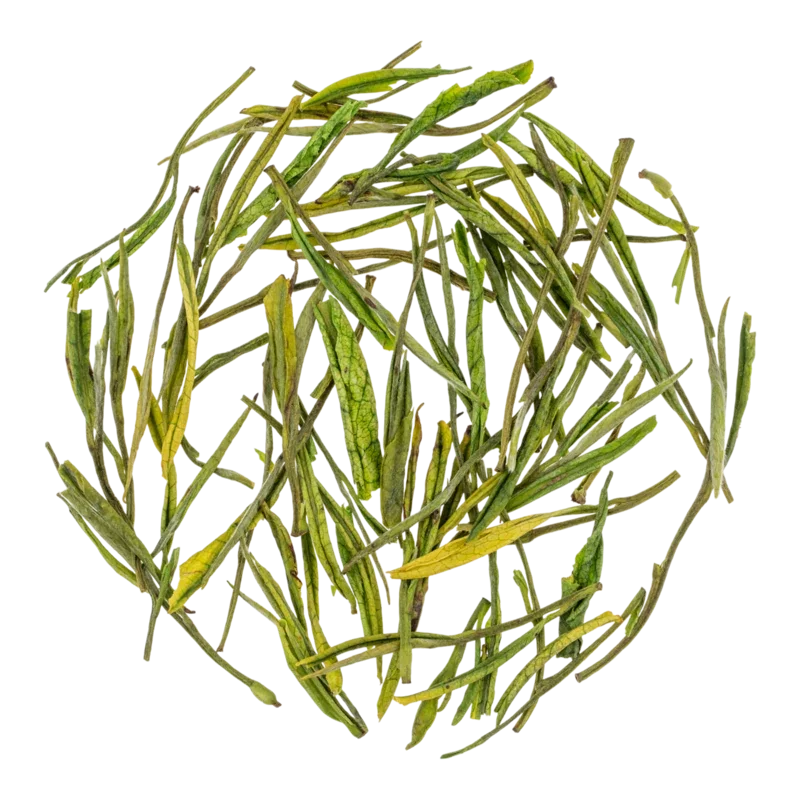
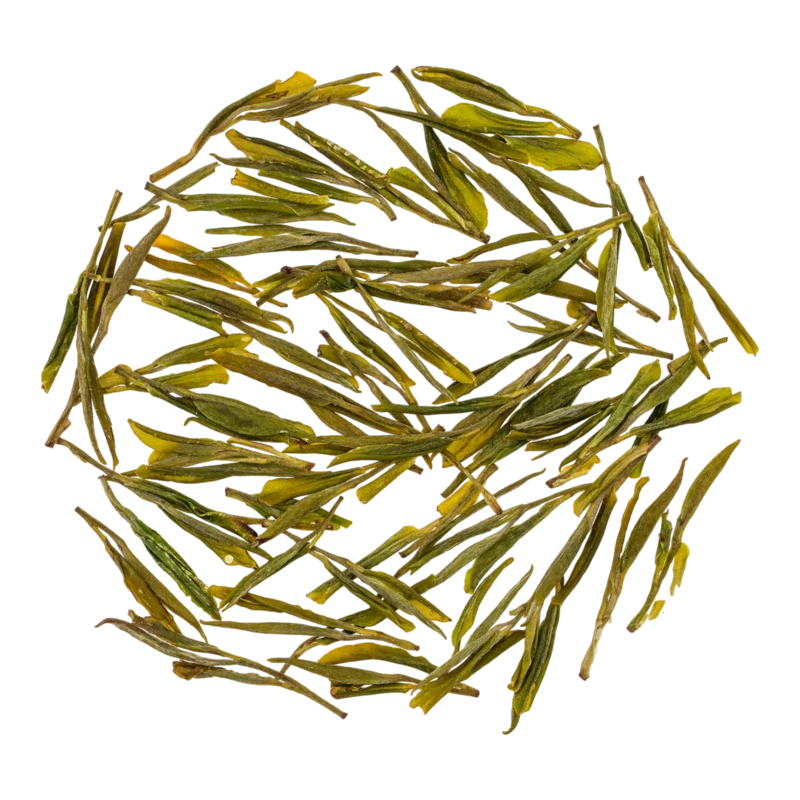
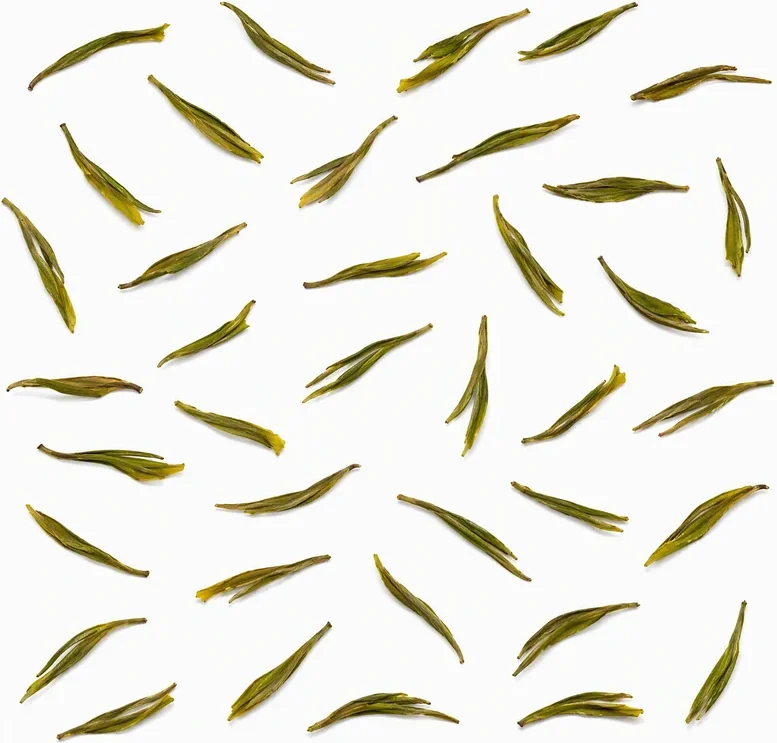
Straight, thin strips resembling silver needles. Uses special grade raw material — single buds. Reference price — from 1,000 yuan per jin (500 g).
Flat, smooth plates, tender green with jade tint. Raw material — "one bud, one leaf" (first grade).
Twisted strips with persistent aroma. Raw material — "one bud, two leaves" (second grade).
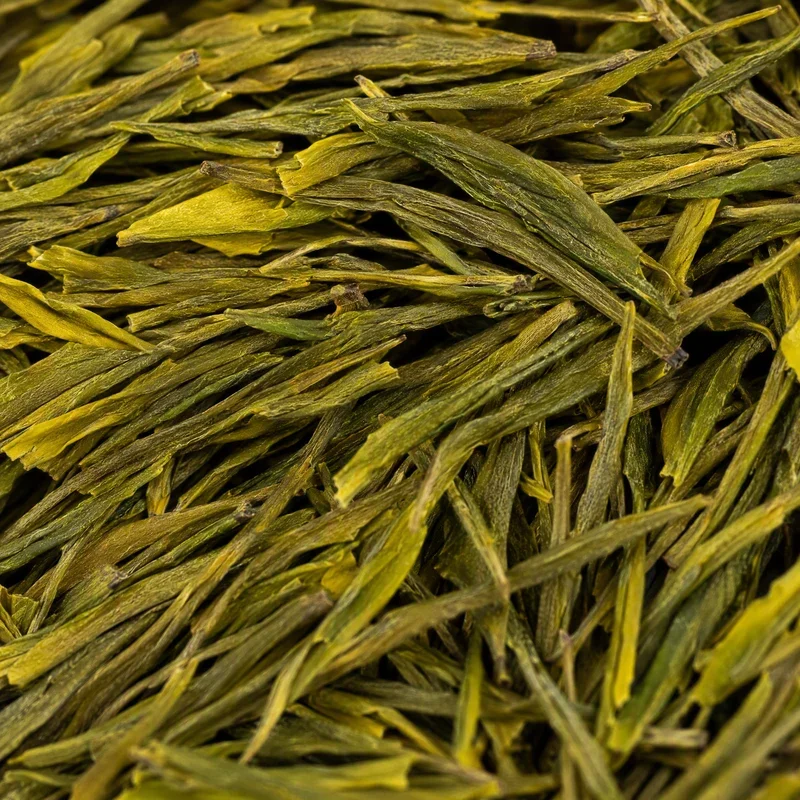
Dry Leaf Appearance: "Phoenix spreads feathers" shape (形似凤羽, xíng sì fèngyǔ) — elegant, curved strips. Color — jade-white with light yellow-green tint (色如玉霜, sè rú yùshuāng), oily luster. Abundant white down.
Dry Leaf Aroma: Delicate "milky" aroma (嫩香, nèn xiāng) — subtle, delicate, with light sweetness, characteristic of teas with high amino acid content. For more mature samples — clean vegetal aroma (清香, qīngxiāng). Aged specimens acquire sweet root note (甘草香, gāncǎo xiāng).
Liquor Aroma: Persistent delicate aroma (嫩香持久, nèn xiāng chíjiǔ), unfolding gradually. Clean, without "green" grassiness.
Liquor Color: Tender green, clear and bright (嫩绿明亮, nèn lǜ míngliàng) for special grade; slightly less transparent for second grade.
Spent Leaves: Main visual authenticity marker — "white leaf, emerald vein" (叶白脉翠, yè bái mài cuì): leaf blade white or cream-white color, while veins retain rich green color. Leaves tender, uniform, unfold as whole "buds."
Taste: Pronounced freshness (鲜, xiān) — calling card of high amino acid profile. Rich but without heaviness (醇厚, chúnhòu). Sweet, refreshing finish note (甘爽, gān shuǎng) with pronounced returning sweetness (回甘明显, huígān míngxiǎn). Virtually complete absence of astringency and bitterness — result of low polyphenol content (about 10.7%, half that of ordinary green teas).
Alkaloids: Caffeine — in standard concentrations for green tea. Content relatively high, so people with increased caffeine sensitivity are recommended to limit evening consumption.
Amino Acids: 5–10% of dry mass (special grade — ≥ 6.5%; maximum recorded value — 8.98%). This is 2–4 times higher than standard green teas. Extraordinary content due to genetic albinism: when chlorophyll synthesis is blocked, plant metabolism switches to nitrogenous compound accumulation. Amino acids — key factor of freshness and taste "body"; correlation with sensory evaluation reaches 98.7%.
Significantly below 7 (critical threshold of sensory "freshness"). This low indicator determines unique taste profile — highest tasting freshness with minimal astringency.
Main uniqueness — inversion of standard green tea ratio "high polyphenols / low amino acids": Jing'an Bai Cha shows directly opposite picture. This makes the tea one of the most "amino acid-rich" green teas in the world, comparable in this indicator only to Japanese tencha/matcha from shaded gardens.
Minerals: Potassium, manganese, microelements of mountain soils.
Polyphenols: About 10.7% — significantly lower than ordinary green teas (20–30%). Low polyphenol level explains virtually complete absence of bitterness and astringency.
Vitamins: Vitamin C, B-group vitamins.
Catechins, despite lower concentration, maintain effectiveness in neutralizing free radicals, exceeding vitamin E activity by 18 times.
High amino acid content (especially L-theanine) promotes strengthening of antiviral defense mechanisms; according to Chinese researchers, immunomodulating effect twice exceeds ordinary green tea indicators.
Catechins promote regulation of blood lipid profile, potentially reducing cardiovascular disease risk.
L-theanine in high concentrations provides smooth, "meditative" alertness, reducing anxiety while maintaining concentration.
Low polyphenol level makes tea exceptionally gentle on stomach — suitable for people with sensitive digestion.
Low tannin content minimizes tooth staining.
Listed properties are based on composition and traditional use; this is general information, not medical recommendation.
Avoid consumption on empty stomach (tannins irritate mucosa). Fresh tea recommended to age 10 days in dark place to eliminate "green" taste (青气, qīngqì). People with increased nervous system sensitivity — limit evening consumption due to relatively high caffeine content.
Tea Amount: 1:50 ratio (3 g per 150 ml).
Teaware: Transparent glass tumbler or glass gaiwan — allows observing unique "white leaf — emerald vein" effect (叶白脉翠). White porcelain — alternative option.
Water Temperature: 80–90°C (for special grade — 80°C; never boiling water — delicate albino leaves cannot tolerate overheating).
Closest analogue from Zhejiang Province, also produced from albino cultivar "Bai Ye Yi Hao" (白叶一号). Both teas have similar albinism mechanism and high amino acid content. Key differences: Anji Bai Cha typically has flat form resembling Longjing; Jing'an Bai Cha comes in three forms (needle, flat, curled). Jing'an terroir — more humid and cold, with longer albinism period and potentially higher amino acid content.
Albino green tea from Jiangsu. Comparable mechanism, but less pronounced amino acid profile and gentler, "neutral" taste. Jing'an Bai Cha has more intense freshness and more contrasting "white leaf — green vein" effect.
Another famous Jiangxi green tea, but produced from standard (non-albino) cultivar. Lushan Yunwu — more "classical" green tea with pronounced polyphenols, nutty aroma, and noticeable astringency. Jing'an Bai Cha — its complete opposite: minimal astringency, maximum freshness.
Albino green tea from Guizhou Province. Similar concept, but different microclimate (high plateau) and somewhat different taste profile — more "mineral" and "rocky."
Price Factors: Season (exclusively spring harvest in 15–20-day albinism "window"); harvest standard; geographical indication presence; brand value (14.55 billion yuan — one of Jiangxi's most valuable tea brands).
No reviews yet. Tell us what you think of this tea.
Rate this tea and share your impressions. We review each submission before publishing it.