Brewing
Gongfu brewing
- Water temperature
- 100 °C
- Tea amount
- 6 g
- Water volume
- 100 ml
- First steep
- 10 s
- Time added per infusion
- 5 s
- Infusions
- 10

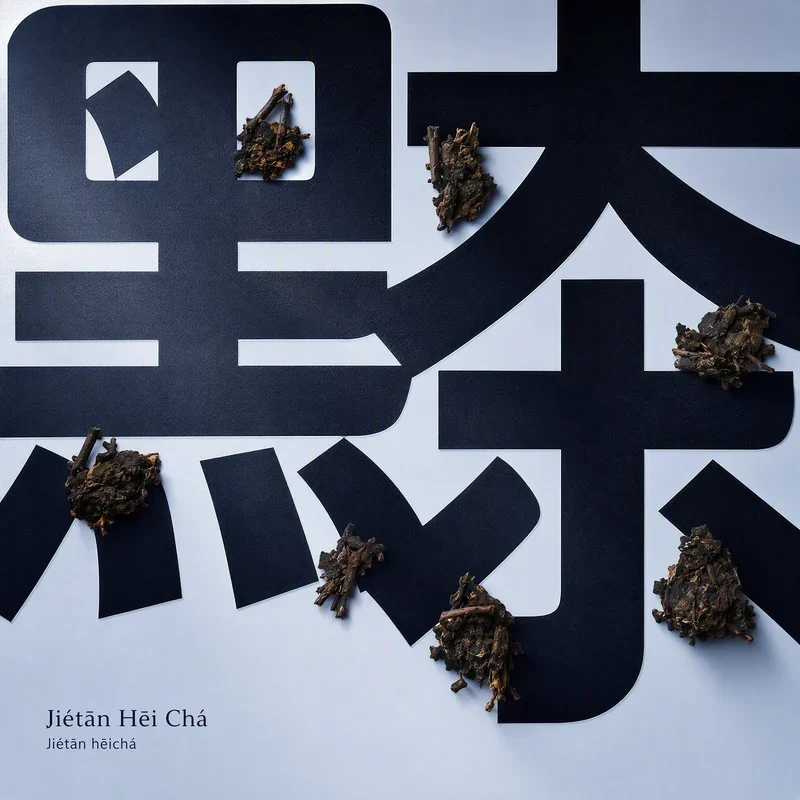
Jiétān hēichá
Choose a brewing method. Start with the recommended quantities and time, then adjust to taste.
Brewing
Brewing
Taste
Tea encyclopedia
Alt Names: Jiétān Chá Hēi Chá (碣滩茶·黑茶) — as part of the general "Jietan Cha" brand (碣滩茶, Jiétān Chá).
Alt Names: Jiétān Chá Hēi Chá (碣滩茶·黑茶) — as part of the general "Jietan Cha" brand (碣滩茶, Jiétān Chá).
Category: Húnán dark teas (湖南黑茶, Húnán Hēichá); regional line within the "Jietan Cha" brand.
Coordinates: approximately 28.3–28.9° N, 110.0–111.0° E.
Origin: China, Húnán Province (湖南, Húnán), Yuánlíng County (沅陵县, Yuánlíng Xiàn), Huáihuà Prefecture (怀化市, Huáihuà Shì). Main production zones: the mountainous Jietanshan area (碣滩山, Jiétān Shān) on the northern bank of the Yuán River (沅水, Yuánshuǐ), as well as the townships of Guanzhuang (官庄镇), Maxipu (麻溪铺镇), Beirong (北溶乡), and Nanmupu (楠木铺乡).
Type: Post-fermented tea (dark tea, hei cha — 黑茶, Hēichá). The degree of fermentation is controlled through the wet piling stage (渥堆, wòduī) and subsequent aging.
Fu brick differs by mandatory presence of "golden flowers" (冠突散囊菌, Eurotium cristatum) and characteristic honey-mushroom note. Jietan Hei Cha has more classic nutty-woody "chenxiang" without mushroom dominance. Both are Hunanese, but technology and organoleptics differ.
Guangxi Liu Bao often gives "camphor" and "wet forest" profile, its liquor is deeper red-chestnut color. Jietan Hei Cha is usually lighter in liquor and possesses more "pure," herbal-nutty character.
Tian Jian is loose Hunan hei cha from more tender raw material, often with pine smokiness. Jietan Hei Cha, especially in pressed forms, is denser in texture and less smoky.
"Old tea heads" of shu pu-erh are denser in body and more "earthy" in profile due to Yunnan large-leaf raw material. Jietan Hei Cha from small-leaf populations is softer, lighter, and more "airy" in aroma.
Hubei green brick is historically mass border tea with coarser raw material and pronounced astringency. Jietan Hei Cha is a more refined product from quality high-mountain raw material.
Cultural Significance: Jietan Cha is one of the "Ten Famous Teas of Hunan" (湖南十大名茶) and a key element of tea culture in Yuanling County, where more than 60 place names are connected with tea. The region is inhabited by the Tujia (土家族) and Miáo (苗族) peoples, for whom tea has historically been an integral part of daily life and hospitality. The dark version fits into the Hunan tradition of hei cha, where such teas were historically consumed after abundant fatty food and were also used to prepare milk-salt beverages among nomadic peoples of border territories.
History: The history of Jiétān tea can be traced back to the period of the Two Jīn dynasties (两晋, 3rd–5th centuries CE), when the "Records of Jingzhou Lands" (《荆州土地记》, Jīngzhōu Tǔdì Jì) noted that "tea grows everywhere in the seven counties of Wuling, and it is excellent." The peak of fame came during the Tāng era (唐, 618–907): according to the "Chenzhou Prefecture Gazetteer" (《辰州府志》), "among the teas of the county, primacy belongs to tea from Jietan, now it is already presented to the court as tribute." The tea sage Lù Yǔ (陆羽, Lù Yǔ) in his treatise "The Classic of Tea" (《茶经》, Chájīng) mentioned "Wushe Mountain" (无射山, Wúshè Shān), which researchers identify with a mountain in Yuanling County, where Jietan tea had long grown. During the Míng and Qīng periods (明清), the tea was known as "Chenzhou Jietan Cha" (辰州碣滩茶, Chénzhōu Jiétān Chá).
Cultivar: Local group populations of tea bushes (群体种, qúntǐ zhǒng) are used, belonging to the southwestern (云贵, Yún-Guì) tea system (Camellia sinensis var. sinensis). The bushes are well adapted to the humid mountain microclimate. In recent years, replacement of part of the plantings with improved provincial varieties with increased productivity has been carried out, with the share of zoned varieties reaching 80%.
Picking: For dark tea, predominantly spring and early summer raw material is used. Spring picking (清明, Qīngmíng — early April, and 谷雨, Gǔyǔ — late April) gives more aromatic raw material; summer — denser leaf with pronounced astringency.
Pluck Standard: For hei cha, more mature leaf is acceptable: 1 bud + 2–4 leaves (一芽二至四叶, yī yá èr zhì sì yè). For premium series, more tender raw material is selected.
Raw Material: Leaves must be clean, without foreign odors, fresh and whole. High-altitude origin of raw material (海拔400–600 m and higher) ensures increased content of amino acids and aromatic substances with reduced content of crude fiber.
Altitude: 300–800 m, individual high-mountain areas — up to 1000 m and higher. About 12 of the 16 thousand mu of plantations belong to the high-mountain category.
Climate: Mid-subtropical monsoon humid (中亚热带季风湿润气候). Average annual temperature about 16.6°C, average annual precipitation — 1440.9 mm (highest indicator in Huaihua Prefecture), frost-free period — 272 days. Forest cover — 76.19%. Prolonged fogs and high humidity are characteristic, especially near the Wǔxī Lake reservoir (五溪湖, Wǔxī Hú) — the largest artificial water body in the province, forming a special "reservoir-type" microclimate (库区小气候).
Soil: Soils developed on fine-platy metamorphic rocks of the Banxi series (板溪群) predominate — schists and phyllites with volcanic ash inclusions. Purple soils (紫色土, zǐsè tǔ) on purple sandstones are also characteristic — a rare type for China, rich in microelements. Acidity pH 4.5–6.0 — optimal for tea bushes. Soils are supplied with selenium, zinc, and other microelements.
Yuánlíng County is located at the junction of the Wǔlíng Mountains (武陵山, Wǔlíng Shān) and Xuěfēng Mountains (雪峰山, Xuěfēng Shān), in the middle reaches of the Yuan River. The terrain is mountainous, with numerous river valleys and gorges. The county has more than 100 mountain peaks, of which over 30 exceed 1000 m. The main mass of tea plantations is located at an altitude of 300–800 m above sea level.
A significant part of the plantations meets organic farming standards, certified by JONA (Japan) and IMO (European Union) systems.
Hand picking of leaf standard 1 bud + 2–4 leaves. For hei cha, more mature raw material is acceptable than for the famous Jietan green tea (where the standard is 1 bud + 1 leaf).
Picked leaf is spread in a thin layer on bamboo trays for partial removal of surface moisture and equalization of water content in tissues. Duration — 2–4 hours.
High-temperature treatment to inactivate enzymes and stop oxidative processes. For hei cha raw material with insufficient leaf moisture, water addition is permitted in a 10:1 ratio (10 kg leaf : 1 kg water) for uniform heating. Temperature — 260–300°C during manual processing or in mechanical drum.
Leaves are rolled to destroy cellular structure and release cellular juice, which ensures future extractability and creates conditions for microbiological fermentation.
Key stage determining the tea's belonging to the hei cha category. Rolled leaf is laid in piles 40–70 cm high in a room with controlled temperature and humidity. Under the influence of microorganisms (yeasts, mold fungi, bacteria), deep biochemical transformation occurs: part of the catechins oxidizes into thearubigins and theabrownins, astringency decreases, characteristic "chenxiang" forms. Duration — from several days to 2–3 weeks depending on conditions.
Additional mechanical treatment to compact leaf structure and improve shape.
Final drying at moderate temperature to residual moisture of about 10–12%.
Raw tea is sorted by fractions and blended for batch quality stability. Larger leaf goes to the core of pressing, more tender — to the outer layer.
High-temperature steam softens the leaf, making it plastic for pressing.
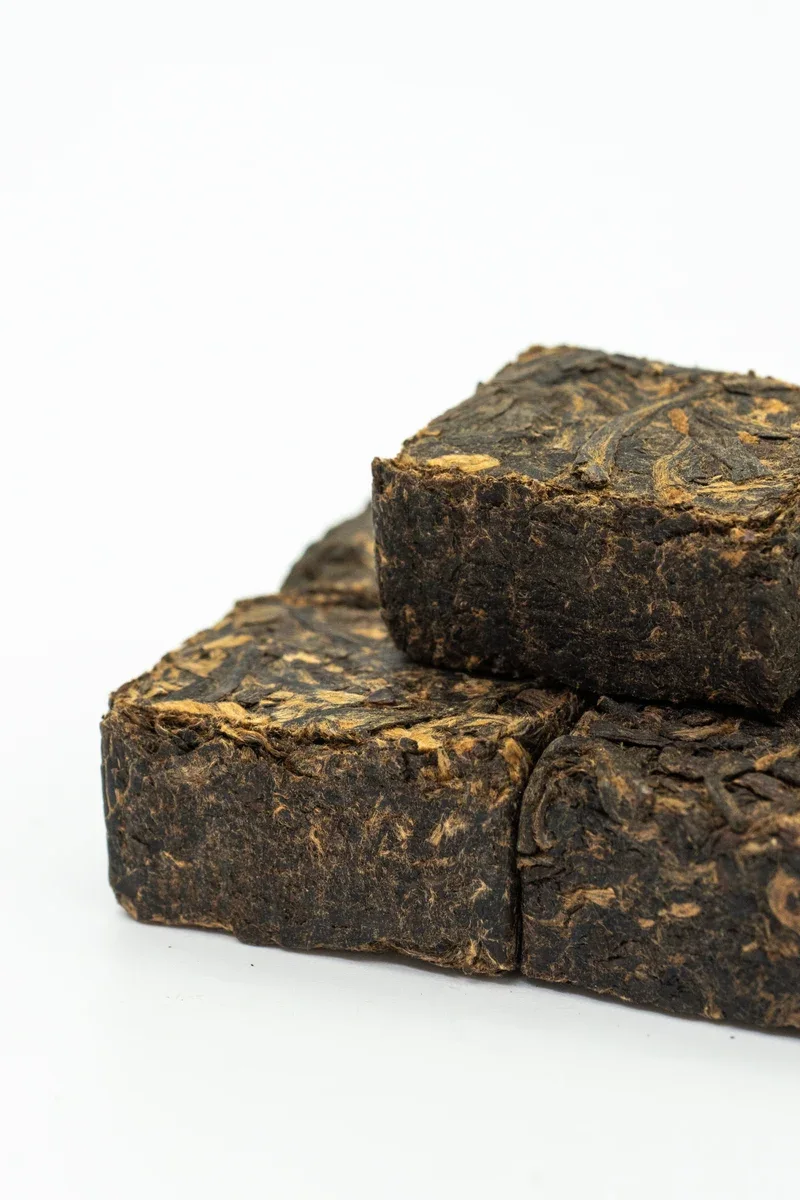
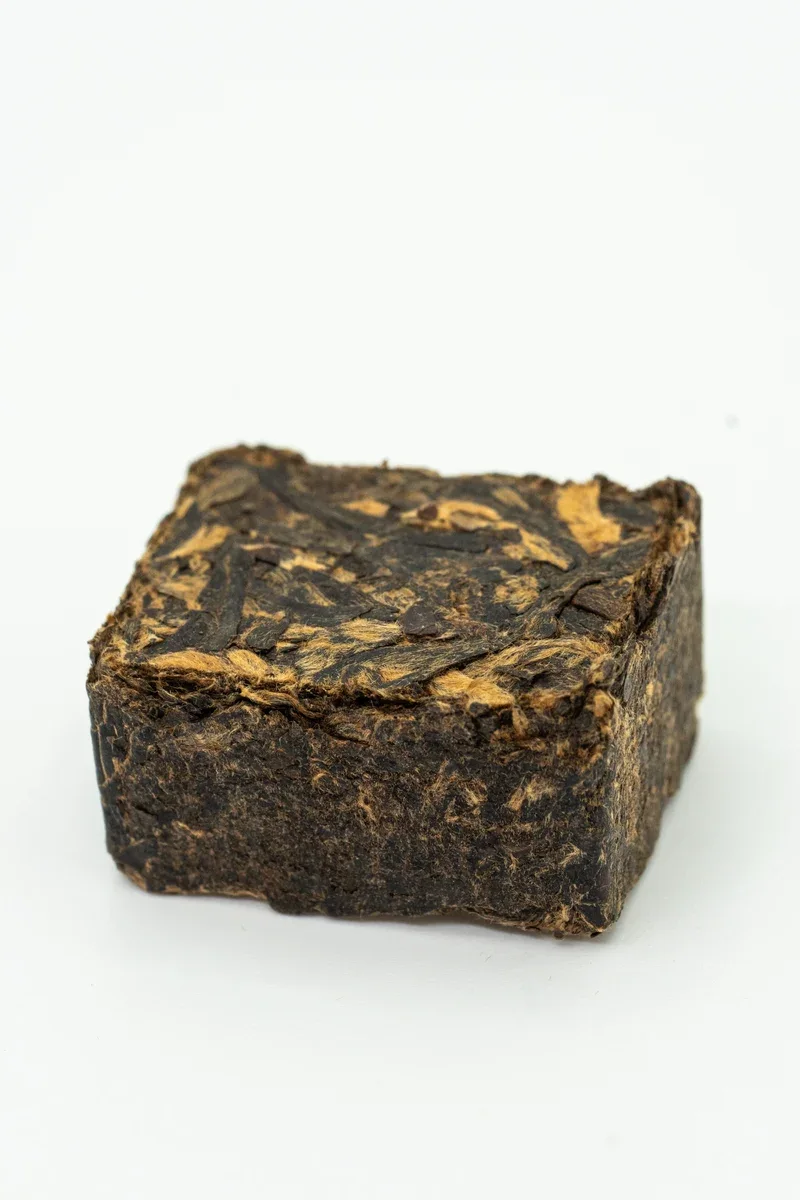
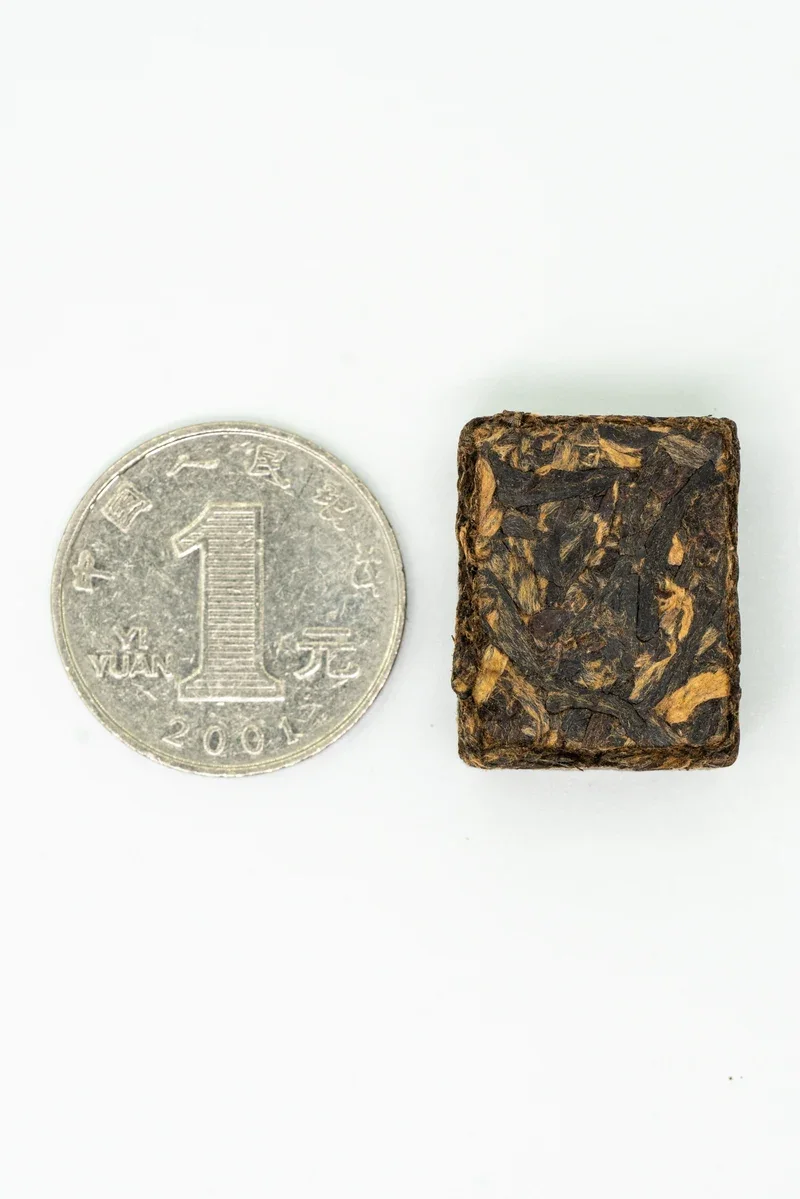
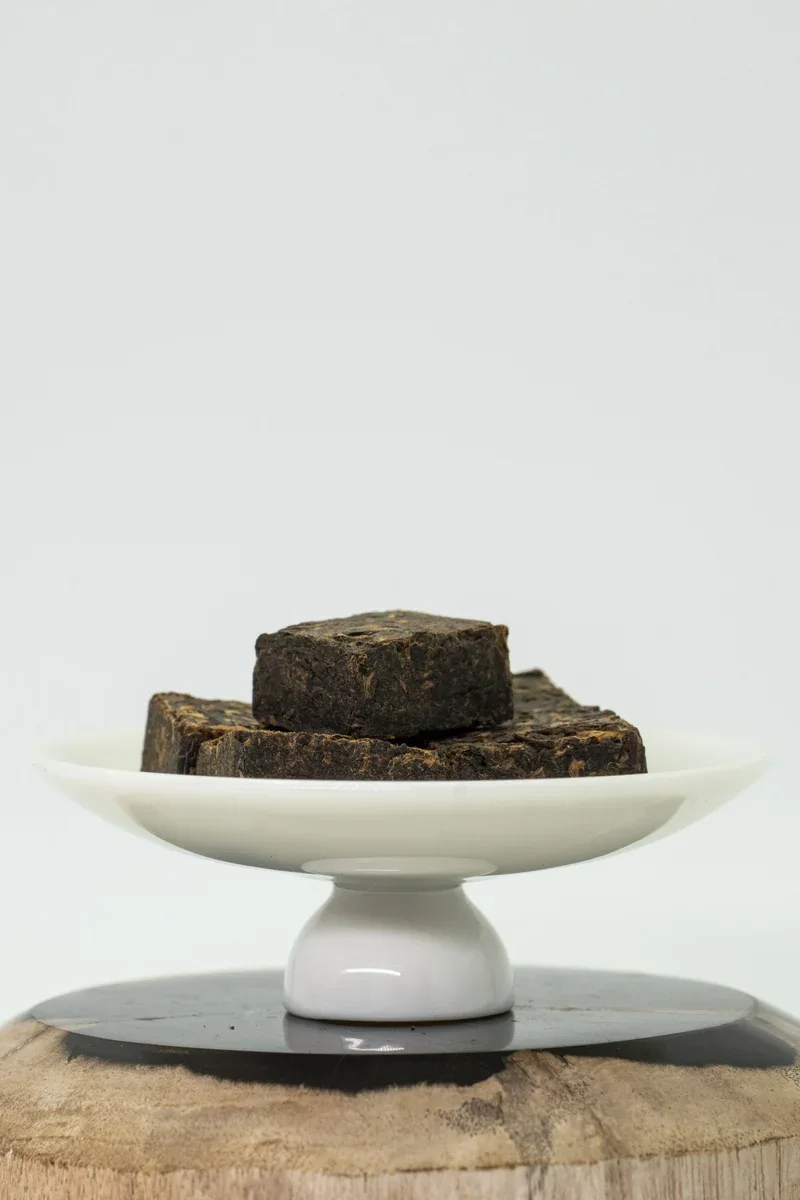
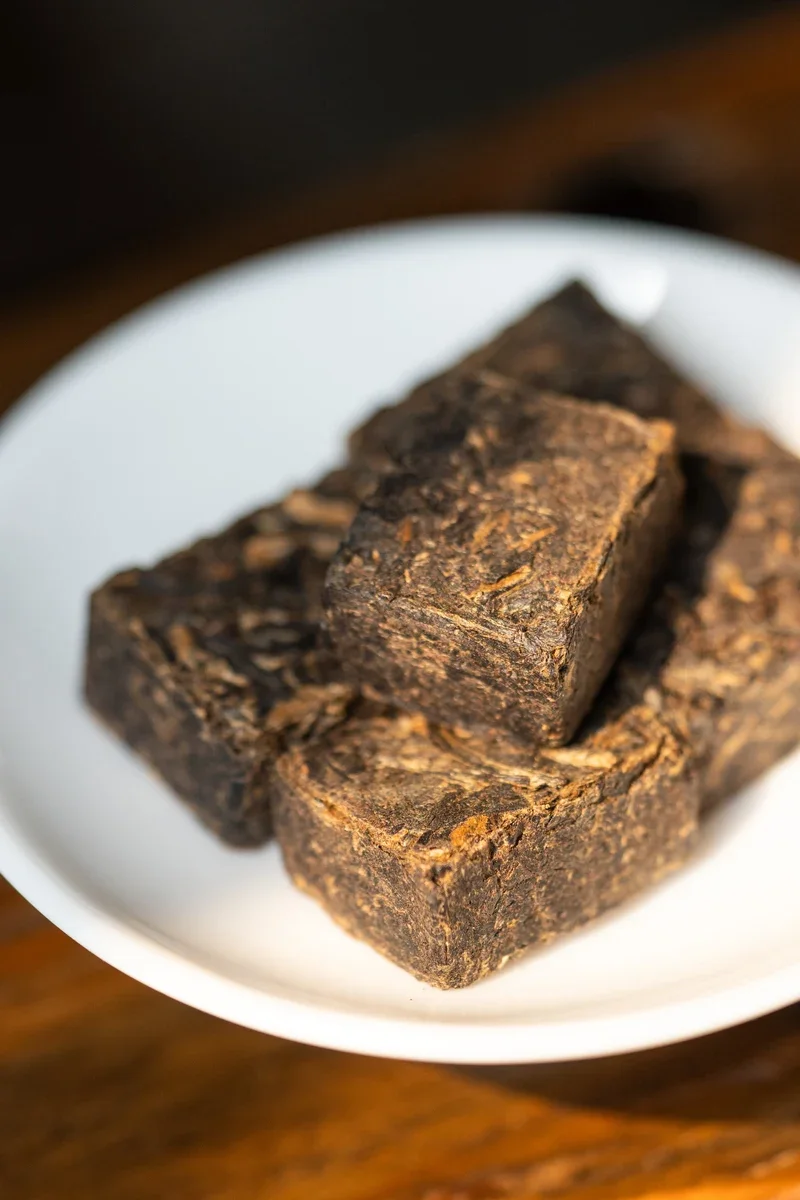
Forming into bricks (砖, zhuān), nests (沱, tuó), or other pressed forms.
Pressed forms are dried to stable condition.
Storage under controlled conditions for further development of "chenxiang" aroma and rounding of taste. Pressed forms improve with years.
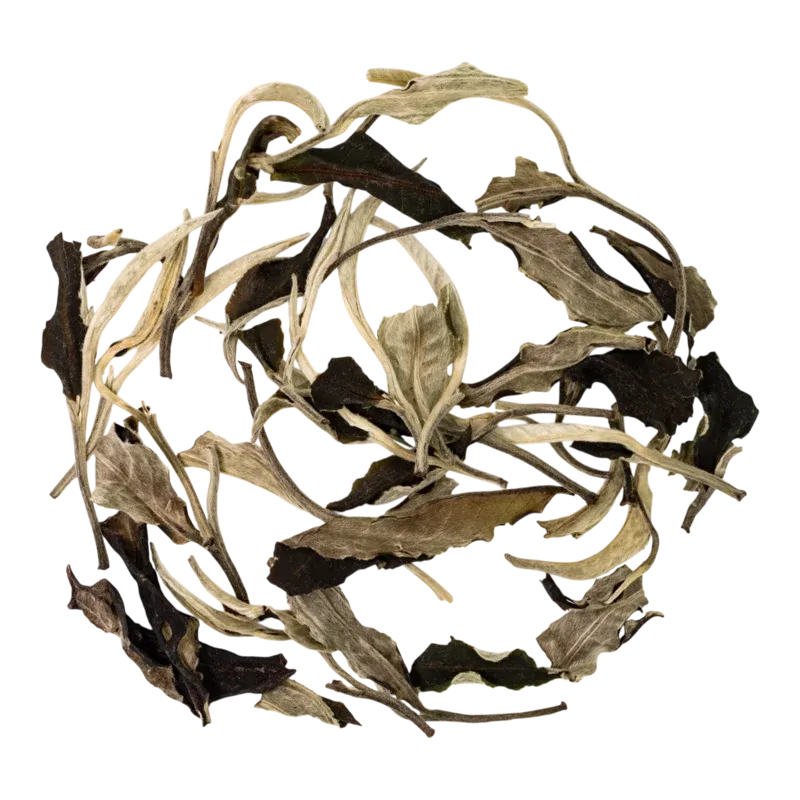
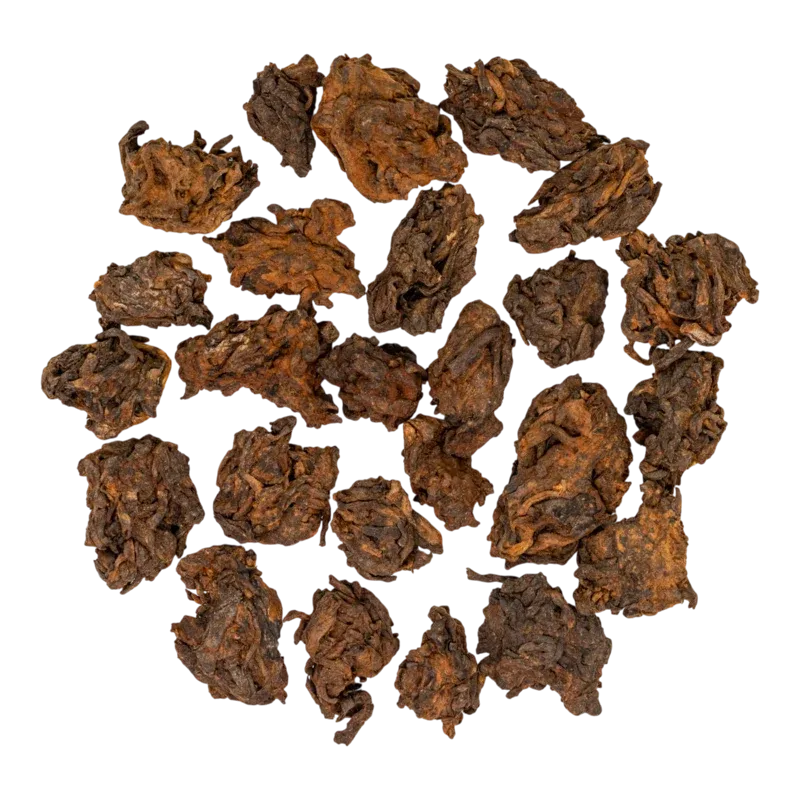
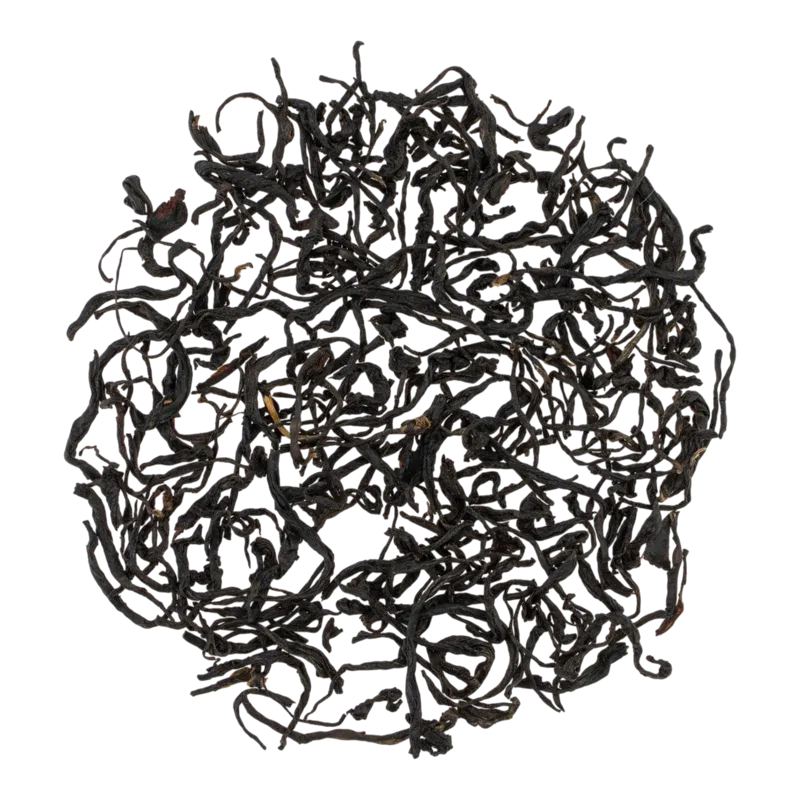
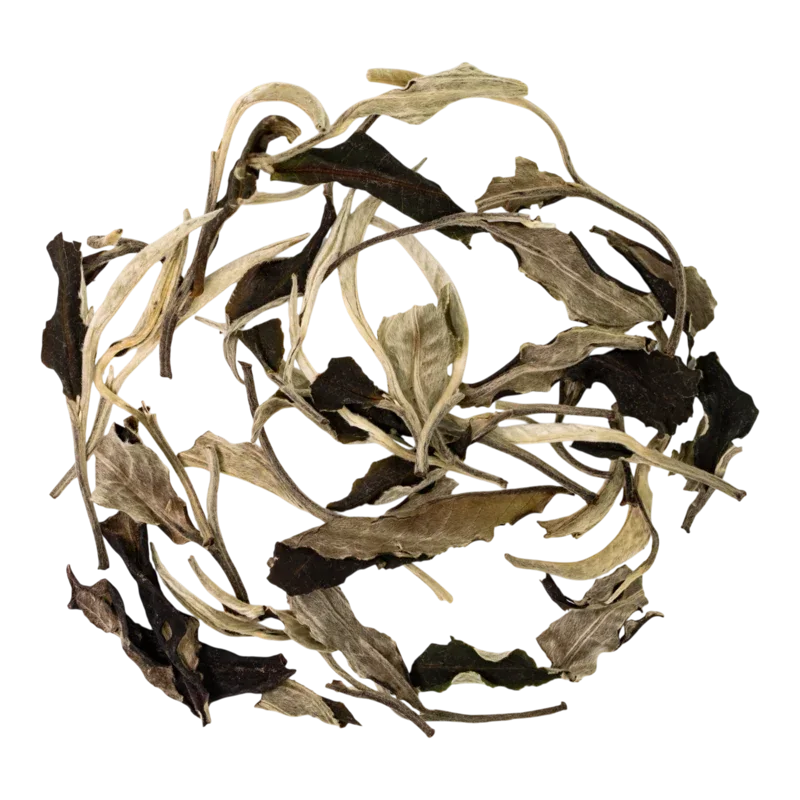
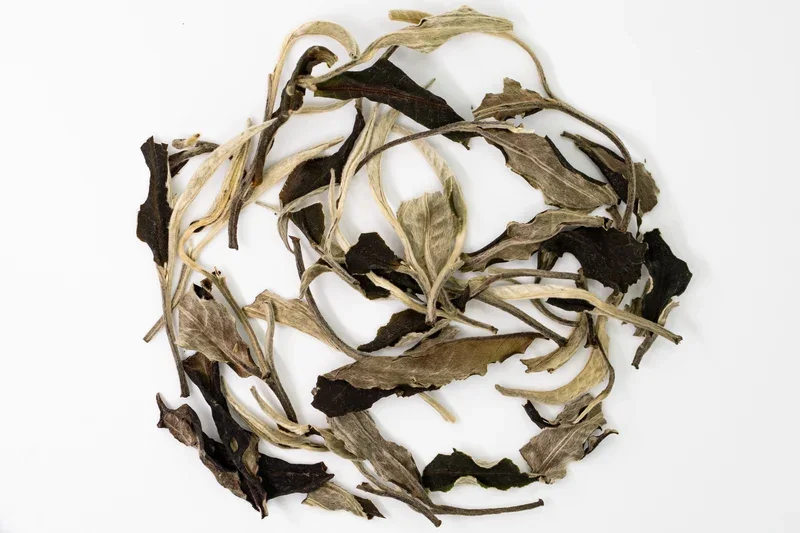
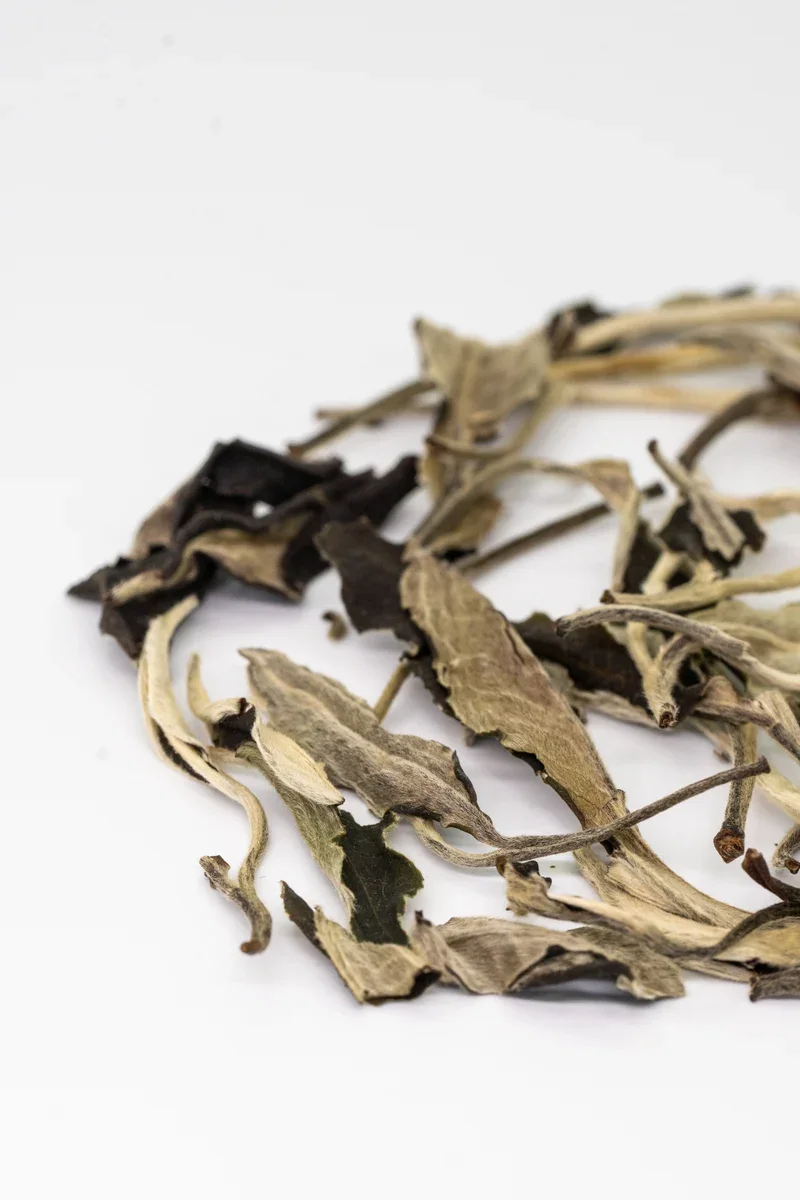
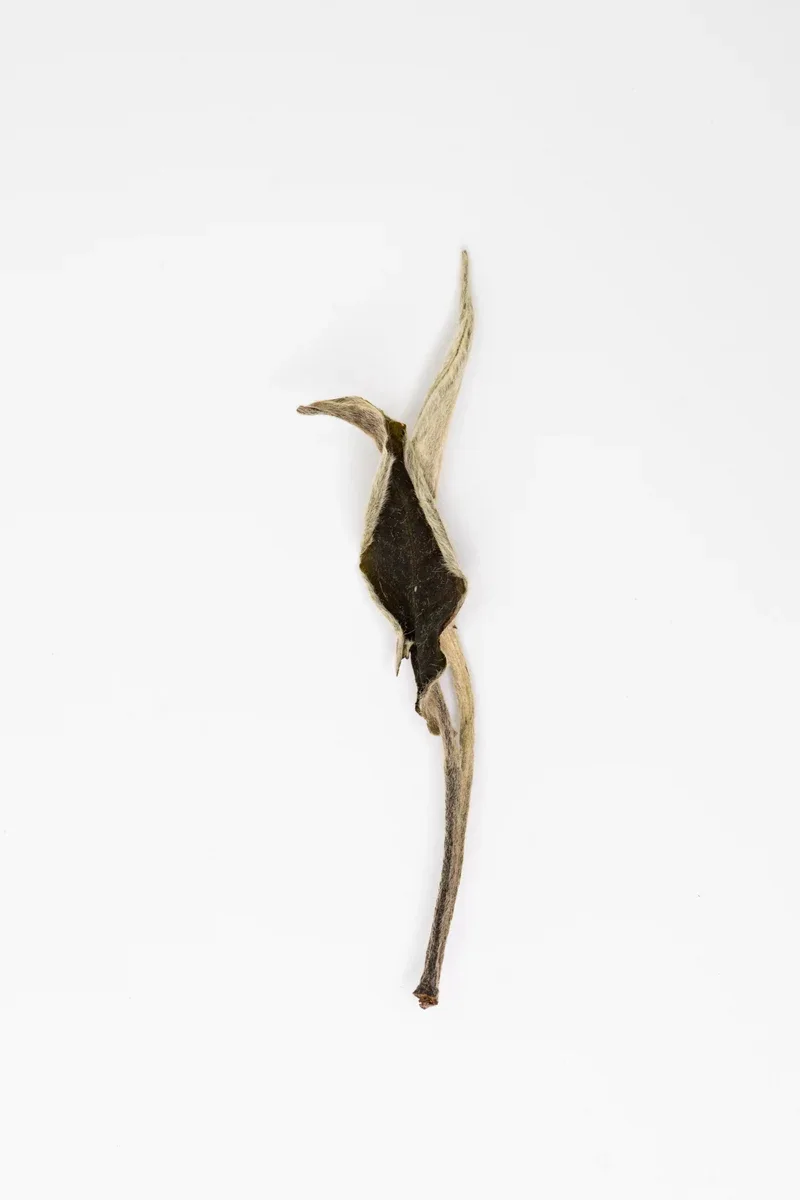
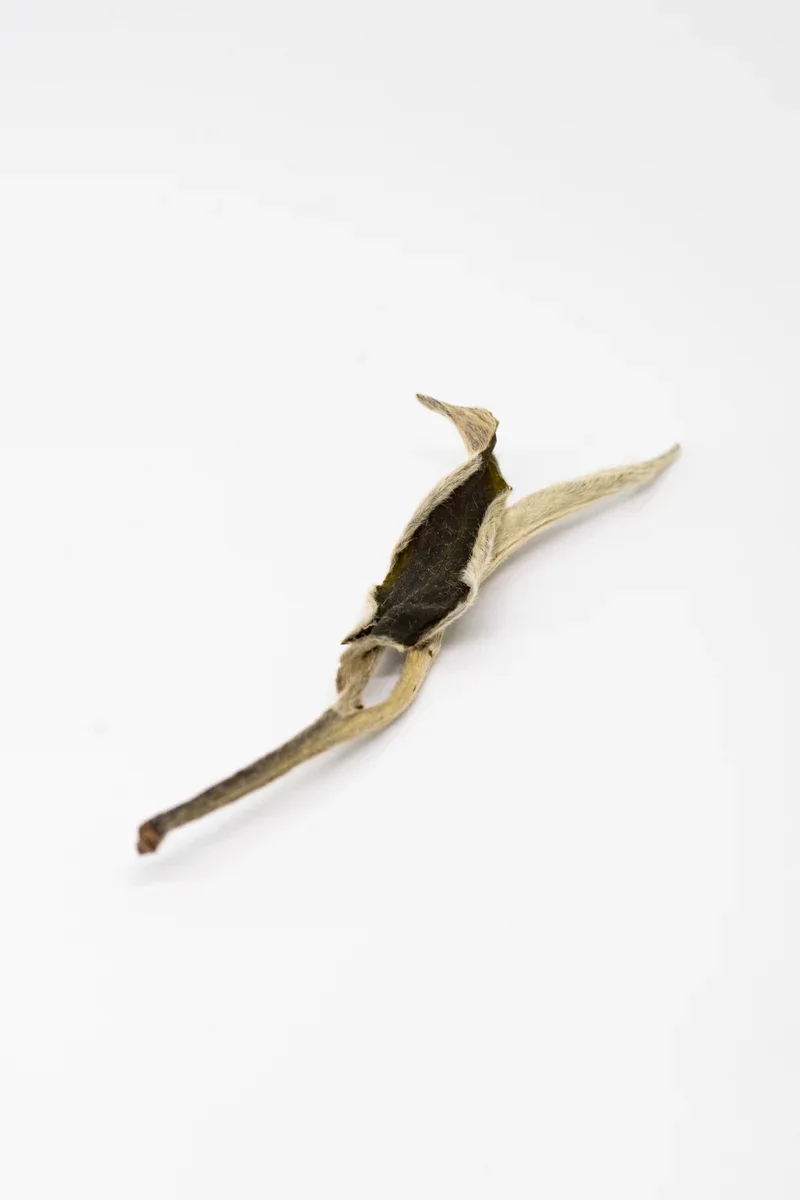
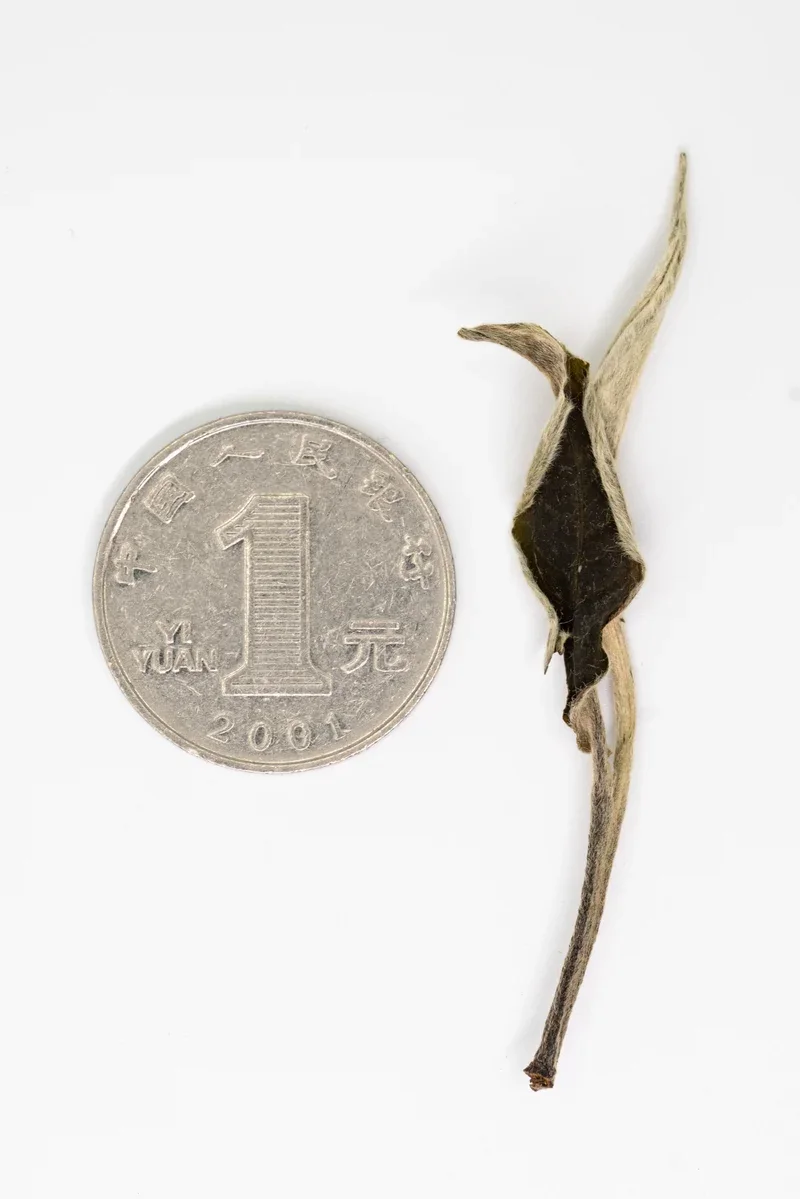
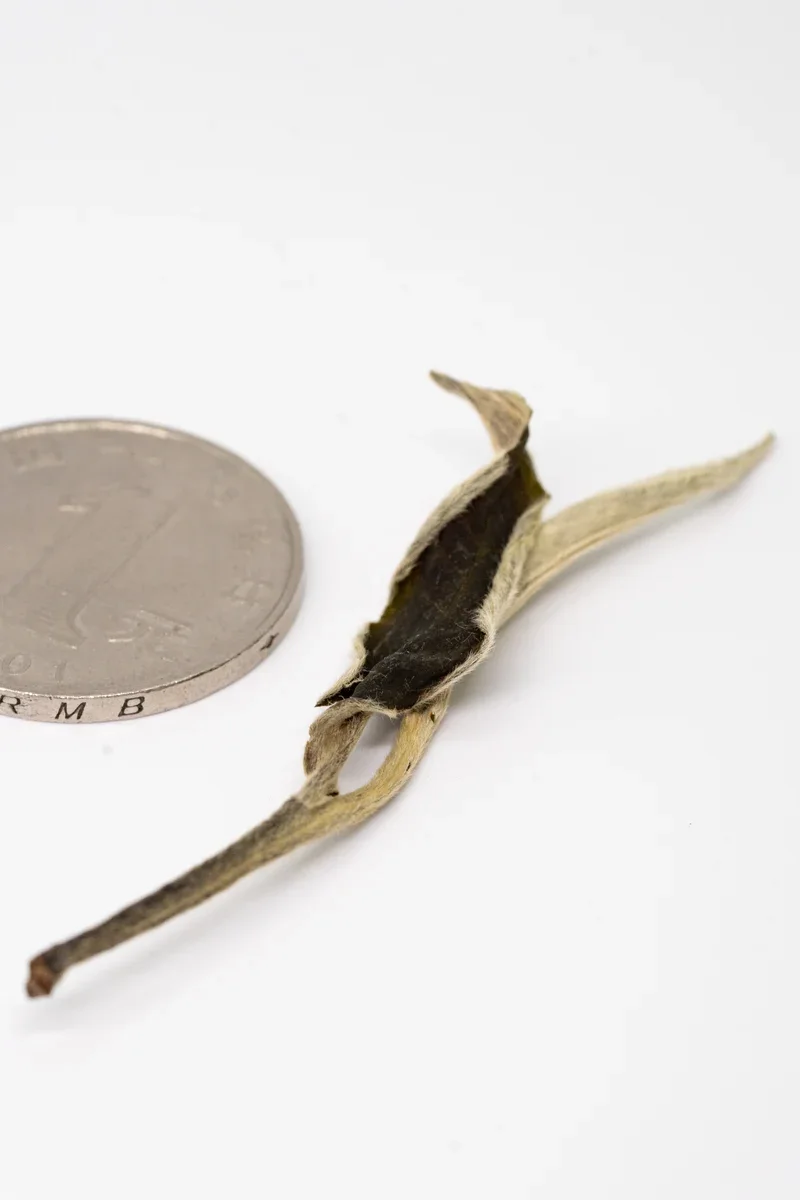
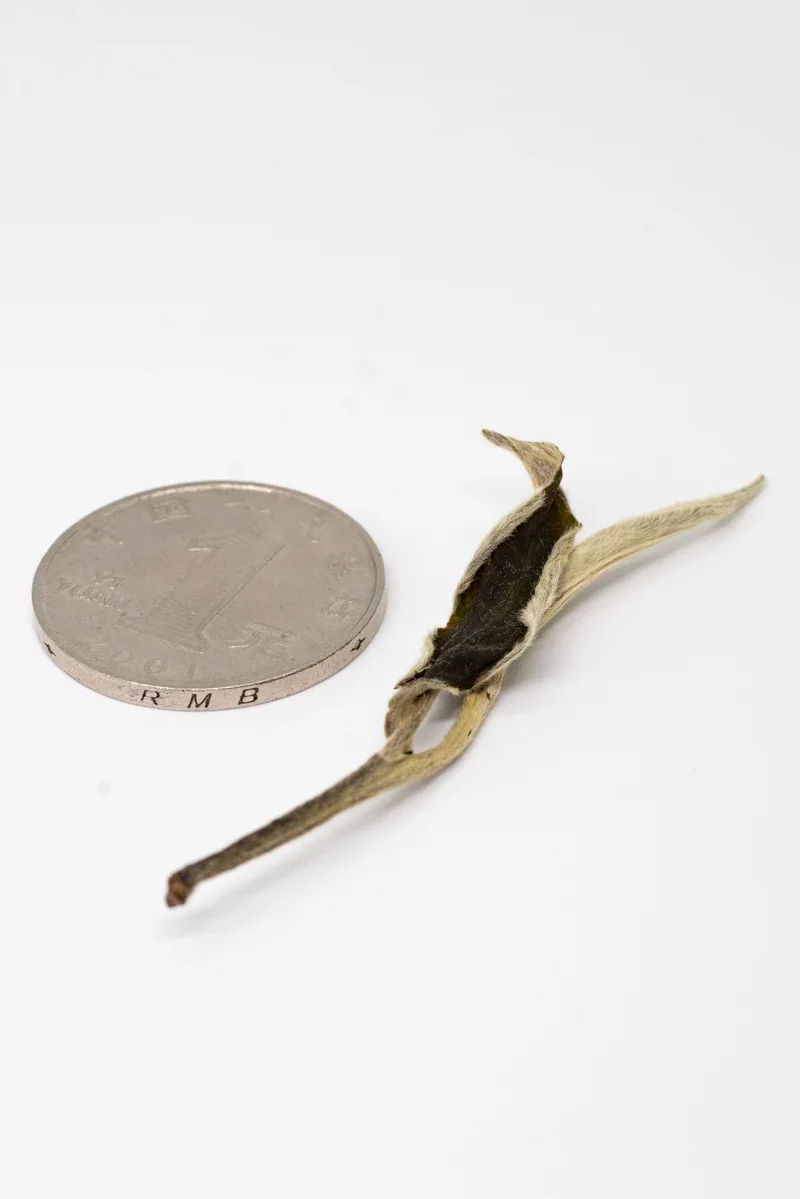
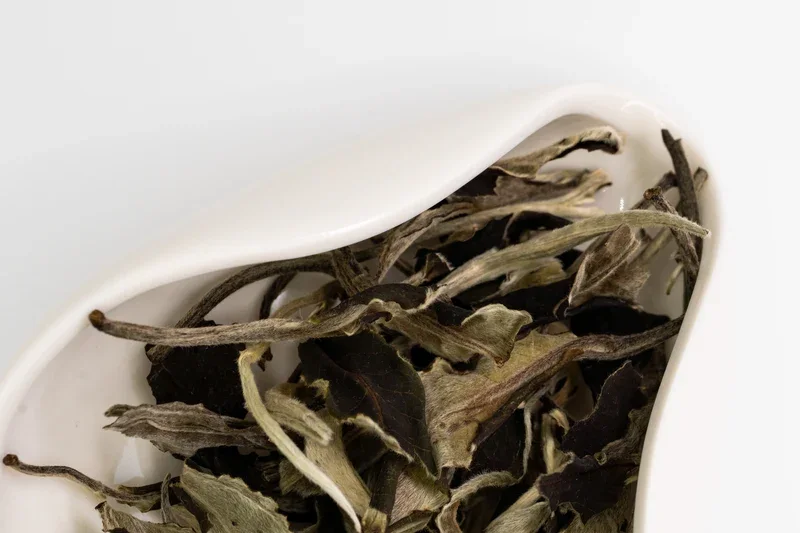
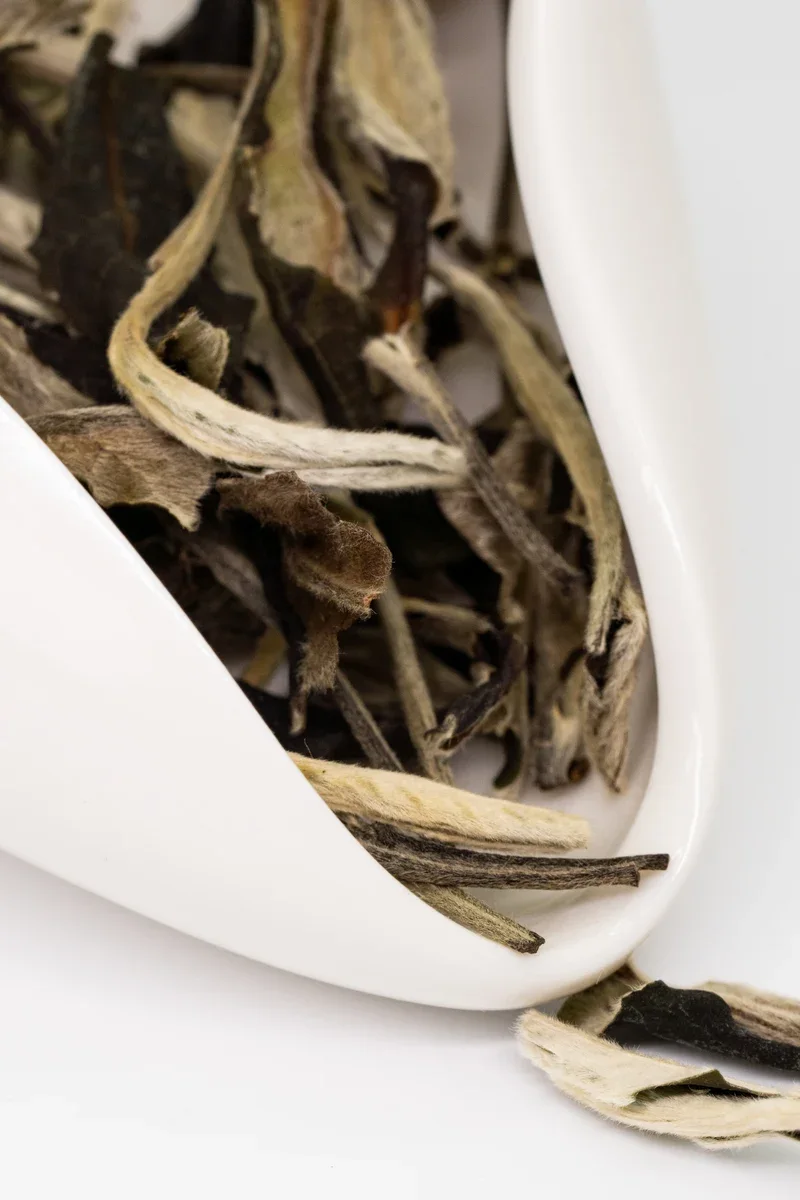
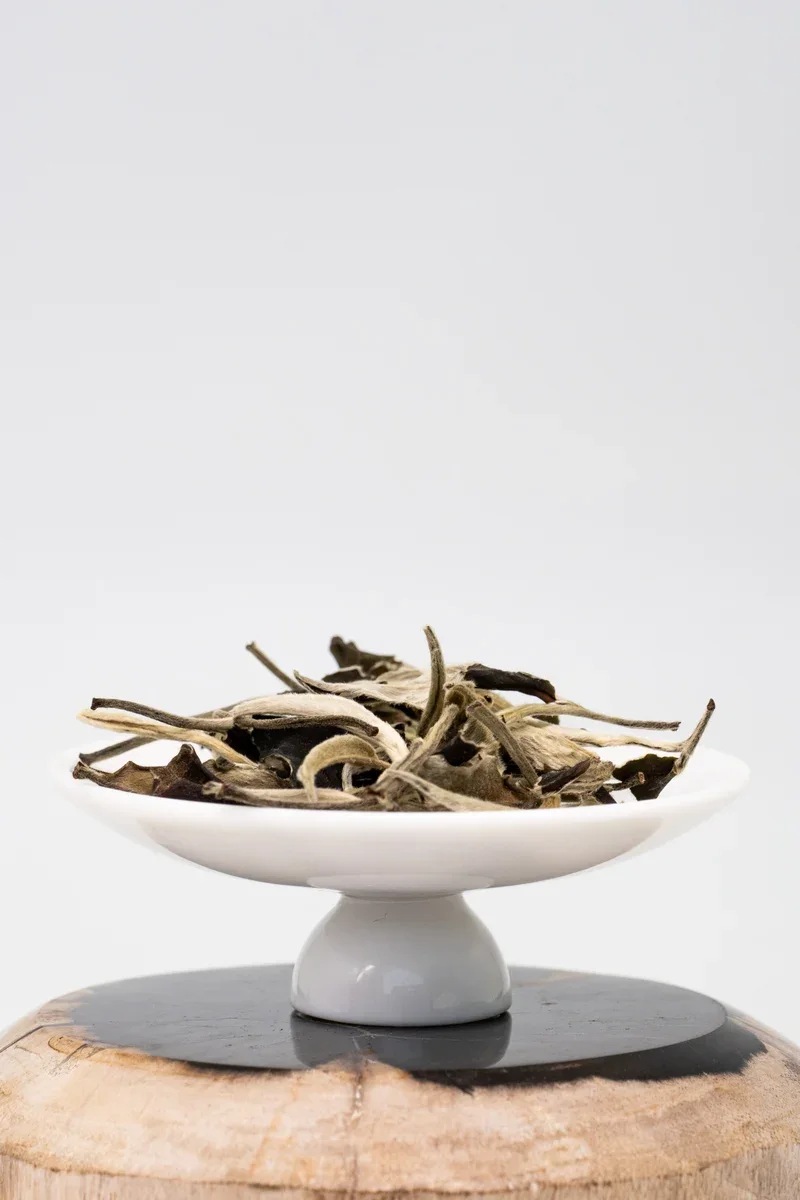
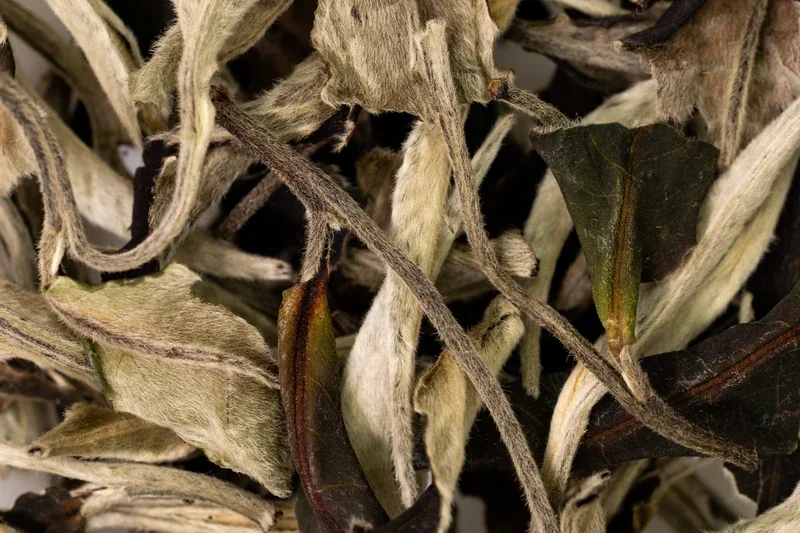
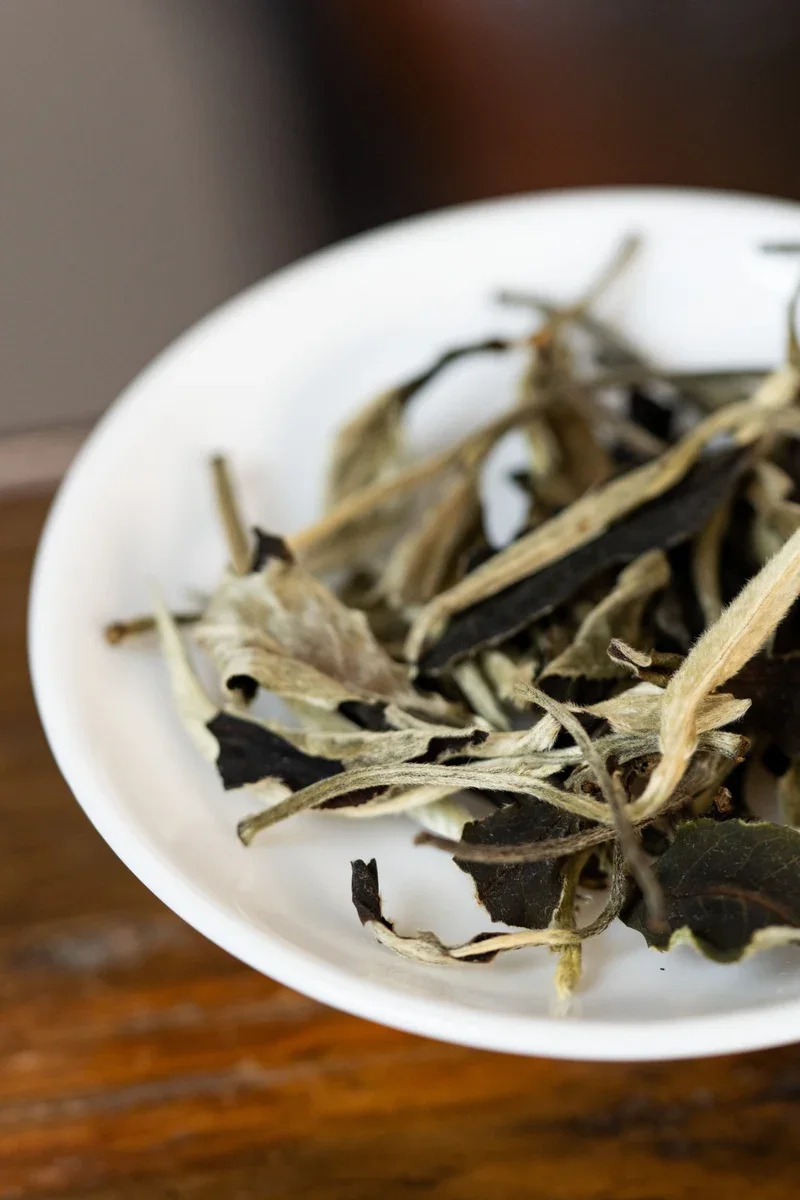
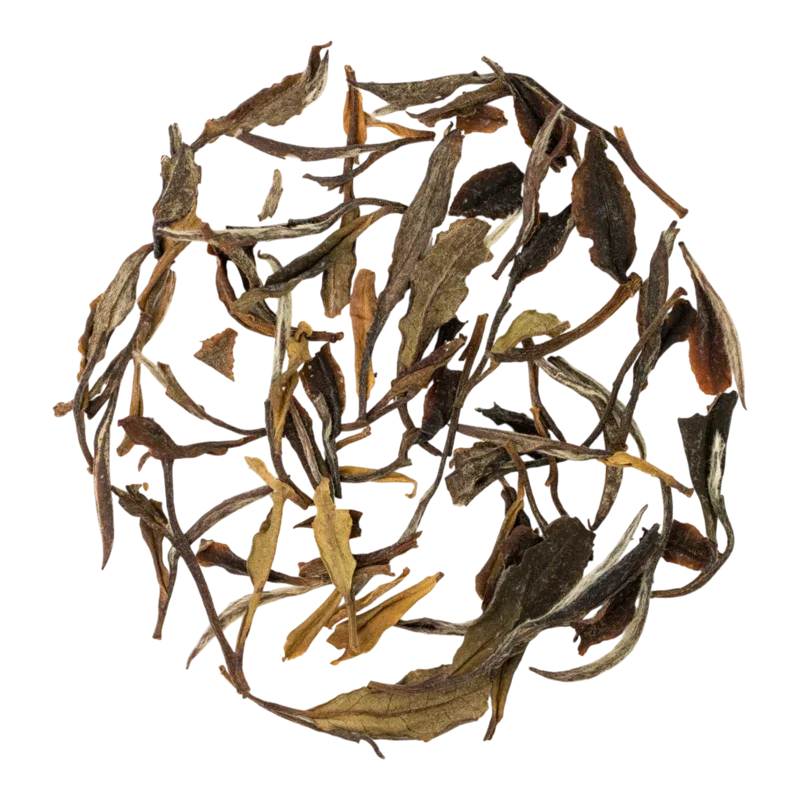
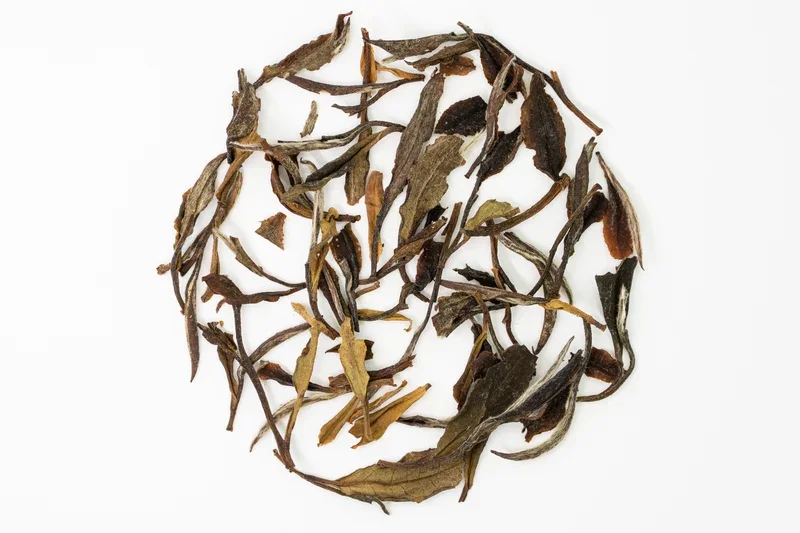
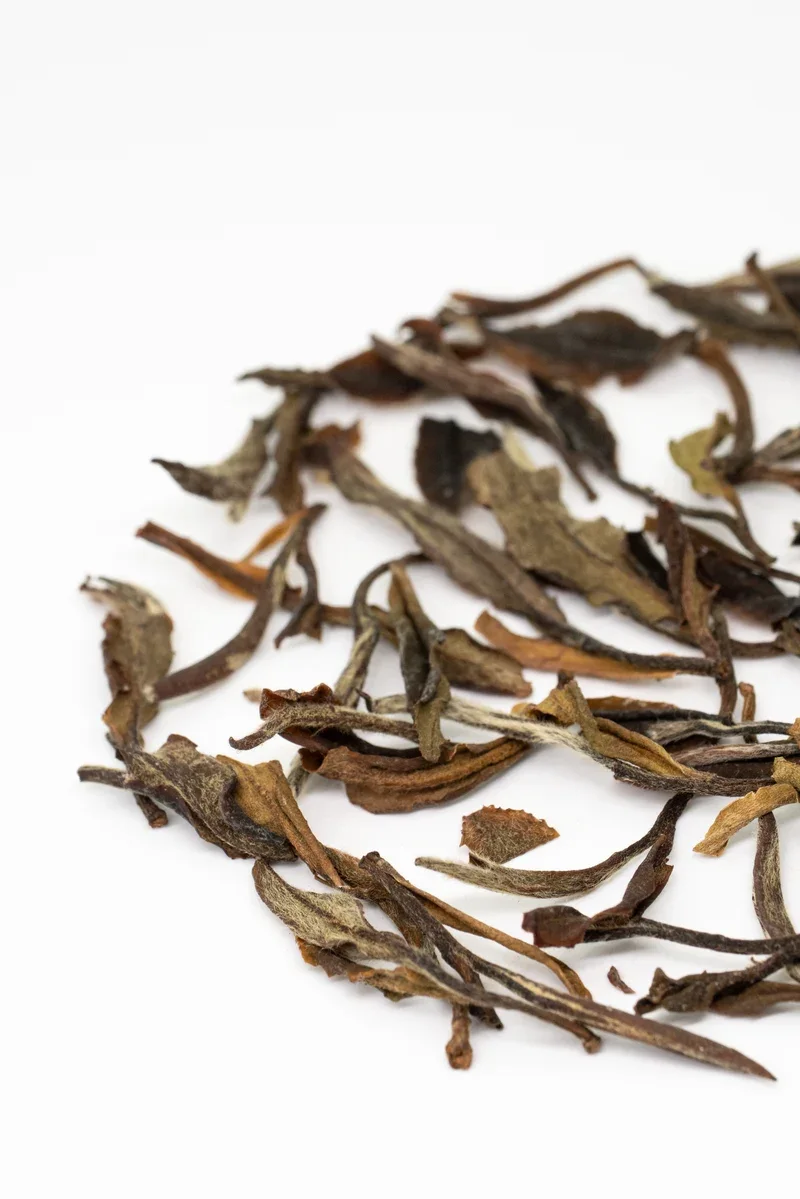
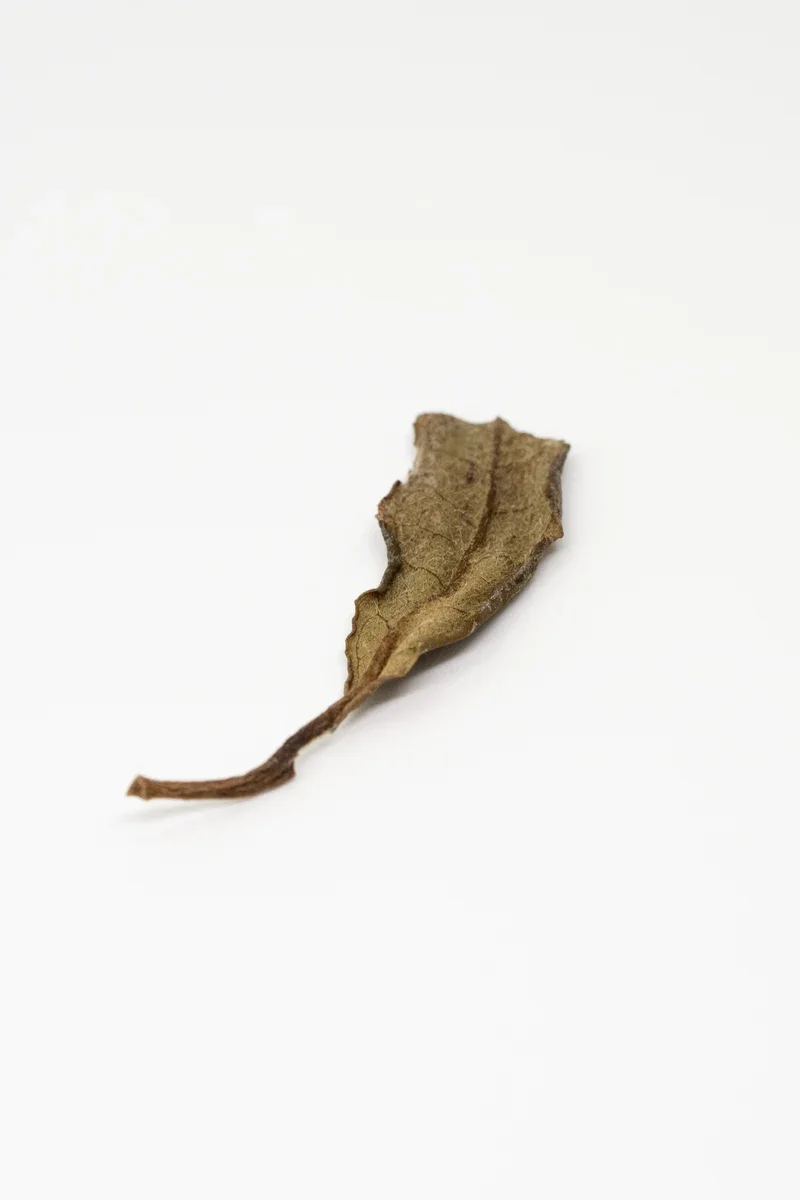
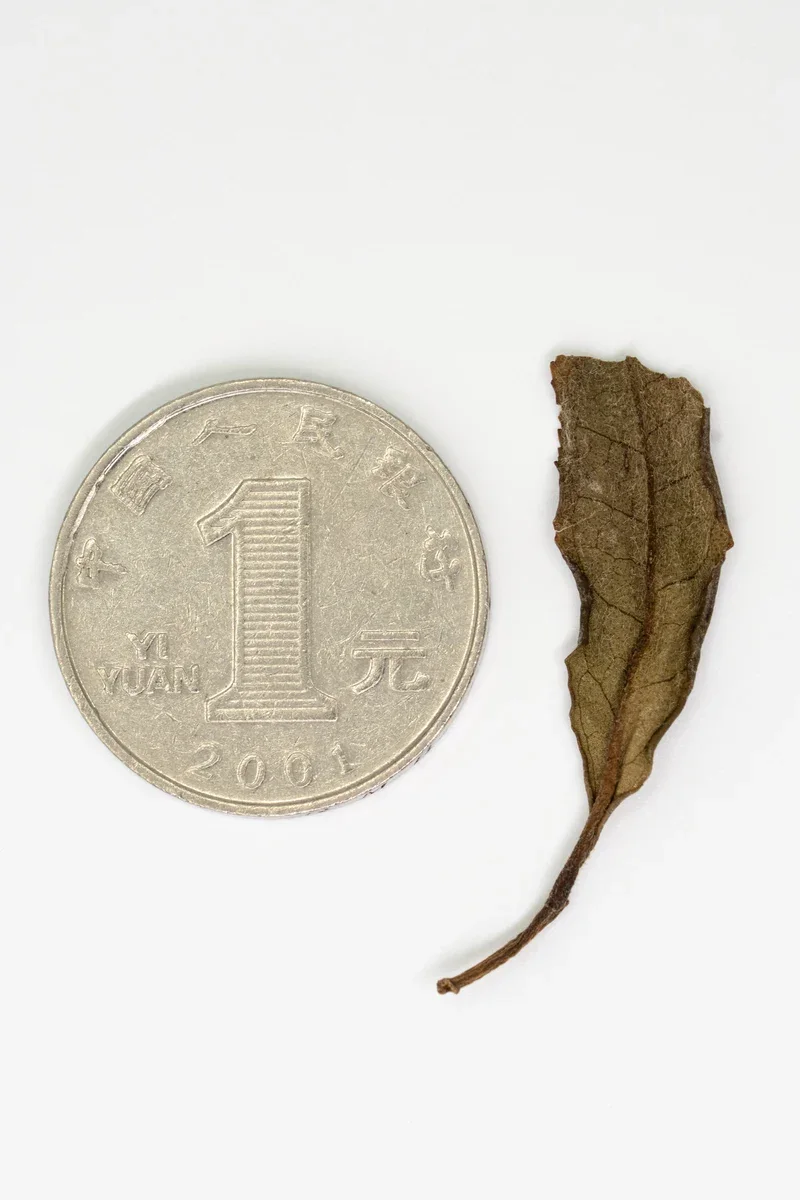
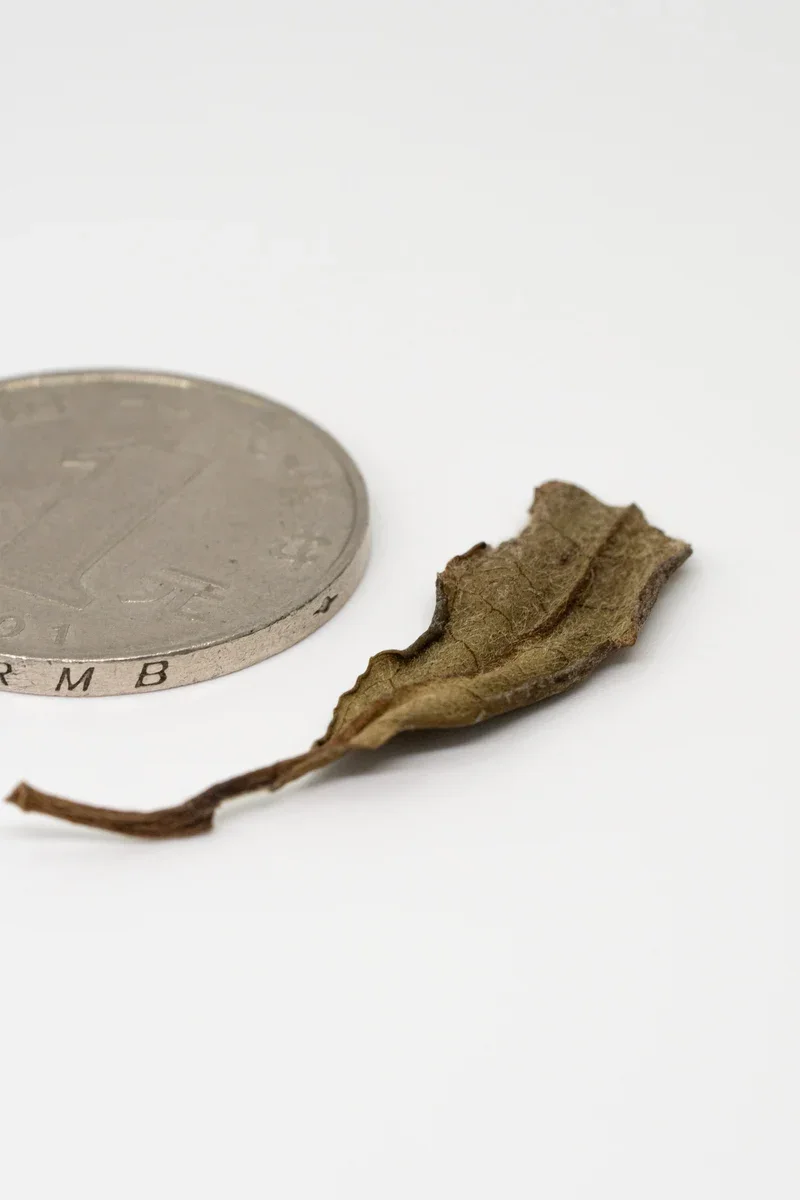
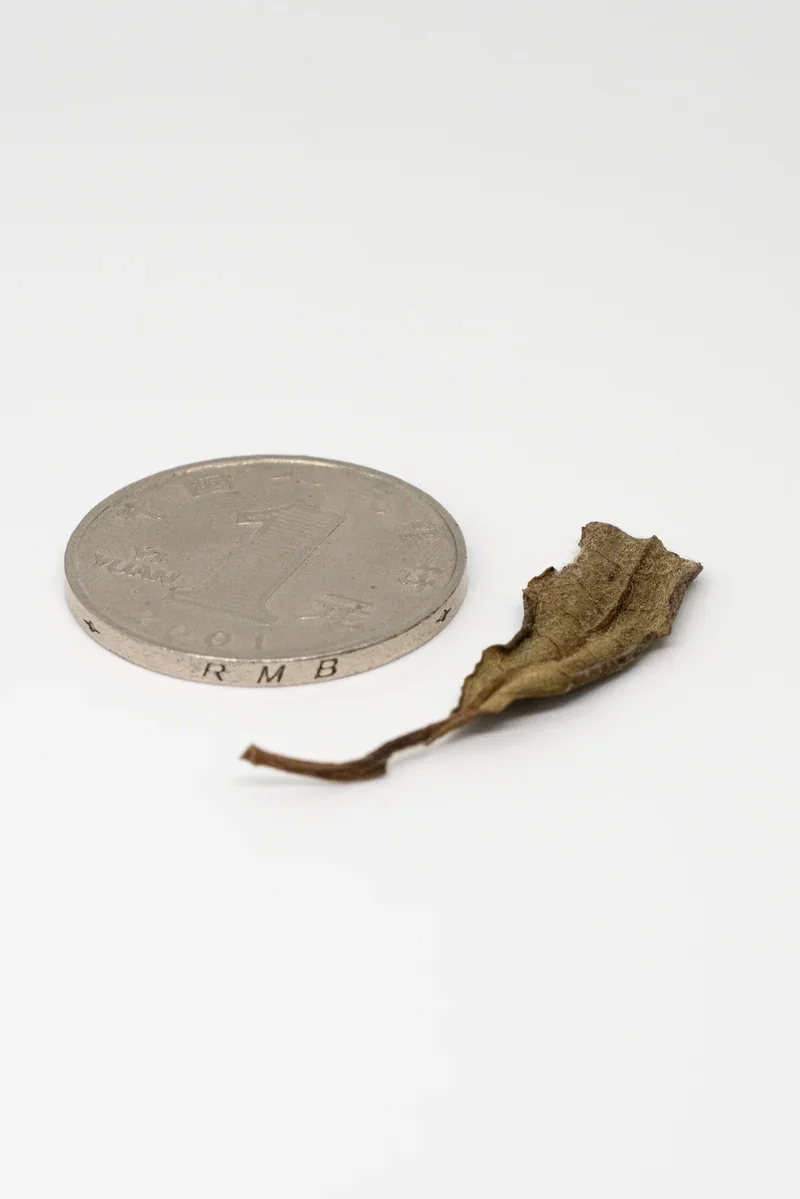
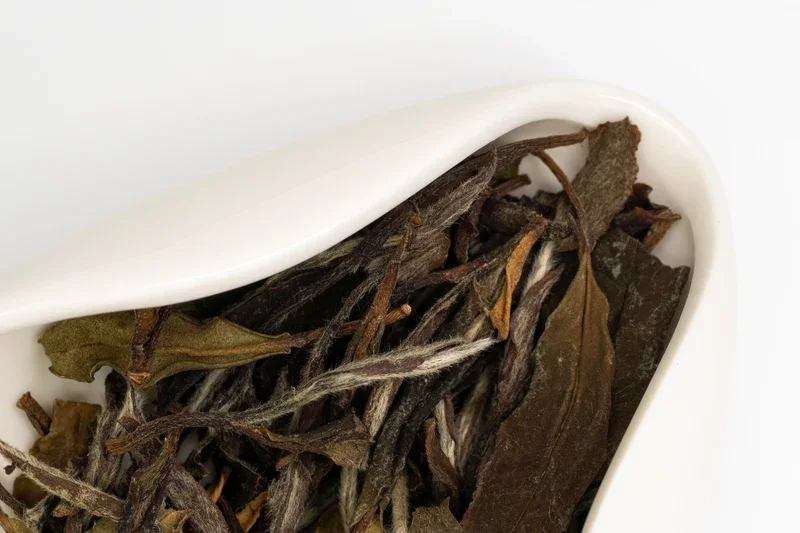
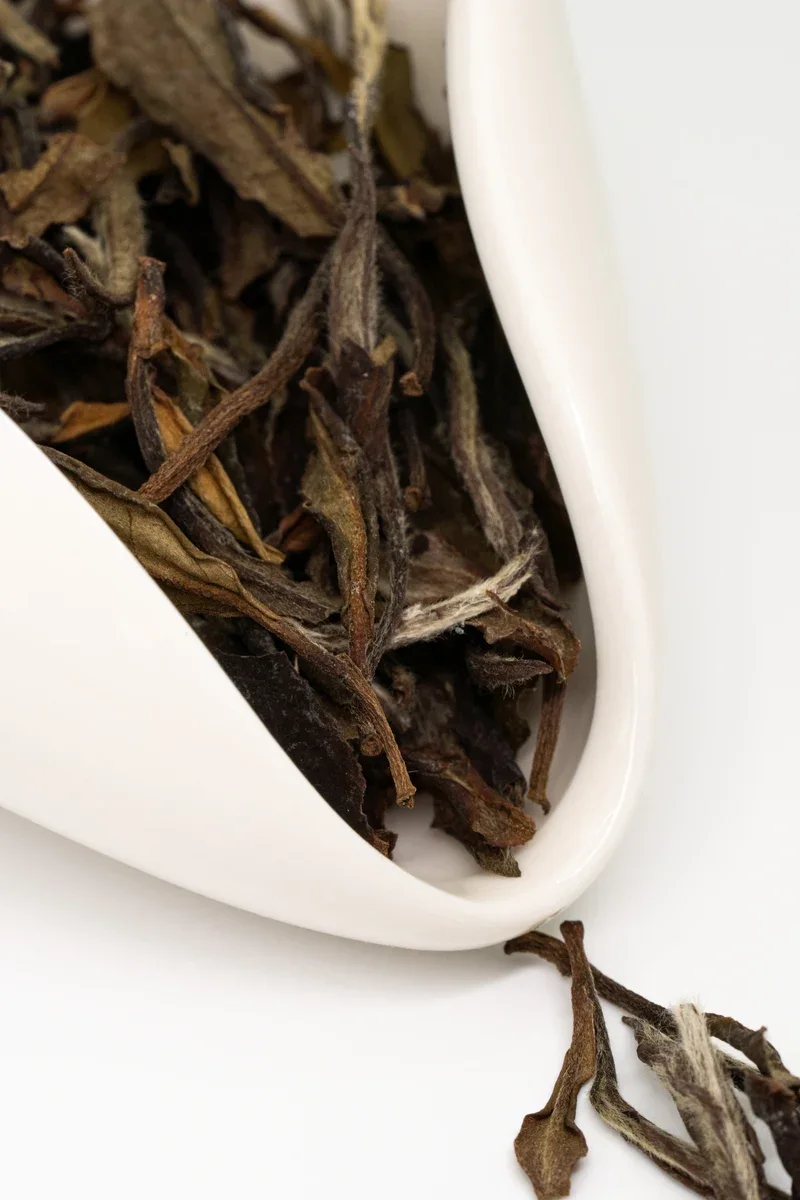
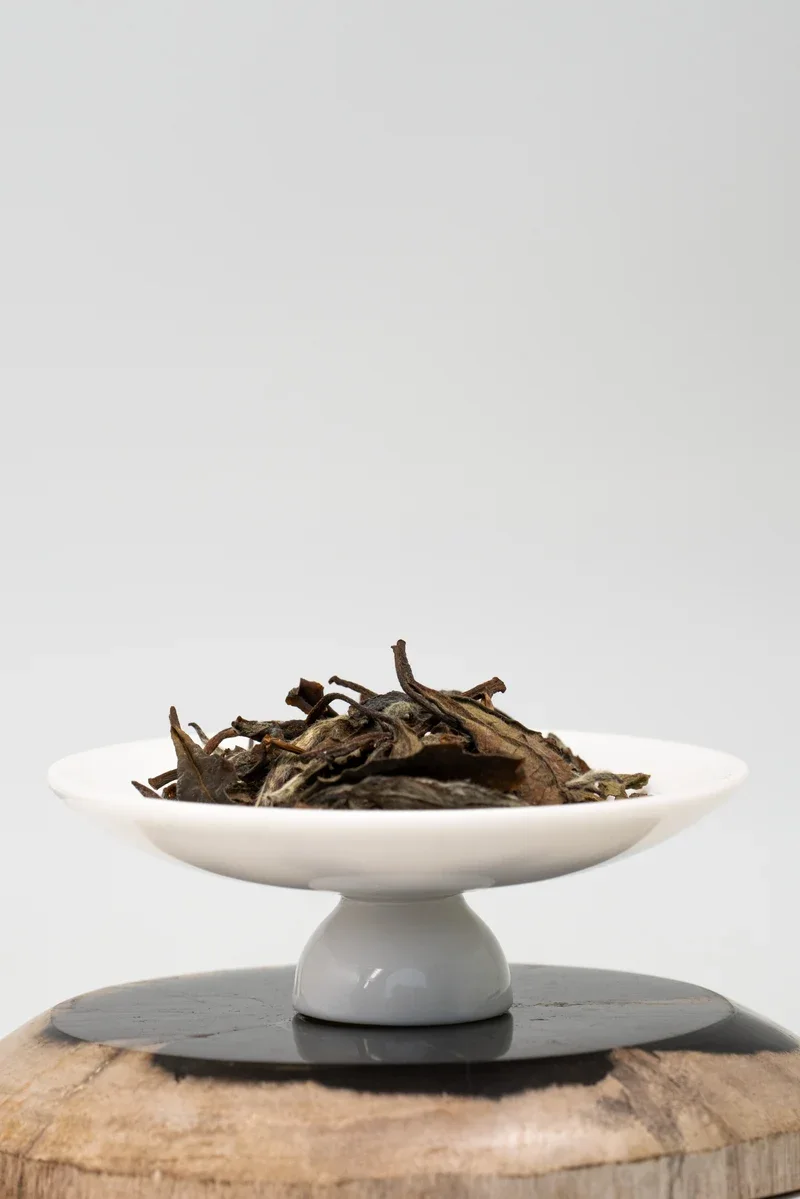
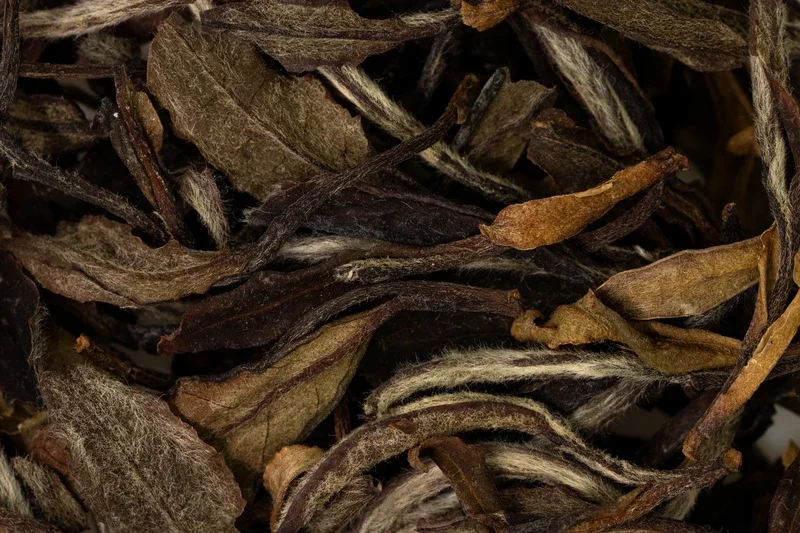
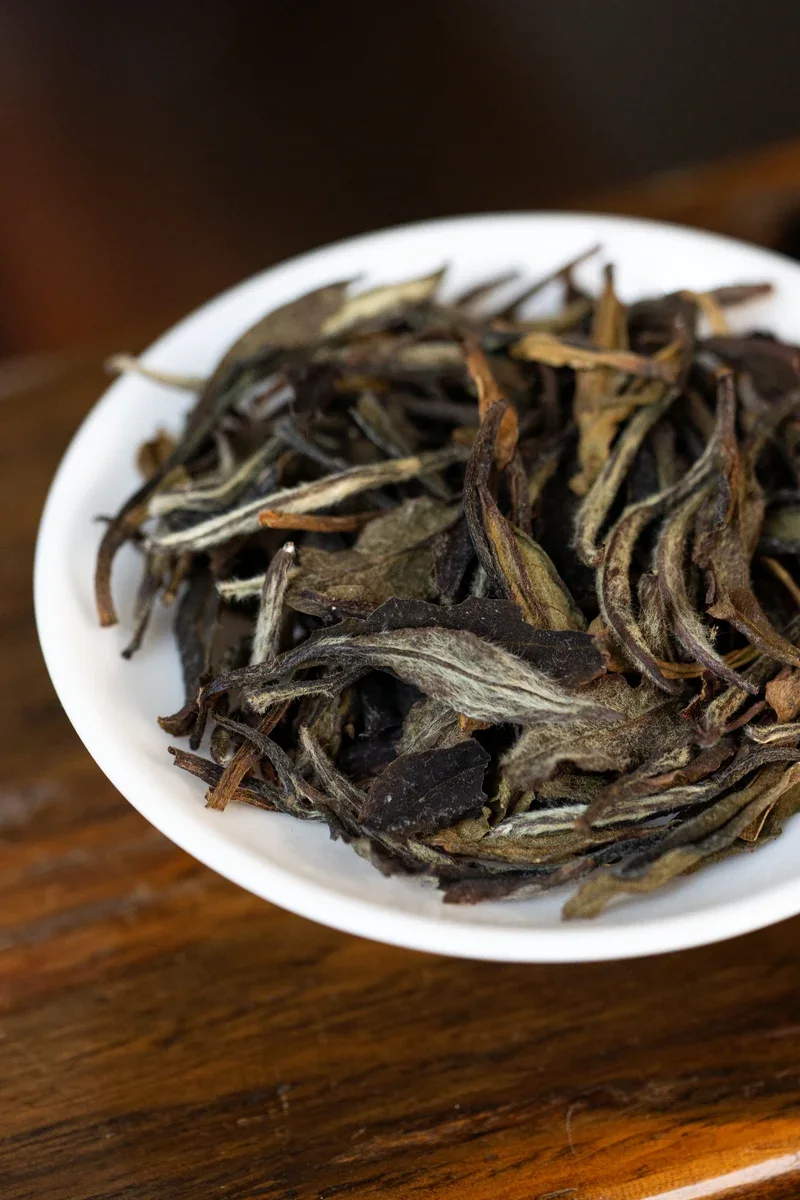
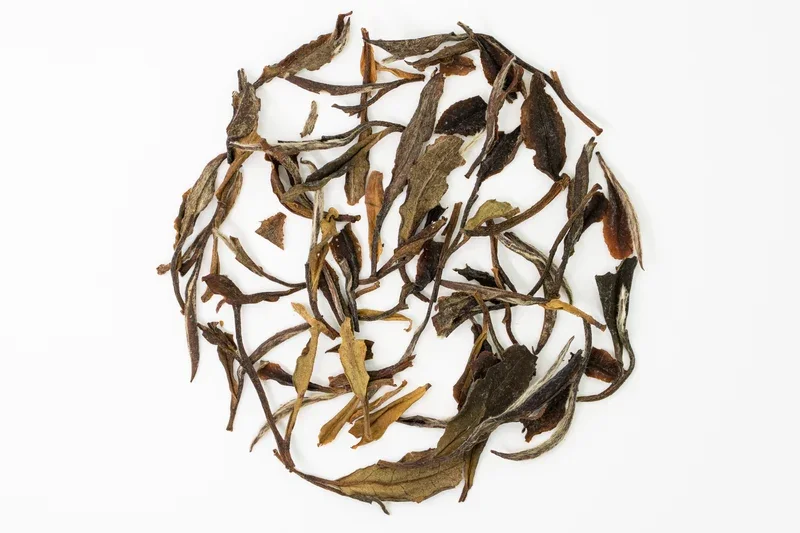
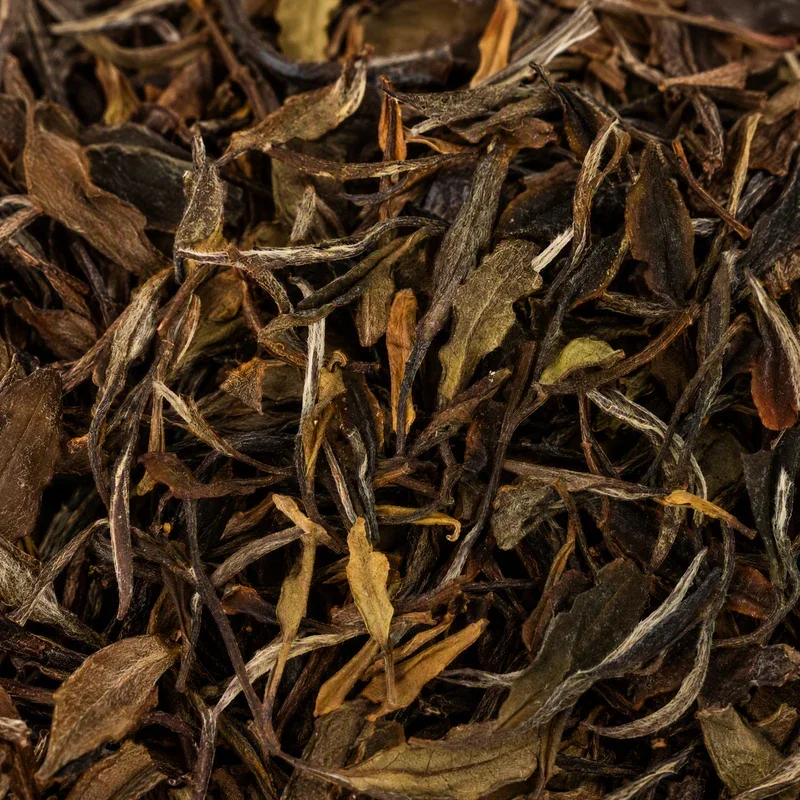
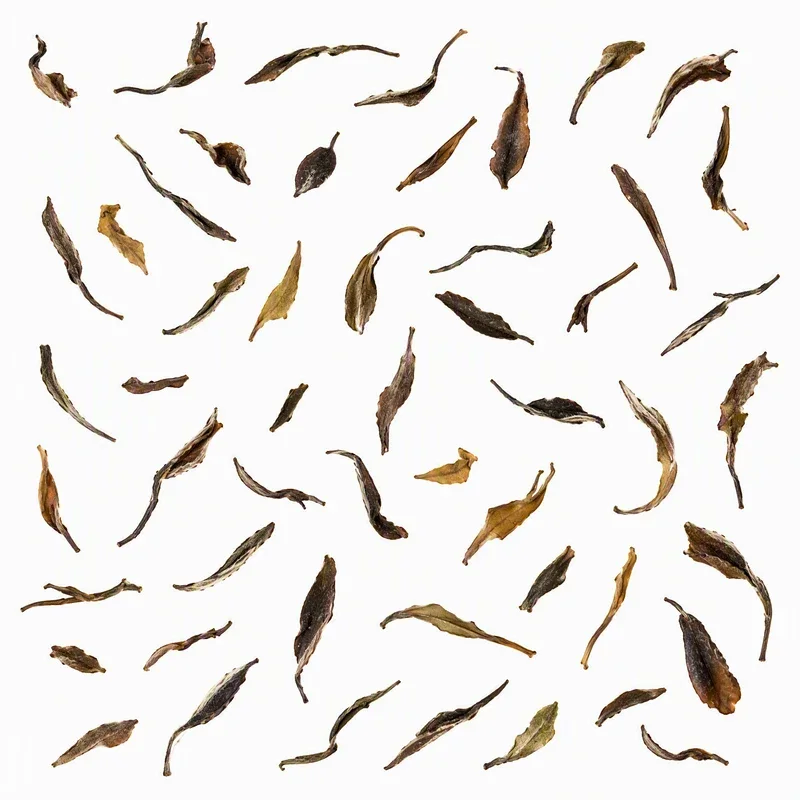
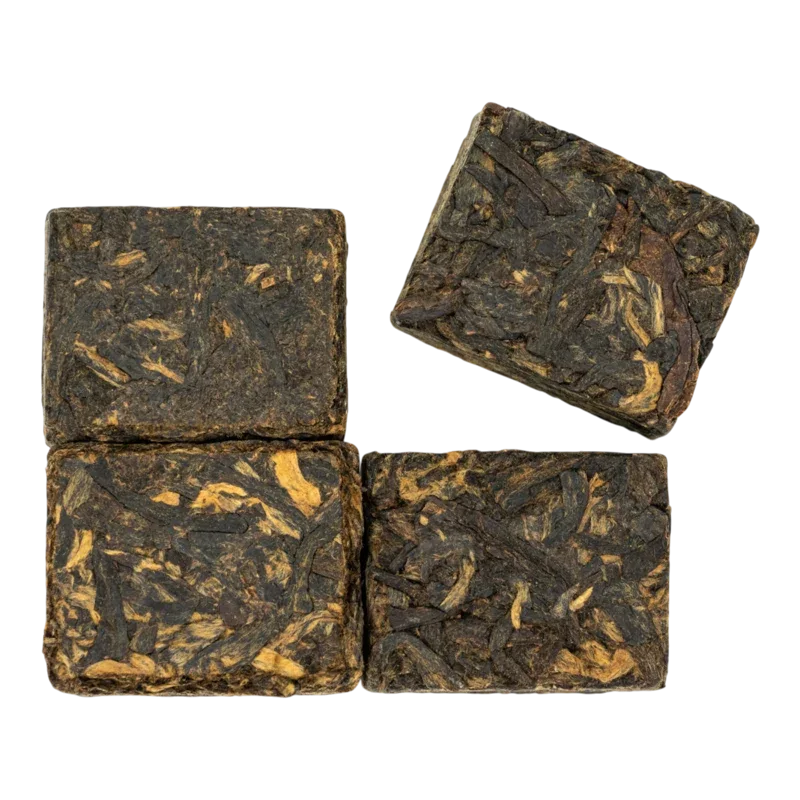
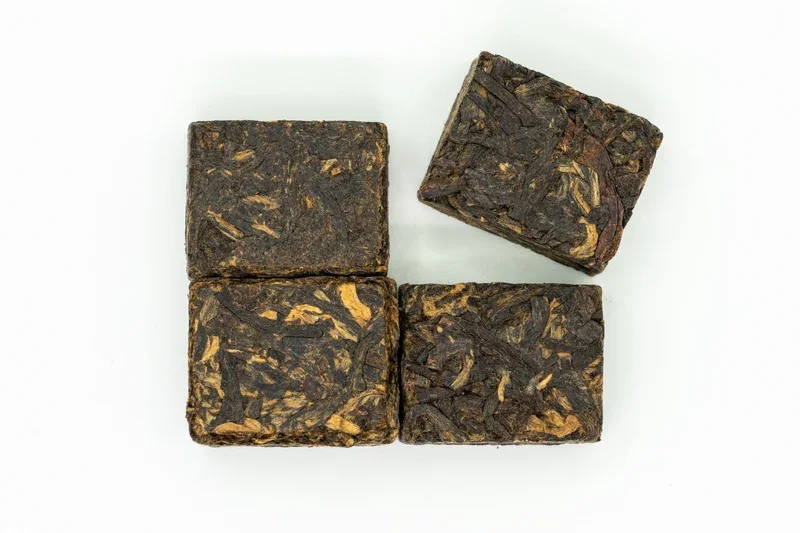
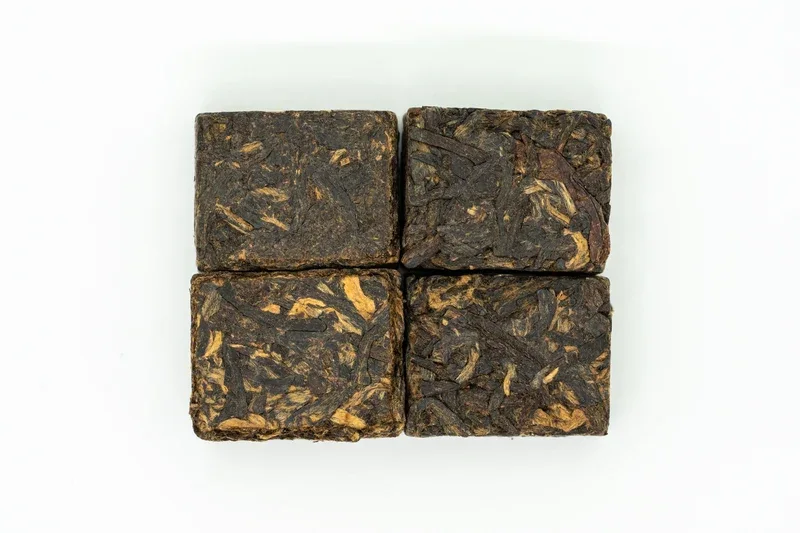
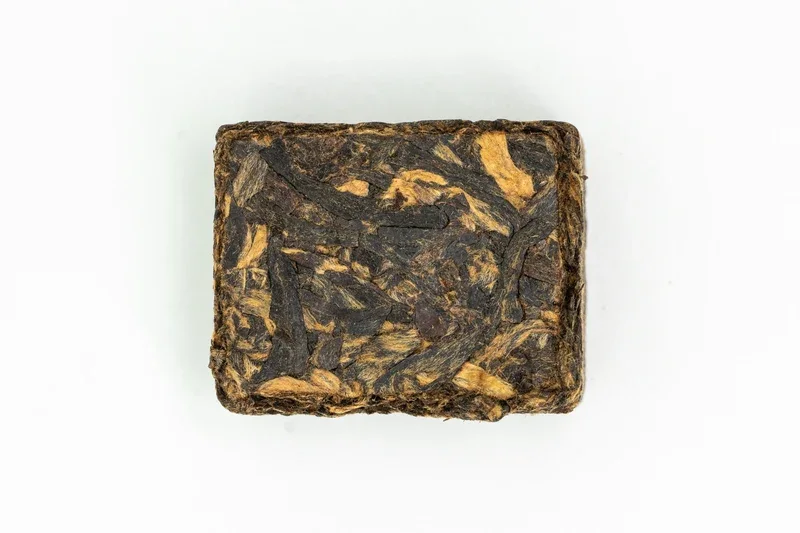
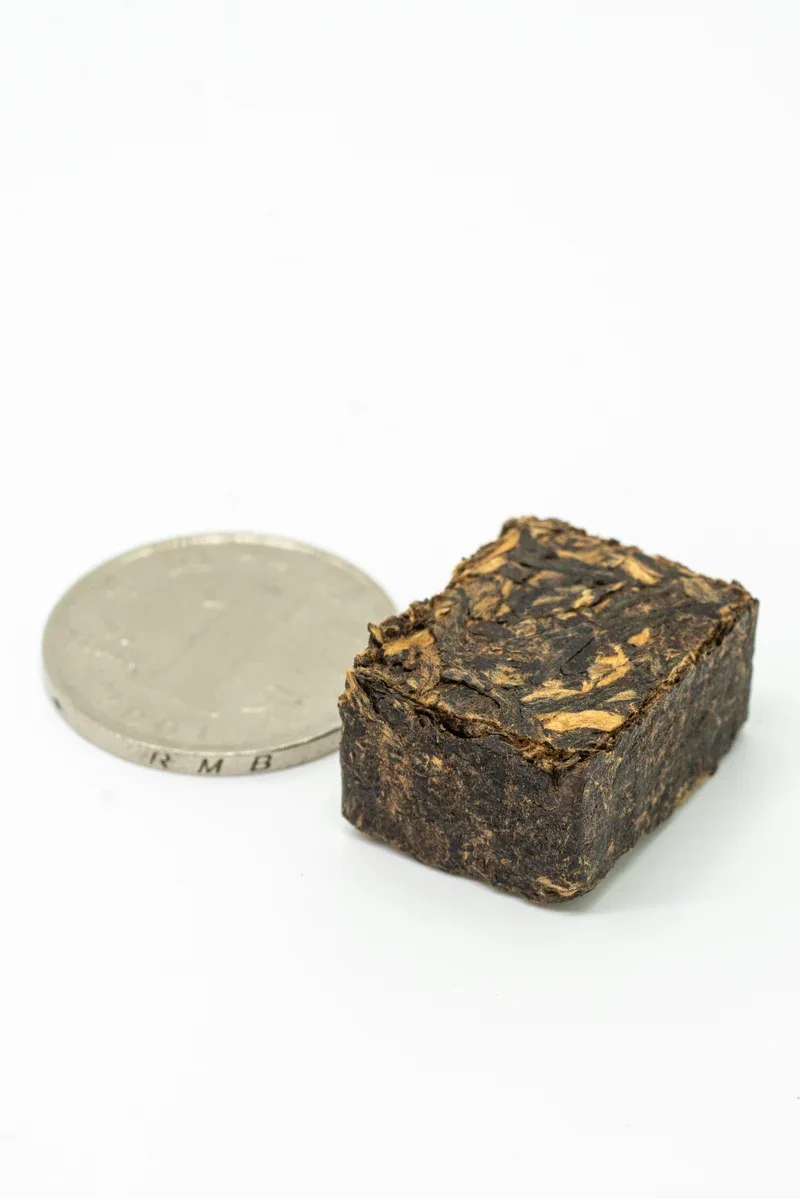
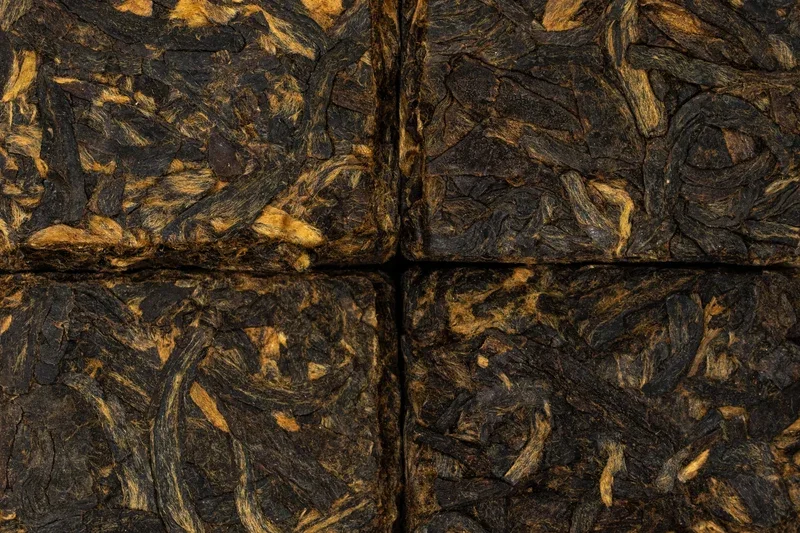
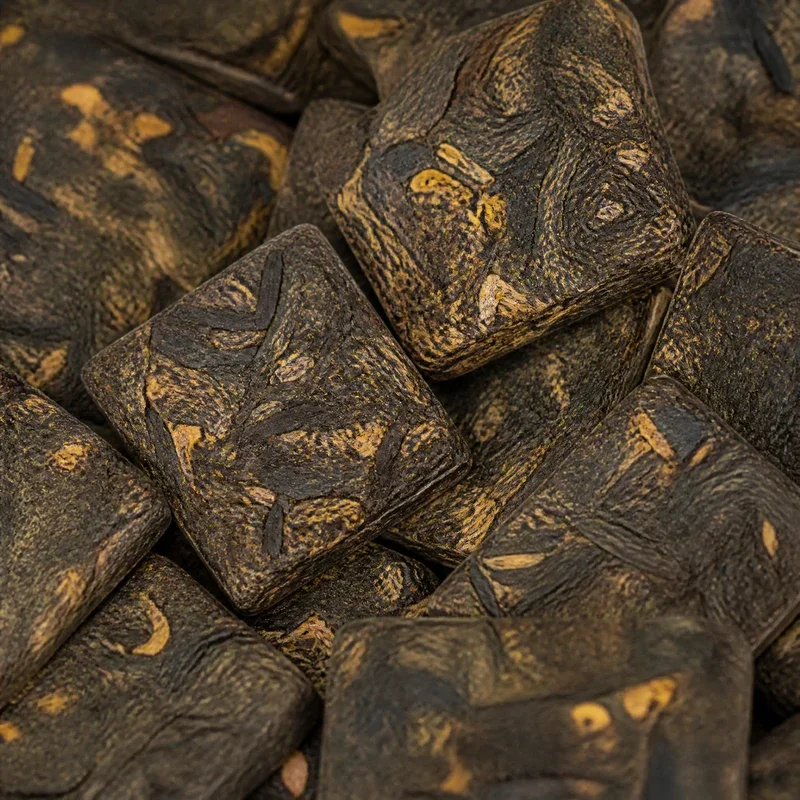
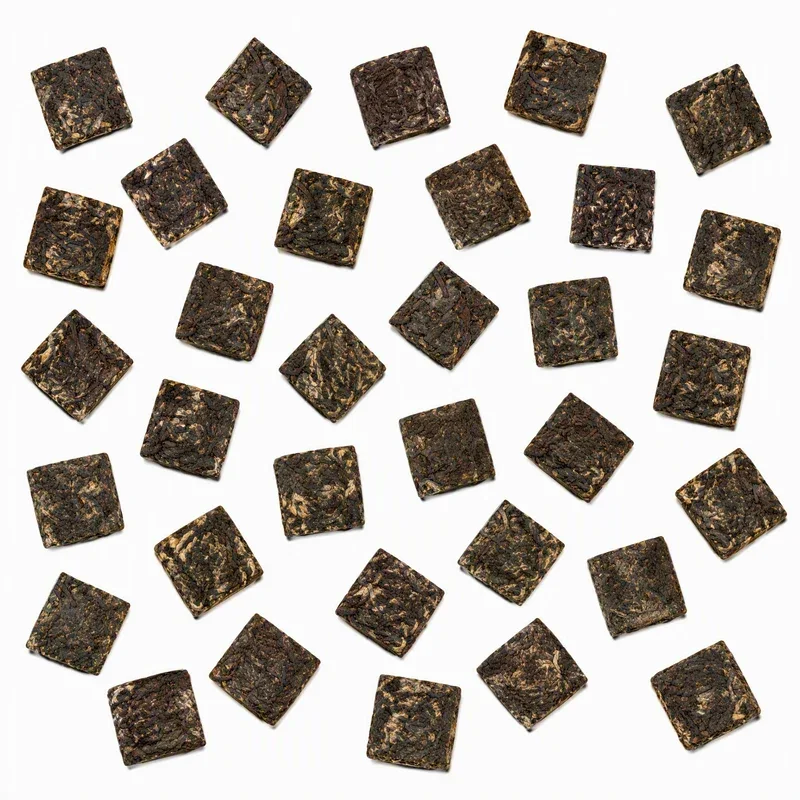
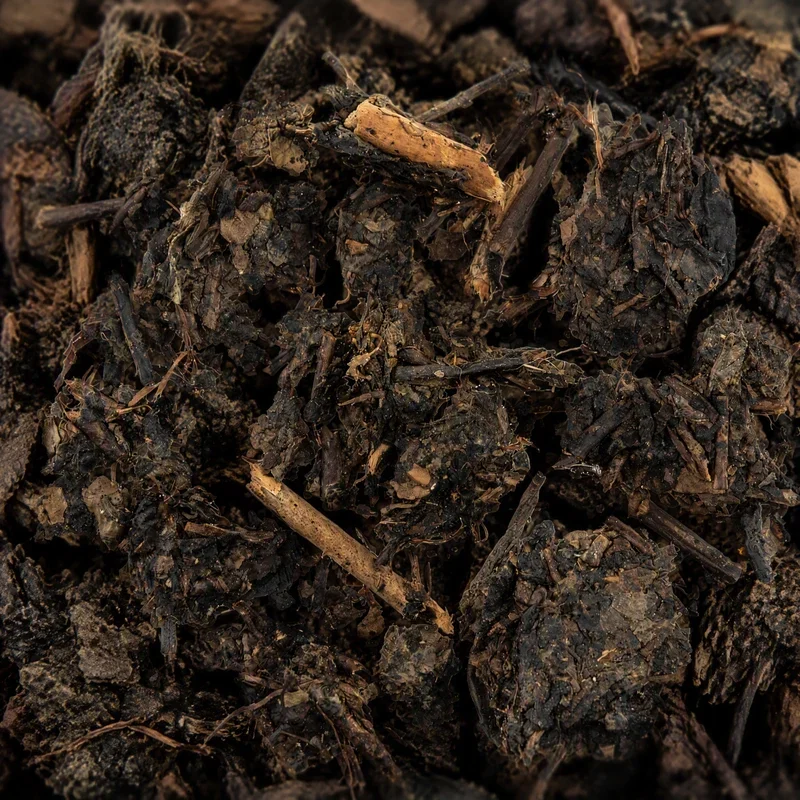
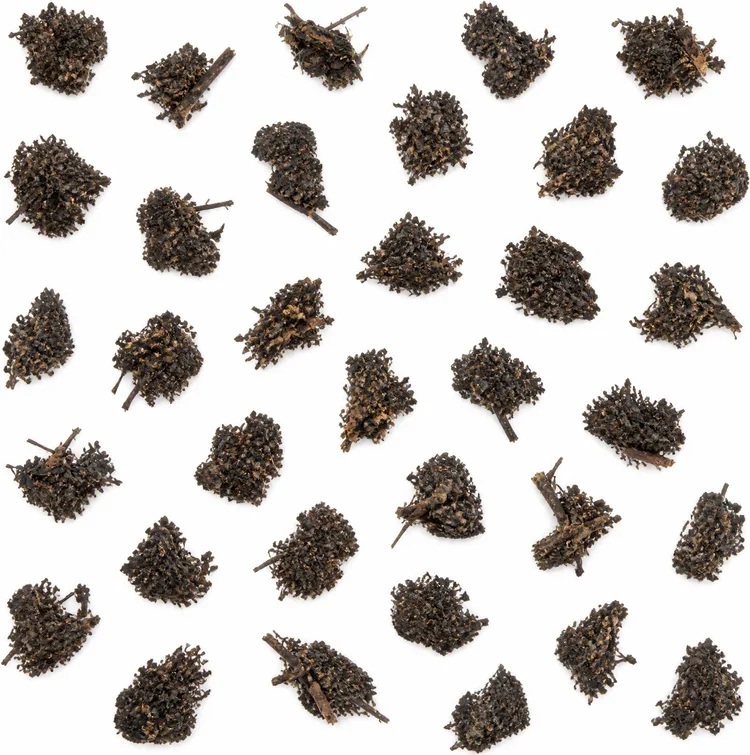
Dry Leaf Appearance: Dark brown to black-brown leaf, tightly rolled. In pressed forms — even surface, without visible mold and foreign inclusions. Light shine from cellular juice is acceptable.
Dry Leaf Aroma: Pure aged "chenxiang" — calm, deep aroma with nutty and woody tones, without "rawness" and mustiness. In young tea — light shade of "duiwei" (堆味, duīwèi) — characteristic piling odor, which disappears with aging.
Liquor Aroma: Pure and rich, with "chenxiang" dominance. Notes of walnut, chestnut, dry wood, dried herbs unfold. In aged samples — light "creaminess" and honey tones. Sometimes — barely noticeable smokiness from drying.
Liquor Color: Golden-amber to amber-red, transparent, with good brightness. With age, liquor darkens to chestnut.
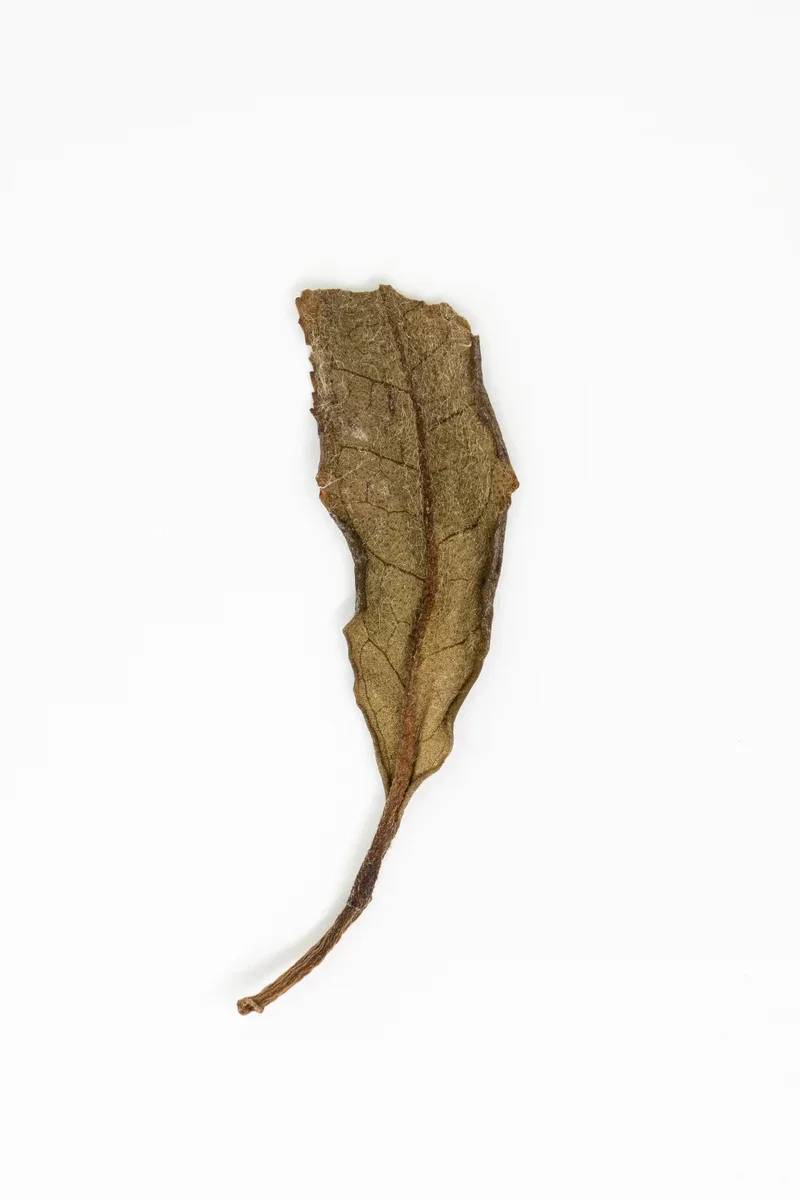
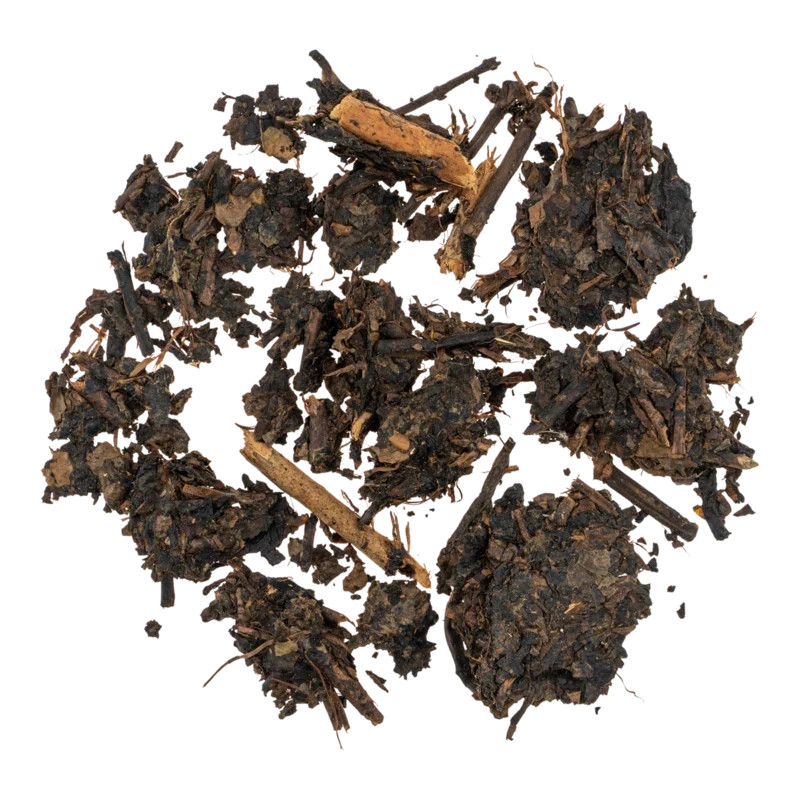
Spent Leaves: Dark olive to brown, elastic, whole leaves unfold well. Uniformity of spent leaves indicates quality of raw material and correct technology.
Taste: Sweet-smooth, with moderate body density. Astringency is soft, quickly transitioning to returning sweetness (回甘, huígān). With aging, taste becomes more rounded, "oily." Long aftertaste with nutty shade.
Alkaloids: Caffeine (咖啡碱, kāfēi jiǎn) — about 4.46% in initial raw material. Theobromine (可可碱, kěkě jiǎn) and theophylline (茶碱, chájiǎn) are also present in trace amounts.
Amino Acids: In initial raw material — about 4.33%, including L-theanine (L-茶氨酸, L-cháānjīsuān). Part of amino acids is consumed in Maillard reactions during thermal treatment and fermentation, forming aromatic compounds.
Tea polysaccharides (茶多糖, chá duōtáng) accumulate in mature leaves and play an important role in the bioactivity of dark teas.
Yeasts, mold fungi (including Aspergillus spp.) and bacteria participating in post-fermentation contribute to the formation of aromatic compounds and reduction of "green" roughness of raw material. Microbial metabolism promotes transformation of polyphenols into bioavailable forms.
Minerals: Potassium, magnesium, fluorine, selenium, zinc — the last two elements are noted as characteristic of soils in this region.
Polyphenols: Initial raw material contains about 26.62% tea polyphenols. During post-fermentation, a significant part of catechins (epigallocatechin gallate, etc.) transforms into thearubigins (茶红素, cháhóngsù) and theabrownins (茶褐素, cháhèsù) — high-molecular pigments that give the liquor deep color and soft taste. Theabrownin content in hei cha usually comprises 4–14%, on average about 6.5%.
Vitamins: B-group vitamins, vitamin C (partially destroyed during fermentation), vitamin E.
Traditionally, dark teas are valued for their ability to "remove greasiness" (解腻, jiě nì) from food, facilitating digestion of heavy and fatty dishes. Tea polysaccharides and microbial fermentation products stimulate peristalsis.
Theabrownins and residual polyphenols possess antioxidant potential. Studies link theabrownins with activity against free radicals.
A number of studies indicate that regular moderate consumption of hei cha may favorably influence cholesterol and triglyceride indicators. Data are preliminary and do not replace medical recommendations.
Tea polysaccharides characteristic of dark teas from mature raw material are being studied as potential modulators of blood glucose levels.
Caffeine provides alertness, while L-theanine softens its action, promoting concentration without pronounced excitement.
Hei cha is classified as "warm" (温, wēn) beverages in traditional Chinese dietetics — it is well suited for cold seasons.
Polyphenolic fermentation derivatives possess moderate antibacterial activity against a number of pathogenic microorganisms of the oral cavity.
Caffeine sensitivity; exacerbation of gastritis or peptic ulcer; taking medications (1–2 hour interval between tea and medicines is recommended); pregnancy and nursing — consume moderately.
Tea Amount: 4–6 g per 100–120 ml (gongfu); 2–3 g per 250 ml (steeping); 5–7 g per 600 ml (boiling).
Teaware: Gàiwǎn (盖碗, gàiwǎn) of porcelain or ceramic; Yíxīng clay teapot (宜兴紫砂壶, Yíxīng zǐshā hú) — porous clay accumulates hei cha aroma over time; for boiling — glass or ceramic teapot.
Water Temperature: 95–100°C (boiling water).
Container: Kraft-type paper or cardboard box with "breathing" outer layer. Hermetic packaging acceptable only for short-term storage of already stabilized batches. Plastic and foil undesirable for long-term aging.
Humidity: Moderate — 50–70%. Too dry air (below 40%) slows maturation processes, too humid (above 75%) creates risk of undesirable mold appearance.
Hei cha extremely easily absorbs foreign aromas. Store away from spices, household chemicals, tobacco, perfumery.
Room should be dry and ventilated, but without drafts.
Pressed forms of Jietan Hei Cha improve with years: "duiwei" disappears, pure "chenxiang" appears, taste rounds. Tasting every 3–6 months is recommended to track maturation dynamics.
Temperature: 15–25°C, without sharp fluctuations and overheating. Direct sunlight excluded.
Fu-brick is distinguished by the mandatory presence of "golden flowers" (冠突散囊菌, Eurotium cristatum) and characteristic honey-mushroom notes. Jietan Hei Cha has a more classic nutty-woody "chenxiang" without mushroom dominance. Both are from Hunan, but the technology and organoleptic properties differ.
Guangxi Liu Bao often gives a "camphor" and "wet forest" profile, its liquor is of a deeper red-chestnut color. Jietan Hei Cha is typically lighter in liquor and possesses a more "clean," grassy-nutty character.
Tian Jian is a loose Hunan hei cha from more tender raw material, often with pine smokiness. Jietan Hei Cha, especially in pressed forms, is denser in texture and less smoky.
"Old tea heads" of shu puer are denser in body and more "earthy" in profile due to Yunnan large-leaf raw material. Jietan Hei Cha from small-leaf populations is softer, lighter and more "airy" in aroma.
Hubei green brick is historically a mass border tea with coarser raw material and pronounced astringency. Jietan Hei Cha is a more refined product from quality high-altitude raw material.
Price Category: Jietan Hei Cha belongs to the medium price category among Hunan dark teas. Cost significantly depends on picking season (spring raw material more expensive than summer), aging age, factory reputation, and storage conditions. Young tea is more affordable, aged pressed forms with pure "chenxiang" cost noticeably more.
Plantation altitude, organic certification, production year, storage care, documentation availability (year, factory, batch number).
No reviews yet. Tell us what you think of this tea.
Rate this tea and share your impressions. We review each submission before publishing it.