Brewing
Gongfu brewing
- Water temperature
- 100 °C
- Tea amount
- 6 g
- Water volume
- 100 ml
- First steep
- 10 s
- Time added per infusion
- 5 s
- Infusions
- 10

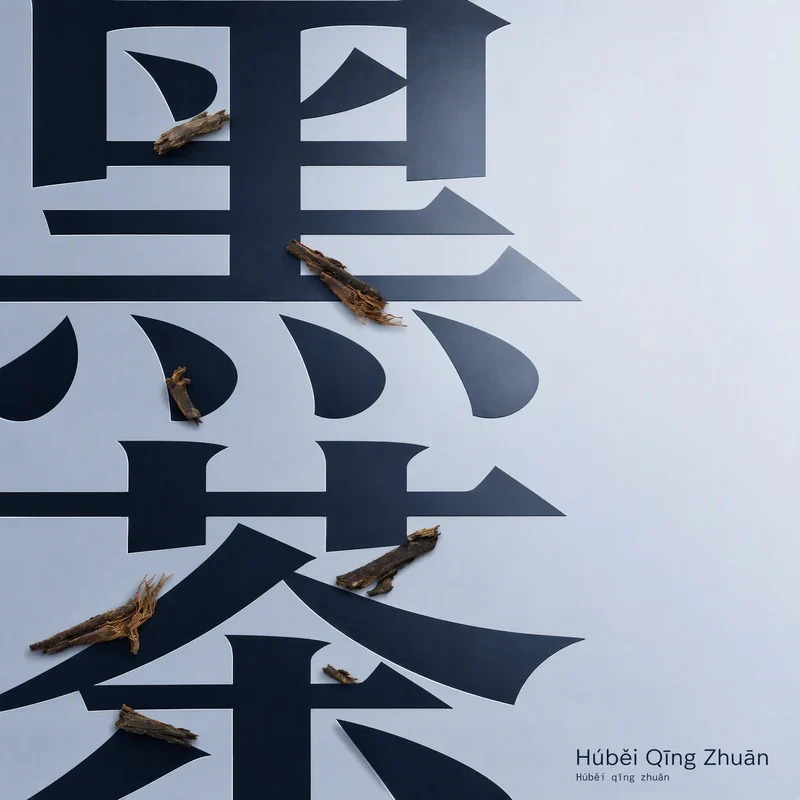
Húběi qīng zhuān
Choose a brewing method. Start with the recommended quantities and time, then adjust to taste.
Brewing
Brewing
Taste
Tea encyclopedia
Alt Names: "Chuan-zi Zhuan" (川字砖, "brick with the character '川'") — by trademark; Lǎo Qīng Chá (老青茶, Lǎo Qīng Chá) — by the name of the source material; Dōngchá (洞茶, Dòng Chá) — by the historical production center — Yánglóudòng village (羊楼洞, Yánglóudòng).
Alt Names: "Chuan-zi Zhuan" (川字砖, "brick with the character '川'") — by trademark; Lǎo Qīng Chá (老青茶, Lǎo Qīng Chá) — by the name of the source material; Dōngchá (洞茶, Dòng Chá) — by the historical production center — Yánglóudòng village (羊楼洞, Yánglóudòng).
Category: Hubei dark brick tea. Historically belongs to border teas (边销茶, biānxiāo chá) — products intended for trade with nomadic peoples of Inner Asia. Simultaneously — export tea (外销茶, wàixiāo chá), supplied to Russia and Europe for centuries.
Coordinates: Approximately 29°–30° N, 113°–114° E.
Origin: China, Húběi Province (湖北, Húběi), Xiánníng City (咸宁市, Xiánníng Shì). Production is concentrated in Chìbì City (赤壁市, Chìbì Shì), Xian'an District (咸安区), Tongshan County (通山县), Chongyang County (崇阳县) and Tóngchéng County (通城县).
Type: Post-fermented tea, belongs to the category of Hēi Chá (黑茶, Hēichá — "dark tea"). Compressed (紧压茶, jǐnyā chá) in the form of a rectangular brick. By degree of compression — one of the densest among all Hei Cha, which ensures exceptional aging potential.
In the 19th century in Mongolia and Buryatia, brick tea served as legal tender alongside silver. For one sheep they gave a certain number of "川" bricks; for a horse — proportionally more.
On the stone pavements of old Yangloudong, deep grooves are still visible — traces from "jigong che" (鸡公车, "rooster carts") — one-wheeled wheelbarrows on which workers transported bricks to the river wharf. These traces are material evidence of the scale of trade: tens of thousands of tons of tea passed through the tiny village annually.
The "川" trademark embossed on the front side of the brick has been continuously used since 1728 — that is, almost 300 years. This is one of the oldest continuously operating trademarks in world trade.
Qing Zhuan played a role in international relations. The Kyakhta Treaty of 1727, besides establishing the border, regulated precisely tea trade. Later, in the era of "万里茶道", brick tea became one of the few goods legally and massively crossing the Russian-Chinese border.
At its peak (1910–1915), tea from Yangloudong comprised about 60% of all Chinese tea exports to Russia — one small village supplied tea to a significant part of the Russian Empire.
Cultural Significance: Qing Zhuan is "the brick that built the Wànlǐ Chádào (万里茶道)." It was the main cargo on the Great Tea Road that connected Southern China with Russia and Europe and is comparable in historical significance to the Great Silk Road. In the steppes of Mongolia and in Buryat yurts, Qing Zhuan was for centuries the "currency of the steppe" — it was exchanged for livestock, hides and silver. In 19th century Russia, Kyakhta "brick tea" was a universally known beverage, and its remains were used for smoking (in Siberia). The stone pavements of old Yangloudong preserve deep grooves from "rooster carts" (鸡公车, jīgōng chē) — one-wheeled wheelbarrows on which bricks were delivered to the wharf. These traces are material evidence of the scale of trade.
In the Tang era, the Chibi area (then — Puqi, 蒲圻) was designated as a "garden household" (园户, yuánhù) for tea production. Local "Dongcha" (洞茶) was included in the list of tribute teas (贡茶).
In Yangloudong, located at the foot of Sōngfēng Mountain (松峰山), production of compressed tea begins. Brick tea was used in tea-horse trade with Mongols.
During the Yǒnglè reign (永乐, 1403–1424), "Mao He Cha" (帽盒茶, māo hé chá — "tea in a hat box") was created in Yangloudong — the prototype of modern Qing Zhuan. Shǎnxī merchants (晋商, Jìnshāng) mastered production and logistics, directing tea to Inner Mongolia and further north.
In 1728, after signing the Kyakhta Treaty (恰克图条约, Qiàkètú Tiáoyuē) between Russia and Qing China, Shanxi merchants transformed "Mao He Cha" into the recognizable brick format with "川" embossing — thus modern Qing Zhuan was born. Tea was shipped from Yánglóudòng by water through Hankou (汉口), then overland through Zhangjiakou (张家口) and Kulun (库伦, now Ulaanbaatar) to Kyakhta (恰克图), and from there through Siberia to Moscow and St. Petersburg. Total route length — about 14,000 km.
During this period annual production reached 48,000 cases (about 26,000 tons), which constituted up to 60% of all Chinese tea exports to Russia. Yangloudong — a tiny village with an area of less than 2 km² — housed more than 200 tea firms (茶庄, cházhuāng), including Russian, English and German ones, and a population exceeding 40,000 people. It earned the nickname "Little Hankou" (小汉口).
In 2014, Qing Zhuan entered the "EU-China Geographical Indications Registry." In 2020, the Húběi Qīng Zhuān Industry Development Group (湖北青砖茶产业发展集团) was created, uniting leading producers. In 2024, the tea was included in the geographical indications promotion list under the "One Belt, One Road" initiative.
Face layer of the brick. Relatively tender leaves with green petioles; color — dark green with light luster.
Middle layer. Medium maturity leaves with reddish petioles; condition — dense, well-rolled form.
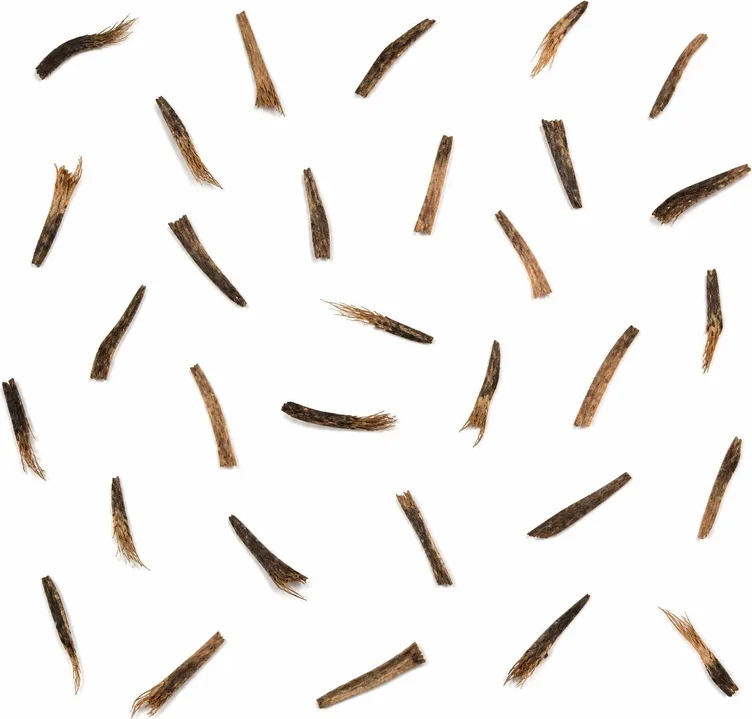
Inner layer. Coarse leaves of the current year with fully woody red petioles; provides density, strength and richness of flavor.
Cultivar: Local wild small-leaf group variety from Southern Húběi (鄂南本地群体种, Ènán běndì qúntǐ zhǒng) — Camellia sinensis var. sinensis. Small leaf with high tenderness and ability to retain moisture; ideally suited for deep fermentation. New plantations are additionally planted with Fúdǐng Dà Bái (福鼎大白, Fúdǐng Dà Bái) variety to increase yield.
Picking: Summer and autumn — main season. For the highest quality "face" layer (洒面, sǎ miàn), relatively tender raw material is used; for the inner layer (里茶, lǐ chá) — coarse mature leaves with petioles.
Pluck Standard: Mature leaves with woody petioles (红梗, hóng gěng — "red petioles" or 青梗, qīng gěng — "green petioles"). Traditionally leaves undergo primary processing "double firing — double rolling — double drying" (二炒二揉二晒) directly on the plantation.
Raw Material: Raw material is classified into three layers, each with separate requirements:
Altitude: 500–800 meters above sea level.
Climate: Subtropical monsoon. Average annual temperature 16–18°C, annual precipitation 1500+ mm, relative humidity 78%+. The territory is shrouded in clouds and fog for a significant part of the year, providing diffused light — optimal for accumulation of amino acids and aromatic substances in the leaf.
Soil: Micro-acidic yellow mountain soils (黄壤, huáng rǎng), pH 4.5–6.5, with elevated zinc and selenium content. Forest coverage — over 60%.
The core plantation of Yangloudong — Laoyingyan (老鹰岩, Lǎoyīng Yán, "Old Eagle Rock") — is located in a relict forest zone, providing natural shading and wind protection.
Topography: Hilly terrain of southern Hubei foothills, transitional zone between Jianghan Plain and Mùfù Mountains (幕阜山脉).
On plantations, "double firing — double rolling — double drying" (二炒二揉二晒) is conducted: leaves are fired twice in a wok (杀青), rolled twice and dried twice in the sun. The resulting semi-finished product is called "lao qing cha" (老青茶).
After wò duī (渥堆), raw material is additionally aged to stabilize quality.
Layer-by-layer placement (洒面 — outside, 二面 — middle, 里茶 — inside) and pressing under pressure of about 100 tons. This ensures density, which is considered maximum among all Hei Cha, and consequently — the longest aging potential.
High-temperature short-term steam treatment (闪蒸, shǎn zhēng) to soften the leaf.
Slow drying over low heat (文火, wén huǒ) for approximately 30 hours.
Finished bricks are wrapped in kraft paper.
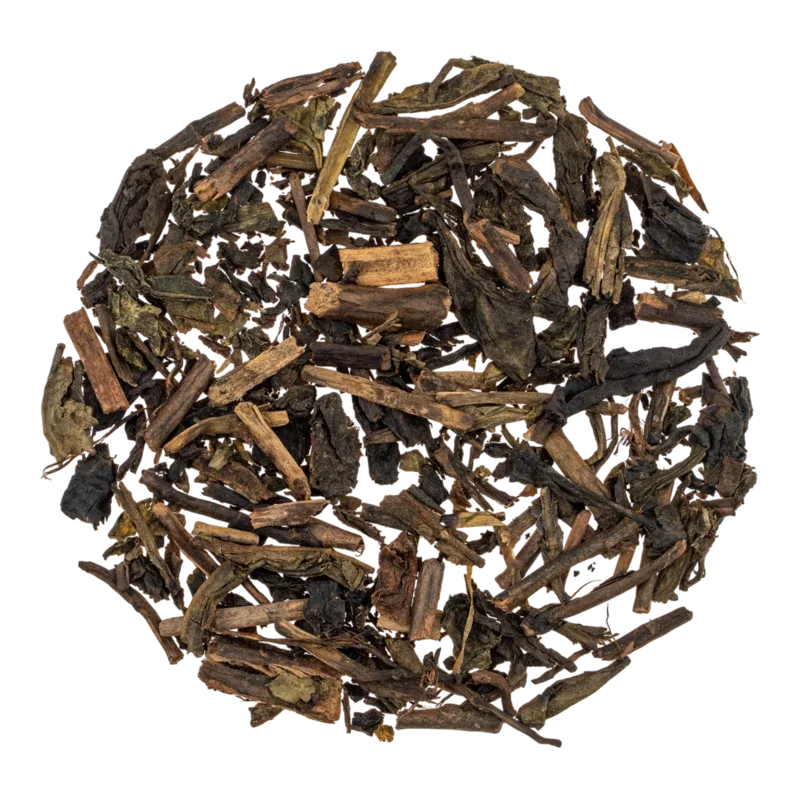
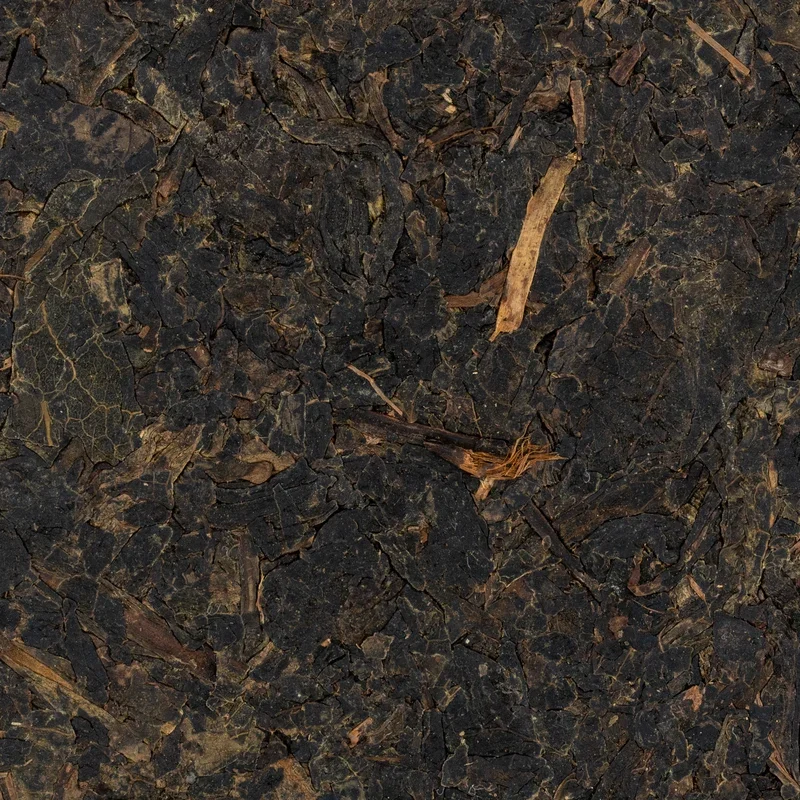
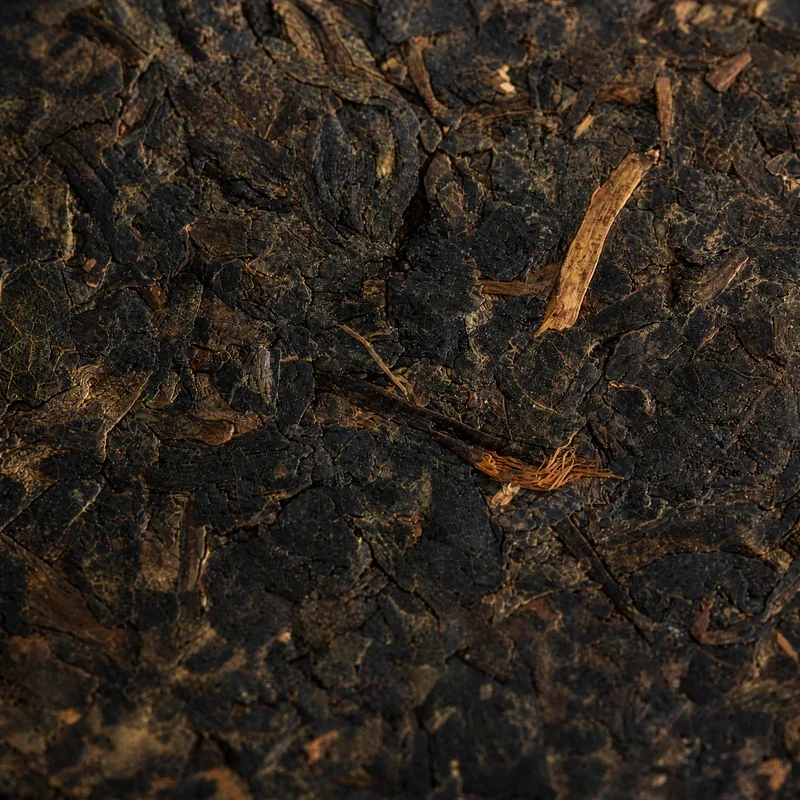
Dry Leaf Appearance: Massive rectangular brick with clear "川" embossing on the front side. Color — 青褐 (qīng hè, "grayish-brown"), surface of special grade may be covered with light golden down (金毫). Texture — dense, monolithic; brick feels heavy. Pressing mold imprint — clear.
Dry Leaf Aroma: Pure chénxiāng (陈香) — mature, calm aroma with notes of dry wood and light mushroom nuancing (菌花香, jūnhuā xiāng — "mushroom flower aroma"), due to prolonged fermentation. In aged bricks (10+ years) pronounced muxiang (木香, mù xiāng) appears — aroma of old sandalwood or cedar.
Liquor Aroma: Rich and warm. Chenxiang dominates; as the cup cools, changbeixiang (长杯香, chángbēi xiāng — "persistent cold cup aroma") appears — a delicate, sweetish trail that is considered one of the quality markers of Qing Zhuan.
Liquor Color: Red-yellow, bright and clear (红黄明亮, hóng huáng míng liàng). Younger specimens give a more yellow shade; aged ones — more red, ruby.
Spent Leaves: Brown leaves with visible petioles; texture soft but not loose.
Taste: 醇厚 (chúnhòu — "rich and mellow"), 甘滑 (gān huá — "sweet and smooth"). Polyphenols — no less than 25%, which provides sufficient "structure" to the taste, however thanks to two-month fermentation, astringency is completely transformed into soft, velvety density. Sweetness — deep, "fruity" (due to high pectin content). Aftertaste (回甘) — long and persistent.
Alkaloids: Caffeine (moderate content), theobromine, theophylline.
Amino Acids: L-theanine, glutamic acid, aspartic acid — form gentle sweetness.
High content of pectic substances provides characteristic "smoothness" of taste and protective action on gastric mucosa.
Tea polysaccharides (茶多糖, chá duōtáng) — play a role in blood glucose level regulation.
During the 60-day wo dui (渥堆) process, a unique microbial community forms, whose metabolites (organic acids, enzymes) determine the flavor profile and probiotic properties of the tea.
Minerals: Zinc, selenium (elevated content due to regional soils), potassium, calcium, magnesium, manganese.
Polyphenols: ≥ 25%. Deep oxidation products predominate — theaflavins (茶黄素) and theabrownins (茶褐素). Theaflavins inhibit cholesterol synthesis, which underlies the hypolipidemic action.
Vitamins: C, B1, B2, PP, A.
The effectiveness of fat breakdown by Qing Zhuan polyphenols, according to various estimates, is twice that of green tea. This explains the centuries-old popularity of the tea among livestock herders of Mongolia and Central Asia.
Theaflavins (茶黄素) inhibit cholesterol synthesis, contributing to maintaining a healthy lipid profile.
According to modern research, aged Qing Zhuan (10+ years) has significant impact on blood glucose (血糖), lipid (血脂) and uric acid (尿酸) levels.
Pectins and probiotic metabolites coat gastric mucosa, stimulate intestinal peristalsis.
Polyphenols and theabrownins neutralize free radicals.
Warm, "yang" character of the tea — traditionally valued in steppe and mountain regions.
Zinc, selenium and B vitamins strengthen the body's protective functions.
Classic way of consuming Qing Zhuan in its historical export market. Tea is boiled to rich color, then milk (cow or mare), salt, sometimes butter and mutton fat are added. Results in a caloric, warming beverage.
Modern connoisseurs increasingly brew Qing Zhuan using flash steeping method — this reveals the nuances of its multi-layered taste.
Excellent with fatty meat, cheeses, nuts, dried fruits, halva.
Due to moderate caffeine content and pronounced "warming" character, suitable for any time of day, especially for autumn and winter evenings.
Tea Amount: 5–8 g per 500 ml water.
Teaware: Ceramic teapot or brewing pot (煮茶器, zhǔ chá qì). For flash steeping method — gaiwan or Yixing teapot.
Water Temperature: 100°C (rolling boil).
Container: Kraft paper. Complete sealing is not recommended — tea should "breathe" for continued post-fermentation.
Enemies: Moisture, foreign odors, direct sunlight.
Humidity: 50–70%.
Dry, dark, well-ventilated, away from foreign odors.
Practically unlimited. 10-year aged bricks demonstrate significant flavor improvement; 20–50-year specimens are highly valued by collectors. Long aging enhances the "three highs reduction" effect (降三高).
Temperature: Room temperature (15–25°C).
Hunan brick tea from Anhua County. Made from medium and coarse grade raw material, but without the layered structure (洒面–二面–里茶) characteristic of Qing Zhuan. Taste — simpler, more straightforward. Qing Zhuan differs with more complex texture, longer fermentation (60+ days versus ~30 for Anhua) and more pronounced "persistent cold cup aroma."
Hunan brick tea with "Golden Flowers" (Eurotium cristatum). Fu Zhuan is softer, with mushroom and nutty notes; Qing Zhuan — more structured, "architectural" in taste, with emphasized "frame" of tannins and long aftertaste.
Sichuan brick tea for the Tibetan market. Kang Zhuan — coarser and more "utilitarian," oriented toward brewing butter tea. Qing Zhuan — more refined, with three-layer architecture and potential for delicate flash steeping.
Guangxi Hei Cha with pronounced earthy and "cellar" notes. Liu Bao — "southern" in character, moist and heavy; Qing Zhuan — more "northern," dry and clean in profile.
Price Category: Varies in wide range:
Raw material grade and layer ratio, aging age, brand (famous marks — "川" (Zhaoliqiao), "Yangloudong", "Changchengchuan"), production year.
Brands "川" (赵李桥茶厂), "Yangloudong" (羊楼洞茶业), "Dongzhuang" (洞庄茶业) — most reliable. Buy in specialized stores or directly from producers.
Brick should be dense, heavy, with clear "川" embossing. Color — uniform grayish-brown. Cracks, looseness, white or green mold — warning signs.
Pure chenxiang, possibly with light mushroom note. Mustiness, sourness, "basement" dampness — unacceptable.
Red-yellow, bright, clear. Cloudiness — sign of defect.
Persistent, sweetish aroma in cooled cup — one of the main markers of authentic quality Qing Zhuan.
No reviews yet. Tell us what you think of this tea.
Rate this tea and share your impressions. We review each submission before publishing it.