Brewing
Gongfu brewing
- Water temperature
- 75 °C
- Tea amount
- 5 g
- Water volume
- 100 ml
- First steep
- 10 s
- Time added per infusion
- 5 s
- Infusions
- 3

Huángshān yún wù chá
Choose a brewing method. Start with the recommended quantities and time, then adjust to taste.
Brewing
Brewing
Taste
Tea encyclopedia
Category: Famous Tea of China (中国名茶, Zhōngguó míngchá). Historical tea of Anhui Province.
Category: Famous Tea of China (中国名茶, Zhōngguó míngchá). Historical tea of Anhui Province.
Coordinates: The Huangshan mountain range is located approximately between 30°01′–30°18′ N and 118°01′–118°17′ E.
Origin: China, Ānhuī Province (安徽省, Ānhuī shěng), Huángshān mountain range (黄山, Huángshān — "Yellow Mountains"), primarily Shé County (歙县, Shèxiàn). The Huangshan Mountains are a UNESCO World Heritage Site (since 1990, dual status: natural and cultural heritage).
Type: Green tea (绿茶, lǜchá), unoxidized. Belongs to the yúnwù (云雾, yúnwù — "clouds and mist") category — a special class of high-mountain green teas cultivated in conditions of constant cloud cover.
Cultural Significance: The Huangshan Mountains, celebrated by poets and artists for millennia, are one of the sacred places of Chinese culture. Their fantastic granite peaks, peculiar pines, and eternal mists are a canonical theme of the Huizhou school of painting and poetry. Yun Wu tea, born in these mystical landscapes, is perceived as a material embodiment of the harmony between earth and sky, nature and spirit. Huangshan is also the birthplace of an entire constellation of famous teas: besides Yun Wu and Mao Feng, Tàipíng Hòu Kuí (太平猴魁, Tàipíng Hóukuí) and Qímén Hóng Chá (祁门红茶, Qímén Hóngchá) are produced here. It is no wonder that Huangshan is called the "capital of famous teas of China" — three teas from the list of ten great Chinese teas belong to this region.
History: Tea cultivation in the Huangshan Mountains has an ancient history. According to the "Huizhou Prefecture Gazetteer" (《徽州府志》, Huīzhōu fǔzhì), tea cultivation in the Huāngshān area originated during the Northern Sòng dynasty (宋朝, Sòng cháo), during the Jiāyóu reign period (嘉祐, Jiāyòu, 1056–1063), and received significant impetus during the Míng period (明朝, Míng cháo), during the Longqing reign (隆庆, Lóngqìng, 1567–1572). The Míng literatus Xǔ Chǔ (许楚, Xǔ Chǔ) left a remarkable testimony in his "Notes on Traveling to Huangshan": "At the Lianhua Hermitage, tea is grown in rock crevices; it is filled with pure fragrance and cold refinement, penetrating to the depths; it is called Huangshan cloud tea."
Cultivar: The local small-leaf variety of tea bush Camellia sinensis var. sinensis is used — Qímén Xiǎoyèzhǒng (祁门小叶种, Qímén Xiǎoyèzhǒng), literally "Qimen small-leaf." This is a low shrub reaching about 1 m in height, with a compact crown and small oval leathery leaves 5–7 cm long. Buds are covered with abundant silvery down (白毫, báiháo).
Picking: Hand-picking is conducted in the second half of April, when shoots reach a certain degree of maturity. The picking standard for Yùn Wǔ is one bud with three to four upper leaves (一芽三四叶, yī yá sān sì yè), which differs significantly from the earlier and more tender picking for Máo Fēng (一芽一叶, yī yá yī yè). The use of more mature leaves gives Yun Wu its characteristic fullness of flavor and pronounced grassy-nutty notes.
Raw Material: Healthy, whole, undamaged leaves of rich dark green color are selected, without traces of frost, disease, or mechanical damage. Buds should have pronounced silvery down.
Altitude: Tea plantations are located at 600–1,000 m above sea level.
Climate: Temperate, with a cool prolonged spring. Average annual temperature +11…+15°C. Annual precipitation is about 1,800 mm. Relative humidity consistently exceeds 80%.
Soil: Yellow-brown forest soils (黄棕壤, huáng zōng rǎng) predominate, formed on a granite base. Soils are acidic (pH 4.5–5.5), well-drained, rich in organic matter and mineral elements.
The Huangshan mountain range in Anhui Province is one of the most picturesque and ecologically clean regions of Eastern China. The Huangshan Mountains occupy an area of about 1,200 km² and include 72 peaks, the highest of which — Liánhuā Fēng (莲花峰, Liánhuā Fēng — "Lotus Peak") — reaches 1,864 m.
The Huangshan Mountains are shrouded in mists and clouds for 200–250 days per year (about 70% of days). This "cloud environment" is the determining factor in tea quality: diffused light passing through mist slows the growth of tea bushes and softens photosynthesis, leading to reduced catechin content (sources of astringency) and simultaneous accumulation of free amino acids, primarily L-theanine, responsible for sweetness, umami, and "depth" of flavor. The high ratio of amino acids to catechins makes yunwu teas so mild and sweet.
Huangshan tea gardens are surrounded by virgin forests of pines, bamboo, and camphor trees. Traditionally, cultivation is conducted without pesticides and herbicides, using organic fertilizers (fermented manure) and hand weeding. The rich ecosystem of mountain slopes — with diverse flora and fauna — is a natural regulator of pests.
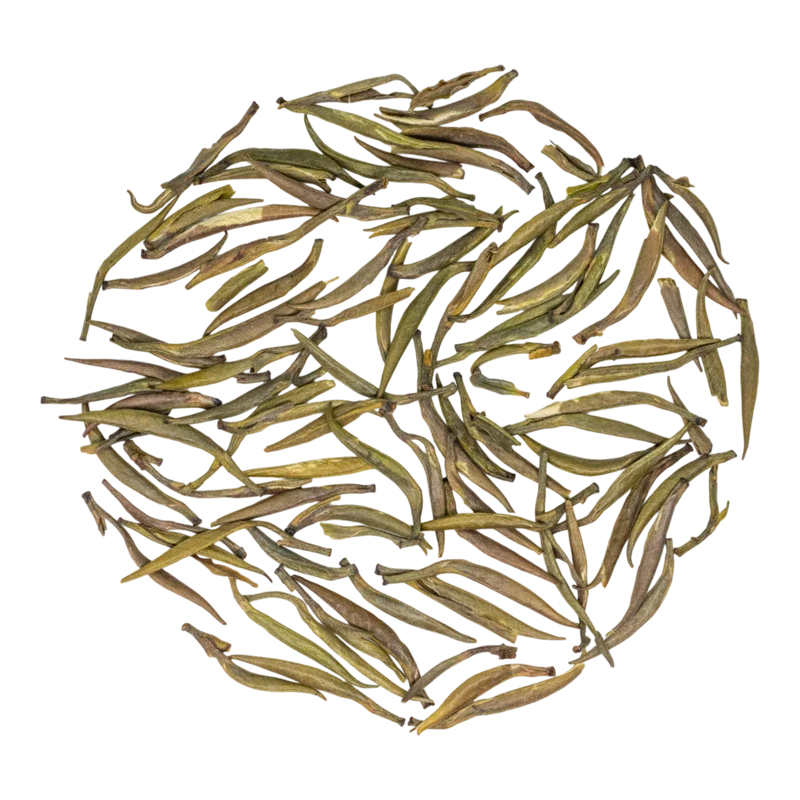
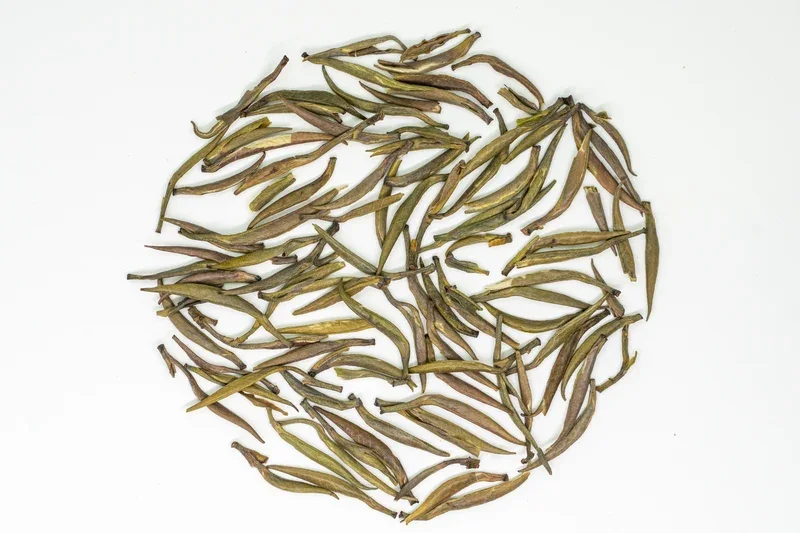
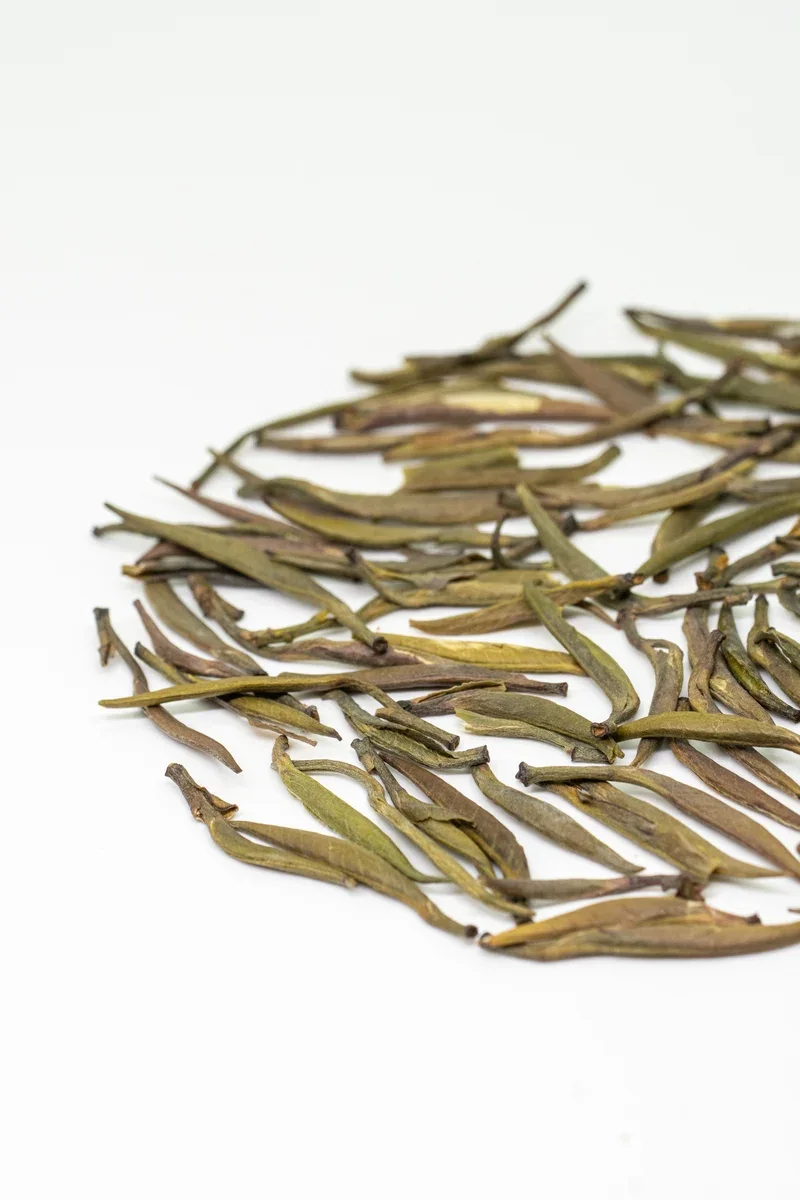
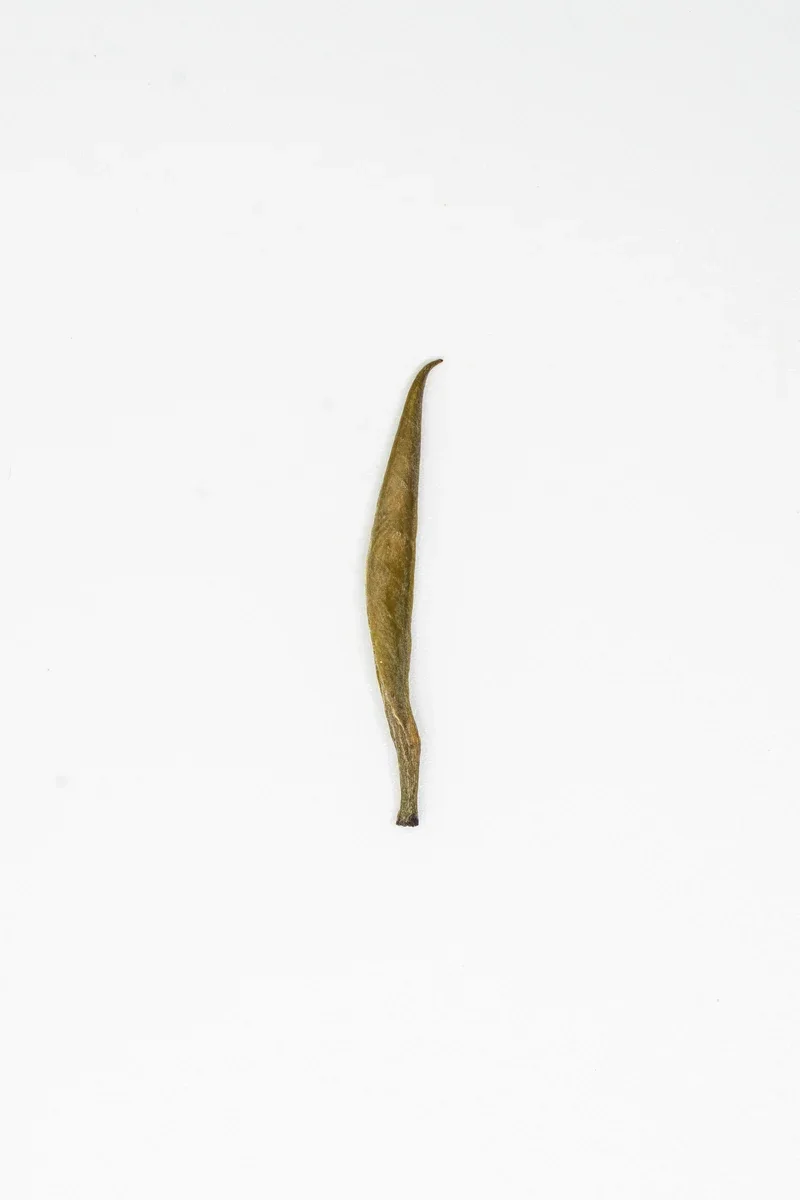
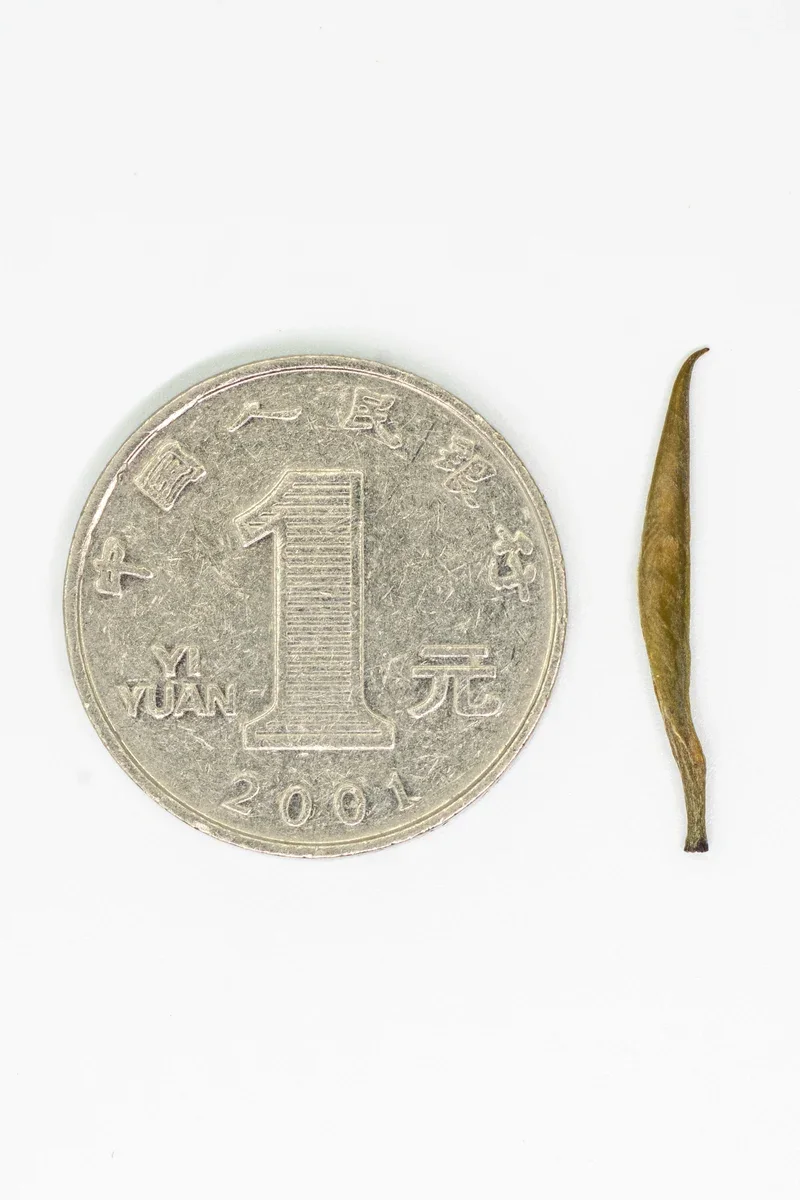
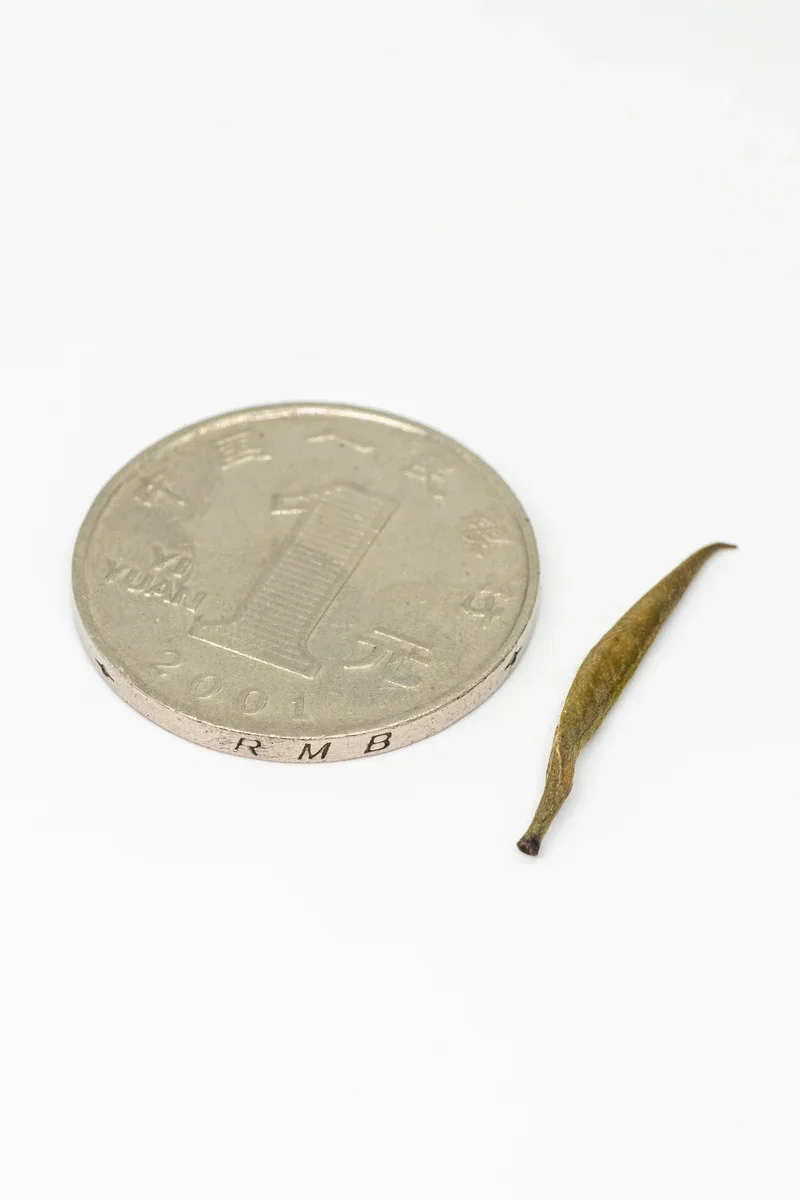
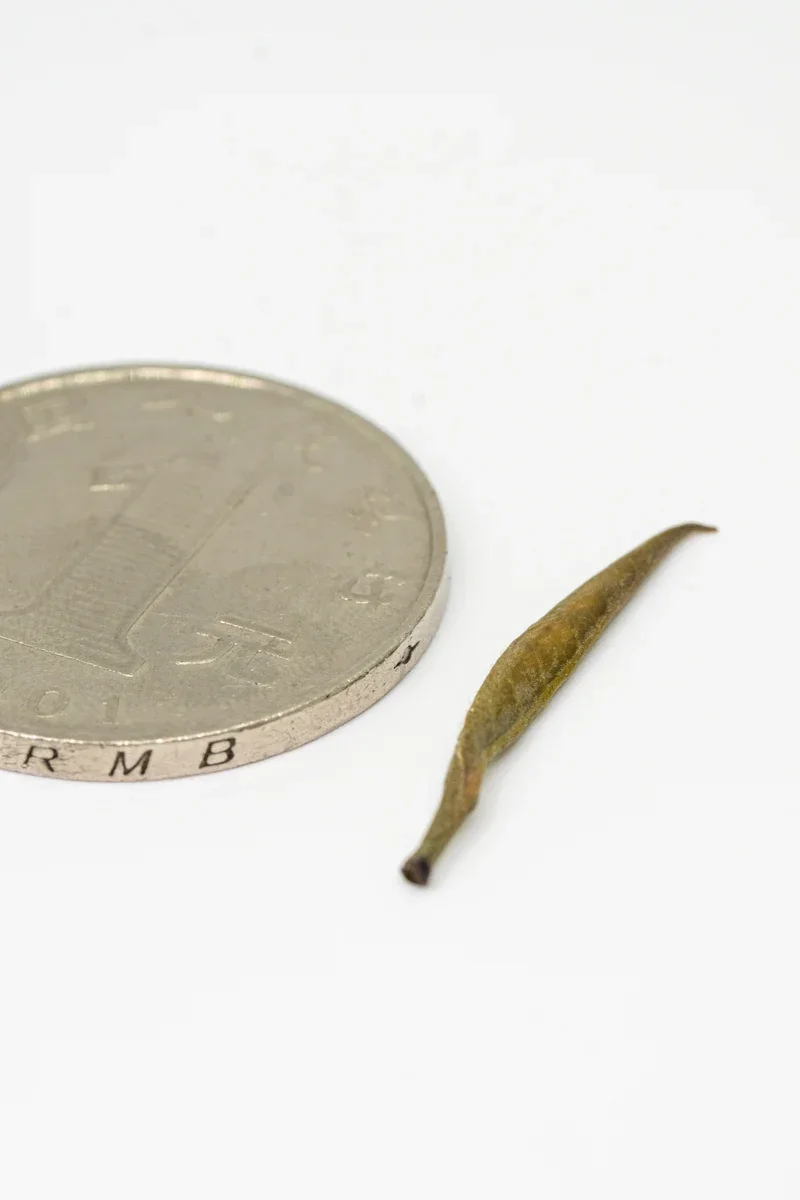
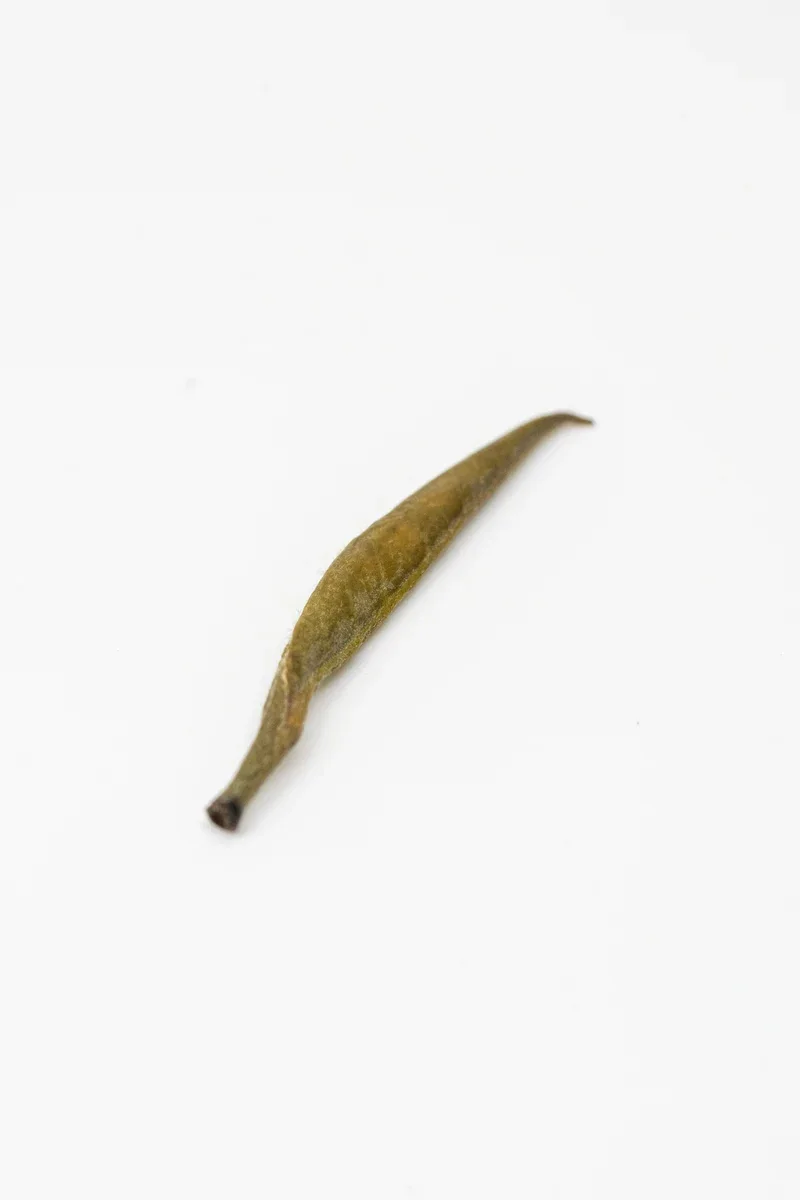
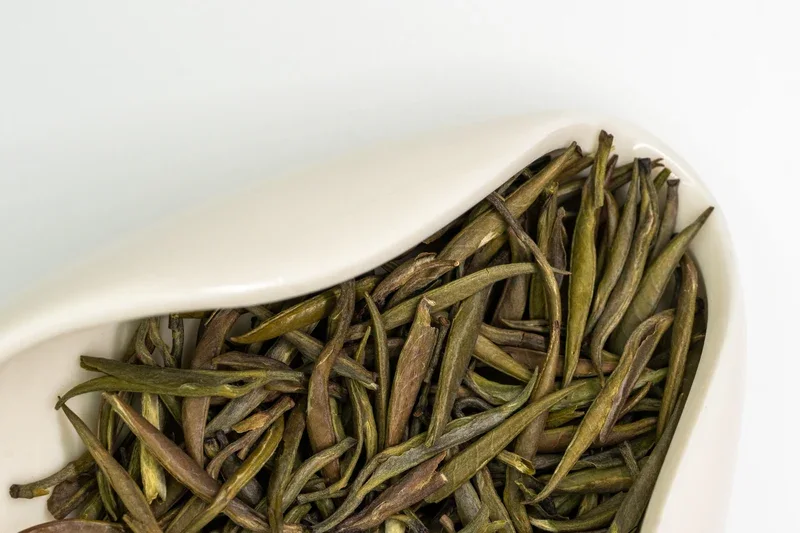
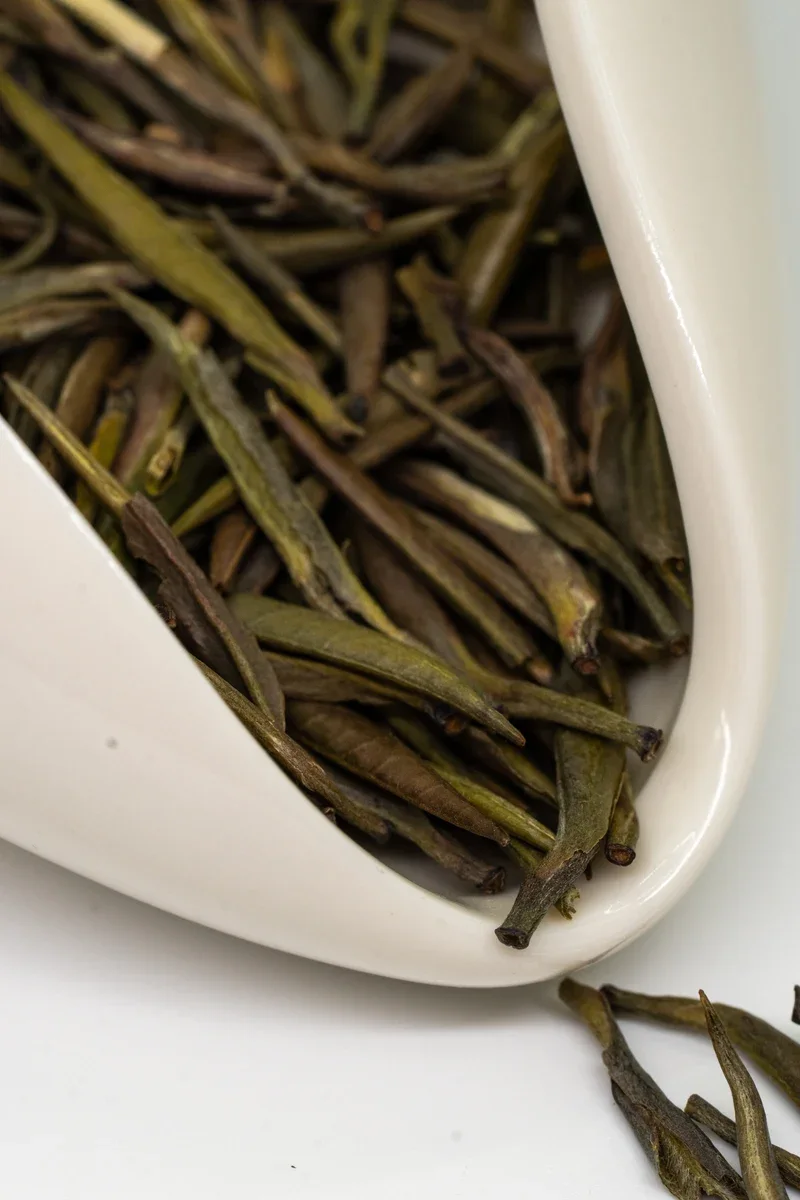
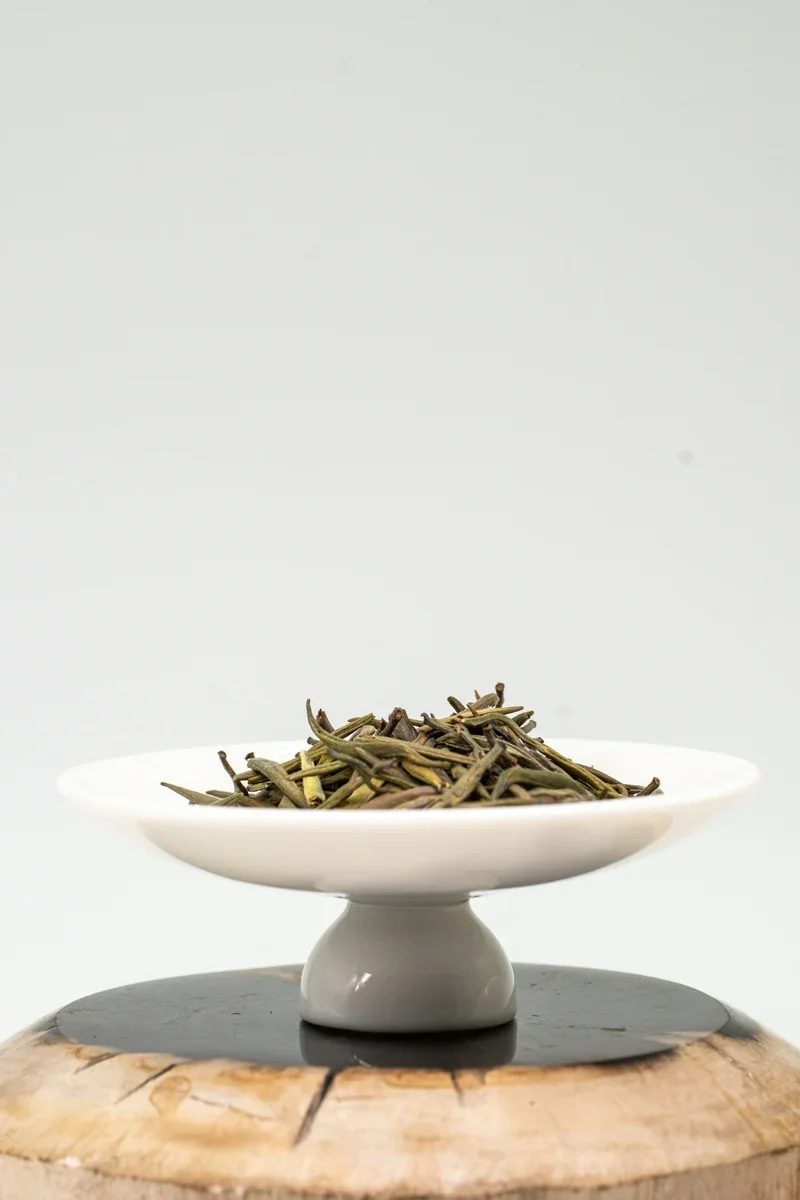
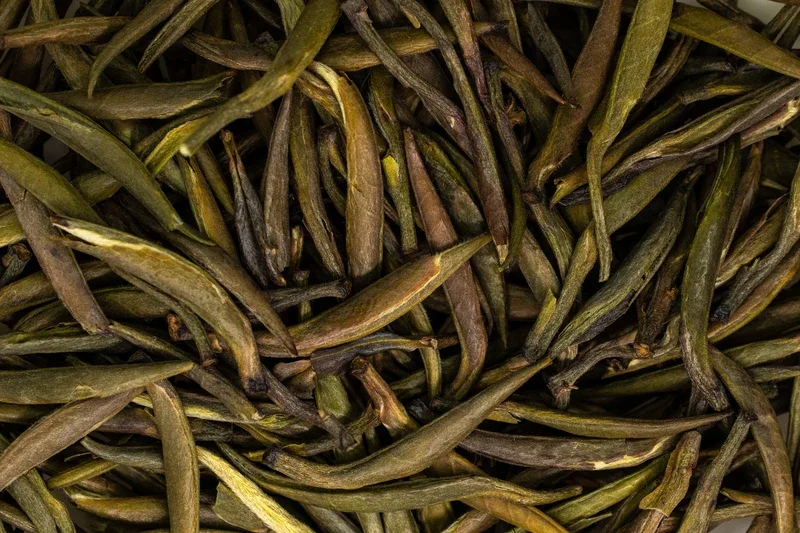
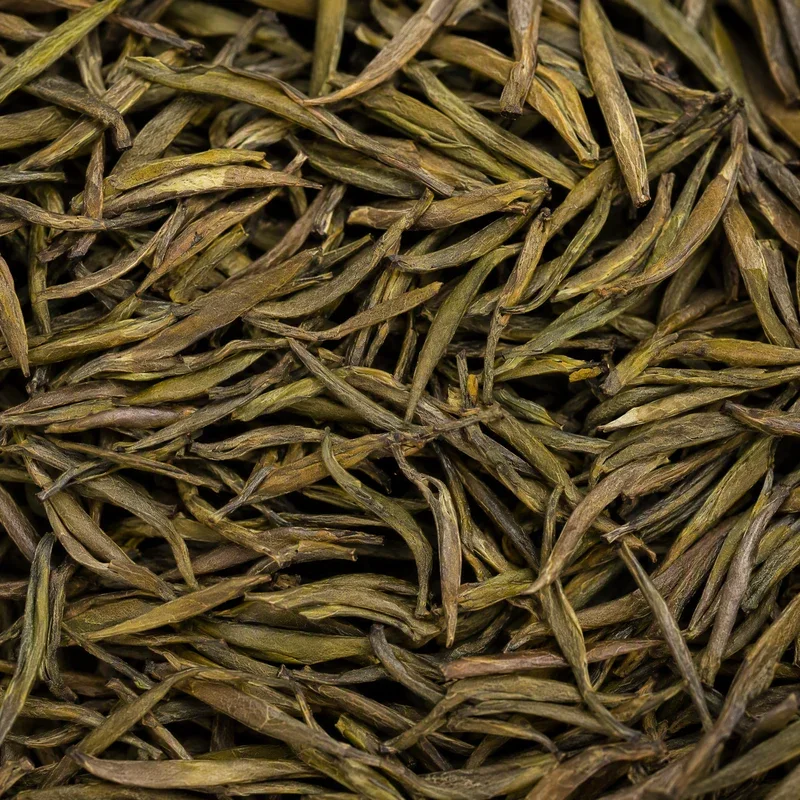
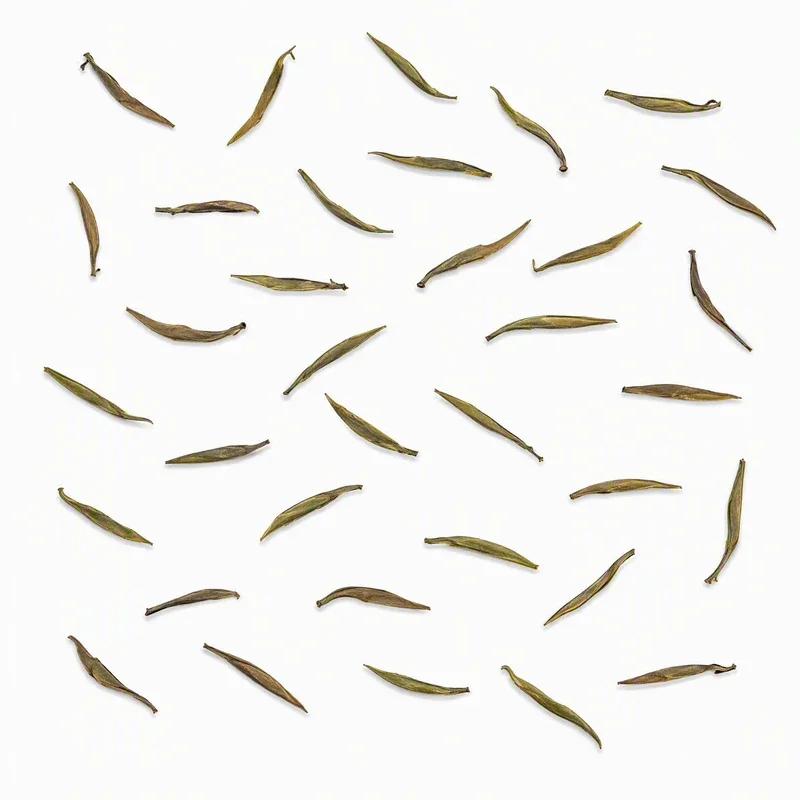
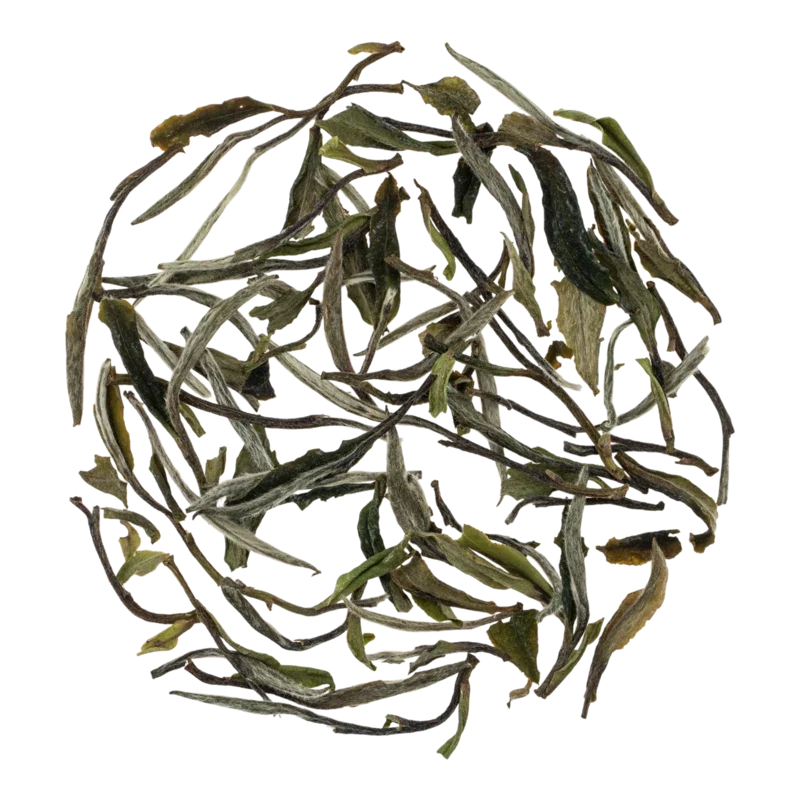
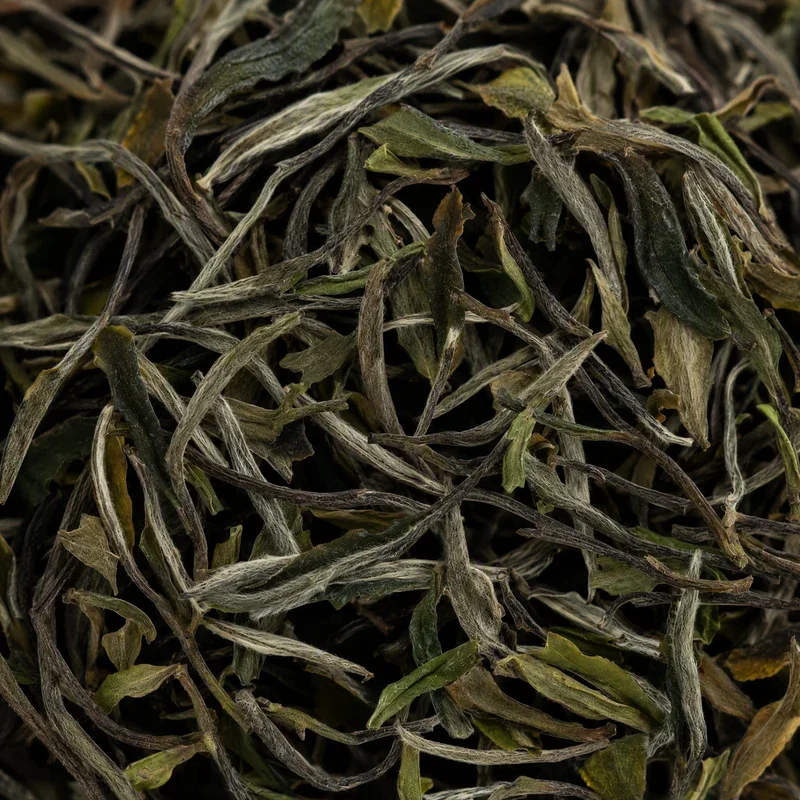
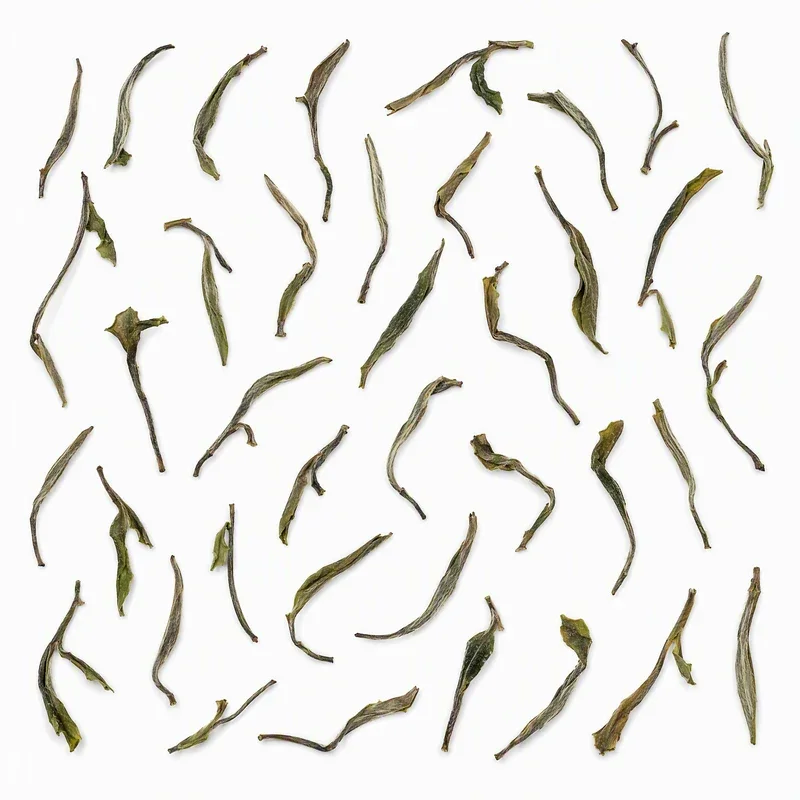
Dry Leaf Appearance: Slightly twisted, elongated strips (up to 5–7 cm) of olive-green or gray-green color, with pronounced silvery down on buds. The form is sometimes poetically described as "fuzzy blades" (毫锋, háo fēng). Leaf is whole, uniform, without broken fragments.
Dry Leaf Aroma: Fresh, grassy, with light floral notes and a barely perceptible toasted, nutty undertone characteristic of charcoal drying.
Liquor Aroma: Delicate, fresh, with predominant grassy-floral tones. In the second-third steeping, light notes of roasted seeds, chestnut, or corn emerge — a sign of Huizhou school processing.
Liquor Color: Clear, light yellow with a distinct greenish tint, sometimes compared to the color of light champagne. Bright, clean.
Spent Leaves: Whole, soft leaves and buds of bright green or olive color, well-preserving structure. Leaves unfold evenly, demonstrating raw material quality.
Taste: Mild, refreshing, slightly sweet. Main profile — grassy-nutty, with tones of hazelnut, roasted corn, and fresh greens. Astringency is moderate or weak, bitterness is absent. Liquor body is medium, texture smooth. Aftertaste is clean, refreshing, with a gentle returning sweetness (回甘, huígān).
Alkaloids: Caffeine — 2–3% dry weight. Due to the use of more mature leaves (compared to Mao Feng), caffeine content may be moderate. Theobromine and theophylline — in trace amounts.
Amino Acids: Elevated L-theanine content — approximately 2–3% dry weight, significantly higher than average for green teas. High L-theanine concentration is a direct consequence of diffused lighting and slow growth in cloudy conditions. L-theanine forms the sweetish, "umami"-like flavor note.
High content due to kill-green (shaqing), giving leaves and liquor their characteristic green tint.
Cis-3-hexenol and its esters (grassy notes), 2-acetylpyrrole and furfural (toasted notes from charcoal drying), linalool and its oxides (light floral notes).
Minerals: Potassium, fluorine, manganese, zinc. The granite soil base enriches the tea with trace elements.
Polyphenols: Total polyphenol content — 18–25% dry weight. Main catechin — EGCG (epigallocatechin-3-gallate), a powerful antioxidant. Due to the high-mountain misty terroir, catechin content in Yun Wu is somewhat lower than in lowland green teas, which accounts for the mildness of taste and reduced astringency.
Vitamins: Ascorbic acid (C), riboflavin (B₂), thiamine (B₁).
Green tea catechins (EGCG) effectively neutralize free radicals, protecting cells from oxidative damage.
Moderate caffeine content combined with high L-theanine levels provides a state of "calm alertness" — steady concentration without nervousness. This synergistic effect is described as "relaxed attentiveness" and is one of the most valuable qualities of high-mountain green teas.
Polyphenols stimulate digestive enzyme secretion, normalize metabolism, and promote fat breakdown.
Regular green tea consumption is associated with reduced LDL cholesterol levels, improved vascular elasticity, and blood pressure normalization.
Vitamin C and catechins support the body's protective functions and have antiviral activity.
L-theanine promotes alpha brain wave generation, improving concentration, learning, and creative thinking abilities.
Fluorine and catechins have antibacterial action, suppressing the growth of bacteria causing tooth decay.
Tea Amount: 3–5 g per 150–200 ml water.
Teaware: White porcelain gàiwǎn (盖碗, gàiwǎn) — a classic choice allowing aroma evaluation and steeping time control. Glass teapot or cup also suitable — through glass one can observe the "dance" of tea leaves in water. Porcelain teapot — for European-style brewing.
Water Temperature: 75–85°C. Boiling water damages delicate leaves and extracts excessive astringency.
Container: Airtight, opaque — tin can, vacuum foil bag, porcelain container with tight lid.
Enemies: Moisture, light, oxygen, foreign odors, elevated temperature.
Shelf Life: 12–18 months under proper conditions. Green tea does not improve with age; recommended consumption within one year of harvest for maximum freshness.
Temperature: Optimally — in refrigerator at 0–5°C, in airtight packaging, separate from strong-smelling products. Room temperature storage acceptable in cool room (not above 20°C).
Closest relative. Mao Feng uses younger, more tender raw material (one bud with one leaf), giving a lighter, more delicate taste with pronounced florality. Yun Wu, with its mature leaves, is fuller-bodied, with more pronounced nutty tones and "rustic" character. Mao Feng is more expensive and prestigious; Yun Wu is deeper and more "peasant-like."
Another famous yúnwù tea from Jiāngxī Province (江西, Jiāngxī). Grows on Mount Lúshān (庐山) — also a UNESCO World Heritage site. Compared to Huangshan Yun Wu, the Lushan variant usually has more pronounced grassy notes and denser liquor texture, related to different soil types and other bush varieties.
Green tea from Hénán Province (河南), also with pronounced silvery down. More small-leafed and pointed than Yun Wu; taste — with characteristic fresh "green" astringency and high aromatics.
Another great green tea of Huangshan, but with fundamentally different character: large flat leaves, dense "oily" taste with orchid notes. Yun Wu is its more modest but no less worthy mountain neighbor.
Price Category: Suspiciously low cost for tea of this class should raise concern.
Leaf should be whole, slightly twisted, with visible silvery down. Broken, dusty tea is a sign of low quality or substitution.
Fresh, grassy-nutty, without foreign odors (mustiness, mold, fishy tone). Artificially colored tea may have unnaturally bright green color.
Clear, light yellow-green. Cloudy, dark liquor is a warning sign.
Cheaper green teas from other regions are often sold as Huangshan Yun Wu. Purchase from verified suppliers, paying attention to specific production location (She County, Huangshan).
No reviews yet. Tell us what you think of this tea.
Rate this tea and share your impressions. We review each submission before publishing it.