Brewing
Gongfu brewing
- Water temperature
- 75 °C
- Tea amount
- 5 g
- Water volume
- 100 ml
- First steep
- 10 s
- Time added per infusion
- 5 s
- Infusions
- 3

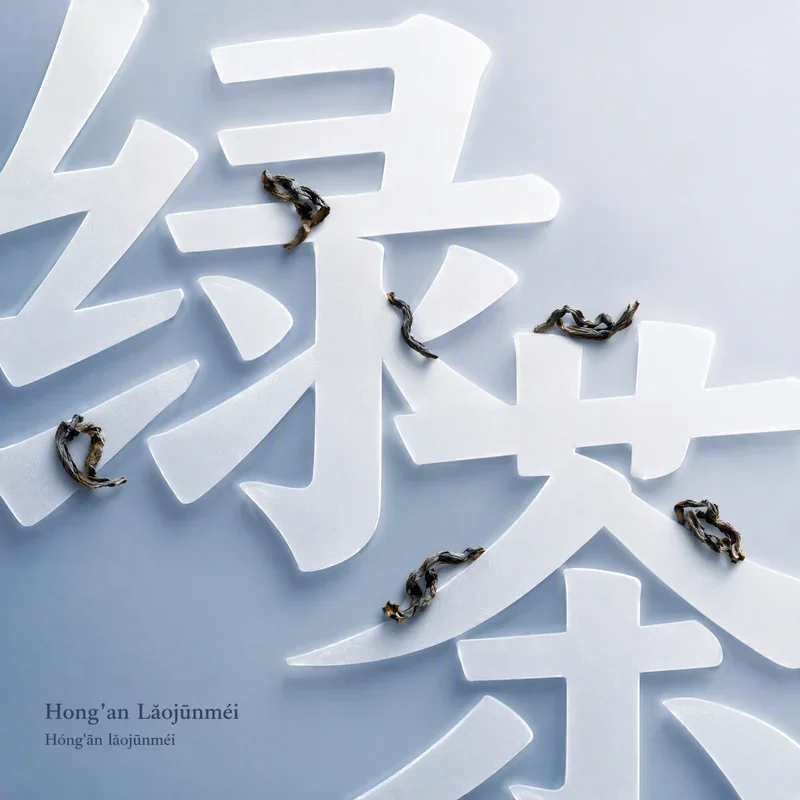
Hóng'ān lǎojūnméi
Choose a brewing method. Start with the recommended quantities and time, then adjust to taste.
Brewing
Brewing
Taste
Tea encyclopedia
Category: Hubei regional green teas; national geographical indication product.
Category: Hubei regional green teas; national geographical indication product.
Coordinates: approximately 31°20′ N, 114°40′ E.
Origin: China, Húběi Province (湖北省, Húběi shěng), Hong'an County (红安县, Hóng'ān xiàn). Production core: Huajiahe Township (华家河镇) — Laojun Mountain (老君山) and Jīnniú Mountain (金牛山); Qiliping Township (七里坪镇) — Tiāntái Mountain (天台山) and Ziyunzhai Ridge (紫云寨). These areas account for up to 90% of special grade production.
Type: Green tea (绿茶, lǜchá), unfermented, combined "hongshao" type (drying + pan-firing).
Cultural Significance: The tea occupies a dual cultural position: on one hand, it is associated with the refined literary tradition of "Honglou Meng," on the other — with the revolutionary history of Hong'an County, part of the "red base" of Dàbié Mountain (大别山革命老区). Hong'an County is known as the "birthplace of two hundred generals" — more than two hundred commanders of the People's Liberation Army of China were born here, and tea culture is perceived as part of local identity, connecting mountain lifestyle with revolutionary self-sufficiency. The combination of classical aesthetics with the image of "red earth" gives the brand unique marketing potential. The tea has repeatedly been awarded the status of "Hubei Famous Brand" (湖北名牌) and awards at international exhibitions, including the gold medal at the XVII China Food Exhibition (2008).
History: The name "Laojunmei" (老君眉, "Eyebrow of the Old Master," i.e., Laozi) first gained wide recognition through Cao Xueqin's (曹雪芹, Cáo Xuěqín) novel "Honglou Meng" (红楼梦, Hónglóu Mèng, "Dream of the Red Chamber"). In the forty-first chapter, a scene is described where the nun Miaoyu serves Mother Jia tea with the words: "This is Laojunmei." The question of the origin of the tea described in the novel remains a subject of debate: some researchers connect it with white tea Jūnshān Yínzhēn (君山银针) from Junshan Island in Dongting Lake (Hunan), others with a named bush of Wǔyí rock teas (武夷岩茶) from Fujian, mentioned in Qing sources "Minchang Yilu" (闽产录异) and "Chongzuan Guangze Xianzhi" (重篡光泽县志). The modern Hubei Laojunmei, however, is a separate product created in a completely different region using different technology. Its connection to the literary prototype is cultural-associative rather than directly historical in nature.
Name Breakdown: 红安 (Hóng'ān) — "Red Peace," the name of the county famous as the birthplace of many figures of the Chinese revolution. 老君 (Lǎojūn) — "Old Master," a respectful designation for Lǎozǐ (老子), founder of Taoism. 眉 (méi) — "eyebrow," indicating the characteristic shape of tea leaves resembling a thin, elegantly curved eyebrow.
Plantations are located in a zone with 100% prohibition on chemical pesticides; biological control is used for pest management — particularly ladybugs (瓢虫, piáochóng) for aphid suppression. Water supply — mountain springs meeting national category I standards.
Cultivar: The raw material base consists mainly of local group varieties (当地群体种, dāngdì qúntǐ zhǒng) — predominantly tree-type (乔木型) original populations with thick leaf blades and polyphenol content ≥28%, well-suited for producing rich green teas. To improve seedling uniformity and down density, clonal varieties of Camellia sinensis var. sinensis have also been introduced to plantations: Longjing 43 (龙井43, Lóngjǐng 43) and Bái Háo Zǎo (白毫早, Báiháo Zǎo).
Picking: Main picking — early spring; highest quality is ensured by raw material picked before the Qīngmíng festival (明前茶, míngqián chá). Special grade standard: whole bud or one bud with one leaf at initial opening stage.
Pluck Standard: Special grade — whole bud or one bud with one leaf (≥90% buds); first grade — one bud with one leaf; second grade — one bud with two leaves.
Altitude: 400–800 m above sea level.
Soil: Slightly acidic yellow-brown soils (黄棕壤, huáng zōng rǎng), pH 4.0–6.5, organic matter content ≥15 g/kg. Soils are rich in zinc and selenium, which is reflected in the tea's mineral composition.
Southern macroslope of the Dàbié Mountain range (大别山, Dàbié Shān). Average annual temperature — 15.7°C, daily temperature variation exceeds 10°C, annual precipitation — over 1,200 mm. Number of foggy days — over 150, proportion of diffused light — over 70%. Significant day-night temperature variation slows sugar consumption for respiration and promotes their accumulation in leaves, forming pronounced taste sweetness.
Forest coverage around tea plantations reaches 98% — one of the highest indicators among China's tea regions. Tea gardens are interspersed with forest massifs, creating a natural barrier against pollution. Plantations are located on steep mountain slopes with good drainage, where tea bush root systems penetrate deep into mineralized rocks, enriching leaves with microelements. Spring waters feeding the plantations meet national category I standards, which is a necessary condition for maintaining purity of flavor profile. Mountain topography also provides natural ventilation, reducing the risk of fungal diseases and allowing operation without chemical fungicides.
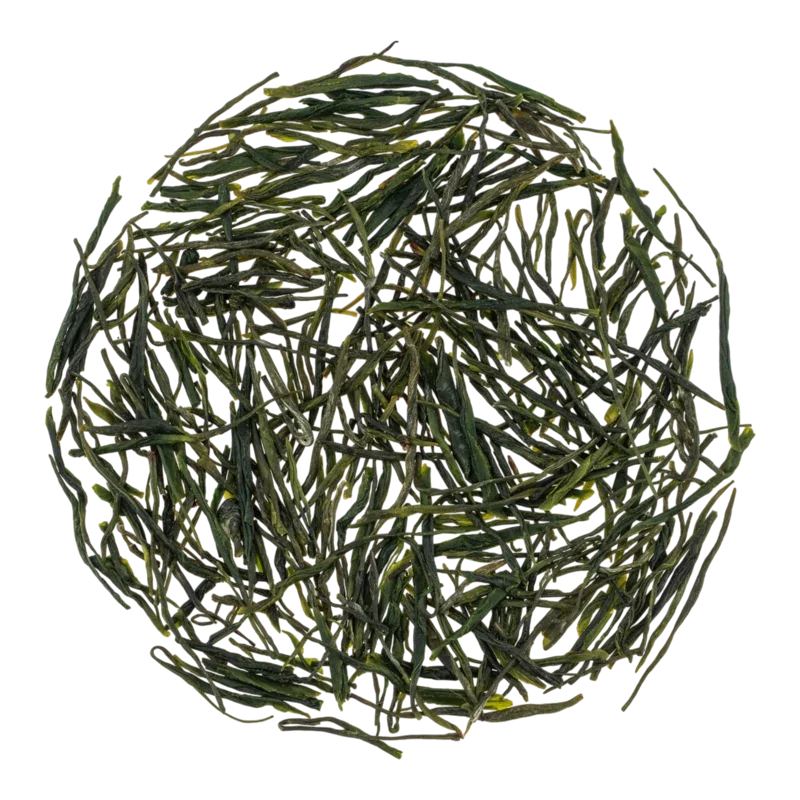
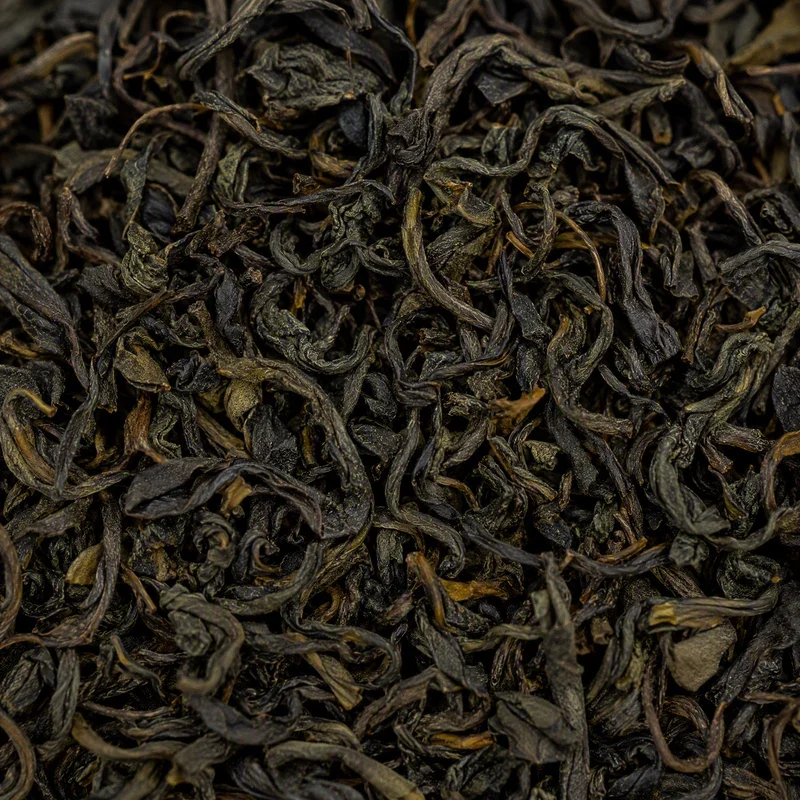
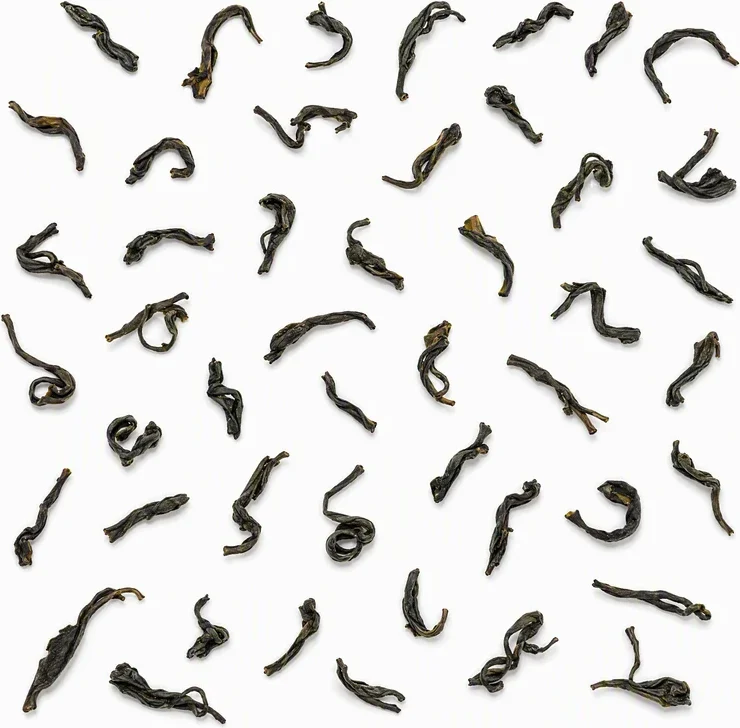
Dry Leaf Appearance: Tea leaves are thin, tight, straight, round in cross-section (条索紧细圆直), resembling an elegant eyebrow (似眉形). White down is clearly visible; color — dark green with silvery sheen.
Dry Leaf Aroma: Chestnut (栗香, lì xiāng) as the main tone, with delicate notes of young tea leaf (嫩香, nèn xiāng) and light floral accent in special grade. Aroma on cold cup persists for more than 5 minutes.
Liquor Aroma: Clean, persistent, with chestnut dominance and deep green base. As it cools, subtle floral overtones unfold.
Liquor Color: Emerald green (翠绿), transparent and bright (清澈明亮).
Spent Leaves: Tender green, uniform, soft; leaves open in "flowers" (成朵), demonstrating raw material integrity.
Taste: Dense and rich (醇厚, chún hòu) due to high polyphenol content; fresh (鲜爽, xiān shuǎng) due to amino acids; distinctly sweet (甘甜, gān tián) with pronounced returning sweetness (huí gān). Balance between full-bodied character and freshness is the main taste virtue of this tea.
Alkaloids: Caffeine, theobromine, theophylline — standard set providing invigorating effect.
Amino Acids: Significant content due to mountain climate with large temperature variations; form freshness and sweetness.
High content due to mountain terroir; participate in forming returning sweetness (huí gān).
Zinc and selenium — result of mineralization of yellow-brown soils of Dabie Mountain range.
Present in noticeable quantities; may contribute to slowing glucose absorption.
Essential Oils: Chestnut and delicate floral aromatic components, fixed at the charcoal drying stage. Precisely charcoal "aroma sealing" (炭火锁香) is considered critical for forming the characteristic persistent chestnut tone that distinguishes Hong'an Laojunmei from most Hubei green teas processed with electric heating.
Polyphenols: ≥28% — comparatively high indicator for green tea from medium-leaf raw material; ensures richness and "body" of taste, as well as powerful antioxidant activity.
Vitamins: Vitamin C (significant content in spring raw material), B group, vitamin K.
Neutral or slightly acidic spring water; alkaline water is undesirable as it suppresses chestnut aroma.
Not recommended on empty stomach — high tannin content may irritate gastric mucosa. Optimal time — one hour after meals. Daily norm — no more than 600 ml (to avoid excessive caffeine consumption). When taking iron-containing preparations, maintain a pause of at least one hour between medication and tea drinking, as tannins may reduce iron absorption.
Tea Amount: 3 g per 150 ml (1:50 ratio).
Teaware: Glass tumbler for observing "leaf dance" (观茶舞, guān chá wǔ); white porcelain gaiwan for aroma concentration (聚香, jù xiāng).
Water Temperature: 80–85°C (boiling water cooled for about 90 seconds). For special grade, 80°C is recommended.
Container: Airtight packaging, protection from light, foreign odors and moisture.
Store in refrigerator in tightly closed container, consume within 4–6 weeks.
Before opening, packaging removed from refrigerator must be brought to room temperature in closed form to avoid condensation.
Temperature: 0–5°C (refrigerator); shelf life — 12 months under proper conditions.
Hubei Province (Enshi). One of the few Chinese green teas fixed with steam (蒸青, zhēng qīng) using Japanese method. Needle-shaped form, bright green color, taste with pronounced umami. Fundamentally different technological approach — steam fixation versus wok pan-firing in Laojunmei.
Anhui Province. Famous green tea mentioned in the same chapter of "Honglou Meng." Unique in being produced exclusively from leaf blades without buds and petioles. Shape — flat "seeds"; aroma — chestnut with nuances of roasted nuts. Taste more astringent and dense than Laojunmei.
Anhui Province (Dabie Mountain). Neighbor along Dabie Mountain range, but on the Anhui side. Name also contains the character "eyebrow" (眉). Thin needle-shaped form, emerald color, aroma delicate and floral. Tea less dense in taste, with lower polyphenol content.
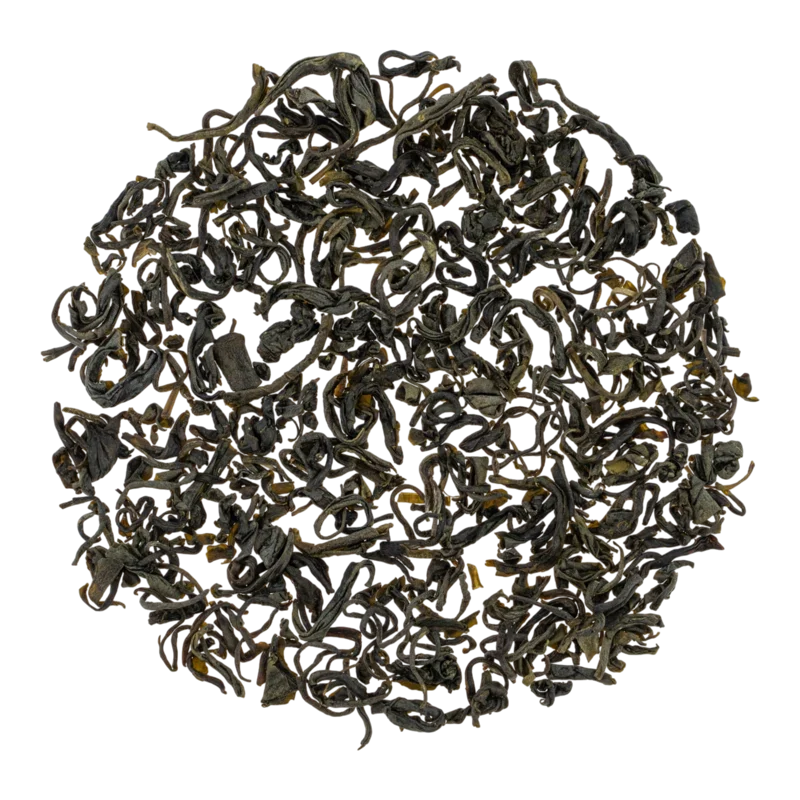
Hubei Province (Yingshan). Another Hubei mountain green tea from the Dabie Mountain region, but rolled into balls ("pearls"), not straight. Taste mild, aroma — light floral; significantly less astringent than Laojunmei.
Special grade (whole bud) — 800–1,000 yuan/jin; first grade — 300–500 yuan/jin (loose); second grade — from 160 yuan/jin.
Price Factors: Picking season (mingqian twice as expensive as yuqian), plantation area (Laojun Mountain and Tiantai Mountain — premium), manual or machine labor.
No reviews yet. Tell us what you think of this tea.
Rate this tea and share your impressions. We review each submission before publishing it.