Brewing
Gongfu brewing
- Water temperature
- 75 °C
- Tea amount
- 5 g
- Water volume
- 100 ml
- First steep
- 10 s
- Time added per infusion
- 5 s
- Infusions
- 3

Guìzhōu lùzhū
Choose a brewing method. Start with the recommended quantities and time, then adjust to taste.
Brewing
Brewing
Taste
Tea encyclopedia
Category: Organic premium green tea (有机名优绿茶, yǒujī míngyōu lǜchá). Certified organic production.
Category: Organic premium green tea (有机名优绿茶, yǒujī míngyōu lǜchá). Certified organic production.
Coordinates: Approximately 26°30′ N, 107°00′ E. Plantation altitude — approximately 1300 meters above sea level.
Origin: Màodòng locality (茂栋, Màodòng), Guìzhōu Province (贵州, Guìzhōu), Southwest China.
Type: Green tea (绿茶) (non-oxidized, oxidation degree <5%). Fixation method — steaming (蒸青, zhēngqīng) at ~120°C.
Cultural Significance: "Lu Zhu" symbolizes Guizhou's transformation from a forgotten tea region into the "organic capital" of Chinese tea. It demonstrates how a province long perceived as a poor mountain periphery turned its main "disadvantages" (high altitude, remoteness, absence of industry) into competitive advantages: clean ecology, unpolluted soils, unique mountain terroir. For the international market, "Lu Zhu" represents the category of "clean" (干净茶, gānjìng chá) Guizhou teas — products with confirmed low content of residual agrochemicals.
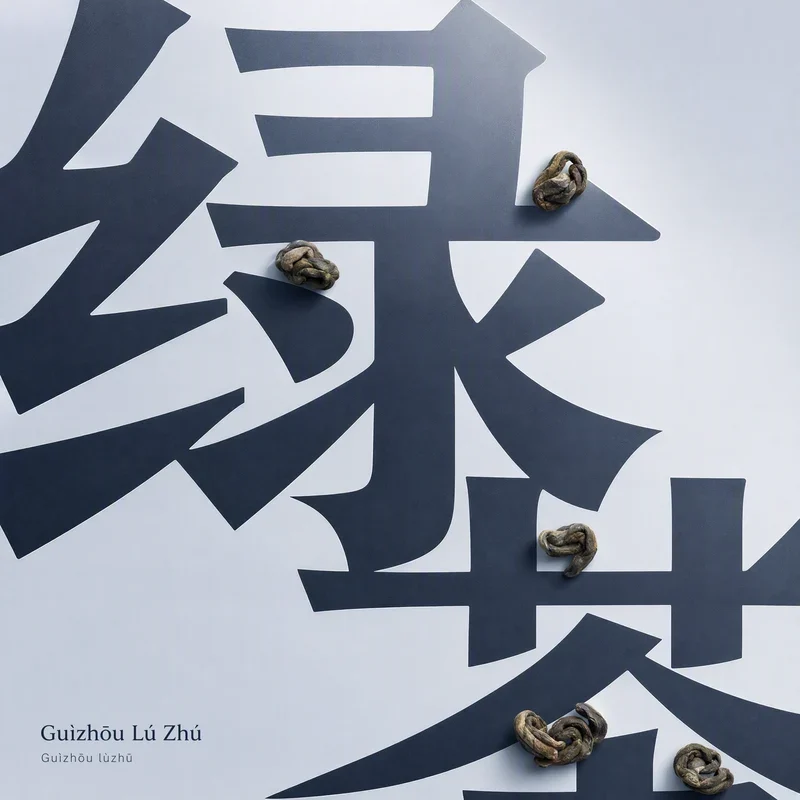
Name Breakdown: "Lu Zhu" (露珠) — "Dew Drops" or "Dewdrops." The name refers to the image of mountain dew on tea leaves — a typical scene of early morning on Guizhou's high-altitude plantations, where fog and dew persist until midday. English commercial name — "Dew Drops." Full designation: "Guizhou Dew Drops Green Tea."
Cultivar: Camellia sinensis var. sinensis. Cultivar — Fúdǐng Xiǎo Bái (福鼎小白, Fúdǐng Xiǎobái), a small-leaf variety genetically related to tea varieties from Fúdǐng County (福鼎) in Fujian Province — the birthplace of famous white teas. Fuding Xiao Bai is one of the "younger" representatives of the Fuding group (alongside Fuding Da Bai / 福鼎大白 and Fuding Da Hao / 福鼎大毫). Characterized by compact bushes, small leaves with fine texture and delicate white down on buds.
Picking: Hand-picking in early spring (April, before or shortly after Qingming / 清明). Standard — unopened bud and one-two upper leaves (一芽一叶 / 一芽二叶). Exclusively certified organic raw material.
Raw Material: Whole, undamaged, tender young shoots with high aromatic compound content. Immediate delivery to factory to prevent onset of oxidation. Careful sorting before processing.
Altitude: 1300 meters above sea level — significantly higher than most famous Chinese green teas (Longjing — 200–400 m, Biluochun — 200–350 m, Huangshan Maofeng — 700–800 m).
Climate: High-altitude subtropical, with characteristics "高海拔、低纬度、寡日照、多云雾" — "high altitude, low latitude, little sunshine, many clouds and fogs." Significant daily temperature fluctuations (10–15°C), high humidity, frequent fogs. These conditions slow tea shoot growth, increasing accumulation of L-theanine, sugars and aromatic substances.
Soil: Red earth (红壤, hóng rǎng) soils developed on karst limestones, rich in minerals. Special value — increased content of selenium (Se) and zinc (Zn), characteristic of many Guizhou soils. Selenium is an important antioxidant microelement; its natural presence in soil transfers to tea leaves, creating additional nutraceutical value.
Māodòng (茂栋), Guizhou Province. Guizhou is the only Chinese province combining high latitude (relative to the tropics), high elevation (average — 1100 m) and minimal industrial burden. Mountain terrain occupies 92.5% of the territory, making the province "mountainous" by definition.
Strict adherence to organic farming standards. Prohibition of synthetic pesticides and fertilizers.
Application of bamboo charcoal (竹炭, zhútan) solution spraying for fungal disease prevention — instead of chemical fungicides.
Traditional Guizhou model where tea rows are interspersed with trees (tung, camphor, bamboo). Trees create natural shade, wind protection and maintain biodiversity (environment for predatory insects — natural enemies of pests).
System developed by Guizhou University under academician Song Bao'an (宋宝安), including methods "grass suppresses grass" (以草抑草), "insect destroys insect" (以虫治虫), "fungus defeats fungus" (以菌克菌).
Careful hand-picking of young shoots in early spring.
Rapid steaming at high temperature (~120°C). Steam inactivates enzymes (polyphenol oxidase), stopping oxidation and preserving green color, chlorophyll and fresh aroma. Temperature 120°C — lower than wok-firing (150–200°C), but higher than Japanese steaming (95–100°C), creating an intermediate aromatic profile: less "marine" than Japanese, but more "fresh" than pan-fired.
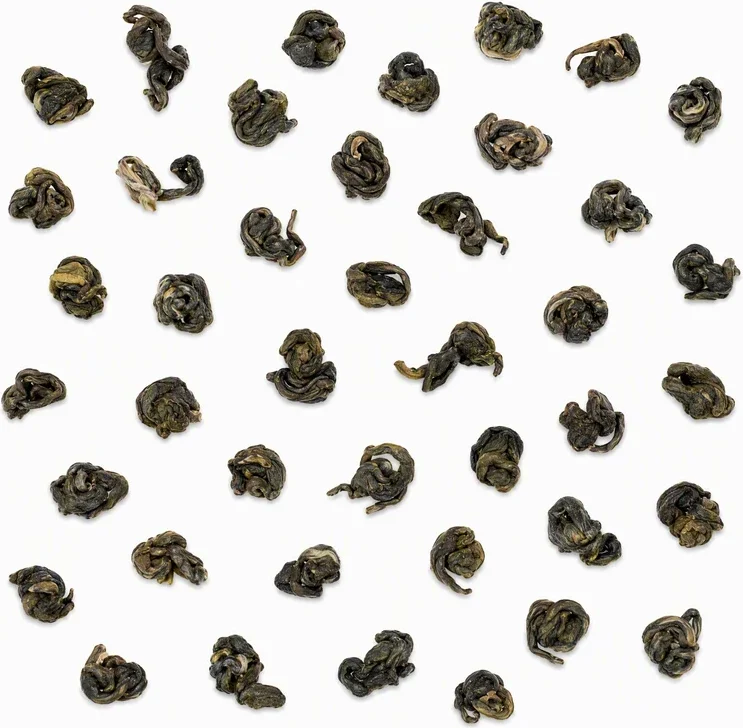
Mechanical rolling in rollers to impart characteristic spiral shape and break cell walls. Small leaves of Fuding Xiao Bai roll into tight, neat spirals.
Final drying, often using infrared technologies (红外线干燥, hóngwàixiàn gānzào), for even and gentle moisture removal to <5% level. Infrared drying preserves color brightness and volatile aromatic compounds.
Finished tea is sorted by quality and uniformity.
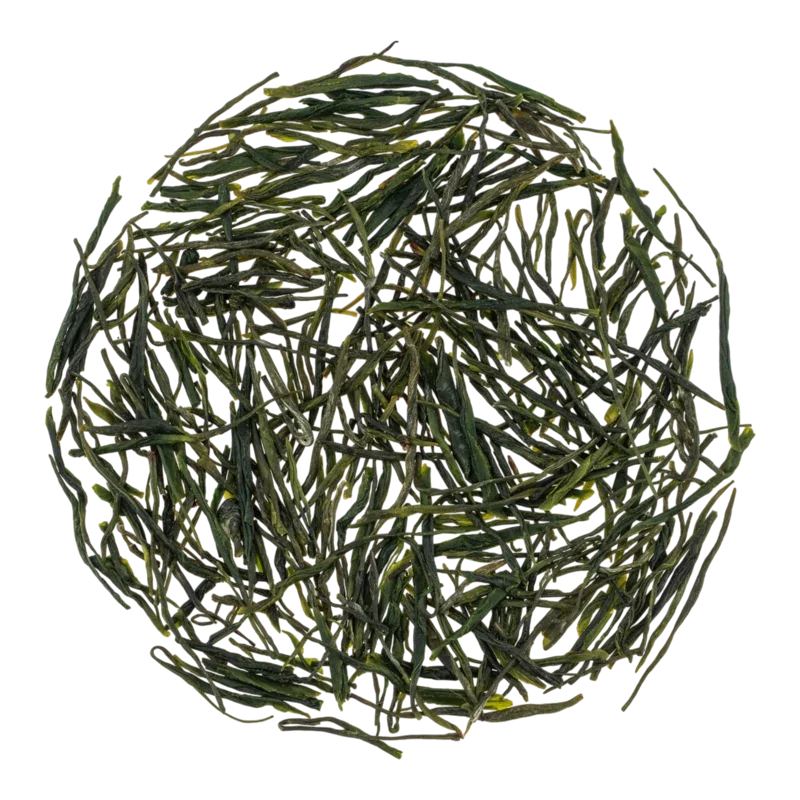
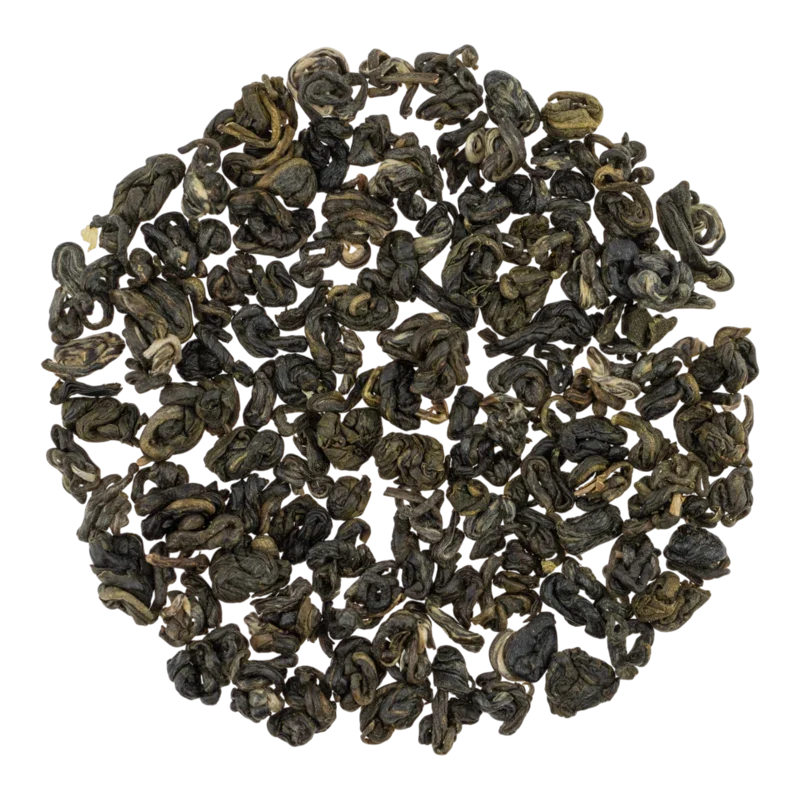
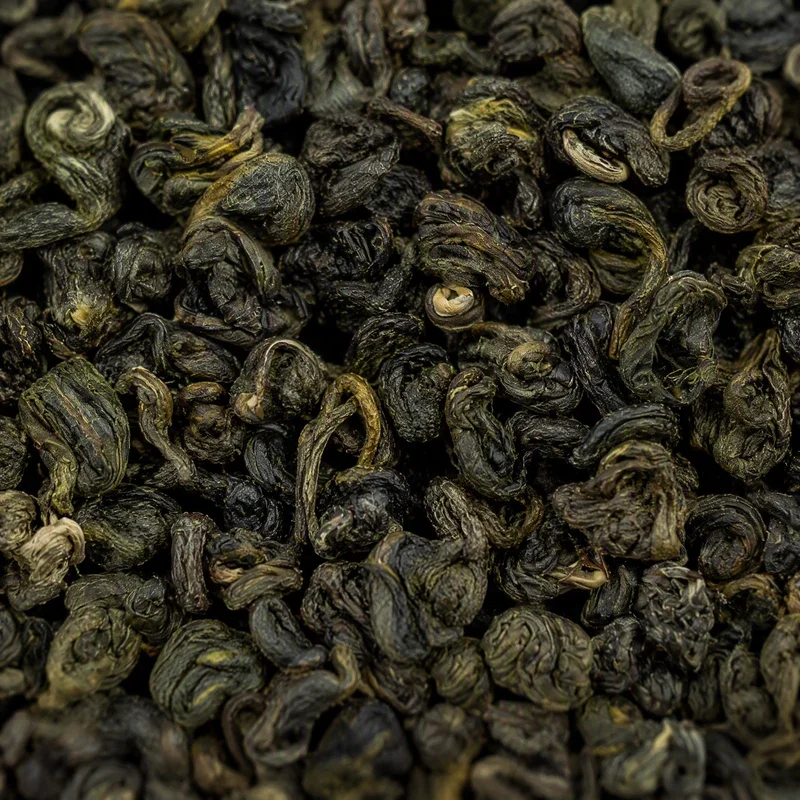
Dry Leaf Appearance: Neatly twisted spirals of dark emerald color, resembling dew drops (hence the name). Dense, uniform, with light silvery down on buds — heritage of the Fuding Xiao Bai cultivar.
Dry Leaf Aroma: Fresh, bright, with pronounced floral (jasmine, white acacia) and citrus (lime, pomelo, bergamot) notes — an unusual profile for green tea, due to the combination of Fuding cultivar and high-altitude terroir.
Liquor Aroma: Develops and deepens the floral-citrus theme of dry leaf, complementing it with light almond and honey nuances. Subtle "mineral" undertone — reflection of karst soils.
Liquor Color: Clear, golden-green (黄绿色, huánglǜsè), bright. Warmer tone than typical pan-fired green teas — influence of steam fixation.
Spent Leaves: Tender, whole buds and young leaves, evenly opened, light green color.
Taste: Smooth, soft, without bitterness when properly brewed. Main notes: sweetish fresh grass, lemon, light mint, creamy-nutty tones. Aftertaste — refreshing, slightly astringent, with mineral "tail" and sensation of "cleanliness" in the mouth.
Alkaloids: Caffeine — approximately 3% dry mass. Moderate, mild tonic effect.
Amino Acids: L-theanine — approximately 2% dry mass. Increased content due to high altitude (1300 m), slow growth and spring harvesting.
Minerals: Due to features of red earth karst soils, the tea is enriched with selenium (Se) and zinc (Zn) — microelements with antioxidant and immunomodulating properties. This is a distinctive feature of Guizhou teas, related to regional geology.
Polyphenols: High content, with EGCG (epigallocatechin gallate) dominance — approximately 85 mg/g dry mass. Steam fixation effectively preserves catechins.
Vitamins: Vitamin C (preserved thanks to steam fixation), B-group vitamins.
High EGCG concentration (ORAC value — approximately 1250 μmol TE/g) provides powerful free radical neutralization.
Natural selenium content — additional antioxidant and immune-supporting factor, absent in most green teas from other regions.
L-theanine and caffeine synergy promotes concentration and mental clarity without anxiety.
Catechins and caffeine contribute to metabolism acceleration. In vitro studies indicate ability to inhibit alpha-glucosidase, which may be useful for blood sugar level control.
Absence of synthetic pesticide and fertilizer residues (confirmed by certification) — important factor for consumers concerned about tea product safety.
2 g per 200 ml at 75°C, steep 2–3 minutes. Suitable for daily tea drinking.
Tea Amount: 3 g per 150 ml water (or 1 g per 50 ml for flash steeping method).
Teaware: Porcelain gàiwǎn (盖碗), glass teapot or glass cup. Glass allows observation of golden-green liquor color and spiral opening.
Water Temperature: 75°C (±3°C). Not boiling water — let water cool after boiling. Soft, filtered or spring water.
Famous Guizhou green tea, one of "China's Ten Great Teas" (1982 version). Produced from local small-leaf cultivars in Duyun area (Qiannan). Pan-fired (炒青). Aroma — chestnut-grassy, classic for Chinese pan-fired green teas. Taste — rich, with light sweetness and moderate astringency. "Lu Zhu" differs with citrus-floral profile (instead of chestnut), steam fixation (instead of pan-firing) and emphasized organic purity.
Another prestigious Guizhou tea from Meitan area (Zunyi). Flat leaves resembling Longjing. Pan-fired. Aroma — "嫩栗香" (young chestnut aroma), characteristic of "Guizhou Lu Cha." Taste — dense, refreshing. "Lu Zhu" is softer, more delicate, with citrus notes and less body density; closer to floral register.
Green tea from Guangxi, also produced from Fuding cultivar (Fuding Da Bai Hao), but pan-fired. Aroma — tropical fruits (mango), light acidity. Taste — sweetish, with almond aftertaste. Both teas are examples of "cross-regional" use of Fuding cultivars, but differ in fixation method (steam vs. pan-firing) and, accordingly, aromatic profile.
Steamed green tea from Hubei. Fixation method is similar (steam), but cultivar, terroir and altitude differ. Enshi Yu Lu is more "dewy," with chestnut notes; "Lu Zhu" is more citrusy and mineral.
No reviews yet. Tell us what you think of this tea.
Rate this tea and share your impressions. We review each submission before publishing it.