Brewing
Gongfu brewing
- Water temperature
- 75 °C
- Tea amount
- 5 g
- Water volume
- 100 ml
- First steep
- 10 s
- Time added per infusion
- 5 s
- Infusions
- 3

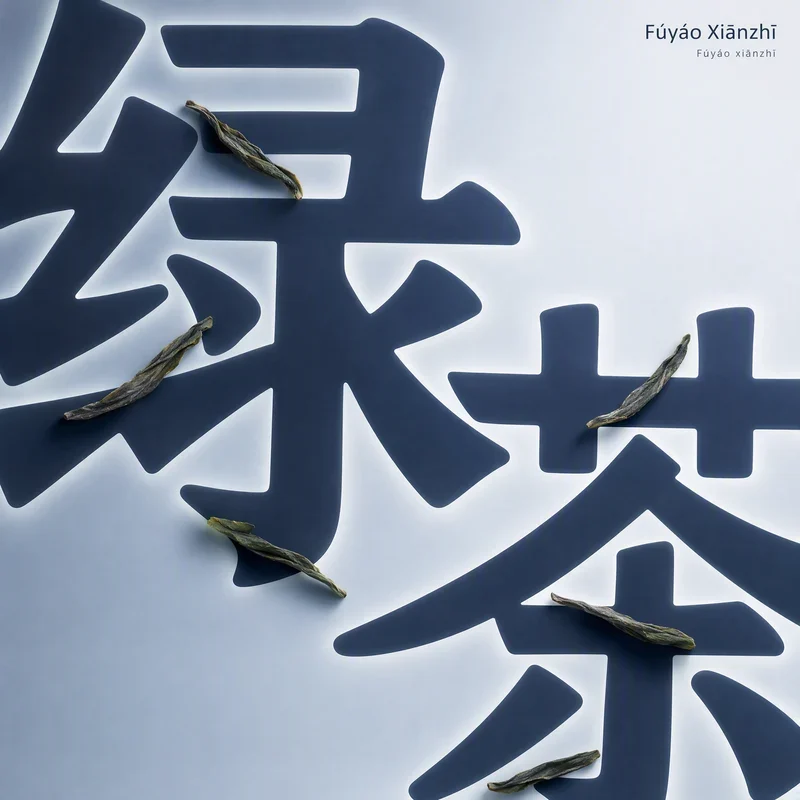
Fúyáo xiānzhī
Choose a brewing method. Start with the recommended quantities and time, then adjust to taste.
Brewing
Brewing
Taste
Tea encyclopedia
Category: Regional famous tea (名茶, míngchá). The Fúliáng Chá (浮梁茶) brand received agricultural geographical indication status (农产品地理标志) from the Ministry of Agriculture of the PRC in 2010. Fuyao Xianzhi is one of the leading products under this "umbrella" brand; in 2003 it was selected by the State Council of the PRC as a special gift tea (特选礼品茶).
Category: Regional famous tea (名茶, míngchá). The Fúliáng Chá (浮梁茶) brand received agricultural geographical indication status (农产品地理标志) from the Ministry of Agriculture of the PRC in 2010. Fuyao Xianzhi is one of the leading products under this "umbrella" brand; in 2003 it was selected by the State Council of the PRC as a special gift tea (特选礼品茶).
Coordinates: Approximately 29.35° N, 117.23° E (reference point for Fuliang County).
Origin: China, Jiāngxī Province (江西省, Jiāngxī Shěng), Jingdezhen Prefecture-level City (景德镇市, Jǐngdézhèn Shì), Fúliáng County (浮梁县, Fúliáng Xiàn). Tea gardens are located predominantly in mountainous and hilly areas, comprising more than 70% of the county's territory, centered in Yáolǐ Township (瑶里镇), Xīhú (西湖) and adjacent mountain zones.
Type: Green tea (non-oxidized, 绿茶, lǜchá). By technology — baked (烘青) with final light drying over slow fire (文火轻烤).
Cultural Significance: Fuliang is inseparably linked with two greatest symbols of Chinese culture — tea and porcelain. Historic Jǐngdézhèn (景德镇), the "porcelain capital of the world," was originally part of Fuliang; the county rightfully bears the title "source of the porcelain capital, land of the tea state" (瓷都之源,茶国之地). This unity of "porcelain and tea" (瓷茶一体) originated as early as the Han. It is part of the "four greens" (四绿) — alongside Lúshān Yúnwù (庐山云雾), Wuyuan Lü Chá (婺源绿茶) and Gǒugǔnǎo Chá (狗牯脑茶) — which are the calling card of Jiangxi tea cultivation.
History: Tea cultivation in Fúliáng territory began during the Hàn dynasty (汉代, 2nd century BCE — 3rd century CE), when Buddhist monks started cultivating tea on mountain slopes. According to "Brief History of Chinese Commerce" (《中国商业简史》), already during the Southern and Northern Dynasties period (南北朝, 5th–6th centuries) "Fuliang tea was the best" (浮梁茶最好). The golden age came during the Tāng dynasty (唐代, 7th–10th centuries): according to "Records of Prefectures and Counties of the Yuanhe Period" (《元和郡县志》), Fuliang's annual tea turnover was seven million pack loads (七百万驮), and tea tax exceeded 150,000 guan, equaling three-eighths of the empire's entire tea tax revenue. Wáng Fù (王敷) in "Discourse on Tea and Wine" (《茶酒论》) wrote: "Fuliang and Shezhou — all nations of the world come seeking them" (浮梁歙州,万国来求). Bái Jūyì (白居易, 772–846) in 816 mentioned Fuliang in the famous "Song of the Pipa" (《琵琶行》), forever linking the county's name with the image of prosperous tea trade. According to palace legend, Emperor Tāng Xuanzong (唐玄宗), after tasting Fuliang tea, was so delighted that Yáng Guìfēi (杨贵妃) declared: "Its aroma and taste are like lingzhi — it is worthy only of immortals" (有灵芝的香和味,只配神仙所用也), after which the emperor bestowed upon the tea the name "Xianzhi" (仙芝, "immortal lingzhi"). Among Tang-era Fuliang teas, "Nenrui" (嫩蕊, "tender buds"), "Fuhe" (福合) and "Luhe" (禄合) are also mentioned. Playwright Tāng Xiǎnzǔ (汤显祖, 1550–1616), author of "The Peony Pavilion," noted: "Fuliang tea is first und
Name Breakdown: Fúyáo (浮瑶) — compound word from "Fuliang" (浮梁) and "Yaoli" (瑶里), a township producing high-quality tea. Xiānzhī (仙芝) — "immortal lingzhi": 仙 (xiān) — "immortal, divine"; 芝 (zhī) — "lingzhi, mushroom of immortality" (Ganoderma lucidum). The name refers to the legend about Emperor Tang Xuanzong and conveys the idea of "heavenly," elevated taste. Note: in some sources the writing 仙枝 (xiānzhī, "immortal branch") appears — this is a graphic error; authoritative sources unanimously use 仙芝.
Cultivar: Local population varieties (群体种, qúntǐzhǒng), adapted to the conditions of subtropical hills and foothills of Fuliang County. Zoned clonal varieties are also used for large-scale production.
Picking: Main period — early spring. The most valuable batches — "Guyu Jian" (谷雨尖, "Grain Rain tips"): harvest is conducted immediately before the onset of Gǔyǔ (谷雨, ~April 20), when the first young buds just appear. Subsequent harvests yield "xicha" (细茶, "fine tea") and "cucha" (粗茶, "coarse tea").
Pluck Standard: One bud with one to two young leaves. For highest grade Fuyao Xianzhi — exclusively tender buds and first leaf, without stems; for standard green tea, more mature raw material is acceptable.
Raw Material: Whole, freshly picked, without mechanical damage. After picking, stems are removed (去掉叶梗); leaves are promptly delivered for processing.
Altitude: 100–800 m a.s.l.; mountainous territories (above 500 m) occupy 41.7% of the county's area, foothills (100–500 m) — another 30.6%. The best tea gardens are located in the high-mountain zone around Yáolǐ Township (瑶里镇) — on the border of Fuliang County (Jiangxi), Wuyuan (Jiangxi), Qimen (Anhui) and Xiuning (Anhui), at altitudes of 600–800 m.
Climate: Subtropical monsoon, middle belt. Average annual temperature — 14–17°C. Sum of effective temperatures — 5000–6000°C. Average annual precipitation — 1700–1900 mm — one of the highest indicators among China's tea regions, ensuring abundant moisture. Frost-free period — ~247 days. Proportion of sunny hours — ~45%. Relative humidity — ~79%.
Soil: Red (红壤) and yellow (黄壤) mountain soils, acidic (pH 4.3–5.5), with exceptionally high organic matter content — up to 14.5%. This is one of the highest indicators among China's tea regions, ensuring richness of mineral profile and density of taste.
Frequent fogs and cloudiness — characteristic feature of Fuliang's mountain tea gardens. A local saying states: "On clear days morning and evening fog everywhere, on rainy days clouds on mountains all day" (晴天早晚遍地雾,阴雨之时满山云).
Fuliang County is distinguished by minimal industrial pollution: the economy has historically been oriented toward porcelain, tea and forestry, not heavy industry. In 2005, the county received the status of "National Pollution-free Tea Production Demonstration Base County" (全国无公害茶生产示范基地县), and in 2007 — "National Tea County Standardization" (国家级茶叶标准化示范县). Water resources are abundant: three major rivers — Changjiang, Donghe and Xihe — ensure stable water balance for tea gardens.
Topography: Hilly-mountainous: mountain chains alternate with river valleys of the Chángjiāng (昌江), Donghe (东河) and Xihe (西河) rivers, penetrating the county from south to north. Forest coverage — 79.4%.
Manual selection of young shoots in morning hours. Raw material is quickly delivered to the workshop.
Fresh leaves are spread in a thin layer to equalize moisture and initiate primary enzymatic reactions that enrich future aroma.
Pan-firing in a wok at high temperature to inactivate oxidation enzymes. Formation of aroma base — clean, fresh, with light floral notes.
Brief airing to prevent "steaming."
Gentle rolling releases cell juices, forms dense, fine leaf shape and ensures full extraction during brewing.
Baking at moderate temperature, reducing leaf moisture.
If necessary — additional rolling for tighter shaping (for standard grades).
Concluding delicate heating, bringing moisture to stable level (≤6.5%), fixing aroma and imparting clarity to the liquor. This stage is Fuyao Xianzhi's calling card: gentle fire reveals subtle floral and sweet nuances without "toastiness."
Removal of defective leaves; classification by grades.
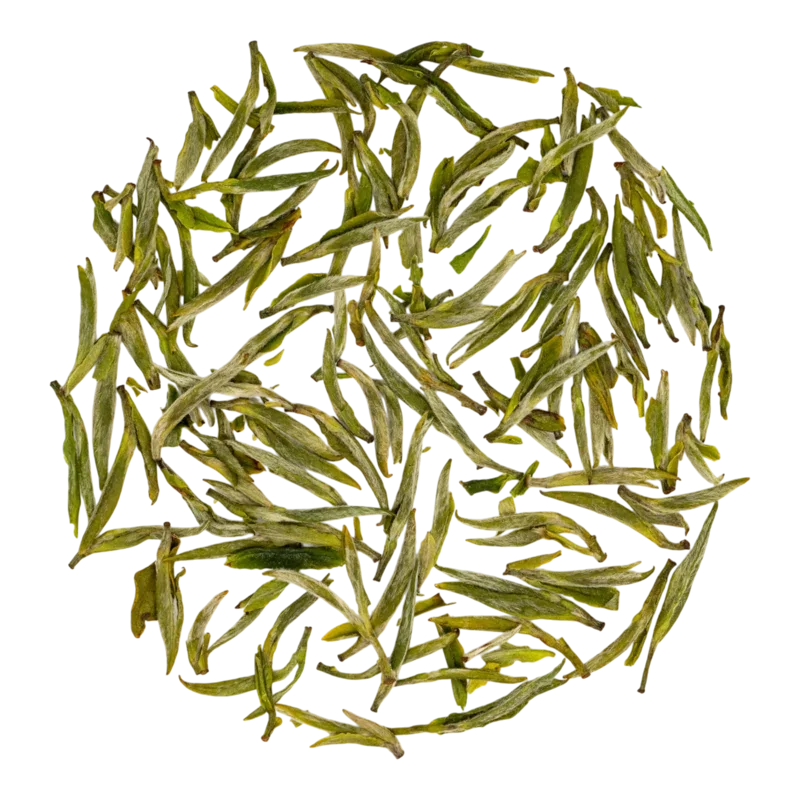
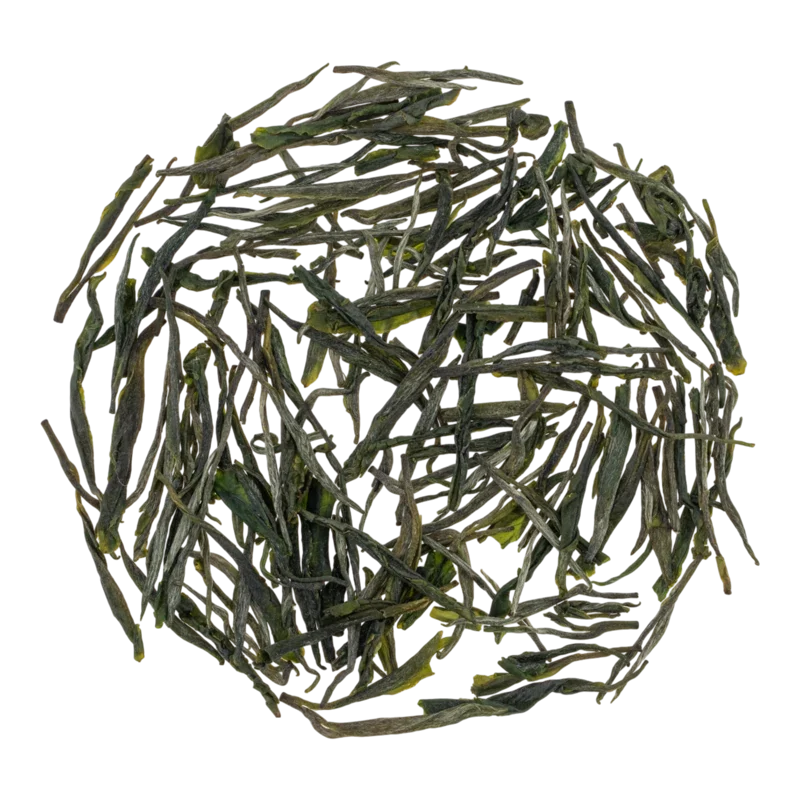
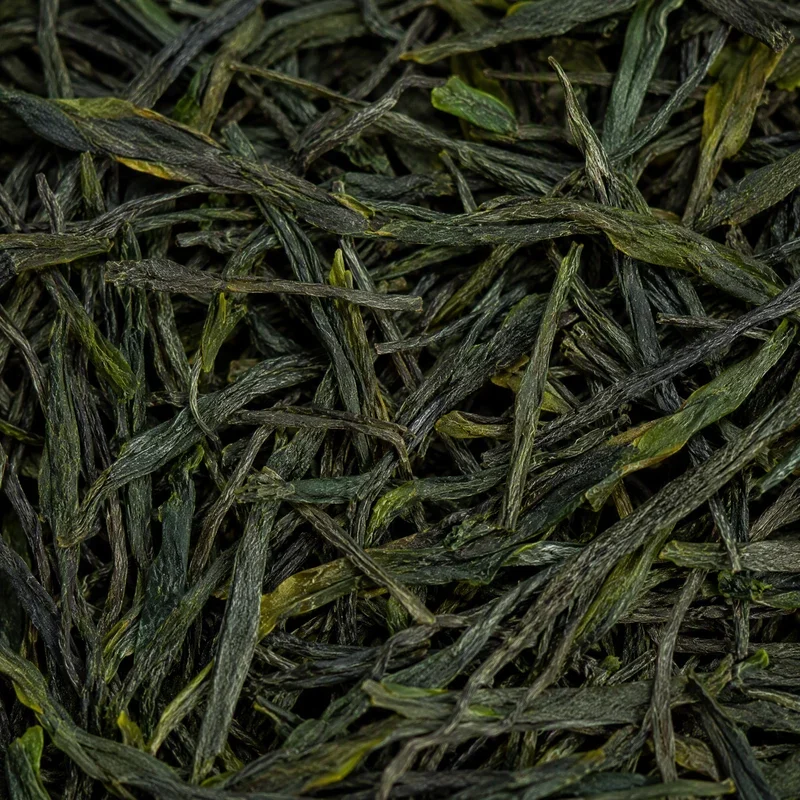
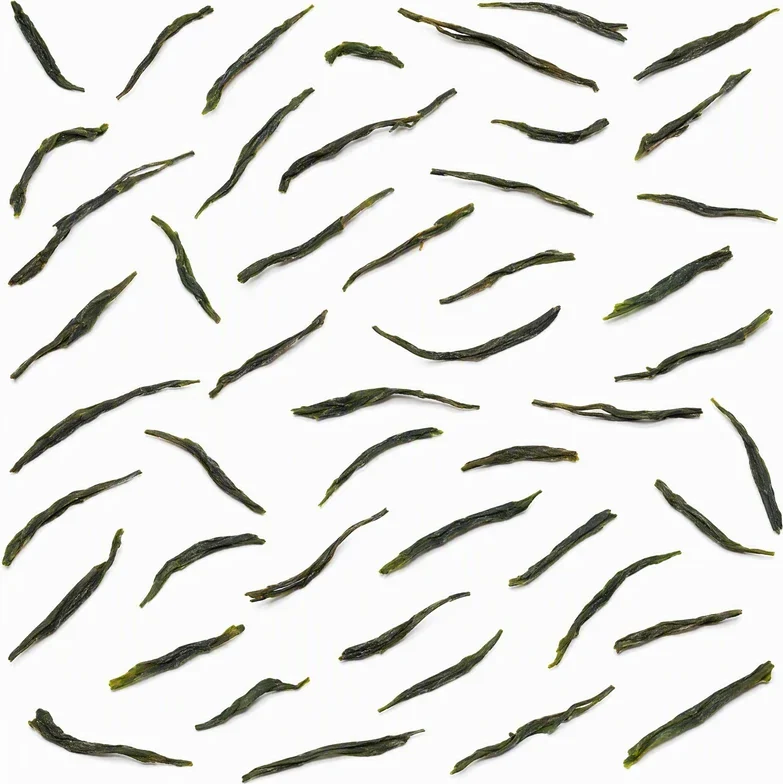
Dry Leaf Appearance: Fine, tightly twisted strips (条索紧细); color — tender green with abundant white down (白毫显露). Leaf is even, uniform in size, with oily luster.
Dry Leaf Aroma: Clean, persistent, with delicate floral notes reminiscent of wild orchid (兰花香, lánhuā xiāng). In the background — light sweet note.
Liquor Aroma: High, persistent; orchid floral note dominates with subtle background of fresh greenness and soft honey notes. Aroma is described as "clean, with long-lasting aftertaste" (清香持久).
Liquor Color: Yellow-green, transparent, bright (嫩绿 / 嫩黄, clear, without turbidity).
Spent Leaves: Tender, whole leaves and buds; color — light yellow with green tint (嫩黄明亮显毫). Down is clearly visible.
Taste: Fresh, soft, brisk (鲜爽醇正). Body — medium, with pronounced sweetness and roundness. Bitterness and astringency are minimal. Aftertaste — clean, with prolonged returning sweetness (回甘) and sensation of "smoothness in mouth" (甘滑).
Alkaloids: Caffeine — typically 2.5–4% for regional green teas. Theobromine and theophylline — in trace amounts.
Amino Acids: Elevated content — characteristic feature of Fuliang teas thanks to high humidity and abundant precipitation, stimulating L-theanine accumulation. Exact data varies by grades, but typically exceeds average indicator for Jiangxi green teas.
High indicator (typically >40%), due to soil richness in organic matter (up to 14.5%) and abundant precipitation (1700–1900 mm/year), which ensure intensive metabolism of tea plants and accumulation of extractive compounds in leaves.
Orchid profile is formed by linalool, geraniol and neryl acetate; soft "honey" notes — by octanal and benzaldehyde.
Minerals: Selenium — natural enrichment of southern Jiangxi soils (mentioned in source). Also potassium, magnesium, manganese, zinc, fluorine.
Polyphenols: Typically 22–30% for green teas of the region. Main fractions — catechins (EGCG, ECG), determining antioxidant activity and light astringency.
Vitamins: Vitamin C (ascorbic acid), B-group vitamins (B₁, B₂), carotenoids.
Catechins, especially EGCG, neutralize free radicals and slow cellular oxidation processes.
Combination of L-theanine and caffeine provides gentle, steady stimulation — concentration without nervousness.
Polyphenols help normalize cholesterol levels and blood pressure.
Gently stimulates peristalsis and enzyme secretion; excellently accompanies light meals.
Selenium and vitamin C strengthen the body's antioxidant defense.
Fluorine and catechins suppress growth of cariogenic bacteria.
Antioxidants and vitamin C help protect against photoaging and collagen synthesis.
Polyphenols and caffeine promote activation of metabolic processes and fat oxidation, which may be beneficial for weight control in combination with balanced nutrition.
Those with increased caffeine sensitivity should limit consumption in the afternoon. Not recommended on empty stomach.
Tea Amount: 3–4 g per 150–200 ml (glass) or 4–5 g per 100–120 ml (gaiwan).
Teaware: Transparent glass tumbler (玻璃杯) — for observing the "dance" of downy buds; porcelain gaiwan (盖碗) — for maximum revelation of orchid aroma. Special charm — brewing in Jingdezhen porcelain: unity of "porcelain and tea" (瓷茶一体) in one cup.
Water Temperature: 75–85°C. For highest grade Fuyao Xianzhi — 75–80°C; for standard green tea — 80–85°C.
Another premium Fuliang green tea, produced in Yaoli mountain gardens at 600–1000 m altitude. Yayu is even more delicate, with silvery down and tender aroma; Fuyao Xianzhi is slightly denser and more "rounded" in taste.
One of the "Ten Famous Teas of China" and fellow of Fuyao from Jiangxi Province. Yunwu is twisted, with thick fuzzy leaf and powerful "mountain" aroma; Xianzhi is finer, with more pronounced orchid note and soft body.
Historic "brother" of Fuliang teas (Wuyuan was part of Fuliang until 740). Wuyuan Lü Cha is distinguished by highest indicators of water-soluble catechins and dense extraction; Fuyao Xianzhi is more delicate and floral.
Green tea from neighboring Anhui, with analogous terroir (mountains at the junction of Jiangxi and Anhui). Mao Feng is more downy, with more delicate, "lily-of-the-valley" note; Xianzhi is slightly denser and more "rounded," with orchid profile.
Unique "white-leaf" green tea from neighboring Jingan County (Jiangxi), produced from albino cultivar. Bai Cha is significantly lighter and "cooler" in taste, with pronounced umami; Fuyao Xianzhi is richer, with more developed floral aroma and "warm" sweetness.
Price Category: Premium Fuyao Xianzhi from early spring harvest — 800–3,000 yuan/kg. Standard Fuliang green teas — 200–600 yuan/kg. Main price factors: harvest season (谷雨尖 — most expensive), plantation altitude (mountain tea from Yaoli more expensive), grade (bud batches more expensive than leaf), and specific sub-brand.
No reviews yet. Tell us what you think of this tea.
Rate this tea and share your impressions. We review each submission before publishing it.