Brewing
Gongfu brewing
- Water temperature
- 80 °C
- Tea amount
- 5 g
- Water volume
- 100 ml
- First steep
- 10 s
- Time added per infusion
- 5 s
- Infusions
- 3

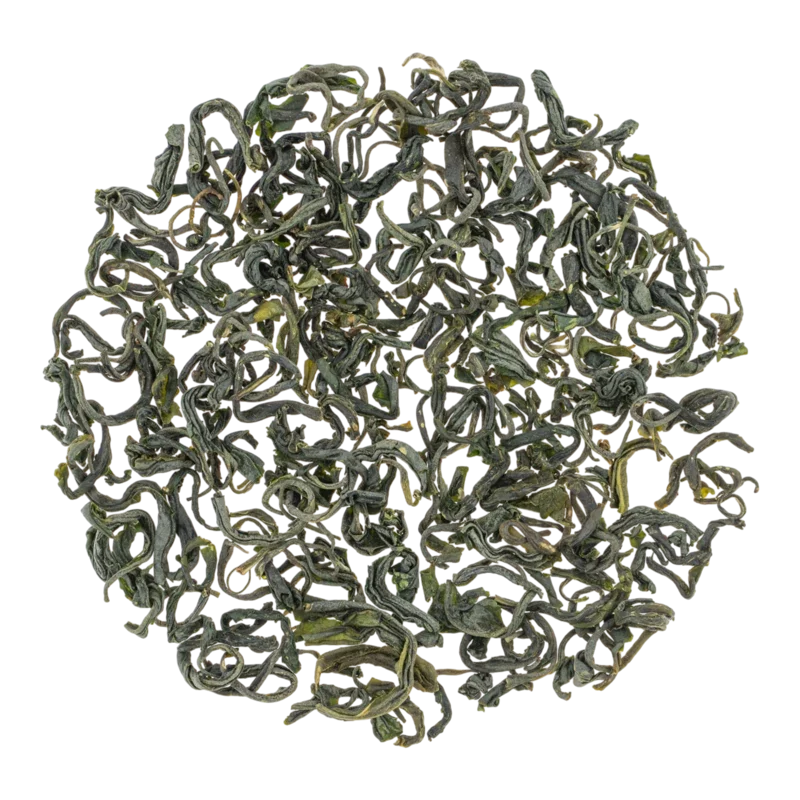
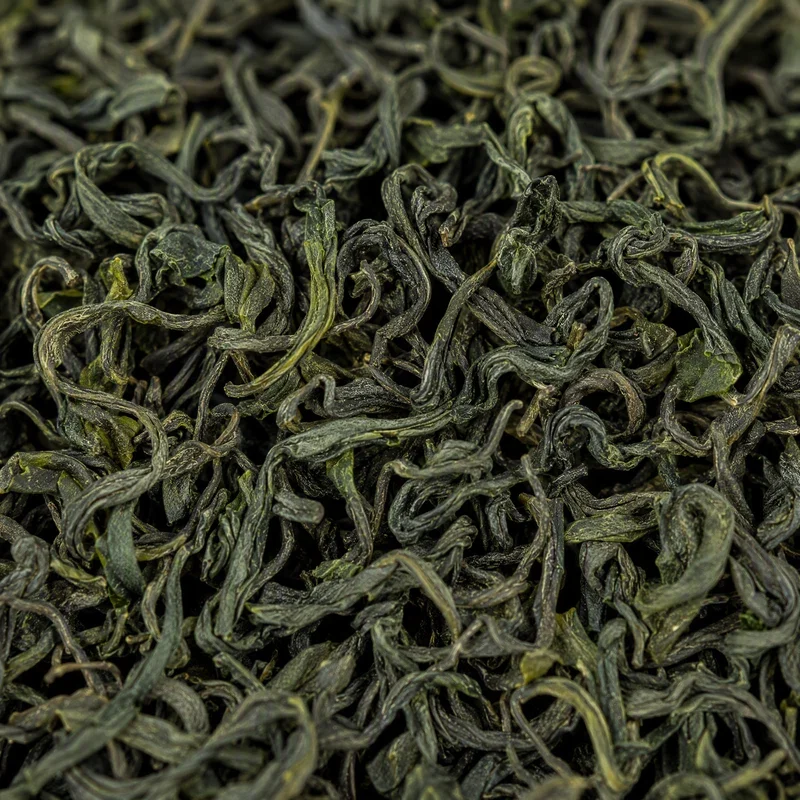
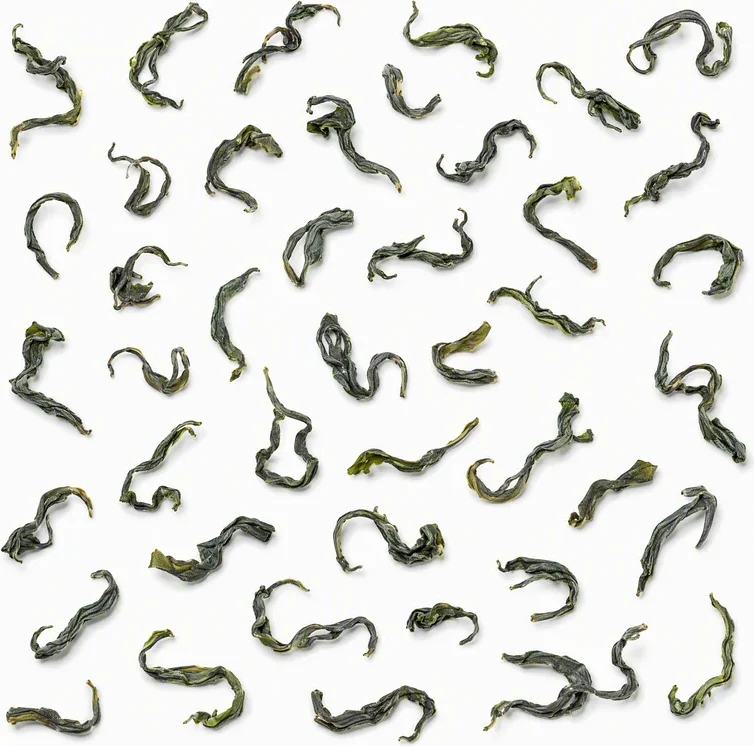
Éméi máo fēng
Choose a brewing method. Start with the recommended quantities and time, then adjust to taste.
Brewing
Brewing
Taste
Tea encyclopedia
Category: Famous tea of Sìchuān (四川名茶, Sìchuān míngchá). Product with geographical indication protection (国家地理标志保护名茶). Repeatedly included among the "Famous Teas of China" (中国名茶). Known as the "new star of the Mengshan tea region" (蒙山茶区名茶新秀).
Category: Famous tea of Sìchuān (四川名茶, Sìchuān míngchá). Product with geographical indication protection (国家地理标志保护名茶). Repeatedly included among the "Famous Teas of China" (中国名茶). Known as the "new star of the Mengshan tea region" (蒙山茶区名茶新秀).
Coordinates: approximately 30.0° N, 103.3° E.
Origin: China, Sìchuān Province (四川省, Sìchuān shěng), Ya'an City (雅安市, Yǎ'ān shì), Yǔchéng District (雨城区, Yǔchéng qū), Fèngmíng Township (凤鸣乡, Fèngmíng xiāng), Guìhuā Village (桂花村, Guìhuā cūn). Located at the foot of the famous Mount Méngdǐng (蒙顶山, Méngdǐng Shān)—one of the world's most ancient tea regions.
Type: Green tea (绿茶, lǜchá), non-oxidized. Belongs to the combined type "hongchao jiehe" (烘炒结合, hōng chǎo jiéhé)—a technology that combines pan-firing and oven-drying at different processing stages.
Cultivar: Primary—Sichuan small-leaf variety (四川小叶种, Sìchuān xiǎoyè zhǒng), possessing high frost resistance. Additionally used is the local population variety (本地群体种). On old plots in Guihua Village, tea bushes over 30 years old are preserved. The weight of 100 shoots of the standard "one bud—one leaf" is about 45 g—an indicator characterizing the tenderness and uniformity of raw material.
Picking: Early spring (早春, zǎochūn). Main period—end of March to early April, before the Qīngmíng festival (清明, Qīngmíng) and in the first days after it.
Pluck Standard: For premium grade (特级, tèjí)—single buds ≥90%, length ≤2 cm. For first grade (一级)—one bud with one beginning-to-unfurl leaf ≥80%. For second grade (二级)—one bud with two leaves.
Altitude: 600–800 m above sea level. Guihua Village is located on the western edge of the Sichuan Basin, in the transition zone between lowland and the Tibetan Plateau.
Climate: Subtropical humid, with pronounced cloudiness. Average annual temperature—14–16°C. Annual precipitation—over 1000 mm. Number of foggy and cloudy days—more than 200 per year. High proportion of diffused light stimulates accumulation of amino acids and chlorophyll in young shoots—amino acid content in spring harvest is ≥3.0%.
Soil: Brown earth (棕壤, zōng rǎng) with deep, loose fertile horizon. pH 4.5–6.5—optimal acidity. Organic matter content—>1.0%. Territory is free from industrial pollution.
Forest coverage—60%. Irrigation—with spring water from the upper reaches of the Hàn River (汉江). Proximity to Mount Mengding creates a unique microclimate with constant high humidity and gentle temperature fluctuations.
Freshly picked shoots are spread for moisture equalization. Preparatory stage.
High-temperature treatment to stop enzymatic oxidation. Formation of aroma base.
Light rolling—release of cell juice without damaging leaf structure.
Additional heating—deepening aromatic transformations, enhancing chestnut and nutty notes.
Formation of denser leaf structure.
Final pan-firing—fixing aroma and final formation of flavor framework.
Giving the leaf characteristic shape—tightly twisted, thin, uniform shoots.
Series of dryings at gradually decreasing temperature. Bringing moisture to stable level, fixing shape and aroma.
Hand shaping—intangible cultural heritage (非遗技艺, fēiyí jìyì). At this stage, the master manually straightens buds and "raises" white hairs, giving the tea its characteristic "silvery" appearance.
Final bringing to commercial moisture content (≤6.5%).
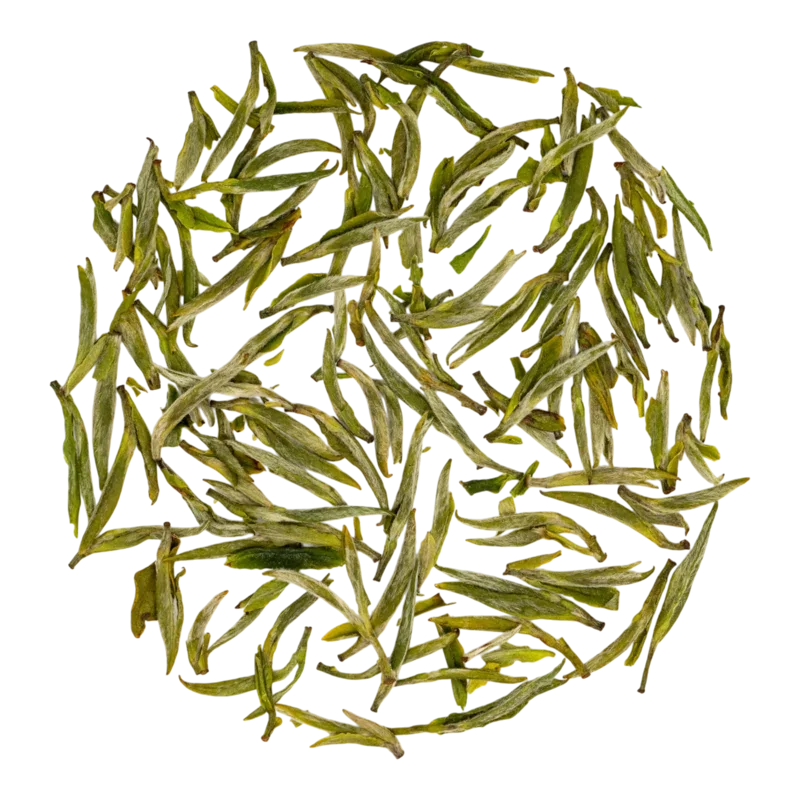
Dry Leaf Appearance: Tightly twisted thin shoots (条索紧细匀卷, tiáosuǒ jǐnxì yúnjuǎn), tender green color with oily luster (嫩绿油润, nèn lǜ yóu rùn). Silver buds are distinctly visible (银芽秀丽, yín yá xiùlì). Abundant covering with white hairs—for premium grade, bai hao coverage is ≥85%.
Dry Leaf Aroma: Clean, fresh (清香, qīngxiāng) with pronounced undertone of tender chestnut (嫩栗香, nèn lìxiāng)—characteristic note of spring harvest. Delicate floral overtones in the finish.
Liquor Aroma: Fresh, clean, with stable chestnut base. Aroma stably manifests throughout several infusions. When cooling—soft grassy-floral notes.
Liquor Color: Slightly greenish-yellow (微黄而碧绿, wēi huáng ér bìlǜ), transparent and bright. Delicate opalescence, characteristic of teas with high amino acid content.
Spent Leaves: Tender green, uniform (嫩绿匀整, nèn lǜ yún zhěng). Whole buds are distinctly visible—bright, glossy (全芽明亮, quán yá míngliàng). Leaf is elastic, retaining shape.
Taste: Xiānshuǎng (鲜爽, xiānshuǎng)—"fresh and brisk"—key descriptor. Pronounced amino acid freshness (umami component). Body—medium, harmonious (醇, chún—"full, balanced"). Extended returning sweetness (回甘, huígān) with prolonged salivation (生津, shēngjīn). Bitterness and astringency are minimal when temperature regime is observed.
Alkaloids: Caffeine content (咖啡碱)—30% higher than average green tea (according to producer data). This provides pronounced tonic effect. Theobromine and theophylline are present.
Amino Acids: Content in spring harvest—≥3.0%. L-theanine—dominant amino acid, forming fresh, umami-like taste and providing calming balance with caffeine.
For premium grade—≥45%. High indicator confirming richness and fullness of taste.
High content—result of abundant fogs and diffused light—determines rich color of leaf and liquor.
Minerals: Fluorine (content provides caries-preventive effect—effectiveness of suppressing cariogenic bacteria is 1.3 times higher than ordinary green tea, according to producer data). Potassium, zinc, manganese, iron, magnesium.
Polyphenols: Content for first grade—≥28% of dry weight. Main catechins: EGCG, ECG, EC, EGC. Polyphenols are responsible for moderate astringency, antioxidant action and stimulation of fat metabolism.
Vitamins: Vitamin C (high content, characteristic of early harvest green teas), B-group vitamins (B₁, B₂), carotenoids.
Increased caffeine content provides rapid awakening and increased concentration. L-theanine softens caffeine action, preventing nervousness.
Catechins, especially EGCG—among the most powerful natural antioxidants, neutralizing free radicals and slowing cellular aging.
Polyphenols stimulate fat metabolism. According to producer data, fat breakdown efficiency after meals increases by 40% with regular consumption. Tea is especially good after fatty food.
Fluorine and catechins suppress activity of cariogenic bacteria, strengthen tooth enamel.
Polyphenols contribute to lowering "bad" cholesterol levels and normalizing blood pressure.
Stimulates gastric juice production, facilitates digestion of heavy food.
Synergy of caffeine and L-theanine improves reaction speed, attention and learning ability.
Soft, with low mineralization. Ideally—spring water.
Tea Amount: 3 g per 150–180 ml (glass cup or porcelain cup); 5–7 g per 100–120 ml gaiwan.
Teaware: Glass cup or white porcelain cup (white background emphasizes delicate green color of liquor). Gàiwǎn (盖碗) for gongfu style.
Water Temperature: 80–90°C. For premium grade (特级)—80°C. For first and second grades—up to 85–90°C.
Container: Foil vacuum bags, tin cans with tight lid. After opening—store airtight in refrigerator and consume within one month.
Enemies: Light, moisture, heat, foreign odors. Do not store near spices, fruits, strongly scented products.
Shelf Life: Best qualities—in first 6–12 months after production. With proper refrigerated storage, freshness is preserved up to one year.
Temperature: Optimally—in refrigerator (0–5°C), in airtight packaging. Green teas are sensitive to heat and light.
Closest "neighbor"—famous tea from the same Mengshan region. Ganlu is one of China's most ancient twisted green teas, with more pronounced floral and "meadow" note. Emei Mao Feng is more chestnut-like, with clearer body and pronounced tonic effect. Both teas reflect Western Sichuan terroir, but through different technological prisms.
"Namesake" from Anhui Province—one of the "Ten Great Teas of China." Anhui Mao Feng is more delicate, with lighter body and pronounced floral-orchid aroma. Sichuan version is denser, more chestnut-like, with higher caffeine content. Processing also differs: Huangshan is predominantly oven-dried (烘青), Éméi is combined (烘炒结合).
Flagship modern green tea of Sichuan, produced directly on Emeishan. Flat shape, with emphasis on visual elegance and delicacy. Emei Mao Feng—twisted shape, more "rustic" and bodied, with deeper aroma and greater brewing durability. Different aesthetics of one region.
Another famous tea of the Emei region—thin "snow buds" with delicate, almost airy texture. Xueya is more delicate and fresh; Mao Feng is richer and more aromatic, with more pronounced chestnut profile.
from 800 yuan per jin (500 g) and higher. Single buds, silvery down, chestnut aroma of piercing purity.
400–600 yuan per jin. Main commercial product, combining high quality and accessibility. One bud with one leaf.
Accessible everyday category. One bud with two leaves, denser taste, increased brewing durability.
Genuine Emei Mao Feng—thin, tightly twisted shoots with visible silvery hairs on buds. Counterfeits—often large-leaf, loose, without pronounced down.
Clean, with delicate chestnut note. Artificial flavoring or "flat," inexpressive smell—reason for suspicion.
Transparent, greenish-yellow. Cloudy or brown liquor—sign of old or low-quality raw material.
Fresh, with returning sweetness. Coarse bitterness, "woody" aftertaste—characteristic of counterfeits from low-quality raw material.
Geographic indication product should have corresponding certification. Buy from authorized producers from Yǔchéng District (雨城区).
No reviews yet. Tell us what you think of this tea.
Rate this tea and share your impressions. We review each submission before publishing it.