Brewing
Gongfu brewing
- Water temperature
- 75 °C
- Tea amount
- 5 g
- Water volume
- 100 ml
- First steep
- 10 s
- Time added per infusion
- 5 s
- Infusions
- 3

Dōngshān xiù fēng
Choose a brewing method. Start with the recommended quantities and time, then adjust to taste.
Brewing
Brewing
Taste
Tea encyclopedia
Category: One of the "Ten Famous Teas of Hunan" (湖南十大名茶, 2005 — alongside Shimen Yin Feng from the same county). Product of geographical indication (国家地理标志产品). In 1990, at the national famous tea competition, it took first place in overall score and received the national silver quality award (国家质量银质奖). Gold at the Hunan "Mingcha Bei" competition (名茶杯, 1991). Gold at the International "Cultural Famous Tea" competition (国际文化名茶金奖, 2002). The "Dongshanfeng" tea farm in 1991 became the first enter...
Category: One of the "Ten Famous Teas of Hunan" (湖南十大名茶, 2005 — alongside Shimen Yin Feng from the same county). Product of geographical indication (国家地理标志产品). In 1990, at the national famous tea competition, it took first place in overall score and received the national silver quality award (国家质量银质奖). Gold at the Hunan "Mingcha Bei" competition (名茶杯, 1991). Gold at the International "Cultural Famous Tea" competition (国际文化名茶金奖, 2002). The "Dongshanfeng" tea farm in 1991 became the first enterprise in China to receive the national "green food product" certification (绿色食品) for tea. Exported to Europe, America, and Southeast Asia.
Coordinates: Approximately 29°40′ N, 110°40′ E.
Origin: China, Húnán Province (湖南省, Húnán Shěng), Chángdé City (常德市, Chángdé Shì), Shímén County (石门县, Shímén Xiàn). The core production area is the state tea farm "Dongshanfeng" (东山峰农场), located on the mountain massif of the same name, at an altitude of 1200–1498.5 m, in the cloud belt at the junction of Hunan and Hubei. Shímén County is located at the eastern extremity of the Wǔlíng Mountain system (武陵山脉), at the foot of Mount Hupingshan (壶瓶山, 2098.7 m) — the highest point in Hunan.
Type: Green tea (绿茶, lǜchá), unoxidized. Strip form (条索形, tiáosuǒ xíng) — straight, elegant tea leaves. The technology combines pan-firing (炒, chǎo) and final charcoal drying (木炭烘焙, mùtàn hōngbèi), which distinguishes this tea among most Hunan green teas that are finished with electric drying.
Cultural Significance: Shímén (石门) — "Stone Gates" — a county unique in that two of its teas simultaneously entered the top ten best Hunan teas: Dongshan Xiu Feng and Shimen Yin Feng. Yu Guangzhong's calligraphy is an extremely rare case when a regional tea receives "blessing" from a world-class writer. The county is the "Birthplace of Chinese Tea Zen" (中国茶禅之乡) thanks to Jiashan Monastery, as well as the "Birthplace of Pan-fired Green Tea" (中国炒青茶发源地) — in Xishanya village (西山垭) of Yanchi township, the most ancient evidence of tea pan-firing technology was found.
History: Shimen County is one of the most ancient tea regions of Hunan, with documented tea cultivation history dating back to the Western Jin period (3rd–4th centuries). In the "Records of Jingzhou Lands" (《荆州土地记》) it is stated: "All seven counties of Wuling produce tea, and [their tea] is the finest." During the Song era, the local "Niudi tea" (牛抵茶, "Tea of the Butting Bull") became imperial tribute tea (贡茶) and remained so until the Qing era. Jiāshān Monastery (夹山寺) in Shimen is considered one of the cradles of "Chan Buddhist tea culture" (茶禅一味).
Cultivar: Several varieties of Camellia sinensis var. sinensis are used, selected for high-mountain conditions:
Picking: Due to the altitude of 1200+ m and cool climate (average annual temperature about 13.6°C), picking begins after the Qīngmíng period (清明, Qīngmíng — early April) — later than in most Hunan lowland areas. However, slow maturation ensures maximum accumulation of free amino acids and L-theanine in shoots. Picking is done exclusively in dry weather.
Altitude: 1200–1498.5 m above sea level — one of the highest mountain tea terroirs in Hunan Province. For comparison: the main production zone of Shimen Yin Feng is located lower — at altitudes of 500–1000 m.
Climate: Mountain subtropical. Average annual temperature — 13.6°C — significantly lower than on Hunan plains (16–18°C). Annual precipitation — about 1900 mm, distributed relatively evenly. Foggy days — more than 180 per year — comparable to Mount Lúshān (庐山) and Mount Wǔzhǐshān (五指山). Daily temperature difference — more than 8°C, which promotes accumulation of aromatic substances and slows L-theanine decomposition. Predominance of diffused light due to almost constant cloudiness stimulates chlorophyll and amino acid synthesis.
Soil: Yellow-brown mountain and red soils (黄棕壤及红壤, huáng zōng rǎng jí hóng rǎng), pH 5.5–6.0 — optimal range for tea plants. Organic matter content — 2.0–4.2% — high indicator due to powerful forest litter. Soils are enriched with microelements: selenium (Se) — 0.82 mg/kg, zinc (Zn) — 1.6 mg/kg. Forest coverage in the tea garden zone reaches 90% — one of the highest indicators among Chinese tea terroirs. Tea gardens are irrigated by mountain streams, year-round shrouded in clouds.
The "Dongshanfeng" tea farm in 1991 became the first tea enterprise in China to receive state "green food product" certification — long before the mass spread of organic standards in Chinese tea cultivation. Shimen County subsequently became "Hunan's No. 1 Organic Tea County" (湖南有机茶第一县), with more than 10,000 mu of certified organic tea gardens.
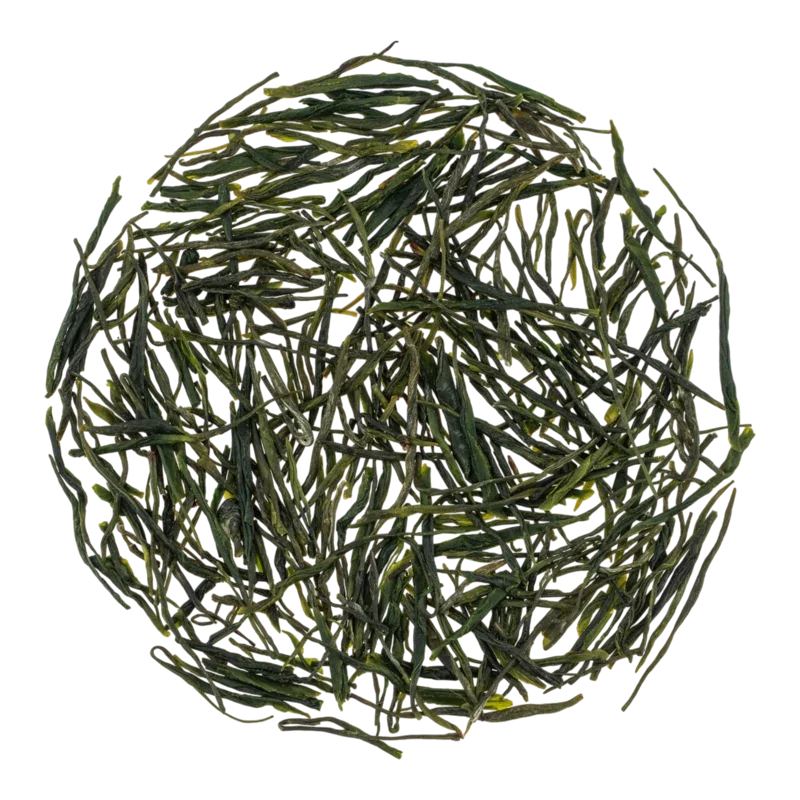
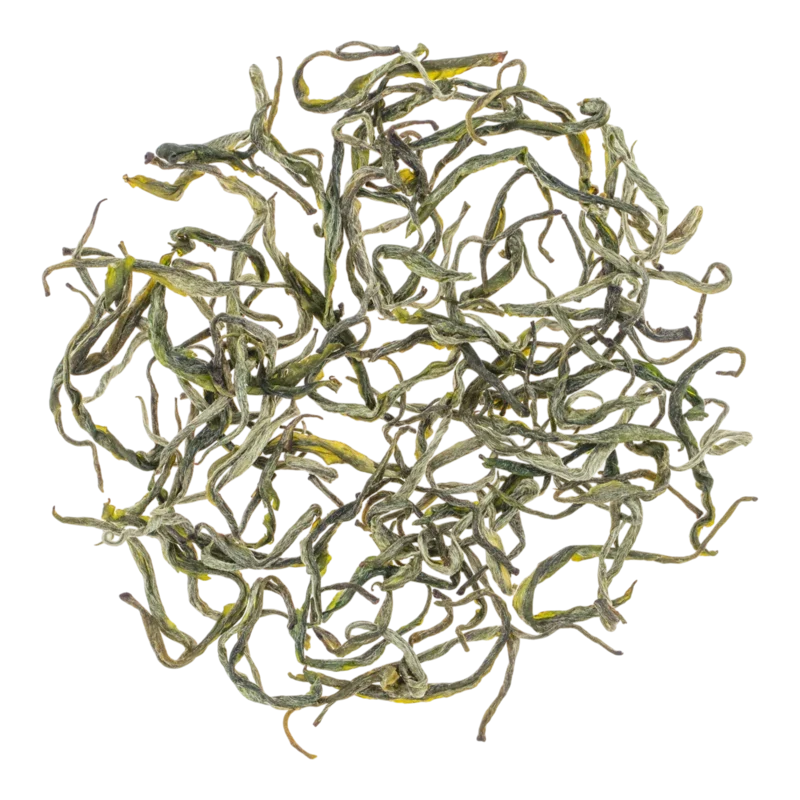
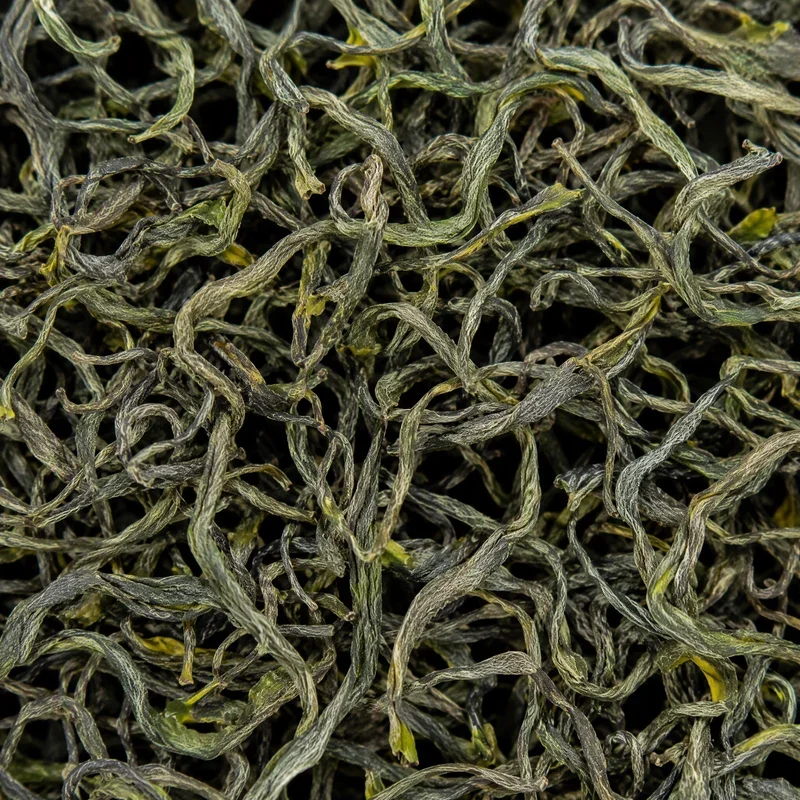
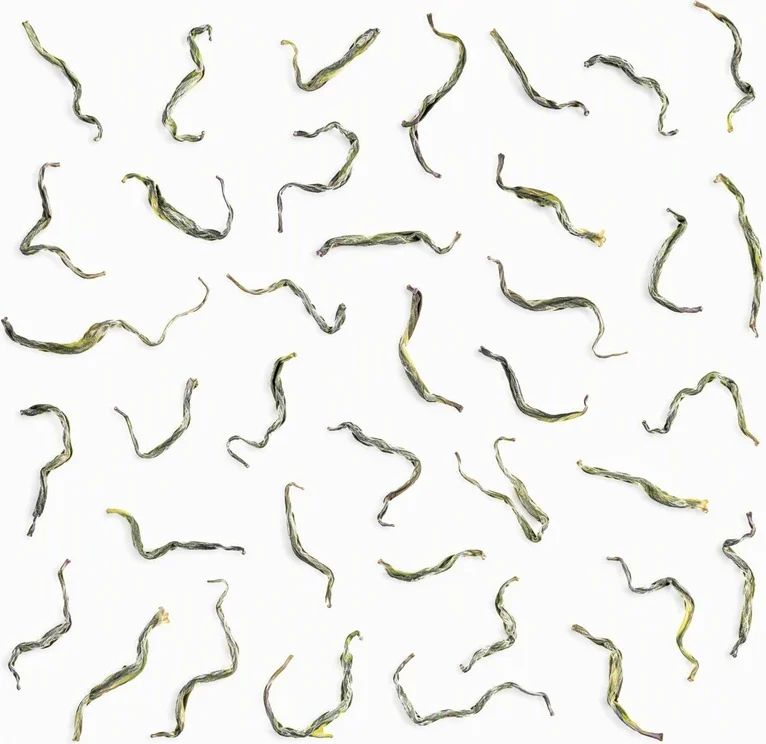
Dry Leaf Appearance: Straight, round in cross-section strips (条索紧直, tiáosuǒ jǐnzhí) with pronounced down "peaks" (峰苗显露, fēngmiáo xiǎnlù). Color — emerald green with abundant silvery down (翠绿披毫, cuìlǜ pī háo). Tea leaves uniform in size and shape, resembling miniature mountain peaks — hence the name "Xiu Feng."
Dry Leaf Aroma: Tender (嫩香, nèn xiāng), clean, with distinct chestnut note brought by charcoal drying. No foreign odors. High-mountain "forest" freshness.
Liquor Aroma: High and lasting. "High-mountain tea aroma" (高山茶香) — clean, "forest," with subtle chestnut sweetness. Unfolds gradually: first infusion — fresh green notes; second — chestnut warmth; third — light floral sweetness.
Liquor Color: Light green, bright and clear (浅绿明亮, qiǎn lǜ míngliàng) — for supreme grade. First and second grades give more saturated yellow-green shade.
Spent Leaves: Tender green, clean, uniform (嫩绿明净匀整, nèn lǜ míng jìng yún zhěng). Buds unfold completely, demonstrating high "tenderness" of raw material.
Taste: Fresh (鲜爽, xiān shuǎng), with persistent returning sweetness (回甘持久, huígān chíjiǔ). Medium body, "transparent" — without heaviness, without astringency. Sensation of purity and "mountain water." Aftertaste — long, with light milky sweetness.
Amino Acids: Elevated content due to slowed vegetation at 1200+ m altitude and predominance of diffused light. L-theanine (L-茶氨酸) — main amino acid, comprising up to 50% of total free amino acid content — responsible for taste freshness and relaxing effect. High-mountain conditions (low temperature, abundant fog) slow L-theanine conversion to catechins, ensuring a milder, less astringent profile.
≥45% — indicator of high liquor saturation.
Moderate content typical for high-mountain green teas — about 2.5–3.5% of dry mass. Combined with L-theanine gives mild tonic effect without sharp stimulation.
Selenium (Se) — 0.82 mg/kg (from volcanic mountain soils), zinc (Zn) — 1.6 mg/kg. Selenium content significantly higher than average for Chinese teas (0.1–0.5 mg/kg), making Dongshan Xiu Feng a "selenium-rich tea" (富硒茶).
Essential Oils: Charcoal drying promotes formation of characteristic aromatic compounds of the chestnut series — pyrazines and furans, absent in electric drying.
Polyphenols: ≥30% of dry mass — high indicator for green tea, due to mountain ultraviolet and large-leaf cultivars. Main components — catechins (儿茶素), including EGCG (epigallocatechin-3-gallate) — the most biologically active antioxidant in green tea.
Vitamins: C (ascorbic acid) — preserved thanks to gentle charcoal drying temperature (70°C); B-group vitamins (B1, B2).
High catechin content (polyphenols ≥30%) combined with selenium provides double antioxidant protection. EGCG neutralizes free radicals, while selenium is part of glutathione peroxidase — a key antioxidant enzyme.
Combination of caffeine and L-theanine provides a state of "calm alertness" — increased concentration without anxiety. L-theanine stimulates alpha-wave generation in the brain.
Green tea catechins help reduce LDL cholesterol levels and maintain vascular elasticity.
Polyphenols stimulate digestive enzyme secretion and support healthy intestinal microflora.
Selenium (0.82 mg/kg) and zinc (1.6 mg/kg) from mountain soils — natural replenishment of two essential microelements for immunity and thyroid function.
L-theanine improves working memory and concentration ability. Regular green tea consumption is associated with reduced risk of cognitive decline.
Catechins and vitamin C jointly support collagen synthesis and protect skin from photoaging.
Mountain spring or soft filtered water. Avoid alkaline water — it spoils the green color of the liquor, making it yellow-brown.
Tea Amount: 3 g per 150 ml water (1:50 ratio).
Teaware: Glass tumbler (for observing the "dance" of silvery tea leaves descending in water) or white porcelain gaiwan (盖碗, gàiwǎn). Glass tumbler is preferable for supreme grade — the spectacle of descending "mountain peaks" is part of the aesthetic experience.
Water Temperature: 80–85°C. For supreme grade (single buds) — closer to 80°C to avoid "burning" tender raw material. For first and second grades — 85°C.
Container: Airtight, light-proof — foil bag with zip closure or tin can with tight lid. Remove maximum air beforehand.
Enemies: Moisture, direct light, foreign odors (tea easily absorbs aromas of neighboring products), high temperature. With long storage (more than 12 months) even in refrigerator, tea loses down "liveliness" and aroma freshness.
Freshly made tea is recommended to rest 7 days before consumption — during this time the "fire energy" (火气, huǒqì) from final charcoal drying dissipates.
In opened package — no more than 1 month (when stored in refrigerator). Without refrigerator — 2 weeks.
Temperature: Refrigerator, 0–5°C. Dongshan Xiu Feng is a delicate green tea from bud material; at room temperature it quickly loses freshness and aroma.
"Brother" from the same Shimen County but from lower altitudes (500–1000 m). Form — thin straight "needle" with silvery down (hence "Yin Feng" — "Silver Peak"). Taste — more saturated, with pronounced "mellowness" (醇厚, chún hòu). Dongshan Xiu Feng, in contrast, is lighter and more "transparent," with emphasis on freshness. Yin Feng withstands up to 4–5 brewings, Xiu Feng — 3–4.
Famous green teas from Guzhang County (western Hunan). More "southern" terroir, altitudes 400–800 m. Profile — more floral, less "forest." Dongshan Xiu Feng stands out with chestnut note from charcoal drying and high-mountain "purity."
One of the "Ten Great Teas of China," from Anhui. Altitudes 700–1200 m. Form — "sparrow tongue" with down. Profile — orchid-like, mild. Dongshan Xiu Feng is denser in body (polyphenols ≥30%) and has pronounced chestnut tone, atypical for Mao Feng.
Green tea from neighboring Hubei, also high-mountain and "selenium-rich" (富硒). However, Yù Lú is steamed (蒸青, zhēngqīng), not pan-fired, giving a completely different profile: more grassy, "Japanese" in character. Dongshan Xiu Feng is pan-fired with charcoal finish drying, with "warm" chestnut tone.
Price Category: Dongshan Xiu Feng belongs to medium and upper price segments of Hunan green teas. Supreme grade (特级, single buds) — from 600 yuan per 500 g (about 80–90 USD). First grade — 300–400 yuan per 500 g. Second grade — mass, affordable product. Key cost factors: raw material grade (buds vs. leaf), picking date (early spring valued higher), growing altitude (higher — more expensive), processing method (hand vs. machine).
No reviews yet. Tell us what you think of this tea.
Rate this tea and share your impressions. We review each submission before publishing it.