Brewing
Gongfu brewing
- Water temperature
- 93 °C
- Tea amount
- 5 g
- Water volume
- 100 ml
- First steep
- 10 s
- Time added per infusion
- 5 s
- Infusions
- 4

Diānhóng sōngzhēn
Choose a brewing method. Start with the recommended quantities and time, then adjust to taste.
Brewing
Brewing
Taste
Tea encyclopedia
Category: High-quality Yunnan red teas, variety of the Diān Hóng (滇红, Diānhóng) group. Belongs to famous teas (名优茶, míngyōu chá), distinguished by rolling form — needle-shaped.
Category: High-quality Yunnan red teas, variety of the Diān Hóng (滇红, Diānhóng) group. Belongs to famous teas (名优茶, míngyōu chá), distinguished by rolling form — needle-shaped.
Coordinates: Fengqing — approximately 24°35′ N, 99°55′ E. General Dian Hong range: between 21° and 29° N, 97° and 106° E.
Origin: China, Yúnnán Province (云南省, Yúnnán Shěng). Main production regions coincide with the range of all Dian Hongs: Fèngqìng County (凤庆县, Fèngqìng Xiàn) of Líncāng City (临沧市, Líncāng Shì), Bǎoshān (保山, Bǎoshān), Pu-erh (普洱, Pǔ'ěr), Xīshuāngbǎnnà (西双版纳, Xīshuāngbǎnnà). Production from Fengqing is considered the standard.
Type: Red tea (black tea) (红茶, hóngchá), fully oxidized (oxidation degree ~80–90%). According to European classification — black tea.
In Yunnan tea circles, Song Zhen is often called "兄妹茶品" (xiōngmèi chápǐn — "brother-sister tea") in relation to Jin Zhen. Both teas are straight needles, but Song Zhen is "older" in raw material composition (bud + leaf) and "younger" in status.
Many tea masters recommend precisely Song Zhen as first introduction to the world of Dian Hongs: it costs significantly less than elite grades, but already fully conveys the character of Yunnan red tea (black tea) — density, sweetness, honey-malty bouquet.
Long, slender Song Zhen needles opening in glass teapot create an image reminiscent of young pine forest — hence the association with coniferous forest embedded in the name.
Song Zhen from different Yunnan districts differs noticeably: tea from Fengqing distinguished by more pronounced honey profile, from Lincang — fruity-floral shades, from Xishuangbanna — greater strength and spiciness.
Unlike Qimen Hong Cha or Zheng Shan Xiao Zhong, for famous forms of Dian Hong (Song Zhen, Jin Luo, Jin Zhen) no unified state standard yet exists. Each producer interprets technology in their own way, making each batch unique, but complicating choice for consumer.
Spring Song Zhen distinguished by maximum sweetness and florality thanks to high amino acid content after winter dormancy. Summer — stronger and more astringent, with spicy notes. Autumn occupies intermediate position, combining softness with light woodiness. Price difference between seasons can reach two to three times.
Cultural Significance: Song Zhen is valued as an "introduction tea" — the optimal entry point into the world of Yunnan red teas (black teas). It combines impressive appearance, worthy quality, and reasonable price. In Yunnan tea circles, Song Zhen is considered one of the best everyday Dian Hongs, capable of revealing the character of the region without elite markup. Historically, Dian Hong played an important strategic role: during the anti-Japanese war years, export of Yunnan red tea (black tea) through the Burmese border ensured foreign currency inflow to the treasury of the Republic of China. Feng Shaoqiu, who arrived from Anhui where he had previously worked with Qimen Hong Cha, was amazed by the potential of Yunnan large-leaf raw material — the first batches of Dian Hong sent to London in 1939 received high evaluation at international auctions.
History: The progenitor of the entire Diān Hóng category is tea technologist Féng Shàoqiú (冯绍裘, Féng Shàoqiú), who created Yunnan red tea (black tea) at a factory in Fengqing in 1938–1941 in the context of the anti-Japanese war and the need for export earnings. The original Dian Hong represented a "gongfu" (工夫, gōngfu) red tea (black tea) with strip-shaped rolling.
Cultivar: Yúnnán Dǎ Yè Zhǒng (云南大叶种, Yúnnán Dàyèzhǒng) — group of large-leaf populations of Camellia sinensis var. assamica. Characterized by large, fleshy leaves (12–20 cm), high polyphenol content (30–38%) and extractive substances (more than 40%). Clonal selection varieties are also used: Fengqing No. 7 (凤庆7号), Fengqing No. 9 (凤庆9号), Yunkang No. 10 (云抗10号) and others, depending on region and producer. For Song Zhen, no strict requirement for specific cultivar is established; choice is determined by the producer.
Picking: Spring harvest (March–April) provides the highest quality raw material. Summer and autumn harvests are also used and cost noticeably less.
Pluck Standard: Main standard — one bud and one young leaf (一芽一叶, yī yá yī yè). For more accessible grades, bud with two leaves (一芽二叶, yī yá èr yè) is permitted. Extra grades from predominantly buds alone occur but approach Jin Zhen in essence.
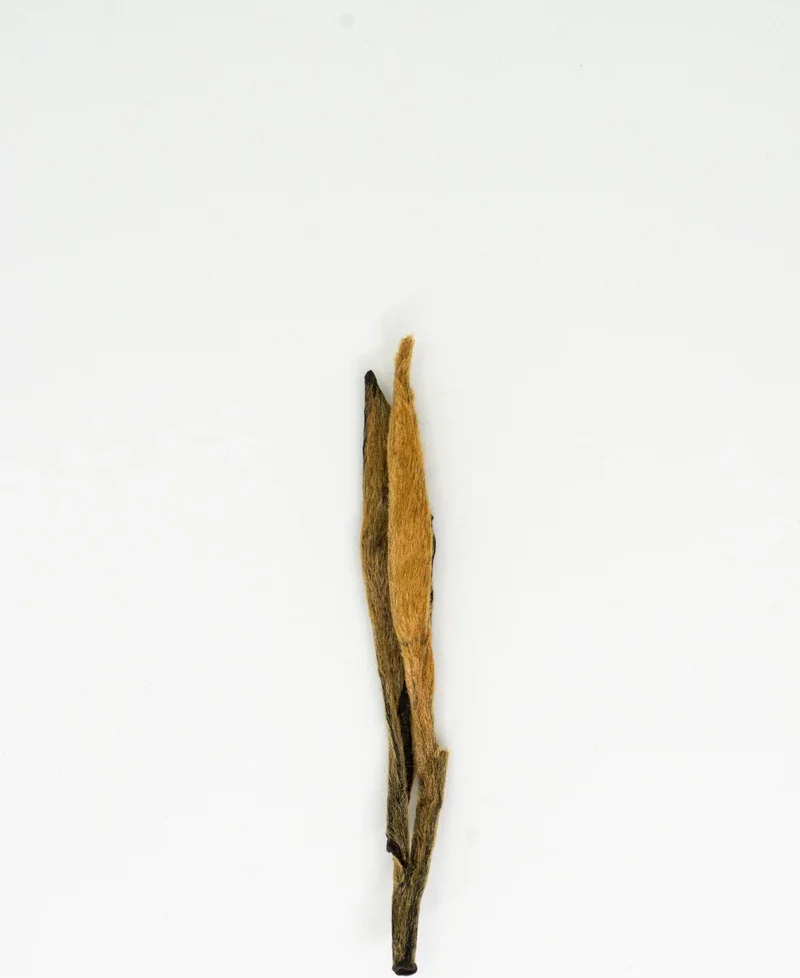
Raw Material: Shoots must be fresh, resilient, undamaged, with well-developed down on the bud. Shoot length 2.5–4 cm.
Altitude: 800–2000 m a.s.l. For premium Song Zhen, high-mountain gardens (1200–1800 m) are preferred, where slowed shoot growth promotes accumulation of amino acids and aromatic substances.
Climate: Subtropical monsoon with vertical zonality. Average annual temperature 15–22°C. Precipitation 1200–1800 mm per year. Air humidity 75–85%. Frequent morning fogs create natural shading, enhancing amino acid synthesis (especially L-theanine) in tea leaves. Significant diurnal temperature variation (10–15°C) — key factor promoting formation of aromatic compounds in tea leaf. Along the Lancang River, where many Fengqing tea gardens are located, the unique microclimate of the river valley additionally moderates winter cold and ensures optimal vegetation from March to November.
Soil: Lateritic red soils and yellow soils with acidic reaction (pH 4.5–5.5), high porosity and deep fertile layer. Rich in organic matter, iron, manganese, selenium.
Hand-picking of shoots in morning hours after dew has cleared.
Harvested shoots are spread in thin layer (3–5 cm) on bamboo trays in ventilated room or under canopy (shade withering). Duration 12–18 hours. Goal — reduce moisture content to 55–65%, give leaf elasticity and initiate initial biochemical transformations. Characteristic "green-fruity" smell of withered leaf appears.
Withered raw material is rolled on rollers or by hand to destroy cellular structure and release cellular juice to leaf surface. For Song Zhen, rolling is conducted longitudinally to form elongated, pointed shape.
Stage distinguishing Song Zhen (and Jin Zhen) from traditional Dian Hong Gongfu. Rolled tea leaves are passed through special straightening machines with heated grooves that straighten and fix the needle-shaped form. Heating parameters and feed speed vary depending on raw material moisture.
Formed needles are spread in 8–12 cm layer on bamboo trays in room with temperature 22–28°C and humidity 90–95%. Oxidation lasts 3–5 hours. Catechins are oxidized by enzymes to theaflavins and thearubigins; leaf acquires red-brown color and forms characteristic sweet-malty aroma. Master controls process visually (by color) and organoleptically (by aroma).
Two-stage: primary at 100–110°C to stop oxidation; final at 80–90°C to residual moisture 5–6%.
Finished needles are sorted by length, straightness, tip content and uniformity. Broken, deformed tea leaves and foreign inclusions are removed.
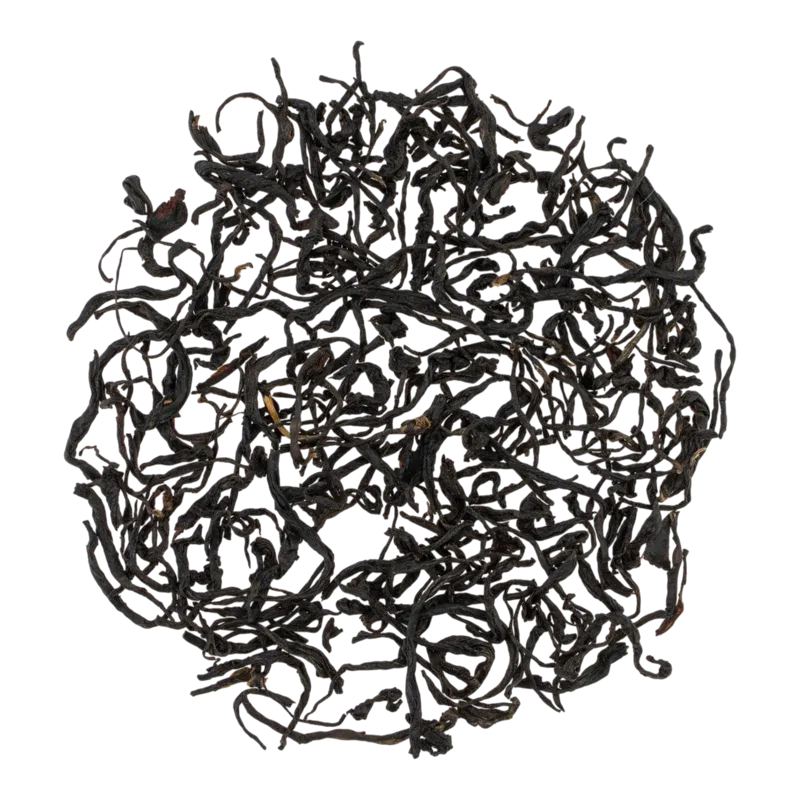
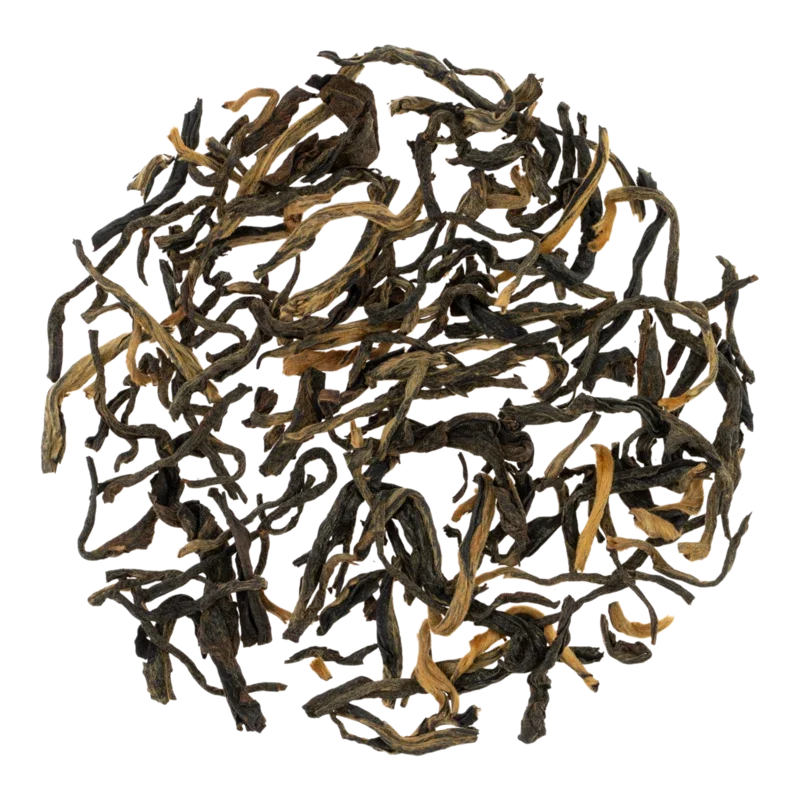
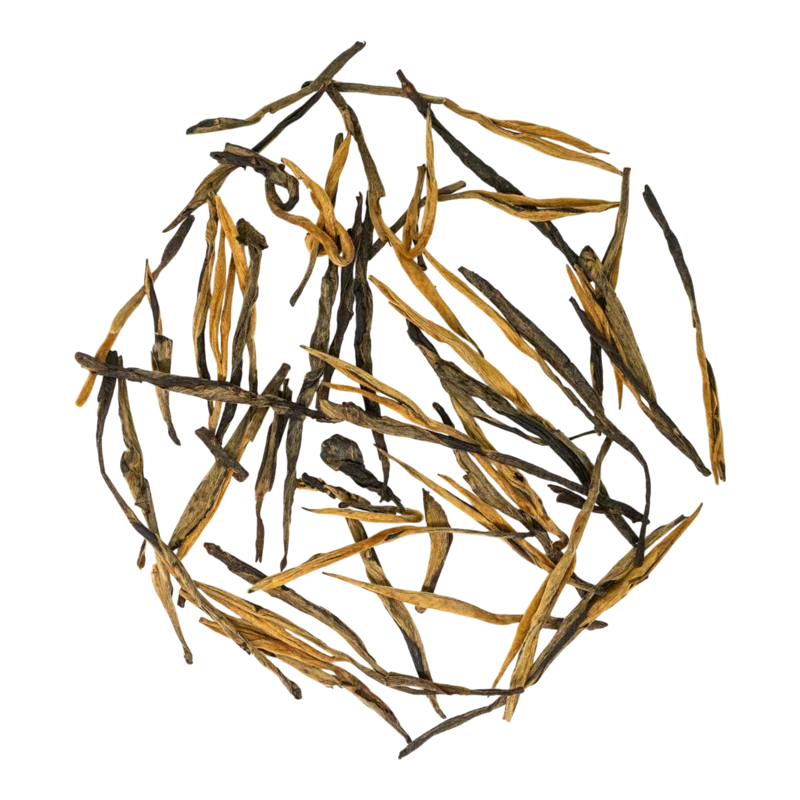
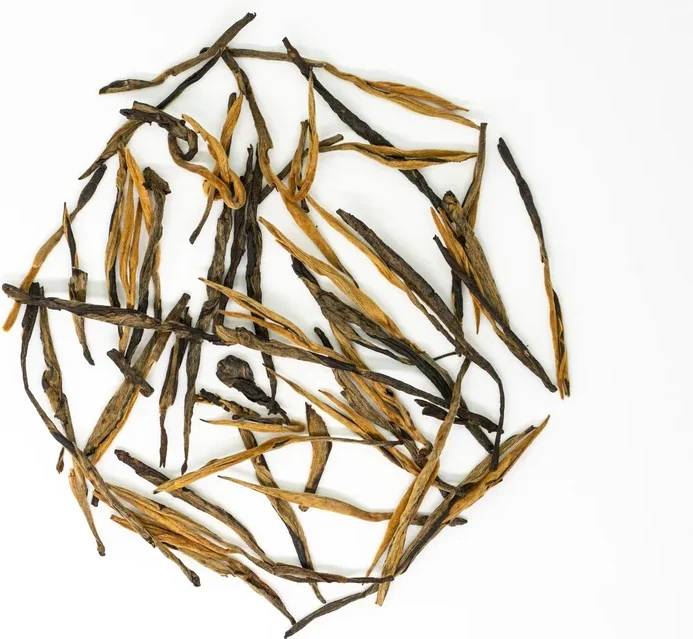
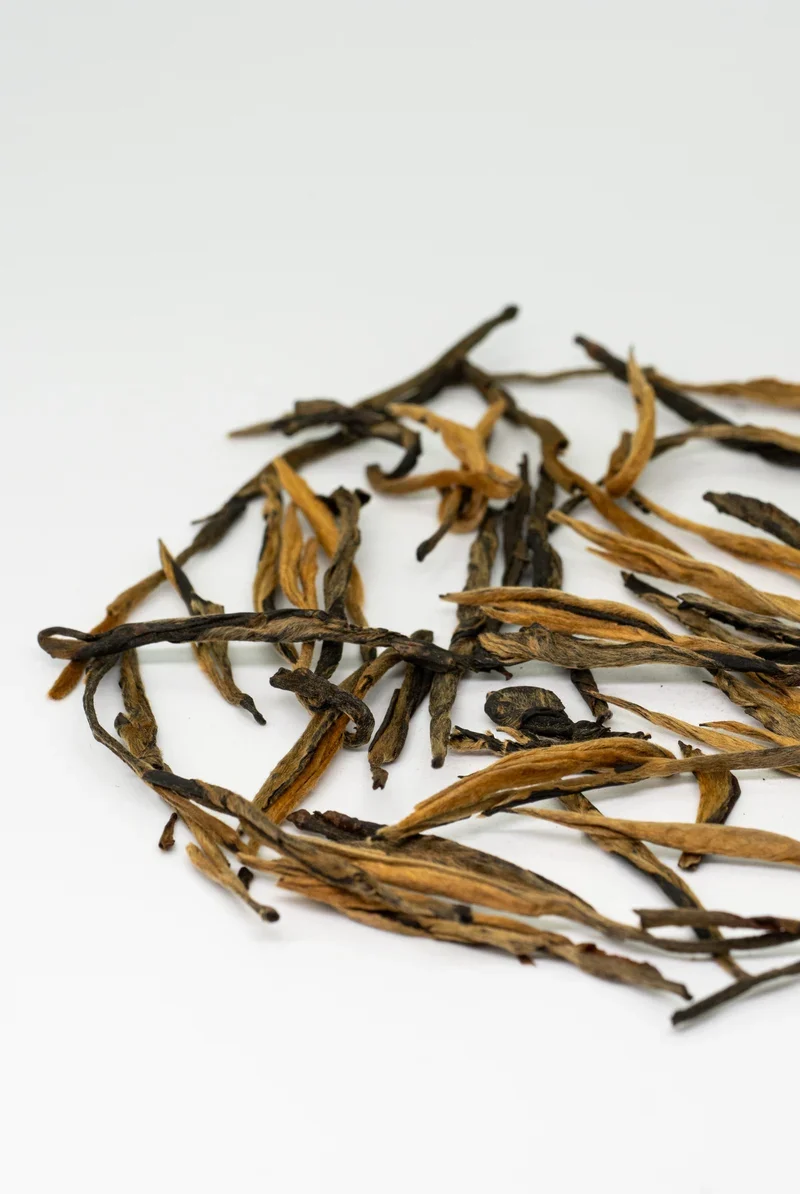
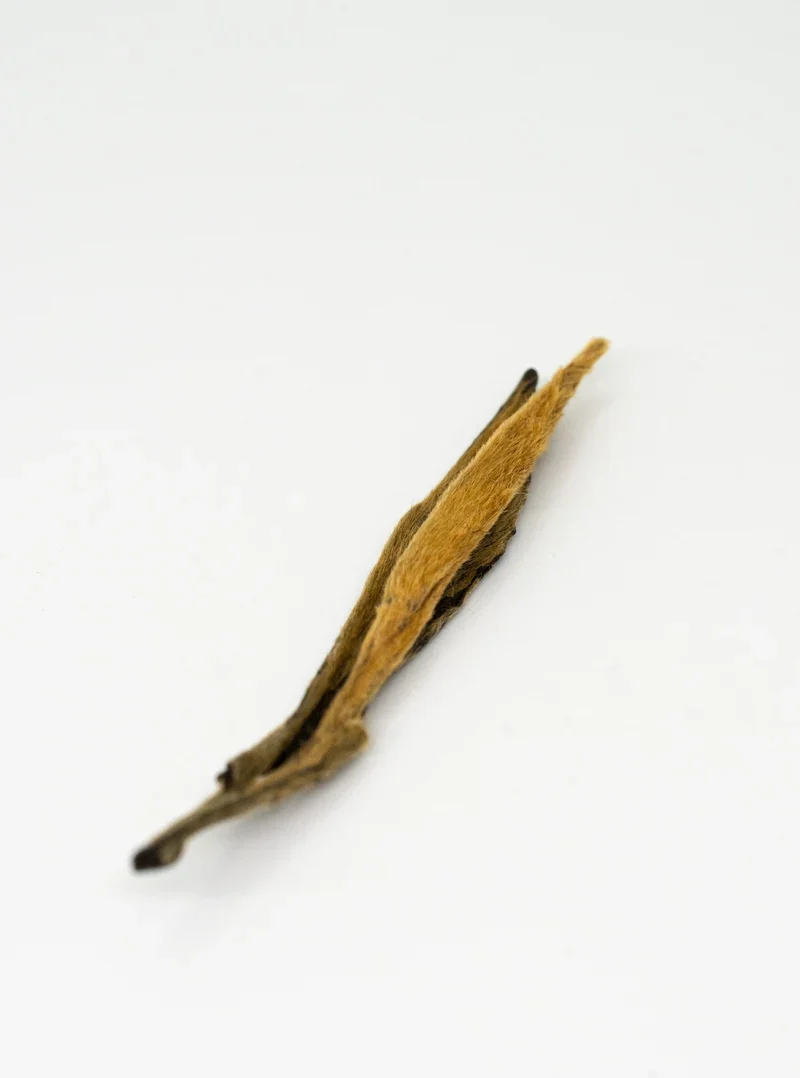
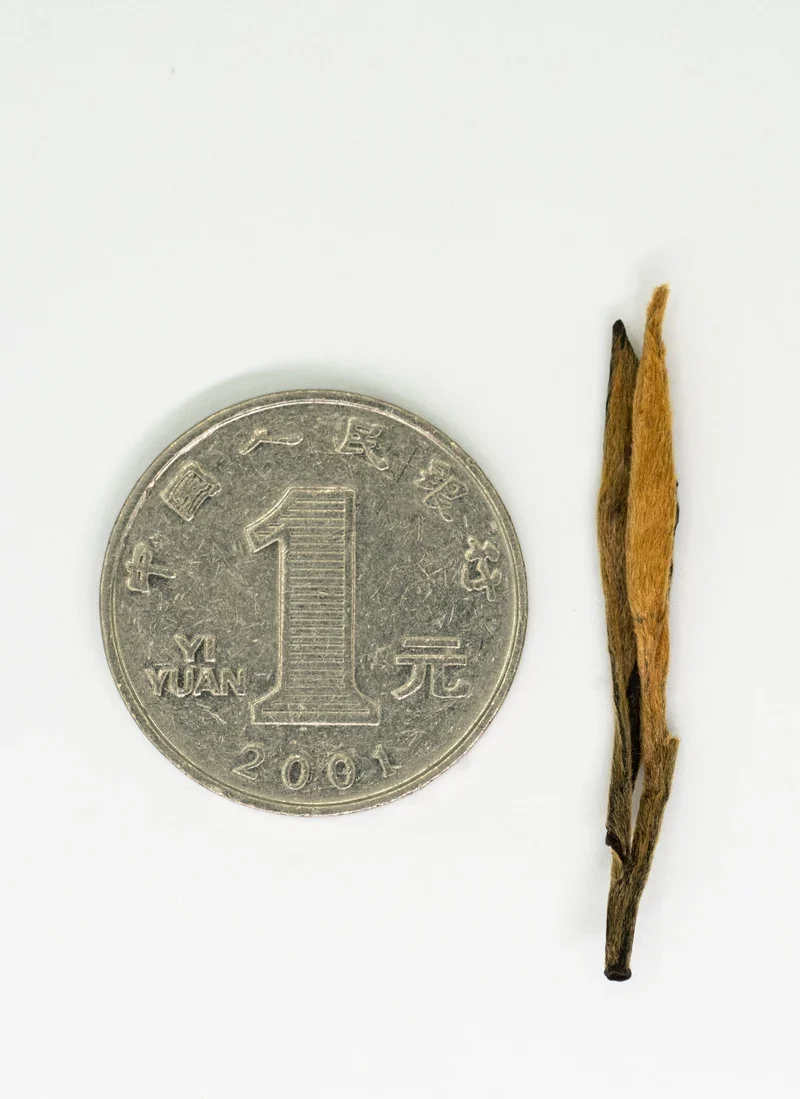
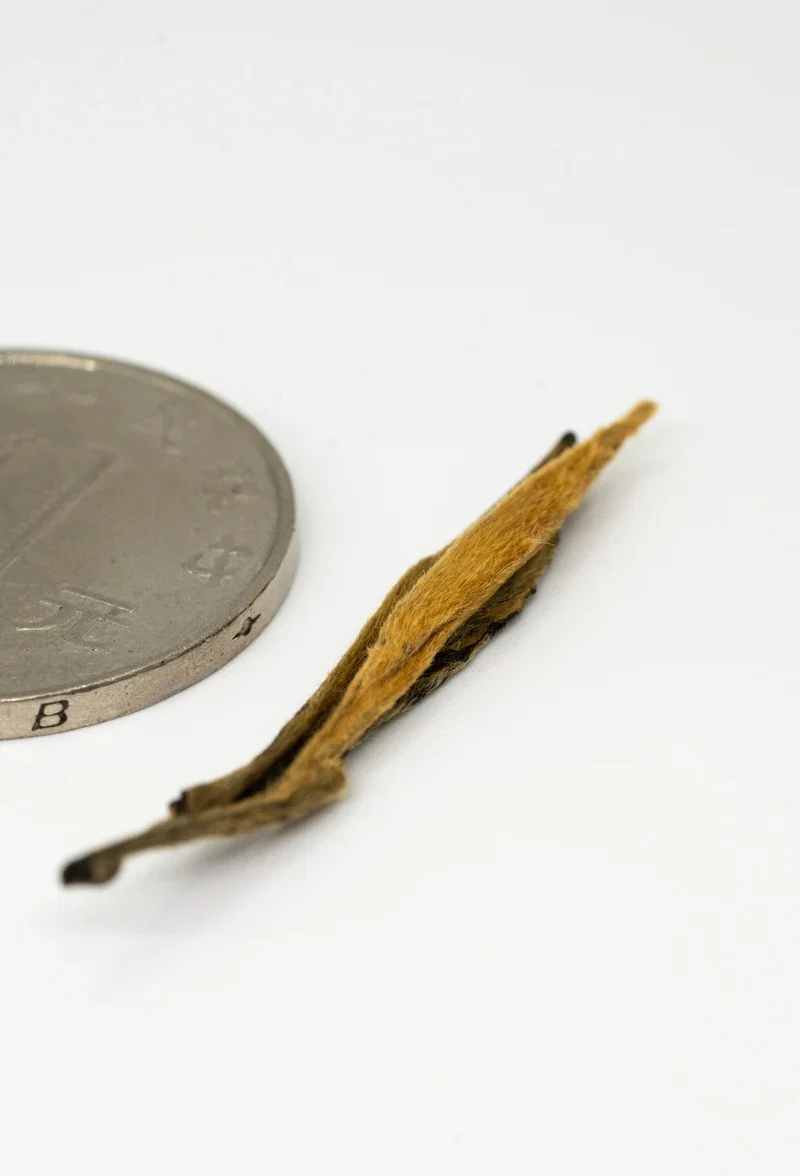
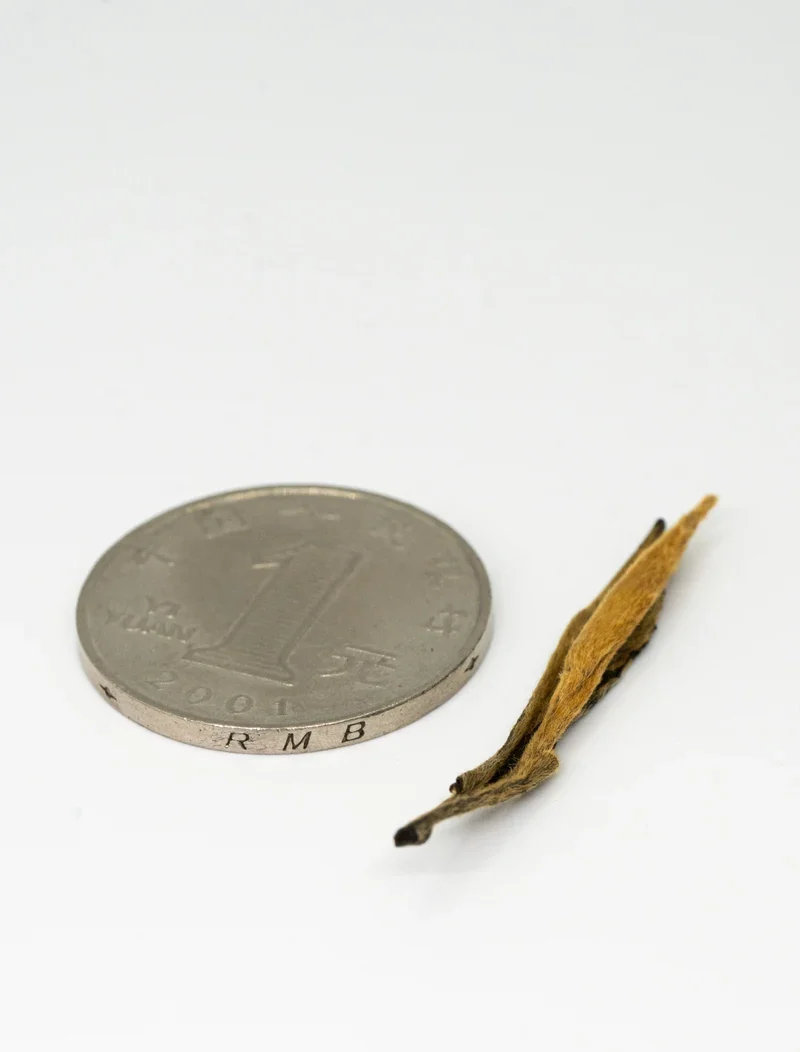
Dry Leaf Appearance: Long, thin, straight needle-shaped tea leaves with pointed tips, resembling pine needles. Tea leaf length 2–4 cm. Color — black with golden and reddish inclusions of tips. Down (毫, háo) abundantly covers the bud portion. Overall impression — elegance and slenderness, tea leaves uniform in size.
Dry Leaf Aroma: Rich, sweet, with dominating notes of malt, honey, dried fruits (prunes, dried apricots), chocolate. Light floral nuances and gingerbread tones are present. In some batches — barely perceptible smokiness.
Liquor Aroma: Bright, warm, enveloping. Honey-malty range dominates with undertones of caramel, dried fruits, flowers and light spices. When cooling, notes of baking and nuts appear.
Liquor Color: From amber-orange to rich red-amber, transparent and clear. With proper brewing — pronounced golden ring (金圈, jīnquān) around cup edge.
Spent Leaves: Whole, resilient shoots — buds and young leaves, expanded after brewing. Color even, copper-red. Buds distinctly stand out with golden tone. Leaf soft, elastic.
Taste: Full, rich, velvety. Natural sweetness is well expressed, but somewhat more "bodied" and structural compared to whole-bud Jin Zhen — presence of leaf adds depth and minerality. Main notes: malt, honey, dried fruits, milk chocolate, caramel. Astringency mild, harmonious. Bitterness absent. Aftertaste (回甘, huígān) long-lasting, with sweet "bread-like" trail.
Alkaloids: Caffeine — 3–4% (approximately 40–60 mg per 150 ml serving), theobromine, theophylline. Leaf content somewhat increases overall caffeine extraction compared to purely bud teas.
Amino Acids: 2–3% of dry mass. Main component — L-theanine, providing sweetness and relaxing effect.
Linalool and its oxides, geraniol, nerol, maltol (malty tones), furfurol (baking tones), β-ionone (fruity notes). Content of volatile aromatic substances somewhat lower than purely bud grades, but palette wider due to leaf components.
Presence of leaf tissue enriches liquor with soluble polysaccharides, providing additional density and "body."
Minerals: Potassium, magnesium, manganese, fluorine, zinc, iron, selenium.
Polyphenols: Content in fresh leaf of large-leaf Yunnan cultivar — 30–38%. In finished tea, catechins are transformed into theaflavins (0.5–1.5%) and thearubigins (8–12%), determining color, taste and antioxidant properties.
Vitamins: C (partially), B₁, B₂, B₆, PP, E, K.
Caffeine combined with L-theanine provides alertness without nervousness, improves concentration and mental clarity.
Red tea (black tea) belongs to "warm" beverages in traditional Chinese medicine; improves peripheral circulation and is especially valued in autumn-winter season.
Theaflavins and thearubigins neutralize free radicals, reducing oxidative stress.
Red tea (black tea) polyphenols stimulate gastric juice production and improve intestinal motility. Warm Song Zhen is good to drink after abundant or fatty food.
Theaflavins promote LDL reduction and strengthen vascular elasticity.
Red tea (black tea) polyphenols have antibacterial effect in oral cavity, reducing caries risk.
L-theanine stimulates α-wave production in brain, promoting relaxed concentration state and reducing stress levels.
Red tea (black tea) polyphenols accelerate metabolic processes, promote fat breakdown and may have positive influence on body weight control with regular consumption.
Tea Amount: 4–5 g per 150 ml (gongfu method); 3 g per 200 ml (European method).
Teaware: Porcelain gàiwǎn (盖碗, gàiwǎn) — universal option. Yíxīng teapot (紫砂壶, zǐshā hú) adds softness. Glass teapot allows observing long "needles" opening in water.
Water Temperature: 90–95°C. Song Zhen tolerates hotter water well than purely bud Dian Hongs, thanks to leaf presence.
Container: Airtight opaque container: tin, ceramic or porcelain jar with tight lid.
Enemies: Moisture, light, foreign odors, high temperature.
Shelf Life: 18–24 months under proper conditions. Refrigerator storage not required. Over time, taste may become slightly more "even" and soft, but long aging is not the goal for this tea.
Dry, cool (15–25°C), dark place, away from strong odors. Humidity no higher than 60%.
Similar needle-shaped form, but made predominantly from buds alone (单芽). Tea leaf color more golden. Taste lighter, more delicate, with accent on floral-honey notes and less "body." Price higher.
Spiral rolling instead of needle-shaped. Denser, "heavier" taste due to compact form and intensive rolling. Pronounced chocolate and caramel notes. Price level comparable to good Song Zhen or slightly higher.
Classic Dian Hong with more mature raw material and strip-shaped rolling. Taste stronger, more astringent, with predominance of malty-spicy tones. Most affordable in price. Less "elegant" appearance.
Thin, thread-like tea leaves from buds alone. Lightest and most delicate representative of the lineup. Taste gentle, "airy," with floral accents. High price.
Produced from raw material of century-old and older tea trees. Distinguished by unusual taste depth, "wild" minerality and pronounced mountain character. Tea leaf form less standardized. Brewing resistance higher than any other Dian Hong — can withstand 10 or more infusions.
Specialized tea shops with transparent origin information.
Needles should be straight, uniform in length, with distinguishable golden tips. Twisted, broken, varied-size tea leaves — sign of low grade.
Unscrupulous sellers may pass off Song Zhen as more expensive Jin Zhen. Key difference: genuine Jin Zhen has golden-yellow tea leaves, predominantly from buds; Song Zhen — black-golden, with noticeable leaf fragments.
Deep, clean, honey-malty aroma. Flat, "papery" smell — sign of old or over-dried tea.
Too low price (at loose Gongfu level) with declared Song Zhen status should alert.
No reviews yet. Tell us what you think of this tea.
Rate this tea and share your impressions. We review each submission before publishing it.