Brewing
Gongfu brewing
- Water temperature
- 93 °C
- Tea amount
- 5 g
- Water volume
- 100 ml
- First steep
- 10 s
- Time added per infusion
- 5 s
- Infusions
- 4

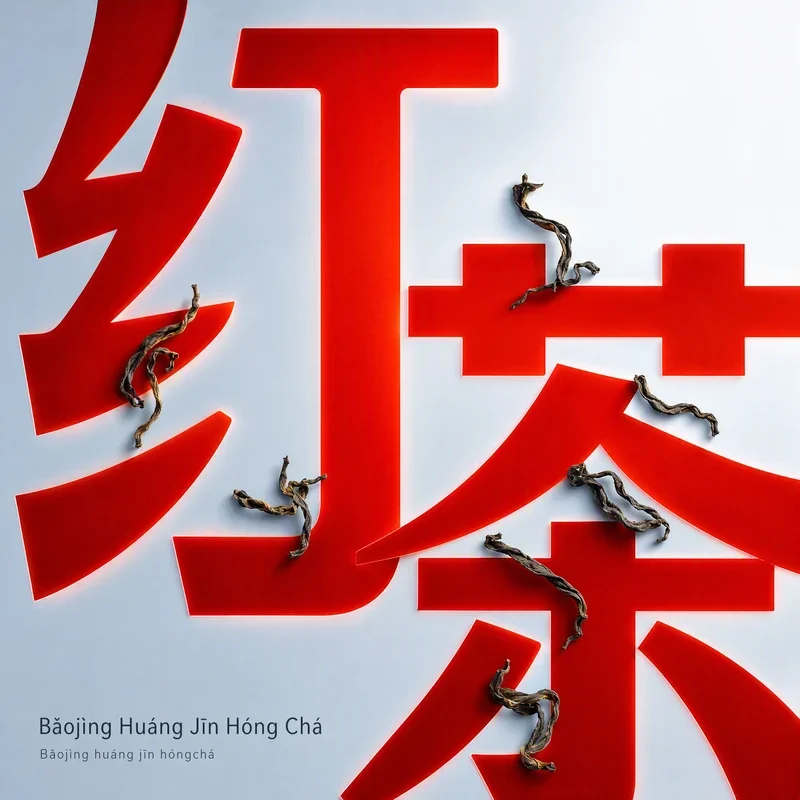
Bǎojìng huáng jīn hóngchá
Choose a brewing method. Start with the recommended quantities and time, then adjust to taste.
Brewing
Brewing
Taste
Tea encyclopedia
Category: Regional Chinese red teas (black teas), gongfu red tea (工夫红茶, gōngfu hóngchá). Part of the "Hunan Hong Cha" (湖南红茶, "Hunan Red Teas") line, for which a separate technical regulation has been developed — "Baojing Huangjincha Gongfu Hongcha Technical Regulations" (《保靖黄金茶工夫红茶技术规程》, "Technical Regulations for Gongfu Red Tea Production from Baojing Huangjincha").
Category: Regional Chinese red teas (black teas), gongfu red tea (工夫红茶, gōngfu hóngchá). Part of the "Hunan Hong Cha" (湖南红茶, "Hunan Red Teas") line, for which a separate technical regulation has been developed — "Baojing Huangjincha Gongfu Hongcha Technical Regulations" (《保靖黄金茶工夫红茶技术规程》, "Technical Regulations for Gongfu Red Tea Production from Baojing Huangjincha").
Coordinates: 109°12′–109°33′ E, 28°24′–28°36′ N (according to geographical indication registry data).
Origin: China, Húnán Province (湖南省, Húnán Shěng), Xiāngxī Tujia and Miáo Autonomous Prefecture (湘西土家族苗族自治州, Xiāngxī Tǔjiāzú Miáozú Zìzhìzhōu), Bǎojìng County (保靖县, Bǎojìng Xiàn). Core production area — townships of Húlu (葫芦镇, Húlu Zhèn), Hāngshā (夯沙乡, Hāngshā Xiāng) and Shuitianhé (水田河镇, Shuǐtiánhé Zhèn). Historical "ground zero" — Huángjīn Village (黄金村, Huángjīn Cūn), located at the foot of Mount Lüdongshan (吕洞山, Lǚdòng Shān).
Type: Red tea (black tea) (红茶, hóngchá) — fully oxidized.
Cultural Significance: Baojing Huangjincha is not merely an agricultural crop, but living heritage of the Miao and Tujia cultures of Xiangxi. The ancient tea gardens of Huangjin Village are declared protected cultural heritage sites at the provincial level, and the "Tree King" itself is Hunan's only living intangible cultural heritage object (活体非物质文化遗产). Local Miao revere the "tea flower fairy" (茶花仙子) as a protective deity, and tea themes permeate traditional Miáo drum rhythms (苗鼓) and song traditions (苗歌). For Baojing County, tea is the leading economic sector: by 2023 the plantation area reached 15.5 万亩 (≈ 10,300 hectares), total tea production value — 23.16 billion yuan, and the brand is valued at 40.93 billion yuan.
History: Baojing's tea tradition reaches back to deep antiquity. In the early historical treatise "Jingzhou Tudiji" (《荆州土地记》) it is noted: "All seven counties of Wuling produce tea, of the finest quality" (武陵七县通出茶,最好). Tāng scholar Dù Yóu (杜佑) in his encyclopedic work "Tongdian" (《通典》, 801 CE) recorded that Xizhou (溪州, roughly corresponding to the territory of modern Baojing) supplied tea buds as tribute. Even earlier evidence — finds from Liye (里耶), where among 36,000 Qin bamboo slips (秦简, 3rd century BCE) records of economic shipments from Qianling (迁陵, now Baojing) were discovered, presumably including tea raw materials.
Name Breakdown: 保靖 (Bǎojìng) — name of the county, literally "protected tranquility"; 黄金 (Huáng Jīn) — "gold," reference to the legend of the liang of gold given by Lu Jie for the miraculous tea; 红茶 (Hóngchá) — red tea (black tea), indication of processing method.
Cultivar: Bǎojìng Huangjincha (保靖黄金茶) — a unique local cultivar formed through prolonged natural selection in the isolated mountain conditions of Xiangxi. Belongs to the population group (群体种) with high genetic diversity. According to research by Professor Hé Shìhuā (何士华), the ancient Huangjincha trees belong to the large-leaf arboreal type (乔木型大叶类品种) and demonstrate certain genetic kinship with the fossil Jǐnggǔ Kuanye Mulan (景谷宽叶木兰, Magnolia latifolia), dated to 35 million years ago. Medium to large bushes, elliptical or lanceolate leaves, tender shoots with high bud density and pronounced resistance to adverse conditions. Key botanical feature — exceptionally high amino acid content in young shoots.
Picking: Spring — main season: early spring harvest (明前, míngqián) is especially valued. Huangjincha is distinguished by early awakening (发芽早) and dense, synchronized shoot formation. For red tea (black tea), summer raw material is also used, possessing higher polyphenol content.
Pluck Standard: Bud and one to two leaves (一芽一叶 — 一芽二叶). For premium batches — single buds (单芽): producing one jin (500 g) requires 32,000–35,000 hand pickings.
Raw Material: Whole, tender, fresh leaf without damage. Hand picking following the "ten don'ts" rule (十不采), including rejection of insect-damaged, overripe, dew-wet and other substandard shoots.
Altitude: 280–1,500 m above sea level. Main high-quality raw material zone — 500–800 m. Huangjin Village is located at approximately 635 m elevation.
Climate: Subtropical monsoon mountain climate. Average annual temperature 15–17 °C, mild summers without extreme heat, winters without severe frosts. Clouds and mists are an almost constant companion: the region is located at the junction of the Yunnan-Guizhou Plateau and Wudangshan. Precipitation 1,200–1,500 mm/year. Significant diurnal temperature variation stimulates accumulation of aromatic compounds and amino acids.
Soil: Formed on parent rocks — shales and sandstones (板页岩和砂岩). Slightly acidic (pH 4.5–5.5), well-drained, deep, with high organic content. Mineral composition — result of hundreds of millions of years of geological processes in Wulingshan (武陵山) — contributes to the characteristic "depth" of flavor.
The Xiangxi region is distinguished by exceptional ecological purity: remoteness from industrial centers, dense forest cover, clean mountain rivers. Baojing's tea gardens have passed organic certification on an area exceeding 4,200 mu. Many plantations are located adjacent to relict forests, forming natural agroforestry systems.
Hand selection of tender shoots. Picking time — morning hours after dew has lifted.
Natural or combined. Duration 12–20 hours, moisture loss 35–40%. Goal — prepare leaf for rolling, initiate primary aromatic transformations. For Huangjincha with its high amino acid content, withering is conducted gently at moderate temperature to preserve the sweet foundation.
Formation of tight, dense twist and destruction of cellular membranes for juice release to leaf surface. Rolling can be either manual (手工揉捻) or mechanical.
Key stage. Temperature 26–30 °C, humidity 90–95%, duration 3–5 hours. Thanks to high polyphenol content (up to 25%) and amino acids (up to 7.47%), Huangjincha raw material creates ideal balance: theaflavins provide brightness and liveliness, thearubigins — depth and "body," while unoxidized amino acids — pronounced natural sweetness.
Primary drying at 100–120 °C to stop oxidation, then — final drying at gentler temperature (60–80 °C) to stabilize aromatic profile.
Classification by leaf standard, tip proportion, fraction size.
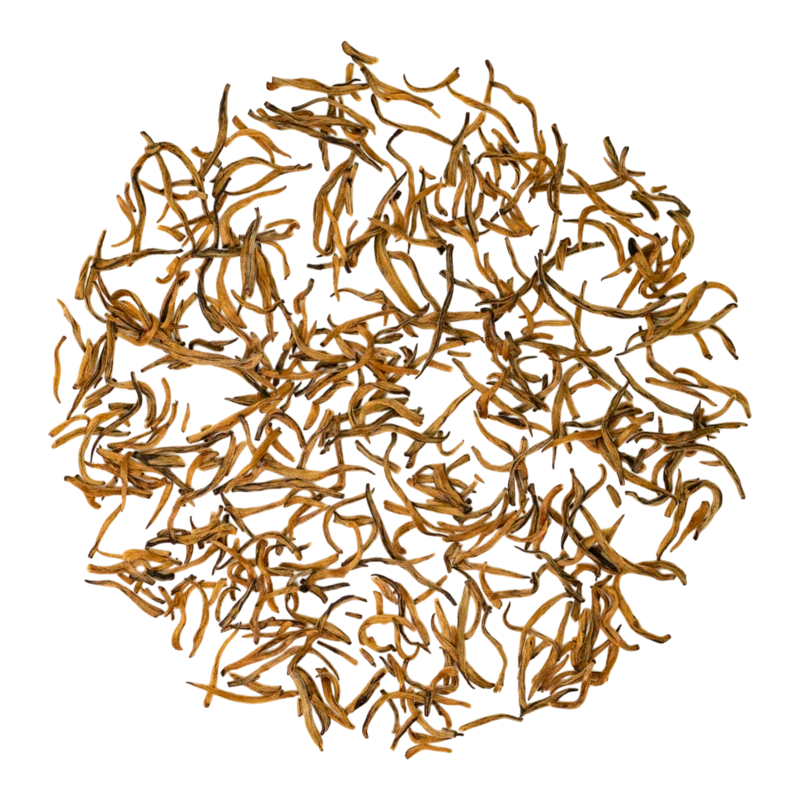
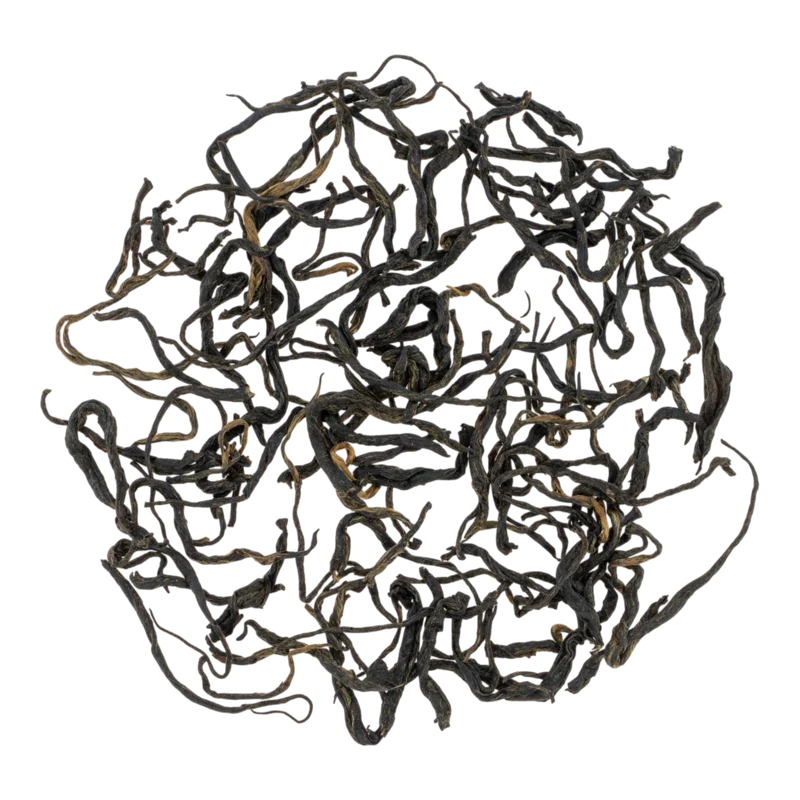
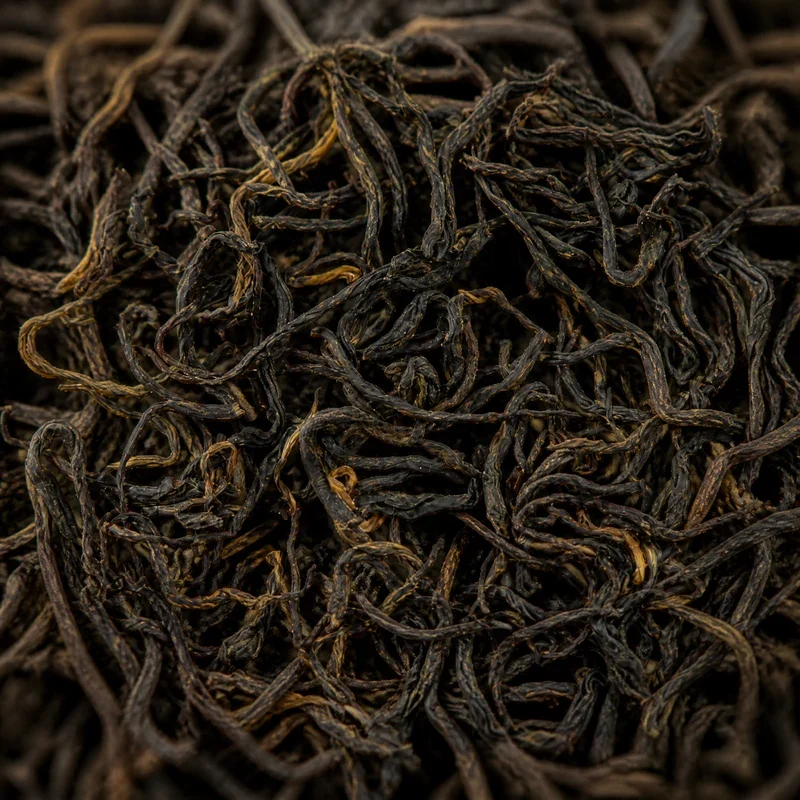
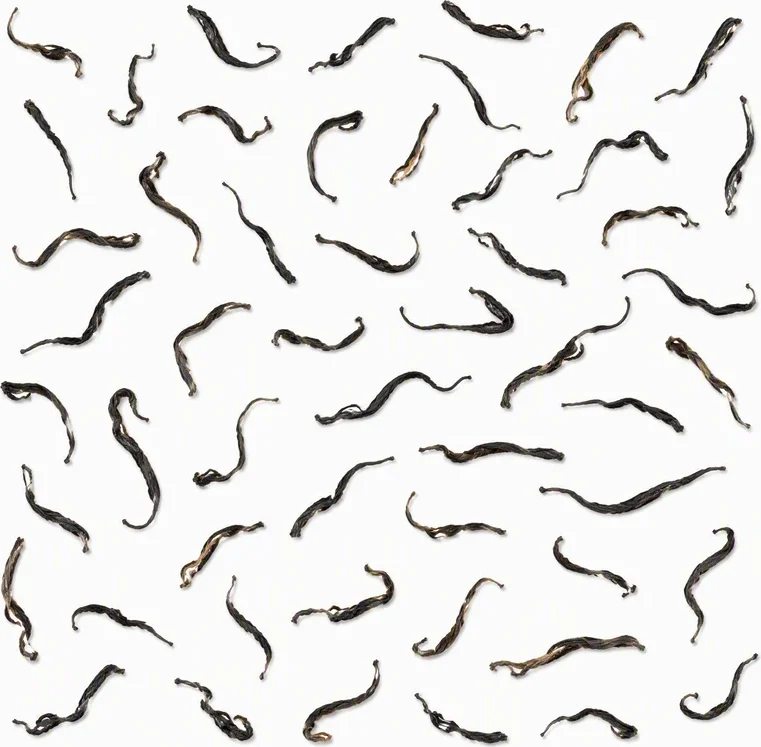
Dry Leaf Appearance: Tight twist, neat stringy tea particles (条索紧细), dark brown or black color with abundant golden tips (金毫). Leaf even, well-sorted.
Dry Leaf Aroma: Sweet, honeyed, with notes of ripe southern fruits and light floral background. Pronounced characteristic "golden" aroma (黄金香) — complex sweet-honey bouquet that is the "calling card" of the cultivar.
Liquor Aroma: Multi-layered and persistent: top notes — honey and dried fruits (apricot, date); middle — caramel, biscuit, malt; base — delicate woody-spicy undertones. With each subsequent infusion the aroma evolves, revealing new facets.
Liquor Color: Red-amber, bright and clear, with pronounced golden "ring" (金圈, jīn quān) — sign of high theaflavin content.
Spent Leaves: Leaf unfolds elastically and evenly; color — copper-brown to reddish-chestnut. Structure whole, buds and leaves well distinguishable.
Taste: Dense, full-bodied and simultaneously surprisingly soft. Clean, deep sweetness (回甘) dominates, due to record amino acid content in source material. Astringency minimal, quickly dissolving into long warming aftertaste. Taste body "oily" (油润), enveloping.
Alkaloids: Caffeine — 4.3% (according to data for native raw material). Theobromine and theophylline — in trace amounts.
Amino Acids: Main "superpower" of Huangjincha. Free amino acid content in fresh spring raw material reaches 7.47% (according to some data — up to 7.76%), which is twice the indicators of ordinary green teas. L-theanine dominates. After full oxidation, a significant portion of amino acids is preserved, ensuring exceptional sweetness and "umami" of the red tea (black tea).
Up to 50% — exceptionally high indicator explaining richness and persistence of liquor during multiple brewings.
Content 50% higher than control varieties, which contributes to increased photosynthetic activity and, indirectly, accumulation of secondary metabolites.
Rich complex of terpenes, aldehydes and Maillard reaction products. Characteristic "golden aroma" is formed by combination of linalool, geraniol, β-ionone and specific amino acid derivatives.
B-group vitamins, ascorbic acid (partially), potassium, magnesium, manganese, zinc, selenium.
Polyphenols: Content in fresh raw material — about 20–25%. In red tea (black tea), oxidized forms predominate: theaflavins (TF) and thearubigins (TR), forming color and "body" of the liquor. TF/TR balance determines characteristic "lively" brightness with simultaneous depth of flavor.
High L-theanine content combined with caffeine provides state of "relaxed concentration" — alertness without anxiety, improved memory and attention.
Theaflavins, thearubigins and residual catechins possess pronounced ability to neutralize free radicals and reduce oxidative stress. In antioxidant activity, red tea (black tea) from high-polyphenol Huangjincha raw material occupies a high position among Chinese red teas.
Polyphenolic compounds and caffeine stimulate thermogenesis and promote fat breakdown, making the tea a good companion for those watching their weight.
Warm, mild red tea (black tea) is traditionally recommended after meals. Moderate tannins normalize gastric juice secretion.
Theaflavins demonstrate in studies ability to support vascular elasticity and normalize lipid profile.
Polyphenols possess moderate antimicrobial and immunomodulating action.
High antioxidant properties of tea polyphenols are linked in studies to slowing age-related cellular changes.
Fully oxidized tea warms in cold weather, relieves subjective feeling of fatigue.
Tea Amount: 4–5 g per 100–120 ml. For tippy batches — slightly less (3–4 g), as substance concentration is higher.
Teaware: Porcelain gàiwǎn (盖碗) — for most precise revelation of aromatic profile; Yíxīng clay teapot (宜兴紫砂壶) — for greater roundness and oiliness; glass teapot — for aesthetic pleasure from observing the "dance" of unfolding golden tips.
Water Temperature: 90–95 °C.
Red tea (black tea) from neighboring Gǔzhàng County (古丈), also located in Xiangxi. Made from raw material of famous green Guzhang Maojian. Structurally a "related" product, but without record amino acid content of Huangjincha. Guzhang Hong Cha is typically somewhat more "dry" and less sweet in taste.
Umbrella brand uniting red teas (black teas) of Hunan Province, including Húhóng (湖红, Hú Hóng). Traditional Hunan red teas are made from standard cultivars and have a more even, "industrial" profile. Huang Jin Hong Cha stands out with exceptional sweetness and "oily" texture due to properties of unique cultivar.
Yunnan red tea (black tea) from large-leaf Assam type. Dian Hong — powerful, full-bodied, with pronounced notes of chocolate, pepper and musk. Huang Jin Hong Cha — softer, sweeter, with more delicate aromatic profile and significantly higher amino acid content.
Premium red tea (black tea) from Wuyishan (Fujian), made from buds only of wild tea bushes. Both teas — tippy, honey-sweet, with golden liquor. Differences — in terroir: Jin Jun Mei carries mineral "rock" notes of Wuyishan, Huang Jin Hong Cha — fruity depth and characteristic "golden" sweetness of Xiangxi.
Price Category: Baojing Huang Jin Hong Cha is a premium regional product. Cost is determined by harvest standard (tippy batches — most expensive), season (early spring raw material valued highest), source (ancient trees vs. young plantations) and presence of award certificates. The saying "一两黄金一两茶" reflects historical perception of this tea as luxury item, though modern market pricing is, of course, far from literal "liang of gold for liang of tea."
No reviews yet. Tell us what you think of this tea.
Rate this tea and share your impressions. We review each submission before publishing it.