Brewing
Gongfu brewing
- Water temperature
- 75 °C
- Tea amount
- 5 g
- Water volume
- 100 ml
- First steep
- 10 s
- Time added per infusion
- 5 s
- Infusions
- 3



bái máo hóu
Choose a brewing method. Start with the recommended quantities and time, then adjust to taste.
Brewing
Brewing
Taste
Tea encyclopedia
Category: Historical famous tea (历史名茶). Created in 1910. Classified as green tea in "Zhongguo Chajing" (《中国茶经》), although the technology includes elements of white tea (prolonged withering) and even light oolong (partial oxidation during withering).
Category: Historical famous tea (历史名茶). Created in 1910. Classified as green tea in "Zhongguo Chajing" (《中国茶经》), although the technology includes elements of white tea (prolonged withering) and even light oolong (partial oxidation during withering).
Origin: China, Fújiàn Province (福建省), Zhènghé County (政和县, Zhènghé Xiàn), northern Fujian. Zhenghe — one of the "three great tea counties" of Fujian alongside Fuding and Jian'ou. Coordinates: ~27°22′ N, 118°51′ E.
Type: Green tea (绿茶, lǜchá), formally unfermented, however with prolonged withering (16–18 hours) — "制法介于红茶绿茶之间" ("technology between red tea and green tea"). Local nickname — "白绿" (Bai Lü, "White-Green"). Emphasis — on "preserving down" (保毫, bǎo háo) and "shaping" (做形, zuò xíng).
Cultural Significance: Bai Mao Hou — a "hybrid" tea: born in the county that gave its name to an entire Song reign era, at the intersection of white and green tea traditions. Its technology — "between red and green" — reflects the Fujian spirit of experimentation that gave birth to all six categories of Chinese tea.
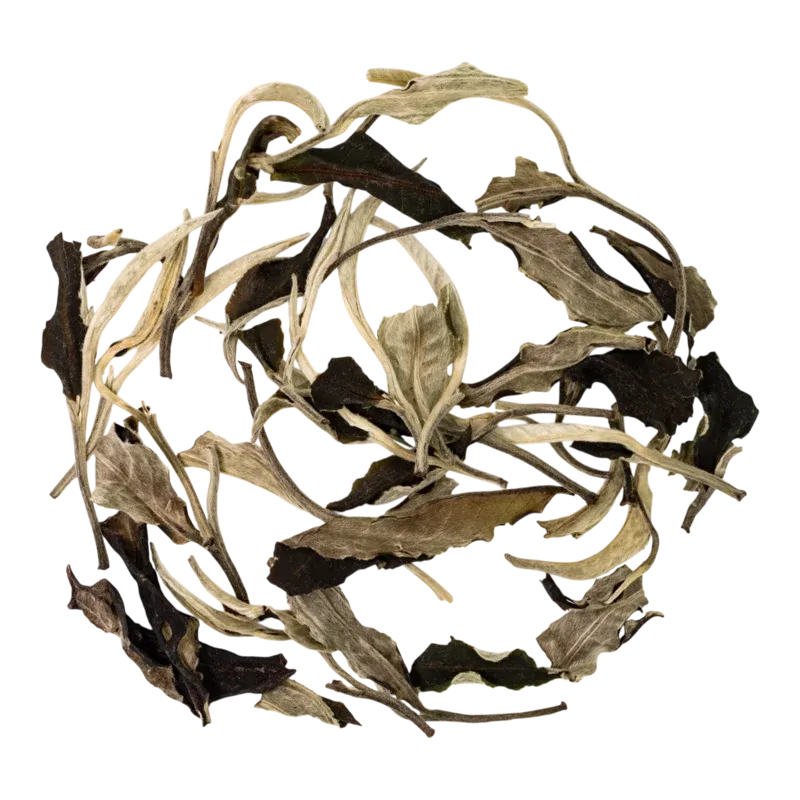
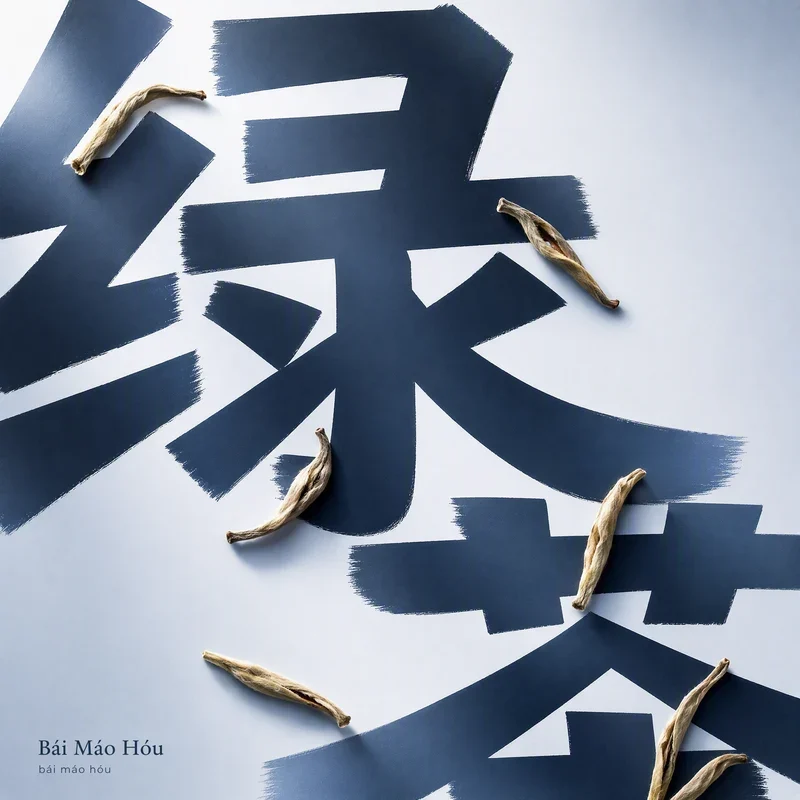
Name Breakdown: 白毛 (Bái Máo) — "white down" (abundant white fuzz on buds and young leaves); 猴 (Hóu) — "monkey". Curved, twisted tea leaves, densely covered with white down, resemble a curled-up little monkey. Local nickname — "白绿" ("White-Green") — reflects the intermediate character of the technology. Particularly outstanding batches receive the suffix "王" (Wang, "King").
Cultivar: Zhenghe Dabaicha (政和大白茶, Zhènghé Dàbáichá) — "Great White Tea of Zhenghe". One of the most valuable Fujian cultivars: large, fleshy buds and leaves, abundantly covered with white down. Bush type (灌木型), medium-leaf variety (中叶类), medium-early (中芽种). This very cultivar is used to produce the famous white tea "Zhenghe Baihao Yinzhen" (政和白毫银针) and "Zhenghe Bai Mudan" (政和白牡丹).
Picking: After Qīngmíng (清明后), spring. Standard — one bud + two-three young leaves (一芽二三叶), densely covered with white down. Only undamaged shoots are picked in dry weather. Shoots must be large, "肥壮" (féizhuàng, "fleshy and strong").
Raw Material: It is categorically forbidden to damage the down — "保毫" (bǎo háo, "preserving down") — the main principle. Shoots are placed in loose layers in bamboo baskets, avoiding compression.
Altitude: 600–900 m (mountainous area of northern Fujian). Zhènghé County is located in the foothills of the Wǔyí Mountain system (武夷山脉), at the junction of Fujian and Zhejiang — one of the most "mountainous" tea counties of the province.
Climate: Subtropical monsoon. Average annual temperature — about 18 °C. Annual precipitation — 1600–1800 mm. High humidity, frequent fogs — more than 180 days per year. Significant daily temperature difference (>8 °C) — stimulates accumulation of amino acids and aromatic substances. Diffused light from cloudiness — one of the key factors ensuring abundant down on Zhenghe Dabaicha shoots.
Soil: Red-yellow (红壤, 黄壤), acidic (pH 4.5–5.5). Well-drained, deep (>60 cm), rich in organic matter and minerals. Parent rock — granite and sandstone, providing mineral "backbone" to the taste. Typical for the mountain belt of northern Fujian — the same soils on which the cliff oolongs of Wuyi grow, although altitude and microclimate differ.
Zhenghe — a mountain county with high forest cover (>70%). Bamboo groves, pine and deciduous forests create a "green canopy" over tea gardens. Water resources — streams and rivers of the Minjiang basin. Absence of industry in the mountain zone.
16–18 hours — significantly longer than standard green tea (2–4 hours). Leaves are spread in thin layers on bamboo trays or "水筛" (shuǐshāi, "water sieve") in shade or in a ventilated room. Over 16–18 hours partial enzymatic oxidation of polyphenols occurs: moisture loss — 25–30%, leaves darken to dark green, petioles become wrinkled, down appears "like silver" (白毫显露, 毫毛如银), texture — "soft as cotton" (叶质柔软如棉), petiole bends but doesn't break (梗折不脆断). Over-withering → reddening; under-withering → excessive "green" bitterness.
In wok at 140–150 °C. First "tossing" (扬炒, yáng chǎo), then "closed" pan-firing (闷炒, mèn chǎo). Until color changes to "青" (qīng, blue-green), petiole — yellow-green, aroma — "清香" (pure), without grassy taste.
Unique stage — combining rolling and shaping the "monkey". Master alternates "rolling" (揉搓, róucuō) and "rotating the mass" (茶团旋转, chá tuán xuánzhuǎn): leaf is rolled into round, curved forms resembling a "curled little monkey". Operation — "light and careful, with attention to down" (操作轻巧,注意保毫). 5–8 minutes. Moist "tea masses" (湿茶团) — 50–500 g each.
100–110 °C. On each "焙笼" (bèilóng, bamboo drying basket) — 10–15 small "tea masses". To 50–60% dryness (tea leaves don't stick to fingers).
50–60 °C. Simultaneously shaping continues: tea leaves are "completed" to full form of "little monkey" (小猴). Down must not fall off (temperature not too high), and color must not "suffocate" into yellow-brown (temperature not too low). At 80–90% dryness — reduction to 40–50 °C. Final drying to complete readiness.
Removal of stems and defective tea leaves. Packaging.
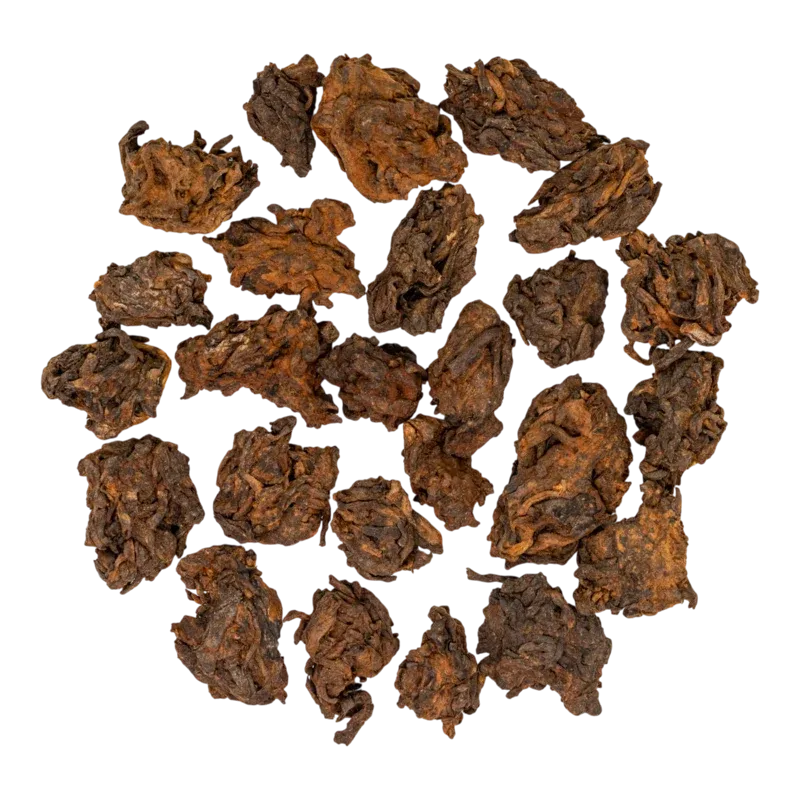
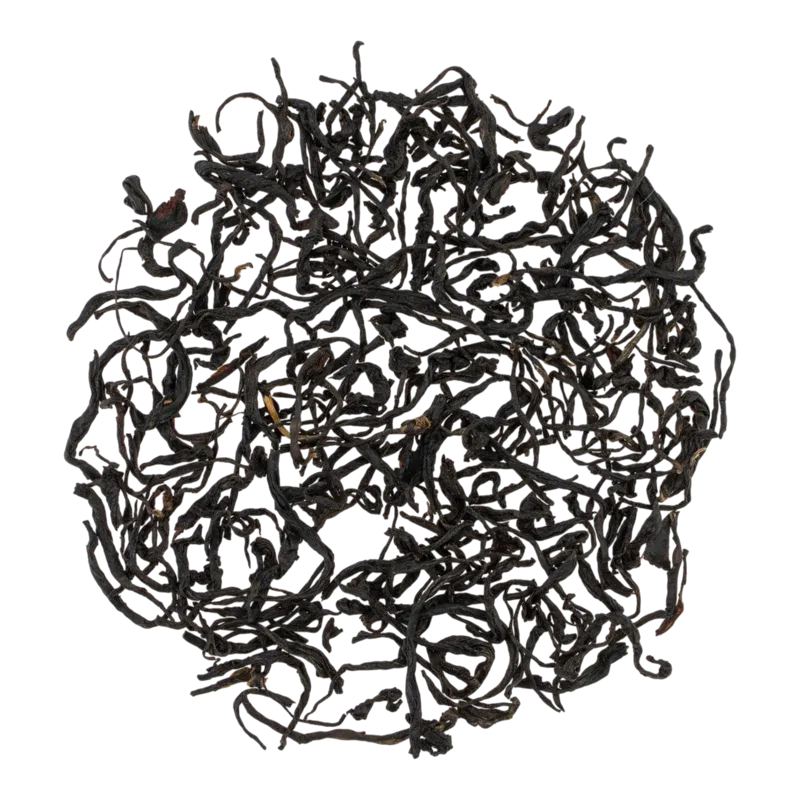
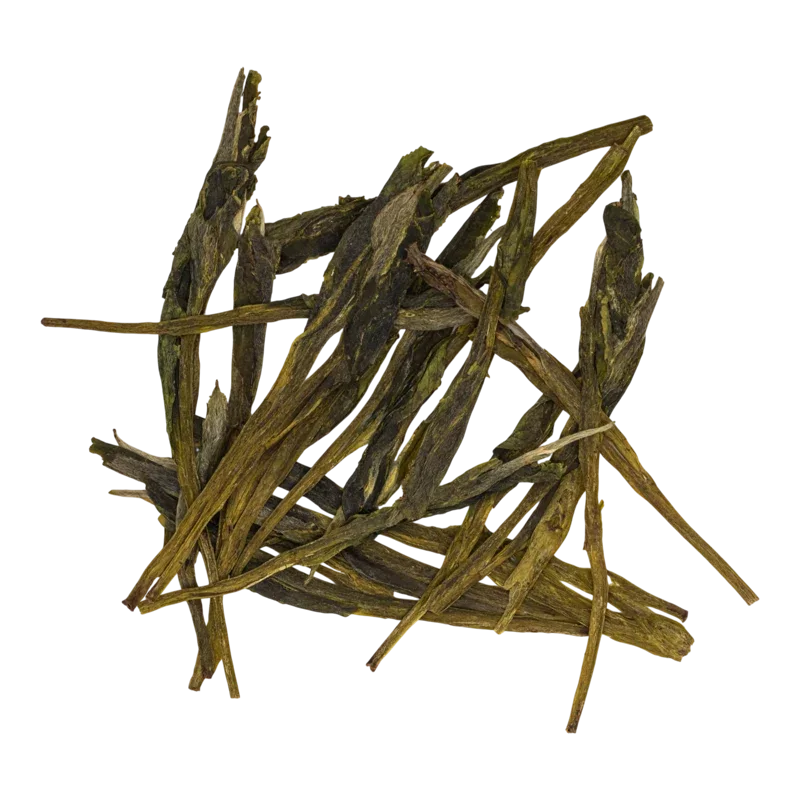
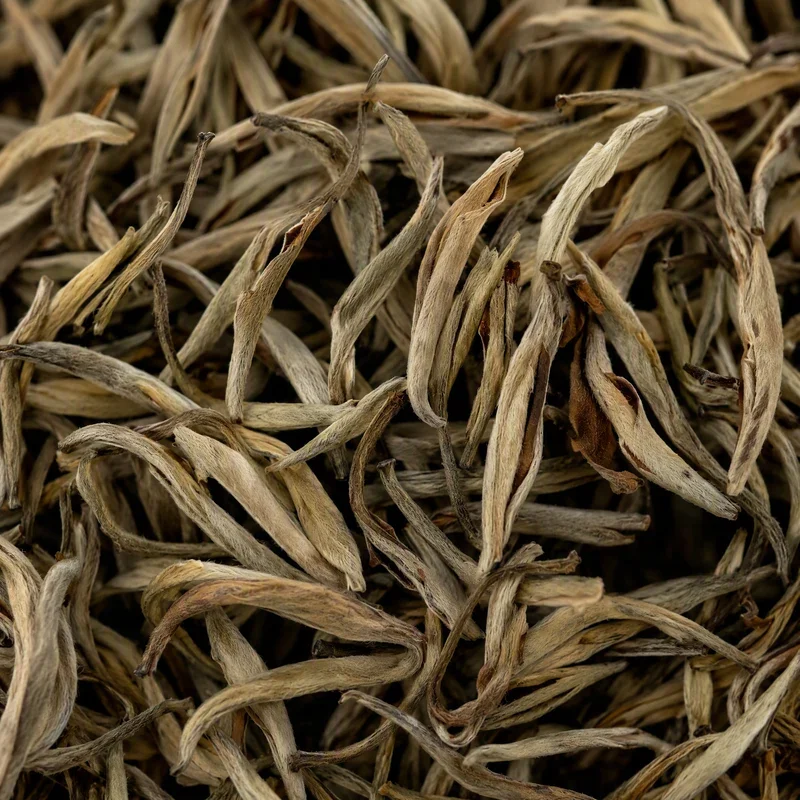
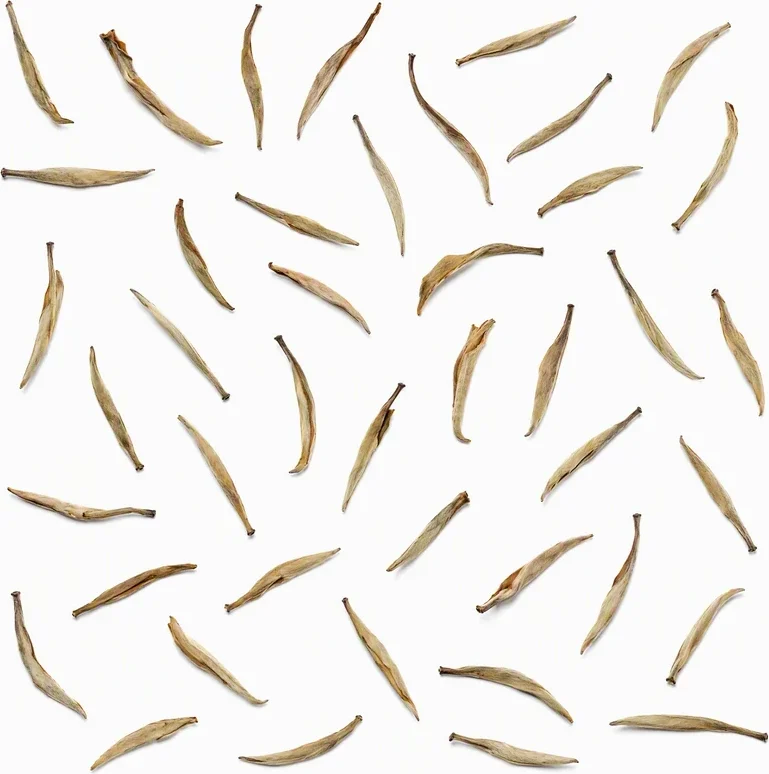
Dry Leaf Appearance: Large, curved tea leaves, "curled little monkeys" (犹如毛猴静伏, "like a little monkey resting in stillness"). Densely covered with silvery-white down. Form — voluminous, "肥壮卷曲" (féizhuàng juǎnqū, "fleshy and twisted"). Color — from silvery-green to dark green with silvery "frost".
Liquor Color: "清绿泛黄" (qīnglǜ fànhuáng, "pure green with yellowish tinge"). In some sources — "橙黄" (chénghuáng, "amber-yellow") — this depends on degree of withering.
"Downy" (毫香, háo xiāng) — fresh, sweetish. Pure (清香). More complex than typical green tea — with "milky" and "honey" overtones, due to prolonged withering.
Spent Leaves: Tender, whole, elastic, bright green (嫩绿、完整、匀净、无杂). Shoots retain their form — indicator of "保毫" and careful processing.
Taste: Mild, "醇和微甘" (chúnhé wēigān, "harmoniously mild, slightly sweet"). Minimal astringency. Pronounced "回甘" (returning sweetness). Body — medium, "velvety".
Amino Acids: Elevated — Zhenghe Dabaicha, one of the most "amino acid-rich" cultivars of Fujian, + mountain terroir (fogs >180 days, daily difference >8 °C) = rich amino acid profile. L-theanine dominates — responsible for characteristic "silky" sweetness and "毫香" (downy aroma).
Present, but in more "mild" form — partial oxidation during 16–18-hour withering transforms part of EGCG into theaflavins and thearubigins, creating a "dual" antioxidant profile uncharacteristic of pure green teas.
Moderate.
Minerals: Fluorine, potassium, magnesium, zinc.
Polyphenols: Moderate — prolonged withering (16–18 h) partially oxidizes catechins, reducing astringency. In polyphenol level Bai Mao Hou is closer to white teas (15–20%) than to standard green teas (20–30%).
Vitamins: C, B group.
Polyphenols + EGCG + vitamin C. Prolonged withering partially transforms catechins into theaflavins, providing "dual" antioxidant profile (green + partially oxidized).
Caffeine + L-theanine — alertness without nervousness. Especially mild — thanks to reduced polyphenols and elevated amino acids.
Moderate catechins stimulate GI motility without irritating mucosa (unlike stronger green teas).
L-theanine stimulates alpha-wave brain activity.
Listed properties are based on general data and are not medical recommendations.
Thanks to prolonged withering (16–18 h) Bai Mao Hou is more "tolerant" of temperature than standard green teas: even at 85 °C it doesn't become bitter, but reveals "honey" overtones. However, for maximum "毫香" (downy aroma) 75–80 °C is preferable.
Tea Amount: 3–5 g per 150–200 ml.
Teaware: Glass cup or porcelain gaiwan — for observing the unfolding of "little monkeys" and silvery down in water.
Water Temperature: 75–80 °C. Delicate "little monkeys" are sensitive to boiling water — down gets "scalded" and clouds the liquor.
Container: Airtight, opaque. Foil + vacuum packaging — ideal. Before opening — bring to room temperature to avoid condensation on down.
Light: Complete isolation — down and chlorophyll are photosensitive.
Shelf Life: 6–8 months at 0–5 °C. Best — in current harvest year. Long-term aging not recommended: Bai Mao Hou is valued for freshness and "毫香", which fade over time.
Temperature: 0–5 °C, airtight. Bai Mao Hou is especially sensitive to moisture — abundant down on tea leaves acts like a "sponge", absorbing atmospheric moisture and foreign odors faster than most green teas.
White tea from the same cultivar (Zhenghe Dabaicha). Buds only. Withering even longer (24–48 h), without fixation. Bai Mao Hou — with fixation and rolling, from bud + 2–3 leaves, "green" character.
Oolong tea from Mount Shizhu. Full oolong fermentation + "窨制". "Medicinal tea of Anxi". Practically lost. Completely different type — oolong, not green.
Anhui. Also "monkey" tea, but flat, large-leaf, without down. Bai Mao Hou — twisted, voluminous, with abundant down. Both — green, but from different provinces and with different technology.
White tea from Zhenghe Dabaicha. Bud + 1–2 leaves. Without fixation. Bai Mao Hou — with fixation and shaping of "monkey". Both — "downy", but of different categories.
No reviews yet. Tell us what you think of this tea.
Rate this tea and share your impressions. We review each submission before publishing it.